Ilyushins first jet bomber, the Il-22, had closely resembled an enlarged Ar 234C, and several features of the German aircraft (the slim fuselage, shoulder-mounted unswept wing with underslung engines, and the large slotted flaps) were carried over into the Il-28.
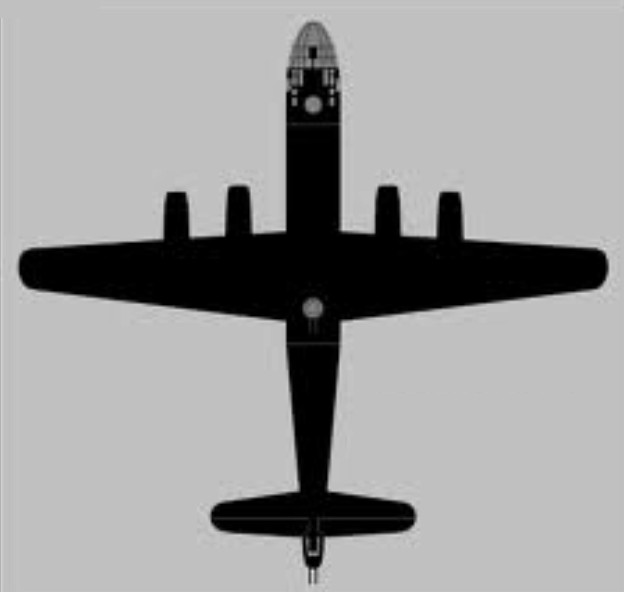
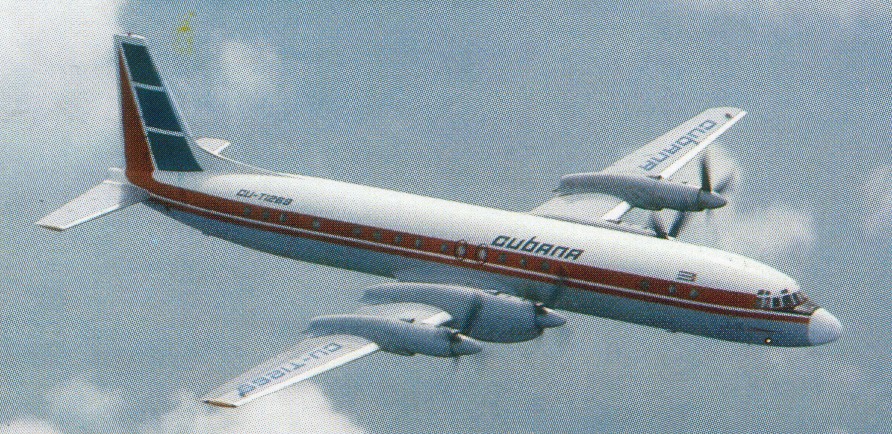
The llyushin Il-18 was developed in the mid-1950s to meet an Aeroflot requirement for a medium-range 75/100-seat transport, and the first prototype flew on 4 July 1957.
Flown for the first time on 4 July 1957, the Il-18 Moskva (Moscow) was originally powered by Kuznetsov NK-4 turboprops, but the Ivchenko AI-20 was adopted as standard at an early production stage.
Production 75-seat models, NATO reporting name ‘Coot’, entered service with Aeroflot in April 1959, and was the nation’s first turboprop airliner.
Aeroflot inaugurated use of the type on its Moscow-Adler and Moscow-Alma-Ata routes on 20 April 1959.
In 1963 Ghana returned four Il-18’s bought in a 1960 order for eight. Ghana decided it needed only four.
Further developments of the model resulted in a number of improvements and growing capacity. The last civil production version, the Il-18D long range variant built from 1965-69, utilised the 4,250 shp AE-20K engine, and could carry 110 or max 122 passengers.
The Il-18 served as s medium haul airliner until the mid to late 1970s. Some remain in Aeroflot service in 1992. Most of the survivors served as aerial laboratories or as transports for industry.
When production ended in 1969, a total of 564 Il-18 airliners of all versions were built in the GAZ-30 Znamya Truda (Banner of Labour) plant at Khodinka in Moscow in the former USSR, and about 120 were exported. Of the total built only small numbers entered military service, primarily for VIP transport.
As Il-18s have been retired from civil use some have been converted into the ECM or electronic intelligence (Elint) ll-20s, and these have the NATO reporting name ‘Coot-A’. It seems likely that the numbers of these aircraft will increase as the turboprop-powered ll-18s are retired from Aeroflot use.
Il-20 Coot-A
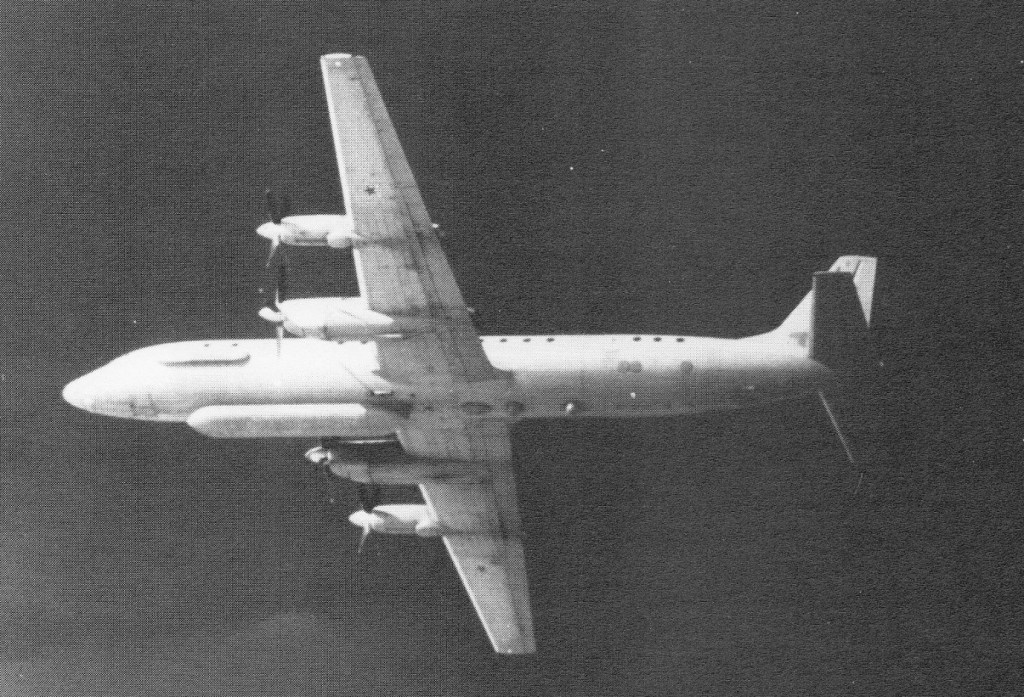
ELINT variants of the Il-18 transport have been operated by SovAir since 1978, and are distinct from the armed Il-38 May derivative. Coot-A has the same airframe as the basic Il-18, and carries SLAR in a large ventral fairing, plus other electronic equipment, camers and sensors for its specialised role. The Il-20 Coot A is a peacetime reconnaissance aircraft fitted with the side looking Igla (Needle) radar in a large underfuselage pad, plus cameras and signal intelligence units. Some twenty aircraft were built between 1969 and 1976. Some were later converted back to the passenger version.
Il-20 Coot-A with SLAR pod under the fuselage
IL- 38 anti-submarine/maritime patrol aircraft also developed from IL-18 and first flew 1961.
IL-20 reconnaissance, electronic intelligence, and communications relay aircraft also developed from IL-18, with the IL-24 civil variant.
Il-18 Engines: 4 x turbo-prop Ivchenko AI-20, 2940kW / 4,250 hp Props: ABI 4 blade 14 ft 9 in dia Max take-off weight: 61200 kg / 134924 lb Empty weight: 34500 kg / 76060 lb Wingspan: 37.4 m / 122 ft 8 in Length: 35.9 m / 117 ft 9 in Height: 10.2 m / 33 ft 6 in Wing area: 140.0 sq.m / 1506.95 sq ft Max. speed: 685 km/h / 426 mph Cruise speed: 650 km/h / 404 mph at 29,500 ft Landing speed: 118 mph Range: 5000 km / 3107 miles Range w/max.fuel: 6500 km / 4039 miles Range w/max.payload: 3700 km / 2299 miles Range at 135,584lb gross: 1550 mi Crew: 5 Passengers: 89-110
Coot-A Engines: 4 x AI-20M turboprop, 4250 shp (3169 kW).
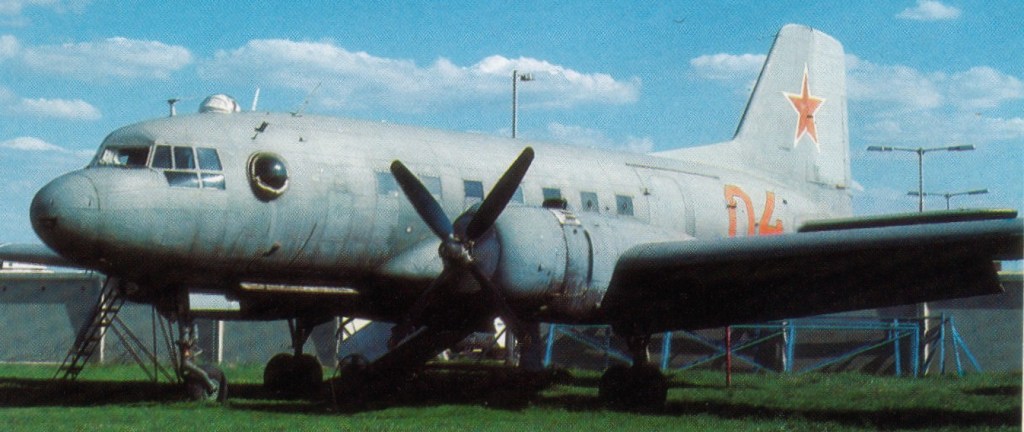
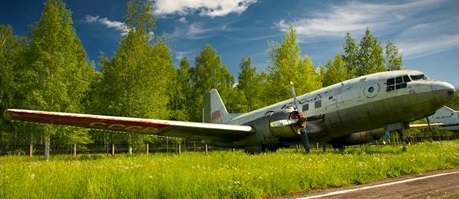
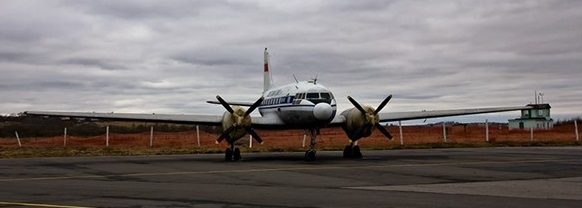
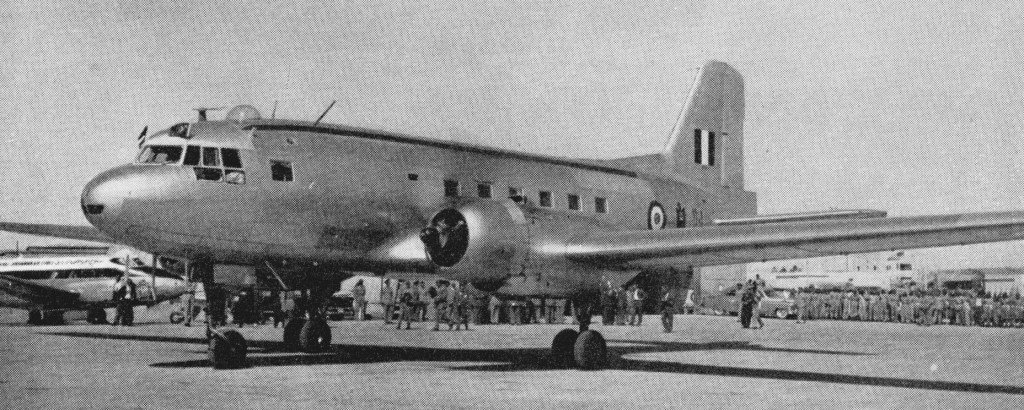
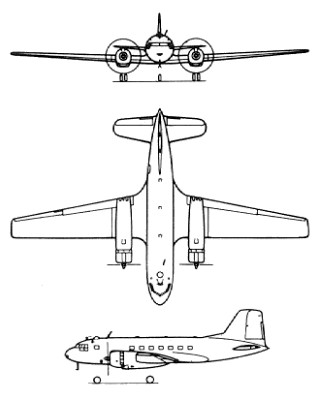
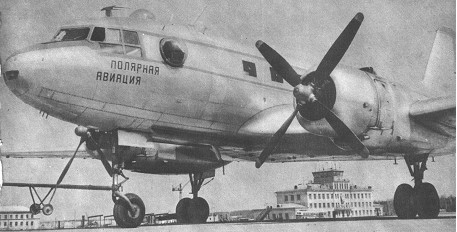
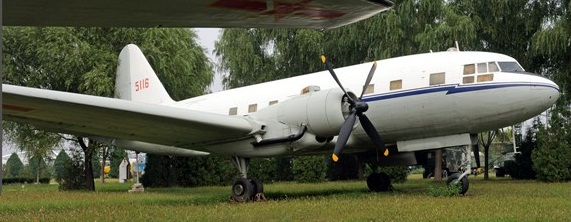
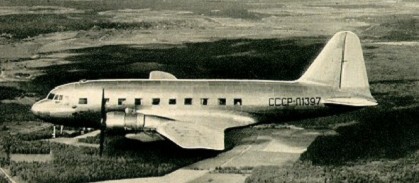
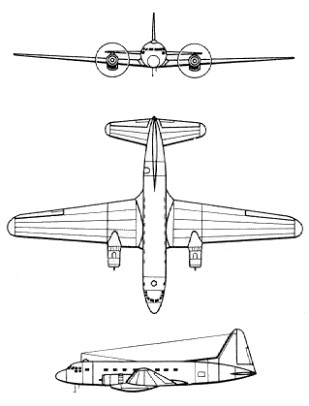
First flown in 1953, the IL-14 was developed from the IL-12 with a new tail unit and wing and was known in the West under the NATO reporting name Crate.
Many thousands were produced in the Soviet Union, East Germany and Czechoslovakia (as the Avia 14). The IL-14 basic version with normal accommodation for 28 passengers was followed by the IL-14M and IL-14P. The Il-14M has a fuselage lengthened by 1.0m and accommodates up to 32 passengers, while the Il-14P seats 26 passengers, has improved performance and an AUW of 16,500kg. A large number of M and P versions were converted into IL-14T freighters.
‘3078’ was the last Il-14 used by the Polish Air Force for VIP transport. Built by VEB in East Germany, it was retired in 1989.
At least 10 Il-14 transport were supplied to Egypt.
Il-14 Engines: 2 x Shvetsov ASh-82T, 1395kW / 1874 hp Max take-off weight: 17000 kg / 37479 lb Empty weight: 12200 kg / 26897 lb Wingspan: 31.7 m / 104 ft 0 in Length: 21.3 m / 69 ft 11 in Height: 7.9 m / 25 ft 11 in Wing area: 100.0 sq.m / 1076.39 sq ft Max. speed: 395 km/h / 245 mph Cruise speed: 345 km/h / 214 mph Service ceiling: 7000 m / 22950 ft Range w/max.fuel: 3200 km / 1988 miles Range w/max.payload: 1000 km / 621 miles Crew: 4 Passengers: 18
It entered service with the Soviet Air Force as a troop/paratroop or freight transport and for glider towing. It also went into commercial service with Aeroflot, CSA of Czechoslovakia and LOT of Poland, utilised by Aeroflot in the late 1940s and 1950s.
Engines: 2 x ASh-82FN, 1360kW Max take-off weight: 17000 kg / 37479 lb Empty weight: 9000 kg / 19842 lb Wingspan: 31.7 m / 104 ft 0 in Length: 21.3 m / 69 ft 11 in Height: 8.1 m / 26 ft 7 in Wing area: 100.0 sq.m / 1076.39 sq ft Max. speed: 375 km/h / 233 mph Cruise speed: 320 km/h / 199 mph Range w/max.fuel: 1900 km / 1181 miles Range w/max.payload: 300 km / 186 miles Crew: 4-5 Passengers: 18-27
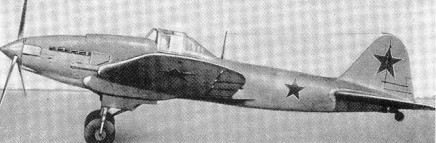
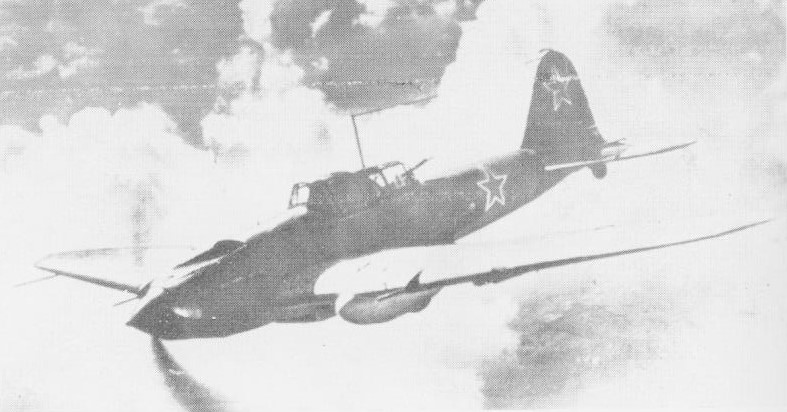
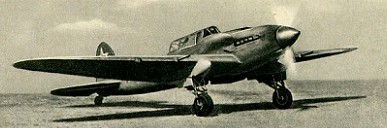
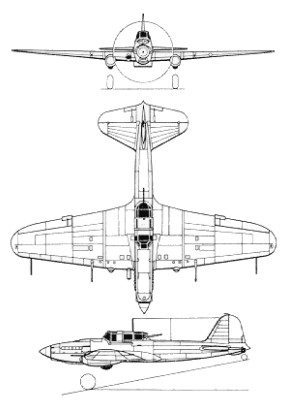
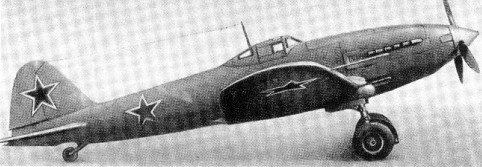
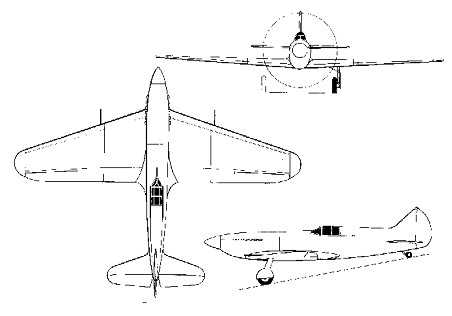
To provide a replacement for the II-2 Shturmovik (ground-attack aircraft), the llyushin design bureau developed two different prototypes in 1943. The Il-8 and Il-10. The Il-10M attack aircraft was created after a proposal by the Soviet Air Force Marshal Pavel Zhigarev.
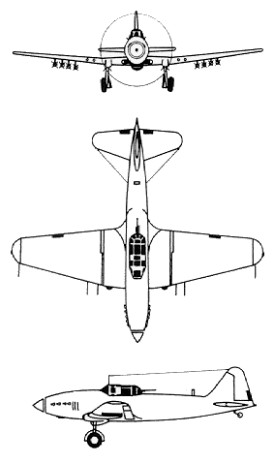
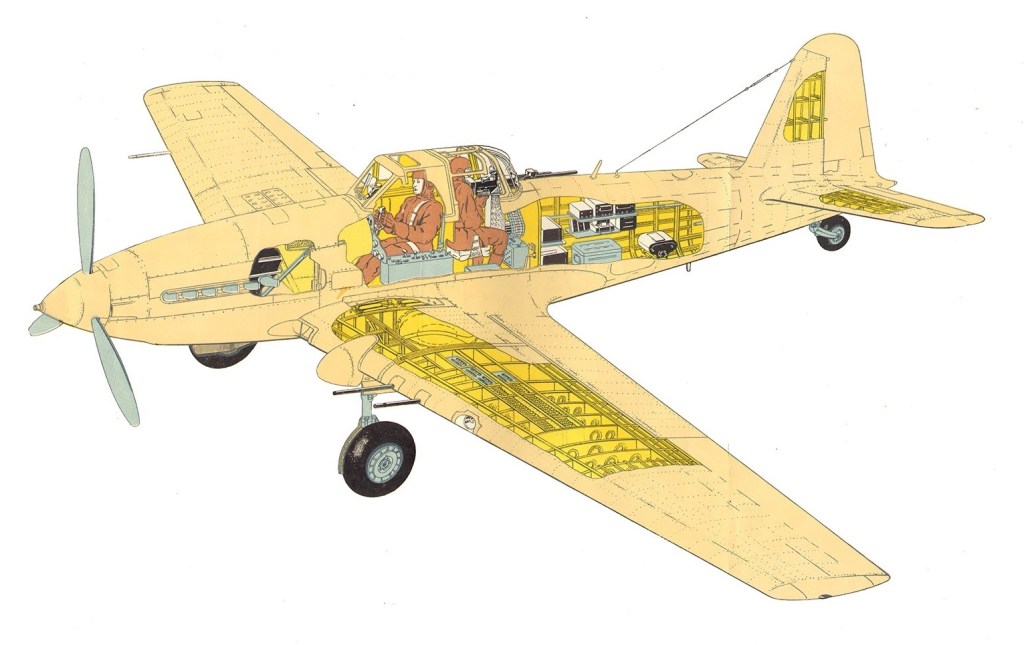
The II-8 was rejected by the Council of Ministers in favour of the contemporary llyushin Il-10 M, which first flew on 2 July 1951, piloted by Ilyushin’s chief test pilot V. Kokkinaki. The Il-10 was a completely new design of all-metal construction and improved aerodynamic form. It provided better crew accommodation, the gunner seated with his back to the pilot in an enlarged cockpit, and both crew members were located within the protective armoured shell. Revised main landing gear units retracted within the wing, eliminating the large landing gear fairings of the II-2 and requiring only small fairings over the pivoting mechanism.
Early favourable reports of the prototype test programme led to a batch of pre-series machines, quantity production being initiated in August 1944, with evaluation in operational regiments starting two months later. The type was used first in operations in February 1945 and by that spring output reached a peak. Many regiments re-equipped with the Il-10 before the German surrender, and a considerable number took part in the brief but large-scale operations against the Japanese in Manchuria and Korea during August 1945.
Production of the Il-10 continued post-war with Soviet factories building 4,966 machines, the last leaving the production lines in 1955. Additionally, ll-10s were also built at the Czech Avia factory, under the designations B-33 and CB-33, the CB-33 being the equivalent of the II-10U trainer variant. Czech production finished in 1954 when over 1,200 examples had been completed.
From 1951 onwards Soviet production had concentrated on the II-10M which featured an entirely new wing of revised planform and deeper aerofoil section, a slightly lengthened fuselage, modified landing gear with increased track, increased fuel capacity, and significantly improved armament. However a lot of equipment that the designers had planned to install on the new machine needed numerous improvements, and so production of the Il-10M started only in 1953. There were 146 aircraft built.
The Shturmovik was armed with four wing-mounted 23-mm NR-23 cannons, plus one 20-mm B-20-EN cannon installed in the VU-9M rear turret. The normal ammunition load was 600 shells for the NR-23’s and 150 shells for the rear gun.
Aside the cannon armament the aircraft could carry 400 kg of bombs and up to 600 kg in an overloaded configuration. The bombs were loaded into two bomb bays and on external BD-2 mounts fitted under the fuselage in front of the bomb bays. Additionally the Il-10M could be equipped with BD-3 bomb mounts on the wing hardpoints.
Alternatively, the new machine was able to mount four launch tubes on wing pylons that were capable of shooting unguided rockets.
The aircraft was quite heavily armored for its time. The plating varied from 4 to 16 mm near the rear armored wall. The armor protected all of the main parts of the aircraft’s power plant, control elements and crew cabin.
The Il-10M was powered by the AM-42 engine which was capable of producing 1750hp and fitted with a 3.6m diameter, three-bladed AV-5L-24 propeller.
The pilots who flew these machines noted a significant increase in controllability and stability in flight over the Il-10. Nevertheless the Il-10M didn’t get a chance to see combat. It was not ready for the conflict in Korea, while later conflicts were dominated by jet-powered aviation.
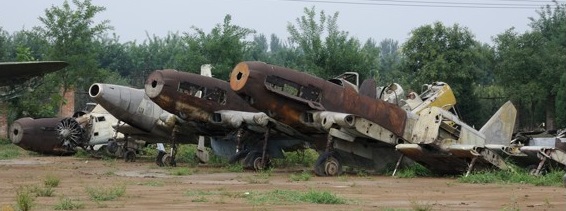
The Il-10 formed the sole equipment of Soviet assault units for a number of years and was also used widely by Warsaw Pact countries. Other Communist countries to employ the type included North Korea in the opening stages of the Korean War in 1950. Losses were heavy and the type was obsolete but, Il-10s remained in service with the Soviet V-VS until 1956 and with various satellite air arms for several years longer. For some time after that they were flown as gunnery trainers but they were decommissioned in April 1956 and all the crews were reassigned for further training on jet aircraft. most had been scrapped by the mid-1960s.
The Il-10 had been tested with a ZhRD-1 auxiliary rocket engine in the rear fuselage to provide short-term performance boost, but this modification was not adopted. The llyushin bureau strove to develop later shturmovik designs, including the II-20 single-seater and the Il-40 with twin turbojets, but official encouragement was minimal.
The Il-10M became the last mass-produced piston-powered attack aircraft designed by the Ilyushin design bureau.
Engine: 1 x AM-42, 1470kW / 1973 hp Max take-off weight: 6335 kg / 13966 lb Empty weight: 4680 kg / 10318 lb Wingspan: 13.4 m / 43 ft 12 in Length: 11.1 m / 36 ft 5 in Height: 4.3 m / 14 ft 1 in Wing area: 30.0 sq.m / 322.92 sq ft Max. speed: 302 kt / 560 km/h / 348 mph Cruise speed: 370 km/h / 230 mph Service ceiling: 7000 m / 22950 ft Range w/max.fuel: 830 km / 516 miles Range w/max.payload: 420 km / 261 miles Crew: 2 Armament: 5 machine-guns, 6 missiles, 600kg of bombs
To provide a replacement for the II-2 Shturmovik (ground-attack aircraft), the llyushin design bureau developed two different prototypes in 1943. The Il-8 bore a close resemblance to the II-2, but was powered by a more powerful AM-42 engine, and had new wings, horizontal tail surfaces and landing gear married to a late-production Il-2 fuselage. Test-flown in April 1944, the II-8 was rejected in favour of the contemporary llyushin Il-10, which began its test flight programme in that month.
The TsKB-26 long-range bomber prototype first flew in 1935, a twin-engined metal low-wing monoplane powered by 597kW Gnome-Rhone K14 radials. Demonstrated by test pilot Vladimir Kokkinaki on May Day 1936, the prototype went on to establish two world altitude records during July 1936.
A second prototype, the TsKB-30 had an enclosed instead of open position for the pilot, Soviet M-85 engines and a metal rear fuselage. The TsKB-30 also broke records and then attracted world interest by flying from Moscow to Canada, where pilot Kokkinaki had to make a wheels up landing on 28 April 1939 after covering a distance of 8000km.
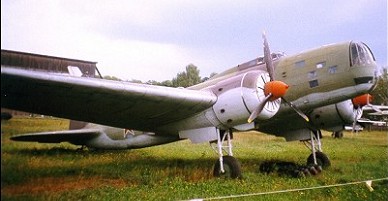
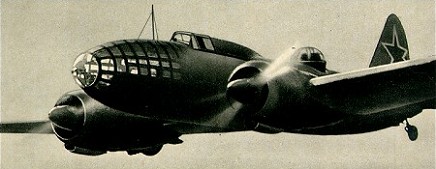
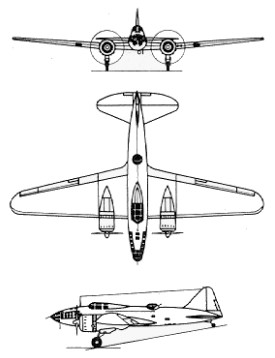
DB-3
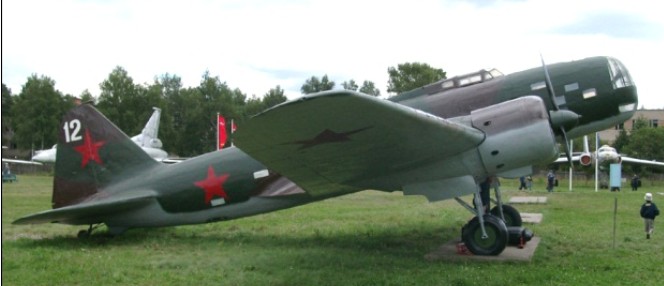
The TsKB-30 entered production in 1937 as the DB-3B (DB being a Soviet contraction denoting long range bomber). Early examples were powered by 571kW M-85 engines, but these were replaced by 716kW M-86s in 1938. It served widely with the ADD (Long-Range Aviation) and the V-MF (Naval Aviation), remaining operational well into the war with Germany, DB-3s being credited with some of the earliest attacks on Berlin. The aircraft suffered from a poor defensive armament of single nose, dorsal and ventral 7.62mm guns, and lost heavily during the Winter War against Finland in 1939-40.
The DB-3 served also with the Finnish air arm between 1940 and 1945, five captured aircraft being augmented by six purchased from German war booty supplies. DB-3 production terminated in 1940 with the 1,528th machine.
In 1939 a modified version with lengthened nose and more armour (the DB-3F) appeared, and in 1940, in conformity with changed Russian practice, the designation became IL-4 (denoting the designer, Sergei Ilyushin).
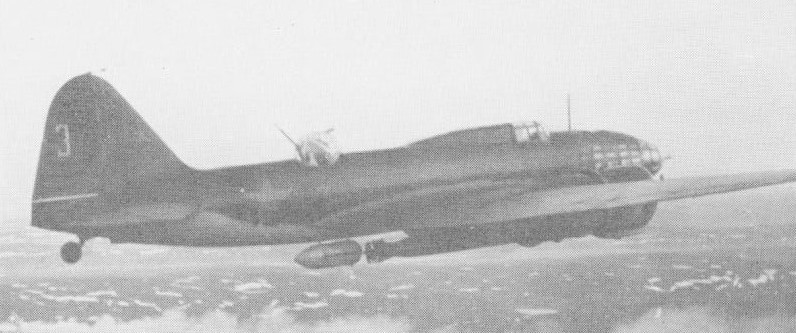
Il-4
Soon after the German attack on the USSR opened in 1941 it was decided to withdraw IL-4 production to newly opening plants in Siberia, at the same time replacing a large proportion of the metal structure by less strategically critical wood. IL-4s also entered service with Soviet Naval Aviation, and it was a naval manned force of these bombers that first raided Berlin from the east on 8 August 1941. Thereafter the IL-4 paid frequent visits to the German capital and other targets in Eastern Europe. In 1944 production ended, although the IL-4 served until the end of the war and afterwards. Apart from increasing the calibre of its guns and giving it a torpedo carrying ability, the IL-4 remained virtually unchanged between 1941 and 1944.
Well over 5,000 IL-4s were produced between 1937 and 1944, the vast majority in the last three years.
DB-3M Engine: 2 x M-87B, 708kW Max take-off weight: 7660 kg / 16887 lb Loaded weight: 5270 kg / 11618 lb Wingspan: 21.44 m / 70 ft 4 in Length: 14.22 m / 46 ft 8 in Height: 4.19 m / 13 ft 9 in Wing area: 65.6 sq.m / 706.11 sq ft Max. speed: 445 km/h / 277 mph Ceiling: 9700 m / 31800 ft Range: 3800 km / 2361 miles Armament: 3 x 7.62mm machine-guns, 2500kg bombs
Il-4 Engine: 2 x M88B, 810kW Max take-off weight: 10055 kg / 22168 lb Empty weight: 5400 kg / 11905 lb Wingspan: 21.4 m / 70 ft 3 in Length: 14.8 m / 48 ft 7 in Height: 4.1 m / 13 ft 5 in Wing area: 66.7 sq.m / 717.95 sq ft Max. Speed: 429 km/h / 267 mph Cruise speed: 340 km/h / 211 mph Ceiling: 9700 m / 31800 ft Range w/max.fuel: 3800 km / 2361 miles Range w/max.payload: 1200 km / 746 miles Crew: 3-4 Armament: 3-8 machine-guns, 2500kg bombs
DB-3F Engine: 2 x M-88, 1100 hp Wingspan: 70 ft 2 in Length: 47 ft 6 in Max speed: 265 mph at 20,000 ft Sevice ceiling: 30,700 ft Max range: 2500 mi Armament: 3 x 7.62 mm mg Bombload: 4400 lb or 1 x 18in torpedo Crew: 3-4
Il-4 / DB-3F Payload: 5,500 lb Cruise speed: 200 kt Ceiling: 31,800 ft Range: 2,400 miles Crew: 3
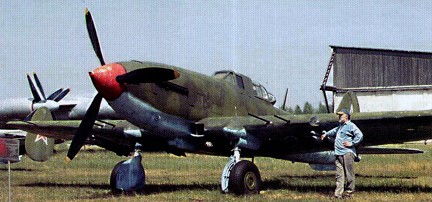
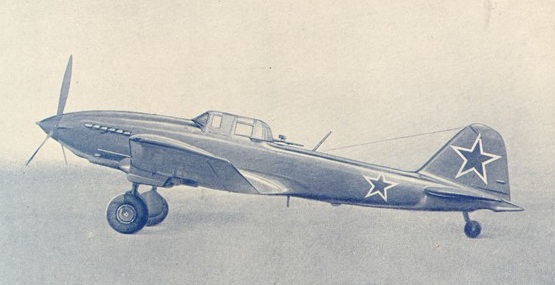
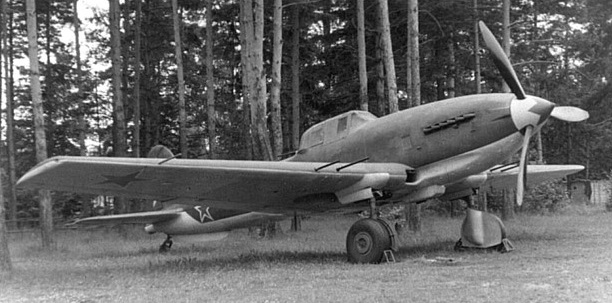
The Ilyushin Il-2 origin dates back to the mid-thirties, within the Soviet military criteria of having air support for the operations of the ground forces.
In 1935 a requirement was launched to obtain a ground attack aircraft that was protected, or more specifically a BSh (Bronirovanyi Shturmovik, armored attack aircraft). Finally Sergei Ilyushin’s team was the one that around 1938 developed the Il-2 that was going to be able to perform the functions required.
Two prototypes were developed a few months apart, the two-seater TsKB-55, also designated BSh-2 (from Bronirovanni Shturmovik, armoured attacker) by the air force that first flew on October 2, 1939, and the single-seater TsKB-57, which replaced the radio operator with an additional fuel tank. They were equipped with AM-35 and AM-38 engines respectively, with 1,350 and 1,600hp. of power, heavily armed with 20mm ShVAK cannons, machine guns, bombs and rockets and protected with more than 700 kg of armour.
On 12 October 1940 the TsKB-57 took to the air with the more powerful 967kW M-38 engine. This improved machine led to the IL-2 which was just getting into service when the Germans invaded in June 1941.
Serial production was prepared in factories in Moscow, Fili and Voronezh, but when only the first 250 examples had been delivered, the German invasion occurred on June 22, 1941.
The factories in Fili and Voronezh were moved to Kuybishyev, which became the center of production under pressing pressure from the Kremlin to make the model available in mass quantities.
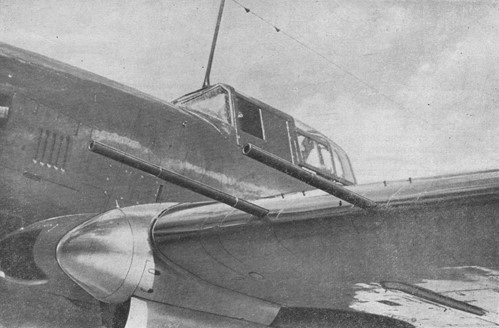
Armament of the original IL-2 was two 20mm ShVAK and two 7.62mm ShKAS guns firing ahead, plus eight 82mm rockets and four 100kg bombs. The need for rear protection resulted in a second crew member being added to man a rear gun, usually a 12.7mm BS, and the forward guns were changed to the hard-hitting 20 or 37mm VYa, and sometimes two of each, in 1942. Bomb load went up to 600kg, including PTAB armour-piercing bombs. The Shturmovik’s weapons could pierce all German armoured vehicles, even the Tiger tank being vulnerable when attacked from the rear.
Il-2I
The aircraft was redesignated Il-2M with the new 1,750hp AM-38F engine, also increasing the armour up to 950 kgs. A new modification was also introduced, which consisted of converting the radio operator into a tail gunner, handling a 12.7mm UBT heavy machine gun, entering into action as of October 1942 under the designation Il-2M3, which was to be finally the main production version.
The Il-2m3 two seat version had a uniform armoured shell entire forward fuselage, with rear fuselage and wings of plywood and other light materials. They carry two 37mm cannon.
In 1943, the Poles were the first foreign operators of the Il-2, followed by the Czechs, Bulgarians, and Yugoslavs.
By the time the Ilyushin Il-10, an improved variant, went into production in August 1944, 36,163 Il-2 Shturmoviks had been delivered. In the postwar period, significant quantities were delivered to China, North Korea, and both Poland and Czechoslovakia produced improvements on the models, adapting them to their requirements. He received the nickname or code name “Bark” by NATO.
The IL-2 remained in operational service in the Soviet Union and with the Air Forces of Czechoslovakia and Poland into the 1950s.
Output averaged 1,200 per month during most of World War II, to give a total of approximately 36,000. When the IL-10 developed version is added the total is reported to amount to 42,330.
Variants:
TsKB-55: two-seater prototype.
BSh-2: designation of the TsKB-55 in the V-VS.
TsKB-57: single-seat prototype.
Il-2: production model of the TsKB-57 (1941).
Il-2M: single-seat production model with improved armament and engine.
Il-2M3: variant similar to the Il-2M but with a tail machine gunner.
Il-2T: torpedo version for the Soviet Navy with the capacity to carry a 533mm torpedo.
Il-2U or U-Il-2: trainer version with double control.
Engine: 1 x Mikulin AM-38F V-12, 1300kW / 1770 hp Wingspan: 14.6 m / 47 ft 11 in Length: 11.6 m / 38 ft 1 in Wing area: 38.5 sq.m / 414.41 sq ft Max take-off weight: 5360 kg / 11817 lb Empty weight: 4200 kg / 9259 lb Max. speed: 430 km/h / 267 mph at 6560 ft Cruise speed: 320 km/h / 199 mph Ceiling: 6000 m / 19700 ft Range w/max.fuel: 800 km / 497 miles Range w/max.payload: 600 km / 373 miles Armament: 2 x 23mm machine-guns, 3 machine-guns, 400-600kg external Crew: 1-2
l-2M3 Power plant: Mikulin AM-38F, 1,720hp Wingspan: 14.60 m Wing area: 38.50 sq.m Length: 11.65 m Height: 4.17m Empty weight: 4,520 kg Maximum takeoff weight: 6,360 kg Maximum operating speed: 410 km/h (255 mph; 221 kt) Service ceiling: 4,530 m (14,862 ft) Service ceiling: 4,530 m Range: 770 km Wing loading: 160 kg/sq.m Power/weight: 0.21 kW/kg Crew: 2 Armament: 2 x VYa-23 23mm mg, 150 rounds per gun, 1 x Berezin UBT 12.7mm machine gun, 150 rounds, 2 x 7.62mm ShKAS machine guns, 750 rounds per gun Bombload: 50 kg, 100 kg or 200 kg internal Hard points: 4 / 600 kg total for 2 x Cannon or 2x RS-82 and RS-132 Rockets



 All Aero