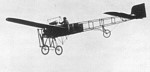
Jeannin Stahltaube

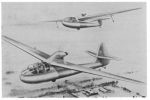
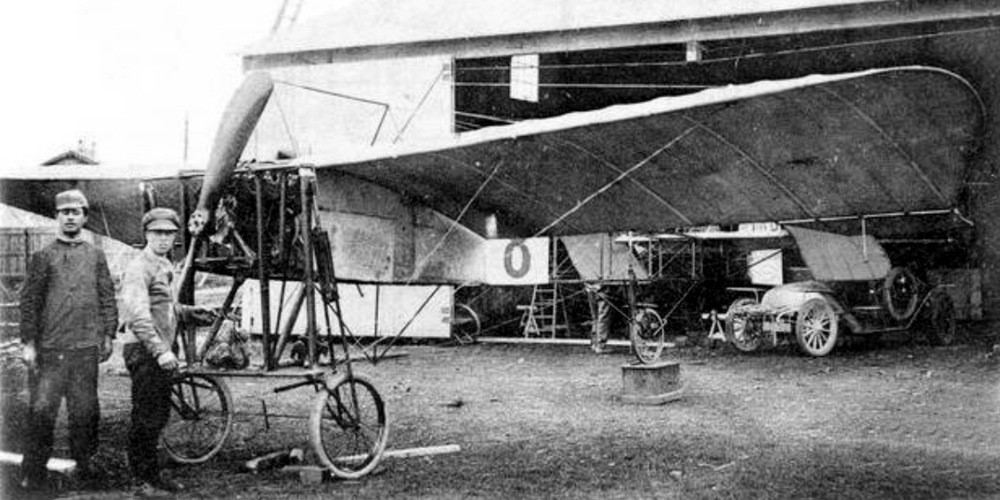
The Jeannin Stahltaube (Steel Pidgeon) of 1914 is a late model of the typical light reconnaisance and training aircraft common at the start of WW I. Unarmed, heavy engine and barely maneuverable.

Length : 31.791 ft / 9.69 m
Height : 9.744 ft / 2.97 m
Wingspan : 45.505 ft / 13.87 m
Wing area : 387.504 sq.ft / 36.0 sq.m
Max take off weight : 1885.3 lb / 855.0 kg
Weight empty : 1323.0 lb / 600.0 kg
Max. weight carried : 562.3 lb / 255.0 kg
Max. speed : 62 kt / 115 km/h
Cruising speed : 54 kt / 100 km/h
Wing load : 4.92 lb/sq.ft / 24.0 kg/sq.m
Range : 162 nm / 300 km
Engine : Daimler D I od. Argus As I, 99 hp
Crew : 2

Jeffair Barracuda

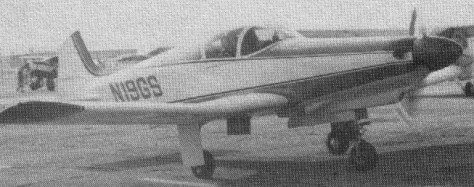
The Barracuda is a sophisticated enclosed-cabin two-seater in the im¬age of the Thorp T-18, with tricycle landing gear, all-wood construc¬tion, and a three-bladed, controllable-pitch propeller. Its designer was a former RAF fighter pilot, Geoffrey Siers, who founded Jeffair. The retractable landing gear features electro-hydraulic retraction. The cabin is fitted with dual controls, gull-wing doors and two armchair-type seats.

Engine 220-hp Lycoming.
Gross Wt. 2200 lb
Empty Wt. 1495 lb
Fuel capacity 44 USG.
Wingspan 24’9”
Length 21 ‘6”
Wing area: 128 sq.ft.
Top speed 218 mph.
Cruise 200 mph
Stall 62 mph.
Climb rate 2000 fpm
Seats: 2

Jarzab Klos

Single seat single engined parasol winged air¬craft with conventional three axis control. Wing has unswept leading and trailing edges, and constant chord; V tail. Pitch/yaw control by elevon; roll control by ailerons; wing profile Clark Y; double surface. Undercarriage has three wheels in tail dragger formation. Aluminium tube/wood fuselage, partially en¬closed. Engine mounted at wing height driving tractor propeller.
Began in 1974, it was not until July 1977 that the aircraft, a joint venture between Kazimierz Jarzab, S Kustron and S Wojton, made its first flight. It is a parasol winged tail dragger constructed largely from wood and aluminium alloy. The pilot sits under the wing, in an open cockpit but protected by a windscreen, and the two blade pusher propeller is mounted at the trailing edge of the wing. A tubular empen¬nage supports the V tail, which has in addition two fins, shaped like an isosceles triangle with rounded corners.

Length overall 13.8 ft, 4.20 m.
Height overall 3.6ft, 1.10m.
Wing span 23.0ft, 7.0m.
Constant chord 2.8ft, 0.86m.
Sweepback 0 degs
Total wing area 65 sq.ft, 6.0 sq.m.
Wing aspect ratio 8.2/1.
Engine: MZ 250, 16 hp.
Power per unit area 0.25 hp/sq.ft, 2.7 hp/sq.m.
Fuel capacity 5.3 US gal, 4.4 Imp gal, 20.0 litre.
Empty weight 209 lb, 95kg.
Max take off weight 419 lb, 190kg.
Payload 209 lb, 95 kg.
Max wing loading 6.45 lb/sq.ft, 31.7 kg/sq.m.
Max power loading 26.2 lb/hp, 11.9kg/hp.
Cruising speed 68mph, 110kph.
Max climb rate at sea level 400ft/min, 2.0mls.
Take off distance 660ft, 200m.
Range at average cruising speed 622 mile, 1000km.
Jarvis Jaybird

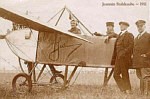
The design was originally by the Jarvis Manufacturing Co (as Jaybird) and first flew on 1 February 1946 with a 65hp Lycoming O-145-B engine and fixed tricycle gear. The Jaybird features a pod nacelle with a pusher engine.

The Jarvis Jaybird design was acquired by Volmer Jensen as homebuilt project soon after World War II and became the VJ-21 Jaybird with retractable wheels and 75hp Continental A75 engine.

Engine: 65hp Lycoming O-145-B
Cruise speed: 110 mph
Top speed: 125 mph
Landing speed: 40 mph
Range: 400 mi
Seats: 2 side-by-side
Wingspan: 45 ft
Length: 24 ft
ROC: 700 fpm
TO to 50ft: 960 ft
Price: $2500

Jaritz 1912 monoplane

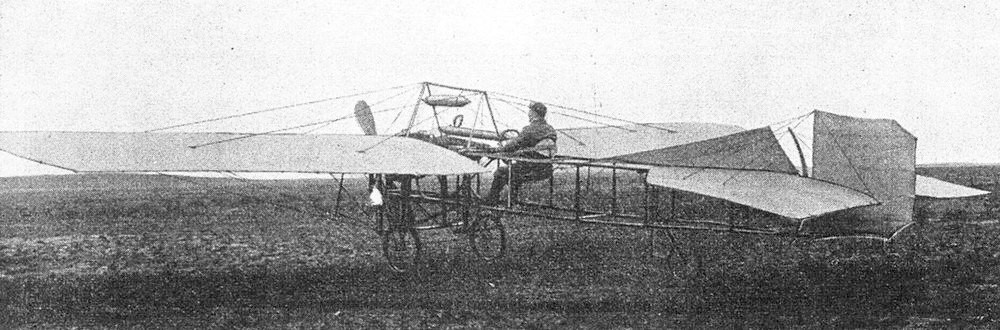
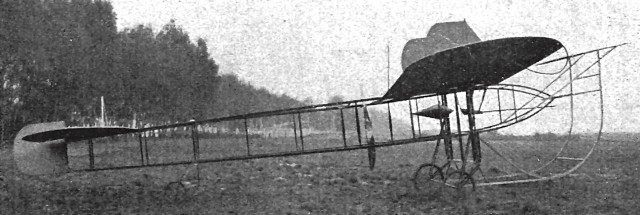
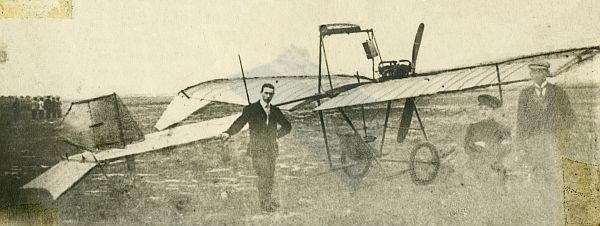
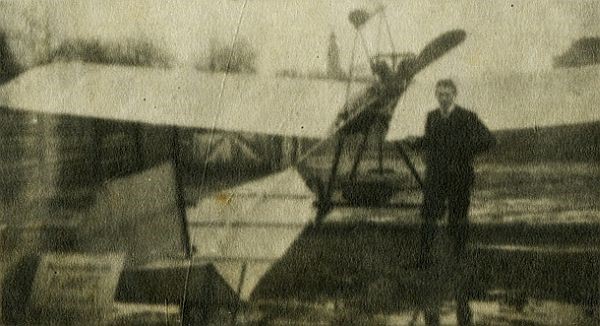
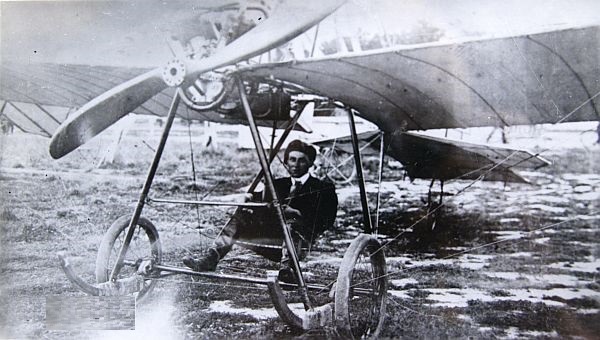
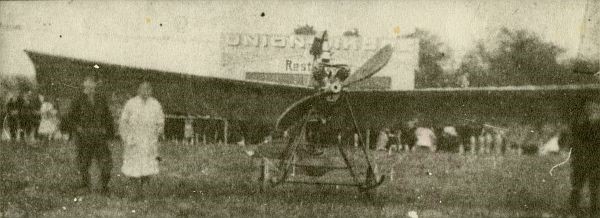
Austrian Paul Jaritz after finishing his engineering studies in 1911 went to Leipzig, where he met Wilhelm Weidenauer, who was in the bicycle and motorcycle business and wanted to enter the field of aviation. So Jaritz built a steel-tube monoplane and Weidenauer constructed the 30 hp 4-cylinder engine, composed from two pacemaker engines. The Lindenthal airfield offered a shed for free.

The aircraft was ready in spring 1912 and test flying continued until summer. A couple of flights were accomplished, but the engine proved quite troublesome. It quickly overheated and lacked in power.

Weidenauer then built another engine, this time a 50 hp with 5-cylinders, probably a radial or fan-type. But before that was completed Jaritz was ordered home for his military service and the liaison came to an abrupt end.