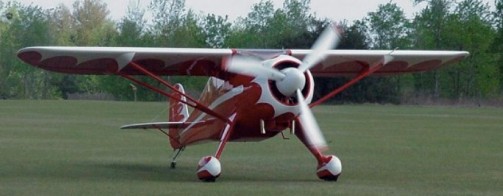
Jodel D.11

The French government, always keen to encourage local enterprise, showed an interest in the D.9 design and a sligtly larger aircraft, the D11 with two seats, followed. Joly and Delemontez fomally set up a company, combining their names. The Jodel company.
The two seat D11 series was designed and constructed as a prototype batch for a French government requirement for an aero club trainer.
The Jodel Club is an enclosed, side by side, two seat dual control, low wing monoplane, which is essentially designed for the amateur builder and pilot, and first flown in 1951. Its essenti¬ally simple but rugged construction, together with the excellent flying qualities, have established the D11 as the most popular French two seater, and led to its adoption by many French flying clubs.
The one piece cantilever wing has upswept tapered outer panels, typical of the Jodel types, with the inboard part of the wing straight. In other respects the con¬struction is conventional and straightforward in spruce and plywood with fabric covering. The wing is built on a single box spar, which also supports the two legs of the wide track undercarriage. The undercarriage em¬ploys rubber in compression springing, and is fitted with light industrial wheels.
The fuselage is a rectangular box structure with a curved spruce top decking and plywood covering. The tailpiece is also plywood covered, while the elevator and rudder are fabric covered. Longitudinal trim is obtained by an elevator trim tab. The design load factor is 6.0 at 1360 lb. The D11 may be powered hp Continental engines from 65 to 100 h.p. and seats two in side-by-side fashion.

The Jodel company did not manufacture that many aircraft itself, their idea being to licence other firms. There were two Jodel-built D.11 prototypes and 11 pre-production D.111. Jean Delemontez worked directly with two organisations in particular to develop the various Jodel models and series.

There were 562 factory built; Wassmer built D.112, SAN 10, Valladeau 50, and other companies. Others were built or sold in kit form in Switzerland, West Germany and Sweden.

Jodel D.117 Article

The D11 variants, principally the 65 hp D112, the 90 hp D117, 225 produced by Society Aeronautic Normande (SAN) at Bernay and the 90 hp D120 from Avions Wassmer at Issoire, were produced in large numbers for aeroclubs through the French government subsidy scheme. Wassmer started aircraft production at Issoire in 1945, building Jodel D.112 under license. There were versions that were called D119 and 1190.
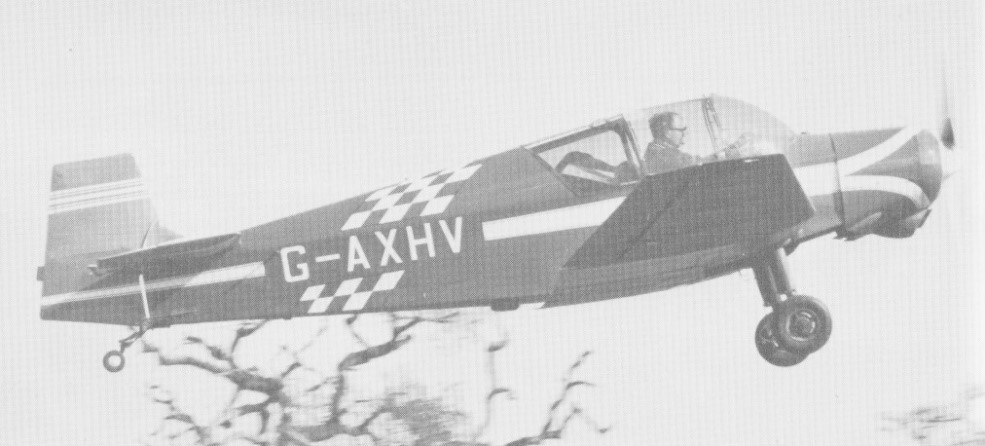
D.112

Alpavia built 10 D.117A, Valladeau built 10 D.119D. Aerodifusion built the D.1190S Compostela version of the D.119, Wassmer built 350 D.120 Paris-Nice versions, and EAC built four of the D.127 version.

Founded 1958 by Mm d’Assche and Noin, Alpavia sa made the slightly modified Jodel D-117-A (two per month from January 1959). In 1962 partnership with Rene Fournier resulted in Avion-Planeur RF3 with Volkswagen engine.
From the 1950s onwards various types, D11, D112, D117 and so on, were built by various companies. There was also a large pool of amateur builders whose examples were generally powered by 90 hp Continental C90s or 100 hp O-200s and usually designated D111. Roughly 1500 commercially built aircraft of this series were produced.
With SAN at Bernay Delemontez developed the 180 hp four to five seat D140 Mousquetaire and later the 100 hp two seat D150 Mascaret. New samples of the breed are still being developed, the D18 and D19 being the most recent models.

Gallery

D.112
Engine: Continental 65 hp
Empty weight: 320 kg
Gross Wt. 1290 lb. / 530 kg
Fuel capacity 10 USG.
Wingspan 26’11” / 8,20m
Length 20’6” / 6,26m
Wing area 136.75 sq.ft / 12,70sq.m
Top speed 124 mph.
Cruise 100 mph / 160 kph
Stall 35 mph.
Climb rate 800 fpm / 2 m/sec
Ceiling 16,000 ft
Takeoff run 500 ft.
Landing roll 800 ft.
Range 300 miles
Seat: 2

Alpavia D.117A
Engine: Continental C-90-14F, 95 hp
Wingspan: 26 ft 11.5 in / 8.22 m
Length: 21 ft 4 in / 6.50 m
Empty weight: 760 lb / 345 kg
MTOW: 1323 lb / 600 kg
Max cruise: 105 kt / 121 mph / 195 kph
ROC: 787 fpm / 240 m/min
Service ceiling: 16,400 ft / 5000 m
Range 20min res: 631 nm / 727 mi / 1170 km
Seats: 2

D.119
Engine: Continental C90, 90 h.p.
Span: 27’0”.
Length: 20’ 5”.
Wing Area: 137 sq. ft.
Empty Weight: 725 lb.
Loaded Weight: 1360 lb.
Wing Loading: 9.9 lb/sq. ft.
Max. Speed: 130 mph.
Cruise Speed: 118 mph.
Stall Speed: 50 mph.
Initial Climb: 790 fpm.
Range: 560 miles.

Engine: Continental O-200A, 100 hp.
Wingspan: 27 ft 0 in
Length: 20 ft 5 in
Wing area: 137 sq.ft
Empty weight: 750 lb
Loaded weight: 1360 lb
Useful load: 490 lbs (222 kg).
Wing loading: 9.9 lb/sq.ft
Max speed: 130 mph
Cruise 65%: 112 mph.
Stall: 28 kt.
Endurance: 3 hr (aux. 4.5 hr).
ROC: 500 fpm.
Range: 560 mi
Ldg roll: 420 ft.

Jodel D.9

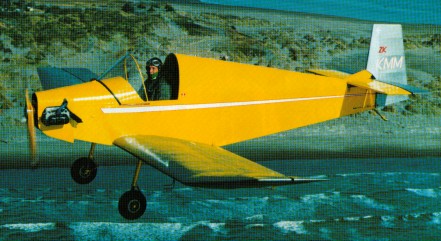
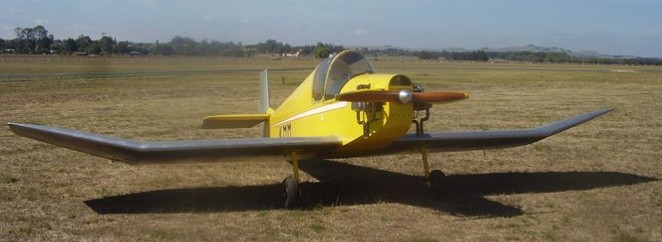
ZK-KMM – pilot Stuart Tantrum

The Jodel design can be traced back to the end of the second world war when the French government, recognising the value of light aviation, purchased considerable numbers of Tiger Moths and Miles Magisters at a very low cost. These were then passed on to flying clubs.
But these ex-wartime trainers were very fuel hungry and slow. This left a gap in the market for Edouard Joly, a private pilot who lived in the area of Beaune, and his son-in-law Jean Delemontez, to fill. The story goes that they fell upon some pre-war aircraft-quality plywood and an old 26 hp Poinsard engine and without formal training in aerodynamics decided to design their own single-seat light aeroplane. The wood was turned into a small, single-seat aircraft with cranked wings. It was so tiny, particularly compared to existing training aircraft, that they called it the D9 Bebe (Baby). The fact that Delemontez spent so much time working on the aircraft, rather than with his wife (Joly’s daughter), is also reported to have something to do with the naming.

In March 1946, the French Societe des Avions Jodel was formed, and built the D.9 Bebe light monoplane, which first flew on 21 January 1948. While the original single place D 9 was built for their personal use, word of the light, responsive handling created a major market demand for plans. As word spread of the amazing performance, the design became so well liked that five French manufacturers got involved in factory production of the series at various times.
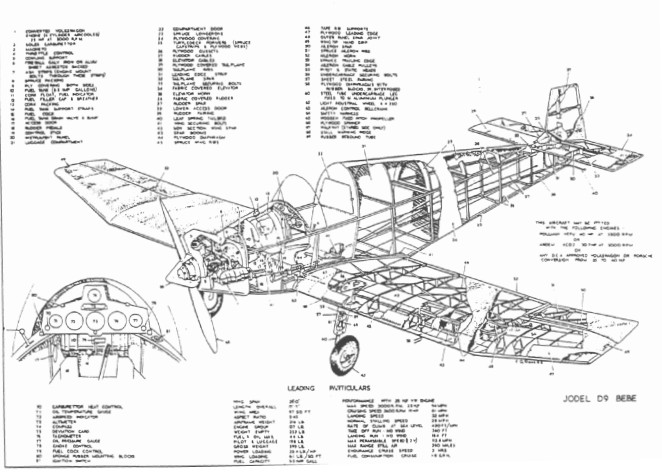
The subsequent Model D.92 uses the modified VW engine for power, replacing the original 25-hp Poinsard engine. Many hundreds have been built in Great Britain, Canada, New Zealand, France, Germany and the U.S.A. The construction is simple and rugged, the materials being spruce and plywood with fabric covering. The one piece wing has a simple box spar, the outer panels being set at a large dihedral angle to give good stability. Another advantage of the polyhedral wing layout is that the loads at the spar splices are lighter than at the wing root, enabling very simple splices to be used. The fuselage is built up conventionally with four 5/8” square longerons and struts, the whole being covered with ply. The simple undercarriage comprises two legs attached to the spar, and uses rubber in compression for springing. The number of metal fittings has been kept to a minimum for ease of construction. The standard engine is the Volkswagen conversion of 30.7 h.p., but other engines of from 25 to 45 h.p. may be fitted The D9 is designed to a load factor of 9.0 at 600 lbs.

Gallery

D.92 BEBE
Engine: VW, 40 h.p.
Span: 23’ 0”.
Length: 18’ 0”.
Wing Area: 97 sq.ft.
Empty Weight: 453 lb.
Loaded Weight: 705 lb.
Wing Loading: 7.2 lb./sq.ft.
Max. Speed: 100 mph.
Cruise Speed: 81 mph.
Stall Speed: 37 mph.
Initial Climb: 420 fpm.
Range: 280 miles
Seats: 1.
Range 217 nm.

Kimball Gee Bee Z replica

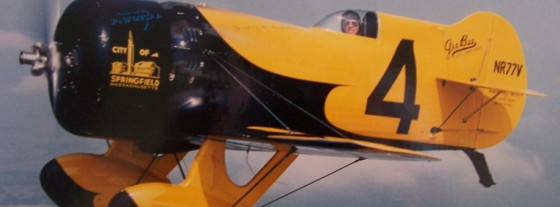
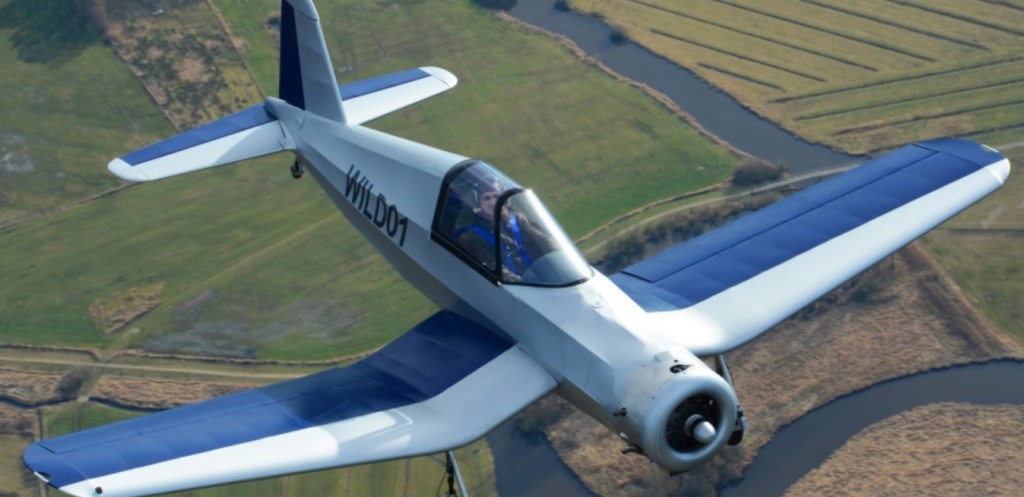
This is a full size, exact, replica of the Granville Brothers Gee Bee Model Z from 1931. The original airplane was victorious in 5 races at the 1931 National Air Races in Ohio after taking only 5 weeks and $5000.00 to construct. This replica was built over a 3.5 year period by Jeff Eicher and Kevin Kimball consuming nearly 6000 man hours of design and construction. The Aircraft in 1996 was part of the Fantasy of Flight colloection in Polk City, FL.

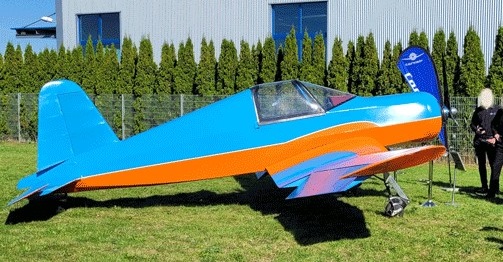
Kimball McCullocoupe

Late in 2000, a ‘doodle’ of what an M14P powered clipwing-ish airplane would or could look like was made. It does resemble the Monocoupe 110 Special and Jim Younkin’s Mullicoupes, but it is a design all its own specifically for the M14P series engine! The McCullocoupe was named by Jim Kimball.

The airplane is slightly larger than a 110 special with a cabin wide enough for 2 people rather than only 1 1/2 people. The wing is 2 piece rather than one and is fully ply sheeted and incorporates Curtis Pitts’ aerodynamically boosted aileron technology. Tail sizing is improved over the 110 special.

The M14PF engine is 400hp with MT making a special 3 bladed prop for the McCullocoupe that will be optimized for cruise while still having great acro performance. The landing gear is the same spring aluminum unit as used on the Pitts Model 12 hidden inside a large fairing. The firewall forward, including the cowling, are borrowed from the Pitts Model 12 as well.

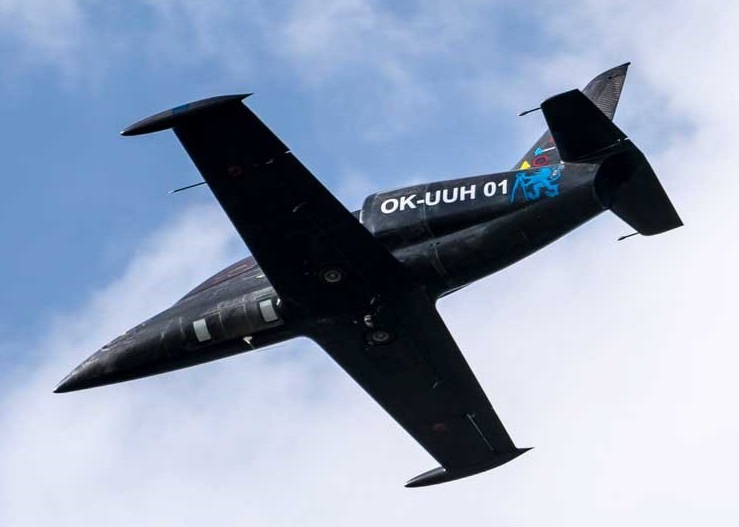
Jihlavan UL-39 Albi

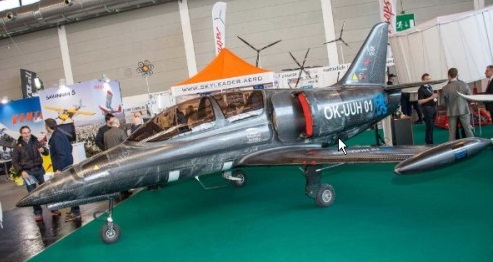
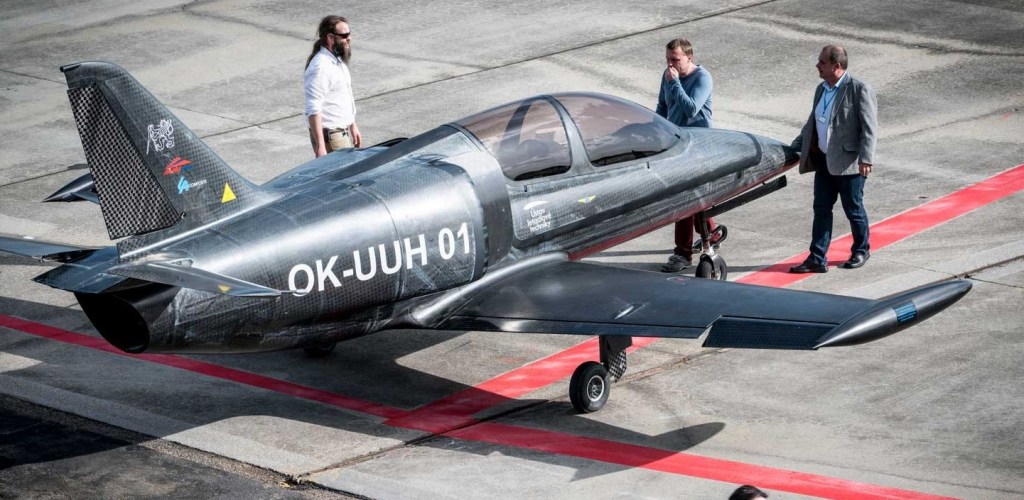
The Jihlavan UL-39 Albi two-seat microlight version of the Czech L-39 Albatross training jet is the result of 17 years of work, 200 engineers and £1.7 million of investment.

The UL-39 Albi is a collaboration between Jihlavan and Prague University’s Faculty of Mechanical Engineering. It’s not simply a student project. This is the first prototype and it’s intended to develop the aircraft further and put it into production. One market is private aviation but another is military. The production price is estimated at 5 million CRK (£146,000).

The Albi’s designers at Prague University say that because the engine is a ‘blower’ ducted fan, rather than a conventional jet, the aircraft’s heat ‘signature’ is almost zero making it hard to detect and shoot down.

Public roll-out for the UL-39 Albi

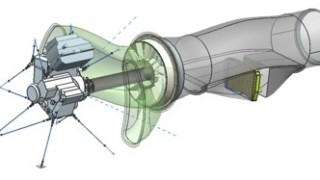
The airframe is made from carbon fibre composite, and this prototype is powered by a 1,000cc 193bhp BMW four-cylinder dohc motorcycle engine driving the blower.

Ducted fan ‘blower’ is driven by a BMW motorcycle engine.
first flight

It’s said to weigh just 320kg, have a max takeoff weight of 472.5kg, be capable of 200km/h (125mph) and have endurance of two hours. The designers say they hope to increase the max speed to 300km/h.

Engine: BMW 1,000cc, 193bhp
Wingspan: 7.22 m
Length: 7.49 m
Height: 2.99 m

JH Aircraft Corsair

The Corsair relies on latest lightweight construction technology to combine flight performance, agility and energy efficiency. The whole primary structure is made of aerospace grade carbon fiber. Carbon fiber spaceframe technology is applied on the fuselage to achieve the greatest possible strength at the lowest possible weight.

The Carbon structure has a proven strength of +9 and -6g. Furthermore the complete cockpit area is constructed as a Kevlar reinforced safety cell.

The Corsair follows the German LTF-L regulation. As well it covers many other national regulations, e.g the British SSDR, the Italian, French, Czech, Polish and even the US American FAR part 103 regulation. For the later the empty weight, MTOW and speeds are slightly reduced.

The Verner Scarlett 3 V – a 4-stroke, 3-cylinder radial engine designed as a light aircraft engine and produces 42 bhp at 2500 rpm. The high engine torque allows the use of a rather big and efficient propeller. There are two standard options: either a ground adjustable 3-blade 1,60 m carbon prop which can produce – depending on the blade pitch – up to 100 kg of static thrust. Or the 1,75 m Helix 2- or 3-blade props which both even deliver more than 100 kg thrust.

The first version of the Corsair features a classic tailwheel configuration. The fixed main landing gears are located at the wings and due to the wing shape are rather short and quite aerodynamic. The cantilevered main wheel attachment together with hydraulic springs and dampers is great for grass strips and the occasional less than perfect landing.

The tail gear is connected with the rudder by means of a GFRP spring and allows good ground handling. Even the tail wheel is on a cantilever and has an elastomeric spring and damper.

Provisions for a retractable landing gear have been considered in the wing design and if we see sufficient customer demand a retractable version could become available in the future. Nevertheless it has to be stated, that the retractable version does not promise to be any faster – the additional weight and the resulting drag will consume the aerodynamic benefit.

Engine: Verner Scarlett 3 VW, 31 kW (42 BHP) at 2.500 RPM
Wing span: 24,6 ft
Wing area: 108 sq ft
Length: 20,7 ft
Empty weight: 265 lbs (FAR part 3 254 lbs)
Payload: 287 lbs (FAR part 3 254 lbs)
Loading: +6g / -4g
Wings folded width: 9,0 ft
Maximum speed: 55 knots / 102 km/h (EU 55 km/h)
Cruise: 54 knots / 100 km/h (EU 160 km/h)
Stall: 24 knots / 44 km/h (EU 210 km/h)
Best climb: 1000 ft/min / 5 m/s

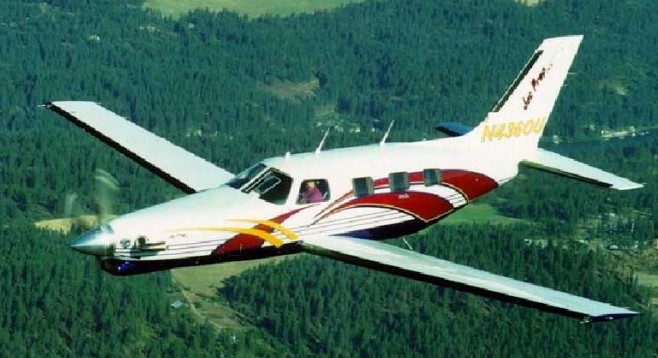
JetPROP DLX

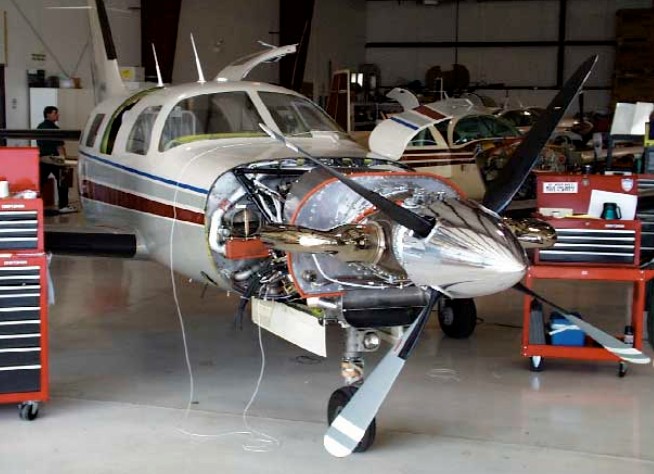
The JetPROP DLX is essentially a firewall forward conversion of the Piper PA-46 Malibu. Prior to mounting the Pratt & Whitney PT6A-35 turbine, the old piston engine is removed and the firewall is rebuilt.

Conversion begins in earnest with the mating of Pratt & Whitney’s 750hp PT6A-35 turbine engine to the Malibu/Mirage airframe. The intake nacelle includes an ice door to prevent damage to the PT6A-35 engine.

JetPROP DLX
Engine: P&W PT6A-35, 560 hp flat rated
Wingspan: 43′
Length: 30′ 1″
Height: 11′ 3″
Cabin Length: 12′ 3″
Empty Weight: 2,950 lb
Ramp Weight: 4,318 lb
Takeoff Gross Weight: 4,300 lb
Useful Load: 1,358 lb
Payload 356 lb
Max. Landing Weight: 4,100 lb
Baggage Capacity: 100 lb
Fuel Capacity: 151.1 USG
Noise Level: 69 dB
Fuel Burn (Idle): 14 USGPH
Climb Rate (Initial): 3,000 FPM
Takeoff – Over 50′: 1,200′
Landing – Over 50′: 1,000′
Service Ceiling: 27,000′
Max. Speed: 265+ knots
Normal Speed: 260 knots
Normal Range: 1,000 NM
Long Range Speed: 235 knots
Long Range: 1,100+ NM
Normal Fuel Burn: 34 USGPH
Stall Speed (Flaps Down): 61 kt