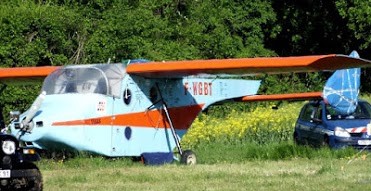
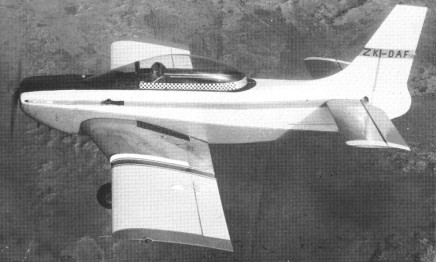
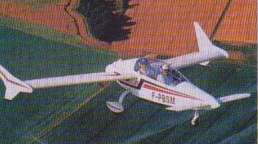
The Jurca MJ-54 Silas is a two-seat light touring cargo aircraft designed by Marcel Jurca to enable a small car to be transported along with the pilot and passenger.
The aircraft came from an idea by Arthur-Joseph Torossian in 1992, who wanted a touring aircraft which could carry a very small vehicle, such as the Aixam Microcar, for use at remote airfields, and which could also be used as sleeping accommodation with the car removed. The car could also act as an aircraft tug at airports. He envisioned it as a combination of a Max Holste Broussard and a Transall C.160. He saw many other uses for the aircraft, including as an air ambulance, carrier for four parachutists, disabled persons carrier, or freighter. Torossian envisaged a market for 1000 aircraft, and during the development of the prototype was looking for a company to mass-produce it.
The designer of wooden homebuilt aircraft, Marcel Jurca was enlisted to design the prototype. Construction was started at Cerny Aerodrome, La Ferté-Alais by Torossian and a group of friends, who together formed a group known as the Association Tegas, a reversal of the surname of Dassault test pilot Jean-Marie Saget. This led to the aircraft sometimes mistakenly being called “The Tegas”.
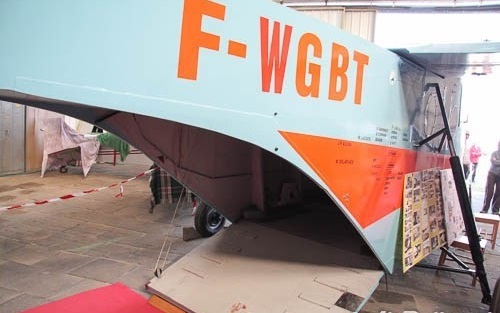
The MJ-54 is a high-wing monoplane of wooden construction, with two seats accessed by two gull-wing doors. The cockpit was designed with touring comfort in mind. The fuselage is a box structure with a rear loading ramp up which a small car can be driven, or other freight loaded. The centre of gravity changes little, whether loaded or unloaded. It has a cantilever wing. The horizontal tailplane is attached to the underside of a rear boom, with twin fins and rudders on the tips. It has a fixed tricycle undercarriage.
The aircraft, registered F-WGBT and nicknamed “Cargolito”, first flew on 30 April 1997, but this may have just consisted of a few hops along the runway. Development was slow, and a public presentation wasn’t held until 16 January 2002 at La Ferté-Alais.
Apparently, obtaining a permit to fly was difficult because of the fuel in the car’s tank. Joseph Torossian had great problems getting finance for production. A planned promotional tour of French flying clubs seems not to have taken place, and little has happened to it since. It remains stored on the airfield.
MJ-54 Engine: 1 × Lycoming, 190 kW (250 hp) Propeller: 2-blade Wingspan: 12 m (39 ft 4 in) Length: 9 m (29 ft 6 in) Empty weight: 1,410 kg (3,109 lb) Gross weight: 1,750 kg (3,858 lb) Cruise speed: 190 km/h (120 mph, 100 kn) Range: 750 km (470 mi, 400 nmi) Crew: one pilot Capacity: one passenger
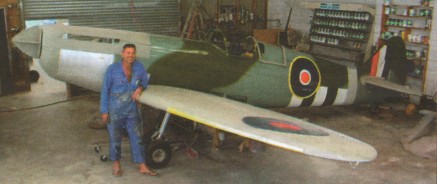
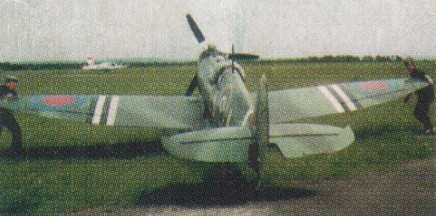
Jurca Plans will provide a 75 per cent Spitfire Mk9 set of plans. The replica will be Powered by a Buick V 6 developed to produce 280 hp from the 3.8 lt capacity. The airframe, which has been professionally stress analysed be ESTACA, will allow engines of up to 700 lb. A 150 litre tank is located in the scuttle. There are no wing tanks. The cockpit fit is snug. The complex wing is true to Mitchell’s original form. Retraction is by electro hydraulic means. Flaps are fitted and have two positions. As an option, Jurca Plans will provide you fibreglass fairings.
MJ-10
Engines for the Spitfire range from 220 to 350 hp.
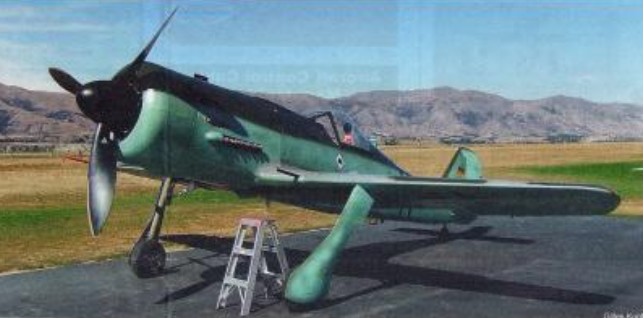
A 75 percent scale replica of the Focke-Wulf Fw 190 fighter developed for the Luftwaffe. Engines from 220 hp to 350 hp can be used. The replica Focke-Wulf Fw 190 D9 is fully aerobatic and certified to +6, -4G.
MJ-8 (75%) Engine: Lycoming, 290 hp. HP range: 200-300. Length: 21.75 ft. Wing span: 55.8 ft. Wing area: 109.8 sq.ft. Weight empty: 1500 lbs. Gross: 2500 lbs. Fuel cap: 30 USG. Cruise: 225 mph. Range: 143 sm. Stall: 67 mph. ROC: 2000 fpm. Take-off dist: 1500 ft. Landing dist: 1500 ft. Seats: 1. Landing gear: retractable tail wheel.
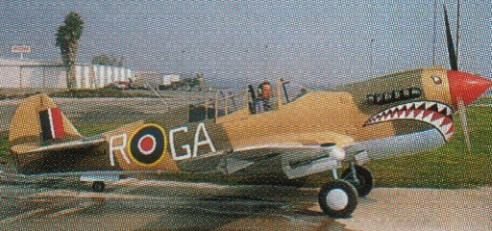
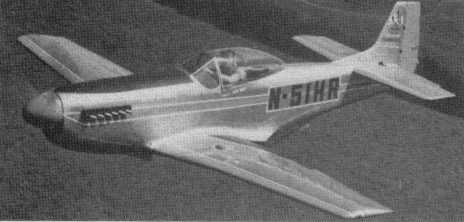
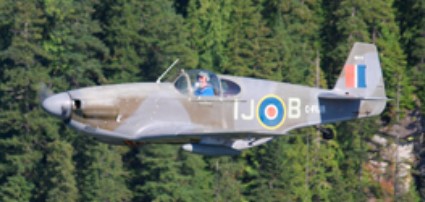
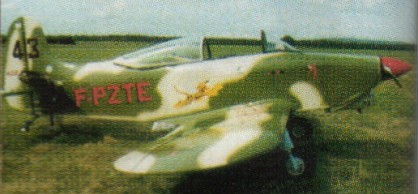
To facilitate homebuilding replicas of fighter planes, designer Marcel Jurca has created a scaled-down ver¬sion of the P-51 Mustang, the Supermarine Spitfire and the Focke Wulf FW-190. The Mustang is available in 2/3 (MJ-7) or 3/4 scale (MJ-77). Only the relative size of a pilot’s head identifies the Baby P-51 from its bigger brother. The ship first flew with a 200-hp Ranger inline engine. Others that can be used include: any of the six-cylinder Rangers, the 125-hp Mènasco, the 130-hp Gipsy Major, the 125 to 160-hp Canadian Rambler, or the General Motors Buick F58. Materials used are wood and fabric.
The Mustang replica is of all-wood construction and uses many components from the aircraft industry. It has a retractable undercarriage and conventional flight control surfaces and flaps. The fuselage, wings and empennage are of sitka spruce framework with a plywood covering and an exterior finish of thin fiberglass. It is powered by a six-cylinder Lycoming aircraft engine.
Although capable of carrying two persons, with the second seat removed and an additional fuel tank installed, the design represents the earlier P-51B with the high rear fuselage, rather than the more common P-51D with a bubble canopy.
The two-thirds scale replica P-51B Mustang is the model MJ-7-G.
Boeve Fiberglass Components Inc offered full kits (1997) for US$35,000. Plans were selling for US$500.
MJ-7 Engine: V8 350/351, 330 hp. HP range: 200-330. Height: 8.7 ft. Length: 22 ft. Wing span: 24.5 ft. Wing area: 112 sq.ft. Weight empty: 1800 lbs. Gross: 2450 lb Fuel cap: 52 USG. Speed max: 300 mph. Cruise: 255 mph. Range: 1000 sm. Stall: 69 mph. ROC: 2000 fpm. Take-off dist: 800 ft. Landing dist: 1000 ft. Seats: 2. Landing gear: retractable tail wheel.
MJ-7-G P-51B Mustang Engine: Lycoming O-540, 260 hp Maximum speed: 200 mph (322 km/h) Loaded weight: 1900 lb (862 kg) Span: 24 ft 9 in (7.5 m) Length: 23 ft 3 in (7.1 m) Height: 6 ft 3 in (1.9 m) Wing area: 114 sq ft (10.6 sq m)
Wingspan 25’l0” Length 22’4” Gross Wt. 2000 lb Empty Wt. 1175 lb Fuel capacity 30 USG Top speed 225 mph Cruise 175 mph. Stall 65 mph. Range 570 miles Takeoff run 900 ft Landing roll 800 ft
Boeve Fibreglass Components MJ-7 Engine: V8 351/350, 330 hp HP range: 200-330 Height: 8.7 ft Length: 22 ft Wing span: 24.5 ft Wing area: 112 sq.ft Empty weight: 1800 lb Gross weight: 2450 lb Fuel capacity: 52 USG Top speed: 300 mph Cruise: 235 mph Stall: 69 mph Range: 1000 sm Rate of climb: 2000 fpm Takeoff dist: 800 ft Landing dist: 1000 ft Seats: 2 Landing gear: tailwheel retractable G limits: +6/-4
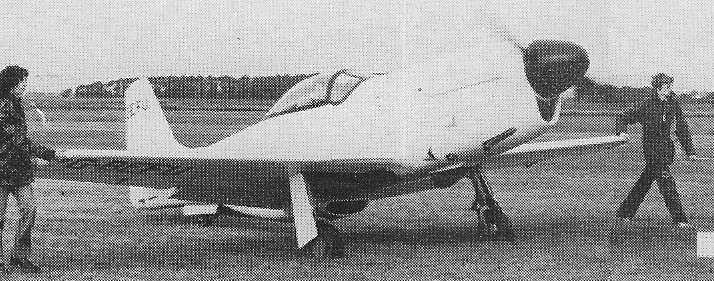
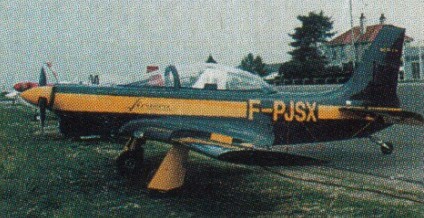
The prototype MJ.5 Sirocco tandem two-seat aerobatic monoplane, built in France, was first flown in 1962. The Sirocco, an all-wood, fiberglass or fabric-covered low-wing design, can be identified by its rooster tail. The Sirocco sports retractable landing gear.
Flying with or without wing end plates, the inboard wing fence is employed in either case. The prototype flew with a Hirth engine, but 90 to 100 hp Continental or 105 hp Potez engine may be fitted. The original prototype was still flying after 30 years.
Engine: Lycoming, 160 hp. HP range: 125-200. Weight empty: 1260 lbs. Gross: 1860 lbs. Height: 8.5 ft. Wingspan: 21.45 ft Wing area: 107.6 sq.ft. Speed max: 196 mph. Cruise 162 mph. Stall: 64 mph. ROC: 1850 fpm. Service ceiling: 16,400 ft. Seats: 2. Landing gear: nose or tail wheel. Takeoff run 820 ft. Landing roll 750 ft. Range 570 sm.
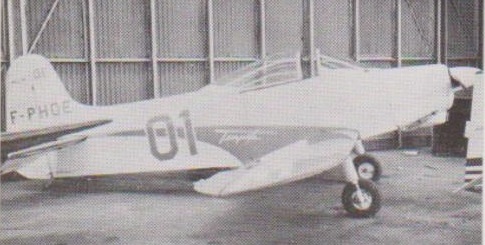
Marcel Jurca incorporated many Jodel Components in the design of the MJ-2 Tempete. The Tempete is a cantilevered low-wing monoplane that can be fitted with engines ranging in horsepower from 65 to 125.
MJ-2 Tempete prototype – Guyancourt, 1965
The single-seat wood/fabric aerobatic MJ.2 Tempete was first flown in 1956.
The standard version is powered by a 65-hp engine. Another common version powered by a 90-hp engine cruises at 120 mph and climbs to 3280 in three minutes.
MJ-2 LX-PUT cn 18, Findel, Luxembourg 5 August 1975. Built as F-PNUD Continental O-200-A
Engine: Lycoming, 110 hp. HP range: 65-180. Height: 7.8 ft. Length: 18.5 ft. Wing span: 19.5 ft. Wing area: 85.9 sq.ft. Weight empty: 639 lbs. Gross: 950 lbs. Fuel cap: 16 USG. Speed max: 120 mph. Cruise: 102 mph. Range: 375 sm. Stall: 62 mph. ROC: 555 fpm. Take-off dist: 820 ft. Landing dist: 800 ft. Service ceiling: 11,500 ft. Seats: 1. Landing gear: retractable tail wheel.
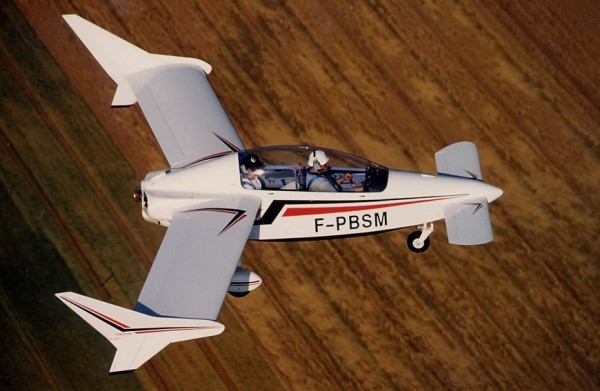
Developed from the RJ.02 Volucelle, the RJ.03 Ibis tandem two-seat canard monoplane, first flown 1991, was offered in plans form for home construction. In March 1992 the Ibis received its French certification at Pau airport in France. Totally enclosed in wood (spruce, douglas fir), it requires no fabric coverings. By utilizing a combination of “Styrodur” (polystyrene) with identically-matching plywood ribs and depression-bonding of surface-coatings, its surface finish matchs that of synthetic-fibre aircraft.
Fitted with “flaperons” on the wings, its approach speed is identical to that of classic aircraft bearing the same load per sq.m. With little nosing-up during approach, rearward and forward visibility is excellent. Due to the use of a nonlaminar surface on the canard, flights are not affected by rain.
The fuel consumption is only 13 l/h at 200 km cruising speed or 10 l/h at 180 km. The rate of climb is 700 fpmat max. take-off weight with only 60 hp.
The IBIS is designed to be used with different types of engines (VW-1830cc, VW-1915cc, French JPX-475T, Australian JABIRU 2200cc, Limbach-2000 EC) and can be fitted with certain types of rotary engines (MID-WEST). The structure comprises 7 frames, 4 longerons and diagonal struts. It is covered with plywood and requires no padding. The fuselage is assembled on the model plane principle, upside down on a table, and after construction of the different frames. The 150 pages handbook, included in the instruction document pack, will give you all the necessary explanations as regards: construction, adjustments and test flight techniques.
The canard wing is rectangular, with no twisting or dihedral angle. It has round tips which are bevelled on the underside. The trailing edge is fitted with a built-in slotted flap, which runs along the whole length of the wing. The canard structure consists of a “box-form spar” the same thickness as the profile and which joins 8 identical plywood former-ribs. The whole structure is filled with “Styrodur” foam, and covered with thin plywood which is glued by suction using the same technique as that employed in the construction of certain model planes. The wing spar is a “box-form” construction and consists of two caps braced together by means of plywood strips on each side. It is in one single piece, at an angle to the airframe. Width and height are constant along whole thickness of the profile. There is no dihedral angle or twisting. All wing ribs are identical, and are in plywood. They are made in a single operation using a metal template and a joiner’s spindle moulding machine. This can be done very quickly. The wing is filled with blocks of “styrodur” foam hollowed out to allow passage of flight control linkages and is covered with thin plywood glued by suction. This method represents a saving of circa 40% on the production time required for standard wood and fabric wing construction. The wing can be dismantled only for major overhaul. Each stabilizer consists of two half-stabilizers made of main plywood longerons and 5 plywood ribs. Thc stabilizers are completely filled with “styrodur”, and covered with glued plywood. The rudders are incorporated in the profile of the stabilizers. The cabin is heated. Internal luggage stowage is behind the passenger’s head. The one-piece canopy, opens laterally. The front undercarriage is mounted on a steering wheel, and is connected to the rudder dual controls; it is not retractable. It is made of steel tubes and fitted with a wheel mounted on a rocker, rubber shock absorbers with brakes on the rear-weels. The main undercarriage is made of glued laminated plywood, for weight, easy assembling and low cost. It is highly efficient even on grass runways. The dual flight control system is the “rigid linkage” type with ball, bell-crank levers and rod connecting joints. The steering and rudder controls are the only system making use of cables. Flight control of the plane is performed through: flaperons (flaps/ailerons) running the whole length of the main wing span, elevator on the canard wing, rudders on stabilizers. The IBIS is flown in a totally classic way. Fuel tanks are in epoxy resin and are incorporated in the leading edge of the wing. They have a capacity of 60 litres; they are equipped with a feed-tank and have a single refuelling point on the wing or on the luggage hold. The tanks are fitted with an electric fuel gauge and with a single pipe leading from the lower part of the feed-tank. There is no manual system for transferring fuel. The IBIS plane has been designed for use with VW (Volkswagen) engines in the 60 to 80 HP range, i.e. engines of at least 1830 CC or any more powerful VW engine. Any four stroke four cylinder engine, without reducing gear, weighing 75 kg or less, in good working order (and roughly equivalent to the VW or up to 20 kg lighter) presently in use or coming on line, can be mounted on the IBIS. It is also possible to use the French engine “JPX 4T 75A” 80 HP, the German “LIMBACH 2000 EC” 68 HP or Australian “JABIRU 2200” 80 HP. All of these engines are without a reduction gearbox. A two-stroke engine is not recommended as its specific consumption is much greater than that of the four-stroke engines. Some rotary engines can also be considered as alternative solutions. The 65 HP Continental engine is too heavy. Plans (set of 12 drawings and a 160 pages contruction handbook) of the IBIS aircraft are available in French and English version. Estimated construction time is put at 2200 hours. The IBIS RJ03 is classified in a “light aircraft category”. It cannot be modified as “ultra-light”.
Engine: VW Wing span: 6.3 m MAUW: 470 kg Empty weight: 260 kg Fuel capacity: 60 lt Max speed: 250 kph Cruise speed: 203 kph Minimum speed: 95 kph Climb rate: 3.5 m/s Seats: 2 Plan price (1998): 3000 F
Engine: VW, 60 hp. HP range: 60-80. Wing span: 6.30 m / 20.66 ft Length: 4.90 m / 16 ft. Height: 5.6 ft. Wing area: 52 sq.ft. Vertical stabilizer height: 1.76 m / 5.6 ft Fuselage width: 0.64 m / 26 in Cabin height: 1.04 m / 3.15 ft Cabin width at pilot elbow: 0.64 m / 26 in. Max. take-off weight: 470 kg / 1034 lbs Weight empty: 260 kg / 572 lbs. Fuel capacity: 60 lt / 16.2 US.G Payload (full fuel): 170 kg / 374 lbs Front pilot weight limits: 65-95 kg / 143-209 lb Vmo / Vne: 161 mph / 260 km/h / 140kts Normal cruise 65%: 200 km/h / 108 kt / 124 mph Long range cruise: 180 km/h / 97 kt / 112 mph Max. range: 900 km (485 nms) + VFR reserves – 559 sm Approach speed: 120 km/h / 65 kts / 74 mph Stall speed: 95 km/h / 52 kts / 59 mph ROC: 650 fpm. Vz: 3.5 m/s Takeoff distance: 1050 ft Landing distance: 1500 ft G-loading: +4.5 and -3.0 Seats: 2 tandem. Landing gear: nose wheel.
Engine: VW 1835 cc Wing span: 6.30 m / 20.66 ft Length: 4.90 m / 16 ft. Height: 5.6 ft. Wing area: 52 sq.ft. Vertical stabilizer height: 1.76 m / 5.6 ft Fuselage width: 0.64 m / 26 in Cabin height: 1.04 m / 3.15 ft Cabin width at pilot elbow: 0.64 m / 26 in. Climb rate: 700 fpm at M.T.O. weight. Fuel capacity: 60 lt / 16.2 US.G
 All Aero