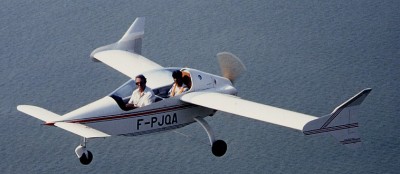
In 1987, Roger Junqua and his son Jean-Claude presented a small, all-wood two seater canard at the International Amateurs Builders air show in Brienne-le-Chateau in France. The “VOLUCELLE”, as it was called, with its futurist lines, after testing, turned out to be an excellent airplane. However, it remained a prototype which was used as a research and test-bed airplane for the development of the “IBIS”.
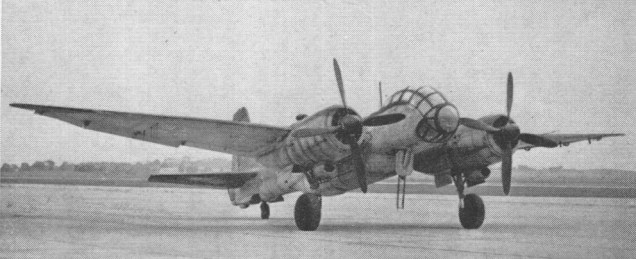
Some sources claim that this was a development of the Ju 388, but it actually was a four-engined long-range bomber, built of Ju 188, Ju 288 and Ju 388 parts. The development of the Ju 488 was ordered from manufacturers in occupied France, who were not very motivated. When the prototype finally neared completion in 1944, it was destroyed by the French resistance with sten guns and grenades.
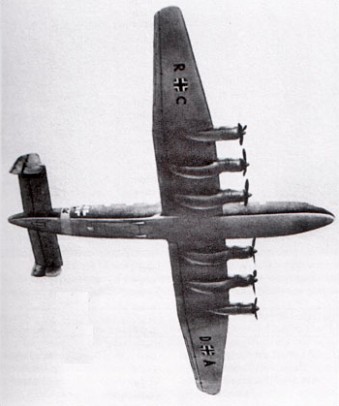
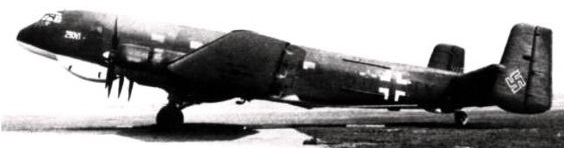
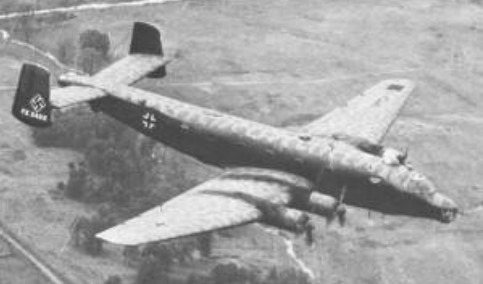
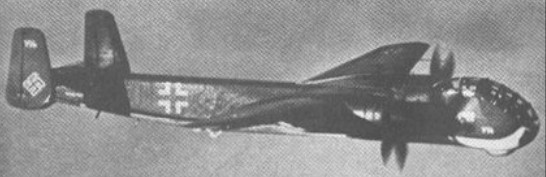
The German Junkers Ju 390 long range heavy bomber aircraft design was intended to be able to strike at locations along the east coast of the United States during World War 2. The Ju 390 itself was a further development of the Junkers Ju 290 and was also tasked to fulfill the roles of maritime reconnaissance and transport in addition to its bombing duties. The Ju 390 – also known under the unofficial name of “New York Bomber” – was developed as two working prototypes, effectively making the idea of transatlantic bombing theoretically possible for Hitler and his Luftwaffe. The Ju 390 was part of the failed “Amerika Bomber” project considered by the Germans, this including the Messerschmitt Me 264 and Focke-Wulf Ta 400 designs.
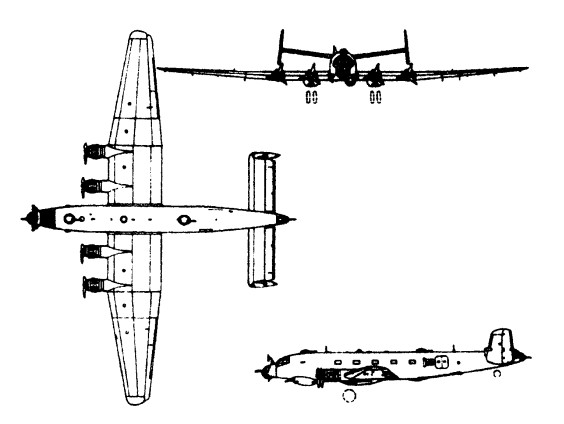
The Junkers Ju 390 heavy bomber appeared when general German wartime philosophy was still centered around medium-class bomber aircraft. Full developmental resources were never really delegated to the Ju 390 project en mass and the entire program was slow. With origins in the Ju 290 airframe, the Ju 390 basically saw its wings lengthened via extensions fitted to help accommodate the additional engines (three to a wing for a total of six installations). The fuselage was also applicably lengthened for the long-range bombing role. Defense was supplied by a pair of 13mm machine guns in a gondola position as well as 2 x 13mm machine guns in beam positions. A pair of 20mm cannons would have been mounted to a dorsal turret and a single 20mm cannon would have been installed in the tail. Crew accommodations would have amounted to ten personnel made up of the flight crew and dedicated gunners. The heavy transport model was given the proposed designation of Ju 390A-1 while the maritime patrol and long-range heavy bombers would have been assigned Ju 390B and Ju 390C respectively.
Ju.390 V-1 GH+UK
Power for the Ju 390 V01 prototype was supplied by 6 x BMW 801D radial piston engines, of 1,730 hp. Maximum speed was listed at 314 miles per hour with a range of approximately 6,030 miles. The service ceiling was a reported 19,700 feet. Empty weight was in the vicinity of 87,100lbs while maximum take-off weight topped at 166,400lbs. The Ju 390 maintained a length of 112 feet, 2 inches with a span of 165 feet, 1 inch. Her height was 22 feet, 7 inches.
First flight for a Ju 390 V1 prototype occurred on October 20, 1943, and Ju 390 V2 was also flown in October of 1943 with testing believed having gone into 1945.
An initial order of 26 Ju 390s were ordered for serial production, however, the program was cancelled in June of 1944 to allocate critical wartime resources and development to other more pressing projects. Pparticularly those of defensive in nature. The Ju 390 was officially strickened from Luftwaffe contention in 1945. Ju 390 V1 was destroyed on the ground by the Germans as the American Army closed in on the development facility.
A test flight of a Ju 390 is said to have taken the aircraft from Brest, France, to within 200 miles of New York city, and returned.
In the fall of 1944, Japanese authorities were granted local production rights to the Ju 390, though none were ever started before the Empire capitulated in August of 1945.
Junkers Ju 390 V1 (New York Bomber) Engines: 6 x BMW 801D radial, 1268kW. Length: 112.20ft (34.2m) Width: 165.03ft (50.30m) Height: 22.60ft (6.89m) Empty Weight: 87,083lbs (39,500kg) Maximum Take-Off Weight: 166,449lbs (75,500kg) Maximum Speed: 314mph (505kmh; 273kts) Maximum Range: 6,027miles (9,700km) Service Ceiling: 19,685ft (6,000m) Armament proposed: 2 x 13mm MG 131 machine gun in gondola 2 x 13mm MG 131 machine guns in waist beam positions. 2 x 20mm MG 151/20 cannons in dorsal turret 1 x 20mm MG 151/20 cannon in tail gun position Crew: 10
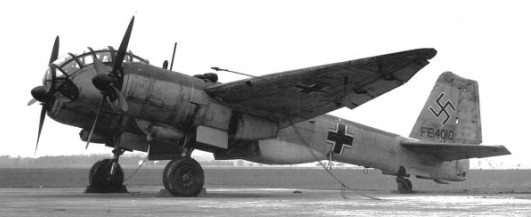
The Junkers Ju 388 was a 1944 development of the Junkers Ju 188. There were three versions, J (hunter), K (bomber) and L (reconnaissance aircraft). The first prototype, the Ju 388 L-0 V 7 with the factory serial number 300,001, PG+YA, developed using of major components of the Ju 188 and flew for the first time in December 1943. The prototypes built were V 1 to V 6 (2 each of the J-1, K-1 and L-1) during 1944. Structural areas and the horizontal tail unit of all versions were taken completely from the Ju 188, the chassis from the Ju 88. In contrast to the Ju 188 the Ju 388 possessed a pressurized cabin for three man crew. In order to improve the aerodynamics and speed, the portion of the cockpit were omitted but a remote controlled tail FHL 131 Z was inserted. The wings were defrosted as with the Ju 188 by warm air by the engines, the snow and ice removal of the horizontal stabilizers took place via a gasoline Kaercher furnace. The only version of this Ju 188 development to enter production before the end of the war was the Ju 388L reconnaissance aircraft, a small number of which were built. Power was provided by two 1,349kW BMW 801TJ engines.
One Ju 388 L-1, 560,049 was captured by the Americans in the Merseburg works. It originated from production from Weser flight in Liegnitz/Schlesien, and parts were manufactured by ATG. It was brought with other German airplanes on the aircraft carrier HMS Reaper in Operation Sea Horse for tests into the USA. These took place in Wright Field, Ohio. The machine carried the identification FE-4010 (later T2-4010).
In 1947 the tests finished, and 560,049 / FE-4010 found its way to the National Air & Space Museum. Unrestored, the cockpit of the Ju is 388 L is nearly in the original state.
Engines: 2 x Junkers Jumo 222E Wingspan 22 m (72 ft. 2.125 in.) Length 14.95 m (49 ft. 1 in.) Height 4.9m (16 ft 1 in) Weight 10,565 kg (23,296 lb.) empty Top speed: 414 mph @ 37,700 ft. Range: 1100 miles Ceiling: 42,200 ft Armament: 3 x 13mm mg
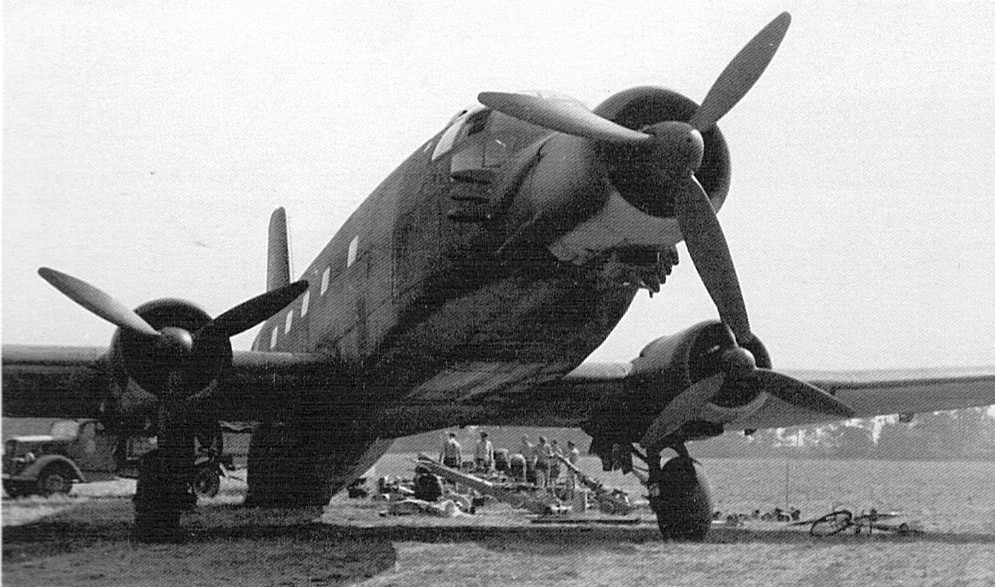
The Ju 352 development was based on wood in order not to use strategic materials. Power was provided by three 894kW Bramo 323R-2 engines. Production of this version totalled 43 or 44.
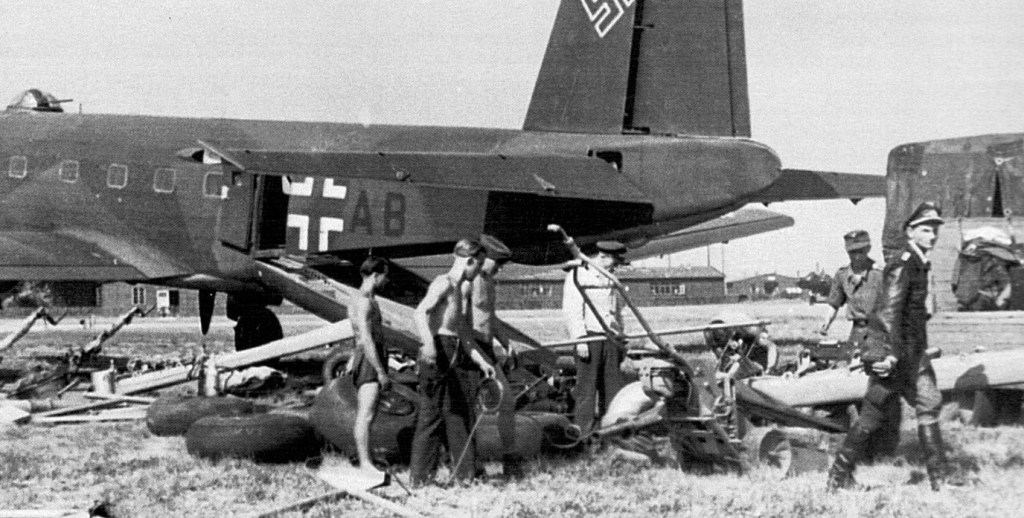
Ju 352 T9+AB at Juvincourt unloading AR234 equipment – Erich Sommer at right
One of the features of the Ju 352 was its Trapoklappe hydraulically-operated loading ramp. Incorporating its own central stairway, this ramp, when lowered, raised the aircraft to a near horizontal position which facilitated easy loading and unloading. Another feature were its reversible pitch propellers.
T9+AB
A total of ten pre-production Ju 352 A-0s and 33 A-1 production aircraft were completed before construction was halted in September 1944.
A number of Ju 352 were delivered to Versuchsverband including T9+AB, T9+MB and T9+AL.
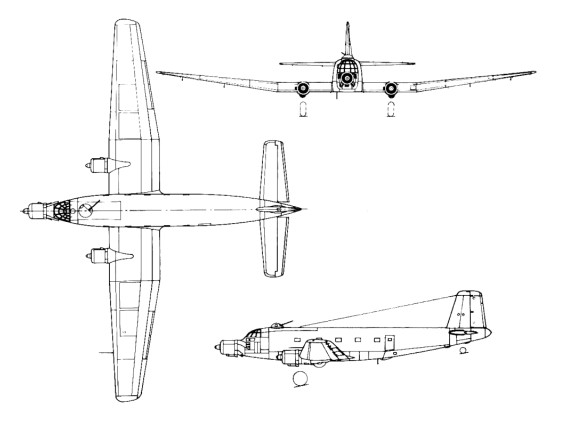
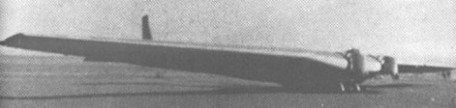
A 1941 flying-wing transport glider, built in competition with the Me 321. The RLM insisted that the Ju 322 would be built of wood, a construction technique not used by Junkers since 1918. Junkers employed a wing like that of the G 38 on a transport glider design, the Ju 322 Mammut (Mammoth) but stability problems showed up on its first test flight.
The RLM had ordered 200, but the Ju 322 was cancelled after the prototype proved unstable. The Me 321 was selected for production.
The 62 m (203 ft) span glider was towed by a Ju 90 towplane (for whose take off 5 km (3 miles) of forest had been cleared from the end of the Junkers airfield at Mersburg) and had to be cast off. It landed in a meadow where it lay for two weeks before it was towed back to the airfield by the two tanks it had been designed to carry. Both it and 99 other Mammuts under construction were sawn up into firewood.
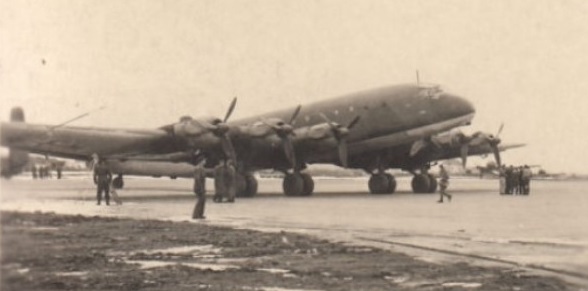
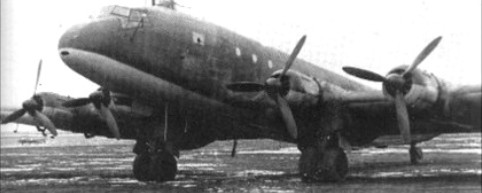
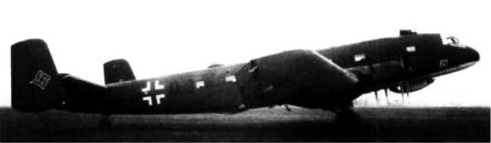
The Ju 290 was originally designed as a development of the Ju 90 transport and was test flown in 1941. Subsequent development was undertaken to enable it ultimately to supersede the Fw 200C for long-range over-sea anti-shipping and U-boat cooperation work, but it failed to achieve this.
Nevertheless seven versions of the A series were produced as transport (A-1 with BMW 801D engines), reconnaissance (A-2, A-3 and A-5), transport (A-6), reconnaissance-bombing (A-7), and reconnaissance (A-8) aircraft – the latter with provision for carrying two Hs 293 anti-shipping glider missiles.
Ju.290 V-3
Production totalled about 55 aircraft.
The Ju 290B was a projected heavily armed long-range bomber. It was followed by the Ju 290C reconnaissance and transport aircraft, Ju 290D long-range bomber and Ju 290E night bomber: all of which failed to enter production.
In April 1944 three Ju-290A-9 of KG200 had been stripped of their armament, except for their nose and tail machine-gun turrets, so they could carry auxiliary fuel tanks containing thousands of gallons of fuel. They now had a range of almost 5500 miles. Flying at an altitude of about 38,000 ft, they crossed the Soviet Union and Mongolia undetected, and after some 20 hours of flight they landed at a base near Mukden, Manchuria. On their incoming flight the Ju 290s carried some four tons of essential munitions to the Japanese. Things like weapon sights and other optical equipment. The next day they would make their return flight, with cargo including molybdenum raw material, back to Germany. They landed back at Mielec northeast of Krakow. On 10 April 1944 the Germans were forced to evacuate Odessa and shifted their take-off base to Mielec too.
Ju.290 V-1 Ju.90 W/no 4918/0011 / BD+TX re-engined and fitted with a loading ramp. First flew 16 July 1942 Crashed Stalingrad 19 January 1943.
Ju.290 V-2 W/no 0151 / CE+YZ / SB+QA First flew 7 December 1942
Ju.290 V-3 W/no 0152 / GF+GH / SB+QB The rebuilt Ju.90 V-7 Crashed and destroyed 5 October 1944
Ju.290 A-0 Two pre-production aircraft Engines: 4 x BMW 801L-2, 1600 hp Props: 3 blade Armament: 3 x 20mm MG151 cannon, 2 x 7.9mm MG81 mg Bombload: 2 x Henschel Hs 293 glider bombs Troop capacity: 40 Transport load: 18,700 lb Winch loading ramp: 15ft 9in long x 7fyt 8in wide
Ju.290A-1 Five aircraft similar to the V-8 W/no 0152 SB+QC / Wno 0153 T9+FK – to Luftwaffe March 1943 W/no 0154 / J4+AH – to Luftwaffe May 1943 W/no 0155 & 0156 – to Luftwaffe for structural testing purposes
Ju.290A-2 Three aircraft as long range maritime patrol aircraft First flew Summer 1943 W/no 0157 SB+QG Went to Britain as AM-57 Scrapped 1950
Ju.290A-3 Five armed maritime / reconnaissance types during 1943 Engines: 4 x BMW 801D, 1700 hp Fitted with extra dorsal turret and a 20mm MG 151 cannon, + another in tail position. 2 x 13mm MG 131 in each waist position + 1 in forward firing gondola.
W/no 0160 & W/no 0161
W/no 0162 9V+GK Shot down 20 November 1943 by a DH Mosquito
W/no 0163 Destroyed 3 May 1945
W/no 0154
Ju 290A-4 Five long range reconnaissance types W/nos 0165 – 0169 Engine: 4 x BMW DB 801 L-2, 1,500 hp Max speed: 243 mph at 18,000 ft Service ceiling: 19,000 ft Max range: 790 miles Weight loaded: 90,000 lb Wingspan: 138 ft Armament: one forward-firing 20-mm MG 151 cannon in forward fuselage; one 20-mm MG 151 cannon in dorsal position; two MG 131 13-mm machine guns in lateral emplacements; one MG 131 13-mm machine gun in forward ventral position; one MG 151 20-mm cannon in rear ventral position; one MG 151 20-mm cannon in tail; bomb load of 19,000 lbs or 90 men.
W/no 0165 Used in testing the Hs 293 guided bomb, fitted with Fritz X radio controlled equipment.
Ju-290A-7 Engine: 4 x BMW 801D, 1268kW Max take-off weight: 46000 kg / 101413 lb Empty weight: 33005 kg / 72764 lb Wingspan: 42.0 m / 137 ft 10 in Length: 29.15 m / 95 ft 8 in Height: 6.83 m / 22 ft 5 in Wing area: 203.60 sq.m / 2191.53 sq ft Max. speed: 440 km/h / 273 mph Ceiling: 6000 m / 19700 ft Range w/max.fuel: 6090 km / 3784 miles Armament: 7 x 20mm cannon, 1 x 13mm machine-guns, 3000kg bombs or 3 missiles Crew: 3
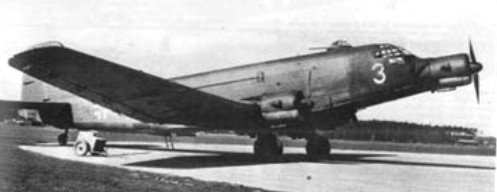
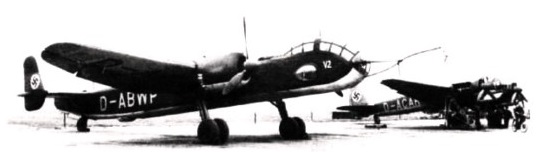
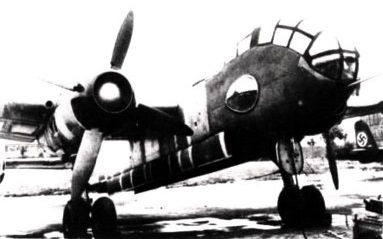
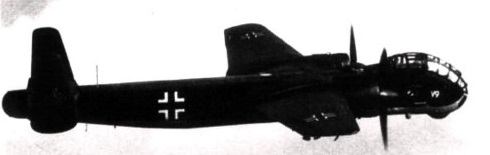
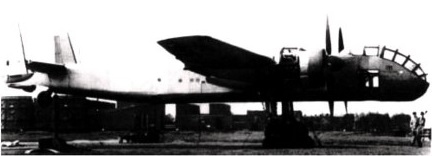
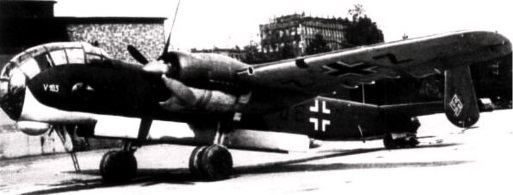
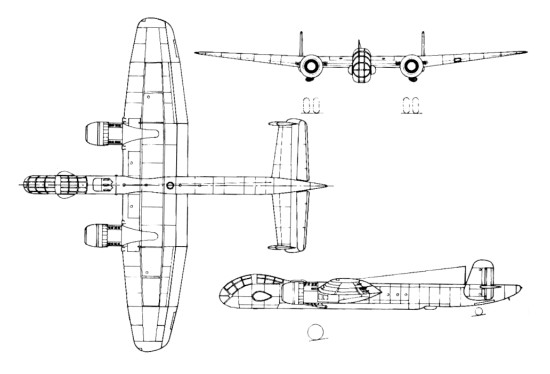
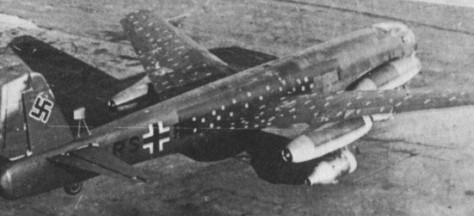
The Ju 288 was not a development of the Ju 88 or Ju 188. It was designed as a twin-engined (Daimler-Benz DB 610) medium bomber and was test flown in 1940. Development was slow but a long series of prototypes had been completed by 1943.
Ju.288 V2
V-5
V-9
V-11
V-107
Only 21 test aircraft had been produced and none of them saw operational service.
Ju.288 V-14 W/no 0014 DF+CT The B series prototype Junkers Jumo 222 engines First flew August 1942
Ju.288 V-15 to V-21 Another major redesign Engines: 2 x Daimler-Benz DB 610, 2950 hp C series prototypes
Ju.288 V-101 W/no 0101 BG+GX C series prototype First flew 5 November 1943 Engines: 2 x Daimlr-Benz DB 606
Ju.288 V-102 W/no 0102 BG+BY Similar to the V-101 Engines: 2 x Daimler-Benz DB 610
Ju.288 V-103 W/no 0103 DE+ZZ C series prototype, re-designed and strengthened First flew 13 August 1943 Engines: 2 x Daimler-Benz DB 610 A/B, 2950 hp Armed with an additional dorsal barbette
Ju.288 V-104 W/no 0104 Similar to the V-103 First flew 12 Novemver 1943
Ju.288 V-105 W/no 0105 Similar to the V-103 Later broken up
Ju.288 V-106 W/no 0106 BS+CA First flew 17 May 1942
Ju.288 V-107 W/no 0107 BS+CB First flew June 1943
Ju.288 V-108 W/no 0108 BS+CC First flew 9 Octover 1943
Ju.288A First 7 prototypes Engines: BMW Wingspan: 60 ft Length: 52 ft
Ju.288A-1 Pressurised cabin Max speed at 32,800ft: 416 mph Range: 2235 miles Crew: 3 Armament: 4 x remotely controlled 13mm MG 131 MG in barbettes, 2 x fixed forward firing 7.92mm MG 81 mg Internal bombload: 8800 lb
Ju.288A-2 An all round gun position at the side of the nose
Ju.288A-3 Remotely controlled barbette armament
Series abandoned
Ju.288B Wingspan: 75 ft 5 in Length: 59 ft 5.25 in Height: 14 ft 9 in Wing area: 696 sq.ft Max speed: 401 mph ROC: 1420 fpm Service ceiling: 30,500 ft Range: 2200 miles
Ju.288B-1 Enlagred cabin, wider forward section, increased wingspan Engines: 2 x Junkers Jumo 222 24-cyl Remotely controlled MG 131 mgs in nose & dorsal turret Crew: 6 Bombload: 6615 lb One prototype completed then stored.
Ju.288C Wingspan: 74 ft 4 in Length: 59 ft 6.75 in Height: 16 ft 4.75 in Wing area: 699.4 sq.ft Empty weight: 29,547 lb Loaded weight: 50,700 lb Normal weight: 47,165 lb Max speed at 22,300ft: 407 mph Cruise speed: 320 mph Landing speed: 93 mph Service ceiling: 34,110 ft Max range: 1615 miles
Ju.288C-0 Modified with an extended canopy and strengthened airframe Engines: 2 x Daimler-Benz 610, 2950 hp Crew: 4 Armament: 2 x 7.92mm mg or 20mm MG 151 cannon in remotely controlled dorsal barbette / 2 x 7.92mm mg or 20mm MG 151 cannon in ventral barbette aft of bomb bay / Twin MG 131 mg in chin turret / 1 x MG 151 or 2 x MG 131 in remotely controlled tail turret Bombload: 11,000 lb
Ju.288C-1 W/no 31051 First flew 4 December 1943 Armament: twin MG 131 in ventral barbette
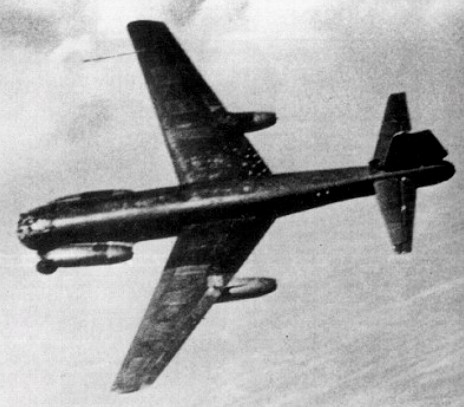
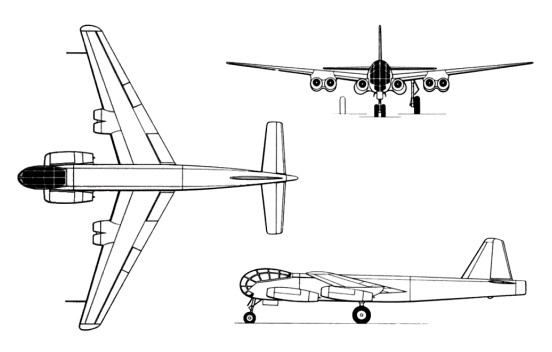
In 1943 the German Junkers com¬pany was given the task of designing a heavy bomber that would be faster than any contemporary Allied fighter. A swept wing planform was essential to reach the speed required, and to overcome the disadvantages of a backward swept wing, the Junkers design team proposed a wing swept forward. In theory such a wing should have the same effect as one swept back in reducing the effective thickness to chord ratio, but would have the highest lift coefficient at the root, decreasing outboard. The wing tips would thus be the last to stall, with aileron control available up to this point. An additional advantage of a forward swept wing was that by freeing the centre portion of the fuselage of wing spars, it facilitated the provision of the large weapons bay called for in the bomber specification, around the centre of gravity. To test such a wing full scale Ju 287 Vl was produced, under supervision of Hans Wocke. To save time and money this aircraft utilised the fuselage of a Heinkel He 177A, the tail of a Ju 388 and nose wheels salvaged from a crashed Consolidated B 24 Libera¬tor. The forward swept wing, however, was representative of that of the intended bomber.
Power was provided by four Junkers Jurno 004B turbojets, two being attached to the sides of the fuselage nose and two being mounted under the wing. Two Walter 501 rocket units provided boost for take off. A forward swept wing is structurally unstable; it reacts to increase the loads. As speed increased the forces eventually exceed the strength of the wing. To compensate for this divergence problem, as it is called, forward swept wings have to be very strong in torsion to prevent any twisting that would lead to catastrophic loads.
An indication of the severity of this problem is that on the Ju 287 V1, to preserve the structural integrity of the wing, the main landing gear did not retract into the wing, but was fixed, the wheels being enclosed in fairings. Seventeen test flights were made by the Ju 287 V1, the first one at Brandis, near Leipzig, on 16th August 1944, in the hands of Flugkapitan Siegfried Holzbaur. The flights proved the aerodynamic advantages of the wing planform; wing tufts confirmed the progressive wing stall from the root to the tip. Lateral control at low speeds was good. However, the trials also proved some of the problems predicted. Two of the most serious were a tendency for the aircraft to Dutch roll in reverse, and for the aircraft to increase g inadvertently during a turn, when the pilot was attempting a steady turn. Despite the problems, work started on the definitive bomber, the Ju 287¬V2, and final assembly was under way when the factory was seized by advancing Russian troops. The incomplete bomber was transferred to the Soviet Union, together with Hans Wocke and other key members of the Junkers design team, where it was completed and test flown in 1947.
Ju.287
EF.131 Wing span: 78 ft 8.75 in Height: 26 ft 3 in Empty wt: 34,838 lb Loaded wt: 51,341 lb Max speed: 534 mph Service ceiling: 43,950 ft Range 4410 bomb load: 1045 mi
V-1 Wing span: 65 ft 11.75 in Length: 61 ft 0.5 in Height: 15 ft 5 in Wing area: 656 sq.ft Empty wt: 25,557 lb Loaded wt: 44,092 lb Max speed: 404 mph Max speed at 19,685 ft: 347 mph Cruise speed: 320 mph Landing speed: 118 mph Stall speed: 105 mph Rate of climb: 1910 fpm Climb to 19,700 ft: 10 min 30 sec Service ceiling: 35,425 ft Range: 932 mi
V3 Engines: 6 x 800kg BMW 003A-1 turbojets Wingspan: 20.11 m / 66 ft 0 in Length: 18.6 m / 61 ft 0 in Wing area: 58.3 sq.m / 627.54 sq ft Max take-off weight: 21520 kg / 47444 lb Empty weight: 11920 kg / 26279 lb Max speed at 16,400 ft: 856 km/h / 532 mph Cruise speed: 493 mph Rate of climb: 2885 fpm Climb to 19,700 ft: 10 min 30 sec Ceiling: 12000 m / 39350 ft Range full load: 980 mi Range half bomb load: 1320 mi Crew: 4
The Ju 252 was a transport aircraft powered by three 1,051kW Junkers Jumo 211 engines. It had been designed to replace the Ju 52/3m but only 15 were produced.





 All Aero