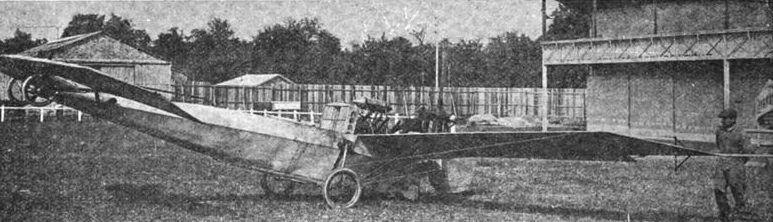
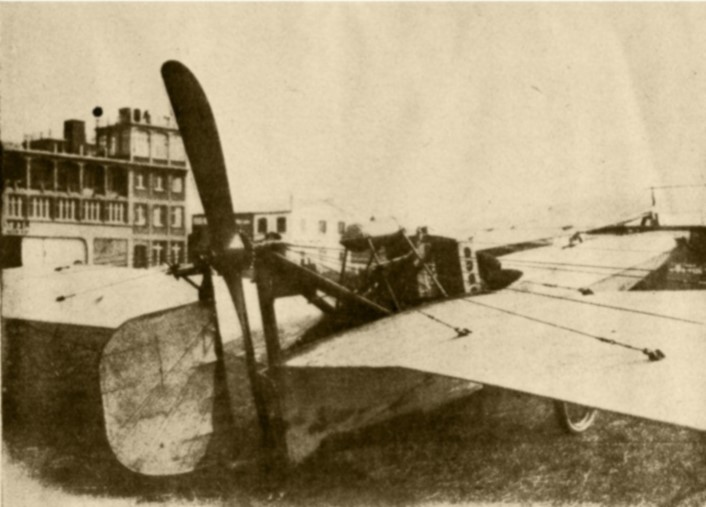
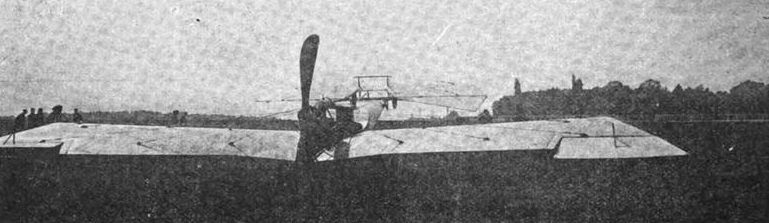
The Canard was a design of Pierre Juvigny which was in the list of about 56 enlisted competitors of the Concours de sécurité 1914 which was published on 17 January 1914. The Concours started in June 1914, but the Juvigny Canard was not ready for competition.
It is noted that the jury nevertheless inspected the incomplete machine (unable to compete) and inspected the variable incidence mechanism of the wing. Due to the weight of the engine and ancillary equipment the machine stood with the nose high when on the ground. There is no information that it took to the air and after the outbreak of the war in begin August 1914 experiments were presumably halted.
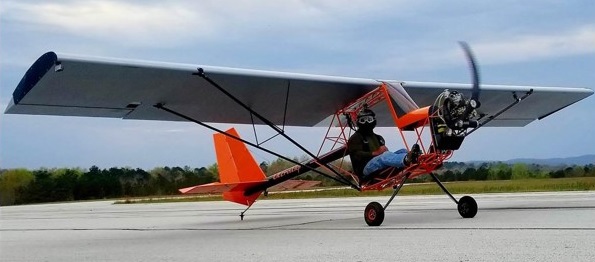
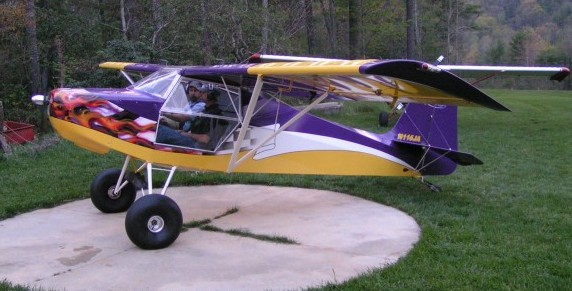
Troy Woodland designed the Just 103 to conform to the FAA Part 103 requirements for ultralight aircraft, including a maximum weight of 254 pounds, a single seat, and a top speed of 63 mph. The new ultralight logged 1.5 hours before heading to the Sun ‘n Fun International Fly-In and Expo. Other than a narrow windscreen, the pilot is very much out in the open air, “which was typical with a lot of earlier Part 103 designs”.
A Polini Thor 250 engine from Italy supplies 37 horsepower at 7,500 rpm, and retails for less than $4,000. Woodland also expected to mount a Rotax 582, which would push the aircraft beyond the ultralight limits and require registration as a light sport or experimental light sport aircraft.
The company was to sell the Just 103 as a kit or ready-to-fly from the factory in Walhalla, South Carolina.
The Just Aircraft SuperSTOL is a classic doped fabric/chrome moly steel frame taildragger with automatically deploying full-span two-segment leading-edge slats, 15-25-40-degree barn door flaps, Rotax 912 power and hydraulic shock-absorbing main gear struts.
The SuperSTOL is based on the Just Highlander. The base price (kit) for the SuperSTOL in 2012 was $36,650 (before engine and avionics), with S-LSA certification underway.
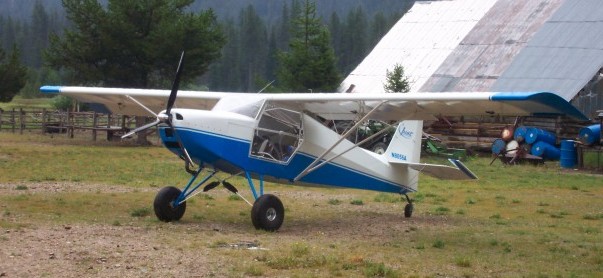
Introduced at Arlington and Oshkosh 2004, Highlander is an upgraded version of the Escapade. Just Aircraft’s new bush plane qualifications are enhanced by a larger balanced elevator and rudder, a larger trim tab, extended (and beefed up) gear legs with larger wheels and brakes, gull wing doors (can be opened in flight), an 8″ tail wheel and VG’s. And, a new three foot longer wing. The Highlander has the same features as the Escapade, but with all the upgrades to make it a better backcountry aircraft. The Highlander is manufactured with all high quality aircraft materials. It is also manufactured with attach points for floats, lots of cabin area and extra large cargo area. The Escapade and Highlander share considerable structural elements including the chrome-moly fuselage frame, wing airfoil construction, and engine compartment. Using the same basic fuselage for both planes means they both have a huge luggage capacity that extends to the tail. The planes can handle a 6’7”+ frame and 300lb+ people. With sliding seats and 44” of elbow room. Highlander LSA 2010 Kit Price: US$22,250 Both planes can be flown with the doors off or the doors and windows open, although a heater can be installed for frigid conditions. The planes are available as complete ready to assemble kits which take about 600 – 700 hours to complete. Or you may choose various stages of assembly based upon your time demands and pocket book. Some choose to have the factory finish the wings and cover the fuselage which cuts the build time in half. There is also the option of “Build Assist” where for a monthly fee the owner may assemble the plane in the factory with company experts on hand for assistance. Those desiring a complete build ready to fly option will find this also available. This would be SLSA certified if desired. An extended-gear option for the Highlander provides heavy-duty axles to support bush tires: those legs raise the fuselage and widen the track by about 4 inches. The Highlander is the bush plane model of the Escapade with longer wings, taller-heavier gear, tundra tires and larger tail feathers with balanced elevator and rudder.
The Escapade and Highlander can be installed with any power plants in the weight range of the Rotax 503 up to the Rotax 914 or Jabiru 2200 up to the Jabiru 3300.
Engine: Rotax 912 100 hp Height: 7’10” Length: 19′ Cabin Width: 44 in Wing Span: 31′ 6″ Wing Area: 120.75 sq.ft Empty Weight: 620 lbs Gross Weight: 1320 Useable Load: 700 Fuel Capacity: 18 USgal Flight Load Factor: +4 -2 G Vne (never exceed speed): 130 mph Cruise speed @ 75% power: 105 mph Vso (full flap) at Gross Weight: 23 mph Vs (clean) at Gross Weight: 27 mph Take off Distance Ground Roll: 300 ft Landing Distance Ground Roll: 250 ft
Highlander LSA Engine: Rotax 912S, 100 hp Wingspan: 31′ 6″ Length: 19 ft Wing area: 116.25 sq.ft Empty weight: 620 lb MTOW: 1320 lb Useful load: 700 lbs Cruise 75%: 105 mph Stall: 25 mph Range: 520 sm ROC: 1500 fpm Takeoff dist: 100 ft Landing distance; 75 ft Seats: 2 Cockpit width: 44 in
Engine: Rotax 912S, 100 hp Wing Span: 31’6” Wing area: 120.75 sq.ft. Mean Cord: 45” Length: 19’ Height: 7’10” Length Folded: 20’8” Width Folded: 7’ 11.5” Number of Seats: 2 Number of Doors: 2 Landing Gear: 8” Tail Wheel Gear Width: 76” Fuel Capacity: 18 or 26 USGallons (24 useable) VNE: 130 mph Cruise: 110 mph Stall With Flaps 40 deg: 27 mph Stall Clean: 32 mph Take off Roll: 300 ft Take off Distance to 50 ft: 800 ft Ground Roll: 300 ft Landing Distance from 50 ft: 1000 ft Climb Rate: 880 fpm Gross weight: 1320 Lbs Empty weight: 615 Lbs Useful Load: 705 Lbs Load Limit Factors: +4 g’s –2 g’s
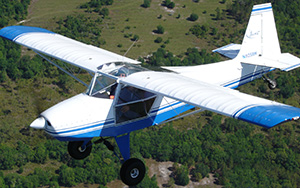
The Escapade has been developed to meet the demand for a two place side-by-side dual control (individual stick controls) aircraft that can be used for training as well as recreation. The Fuselage, tail and landing gear are manufactured from 4130 Chrome-moly steel. The original Escapade earned the United Kingdom’s BCAR (British Civil Aviation Requirement) Section S structural – and flight – test standards.
The wings fold in under 2 minutes with no disconnecting of any controls or control surfaces. The Escapade can be configured with tail-wheel or tri-cycle landing gear with the ability to swap from one to the other in about 1 hour.
The Escapade has been through UK Section S static testing certification requirements and flight-testing certification requirements. The Escapade can be installed with any power plants in the weight range of the Jabiru 2200 or Rotax 912/914. Jabiru Pacific can provide from the firewall forward.
The Escapade and Highlander share considerable structural elements including the chrome-moly fuselage frame, wing airfoil construction, and engine compartment. Using the same basic fuselage for both planes means they both have a huge luggage capacity that extends to the tail. The planes can handle a 6’7”+ frame and 300lb+ people. With sliding seats and 44” of elbow room. Both planes can be flown with the doors off or the doors and windows open, although a heater can be installed for frigid conditions. The planes are available as complete ready to assemble kits which take about 600 – 700 hours to complete. Or you may choose various stages of assembly based upon your time demands and pocket book. Some choose to have the factory finish the wings and cover the fuselage which cuts the build time in half. There is also the option of “Build Assist” where for a monthly fee the owner may assemble the plane in the factory with company experts on hand for assistance. Those desiring a complete build ready to fly option will find this also available. This would be SLSA certified if desired. Escapade LSA 2010 Kit Price: US$20,250 The Escapade and Highlander can be installed with any power plants in the weight range of the Rotax 503 up to the Rotax 914 or Jabiru 2200 up to the Jabiru 3300.
Variation: Lanitz Escapade Two
Engine: Rotax 912, 80 hp Height: 7’2” Length: 19′ Cabin Width: 44 in Wing Span: 28′ 6″ Wing Area: 108 sq.ft Empty Weight: 615 lbs Gross Weight: 1320 Useable Load: 705 Flight Load Factor: +4 -2 G Vne (never exceed speed): 130 mph Cruise speed @ 75% power: 110 mph Vso (full flap) at Gross Weight: 27 mph Vs (clean) at Gross Weight: 32 mph Climb Rate (sea level @ gross): 880 ft/min Take off Distance Ground Roll: 300 ft Landing Distance Ground Roll: 300 ft Fuel Capacity: 18 USgal
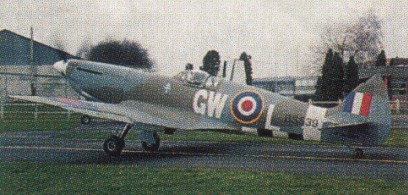
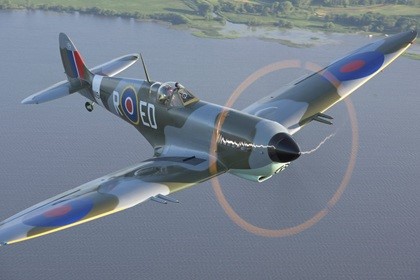
Jurca Plans will provide a full size MJ-100 Spitfire replica set of plans and power plant required is some V 12 of 1700 hp. The MJ-100R version has 4130 tube fuselage covered with aluminium or composite skins.
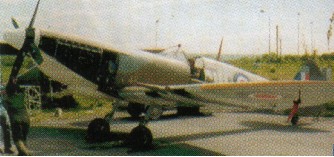
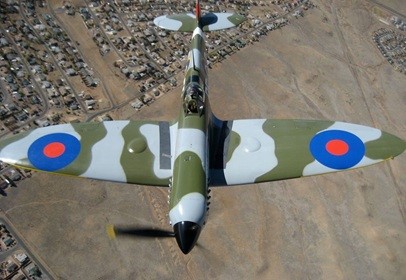
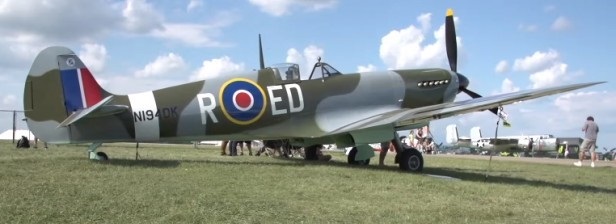
Bob Deford, EAA 314241, of Prescott, Arizona, built a full-scale replica Spitfire Mk IX of wooden construction, powered by an Allison V-1710 engine turning a DC-3 propeller. He and a friend went to work on the plane in 1996 and spent eight years to finish it. N1940K was completed in 2003.
N1940K
French engineering studies yielded a welded steel tube fuselage structure that could support an Allison V-1710 engine capable of generating 1,400 hp on takeoff. The steel tube internal fuselage structure is covered with a non-load-bearing aluminum skin riveted in place. The wing spar is made of laminated Douglas fir planks hosting wooden ribs. The whole skeletal structure of the wing is sheathed in 3/16-inch aircraft plywood. The unattached skins are soaked from both sides, and then placed flat in the sun just long enough to dry the surfaces while keeping the interior moist. The inside surface of the sheet next received a rolled-on coat of epoxy before being aligned on the wing and hit with a staple gun. The plywood drys, conforming to the airfoil shape of the wing. Fiberglass topped with epoxy finishs the job, giving the wing protection and smoothness.
The main landing gear uses T-6 Texan hydraulics and T-28 wheels and brakes support tires normally found on a business twin. The main gear struts are newly made. Instead of using oleos for shock absorption, Deford worked with a spring vendor to come up with heavy springs that cushion the load of landing without the complexity of oil shocks, giving the gear no maintenance. He said the result is a ground ride that “hops like a real Spitfire,” based on his review of Spitfire ground handling films.
The Allison engine is from a P-39 Airacobra and Hamilton Standard propeller from a DC-3.
The Allison uses a downdraft carburetor with a duct running from the traditional Spitfire chin scoop back to the firewall and up to the top of the cowled Allison.
His has an original-type stick that pivots at mid-stick for roll, and says it could not work otherwise because the Jurca cockpit is a bit more narrow than the original due to straight tubing in the cockpit area. The original cockpit bows outward a bit from the canopy opening so, if the entire stick pivoted for roll at the floor, he would have very little roll control throw available.
 All Aero