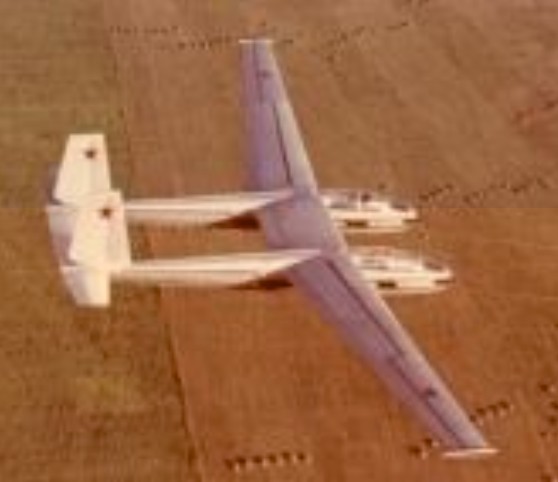
Flying Lab SL-2 1968.
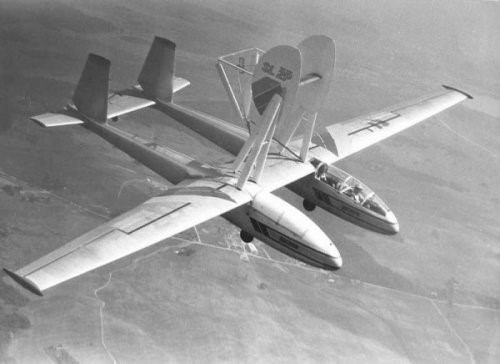
Flying Lab SL-2 1968.
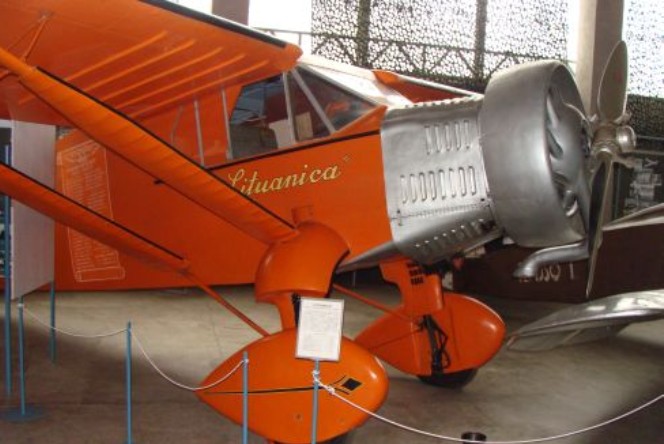
The director Raimondas Beetle was going to make a movie on S. Darius and S.Gireno, which required a copy of the legendary aircraft, Lituanica.
Kensgaila already knew the original settings and was thinking about what parts of other planes to use. A “Construction Office” wassetup in their house in the basement for a stack of drawings. However, turning to the Yak-12 “Bellanca”, and later – Lituanica was not easy.
Maintaining the engine mounting frame and other parts, it was necessary to evaluate the structural stiffness and chromansilio tubes were boiled at the factory – all the major work conducted in Panevezys Base Aero Club.
The movie studio agreed on a salary for a group of ten people. Each assessed the number of hours worked. Put all the time and in proportion to divide the salary.
Working in the club, the main tools were a hammer and files. Most critical units were commissioned in Panevezys Compressors in the factory. Although they had Prienuose aviation plant, it was far away, and building inhouse saved time because of no need to prepare the drawings, but the quality was the same.
The Lituanica used Yak-12 wings, but they had to be lengthened forflaps. To riveted wing extension, required change the front edge.
The first of Bellanca’s flights took place at Panevezys aerodrome.
Aviation celebrations, attended by Darius and Girėnas with Bellanca, “filmed in Klaipeda airfield. Pulp mill chimneys, “played” Chicago. That shot with the airplane in the background, then they had to quickly disassemble and assemble Minija street. Later, in the autumn began the recycle of “Bellanca” to “Lituanica”.
During filming the plane went into a pit, onto the nose and broke the propeller. Fortunately, sufficient parts to produce a new propeller were available. And this is also not a small job. This used only the central Yak-12 propeller parts.
The movie “One Flew over the Atlantic” was completed. After the shooting in 1983 summer, Lituanica participated in a transatlantic flight 50th anniversary commemorations. The first of them was Darius Judrėnai hometown. The aircraft had to travel by truck. During the night Lituanica brought him to his homeland S.Girėno Vytogalą, then attended aviation festival in Vilnius.
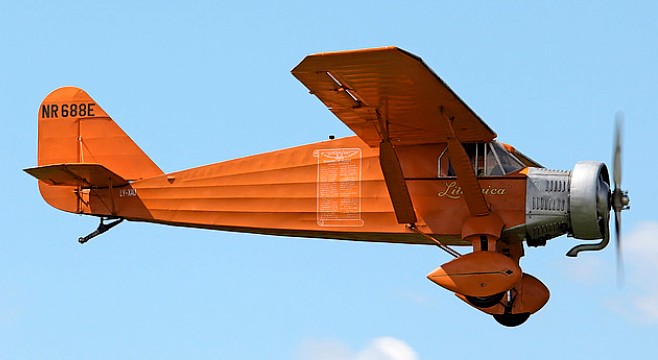
The aircraft flew in aviation festivals until 14 May 1989, when it flew into the airfield Aleksoto Kaunas in Lithuania with a technical museum. In order to fly from Panevezys to Kaunas, it took long negotiation with the Riga sitting by the Soviet military to convince Panevezys Aero Club chief S.Noreiką. Only threatened to fly without permission finally got it. On the same day with the museum staff compiled Lituanica former airport, and a museum hall, where she stayed until the summer of 1993 and returned after flying into Soldini.
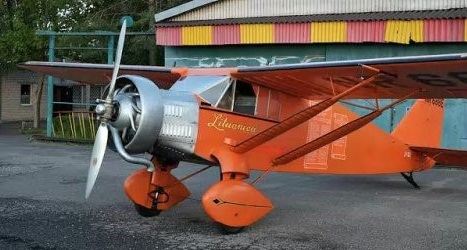
The original LY-XAU / NR688E Lituanica was a modified Bellanca CH-300 Pacemaker flown from New York across the Atlantic Ocean by lithuanian-american aviators Steponas Darius and Stasys Girėnas in 1933. After flying 6,411 km in 37 hours it crashed in Germany, 650 km away from it‘s intended destination Kaunas Aleksotas Airport due to the undetermined circumstances, killing both pilots.
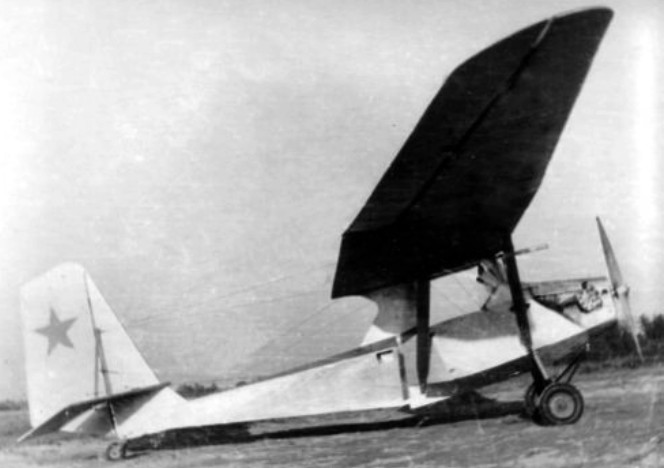
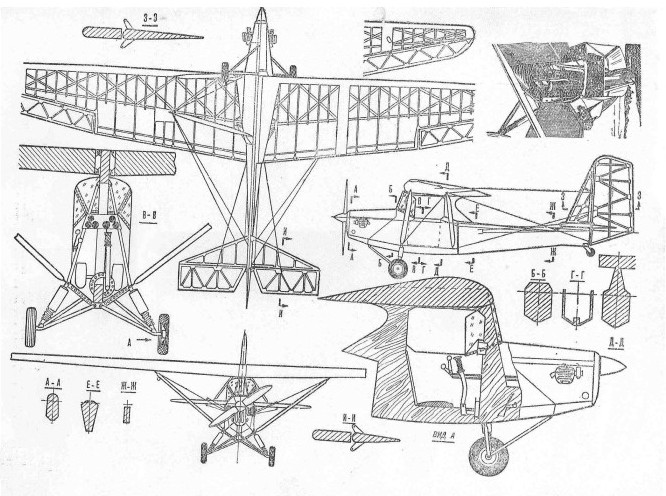
The RT-4 Seagull motorglider was created by Vlado Kensgailos with Silutes ASK.
The M-72 motorcycle engine of 22 hp power spun a 1.7 m diameter propeller. The propeller speed of 2500 rpm, with engine speeds 4800 rpm. Fuel tank – 20 liters, filled the first third of the wingspan, gravity feed into the carburetor.
On the right side, the cockpit door is made with a plexiglass panel. Instruments were compass, vertical speed indicator, altimeter, speed indicator, slip indicator, tachometer and the magneto switch.
The main undercarriage wheels came from a “Vyatka” scooter and the tail wheel of solid rubber.
The motorglider was built in the winter, spring, and summer of 1961 before the first flight.
Specifications:
Engine: M-72, 22 hp
Wingspan: 13.052 m
Fuselage length: 6,23 m
Wing area: 16.13 sq.m
Airfoil: R-III
Empty weight: 280 kg
Flight weight: 380 kg
Speed: 110 km / h.
Take-off speed: 65 km / h
Landing speed: 60 km / h
Takeoff dist: 250 m
Landing dist: 200 m
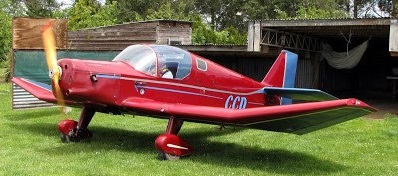
Charlie Kenny of Clydevale near Balclutha, New Zealand, a Jodel enthusiast built a Jodel D 9 ZK-AKR but believed he could build a better Jodel so he designed and built his D 150X Governor ZK-CCD (c/n AACA 360/2).
He incorporated what he reckoned were the best bits of all the many Jodel models. Charlie’s D 150X has the rudder from the D 150, the all-flying tailplane from the D 18 (but bigger), the luggage locker from a D 140 and the wing airfoil is that of a D 18 but again applied to a bigger wing. The wing has split flaps that drop down from the trailing edge.
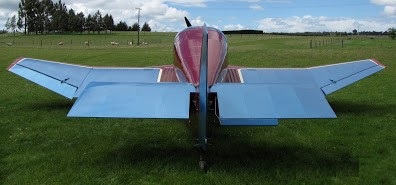
Charlie has also made the fuselage wider than the D 150 at 44 inches while he has moved the seat back 3 inches and sloped the seat to 30 degrees which gives a very roomy cockpit. The windscreen is from a Fletcher FU 24 and it has gull wing doors.
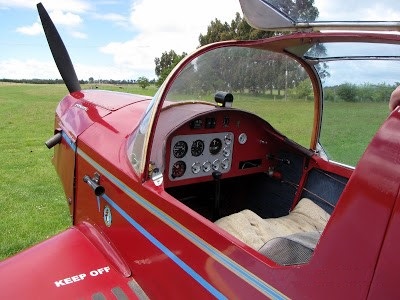
The Jodel is powered by a 1.9 litre Peugeot turbo diesel engine (from a Peugeot 405) that produces around 100 HP. It has a belt reduction drive designed by Wayne Affleck of Invercargill that gives 2400 rpm at the propellor for 3300 rpm engine revs. The engine is water cooled and the radiator in located in the starboard wing root with the battery located in the port wing root. Charlie developed the engine himself but later found out that Jean Delemontez (the del in Jodel) and Jacques Vion had developed their Delvion diesel engine along very similar lines. The diesel engine is very economical using only around 10 litres per hour at cruise.
The dimensions of Charlie’s D 150X Governor are similar to the D 150 Mascaret which has a length of 6.30 metres (20 feet 8 inches), a wingspan of 8.15 metres (26 feet 9 inches) and a wing area of 141 square feet.
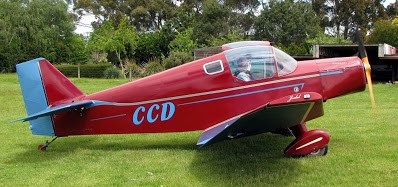
It was first registered on 7 November 2011. The first flight was on 2 July 2015. Charlie says his aircraft flies really well and he had flown about 65 hours in, although it hasn’t flown in the last year or so.
Charlie Kenny has designed and built his D 150X entirely by himself in his shed, as well as sorting the entirely clean sheet engine conversion and all its systems.
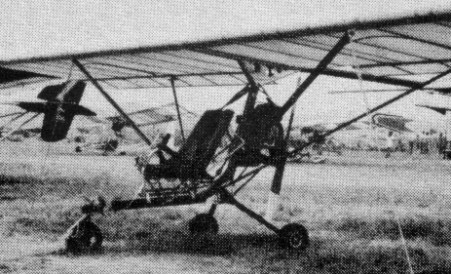
Offered as a completely finished, unassembled kit. A high-wing monoplane with conventional tail group and three-axis stick-and-rudder controls. Steerable nosewheel. Strut-braced, built-up rigid wings, Dacron cover-ing. Fuel tank built into pilot seat. POWERPLANT: Yamaha 15 hp, 2:1 reduction drive, 48-inch prop. LANDING GEAR: Spring tube.
Prototype
Wingspan 28’6”.
Wing area 114 sq ft.
Length 14’.
Height 78”
Empty weight 190 lbs.
Empty wt: 240 lbs.
Wing span: 29’.
Wing area: 145 sq.ft.
Height: 6’10”.
Length: 15’6”.
Fuel cap; 5 USG.
Construction: Aluminium, Dacron.
Engine: Rotax 277 (268 cc) 28 hp.
Max wt: 455 lbs.
Stall: 25 mph.
Max speed: 60 mph.
Vne: 80 mph.
Climb rate: 700 fpm @ 45 mph.
Design limit: +6, -4g.
Glide ratio: 7-1.
Wing loading: 3.14 lbs/sq.ft.
Power loading: 16.25 lbs/hp.
Production
Engine: Rotax 277.
Prop: 48 in.
Wingspan: 28 ft 6 in.
Wing area: 145 sq.ft.
Empty wt: 240 lbs.
Max wt: 500 lbs.
Cruise: 45-50 mph.
Stall: 24 mph.
Vmax: 63 mph.
T/O run: 100 ft.
Ldg roll: 20-50 ft.
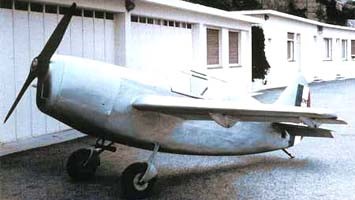
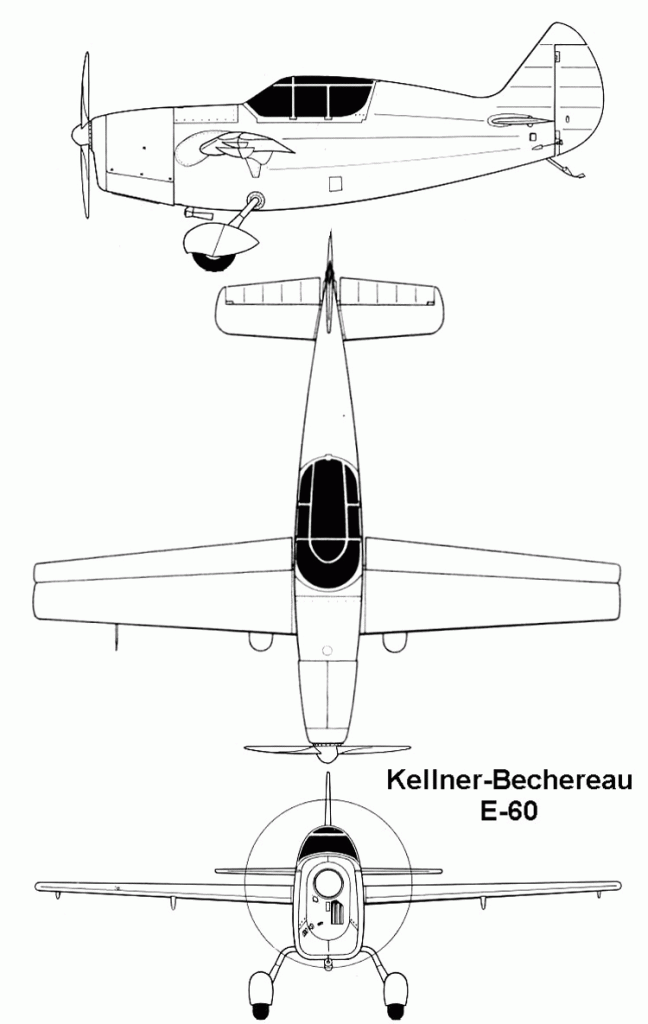
The E-60 is one of many attempts to create a cheap and efficient training aircraft that combines high flight performance, small size and modern appearance. After conducting a series of studies, French designer Louis Bechereau began construction of such a machine in 1939. Its design was distinguished by a very small size – length 4.9 m, wingspan – 5.4 m with an area of only 3 sq.m. To ensure flights at ultra-low speeds, an absolutely new aileron system was installed on the E-60. All the originality of the plane was due to this ” wing in drawer ” design. The first works on the drawer wing had started in 1936, and found their first application on the Kellner-Béchereau E.1. This system consisted of a wing in two parts, the movable rear part of which could move backwards by lowering for landing, like the Fowler flaps. The mobile part of this wing could also partially retract, the two extreme positions corresponding to the “low speed” configuration (fully free wing) and “high speed” configuration (mobile wing partially retracted).
Tests carried out on September 22, 1939 at the Eiffel Laboratory allowed to establish the polar (curve characterizing the profile). This resulted in a profile with low drag (therefore allowing high speeds) and high lift, allowing a large speed difference. However, the high angles of attack were hardly usable, due to the lack of visibility when the aircraft was taking a very nose-up attitude.
The airplane was a monoplane with a mid-wing and a streamlined fixed landing gear. The construction was carried out in spruce and plywood. The fuselage had only three frames: the sheet metal firewall, the pilot’s backrest and the sternpost support. The engine was a Walter Micron of 62 hp, driving a two- bladed propeller. The engine rested on a frame of steel tubes. The simplified landing gear consisted of a single axle.
The completion of the construction of the E-60 just coincided with the competition announced by the fleet on a training aircraft. The plane left the factory in the early days of March 1940 and was brought by road to Buc (Yvelines) and reassembled for his first flight. This took place on 7 March 1940. The test pilot was François Bruneteau. He took off from the 900m grass runway, which was in poor condition that day, plowed by the landings of British heavy aircraft the day before. Takeoff was bumpy. As soon as it took off, the plane took a strong 45- degree right tilt, due to the improper adjustment of the slots. The pilot’s skill allowed him to reduce the incline to 30 degrees and bring the plane back onto the runway, the left wheel touching first. The following tests focused on longitudinal and transverse stability, and revealed acute problems.
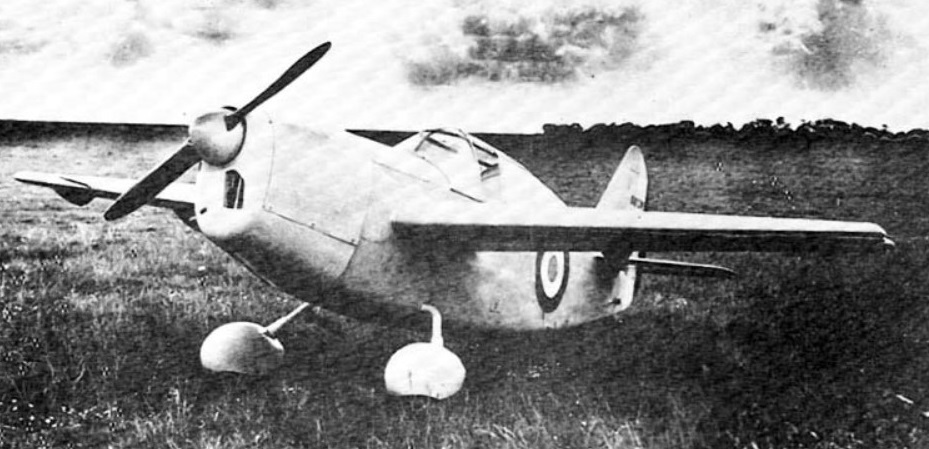
A presentation flight was carried out on April 25, 1940 by François Bruneteau before the Naval Air Commission, which was very interested. This flight, which lasted 40 minutes, highlighted the qualities of the aircraft. Due to its small size, it became practically invisible at 1,500 meters. The Navy planned to use it as a reconnaissance aircraft. The aircraft was able to be fitted with light bombs.
The last two flights took place on June 1 and June 3, 1940. The first included engine temperature tests, and the second included level speed tests at different altitudes, recorded with the barograph. This last flight, lasting 1 hour 45 minutes, almost ended badly for François Bruneteau. A leak of ethylene fuel took place, the vapors spreading in the cockpit.
Before the advance of the Germans, who were already at the gates of Paris, the prototype was evacuated to the South on June 5, 1940. Mounted on a truck, it left Paris by the Porte de Saint-Cloud, when the Germans had arrived at Le Bourget. The destination was the fall-back factory in Alençon, but the Germans were already there. The truck took the direction of Castelnaudary. François Bruneteau left the convoy at Clermont-Ferrand to reach Marseille where he embarked on a boat bound for North Africa. From there, he joined the Free French Air Force in London. The truck continued to Air Base 745 Aulnat, where the plane was hidden throughout the war.
After the war a scrap dealer, “aviation fan”, found the prototype among the wreckage of planes which he found in Aulnat and sold it to his test pilot, François Bruneteau, or rather to his wife, who offers it to her husband as a Christmas present. François Bruneteau completely restores the aircraft (except the original paint and without engine) on his property in Èze-sur-mer (Alpes-Maritimes). In 1975, following the publication of the article in the Fanatique de l’Aviation (number 72), the Air and Space Museum contacted the Bruneteaux. The aircraft was donated to the museum.
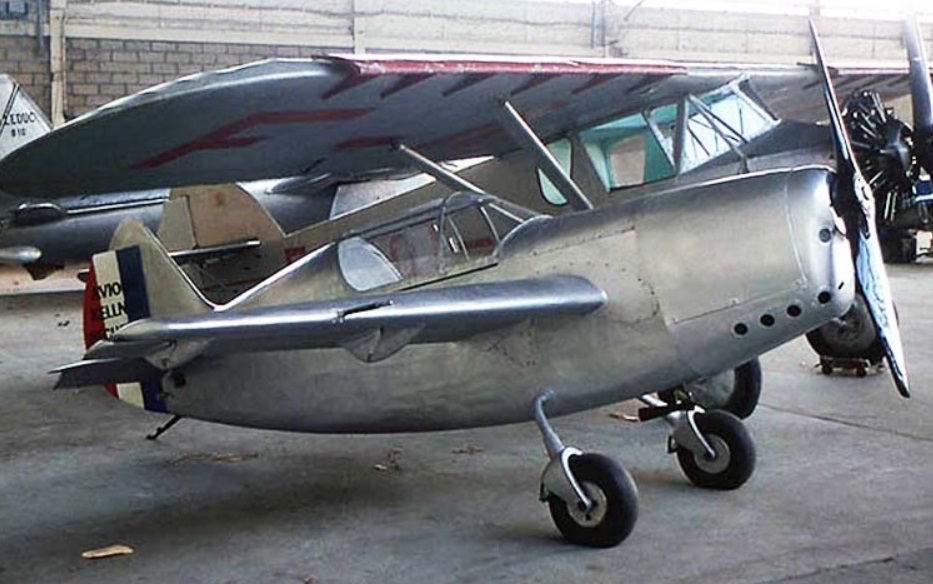
Engine: Walter Mi-2, 62 hp
Wing span: 5.40 m
Wing area: 3.20 sq,m
Length: 4.90 m
Height: 1.80 m
Empty weight: 410 kg
MTOW: 580 kg
Maximum speed: 215 km / h
Cruising speed: 168 km / h
Range: 400 km
Ceiling: 4000 m
Crew: 1
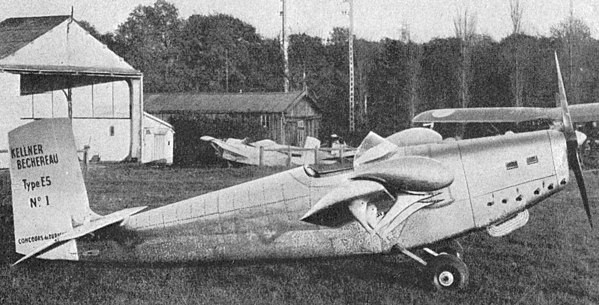
The Kellner-Béchereau EC.4 and Kellner-Béchereau ED.5 were a pair of French training aircraft with side-by-side seating and a novel “double wing” patented by their designer, Louis Béchereau. The principal difference was that the EC.4 had an all-wood structure whereas the ED.5 was all-metal. Both were single-engine, mid-wing cantilever monoplanes.
In 1936–37 Avions Kellner-Béchereau built a short series of small monoplanes exploiting one of Béchereau’s patents, a full span lateral division of the wing into two sections forming a “double wing”, a little like that used by Junkers but with a more equal division of area. The wing was first tested on the single-seat Kellner-Béchereau E.1 on 1936, which was followed by two larger and more powerful two-seaters, the EC.4 and ED.5. Both of these were designed to meet the French Air Ministry’s requirement for a pre-military trainer aircraft to be used by the clubs set up in the “Aviation Populaire” programme.
The ED.5 was similar to the EC.4 except that it was a metal aircraft. The forward part of the wing and the whole fuselage were constructed in a process also patented by Béchereau. It involved the use of wooden formers, shaped to the required skin profile but with cut-outs for strengthening members such as ribs. These were placed into the mould before the duralumin skin was fitted over the former and held down with leather belts. Once secured, the internal pieces and skin could be joined, still in the mould, by screws or rivets. The rear wing surfaces were also metal, though more conventionally built.
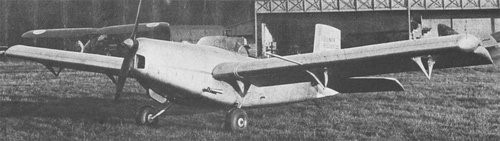
The dimensions of the EC.4 and ED.5 were the same, as were seating, engine and undercarriage. The loaded weight of the metal aircraft was 25 kg (55 lb) lower. Performance was similar, with identical maximum speeds; the lighter ED.5 had a 5 km/h (3 mph) lower stalling speed but a 55 km (35 mi) shorter range.
The ED.5 first flew in 1937.
The Kellner-Béchereau designs were not ordered for the Aviation Populaire programme, the Air Ministry preferring the Caudron C.270 and the Salmson Cri-Cri which were both bought in large numbers. Instead, Kellner-Béchereau, along with other manufacturers, built the Cri-Cri under licence.
ED.5
Engine: 1 × Train 6T, 45 kW (60 hp)
Propeller: 2-bladed
Wingspan: 8.80 m (28 ft 10 in)
Wing area: 8.2 sq.m (88 sq ft)
Length: 5.30 m (17 ft 5 in)
Height: 1.60 m (5 ft 3 in)
Gross weight: 500 kg (1,102 lb)
Maximum speed: 160 km/h (99 mph, 86 kn)
Stall speed: 60 km/h (37 mph, 32 kn)
Range: 790 km (490 mi)
Rate of climb: 2.0 m/s (390 ft/min)
Seats: 2
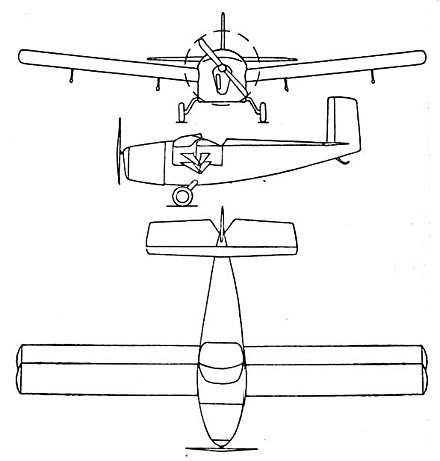
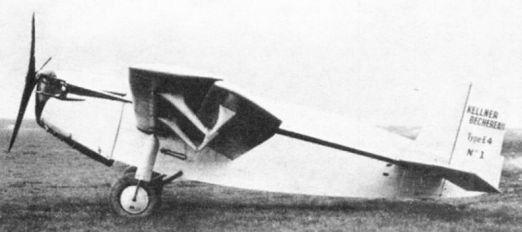
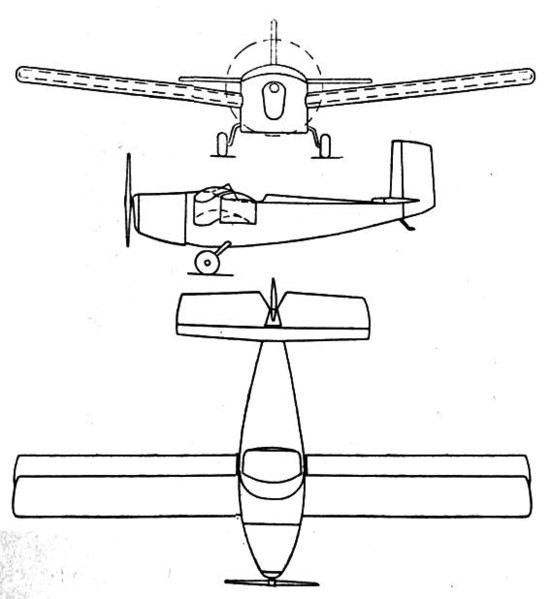
The Kellner-Béchereau EC.4 and Kellner-Béchereau ED.5 were a pair of French training aircraft with side-by-side seating and a novel “double wing” patented by their designer, Louis Béchereau. The principal difference was that the EC.4 had an all-wood structure whereas the ED.5 was all-metal. Both were single-engine, mid-wing cantilever monoplanes.
In 1936–37 Avions Kellner-Béchereau built a short series of small monoplanes exploiting one of Béchereau’s patents, a full span lateral division of the wing into two sections forming a “double wing”, a little like that used by Junkers but with a more equal division of area. The wing was first tested on the single-seat Kellner-Béchereau E.1 on 1936, which was followed by two larger and more powerful two-seaters, the EC.4 and ED.5. Both of these were designed to meet the French Air Ministry’s requirement for a pre-military trainer aircraft to be used by the clubs set up in the “Aviation Populaire” programme.
Like the E.1, the EC.4 was a wooden aircraft with spruce frames and plywood covering. It was a mid-wing cantilever monoplane with straight, thick section, constant chord wings of quite high aspect ratio (9.45). The lateral division was at about 65% chord, with the rear part joined to the front with conspicuous V-shaped faired underwing hinges. In normal flight the two parts were close together and the rear sections acted both as lifting surface and, differentially, ailerons but they could also be lowered together as slotted flaps, moving rearwards as well as down to produce a slot between fore and aft parts.
The fuselage was rectangular in cross section, with an open cockpit seating two side-by-side at the wing trailing edge and an inverted in-line 40 kW (60 hp) Train T6 in the nose. A straight edged tailplane was mounted on the upper fuselage longerons and carried elevators with a small cut-out for rudder movement. The latter, mounted on a very narrow fin, was rectangular and extended to the bottom of the fuselage. The rear control surfaces were fabric covered. The EC.4 had a conventional undercarriage with cantilever main legs hinged on the lower longerons, rubber sprung inside the fuselage.
The EC.4 first flew in 1937.
Thee dimensions of the EC.4 and ED.5 were the same, as were seating, engine and undercarriage. The loaded weight of the metal aircraft was 25 kg (55 lb) lower. Performance was similar, with identical maximum speeds; the lighter ED.5 had a 5 km/h (3 mph) lower stalling speed but a 55 km (35 mi) shorter range.
The Kellner-Béchereau designs were not ordered for the Aviation Populaire programme, the Air Ministry preferring the Caudron C.270 and the Salmson Cri-Cri which were both bought in large numbers. Instead, Kellner-Béchereau, along with other manufacturers, built the Cri-Cri under licence.
EC.4
Engine: 1 × Train 6T, 45 kW (60 hp)
Propeller: 2-bladed
Wingspan: 8.80 m (28 ft 10 in)
Wing area: 8.2 sq.m (88 sq ft)
Length: 5.30 m (17 ft 5 in)
Height: 1.60 m (5 ft 3 in)
Gross weight: 525 kg (1,157 lb)
Maximum speed: 160 km/h (99 mph, 86 kn)
Stall speed: 65 km/h (40 mph, 35 kn)
Range: 845 km (525 mi, 456 nmi)
Rate of climb: 2.0 m/s (390 ft/min)
Seats: 2
In the 1930 C.1 competition for a single seat fighter, about 31 or 32 entries were submitted. The Kellner-Bechereau KB-29 was a single seat fighter project, for this contest. Developed from the KB-28 racer, it was powered by one 450 hp Delage 12 Gvis engine.
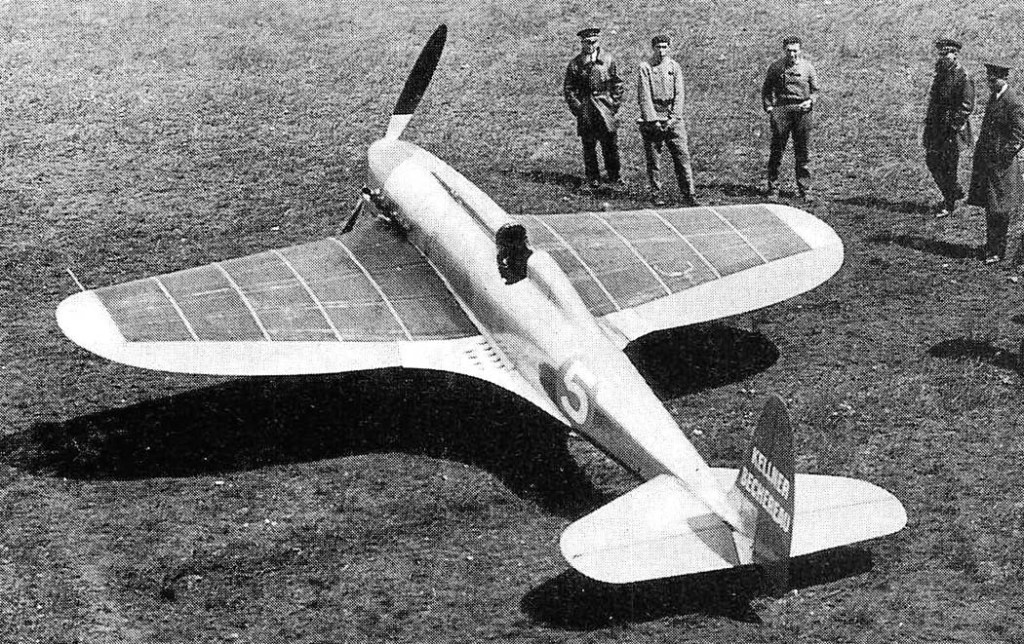
The Kellner-Béchereau 28VD was designed to compete in the 1933 Coupe Deutsch, a race around a 200 km (120 mi) circuit from Etampes in two 1,000 km (620 mi) flights separated by a refuelling stop. Engines of less than 8 l (490 cu in) were stipulated; the 7.95 l (485 cu in) Delage 12C.E.D.irs engine of the 28VD just met this limit.
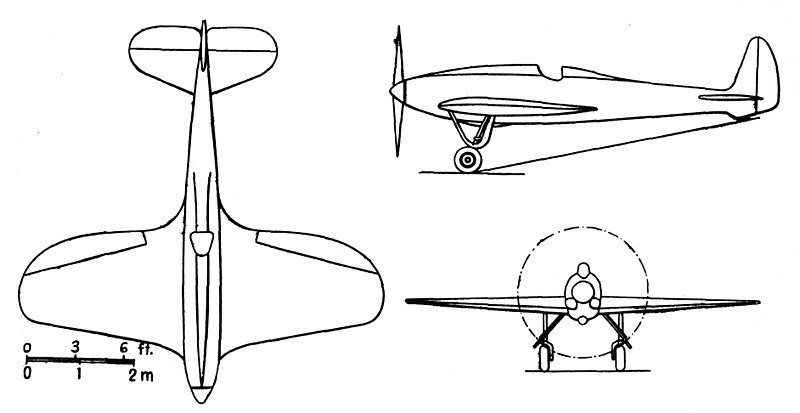
The 28VD was a low wing, cantilever monoplane. Its wing span was small (6.65 m (21 ft 10 in); a wing area large enough to keep the wing loading to values comparable to those of World War II fighter aircraft designed a few years later produced an aspect ratio of only 4.2. In plan the wing was carefully faired into the fuselage and had a swept, straight leading edge, rounded tips and a curved trailing edge entirely occupied by ailerons. There were two spars, one perpendicular to the fuselage at mid-chord and one at an angle bearing the ailerons.
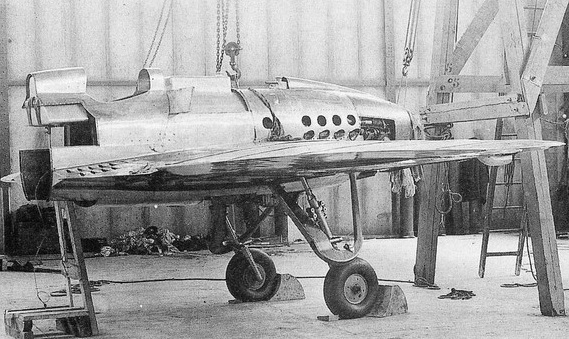
Its fuselage was slender, with a rounded cross-section. The 280 kW (370 hp) water-cooled, double-supercharged, inverted V-12 Delage engine drove a large diameter, two blade propeller. Double reduction gear produced 1,900 rpm at the propeller. Its radiators were in the wing. There were two on each side, one inboard and one outboard, both occupying the full chord and forming the wing skin. An open cockpit was placed a little in front of the trailing edge of the wing, within a narrow dorsal fairing which stretched over half the fuselage, starting close to the nose. The fuselage tapered rearwards to a conventional tail, with a round-tipped triangular tailplane, mounted at mid-fuselage, which had an adjustable angle of incidence. Its vertical tail was tall and slightly rounded and the unbalanced rudder extended down to the keel.
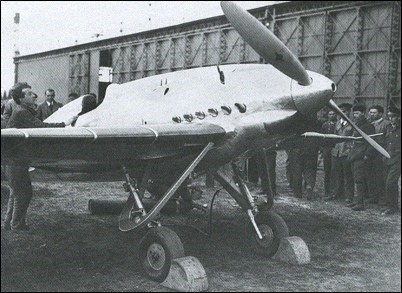
The landing gear of the 28VD had retractable mainwheels, mounted on shock absorbing forward-raked, parallel legs from the wing. These were hinged to the lower fuselage on opened U-shaped frames. Retraction was vacuum-powered; to raise the wheels the tops of the legs were translated outward, swinging frames and wheels upwards. The tailskid was fixed to a small ventral extension of the fuselage under the fin.
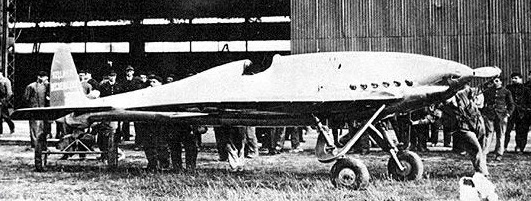
The 1933 Coupe Deutsch de la Meurthe was scheduled to start on 28 May and each aircraft had to make a flight at more than 200 km/h (120 mph; 110 kn) over a 100 km (62 mi) course in the period 8–14 May to participate. The 28VD arrived at Etampes on 3 May to be flown by Vernhol; it is not known how much flying it had done before that, though it was only completed a fortnight before the competition. The early days of the test period were occupied with the refinement of the 28VD but on the 12–13 May it was reported to have engine problems. During the early tests it was decided to set a finer propeller pitch as the initial setting was producing to much drag on the engine. When the aircraft attempted its qualifying flight on the last allowed day, the 14 May 1933, this change of setting allowed the engine to overspeed. As a result, a rubber joint in the cooling system failed, releasing a cloud of vapour which temporarily blinded the pilot and forced an emergency landing in which the undercarriage collapsed and the aircraft overturned. Vernhol was thrown clear and was not seriously hurt but the 28VD was too damaged to take part in the contest for which it was built.
Engine: 1 × Delage 12C.E.D.irs, 280 kW (370 hp) at 3,900 rpm.
Propeller: 2-bladed Ratier, 2.5 m (8 ft 2 in) dia approx, adjustable pitch
Wingspan: 6.65 m (21 ft 10 in)
Wing area: 10.6 sq.m (114 sq ft)
Aspect ratio: 4.2
Length: 7.16 m (23 ft 6 in)
Empty weight: 1,002 kg (2,209 lb)
Gross weight: 1,600 kg (3,527 lb)
Wing loading: 150 kg/sq.m (31 lb/sq ft)
Crew: One
 All Aero