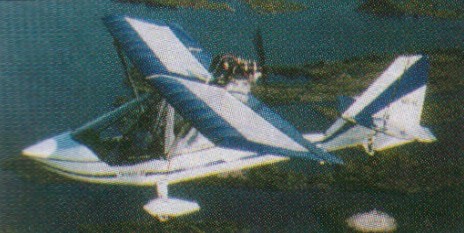
Keuthan Zephyr / Arnet Pereyra Zephyr II

Zephyr II

Detachable wings.

Zephyr II
Speed max: 90 mph.
Cruise: 73 mph.
Range: 200 sm.
Stall: 33 mph.
ROC: 1100 fpm.
Take-off dist: 125 ft.
Landing dist: 100 ft.
Service ceiling: 14,000 ft.
Engine: Rotax 582 DCDI, 65 hp.
HP range: 52-74.
Fuel cap: 12 USG.
Weight empty: 480 lbs.
Gross: 1100 lbs.
Height: 7 ft.
Length: 22.5 ft.
Wing span: 29.67 ft.
Wing area: 156 sq.ft.
Seats: 2.
Landing gear: tail wheel.

Keuthan Sabre / Arnet Pereyra Sabre II

Sabre II

The Sabre II was first flown in July 1992. Detachable wings.

Sabre I
Speed max: 82 mph.
Cruise: 65 mph.
Range: 200 sm.
Stall: 29 mph.
ROC: 1100 fpm.
Take-off dist: 125 ft.
Landing dist: 175 ft.
Service ceiling: 14,000 ft.
Engine: Rotax 503 DCDI, 52 hp.
HP range: 40-50.
Fuel cap: 10 USG.
Weight empty: 350 lbs.
Gross: 740 lbs.
Height: 6.25 ft.
Length: 20.1 ft.
Wing span: 29.67 ft.
Wing area: 143 sq.ft.
Seats: 1.
Landing gear: nose or tail wheel.

Sabre II
Speed max: 90 mph.
Cruise: 75 mph.
Range: 220 sm.
Stall: 28 mph.
ROC: 1000 fpm.
Take-off dist: 150 ft.
Landing dist: 175 ft.
Service ceiling: 14,000 ft.
Engine: Rotax 582 DCDI, 65 hp.
HP range: 50-80.
Fuel cap: 10 USG.
Weight empty: 480 lbs.
Gross: 1100 lbs.
Height: 7 ft.
Length: 22.33 ft.
Wing span: 29.67 ft.
Wing area: 156 sq.ft.
Seats: 2.
Landing gear: tail wheel.

Kestrel K-350 / JP10 / JP100 / Farnborough Aircraft F1

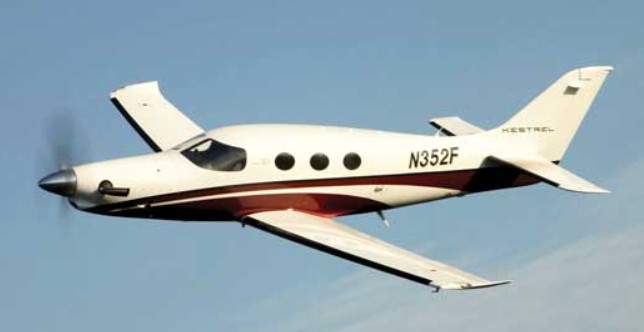
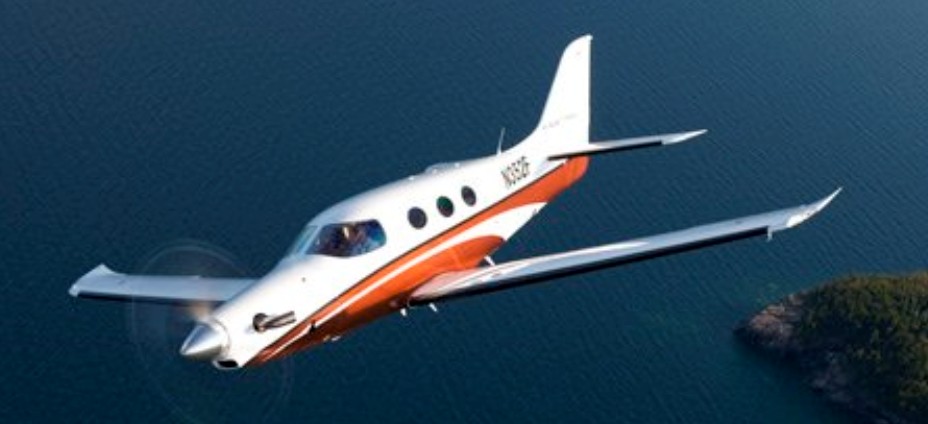
The Kestrel JP10, Kestral K-350, or Kestral is a high-performance single turboprop-engined all-composite six-seat aircraft. Its layout is low-wing with tailplanes mid-set on a single fin. The tricycle undercarriage is fully retractable. Its construction uses composites incorporating carbon fibre. The wing is also of carbon-fibre construction and features a high lift laminar flow design worked out mostly by aerodynamicist Dr. Gordon Robinson.

The cabin features a pressurized area.

Farnborough Aircraft formed a business alliance with Epic Aircraft to develop both companies aircraft and as a result the JP10 appears similar to the Epic LT. The wing is reportedly the same, while the Kestrel’s fuselage is 20 inches longer than the Epic’s.

The company formed in 2002 to build the aircraft was started by Richard Noble who was responsible for the team that first broke the sound barrier on land. Noble envisioned the aircraft’s primary role as being part of the fleet of “air taxis” flying over Europe that provide an alternative to both commercial airlines and chartered corporate jets. Noble named his Farnborough, England based company “Farnborough Aircraft” and the design for the then designated “F1” was detailed.

The name of the company has since been changed to Kestrel Aircraft Company and the aircraft’s designation was changed from “F1” to “JP100” and is now the “JP10”.

A business partnership formed to complete the Kestrel’s development named the Gulf Aircraft Partnership and located in the UAE did not proceed. Alan Klapmeier, co-founder of Cirrus Aircraft Corporation, has joined with Anthony Galley and others in the renamed Kestrel Aircraft Company. A business relationship has been formed with Liberty Aerospace of Melbourne, Florida, United States to provide assistance with Toray carbon fiber components.

Kestrel Aircraft’s Adrian Norris reported that the company was ready to freeze the design and build conformal prototypes in efforts to seek part-23 certification. On 23 July 2010 Kestrel Aircraft announced that they would be relocating to large, relatively newly built hangars at the soon to be closed Brunswick Naval Air Station in Brunswick, Maine. The company was to receive some local financial assistance in exchange for an anticipated eventual creation of some 300 jobs.

The prototype first flew on 29 July 2006. The engine that has been powering the prototype is a Pratt & Whitney PT6-67A turboprop flat rated to 1,000 hp (746 kW). As of April 2010, the prototype, registered N352F, had logged about 260 hours.

In 2011 the company selected the Honeywell TPE331-14GR engine as first choice for the aircraft, also flat rated to 1,000 hp (746 kW).

On January 17, 2012, it was announced that the aircraft will be produced in Wisconsin due to tax incentives totalling US$50 million.

In July 2013 Kestrel CEO Alan Klapmeier stated that funding delays had slowed progress on the aircraft and that a conforming prototype was now expected to be ready in the summer of 2014, with the first customer delivery forecast for the end of 2015 or early 2016. Certification costs were estimated at US$175M, with US$50M already spent.

By September 2013 employees were reporting that the company was short of money and that salaries and insurance payments were missing or late, and that vendors had not been paid. The company indicated that development had been delayed due to lack of investment and that the first flight of a production aircraft would not occur in 2014.

In early 2014 it was reported that Kestrel Aircraft had fallen months behind on loan payments to the Wisconsin Economic Development Corporation due to financing delays. It was also reported that the delay in financing had impacted hiring, causing the company to reduce its staff in Superior. The WEDC and Kestrel have agreed upon new terms that will defer the payments until November 2014.

Kestrel JP10
Engine: Pratt & Whitney PT6-67A turboprop, 1,000 hp (746 kW)
Wingspan: 44 ft 11 in (13.7 m)
Length: 38 ft 5 in (11.7 m)
Height: 13 ft 0 in (3.96 m)
Empty weight: 5,200 lb (2,359 kg)
Max takeoff weight: 8,500 lb (3,856 kg)
Fuel capacity: 319 US gal (1,208 l)
Maximum cabin altitude: 8,000 feet (2,400 m) at FL 310
Pressurization: 7.5 psi (52 kPa)
Cruise speed: 320 kn (368 mph; 593 km/h)
Stall speed: 53 kn (61 mph; 98 km/h)
Range: 1,300 nmi (1,496 mi; 2,408 km)
Service ceiling: 31,000 ft (9,400 m)
Rate of climb: 2,250 ft/min (11.4 m/s)
Capacity: six standard/seven-eight optional
Crew: 1 or 2
Kerr Stuker

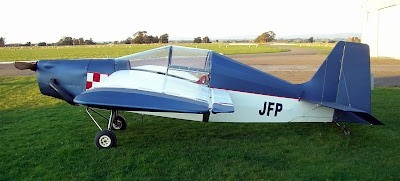
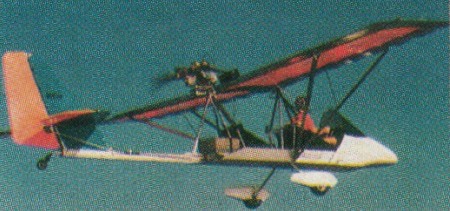
The Stewart Kerr Stuker was built by Stewart Kerr of Dunedin in the mid 1990’s.

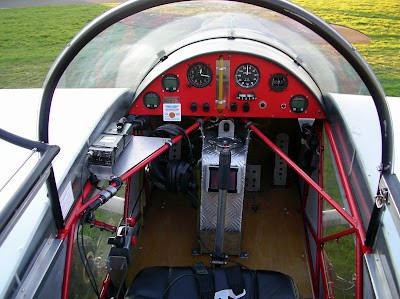
It is a mid wing design and construction is of steel tube fuselage and alloy tube wings, all fabric covered. The motor is a Rotax 503, swinging a Brent Thompson propeller.

First registered ZK-JFP (c/n 001) to S.L.Kerr, Invercargill, New Zealand, on 13 May 1997.

It was sold to Andrew Gilmour of Taieri on 6/8/03 and then to Noel Wilson of Reefton on 8/4/08. Finally, it was purchased by Robin Baker of Palmerston North on 22/4/08. Robin refurbished the aircraft and painted it in its current blue and white scheme. It is hangared at Feilding Aerodrome where the photos were taken. ZK-JFP had flown 215 hours.

Kerestesi MG-1 Motorglider

Kerestesi MG-1 Motorglider had its beginnings as the G-1 Formula racer. It resembled the Fournier RF-1, but was built of metal for protection against the weather. It has a constant chord wing for higher drag penalty, and the trailing edge of the inboard wing panels are all flap, and the outer edges all aileron. Both are operated by push-pull tubes. The fuselage is built of composite materials. An all-moving stabilator was used in place of conventional two-piece elevator surfaces.

Gross Wt. 940 lb
Empty Wt. 731 lb
Fuel capaci¬ty 4 USG
Wingspan 45’
Length 21’.
Engine 50-hp 1200cc VW
Top glide mph 120 (power on 80 mph)
Takeoff run 800 ft
Landing roll 300 ft

Kensinger KF

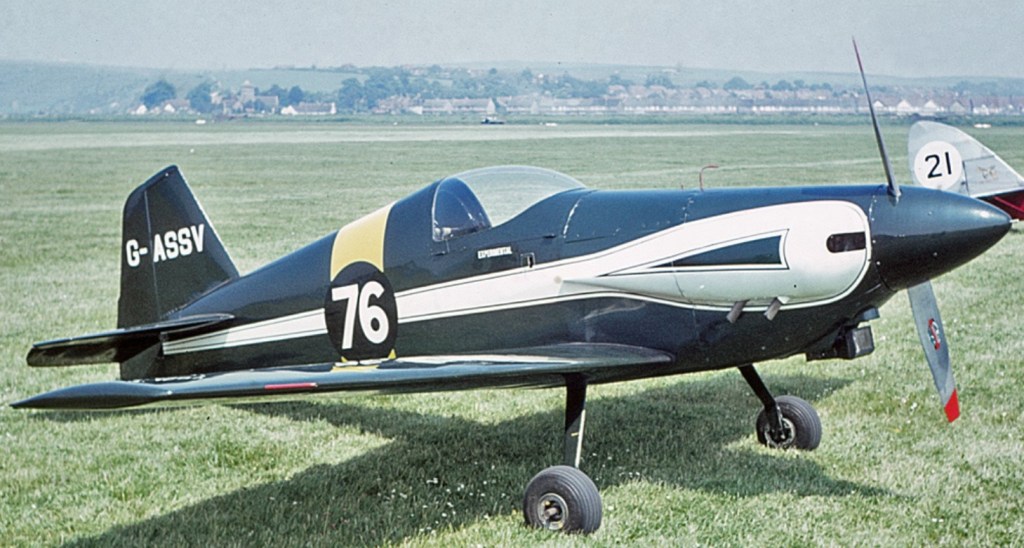
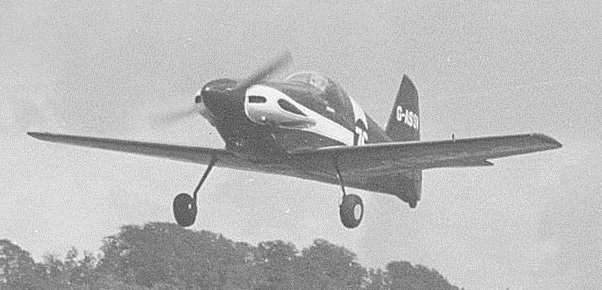
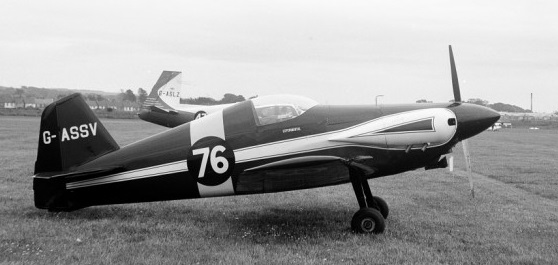
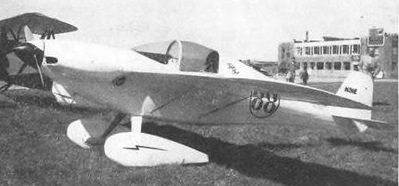
The Kensinger KF was a single seat, all metal Formula One racing aircraft designed and built by Ned Kensinger at Fort Worth in 1959 as N23S.

Only one was built which was later exported to the UK. In the UK, it was registered as G-ASSV c/n.2, fitted with a Continental C85-12F, later changed to a C90 engine.

This flight test was conducted in June 1965 by test pilot J.W.C. Judge and was to test the handling of G-ASSV for the issue of the Permit to Fly. The test flight took place at Halfpenny Green Aerodrome near to the town of Wolverhampton, England and lasted for 25 minutes.
The Kensinger KF (derivative of the Midget Mustang) is a small, all metal, single seat monoplane. The aircraft is powered by a Continental C.85 engine driving a two-bladed MacCauley fixed pitch propeller. The ground clearance of the propeller is satisfactory.
The fuel system comprise of an 11.5 U.S. Gallon gravity fed main tank situated forward of the cockpit and two 4 U.S. Gallon tanks situated in each wing root. The fuel selector cock was mounted on the cockpit floor below the pilot’s right thigh and was easily reached in flight when the pilot was strapped in. The main tank was fitted with an uncalibrated float-type guage on top of the scuttle but the wing root tanks were not guaged.

Kensinger Kf G-ASSV

The cockpit was fitted with a good quality one piece blown perspex canopy that was hinged to fold to starboard for access. A simple and effective canopy locking lever was fitted to the port cockpit wall. A Z-type harness was fitted.
The forward view on the ground was poor but an adequate view could be obtained if the nose was swung from side to side while taxying in the Spitfire manner. The steerable tailwheel (mounted in the base of the rudder) was very effective and although sensitive, one soon got the hang of it. The hydraulically operated toe brakes were effective without being fierce and ther was no tendency for the tail to lift. The toe brakes were so arranged as to require a distinct movement to operate them, making inadvertant operation unlikely. The ground ride was good on tarmac surfaces. The main undercarriage legs were of the spring steel type, the spats were not fitted for this flight.
Max. power static gave 2280 R.P.M. An effective carburettor hot air control was fitted.
On take-off flaps up, there was no undue tendency to swing, the tail rose quite readily and the aircraft was lifted off at 85 mph The flight was made from a smooth tarmac runway in light and variable wind conditions, in fact there was a slight tail wind component.
A comfortable climbing speed was 120 mph, which gave 2550 R.P.M. at full throttle. Engine cooling appeared to be most satisfactory.
The aircraft was dived to 230 mph satisfactorily although the R.P.M. tended to get rather high (in excess of 3200 R.P.M., even when well throttled back). No information on VNE or other limitations was available, although there was a red mark at 250 mph on the A.S.I. There was no evidence of control over balance or flutter.
In cruising flight the aircraft flew with a nose-down attitude and the forward view was good.
Max. level speed at 750 feet (1013 mbs.) gave 185 mph at full throttle/3100 R.P.M.
At high speeds the aircraft was slightly tail heavy, requiring a light push force and making it difficult to assess stability and stick force/g. Stick forces were however light. It is understood that it is intended to fit a Tiger Moth type elevator trimmer eventually, in the meantime it might be worth while to fit a small fixed elevator tab.
On lowering the flaps there was a slight nose down trim change. The flaps were lowered fully at up to 110 mph (again no limitations were available). The flaps, operated by a lever on the port side of the cockpit, had four positions in addition to up. It was easy to lower them to the 3rd position but there was an increased force to reach the 4th position. There was little or no difference in stalling speed or handling between 3rd and 4th positions. The following stalling speeds were achieved, power off:-

Flaps Up – Min. I.A.S. 65 mph – No buffet warning, starboard wing drop at min
Flaps 3rd or 4th position – Min. I.A.S. 63 mph – No buffet warning, starboard wing drop at min.

Lateral stability was satisfactory power on and power off. The ailerons were effective but not as crisp as on the Cosmic Wind. The rudder forces were light but satisfactory.
In the event of an engine failure I recommend that the flaps be left up and 120 mph be maintained while manoeuvring. this gives a good view and a reasonably flat glide angle. The flaps may be lowered in the final stages of the approach but care should be taken not to let the speed fall off too much power off with full flap as it would then be easy to develop a high rate of sink. The 4 divisions of flap allow them to be lowered in stages as required.
The normal powered approach was made at 100 mph with full flap, the view was good and there was ample control, speed was allowed to fall off to 85 mph at the runway threshold and the recommended wheel landing was made (with the sensitive tailwheel steering it could be easy to introduce a swerve if a three point landing was made with the rudder slightly off centre). Speed fell off rapidly after the tail was lowered (even with a slight downwind component) and little braking was necessary.
Summary
This little racing aircraft is pleasant and reasonably easy to fly. Control forces are light but appropriate to an aircraft in the ultra light category. The flaps are effective and make the aircraft much easier to land than the unflapped Cosmic Wind.
It is recommended that the aircraft will be improved by the addition of an elevator trim control as it is at present slightly tail heavy at high speeds, requiring a light push force. There is also a slight nose down trim change when the flaps are lowered.
J.W.C. Judge – 10th June 1965

It was written off on 2 July 1969.

Gallery

Span: 18.06 ft
Length: 16.05 ft

Kensgaila VK-8 Ausra

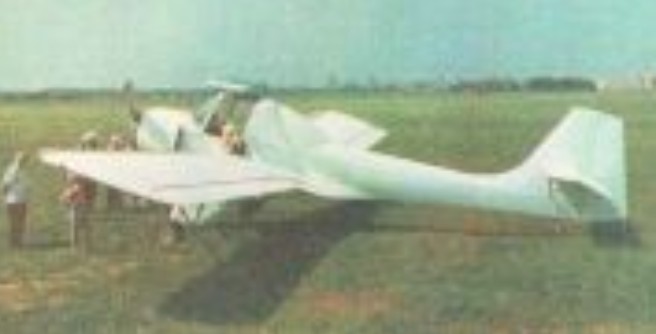
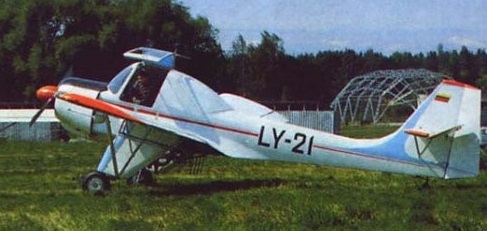
Design of this two seat agricultural homebuilt was undertaken by Vladas Kensgaila in Lithuania. Panevezys District “Dawn” kolkhoz (Chairman Vilius Pasiukas) decided to pay the costs. Pasiukui, over the years, have not changed, and thousands of bills paid for the materials. Work began in 1987 and the construction of the prototype began in 1989 and later that year the VK-8 appeared at the 5th National Homebuilt Convention held at Riga. At that time it was the largest homebuilt in the Soviet Union and carried the Lithuanian registration LY-21. The designer was hopeful of series production.

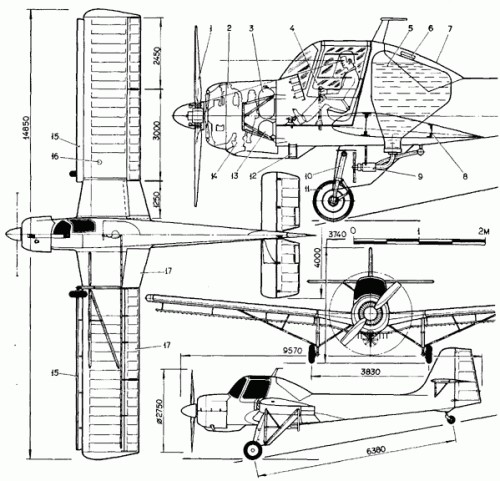
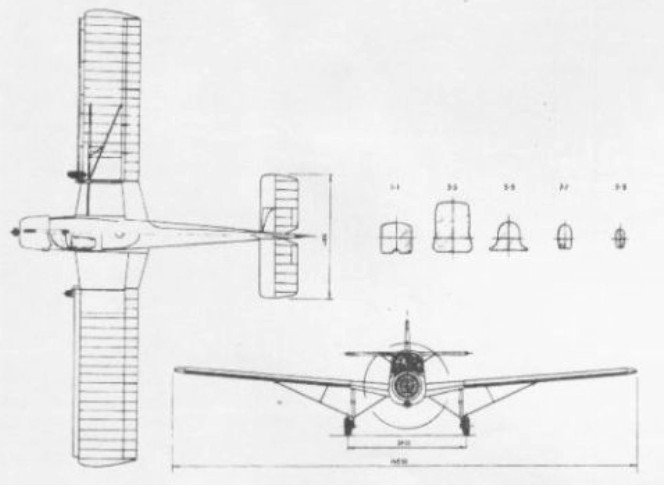
It was an aircraft designed for agricultural, training and transport roles, and conformed to experimental regulations. It was a strut-braced low-wing monoplane, of composite construction. It had three axis control plus flaps, leading-edge slats and electric trim. Spray booms were carried below the wing trailing edges ahead of the ailerons. The undercarriage was not retractable and the main wheels were fitted with trouser fairings and brakes.

It had a high raised cockpit, slightly forward of the wing which gave a good view. An 800 litre container was carried behind the cockpit for 309 kg and the VK-8 could spray a swathe of 30 metres width. The Vedeneyev 360 hp radial engine drove a two bladed variable pitch wooden propeller with reduction gearing. The airscrew diameter was 2.75 m. Powered by a 360 hp power M 14 F engine, either the M-14P or M-14PS could be fitted.

The plane was built in two years. The VK-8 Ausra two-seat agricultural aircraft first flew in May 1989 piloted by Vlad Kensgaila, from Panevezys aviation technical sports club hangar.

Designed as a potential An-2 replacement, only one was built. It fully complied to FAR 23 standards.

Engine: 1 x Vedeneyev M-14P (268kW)
Prop dia: 2.75 m
Wing span: 14.85 m
Wing area: 28.4 sq m
Length: 9.57 m
Height: 3.74 m
Empty weight: 1140 kg
MTOW: 2,200 kgs
Max fuel: 180 litres
Max payload: 1,000 kgs
Maximum speed: 220 km/p
Cruise: 180 km/p
Economic cruising speed: 160 km/p
Stall speed: 70 km/p
Range: 450 km
Endurance: 3 hr 40 min
Take off speed: 60 km / h
Service ceiling: 4,000 m
Rate of climb: 300 m per minute
Take-off run: 60 m
Landing run: 40 m
G Stress: +3.5 & -2.0
Accommodation: 2