Sergei Korolyov decided to enrol in the Kiev Polytechnic Institute, where at that time it was supposed to begin training aviation engineers at the mechanical faculty.
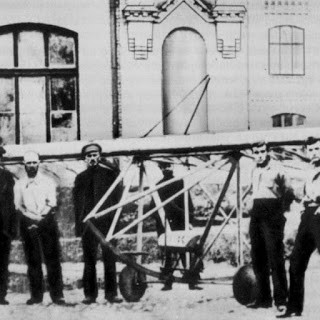
There was a globular circle at the institute. His work was monitored and helped by many prominent scientists who taught at the KPI. Sergey Korolev became a member of it. He worked, as all are many and enthusiastic. Often at night. Korolev slept sometimes in the workshop on the shavings. He loved to work and was a master of all trades. After that, they never altered anything. Gliders built in the institute workshops, participated in international competitions, receiving the highest marks. At circles there was a rule: who built a glider, he flew it.
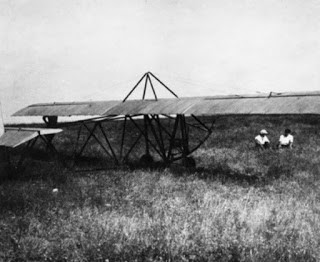
A training glider KPIR-3 was built, he contributed a share of his work and Korolev. Sergei flew on it. One of the flights almost cost him his life. On the border of the site – wasteland, where the gliders were tested, from a pile of garbage a water pipe was sticking out. Sergei did not notice and planted a glider on it. The blow was strong enough and Korolev lost consciousness for a while.
In 1926, after two years of studying at the KPI, Sergei Korolyov was transferred to Moscow for a special evening group on the aerodynamics of the Moscow Higher Technical School.
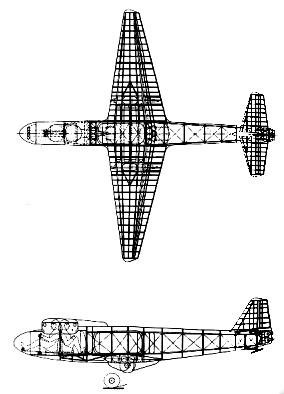
The two-seat SK-9 was designed by S.P.Korolev in 1934 – 1935 and was built at Osoaviakhim’s Planernyi Zavod (“Glider factory”, Tushino, near Moscow) in the Fall of 1935. The glider was built as a two-seater and had an unusual for sailplanes airframe: SK-9 had very high wing load and was capable to withstand loads up to 7g.
Chosen parameters were based on earlier experiments with BICh-11 glider, which was never flown with rocket engine just because light wooden airframe “expired” prior to arrival of the powerplant.
The SK-9 was an all-wooden aircraft. Box-type spars, ribs and 1mm plywood skin formed rigid box with strong resistance against bending and twisting. Fuselage of the oval crossection had 1mm to 1.5mm external skin and internal 1mm plywood skin for extra rigidity. Wing carried 2-section slotted ailerons covered with fabric. Landing gear included a ski and fixed tailskid. The wooden ski was covered with steel and linked to the fuselage by set of rubber rings protected with fabric cover.
Pilot’s and passenger cockpits – of the open type. Pilot is protected by small plastic windshield. Rear cockpit had a removable set of controls.
During the Fall of 1935 the SK-9 passed factory trials at Tushino airfield, performing number of flights both towed by the airplane and in free flight.
It was flown (towed by an R-5) from Moscow to Koktebel for participation in the XIth All-Union Glider Convention (September 6 – October 6, 1935) in Koktebel (it flew there from Moscow on tow, as part of an “aerotrain”, with Korolev onboard as a passenger). During overflight and at the Convention SK-9 proved its high performance and good handling at speeds up to 180km/h even in “rough air” conditions. During flight from Moscow to Koktebel and back the SK-9 was piloted by glider-pilot Romanov and S.P.Korolev himself (he was a licensed pilot too).
The SK-9 was designed to be converted into a Rocketoplane – aircraft propelled by a rocket engine, and was later converted into the RP-318-1 rocket-plane.
The SK-9 fuselage and leading edges of the wing were painted bright-red. Wing, tailplane, rudder and nose section of the fuselage – ivory. Landing ski – black.
SK-9 Wingspan: 17.0 m Wing area: 22 m2 Wing aspect ratio: 13.1 Length: 7.33 m Height: 2.64 m Empty weight: 300 kg Loaded weight: 4605 kg Wing loading: 23 kg/sq.m Takeoff speed: 71-76 kph Tow speed: 130-140 kph Min glide: 85 kph Normal glide: 100 kph Max glide: 200 kph Glide ratio: 19:1 (23:1 by another source) Landing speed: 70 kph Minimal descent: 0.94 m/sec Normal descent: 1.4 m/sec Crew: 2
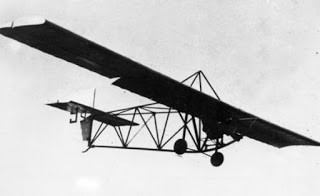
The Korolev SK-5 Koktebel single-seat, high-perform sport glider. Designed together with Sergei Lyushin; sometimes mentioned as KL-5. Built in 1929 in Moscow, took part in 6th (October 6-23, 1929) and 7th (1930) All-Union gliding contests. The glider was named after a town in Crimea where all gliding contests until 1935 were held (in 1944 this gliding center was even renamed into Planerskoye – “Glider Town”; it regained name “Koktebel” in 1991).
Among contemporary gliders, SK-5 was unusual with its long fuselage and robust design; but it had excellent aerodynamics (for that time of course) and flew as well as the better of its much lighter counterparts.
Wing span: 17.0 m Length: 7.75 m Wing area: 16.4 sq.m Wing aspect ratio: 17.6 Empty weight: 230 kg Flight weight: 300 kg Glide ratio (L/D): 25:1
After attending the Kiev Polytechnic Institute, Korolev went on to the Moscow Higher Technical University (MVTU). There he was involved in design and construction of an increasingly ambitious series of gliders, culminating in the powered SK-4, designed for record duration flights in the stratosphere.
The student of the graduate course of the Bauman Moscow Technical University Korolev passed the production practice at the Central Aerohydrodynamic Institute (TsAGI), at the Tupolev Design Bureau. At this time, he was already working at the aircraft factory in Fili. At the same time, in 1929, he was preparing a thesis project, deciding to design a light-engine twin aircraft SK-4 (his advisor was Andrei Tupolev).
The design of the SK-4 aircraft, designed for a record range of flight, turned out to be original, detailed and well designed. The project manager was Tupolev himself, signing it with the first presentation. This is not the case in the practice of students. The Tupolev approved single-engine two-seater SK-4 project was then built and tested.
The aircraft was designed for a 100-hp Shvetsov M-11, but it had just came to production and Korolev couldn’t obtain one. As an alternative one Walter NZ-60 engine, 5-cylinder radial, of 60 hp was used.
The SK-4 could be used as liaison and trainer aircraft, but Korolev planned to use it also for long-range air raids. He wanted to surpass the achievement of the Yakovlev AIR-3 in which pilot Filin, with journalist Koval’kov onboard, performed a non-stop flight from Minvody to Moscow on September 6, 1929 (during 10 hours 23 minutes they covered 1750 km – a world record for this category of aircraft, unregistered officially because USSR wasn’t FAI member that time).
The SK-4 was tested in late 1930 – early 1931 by Korolev’s good friend Dmitry Koshitz, and Korolev himself also participated in the tests. During one of test flights, the engine failed and the SK-4 crashed (Koshitz wasn’t seriously injured, and Korolev wasn’t onboard that time). The record flight was never attempted.
Engine: one Walter NZ-60, 60 hp Wingspan: 12,2m Wing area: 15.36 sq.m Length: 7,15m Height: 1,88m Empty weight: 500 kg Takeoff weight: 690 kg Maximum speed: 160 km/h Landing speed: 68 km/h Service ceiling: 4000 m Ceiling: 4000m Seats: 2 Flight endurance: 2 hours
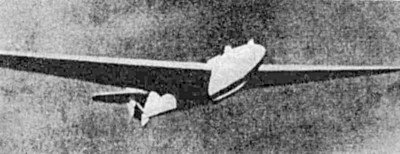
The S.K.3 Red Star (Krasnaya Zvezda, SK-3) glider was designed by Soviet engineer Sergei Korolev (1907-1966). Korolev began his first full-time paid position at Factory 22 Design Bureau in 1929, and was assigned a glider project.
It had a wingspan of 12.2 metres and was designed for aerobatic manoeuvres (safety factor of 10). It was built in 1930 in Moscow during only 47 days.
Its pilots included Vasily Stepanchonok. Photographed in October 1930, in Koktebel, the Crimea region, Ukraine, taking part in the 7th All-Union (USSR) glider competition.
The SK-3 participated in 7th (October 1930) and 8th (October 10 – November 10, 1932) All-Union gliding contests in Koktebel. On October 28, 1930 Vasily Stepanchonok (later renowned test pilot) during one flight made three loops with it. This was world’s first successful attempt to perform such manoeuvres on a glider which climbed on thermals (shortly before an American pilot made four loops on a glider, but he used assistance of towing airplane for climbing).
Not only a successful glider design, it was accepted for production and demonstration, flown by S.V.Ilyushin.
Wing span: 12.2 m Length: 6.79 m Wing area: 12 sq.m Wing aspect ratio: 12.4 Empty weight: 189 kg Flight weight: 270 kg Glide ratio: 20:1 Rate of sink: 0.9 m/s
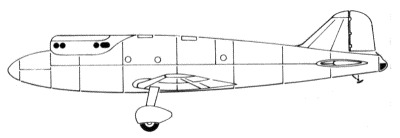
The RP-318 or RP-318-1 was Russia’s first rocket-powered aircraft or Rocket Glider (Rocketny Planer or Raketoplan) which “RP” stands for in Russian language. Beginning in early 1936 it was firstly known as RP-218-1 or “Objekt 218” before it was changed to RP-318-1 in 1938 due to inner reforms of Rocket Science And Research Institute.
According to the proposal of Marshall Tukhachevsky the Revolutionary Military Board established on 21 September 1933 a brand new institution – RNII. The activities of the new institute began on October 31 by merging of GDL and GIRD. In the beginning the works on a rocket-glider were not a part of RNII activities and also the development of rocket engines using a liquid propellant was also not in the focus of activities – the main activities were focused on military rockets, using solid fuel.
He understood well, that the idea of creation of the rocket plane simply by putting a rocket engine into usual airframe was wrong. He stressed, that there are differences in flight characteristics, trajectories and weights. The development of necessary airframes could be possible on condition, that there was a reliable and powerful rocket engine. These conclusions he pointed at the conference about utilizing of rocket-powered aircraft for use in the atmosphere, which was held on 2-3 March 1935 in Moscow.
The chief designer was S.P.Korolev and his deputy was E.S.Schetinkov. The original design was a single-seater and a pressurised cabin was not in consideration, instead the pilot was provided with a space suit. The empty aircraft was to be very light: 240kg airframe, 200kg fuel system, 200kg compressed air system (used for life support and to displace fuel components toward the engine), 50kg for engine. The rocket engine should have thrust of 19.6kN and the take-off should be assisted by solid fuel boosters. After a steep climb (at angle of 60°) to an altitude 32km, and the aircraft would glide at the speed of up to 2500km/h, covering 220km in 18min.
Some changes were introduced in the design. Now it was a two seater, high-altitude experimental aircraft with pressurized cockpit, equipped by a rocket engine (developed by the 1st department of liquid rocket engines, managed by V.P.Glushko). It was obvious that such a complicated aircraft can not be successfully built without simpler manned technology demonstrator. S.P.Korolev was ready for this: he already built a strengthened glider SK-9, specially intended to fly with a rocket engine. On June 16 1936 the board of RNII decided to proceed with a “supplement” to the Object 218. It would be an experimental aircraft equipped by a low-output rocket engine, named RP-318, essentially a SK-9 fitted with ORM-65 engine and fuel system. The engine selected, Glushko’s ORM-65, a nitric acid/kerosene engine capable of generating between 50 and 175 kg of thrust, was already under development for the 212 winged missile.
RP-318-1
Built in 1936 by Sergei Korolev as an adaptation of his SK-9 glider, it was originally designed as a flying laboratory to test rocket engines and ORM-65 (RDA-1-150) designed by Valentin Glushko was the one selected to be used. Arvid Pallo took the work on installation into the SK-9 rear fuselage, and the tanks for nitric acid and kerosene occupied the former rear cockpit. The whole powerplant weighed 136.8 kg, the fuel 75 kg. The engine could run for 112 seconds. Ground fire tests began at February 1939, until October more than 100 firings were done.
In late 1938, when both Korolev and Glushko were arrested in suspicion of Anti-Soviet activity, new RNII Director B.M.Slonimer transferred the “Rocket-Glider” project with remains of the team to the new department (head – L.S.Dushkin). A.V.Pallo was put in charge for the RP-318. Development of the RP-318-1 was continued by Alexei Scherbakov (Щербаков, Алексей Яковлевич) and Arvid Pallo (Палло, Арвид Владимирович), culminating in the first powered flight on Feb. 28, 1940 by test pilot Vladimir Fedorov. The rocketplane took off towed by a Polikarpov R-5; at 2800 m altitude it released, Fedorov set up 80 km/h speed and then fired the engine. After 5-6 seconds the speed increased to 140 km/h; Fedorov established climbing flight with 120 km/h speed and held it during all time the engine worked (110 seconds); he climbed 300 m during this time. The speed increase after engine start was smooth, vibrations didn’t appear. On March 10 and March 19, 1940 two more successful rocket flights were performed.
As it already occur several times in Soviet pre-WWII history, purges and re-organizations added new problems. RNII lost its Flight-Trials Grounds. There were no more experienced test-pilots (S.P.Korolev was in prison). It was necessary to find an organization within Aviation-Industrial complex capable to carry out flight trials of the aircraft. Help came from the OSK Factory N°1 NKAP. A.Ya.Scherbakov, head of the OSK was involved with “Project 218” as a designer of pressurized cabin. Glider-pilot V.P.Fedorov was invited as a test-pilot. The aircraft was carefully evaluated. Tail section (damaged by acid) was rebuilt. New landing ski was installed. Rigid tail skid got a shock absorber. New cowling for fuel tanks was developed.
Flight trials of RP-318-1 (designation of rebuilt RP-318) took place in November-December 1938 towed by R-5 biplane (pilot Fikson). The engine was replaced by its weight equivalent. First three flights were dedicated to the center of gravity studies: with empty tanks, 50% of fuel, 100% of fuel drained gradually to imitate its consumption by the engine.
After those flights RP-318-1 was installed in the L.S.Dushkin laboratory for engine installation and trials. Soon several problems with the ORM-65 engine were revealed. First of all, there were only three ORM-65s built, and two of them were allocated to the “Project 212” winged rocket (cruise missile). This brought some limitations on use of the engine for a RP-318: no provision for multiple start, overheating of the engine head, few unreliable sealings. Acceptable for a missile, ORM-65 needed to undergo serious modifications before it could be used on the manned aircraft.
Modified engine was designated RDA-1-150. It was 2kg lighter than the ORM-65, had improved cooling system. Number and design of injectors was changed. Intermediate ‘starter’ engine regime (fuel flow at 8…10% of normal) was introduced for the first time. Monitoring of the engine operation was improved. Though still very basic, it was a step forward from couple of ORM-65’s wires burned by flames and disrupting the electric current to lights on the pilot’s instrument panel.
Experiments with multiple ignition (additional air-hydrogen burner with electric start) were successful, but tight design limitations of the RP-318-1 created problems for its installation. Total number of engine firings was more than 100, including 16 after installation on the RP-318 (July 21, 1939). On October 3 A.Ya.Scherbakov sent to People’s Commissar of Aviation Industry a request for permit to fly RP-318-1 with the rocket engine fired.
KB-29 NKAP airfield at Podlipki (Moscow Region) was chosen for trials. In November 1939 the aircraft was installed on the edge of the field, partly covered by birch and fir trees. The team had to perform systems tune-up and to work with kerosene and concentrated acid under deep freeze conditions, with very basic fuelling equipment and rudimentary accommodations: wooden package box used to transport the aircraft served as a “field laboratory and workshop”.
More on-ground firings were performed and all were successful, but on January 3, 1940 supervising commission ordered more unpowered flights and demanded to perform more study of the airframe shape (the wooden SK-9 glider had been built in 1935). No damage or degradation of wooden parts were revealed, but speed was restricted by 150km/h.
Test pilot V. P. Fedorov (Владимир Павлович Фёдоров) was towed to 2,600 m and cast off at 80 km/h before firing the rocket engine and accelerating the aircraft to 140 km/h and an altitude of 2,900 m. In all, the RP-318 flew nine times before World War II ended development.
First flight with rocket engine fired at full power took place on February 28, 1940. It took since early morning until 5 p.m. to prepare the snow-covered airstrip, fuel the RP-318-1 (40kg of acid and 10kg kerosene), fill the nitrogen bottle to 130kg/m2, and check the fuel system for leakage absence. Flight crews were in cockpits: N.D.Fikson as a pilot of the R-5, A.V.Pallo as an observer and A.Ya.Scherbakov as a tag winch operator – in the rear cockpit of the R-5. V.P.Fedorov – pilot of the RP-318-1.
At 5:28 p.m. both aircraft took off, and 31 minutes later at altitude 2800m RP-318-1 was released. It took some time for N.D.Fikson to bring the R-5 into an optimal position for observation, and at altitude 2600m V.P.Fedorov fired the engine. First, grey smoke indicated ignition of the powder charge. Shortly its place was taken by blurred flame with brown smoke showing that the engine is running in the ‘start’ regime. And, finally – spear-shaped bright flame near 1.5m long with little smoke.
After gradual acceleration of the RP-318-1 left the observers far behind, and all efforts of the R-5 pilot to keep up with the experimental machine failed. Once it was out of sight, N.D.Fikson, A.V.Pallo and A.Ya.Scherbakov turned back to the airfield to meet the rocket-plane during its landing.
From V.P.Fedorov report: Start of the ZhRD was normal, the glider speed was 80km/h. In 5…6sec speed was increased to 140km/h. During following climb speed was reduced to 120km/h. Engine was working during 110sec. During the climb altitude increased from 2600m to 2900m. Climb rate was 3m/sec. Handling and stability of the rocket-plane with fired engine are good. Start of the ZhRD does not deteriorate handling of the aircraft. Acceleration is smooth. Noise in the cockpit from the ZhRD is not irritating is is more muffled than during ground trials. The feel of acceleration and flight with the ZhRD fired is more appealing than on a prop-driven aircraft with the engine boosted to maximum power.
On March 10 and 19 two more flights were performed without an accident. During those flights the engine start was filmed from the R-5 observer’s cockpit.
Than the Spring came. Melting snow made the airfield unusable and delivery of the acid to the plane virtually impossible. No more flights were performed. In the Fall of 1940 the RP-318-1 was transported back to the RNII and disassembled.
It was planned to continue trials with modified RDA-1-300 engine. Plans included rocket-powered takeoff using jettisonable wheel cart. But this project was pushed aside by RAS and RDD rockets. In 1941 priority was given to RDA-1-1100 engine for Bolkhovitinov’s BI rocket fighter.
In August 1941 RP-318 was burned. The Rocket Institute was preparing for evacuation, and old wooden airframe was worthless.
RP.218 1935 Powerplant: 1 × RDA-1-150 rocket, 0.98 kN (220 lbf) thrust 100 kgf Wingspan: 17.0 m (55 ft 9 in) Wing area: 22.0 sq.m (237 sq ft) Length: 7.44 m (24 ft 5 in) Empty weight: 570 kg (1,257 lb) Gross weight: 700 kg (1,543 lb) Maximum speed: 140 km/h (87 mph; 76 kn) Range: 220 km Endurance: 18min Ceiling: 32,000 m Crew: 1
RP.218 1938 Engine: 4900 to 9800kN Loaded weight: 1600 kg Endurance: 15 to 20min Ceiling: 50,000 m Crew: 2
RP318-1 Powerplant: 1x Dushkin RDA-1-150 rocket engine, 1500 N maximum thrust Wing span – 17.0 m Length: 7.44 m Wing area: 22 sq.m Normal takeoff weight: 637 kg MTOW: 700 kg Vne: 160 km/h (limited by strength reasons)
The Korean Air Chang-Gong 91 (English: Blue Sky 91) is a four-seat single-engined low-wing monoplane designed by the Korea Institute of Aeronautical Technology and built by the Aerospace Division of Korean Air.
Chang-gong-91 (meaning Blue Sky) was the first light plane prototype developed by Korean Air and other collaborative companies as a national policy research project led by the Ministry of Science & Technology.
Three prototypes were developed and the first flight was on 22 November 1991.
Due to low marketability forecast by Korean Air it was not put into production. It is now on static display at the Aviation Pavillion near Jeongseok Airport (RKPD).
Engine: 1 × Lycoming IO-360-A1B6, 149 kW (200 hp) Wingspan: 10.2 m (33 ft 5 in) Wing area: 14.86 m2 (160 ft2) Length: 7.74 m (25 ft 5 in) Height: 2.7 m (8 ft 10 in) Empty weight: 839 kg (1850 lb) Gross weight: 1225 kg (2700 lb) Fuel Capacity: 210 ltr Maximum speed: 339 km/h / 210 mph / 183 kts Cruise Speed: 119 kts Range: 1500 km / 932 miles / 600 nm Take Off Distance: 620 m Landing Distance: 270 m Absolute Ceiling: 16500 ft Service ceiling: 5025 m (16,500 ft) Maximum Climb Rate: 740 ft/min Seats: 4
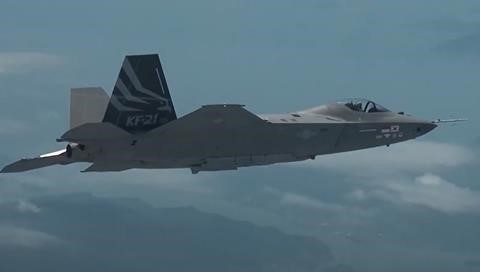
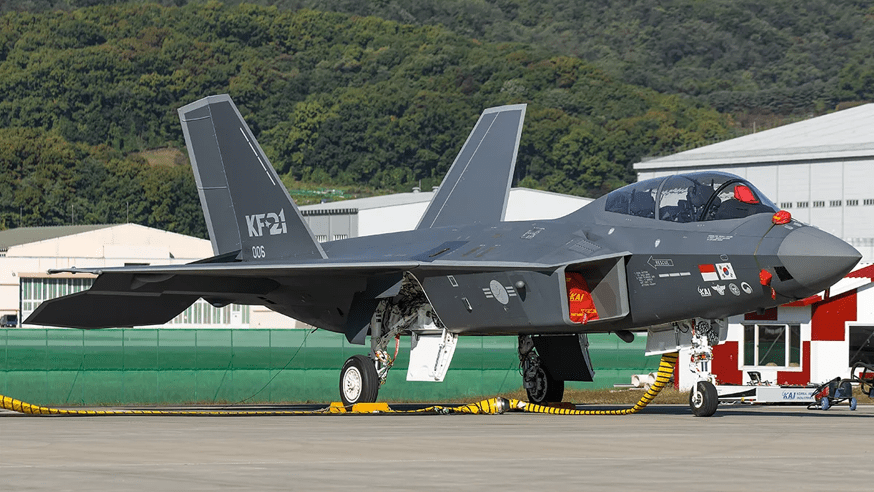
Following the KF-21’s maiden flight on 19 July 2022, five additional prototypes were set to join the flight test campaign from October 2022, according to South Korea’s Defense Acquisition Program Administration (DAPA).
The developmental Korea Aerospace Industries (KAI) KF-21 Boramae fighter continued to expand its flight envelope in September 2022, with more prototypes set to join the testing campaign.
Overall, the development was expected to be completed by 2026.
DAPA’s programme update coincided with a 28 September ceremony at KAI’s factory at Sacheon attended by South Korean government officials and Indonesia’s defence establishment – Jakarta is a 20% partner in the W8.8 trillion ($6.15 billion) programme.
Eom also told Yonhap that Jakarta has paid just 30% of its share via unspecified “in-kind” payments, and that no payments have been made since 2017.
Jakarta’s tardiness with payments has been a persistent issue for the programme, although Indonesian president Joko Widodo and South Korean president Yoon Suk-Yeol reaffirmed their countries’ joint commitment to the KF-21 in July.
At present, 37 Indonesian personnel are in South Korea working on the project, and Herindra indicates that the aim is to raise this number to 100.
Powered by two GE Aviation F414 engines, the KF-21 will replace McDonnell Douglas F-4 Phantoms and Northrop F-5s in South Korean service. Seoul is expected to obtain 120 and Indonesia 50, while the former also hopes to sell the type on the export market.
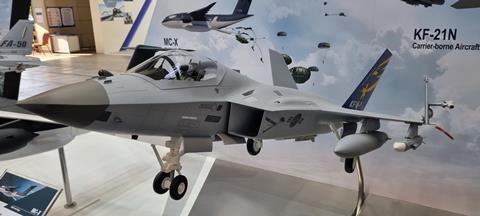
At the DX Korea 2022 show, KAI displayed a model of a prospective naval variant, the KF-21N. Media reports indicate that the jet would be capable of operations from both catapult assisted take-off but arrested recovery and STOBAR short take-off but arrested recovery vessels.
A model of the prospective naval variant of the KF-21, the ‘KF-21N’
The KAI KF-21 Boramae (meaning “hawk” in Korean) represents South Korea’s emergence as a major player in the global aerospace industry.
Powered by two General Electric F414 engines—the same that power the Super Hornet—the KF-21 reaches Mach 1.8 (2,200 km/h).
At approximately $74 million per unit, it offers near-fifth-generation capabilities at fourth-generation prices.
With 120 aircraft planned for South Korean service by 2032.
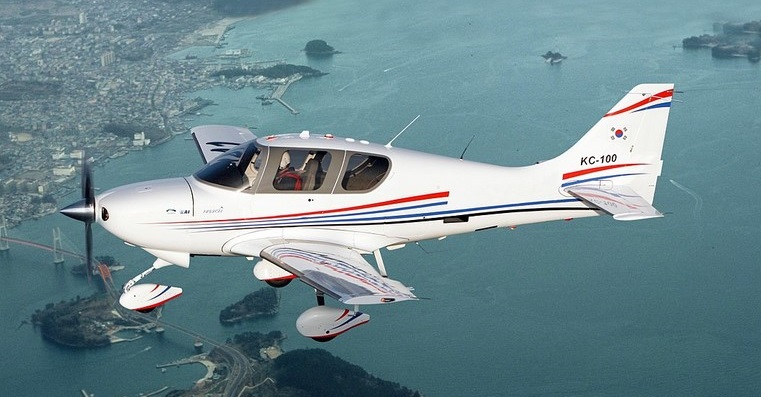
The KAI KC-100 Naraon is a four-seat, low-wing, single-engine light aircraft under development by Korea Aerospace Industries. Development began in June 2008 with a five-year development timeframe.
The KC-100 is built from carbon fibre and features gull-wing doors. The wing employs a laminar flow airfoil and winglets. The engine is a Continental TSIOF-550-K turbocharged 315 hp (235 kW) powerplant controlled by FADEC. A full-plane parachute system will be optional.
First flying on 20 July 2011, the name Naraon was chosen based on public input.
The company expected that deliveries would commence in mid-2013 at a forecast price of US$575,000.
In May 2014, the South Korean Air Force academy entered a memorandum of understanding to obtain a military trainer variant designated the KT-100, the first mass production contract for the aircraft. The KT-100 was to replace the 20 Ilyushin Il-103 aircraft at the academy to familiarize students with flying. The KT-100 first flew on 5 October 2015 and all expected to be delivered by the end of 2016.
KC-100 Naraon Powerplant: 1 × Continental TSIOF-550-K , 315 hp (235 kW) Wingspan: 37 ft 4 in (11.37 m) Airfoil: laminar flow Length: 27 ft 11 in (8.50 m) Height: 9 ft 5 in (2.87 m) Empty weight: 2,400 lb (1,089 kg) Gross weight: 3,600 lb (1,633 kg) Maximum speed: 210 kn (242 mph; 389 km/h) Range: 1,200 nmi (1,381 mi; 2,222 km) Crew: one Capacity: three passengers
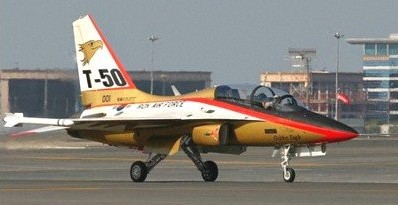
The T-50 Golden Eagle is a South Korean supersonic advanced trainer and light attack jet, developed by the Korean Aerospace Industries with Lockheed Martin, beginning in the late 1990s. The T-50 is South Korea’s first indigenous supersonic aircraft and one of the few supersonic trainers. 2002





 All Aero