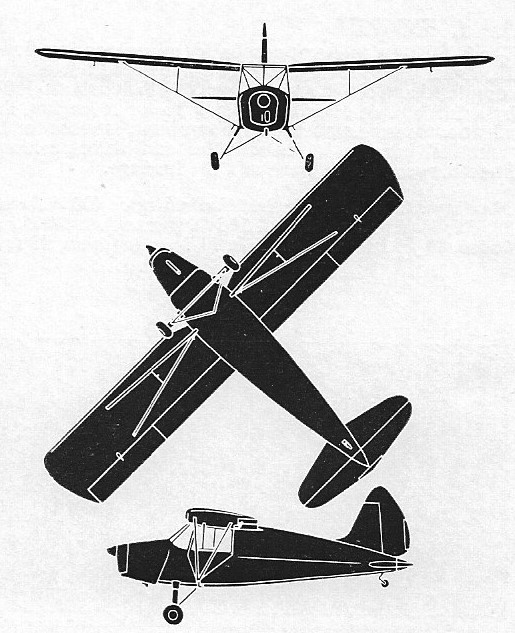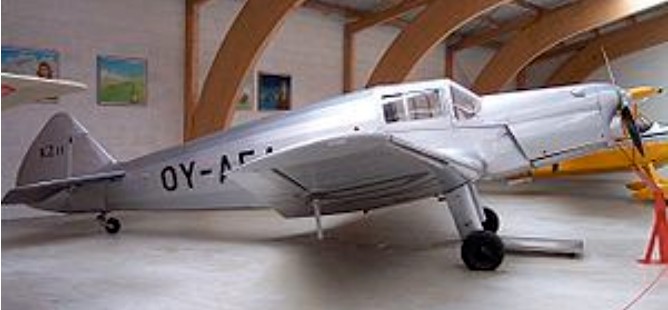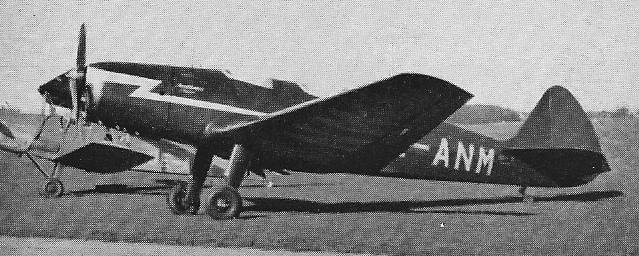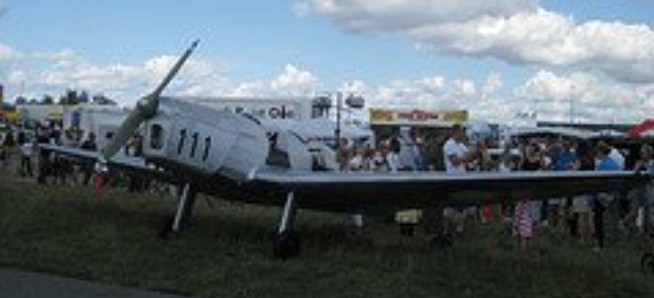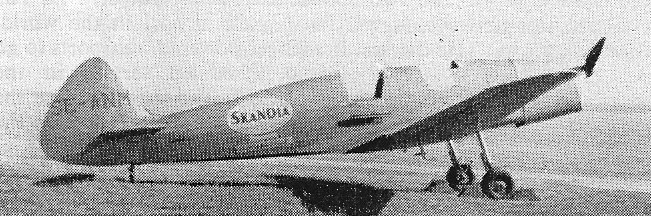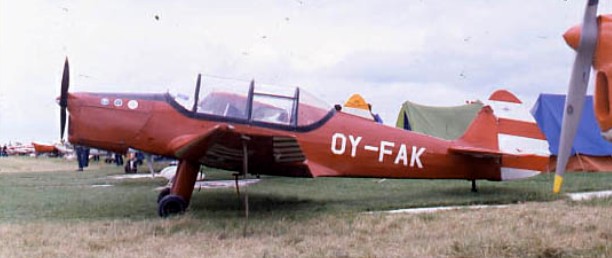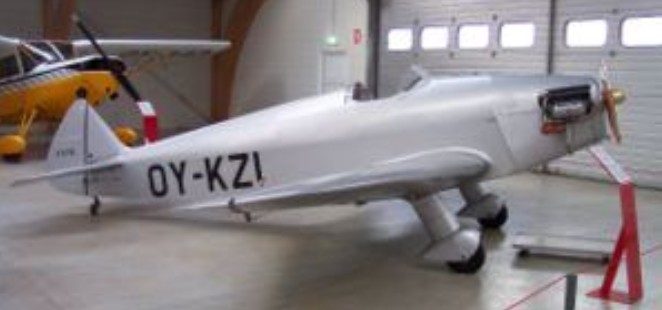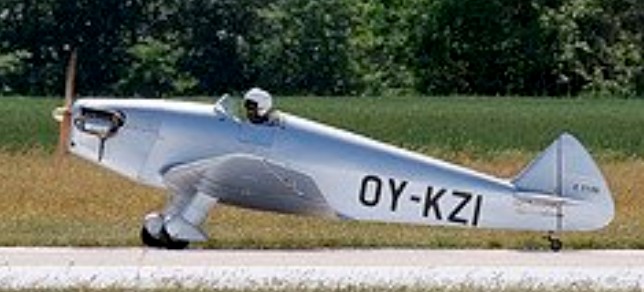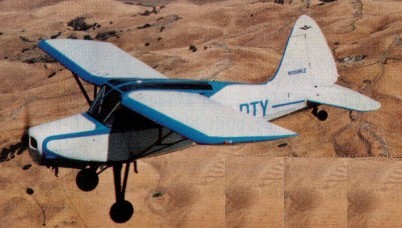
Kramme & Zeuthen KZ.VII Lærke / SAI KZ.VII

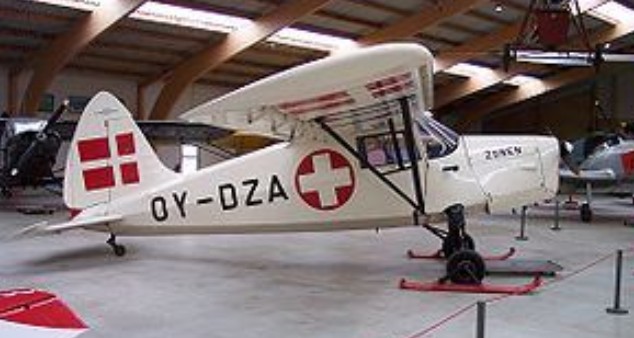
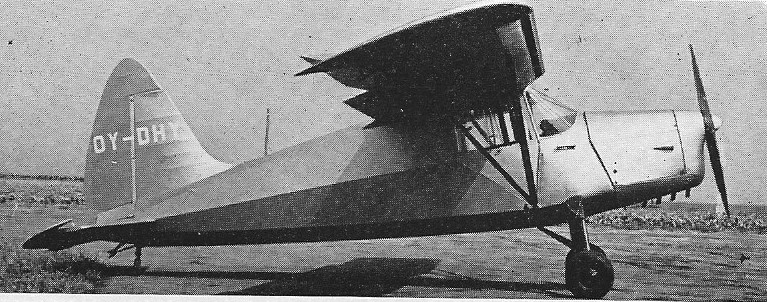
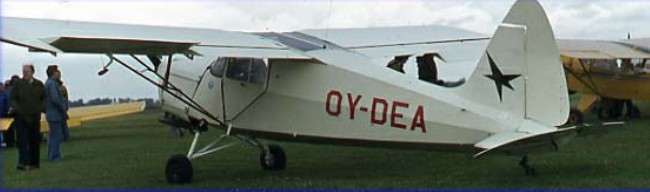
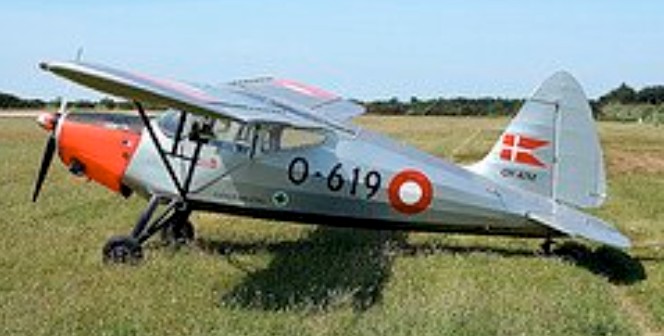
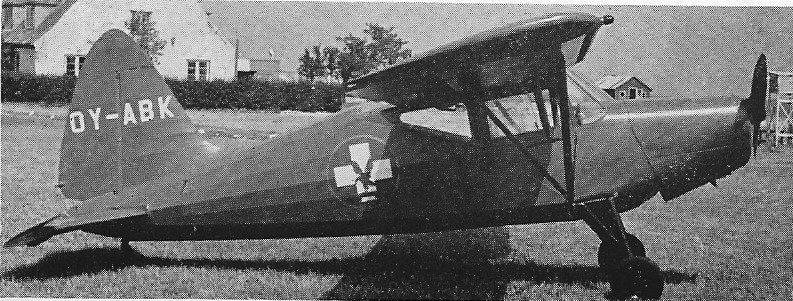
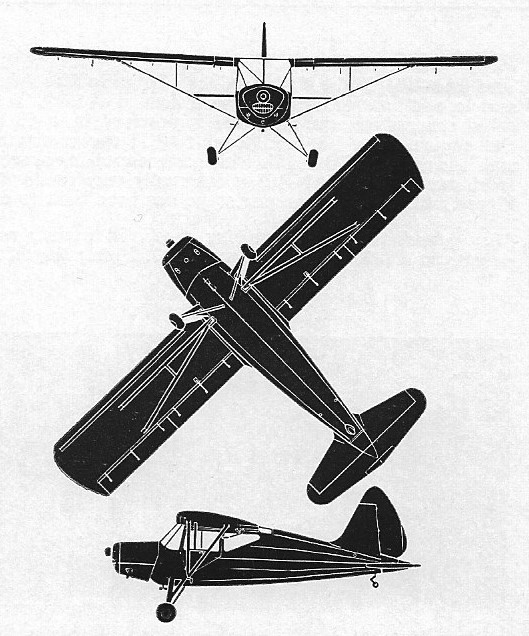
Designed by Viggo Kramme and Karl Gustav Zeuthen, the SAI KZ VII Lærke (Danish: “Lark”) was a light utility aircraft built in Denmark shortly after the Second World War. Based on the SAI KZ III air ambulance, the KZ VII was a strut-braced, high-wing monoplane of conventional design with an enclosed cabin for four seats. The wings were made of wood, although covered mainly in fabric.
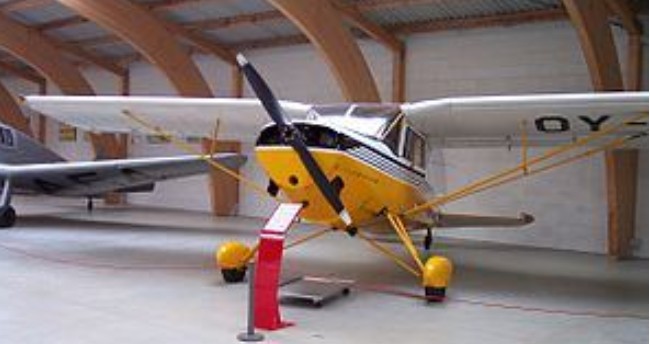
First flown on 11 November 1946, fifty-six aircraft were built by Skandinavisk Aero Industri, and another 22 partially completed aircraft were destroyed in a factory fire in 1947. The Danish Air Force operated 10 of the type as trainers between 1950 and 1977.
Seven were supplied to Switzerland with 145 hp Continental C-145-2 engines with Aeromatic constant-speed airscrews.
Engine: 1 × Continental C125, 93 kW (125 hp)
Wingspan: 9.60 m (31 ft 6 in)
Wing area: 13.0 sq.m (140 sq.ft)
Length: 6.56 m (21 ft 6 in)
Height: 2.10 m (6 ft 11 in)
Empty weight: 464 kg (1,022 lb)
Gross weight: 867 kg (1,911 lb)
Maximum speed: 200 km/h (125 mph)
Cruising speed: 185 km/h (115 mph)
Range: 725 km (450 miles)
Service ceiling: 4,115 m (13,500 ft)
Rate of climb: 2.8 m/s (590 ft/min)
Crew: One, pilot
Capacity: 3 passengers
Kramme & Zeuthen KZ IV / SAI KZ.IV

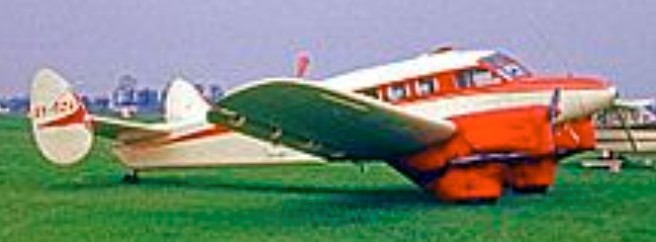
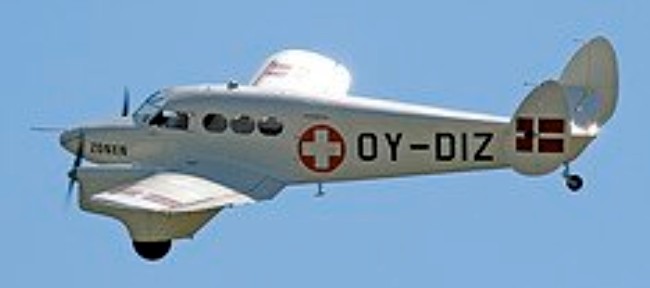
Designed by Viggo Kramme and Karl Gustav Zeuthen, the SAI KZ IV was a light twin-engined aircraft first built by Skandinavisk Aero Industri in Denmark in 1944 for use as an air ambulance. First flown on 4 May 1944.

It was a conventional, low-wing cantilever monoplane with twin tails, mounted on the ends of the horizontal stabiliser. Power was provided by two engines mounted in nacelles on the wings that also housed the main units of the fixed, tailwheel undercarriage. The cabin could hold two stretchers, two medical attendants, and a flight crew of two.

A single machine, registered OY-DIZ, was built during the war, with a second aircraft registered OY-DZU being built and flown in 1949. That same year, the OY-DIZ was christened with the name Folke Bernadotte in honour of the Swedish count who had used this very aircraft to make a diplomatic visit to Germany to negotiate for the release of Danish prisoners in German concentration camps near the end of the war. This aircraft is now the “flagship” of the Danmarks Flymuseum collection, having been restored to its original wartime configuration and markings following a career as a utility aircraft in England and a crash in 1979. The second aircraft was actively operational until the mid 1960s.

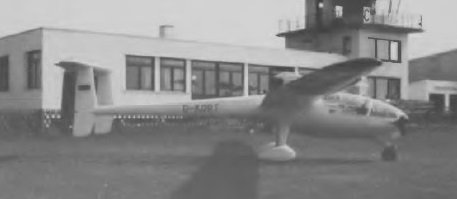
The second KZ IV at Hanover Airport, Germany, 1964.

Gallery

Engines: 2 × de Havilland Gipsy Major, 108 kW (145 hp)
Wingspan: 16.00 m (52 ft 6 in)
Wing area: 29.0 sq.m (312 sq.ft)
Length: 9.80 m (32 ft 2 in)
Empty weight: 1,378 kg (3,302 lb)
Gross weight: 2,100 kg (4,620 lb)
Maximum speed: 215 km/h (134 mph)
Range: 850 km (530 miles)
Service ceiling: 4,500 m (14,800 ft)
Crew: Two pilots
Capacity: Two stretchers and two attendants

Kramme & Zeuthen KZ.III / SAI KZ.III

The SAI KZ III was a Danish light utility aircraft used by the Danish Air Ambulance Service and Danish Air Force.

The Germans permitted the build of a plane for the Danish Air Ambulance Service. The first flight was on September 11, 1944, when Denmark was still under German occupation. Two prototypes were built unser occupation. The second was smuggled to Sweden in a railway truck and test flown there.

The plane is upper-wing, of mixed construction, canvas and plywood covered.

Production commenced after the liberation of Denmark and sixty-four were produced from 1946 to 1947. Operators were the Danish Air Ambulance Service and Royal Danish Air Force. For ambulance duties, the KZ-III gas a hinged panel in the fuselage left-side through a stretcher may be loaded.

Engine: 1 × Blackburn Cirrus Minor II, 100 hp (75 kW)
Wingspan: 9.60 m (31 ft 6 in)
Wing area: 13.00 sq.m (140 sq.ft)
Length: 6.53 m / 21 ft 6 in
Height: 2.10 m / 6 ft 9 in
Empty weight: 419 kg (922 lb)
Loaded weight: 650 kg (1,430 lb)
Wing loading: 50 kg/sq.m (10 lb/sq.ft)
Power/mass: 0.11 kW/kg (0.07 hp/lb)
Maximum speed: 185 km/h (115 mph)
Cruise: 106 mph
Range: 500 km / 310 mi
ROC: 700 fpm
Service ceiling: 4,150 m (13,612 ft)
Seats: 2

Kramme & Zeuthen KZ.II / SAI KZ.II

KZ II Kupé in Danmarks Flymuseum

Designed by Viggo Kramme and Karl Gustav Zeuthen, the SAI KZ II was a sport aircraft built in Denmark in 1937, produced by Skandinavisk Aero Industri in three major versions before and after the Second World War. First flown on 11 December 1937, in its original form, designated the Kupé (Danish: “Coupé”) it was a low-wing cantilever monoplane of conventional design with fixed tailwheel undercarriage and two seats side-by-side under an enclosed canopy. the fuselage structure was of steel tube, skinned in plywood and fabric, and the wings were wooden with plywood covering and could be folded back along the fuselage for transport and storage.

KZ-II-T

This was followed by the aerobatic KZ II Sport with a revised fuselage design, placing the two seats in separate open cockpits in tandem, and a dedicated military trainer version along the same lines, the KZ II Træner (“Trainer”). The Danish Navy ordered four KZ II Sport, but these were confiscated by Germany before delivery.

This latter type was first produced in 1946, as a step towards rebuilding Denmark’s air force after the war. They remained in service until 1955, when nine examples were sold into private hands. A total of forty-five were built.

In 2008, an example of each variant (including the sole extant KZ II Sport) is preserved in the Danmarks Flymuseum.

KZ-II Sport

Variants

KZ II Kupé – original version with enclosed canopy, side-by-side seating and de Havilland Gipsy Minor or Cirrus Minor engine (14 built)

KZ II Sport – aerobatic version with tandem seating in open cockpits and Hirth HM 504 engine (16 built)

KZ II Træner – military trainer version similar to KZ II Sport with de Havilland Gipsy Major engine (15 built)

Specifications:

KZ II Træner
Engine: 1 × de Havilland Gipsy Major, 108 kW (145 hp)
Wingspan: 10.20 m (33 ft 6 in)
Wing area: 15.0 sq.m (161 sq.ft)
Empty weight: 550 kg (1,210 lb)
Gross weight: 850 kg (1,870 lb)
Maximum speed: 220 km/h (140 mph)
Range: 650 km (410 miles)
Service ceiling: 5,000 m (16,400 ft)
Crew: Two, pilot and instructor

Kramme & Zeuthen KZ.I / SAI KZ I

KZ I replica in Danmarks Flymuseum

The SAI KZ I was a sport aircraft built in Denmark in 1937, the first aircraft built by the Kramme & Zeuthen firm. First flying on 24 February 1937, it was a low-wing cantilever monoplane of conventional design, with fixed tailwheel undercarriage and an open cockpit with a single seat. Construction throughout was of wood.

Only a single KZ I was constructed, and it disappeared during the course of World War II. During the 1970s, a flying replica was built, with work started by Gunnar Fjord Christensen in 1972 and sold to the Danmarks Flymuseum in 1977. The completed aircraft flew for the first time on 20 November 1988, and in 2008 remains part of the museum’s collection.

KZ I replica

Engine: 1 × ABC Scorpion, 37 kW (50 hp)
Wingspan: 7.20 m (23 ft 8 in)
Wing area: 8.4 sq.m (90 sq.ft)
Empty weight: 192 kg (422 lb)
Gross weight: 325 kg (715 lb)
Maximum speed: 180 km/h (110 mph)
Crew: One, pilot

Kraft Super Fli

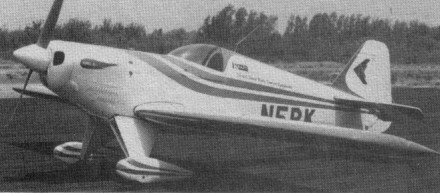
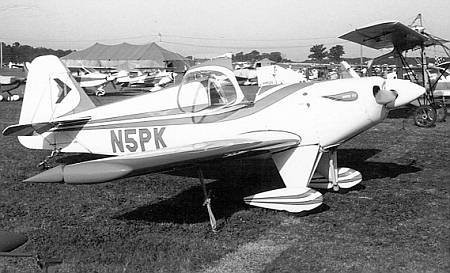
Designer Phil Kraft is a world champion model-builder, and he used his know-how to construct the Super Fli N5PK with assistance by Paul White. This unlimited aerobatic low-¬winger has seating for one under a transparent canopy. Fuselage construction is a steel-tube frame covered by aluminum, while the wings are a spruce and plywood structure covered with plywood.

The K-1 Super-Fli first flew in December 1974 under the power of a 200hp Lycoming AIO-360-A1D engine.

Although the K-1 was made available for amateur construction, no addition aircraft were completed. It is possible that a later owner (Ian Paden) installed a more powerful IO-540 engine.

The N5PK registration for the aircraft was cancelled in March 1990.

Gross Wt. 1450 lb.
Empty Wt. 1060 lb.
Fuel capacity 23 USG.
Wingspan 24’6”.
Length 20’.
Engine 200-hp Lycoming.
Top mph 185.
Cruise mph 135.
Stall mph 48.
Climb rate 1800 fpm.
Ceiling 12,000 ft
Takeoff run 800 ft.
Landing roll 1000 ft.
Range 400 miles.

Kozlov PS

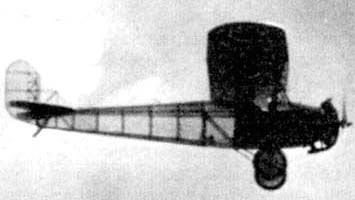
After a preliminary experiment using a Polikarpov U-2, Professor Sergei Grigorevich Kozlov, of the Nikolai Zhukovsky Air Force Engineering Academy, modified a Yakovlev AIR-4, in 1935, to produce the Kozlov PS (Prozrachnyy Samolyot — transparent aircraft). Fabric covering on the fuselage and wings was replaced with a transparent plastic material, called ”Cellon” or ”Rhodoid”, and the opaque structure was painted with a white paint mixed with aluminium powder. Trials with ground and airborne observations confirmed Kozlov’s theories, with the bonus of excellent visibility for the crew. After the initial success, the film was found to become opaque through dirt collection and the effects of the sun, diminishing the ”invisibility effect”.

Kozlov proposed an invisible single-seat reconnaissance aircraft using the transparent plastic material, but doubts about structural strength of the material precluded development. Further studies into transparent aircraft were ordered from the experimental institute headed by Pyotr I. Grokhovskii but no more transparent aircraft were built using Kozlov’s methods.”

Kortenbach & Rauh Kora 1

Having a twin boom pusher configuration and (on the second prototype) a conventional fixed, spatted main undercarriage, the Kora 1 is a side-by-side two seater intended primarily for training; it was designed by Messrs Schultes, Seidel and Putz, and the firm of Kortenbach & Rauh is best known for its range of furniture and other products for the garden and household.

The prototype Kora 1 made its maiden flight on 13 September 1973 and had a forwards-retracting nosewheel and the main wheels retracting backwards into the tail booms. The second prototype, which first flew on 9 April 1976, had a fixed main undercarriage to save weight and complexity, and was still undergoing flight testing at the beginning of 1978, at which time it had not yet been decided whether to start production, although orders had already been received for about a dozen Koras.

The power plant is a 65hp Limbach SL 1700EC1 air-cooled ‘flat four’ driving a Hoffman two-blade variable-pitch feathering propeller. The Kora is of all-wood construction, with cantilever high wings which have Schempp-Hirth air brakes in the upper surfaces. The pod-type fuselage nacelle has roomy side-by-side seating in a cockpit 47in wide, the canopy opening sideways to starboard. The twin tail booms end in twin fins and rudders which have the tailplane mounted on top of them. The fixed main undercarriage units on the second prototype consist of two spatted main wheels set on thin steelsprung legs cantilevered from the fuselage underside.

Second prototype
Engine: Limbach SL 1700 EC1, 48.5 kW / 65 hp
Span: 18.0 m / 59 ft 0.75 in
Length: 7.4 m / 24 ft 3.25 in
Height: 1.85.m / 6 ft 0.75 in
Wing area: 19.44 sq.m / 209.25 sq ft
Aspect ratio: 16.65
Wing section: Wortmann FX-66-S-1967161
Empty weight: 510 kg / 1,124 lb
Max weight: 750 kg / 1,653 lb
Water ballast: None
Max wing loading 38.58 kg/sq.m / 7.9 lb/sq ft
Max level speed at S/L: 110 kt / 205 km/h / 118 mph
Stalling speed: 35 kt / 65 km/h
Max rate of climb at S/L: 180 m/min / 590 ft/min
Min sinking speed: 0.85 m/sec / 2.79 ft/sec at 53 mph / 51 kt / 95 km/h
Best glide ratio: 30:1 at 59 mph / 54 kt / 100 km/h