Laister-Kauffmann LK-10A / Lawrence Tech Sailplane / TG-4

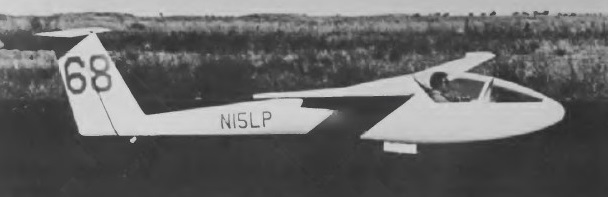
LK-10A

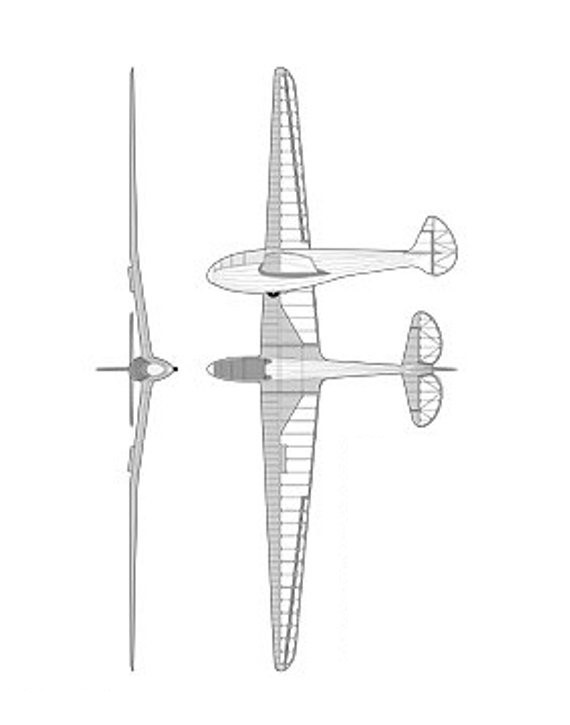
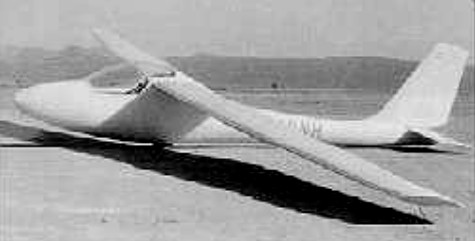
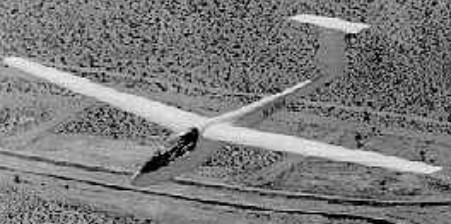
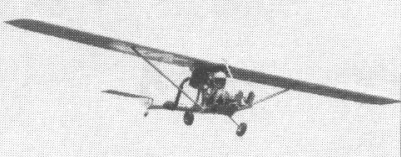
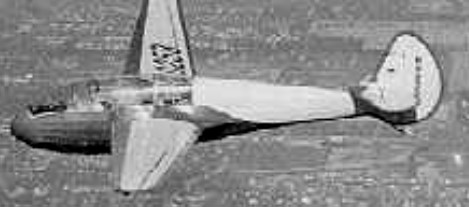
In 1938 Jack Laister completed a gull-wing sailplane, which was referred to as the Lawrence Tech Sailplane after its sponsor. Repainted red, white and blue and renamed the ‘Yankee Doodle’ it competed in a 1939 aerobatic competition at the Paris airshow.
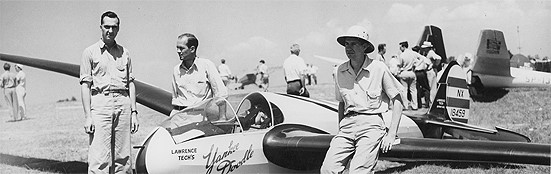
Yankee Doodle

With the need for military trainers on the outbreak of World War II, Laister designed the two-place Yankee Doodle 2 from the original that utilized some of the features and technology from the LT-IV but transitioned to a dual cockpit and straight wing arrangement.
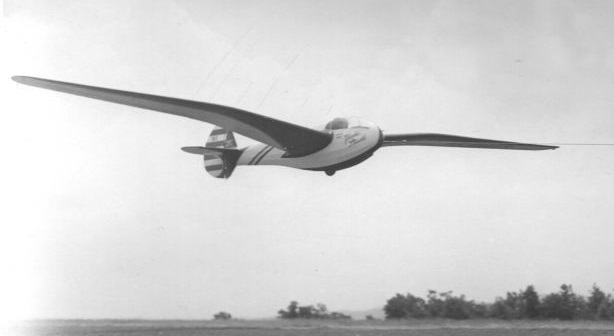
Lawrence Tech

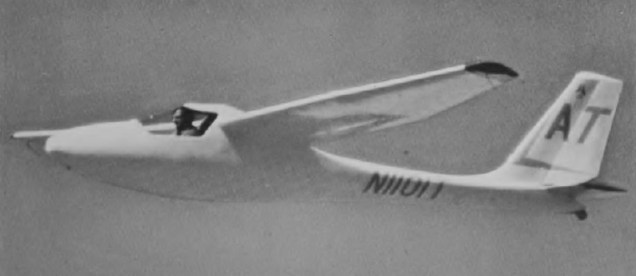
A flat-top Version with increased performance also has an ATC. A ‘bunnynose’ LK, flown by Harold Hutchinson, held the national multiplace goal record of 399 km/ 248 miles from 1956 to 1967.
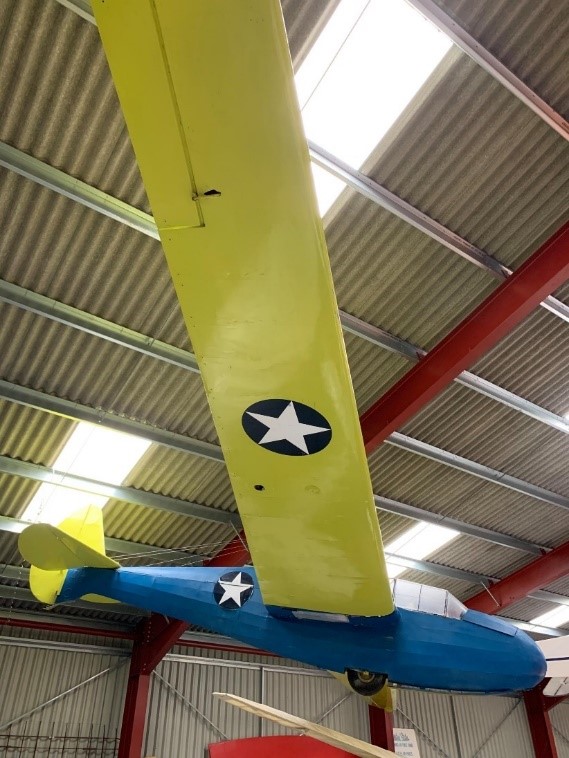
The Vintage Sailplane Association has copies of the military manuals, color scheme drawings and paint chips available.

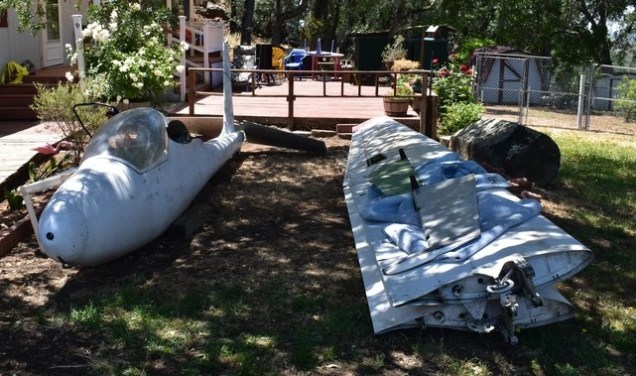
One LK-10A belongs to the National Soaring Museum.
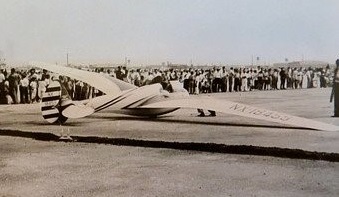
LT IV
Laister-Kauffman TG-4A

LT IV
Wing Span: 14.173 m
Wing Area: 12.5 sq m
Structure Weight: 124.7 kg
Flying Weight: 214.3 kg
Wing Loading: 17.14 kg/sq m
Root Chord: 137.2 cm
Tip Chord: 50.8 cm
Aspect Ratio: 16
Fuselage Length: 5.867 m
Stabilizer Span: 269.2 cm

LK-10A
Wing span: 15.2m /50ft
Wing area: 13.33sq.m / 165sq.ft
Empty Weight: 215kg / 475lb
Payload: 181kg / 400lb
Gross Weight: 396kg / 875lb
Wing Load: 29.7kg/sq.m / 5.27lb/sq.ft
L/DMax: 22 89 kph / 45 kt / 55 mph
MinSink: 0.98 m/s / 3.2 fps / 1.90 kt
Aspect ratio: 15.1
Airfoil: NACA 4418, 4409
Seats: 2
No. Built: 156

Lawrence Tech IV

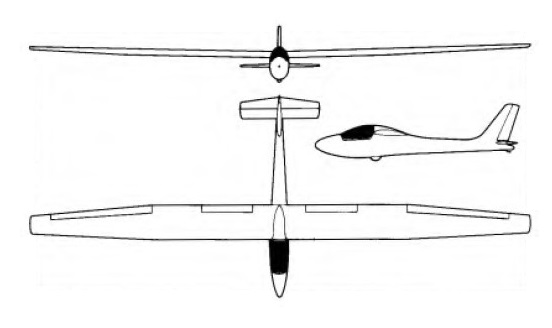
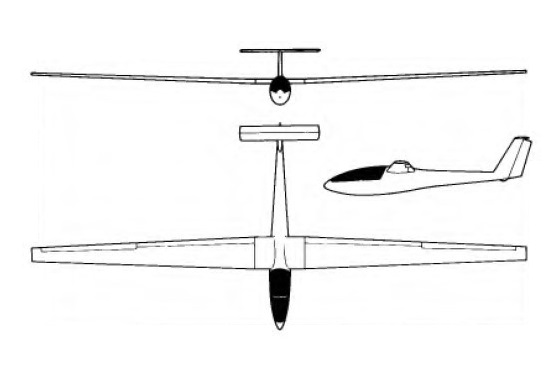
Laister LP-46 / LP-49

The LP-49, popularly known as the ‘Forty Niner’, is a Standard Class single-seater that was first rolled out in prototype form, designated LP-46, on 4 July 1966. It is of metal and glassfibre construction, but designed to be sold in kit form for the amateur constructor, and more than 50 LP-49 kits had been sold by early 1976, about 35 of which had been completed and flown.

The high cantilever wings are of laminar flow section, the extruded aluminium main spar booms being curved in a chordwise direction to follow the aerofoil section; the roll contoured aluminium sheet wing skin is butt jointed and flush riveted with blind pop rivets. The semimonocoque fuselage is made up of two premoulded glassfibre halves joined over aluminium bulkheads and fittings. The tail unit is of aluminium with a swept back fin and rudder, and the landing gear consists of a shock- strutted retractable monowheel with a brake and a glassfibre nose skid with a steel shoe; a fixed shrouded tailwheel replaces the retractable tailwheel of early production aircraft. The LP-49 has an automatic aileron and dive-brake control hookup and internal control- surface counterweights.

LP-49

The ship is approved for spins, loops and wing-over, and has been static tested to 12 g. The LP-49 was sold in both kit form and as a complete, ready-to-fly sailplane.

Jerry Haynes
haynesja@yahoo.com
Need help to find Stabilizer ? Elevator / pictures / drawings to build a new tail group

28 May 2018

LP-46
Span: 13.56 m. / 44.5 ft.

LP-49
Span: 15.0 m / 49 ft 2.5 in
Length: 20 ft 7.25 in
Wing area: 13.29 sq.m / 143 sq ft
Aspect ratio: 16.9
Airfoil: NACA 64(3)-618
Empty Weight: 215 kg / 475 lb
Gross Weight: 408 kg / 900 lb
Payload: 125 kg /275 lb
Water ballast: None
Max wing loading 30.72 kg/sq.m / 6.29 lb/sq ft
Max speed: 135 mph /117 kt / 217 km/h
Stalling speed: 30 kt / 56 km/h
Max rough air speed: 117 kt / 217 km/h
Min sinking speed: 0.63 m/sec / 2.07 ft/sec at 50 mph / 43 kt / 80 km/h
Best glide ratio: 36.5:1 at 58 mph / 50 kt / 92.5 km/h
No. of Seats: 1
No. Built: 53

LP-49

Laister LP-15 Nugget

Laister-Kauffman Aircraft Corp was later succeeded by Laister Sailplanes Inc and in 1970 Jack Laister and his son Bill, an aerodynamicist, started design work on the LP-15 Nugget Standard Class single-seater of metal construction.

It is a cantilever shoulder-wing monoplane with a T-tail and long-span flaps which are raised slightly for high speed flight, are lowered 8° for soaring in thermals and can be extended to 85° for use as air brakes. Up to 185lb of water ballast can be carried on the center of gravity. The wings and top-hinged plain ailerons are of Chem-Weld bonded aluminium alloy construction, while the semi-monocoque fuselage has the forward portion of moulded glassfibre and the rear part of bonded aluminium alloy construction which incorporates the swept fin. Landing gear consists of a retractable monowheel and the pilot sits in a semi-reclining seat under a two-piece canopy with a removable section and a sliding ventilation panel.

They decided to wait for the recommendations of the CIVV conference on Standard Class requirements before starting construction of the prototype in February1971, and this first flew in June that year, its maiden flight also being a contest flight; the Nugget was certificated in mid-1975.

The ship was available only as a factory-built product and 15 were built. One Nuget belongs to the National Soaring Museum.
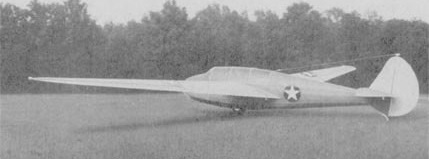
Wingspan: 15.0 m / 49 ft 2.5 in.
Wing area: 10.13 sq.m / 109 sq.ft
Airfoil: Wortmann FX 67170/150
Wing aspect ratio: 22.2
Length: 6.1 m / 21 ft
Height: 1.27 m / 4 ft 2 in
Gross Weight: 408 kg / 900 lb
Empty Weight: 193 kg / 425 lb
Wing loading: 40.27 kg/sq.m / 8.26 lb/sq ft
Payload: 215kg / 475lb
Water Ballast: 84 kg / 185 lb
Max airspeed: 135 kts 126 kt / 233 km/h
Rough air speed: 126 kt / 233 km/h
Stall: 34 kt / 63 km/h
Lift to drag: 37 at 93 kph / 50 kts / 58 mph
Sink: 0.66 m/s / 2.16 fps / 1.29 kt at 43 kts
Seats: 1

Laird-Turner LTR 14 Pesco / (Lawrence) Brown Pesco Special

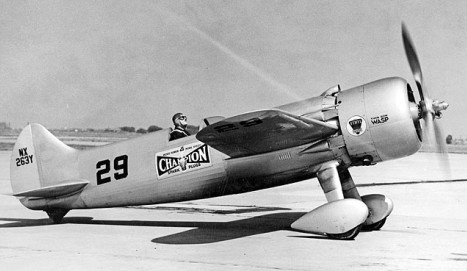
The Laird-Turner LTR 14 Pesco (or (Lawrence) Brown Aircraft Co Special / Pesco Special) was designed by Howard Barlow and Roscoe Turner, and built by the (Lawrence) Brown Aircraft Co of Montebello CA., USA, in 1937. It was sometimes known as the Turner-Laird because of its Laird-built wings, originally 22’0″.

Registered NR263Y Ring-Free Meteor, it was renamed by Turner in 1938 for sponsor Pesco Pump Co, and won the 1938 and 1939 Thompson Trophies.

Engine: P&W Twin Wasp, 1830 hp
Wingspan: 25’0″
Length: 23’0″
Max speed: 330 mph
Stall: 87 mph
Seats: 1

Laird No.1

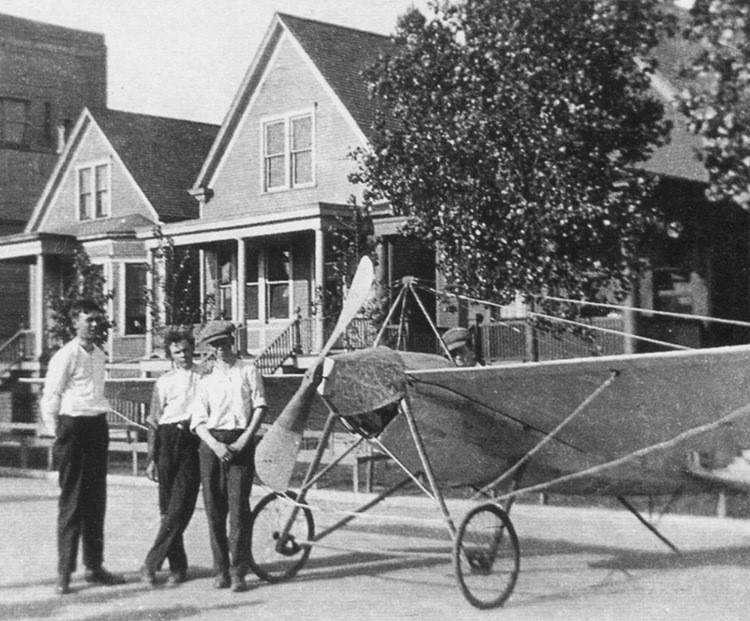
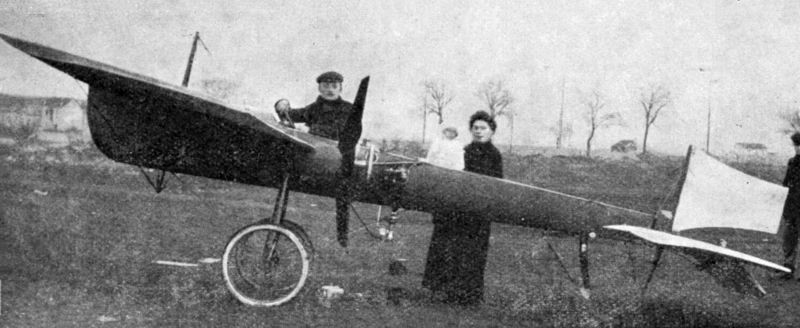
Engineless at the “rollout” in Chicago in early 1913.

At age 17, Matty Laird’s first design would be a monoplane powered with an engine designed by Harry Wells. The two worked on their separate projects month after month in high school night classes. Matty’s airframe progressed, but Harry Wells was never able to devise a reliable valve mechanism for his engine. Thus Matty was left with an engineless airplane.

A Chicago machinist named Hofer offered him a 12 horsepower engine for $150. After several months of revamping his plane to accept the Hofer engine, Laird took his little single seat monoplane out to Cicero Field. To his surprise, up it came about 15 feet.

He had a very light airplane and a little too much speed, and somewhere in the series of bounces that followed, he crossed the controls and wound up on his back.

Ladd Taylor Chihuahua

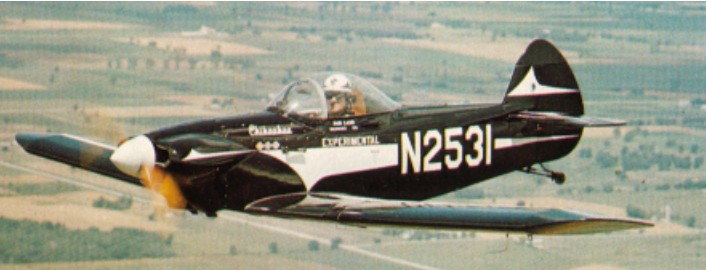
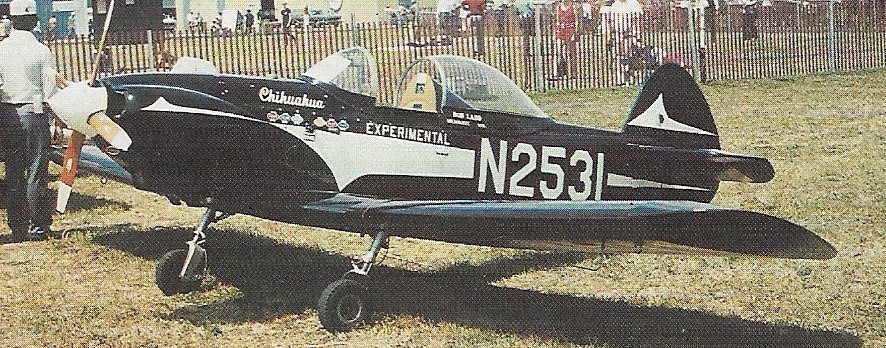
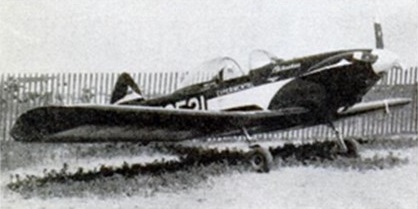
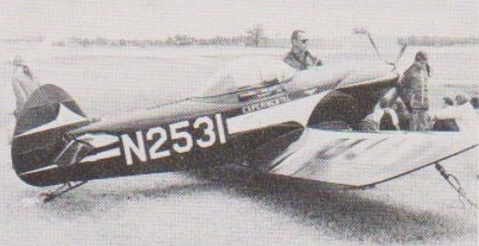
Built by Robert Ladd in 1967, the Taylor Chihuahua single place, enclosed low wing monoplane, was developed from the British John Taylor monoplane. One was built, N2531, was first flown in September 1967.

Engine: 53hp VW
Wingspan: 21’0″
Length: 15’6″
Cruise speed: 118 mph
Stall: 60 mph
Range: 250 mi

Taylor Monoplane built by Bob Ladd of Milwaukee, 4-blade prop, at Oshkosh 1974

Lachassagne tandem wing monoplane

The first design of Adolphe-Étienne Lachassagne was this 1912-1913 tandem wing monoplane. The front and the tail wings could be adjusted. The two propellers were fitted at the trailing edge of the front wing, and were adjustable together with the wing. The engine was mounted in the fuselage and drove the two propellers via a rod. As Lachassagne had no funds to acquire a new and powerful engine he had to do with second hand engines. Lachassagne started to study a new aeroplane with tandem wings. The AL-2 airplane was never built in full size, only as a model. He was creative inventor and kept developing and building variable wing profile aircraft at least up to WW2. He also tried to develop a small affordable “peoples airplane”.

Lacey M-10 / M-10 VW Twin

Lacey M-10

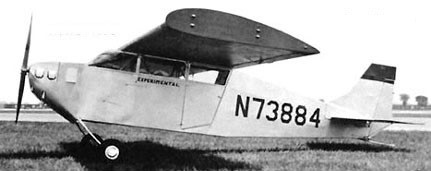
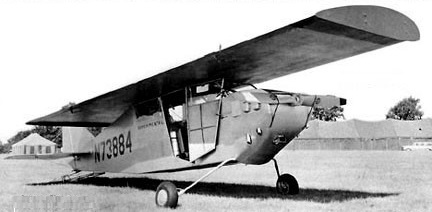
Built by Joseph L Lacey in 1962, the the two place Lacey M-10 had a pivoting unbraced wing stowed fore-and-aft for trailing or hangaring. One was built, N73884, first flying on 7/6/62.

The Lacey is one of the simplest designs for the homebuilder to construct. In the words of its designer, “There are no com¬pound curves and very few simple ones. The wing has no wash-in, no washout, no dihedral, and no incidence angle (the bottom is flat, and fits flat on top of the fuselage). It has no taper, no slots, no flaps, no spoilers, no wingtips, no struts, no wires, no braces, no spars.” The two-place, towable Lacey is propelled by a 90-hp Continental.

One M-10 VW Twin was built, N187LH, in 1968.

M-10
Engine: 95hp Continental C-90
Wingspan: 20’0″
Length: 19’6″
Gross Wt. 1118 lb
Empty Wt. 638 lb
Fuel capacity 20 USG
Useful load: 400 lb
Top speed: 140 mph
Cruise speed: 120 mph
Stall: 38 mph
Climb rate: 1000 fpm
Ceiling: 25,000′
Range: 440 miles
Takeoff run: 600 ft
Landing roll: 600 ft
Seats: 2

M-10 VW Twin
Engine: 2 x 40hp VW
Wing span: 20’0″
Length: 19’6″
Seats: 2

Labahn Hitchiker

The Hitchiker is the third ultralight design from Robert Labahn and it is designed for cross-country and short field operations. With a rigid wooden wing sporting full span flaperons having both positive and negative selling, the light weight Hitchiker easily fits the bill. The pilot’s seating is reclining, glider like, to present the smallest possible frontal area. A streamlined pod will be fitted in the colder months for pilot protection.

Engine: Rotax 277 geared drive.
Prop: 127 cm x 96cm pitch.
Wing span: 8.05 m.
Weight: 100 kgs.
Fuel capacity: 27 ltr.
Econ cruise speed: 43 kts.
Stall: 23 kts.
Construction time: Ready to fly.