A two place side-by-side high wing cabin monoplane, built in 1934 by George L Landis & Earle Blodgett. The wings were modified from a Pheasant Traveler. Registered NR/NC13657, power was from a 90hp Cirrus.
Monoplane
Lancair Tigress
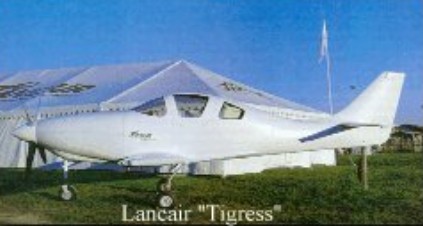
Lancair’s new Tigress is flying with Don Goetz. It has the Orenda 600HP V-8 in it and is predicted to see 405mph at altitude. The price of the Orenda is very high, around $90,000 with no accessories. Lancair is not taking deposits on it yet.
Engine: Orenda, 600+ hp.
Empty Wt : 2400 lb
Gross Wt: 3400 lb
Fuel Max: 115 USG
Cruise Speed: 299 kt
Stall Speed: 75 kt
Range: 1450 nm
Service Ceiling: 29,000 ft
Rate of Climb: 2600 fpm
Take over 50 foot obstacle: 1200 ft
Landing over 50 foot obstacle: 1400 ft
Take Off Normal: 1450 ft
Landing Normal: 1700
Seats: 2.
Lancair Sentry
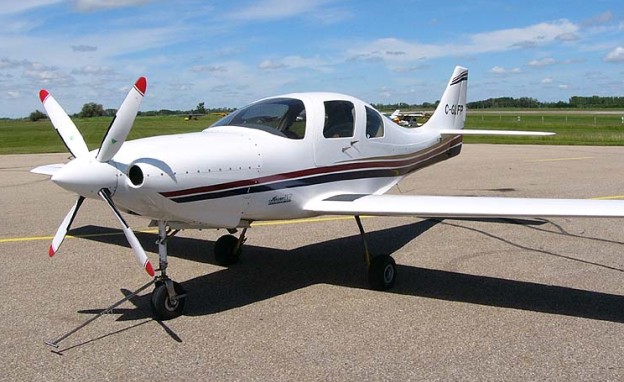
Only the top segment of the Lancair IV fuselage was modified for the Sentry, as well as portions of the vertical tail. Not only does this Lancair kit yield higher speeds similar to the IV-P Propjet model, it also offers increased yaw stability and excellent visibility out of a newly designed rear hinge canopy.
The Lancair Sentry kit was priced at $119,900, and included the converted fuselage top half, the modified turbine firewall, turbine engine mount, fuel tank extension, and carbon fiber cowling.
The concept plane, the Lancair Sentry is an adaptation of the highly successful Lancair IV aircraft. The Lancair IV was developed in 1990 and thus has sold over 500 kits.
The design of the Lancair Sentry was to provide a two-place tandem configuration for centerline seating; revised control systems to accommodate the tandem configuration; improved pilot / co-pilot visibility from military style, full bubble canopy; all graphite carbon fiber airframe; engineered for a 400 lb increase in gross weight; andengineered for turbine power and air conditioning.
Engine: Walter 601D, 708 hp @ sea level
Propeller: 3 Blade, Constant Speed
Length: 26 Ft.
Wingspan: 30.2 Ft.
Wing Area: 98 Sq Ft.
Wing Loading: 36 Lbs/sq Ft.
Aspect Ratio: 9:1
G Loading: +4.4 -2.2 Gs normal
Empty Weight: 2200 Lbs.
Gross Weight: 3550 Lbs
Fuel Capacity: 125 USGal.
Useful Load: 1350 Lbs.
Baggage Capacity: 150 Lbs.
Cabin Width: 46 in (front), 43 in (rear)
Cabin Height: 48 in.
Seats: 2 (tandem)
Cruise: (typical) 380 Mph @ 26,000′
Stall Speed: (dirty) 74 Mph
Takeoff Distance: 1500 Ft.
Landing Roll: 1700 Ft.
Fuel Consumption: 33 USGph (.67 Sfc)
Maximum Range: 1150 Sm (with Reserves)
Rate Of Climb: 4000 Fpm
Lancair Evolution

The Lancair Evolution was developed entirely through Computer Aided Design, created by Computer Numeric Code machining and evaluated by Finite Element Analyses.
The Evolution is designed to FAR part 23 compliancy, the same standard that certified aircraft follow. It’s safety innovations include the BRS Ballistic Recovery Parachutes, AmSafe Aviation airbag seatbelts and energy absorbing seats.
The Fastbuild Kit did cost US$250,000 with a finished piston plane estimate of US$600,000, and turbine cost of US$650,000 – $1,000,000.
Lancair Evolution
Engine: Lycoming Piston
Length: 30 ft
Height: 10 ft
Wingspan: 37 ft
Seating: 4
Cargo Volume: 39 cu ft
Baggage Capacity: 225 lbs
Payload (full fuel): 1,074 lbs
Time to climb (FL 240): 13 min
Rate of climb: 2000 fpm
Mmo: .64
Vne: 255 kt
Vfe: 135 kt
Vfe 10 deg: 160 kt
Vlo: 180 kt
Vs1: 75 kt
Vso: 61 kt
T/O Distance: 1,200 ft
Landing Distance: 1,400 ft
Cruise Speed (max): 270 kt
Range: 1300 nm
Fuel Flow: 22 USgph
Cruise Speed (economy): 240 KTAS
Range: 1700 nm
Fuel Flow: 17.5 gph
Max Operating Altitude: 28,000 ft
Lancair Evolution
Engine: Pratt & Whitney PT6A-135A Turbine, 750 shp
Propeller type: Sensenich
Length: 30 ft
Height: 10 ft
Wingspan: 37 ft
Gross weight: 4300 lb
Seating: 4
Cargo Volume: 39 cu ft
Baggage Capacity: 225 lbs
Payload (full fuel): 957 lbs
Useful Load, Std: 1950 lb
Usable Fuel, Std: 146 US gal
Time to climb (FL 240): 8 min
Rate of climb: 4000 fpm
Mmo: .59
Vne: 255
Vfe: 135
Vfe 10 deg: 160
Vlo: 180 kt
Vs1: 75 kt
Vso: 61 kt
T/O Distance: 1,000 ft
Landing Distance: 1,000 ft
Cruise Speed (max): 330 KTAS
Range, Max Cruise: 886 nm
Max range: 1314 nm
Fuel Flow max cruise: 39 gph
Cruise Speed (economy): 270 KTAS
Fuel Flow econ cruise: 23 US gph
Max Operating Altitude: 28,000 ft
Lancair ES / Columbia / Cessna 400 Corvalis / Cessna CE-350 Corvalis / TT
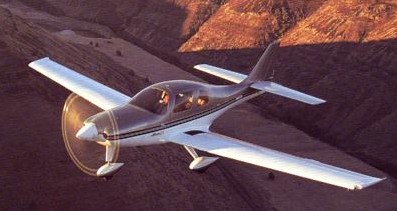
Lance Neibauer called Martin Hollman one day and said, lets design an all fiberglass airplane with fixed gears. We will use the Stallion size wing and tail and the LIV fuselage and we will have it flying by Oshkosh this year. High Tech went on overtime building molds and Martin designed the new aircraft called the Lancair ES. It was designed, built and test flown in 63 days. Lance had the help of 38 people who came to bend, or to build it at their expense. They wanted to learn how to build fiberglass airplanes.
This aircraft has the same body shape as the Lancair IV, but with a longer wingspan and a fixed, tricycle undercarriage. These all-composite, four-seat, fixed gear models offer roomy interiors. The ES and Super ES four-place aircraft have high climb rate, long endurance, slow landing speed, and can haul a load at 200-225 mph.
Based on analysis and testing, the custom airfoil sections used in the Lancair IV was suited to the ES models. This wing structure features a high laminar flow design which enhances cruise speed, control and lift. With preferred cruising of 7,000 to 12,000 feet, an aspect ratio of 8.4:1 was selected.
Large, easy-to-operate, full slotted electrical flaps make the transition from high cruise speed to low pattern speed easy. The nearly 19 feet of effective flap span, combined with the high-lift, slotted flap design gives a low stall speed of 65mph. Detachable wing panels remove the wings while the aircraft remains on its landing gear.
The ES interior is 46 inches across and 48 inches in height, with large windows and the wrap-around windshield. An inflatable door seal keeps the cabin shielded from whistling wind and engine noise. Also, a custom sound-proofing package, developed exclusively for Lancairs, is available to make the cabin even quieter.
The ES can cruise at 225 mph in the Super ES which features a 310-hp Continental IO-550 engine. The ES can easily reach 200 mph with its 210-hp Continental IO-360 engine. Our climb rate is up to 2000 fpm and takeoff distance 600 ft.
The Fastbuild door option offers a completely finished door with all hinges, latches, gas strut, pneumatic door seal, lock and window installed. This option saves our builders over 200 hours.
With the Super ES at 55% power, fuel consumption is approximately 11 gph, which equates to 6 hours of flight with an hour reserve at 170 mph, and in excess of 1,000 miles – with a maximum range of 1,450.
Fuel is carried in tanks, on the left and right, integrated within the wing bays. A standard supply of 95 gallons is offered. As a safety feature, each tank incorporates a “slosh bay” to prevent unporting of the fuel pickup during uncoordinated maneuvers. The fuel valve also returns vapor to the same fuel tank that is in use.
The main gear legs are tubular 4340 steel, gun-drilled, honed, tapered, heat-treated and plated for rust protection. The Cleveland 600 x 6 wheels come standard with heavy-duty breaks. The nose gear features a custom-built premium air/oleo strut for maximum dampening. The differential braking system allows for tight turns and the rudder provides ground steering at speeds as low as 20 mph.
The airframe components are cured under vacuum pressure at 270&Mac176;F. A full flutter test program is conducted on all aircraft components.
A complete static load testing program is conducted for the wing and other specific load bearing areas.
Lancair airframe system components are pre-built, ready for assembly. There’s no welding, no machining, no contour forming. The Fastbuild kits include premolded surfaces using high-temperature epoxy-based prepregs. Most of the major assemblies come complete, including the wing with ribs, spar and hardpoints for control surfaces installed. The main gear is attached to the fuselage and the firewall and engine mount are installed with the nose gear attached. Plus, the tail surfaces come with equal amounts of completion, even the rudder hardware is installed.
With the Fastbuild “A” kit option, virtually all of the inner wing and horizontal tail structure is installed. With the Fastbuild “B” kit option, major fuselage subassemblies are preinstalled, including firewall, engine mount supports, bulkheads, landing gear and tail alignment saddles.
The aircraft is developed around an engine of choice. For the Lancair Super ES that engine is the Continental IO-550. This normally aspirated engine develops 310 hp at sea level. As an option, Lancair also support Continental IO-360ES installations. This is a 210 hp engine that will burn an average of 9.5 gph, giving you a range well over 1800 sm with the additional fuel option.
Lancair will fastbuild the engine by installing an engine to the mount and adding all baffling, fittings, lines, etc. to completely plumb the engine. They can also install all the firewall-mounted items needed onto the firewall before the fuselage kit leaves the facility. With these two options, the engine can installed in less than a day.
Lancair created a whole new company that is dedicated solely to the avionic systems of Lancair.
Customers receive very competitive prices on virtually all avionics and cockpit systems. The modular Lancair instrument panel is custom painted to your specifications, complete with professional labeling, and each panel is bench tested and “burned in” for a minimum of thirty hours to ensure a fast, trouble-free installation.
In 1991 in the Philippines, Pacific Aeronautical, the new name of ACT relocated to Cebu City and started producing airframes for Lancair 320 and Lancair IV, the new higher-powered, four-seat version. Also in 1991, the PADC started assembling Lancair IVs and Lancair ESs ordered by the Philippine National Police (PNP).
The Lancair ES-P four-place fixed gear aircraft can cruise at speeds of up to 293 miles per hour at 24,000 feet with its all-carbon fiber pressurized cabin.
The 1998 Columbia 300 (ATC LC40-550FG) is a factory-built ship based on Super ES design; fixed tri-gear, four place and 300hp Continental IO-550N engine. Eleven had been built by early 2001. One to NASA in Jan 2001 for use as a testbed in evaluating technologies developed in Advanced General Aviation Transport Experiments (AGATE) and Small Aircraft Transportation System (SATS) programs.
The ES was later certified and called the Columbia and then Cessna 400. The ES kit price was $33,900 (1991), and $39,900-42,900 (1998). The Cessna 400 was derived from the normally aspirated Columbia 300, which in turn was derived from the Lancair ES kit aircraft. The Cessna 400 was originally built by Columbia Aircraft as the Columbia 400.
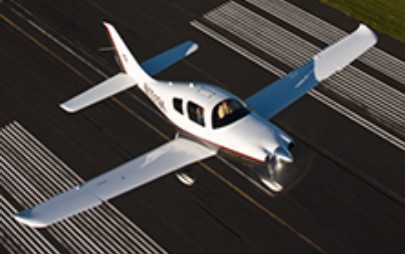
The 400 is powered by a turbocharged Continental TSIO-550-C engine producing 310 horsepower (230 kW) at 2600 rpm. The 400 features a Garmin G1000 glass cockpit that was later incorporated into the 300 to create the Cessna 350.
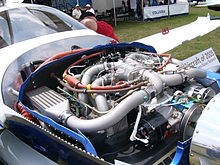
The 400’s Continental TSIO-550-C engine is capable of being operated lean of peak. Measured in flight at 11,000 feet (3355 m), 50 F° (28 C°) rich of peak turbine inlet temperature, maximum cruise yielded 199 knots (369 km/h) true air speed and 24.7 US gallons (93 L) per hour fuel flow. At the same operating parameters and 50–75 °F lean of peak the 400 was measured at 189 knots (350 km/h) TAS and 17.8 US gal (67 L)/hr (106.8 lb/hr, 67.6 l/hr).
The Columbia 400 was marketed with an optional ice protection system, known as E-Vade that was not certified for flight into known icing. The system consists of heat-conducting graphite foil panels on the wing and tail leading edges. These panel areas are heated by 70 volt 100 amp electrical power delivered from a dedicated alternator. The system is controlled by a single switch.
The 400 features optional speedbrakes mounted on the wing’s top surfaces.
The 400 nosewheel is not directly steerable; directional control while taxiing is accomplished using differential braking on the mainwheels.
Initially sold simply as the Cessna 400, the aircraft was given the marketing name Corvalis TT for twin turbocharged by Cessna on 14 January 2009. The name is a derivation of the town of Corvallis, Oregon which is west of the Bend, Oregon location of the Cessna plant that built the aircraft, prior to closing the plant and relocating production to Independence, Kansas in 2009.
In 2008 Cessna’s new low wing, high performance, composite aircraft sold for around US$620,000. The 1991 ES (TC LC20) was available as the Super ES with IO-550G engine.
In April 2009 Cessna announced that it would close the Bend, Oregon factory where the Cessna 400 was produced and move production to Independence, Kansas, with the composite construction moved to Mexico. The production line was restarted in October, 2009 in the Cessna Independence paint facility, at a rate of one aircraft per six months initially. This was to allow the new workers, plus the 30 employees transferred from Bend, to gain experience and also allow Cessna the opportunity to retail its unsold inventory of Cessna 350s and 400s. At that time the company anticipated moving the 350/400 production to a permanent facility by the end of 2009.
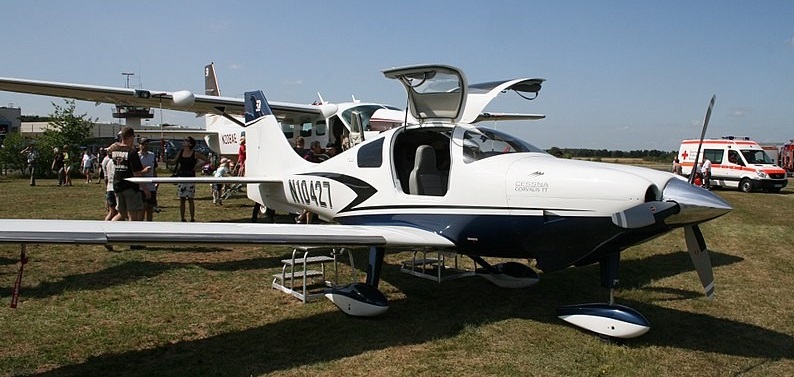
In December 2010 a Cessna 400 that was being test flown by an FAA test pilot at the factory developed a fuel leak, the cause of which was determined to be that the aircraft had “suffered a significant structural failure in the wing during a production acceptance flight test. The wing skin disbonded from the upper forward wing spar. The length of the disbond was approximately 7 feet.” As a result, the FAA issued an Emergency Airworthiness Directive affecting seven Cessna 400s and one 350, all on the production line. The AD did not affect any customer aircraft in service, but did delay deliveries. In September 2011 the Federal Aviation Administration proposed a US$2.4M fine against the company for its failure to follow quality assurance requirements while producing fiberglass components at its plant in Chihuahua, Mexico. Excess humidity meant that the parts did not cure correctly and quality assurance did not detect the problems. The FAA also discovered 82 other aircraft parts that had been incorrectly made and not detected by the company’s quality assurance.
The aircraft was originally certified by the Federal Aviation Administration under FAR 23, on April 8, 2004 as the Model LC41-550FG (for Lancair Certified, Model 41, Continental 550 engine, Fixed Gear) and marketed under the designation Columbia 400. EASA certification was added in February 2009.
The Cessna 400 is certified in the Utility Category, with a positive limit maneuvering load factor of 4.4, whereas most comparable aircraft (such as the Cessna 182 and Cirrus SR22) were certified in the Normal Category with a load factor of 3.8.
The 400 has a certified airframe maximum life of 25,200 flight hours.
The 2009 Cessna 400 Corvalis TT new price was US$635,000. From 2013, the aircraft was built as the Cessna TTx Model T240.
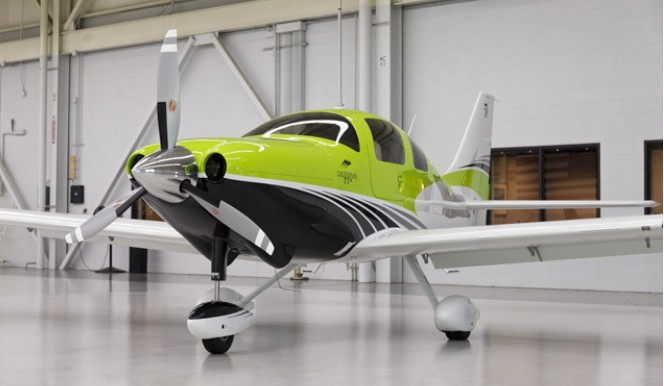
On 29 March 2011 Cessna unveiled several improvements to the Cessna 400 at Sun ‘n Fun, designating the new variant the TTx. The aircraft has not been selling well since the late-2000s recession started, with 110 delivered in 2008, the first year Cessna produced the model, 41 in 2009 and just seven sold in 2010. The improved aircraft features a new glass cockpit panel, designed by Cessna and based on the Garmin G2000. Called Intrinzic, it features two 14 in (36 cm) wide high definition displays and a touchscreen controller that uses an infra-red grid to accept touch commands. The updated model also has dual Attitude and Heading Reference Systems, a GFC 700 autopilot, a Garmin GTS800 traffic avoidance system, Garmin GTX 33ES transponder with ADS-B and the Garmin Electronic Stability Protection System, which protects the aircraft from operations outside the approved flight envelope. The new TTx model has no traditional instruments and instead employs the L-3 Trilogy as a back-up. The TTx also features a built-in pulse oximeter, a new paint scheme and a new interior. By the end of Sun ‘n Fun 2011 the company indicated it had sold 16 of the new TTx model.
The design’s production came to an end in February 2018. Sales of the model had been poor, with only 23 examples sold in 2017, compared to its main competitor, the Cirrus SR22, which sold 309 models that same year. Cessna produced only 12 of the model in the fourth quarter of 2017 after selling 31 in total the year before.
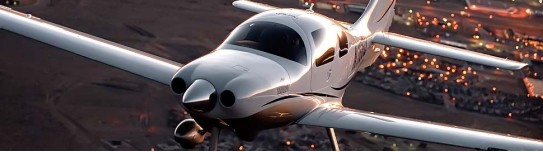
The 2009 Cessna 400 Corvalis TT new price was US$635,000.
Lancair ES
Engine: Cont. IO-550-N, 310 hp @ 2700 rpm
Propeller: 3 blade, constant speed
Length: 25 ft.
Wingspan: 35.5 ft.
Wing Area: 140 sq. ft.
Aspect Ratio: 9:1
Wing Loading: 21.4 lbs./sq. ft.
G Loading: +4.4, -2.2 G’s (utility)
Empty Weight: 2,000 lb
Gross Weight: 3,200 lb
Fuel Capacity: 95 USgal.
Useful Load: 1,200 lb
Baggage Capacity: 175 lb
Seats: 4
Cabin Width: 46 in. (front) / 43 in. (rear)
Cabin Height: 48 in.
Cruise (typical): 225 mph @ 8,000 ft.
Rate of Climb: 2000 fpm (solo) / 1550 fpm (gross)
Stall Speed: 65 mph (dirty)
Service Ceiling: 18,000 ft.
Takeoff Distance: 600 ft. (gross @ sea level)
Landing Roll: 800 ft.
Cross Wind Landing: 21 mph component
Fuel Consumption: 13.5-15 gph (typical)
Maximum Range: 1350 sm (with reserves.)
Lancair ES-P
Engine: Cont. TSIO-550-C, 350 hp @ 2600 rpm
Propeller: 3 blade, constant speed
Length: 25 ft.
Wingspan: 35.5 ft.
Wing Area: 140 sq. ft.
Wing Loading: 25.7 lbs./sq. ft.
Aspect Ratio: 9:1
G Loading: +4.4, -2.2 G’s (utility)
Empty Weight: 2200 lbs.
Gross Weight: 3550 lbs.
Fuel Capacity: 105 gal.
Useful Load: 1350 lbs.
Seats: 4
Cabin Width: 46 in. (front) / 43 in. (rear)
Cabin Height: 48 in.
Baggage Capacity: 175 lbs.
Cruise: 270 mph @ 17500;
293 mph @ 24,000 (typical)
Fuel Consumption: 17.5-19 gph (typical)
Maximum Range: 1350 sm (with reserves)
Endurance: 6 hours
Rate of Climb: 2000 fpm (solo); 1550 fpm (gross)
Takeoff Distance: 600 ft. (gross @ sea level)
Landing Roll: 900 ft.
Cross Wind Landing: 21 mph component
Stall Speed: 70 mph (dirty)
Service Ceiling: 28,000 ft.
Lancair Super ES
Cruise: 225 mph
Stall: 65 mph
Range: 1550 sm
Rate of climb: 2000 fpm
Takeoff dist: 600 ft
Landing dist: 800 ft
Engine: Continental IO-550, 310 hp
HP range: 210-310
Fuel capacity: 95 USG
Empty weight: 2000 lb
Gross weight: 3200 lb
Length: 25 ft
Wing span: 35.5 ft
Wing area: 140 sq.ft
Seats: 4
Cockpit width: 46 in
Landing gear: nose wheel
Lancair Super ES
Top speed: 234 mph
Cruise: 225 mph
Stall: 57 mph
Range: 1200 sm
Rate of climb: 2000 fpm
Takeoff dist: 600 ft
Landing dist: 800 ft
Service ceiling: 18,000 ft
Engine: Continental IO-550-G, 300 hp
Fuel capacity: 75 USG
Empty weight: 1800 lb
Gross weight: 3000 lb
Height: 8 ft
Length: 25 ft
Wing span: 35.5 ft
Wing area: 140 sq.ft
Seats: 4
Landing gear: nose wheel
Lancair 1998 Columbia 300
Engine: Cont. IO-550-N1B, 310 hp
TBO: 2000 hrs
Propeller: Const. spd.
Wingspan: 36 ft. 1 in.
Overall length: 25 ft. 2 in.
Height: 9 ft.
Wing area: 142 sq. ft
Landing gear type: Tri/Fixed
Gross weight: 3400 lb
Empty weight, std: 2045 lb
Useful load, std: 1355 lb
Fuel: 100 USgal
Seating capacity: 4
Cabin width: 49 in
Cabin height: 51 in
Baggage capacity: 120lb
Cruise speed 75% power: 191kt
Cruise speed 65% power: 185 kt
Max range (w/ reserve) 75% power: 915 nm
Max range (w/ reserve) 65% power: 1000 nm
Fuel consumption 75% power: 17 USgph
Fuel consumption 65% power: 15 USgph
Columbia 350
Engine: Continental IO-550N, 310 hp@SL
TBO: 2000 hr
Fuel type: 100/100LL
Propeller type/diameter: Hartzell 78 in.
Landing gear type: Tri./Fixed
Max ramp weight: 3400 lb
Gross weight: 3400 lb
Landing weight: 3400 lb
Empty weight, std: 2300 lb
Useful load, std: 100 lb
Payload, full std. fuel: 512 lb
Usable fuel: 98 USgals
Wingspan: 35 ft. 8 in.
Overall length: 25 ft. 2 in.
Height: 9 ft.
Wing area: 141.2 sq. ft
Wing loading: 24.1 lbs./sq. ft
Power loading: 11 lbs./hp
Wheel size: 6.00 x 6 in
Seating capacity: 4
Cabin doors: 2
Cabin width: 46 in
Cabin height: 48 in
Cruise speed 85% power: 191kt
Max range 45%: 1300 nm
Best rate of climb (SL): 1340 fpm
Max operating altitude: 18,000 ft
Vso: 57 kt
Takeoff ground roll: 700 ft
Takeoff over 50-ft. obstacle: 1250 ft
Landing ground roll: 1150 ft
Landing over 50-ft. obstacle: 2350 ft
Stall speed (gear, flaps down): 60 kt
Best rate of climb: 1340 fpm
Service ceiling: 18,000 ft
Takeoff ground roll: 700 ft
Landing ground roll: 1500 ft
New price: $378,900
Cessna 400 Corvalis TT
Engine: Teledyne Continental TSIO-550-C, 310 hp@SL
TBO: 2,000 hr
Fuel type: 100LL
Propeller type: CS Hartzell
Landing gear type: Tri./Fixed
Height: 9 ft (2.74 m)
Length: 25 ft 4 in (7.72 m)
Wingspan: 35 ft 10 in (10.91 m)
Wing area: 141 sq. ft
Wing loading: 25.5 lbs./sq. ft
Power loading: 12.3 lbs./hp
Cabin Height: 49 in (1.24 m)
Cabin Width: 49 in (1.24 m)
Cabin Length: 11 ft 8 in (3.54 m)
Seating: 4
Cabin doors: 2
Baggage Capacity: 25 cu.ft (0.7 cu.m)
Ramp Weight: 3,600 lb (1,633 kg)
Takeoff Weight: 3,600 lb (1,633 kg)
Landing Weight: 3,420 lb (1,551 kg)
Zero Fuel Weight: 3,300 lb (1,497 kg)
Usable Fuel Capacity: 612 lb (278 kg / 102 USgal)
Typically-Equipped Empty Weight: 2,550 lb (1,157 kg)
Useful Load: 1,050 lb (476 kg)
Maximum Payload: 750 lb (340 kg)
Full-Fuel Payload: 438 lb (199 kg)
Vso: 59 kts
Maximum Cruise Speed (75% pwr): 235 ktas (435 km/h)
Fuel consumption, 75% power: 19.5 USgph
Certified Ceiling: 25,000 ft (7,620 m)
Takeoff Distance 50ft: 1,900 ft (579 m)
Landing Distance 50 ft: 2,600 ft (792 m)
Rate of Climb at Sea Level: 1,400 fpm (427 mpm)
Range 45 min Res, 55% Pwr @ 25,000 ft: 1,250 nm (2,315 km)
Single Pilot Certified: Yes
Columbia 400
Engine: Continental TSIO-550-N1B, 310 hp@2600@SL to 25,000 ft.
TBO: 2000 hrs
Fuel type: 100/100LL
Propeller type/diameter: Hartzell CS / 76
Landing gear type: Tri/Fixed
Max ramp weight: 3400 lb
Gross weight: 3400 lb
Landing weight: 3400 lb
Empty weight, std: 2100 lb
Useful load, std: 1300 lb
Payload, full std. fuel: 700 lb
Usable fuel, std: 100 USgal
Oil capacity: 12 qt
Wingspan: 36 ft. 1 in.
Overall length: 25 ft. 2 in.
Height: 9 ft.
Wing area: 142 sq. ft
Wing loading: 24 lbs./sq. ft
Power loading: 11 lb/hp
Wheel track: 9 ft. 6 in.
Wheel size: 6.00 x 6 in
Seating capacity: 4
Cabin doors: 2
Cabin width: 49 in
Cabin height: 51 in
Baggage capacity: 120 lb
Cruise speed 75% power @ 18,000 ft: 230 kt
Cruise speed 75% power @ 25,000 ft.: 245 kt
Max range (w/ res) 75% power: 1000 nm
Fuel consumption 75% power: 18 USgph
Fuel consumption 65% power: 16 USgph
Fuel consumption 55% power: 14 USgph
Best rate of climb: 1340 fpm
Service ceiling: 25,000 ft
Columbia 400
Engine: Continental TSIO-550, 310 hp@SL
Fuel type: 100LL
Landing gear type: Fixed/Tri.
Max ramp weight: 3612 lb
Gross weight: 3600 lb
Landing weight: 3420 lb
Empty weight, std: 2500 lb
Baggage weight: 120 lb
Useful load, std: 1100 lb
Usable fuel: 98 USgal
Wing loading: 25.5 lbs./sq. ft
Cabin width: 49 in
Cabin height: 49 in
Cabin length: 131 in
Seating capacity: 4
Max cruise speed: 235 kt
Max operating maneuvering speed, 3600 lbs. gross weight: 158 kt
Max flap extended speed, full flaps: 117 kt
Max takeoff flap extended speed, takeoff flaps: 126 kt
Max structural cruising speed: 181 kt
Max range: 1300 nm
Vs : 69 kt
Vso : 59kt
Vne : 230kt
Best rate of climb (SL): 1340 fpm
Takeoff ground roll: 1300 ft
Takeoff over 50-ft. obstacle: 1900 ft
Landing ground roll: 1250 ft
Landing over 50-ft. obstacle: 2600 ft
Lancair Columbia 400 N143LC
Engine: Continental TSIO-550-N, 310 hp@2600@SL to 25,000 ft.
TBO: 2000 hr
Fuel type: 100/100LL
Propeller type/diameter: Hartzell CS/76
Landing gear type: Tri/Fixed
Max ramp weight: 3612 lb
Gross weight: 3600 lb
Landing weight: 3400 lb
Empty weight, std: 2350 lb
Payload, full std. fuel: 674lb
Usable fuel, std: 98 USgal
Oil capacity: 8 qts
Wingspan: 36 ft.
Overall length: 25 ft. 6 in.
Height: 9 ft.
Wing area: 141.2 sq. ft
Wing loading: 25.5 lbs./sq. ft
Power loading: 11.6 lbs./hp
Wheel base: 7 ft
Wheel size: 6.00 x 6 in
Seating capacity: 4
Cabin doors: 2
Cabin width: 49 in
Cabin height: 51 in
Baggage capacity: 120lb
Cruise speed 75% power @ 18,000 ft: 230 kt
Max range w/ res 75% power: 1000 nm
Fuel consumption 75% power: 19 USgph
Fuel consumption 65% power: 16 USgph
Fuel consumption 55% power: 14 USgph
Estimated endurance (65%): 5.0 hr
Vso: 57 kt
Best rate of climb: 1300 fpm
2009 Cessna 350
New price: $535,000
Engine: Continental IO-550N, 310 hp@SL
TBO (hrs.): 2000
Fuel type: 100LL
Propeller: 78-in., CS McCauley
Landing gear type: Tri./Fixed
Ramp Weight: 3,400 lb (1,542 kg)
Takeoff Weight: 3,400 lb (1,542 kg)
Landing Weight: 3,230 lb (1,465 kg)
Zero Fuel Weight: 3,228 lb (1,464 kg)
Typically-Equipped Empty Weight: 2,450 lb (1,111 kg)
Useful Load: 950 lb (431 kg)
Maximum Payload: 778 lb (353 kg)
Full-Fuel Payload: 338 lb (153 kg)
Useable fuel (gals.): 98 / 612 lb (278 kg)
Wingspan: 35 ft. 8 in. (10.91 m)
Overall length: 25 ft. 2 in. (7.67 m)
Height: 9 ft (2.74 m)
Wing area (sq. ft.): 141.2
Wing aspect ratio: 9.2:1
Wing loading (lbs./sq. ft.): 24
Power loading (lbs./hp.): 11
Wheel size (in.): 6.00 x 6
Seating capacity: 4
Cabin doors: 2
Cabin Height: 49 in (1.24 m)
Cabin Width: 49 in (1.24 m)
Cabin Length: 11 ft 8 in (3.54 m)
Baggage capacity (lbs.): 120
Baggage Capacity: 25 cubic ft (0.7 cubic m)
Cruise speed 81% power: 191 kts
Cruise speed 55% power: 158 kts
Range (nm) 81% power: 1130
Range (nm) 55% power: 1395
Best rate of climb, SL (fpm): 1225
Service ceiling (ft.): 18,000 / 5,486 m
Takeoff distance (ft.): 1300
Takeoff over 50 ft. obstacle (ft.): 2300 (701 m)
Landing distance (ft.): 1450
Landing over 50 ft. obstacle (ft.): 2150
Cessna TTx
Engine: Continental TSIO-550-C, 310 hp
Propeller: McCauley: 3-blade metal, constant speed
Length: 25 ft 2 in (7.68 m)
Height: 9 ft (2.74 m)
Wingspan: 36 ft (10.97 m)
Wing Area: 141 sq ft (13 sq m)
Cabin Interior Height: 49 in (1.24 m)
Cabin Interior Width: 48 in (1.22 m)
Cabin Interior Length: 11 ft 8 in (3.55 m)
Seating Capacity: 4
Baggage Capacity Weight: 120 lb (54 kg)
Baggage Capacity Volume: 25 cu ft (0.71 cu m)
Height: 9 ft (2.74 m)
Maximum Ramp Weight: 3,600 lb (1,633 kg)
Maximum Takeoff Weight: 3,600 lb (1,633 kg)
Maximum Landing Weight: 3,420 lb (1,551 kg)
Maximum Zero Fuel Weight: 3,300 lb (1,497 kg)
Usable Fuel Capacity: 612 lb (278 kg) / 102 gal (386 lt)
Basic Operating Weight: 2,600 lb (1,179 kg)
Useful Load: 1,000 lb (454 kg)
Maximum Payload: 700 lb (318 kg)
Full Fuel Payload: 388 lb (176 kg)
Maximum Cruise Speed: 235 ktas (435 km/h)
Range: 1,250 nm (2,315 km)
Takeoff Takeoff Distance: 1,900 ft (579 m)
Takeoff Ground Roll: 1,280 ft (390 m)
Landing Distance: 2,640 ft (805 m)
Landing Ground Roll: 1,260 ft (384 m)
Maximum Operating Altitude: 25,000 ft (7,620 m)
Maximum Climb Rate: 1,400 fpm (427 mpm)
Maximum Limit Speed: 230 kias (426 km/h)
Stall Speed: 60 kcas (111 km/h)
Cessna TTx Model T240
Engine: Continental TSIO-550-C, 310 hp (231 kW)
Price 2017: US$715,000
Lancair Lancair IV
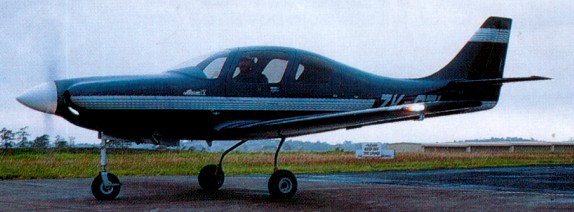
In 1988, Lance contacted Martin Hollman to help design a four place aircraft around a Contintental TSIO-550A engine which had 350 hp at 2,700 rpm. The goal was to design and produce a 345 mph, four seat, pressurized aircraft that could be easily built in one’s home shop and fly at 24,000 ft.. The Lancair IV-P maintains a 5.0 psi cabin differential. From the outset the aircraft was designed to be presssurised Aerodynamicist, Rick McWilliams designed the wing.
In addition to computer analysis and static load testing, a full flutter test program was conducted. The airframe was analyzed through ground vibration testing (GVT) that determines stiffness and natural frequencies of all major components. Test pilot Dave Morss conducted all in-flight tests to again verify safe operations throughout the entire flight envelope.
A complete stress/strain survey was conducted by Hartzell and MT-Propeller to ensure a perfect match to the Continental engine and airframe. In these tests, sophisticated radio transmitting equipment was attached to the engine and propeller so that actual real-time, in-flight data could be received and analyzed.
With the Lancair IV and IV-P requirements for reduced weight and extreme high speeds, a small, strong and stiff wing was essential. Carbon fiber was chosen because of its strength to weight ratio, which is generally 25% lighter than E-glass as well as 2 times stiffer.
Typical ply schedules for the airframe will range from three to as many as seventy plies of carbon fiber, depending on the load requirements. These carbon fibers are typically woven materials; however, spar caps, longerons, and roll over structures are fabricated with uni-directional carbon.
To complete the sandwich structure, only Nomex honeycomb core materials are used. The resultant structure is comprised of several layers of woven carbon fiber, a film adhesive layer on each side of the Nomex core, and followed by closeout layers of woven carbon fiber.
The wing compromises a unique blend of an inboard custom airfoil section with a NACA tip section. Also unique for such a high-speed aircraft is the high laminar flow airflow root section, which has a 17% chord thickness. This offers the added benefits of greater strength, greater stiffness and increased fuel volume.
The Lancair IV, IV-P and Propjet were designed for high altitude operations and they are in their element when cruising up in the flight levels. To achieve this high altitude performance, the wing has relatively high aspect ratio that can be further enhanced with addition of the extended winglets. The wing offers a higher wing loading but has full slotted Fowler flaps to reduce stall speed and improve slow speed handling. The Fowler flaps operate in roller tracks that are completely hidden when the flaps are retracted. When the flaps are extended, they add considerable wing area to enhance slow speed handling. Take off flaps (full aft extension and 10 degrees down) can be deployed at speeds as high as 200 mph (174 kts). This Fowler flap system is fully electro/hydraulic and is completely installed in every Fastbuild kit.
A winglet option increases span and adds to roll coupling for greater stability up in the thinner air of the flight levels. Winglets are interchangeable in a matter of minutes with the standard wing tip. In addition, a speed brake option to enable quick descents without reducing power is offered.
The ailerons are 15% of chord-long and thin.
Fuel is carried in the “wet wings” which are integral with the structure. Typical fuel is 90 US gallons with options for adding more fuel bays in the wing and increasing volume up to approximately 110 US gallons for the reciprocating engine and 125 or 150 US gallons for the turboprop, Propjet. The Propjet wings will hold 115 US gallons and the kit includes a header tank that holds an additional 10 US gallons. There is an optional header tank that will hold 35 US gallons available. Fuel tanks are selected from the single valve that offers left, right, and off.
The “IV” has a very roomy cabin area measuring 46 inches across the front seats and 43 inches in the back. Cabin height is 48 inches. Front seats have ground adjustable seat backs and large side arm rests that add to the overall comfort. The cabin door offers an inflatable seal.
On approach the one-piece, 3/8″ thick windshield provides excellent visibility. The large side windows are 3/16″ thick on standard IV’s and 1/4″ thick on the pressurized IV-P. Dual side sticks are standard.
The gear system is electro/hydraulic and includes an accumulator thereby providing a constant pressure of 1100 psi. In addition, the Fowler flap system uses the same electro/hydraulic pressure for operation. As a gear down backup, a hand pump is supplied which draws hydraulic fluid from a dedicated portion of the reservoir. All airframe kits contain this complete gear and actuation system. The main gear is made of tubular 4340 steel. The main gearbox is pre-aligned truss assembly that is already installed for you. These gear legs retract using a rack and pinion system. Large 600×6 wheels and heavy-duty brakes are standard. The nose gear is a premium air/oleo strut designed with an internal shimmy dampener and alignment system. Steering is via differential braking.
The Lancair IV and IV-P, are designed around the Continental TSIO-550. With the “IV’s” performance optimized for the flight levels, this twin turbocharged, twin intercooled engine delivers 75% power up to 25,000 ft. with true airspeeds of 330 to 345 mph. An option is the IO-550 engine.
The Lancair IV was built in 1.5 years and introduced at Oshkosh in 1990. The first prototype and kits were not pressurized. On a Friday in July, 1990, Lance and Dave Morss took off for Oshkosh, flying at 19,000 feet and using oxygen, the cruise speed was 300 kts. About 25 Lancair IVs were sold that year at Oshkosh. The Lancair IV was fast and Dave Morss went on to set many records with it such as flying from Los Angeles, CA to Florida in 6 hours and 2 minutes at 24,000 ft. averaging 385 mph.
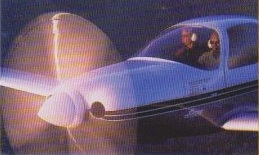
In 1998 a 350 hp Lancair IV held the San Francisco-Denver record at an average speed of 62 kph. At that time, of the 400 sold, 70 were flyng. The IV (TC LC30) kit price in 1989 was $52,400 for a non-pressurized standard-build kit, $100,800 for a pressurized fast-build kit and the IV-P pressurized version was $38,500 (1989), $76,500-80,200 (1998).
The “IV” is qualified to race in the unlimited category at the Reno National Air Races, and at Reno, the “IV” has again set lap speed records in the new Sport Class. Test pilot Dave Morss has piloted the IV at all Reno races, setting course records on more than one occasion and has set many internationally recognized world speed records.
Walter, in the Czech Republic has worked with Lancair to complete the installation of the Walter 601E engine into the Lancair IV-P airframe. Hartzell as well as Avia propeller have designed propellers for this engine installation.
For a little more power and speed, Lancair introduced the Propjet in 2000. This aircraft is designed for the Walter 601E, 750hp turboprop engine. This engine features two basic parts: the gas generator and power section. The gas generator consists of two stage axial and one stage centrifugal compressor, annular combustor and one stage axial turbine. An accessory gearbox with instruments necessary for engine operation and power control is situated on the rear part of the compressor air intake casing. An oil tank is an integral part of the accessory gearbox. The power section is mounted on the front part of the gas generator. This section consists of one stage axial turbine, exhaust system (exhaust is optional) and two stage reduction gearbox with a torquemeter and propeller shaft. The propeller governor is situated on the reduction gearbox and controls the hydraulic actuated propeller including the reverse thrust angle adjustment. The engine is equipped with a system of electronic limiters, which protects the engine against overload. The pressurization comes from a low pressure bleed air port that has been installed on the engine. This allows air into the cabin through the mixer box installed on the firewall. The pilot operated valve and mixer box control the quantity and temperature of air into the cockpit. Typical cruise with the turboprop Walter engine at 26,000 feet is 370 mph.
There are 4 approved propellers for the IV, IV-P and Propjet – the composite three or four-blade by MT-Propeller, the Avia propeller and the aluminum three blade by Hartzell. These propellers have been fully stress/strain tested in flight by the manufacturer on IV’s and are fully approved. They are all 76″ in diameter, which provides ground clearance of approximately 10 inches.
The IV-P is structurally quite different and is designed to operate with 5.0 psi cabin differential pressure. The structure again has been fully FEA analyzed and tested; ground tested to over 10 psi with no problems encountered. The pressurization system is custom developed by Dukes Inc., and it is fully automatic.
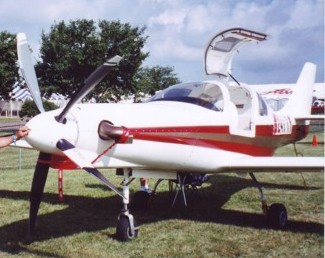
Hollmann designed a Lancair IV with a PT6A-27 gas turbine engine for Ty Ross. Ty flew his aircraft to Oshkosh but he had to make 5 landings to refuel. The LIV was designed to carry 90 gallons in the wing and with a fuel burn of over 35 gph the range is not long. Ty states that it has a climb rate of over 4,500 fpm.
In 1991 in the Philippines, Pacific Aeronautical, the new name of ACT relocated to Cebu City and started producing airframes for Lancair 320 and Lancair IV, the new higher-powered, four-seat version. Also in 1991, the PADC started assembling Lancair IVs and Lancair ESs ordered by the Philippine National Police (PNP).
Lancair IV
Engine: Cont. TSIO-550
Horsepower: 350 h.p. @ 2600 rpm
Propeller: 3 blade, constant speed
Length: 25 ft.
Wingspan: 35.5 ft.
Wing Area: 98 sq. ft. (108 sq. ft. with optional winglets)
Aspect Ratio: 9:1
Wing Loading: 36.2 lbs/sq. ft., 32.2 lbs/sq ft. (with winglets)
G Loading: +4.4, -2.2 G’s (utility);+3.8, -2.0 G’s (normal)
Empty Weight: 2,000 lbs.
Gross Weight: 3,550 lbs.
Fuel Capacity: 90 gal. (110 gal. with extended tanks)
Useful Load: 1,550 lbs.
Baggage Capacity: 150 lbs.
Seats: 4
Cabin Width: 46 in. (front) 43 in. (rear)
Cabin Height: 48 in.
Cruise: 330 mph @ 24,000 ft. (typical)
Fuel Consumption: 18-22 gph (typical)
Maximum Range: 1550 sm (with reserves @ 8,000 ft.)
Endurance: 6 hours
Rate of Climb: 2,000 fpm (solo), 1,500 fpm (gross)
Takeoff Distance: 1,500 ft. (gross @ sea level)
Landing Roll: 1,900 ft.
Stall Speed: 75 mph (dirty); 73 mph (dirty and with optional winglets)
Cross Wind Landing: 21 mph component
Lancair IV
Engine: Continental TSIO-550-B, 350 hp.
Speed max: 315 mph.
Cruise: 300 mph.
Range: 1450 sm.
Stall: 75 mph.
ROC: 2600 fpm.
Take-off dist: 1200 ft.
Landing dist: 1400 ft.
Service ceiling: 29,000 ft.
HP range: 280-350.
Fuel cap: 82 USG.
Weight empty: 1900 lbs.
Gross: 3200 lbs.
Height: 8 ft.
Length: 25 ft.
Wing span: 30.2 ft.
Wing area: 98 sq.ft.
Seats: 4.
Landing gear: retractable nose wheel.
Cockpit width: 46 in.
Lancair IV
Engine: Continental TIO-540K, 350 hp.
Cruise: 300 kt @ 23,000 ft.
Range: 1150nm.
Cockpit width: 46 in.
Lancair IV
Engine: Continental TSIO-550-E, 350 hp.
Speed max: 335 mph.
Cruise: 335 mph.
Range: 1450 sm.
Stall: 75 mph.
ROC: 2600 fpm.
Take-off dist: 1200 ft.
Landing dist: 1400 ft.
Service ceiling: 29,000 ft.
HP range: 280-350.
Fuel cap: 82 USG.
Weight empty: 1900 lbs.
Gross: 3200 lbs.
Height: 8 ft.
Length: 25 ft.
Wing span: 30.2 ft.
Wing area: 98 sq.ft.
Seats: 4.
Landing gear: retractable nose wheel.
Cockpit width: 46 in.
Lancair IV
Engine: Continental TSIO, 350 hp
Wing span: 9.2 m
Wing area: 9 sq.m
MAUW: 1450 kg
Empty weight: 862 kg
Fuel capacity: 310 lt
Max speed: 539 kph
Cruise speed: 426 kph
Minimum speed: 121 kph
Climb rate: 13 m/s
Seats: 4
Fuel consumption: 70 lt/hr
Lancair IV
Engine: Continental TSIO, 350 hp
Wing span: 9.2 m
Wing area: 9 sq.m
MAUW: 1450 kg
Empty weight: 862 kg
Fuel capacity: 310 lt
Max speed: 539 kph
Cruise speed: 426 kph
Minimum speed: 121 kph
Climb rate: 13 m/s
Seats: 4
Fuel consumption: 70 lt/hr
Lancair IV-P
Engine: Cont. TSIO-550
Horsepower: 350 h.p. @ 2600 rpm
Propeller: 3 blade, constant speed
Length: 25 ft.
Wingspan: 35.5 ft.
Pressurization: 5 psi
Wing Area: 98 sq. ft. (108 sq. ft. with optional winglets)
Aspect Ratio: 9:1
Wing Loading: 36.2 lbs/sq. ft., 32.2 lbs/sq ft. (with winglets)
G Loading: +4.4, -2.2 G’s (utility);+3.8, -2.0 G’s (normal)
Empty Weight: 2,200 lbs.
Gross Weight: 3,550 lbs.
Fuel Capacity: 90 gal. (110 gal. with extended tanks)
Useful Load: 1,350 lbs.
Baggage Capacity: 150 lbs.
Seats: 4
Cabin Width: 46 in. (front) 43 in. (rear)
Cabin Height: 48 in.
Cruise: 330 mph @ 24,000 ft. (typical)
Fuel Consumption: 18-22 gph (typical)
Maximum Range: 1550 sm (with reserves @ 8,000 ft.)
Endurance: 6 hours
Rate of Climb: 2,000 fpm (solo), 1,500 fpm (gross)
Takeoff Distance: 1,500 ft. (gross @ sea level)
Landing Roll: 1,900 ft.
Stall Speed: 75 mph (dirty); 73 mph (dirty and with optional winglets)
Cross Wind Landing: 21 mph component
Lancair IV-P
Engine: Continental TSIO-550-E, 350 hp.
Speed max: 335 mph.
Cruise: 335 mph.
Range: 1400 sm.
Stall: 75 mph.
ROC: 2600 fpm.
Take-off dist: 1500 ft.
Landing dist: 1700 ft.
Service ceiling: 29,000 ft.
HP range: 280-350.
Fuel cap: 82 USG.
Weight empty: 2200 lbs.
Gross: 3200 lbs.
Height: 8 ft.
Length: 25 ft.
Wing span: 30.2 ft.
Wing area: 98 sq.ft.
Seats: 4.
Landing gear: retractable nose wheel.
Cockpit width: 46 in.
Lancair IVP
Engine: Cont. TSIO-550B1B, 350 hp
TBO: 1600 hrs
Propeller: Const. spd.
Landing gear type: Tri/Retr.
Gross weight: 3200 lb
Empty weight, std: 2200 lb
Useful load, std: 1000lb
Fuel: 88 USG
Wingspan: 30.2 ft. (w/winglets: 32.6)
Overall length: 25 ft.
Height: 8 ft.
Wing area: 98 sq. ft (w/winglets: 108 sq. ft)
Seating capacity: 4
Cabin width: 46 in
Cabin height: 48 in
Baggage capacity: 150 lb
Cruise speed: 75% power: 300 kt
Max range (w/ reserve): 75% power: 1050 nm
Fuel consumption 75% power: 18 USgph
Stall speed (gear, flaps down): 73 kt
Best rate of climb: 2500 fpm
Service ceiling: 25,000 ft
Takeoff ground roll: 800 ft
Landing ground roll: 1700 ft
Lancair Legacy
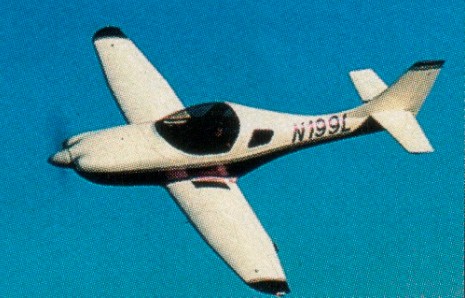
The successor to Lancair’s two-place line, the Legacy represents the culmination of more than a decade of research, testing and invaluable input from Lancair builders and fliers. Redesigned from the tail forward, it’s bigger, faster and easier to build.
Lancair designed a new wing planform, and to keep area to a minimum, the wing has a double taper to maximize the lift distribution from root to tip. This eliminates all “washout” and creates extensive laminar flow across more than 50% of the surface. The low-drag laminar “bucket” is also wider than before, further increasing overall performance. The result is very carefully “tuned” wing design, which enhances overall aircraft performance.
A relatively thick chord was employed which aids strength while providing room for adequate fuel (up to 66 gallons). This wing also had to swallow the new larger 5.00 x 5 main gear ties without gear door modifications.
The addition of simplified Fowler flaps further increases the wing’s maximum lift coefficient to enhance this low speed handling.
Lancair engineers completely redesigned the the cabin. A wider and taller cabin now offers more shoulder and headroom. Plus, the larger canopy affords unobstructed visibility and outstanding views in all directions. The roomier baggage area makes it possible to stow everything including golf bags and fishing rods.
The Lancair Legacy offers a 43.5-inch cabin width and 44.5-inch height. The pilot and passenger sit in a normal upright position.
The Legacy’s new fuselage is now able to accommodate a 310 h.p. Continental 1O-550. The Legacy will cruise at 280 mph at 10,000 ft. The Legacy’s climb rate is +2200 fpm.
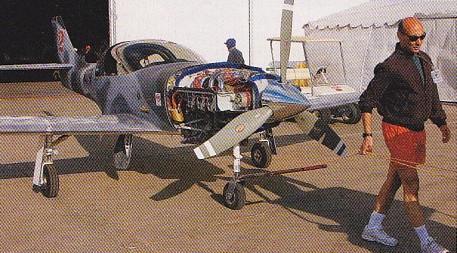
To trailer the aircraft, the wings can be removed while the aircraft remains fully on its landing gear. Lancair also works closely with the engineers at Teledyne Continental Motors and Textron Lycoming, Hartzell and MT-Propellers to refine the power plant installation and to perfect the union of engine and propeller to the airframe. Many engine options – from 160 hp to 310 hp – can be accommodated including the Lycoming 1O-360 and the Continental 1O-550.
Fuel is carried in the wings – the fuel tanks are integral within the wing bays. Standard fuel tanks have a 66 US gallon capacity. The fuel selector is per FAA standards, allowing for either left, right or off. (The “both” position is not recommended for low-wing aircraft.) As a safety feature, each wing tank incorporates a “slosh bay” to prevent unporting of the fuel pickup in the event of uncoordinated maneuvers such as during slips. The fuel valve (for Continental engines) also returns “vapor,” or return fuel, back to the fuel tank in use. Custom fuel quantity monitoring systems are available as options.
Sitting three inches taller than the 320/360 for more ground and prop clearance, the Legacy’s main landing gear incorporates air/oleo struts with 5.00 x 5 main gear tires. The nose gear is also the premium air/oleo strut with internal viscous shimmy dampening. Protected from the environment, the internalized dampening system provides longer service life, and there are no scissor links to wear out. Steering is accomplished by differential braking, and the rudder becomes effective at taxi speeds as low as 20 m.p.h. A tire guide strap assures proper retraction of the nose wheel into the gear. The retraction method is Lancair’s electro/hydraulic system.
The Legacy’s major airframe is constructed of composite materials. Cured at 270 degrees Fahrenheit under vacuum pressure, these composites are NASA tested.
The high-temperature, pre-impregnated carbon fiber and/or fiberglass systems combined with Nomex/honeycomb core materials allows the Legacy’s sculptured fuselage and double-taper wing to have no drag-producing rivets or lap joints. Corrosion resistant, a nearly infinite fatigue life and virtually non-flammable, composite materials also extend the life of the airframe.
Lancair’s fastbuild kit, accessory catalog service, avionics shop, free technical assistance and builder assist program make the assembly process quick and efficient enjoyable. To make wing assembly simpler, the main spars and the ribs are “pre-installed” into the wing skins. Then, wing attachments bushings that accurately establish the wing dihedral are pre-installed. Flaps and ailerons are completed and most of the control systems are installed.
Darryl Greenamyer raced a Legacy in the Sport Class at the 40th Annual Reno Races. Greenamyer achieved 350mph during qualifying laps and won the Gold race.
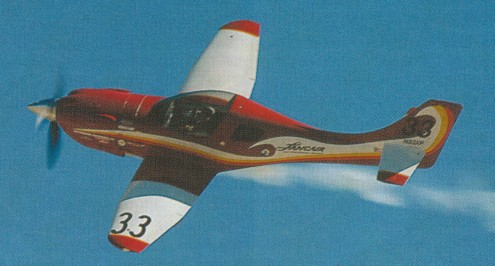
Legacy’s achieved 1st, 2nd, and 3rd in the Gold Class and 1st in the Silver Class that year.
LEGACY FG
The Legacy Fixed Gear kitplane is a simple, economical version of the retractable gear Legacy. Other than the permanent down and locked wheels, the fixed gear Legacy is very similar to its retractable gear counterpart. Sharing the fuselage, wing and tail with the retractable gear Legacy, the Legacy FG is designed to accept a four cylinder Lycoming engine with a conventional instrument panel to lower costs and reduce build time. Fitted with a 210 hp Lycoming IO or TNIO-390X powerplant, the Legacy FG has a typical cruise of over 225 mph and a range of more than 1,300 statute miles. The FG was available in a carbon version that will accept the TCM IO550N.
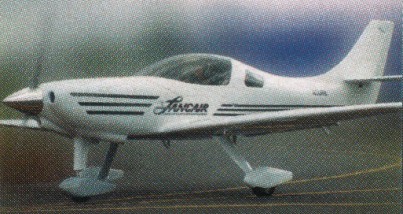
The fixed gear Lancair Legacy FG introduced at Sun’n Fun 2003. The overall configuration of the airframe is basically the same for both aircraft, but the fixed gear version is constructed primarily of fiberglass rather than carbon fiber. Additionally, Lancair designed the kit to accept four-cylinder Lycoming engines as well as simplified panels and interior appointments to lower costs and speed up building times.
To make wing assembly simpler and more manageable, the main spars and the ribs are “pre-installed” into the wing skins. Then, wing attachments bushings that accurately establish the wing dihedral are pre-installed. Flaps and ailerons are completed and most of the control systems are installed for you. The remaining installations and assemblies are simple and very straightforward.
Legacy FG
Engine: Lycoming IO-390, 200 h.p. @ 2700 rpm
Propeller: 2 blade, constant speed
Length: 22 ft.
Wingspan: 25.5 ft.
Wing Area: 82.5 sq. ft.
Wing Loading: 23 lbs./sq. ft.
Aspect Ratio: 7.95:1
G Loading: +4.4, -2.2 G’s (utility); +3.8, -2.0 G’s (normal)
Empty Weight: 1,450 lbs.
Gross Weight: 2,200 lbs.
Fuel Capacity: 65 USgal.
Useful Load: 750 lbs.
Baggage Capacity: 90 lbs.
Seats: 2
Cockpit Length: 63″
Cockpit Width: 43.5″
Cockpit Height: 44.5 in.
Cruise: 215 mph @ 8,000 ft.
Stall Speed: 65 mph (dirty)
Takeoff Distance: 1,500 ft. (gross @ sea level)
Landing Roll: 900 ft.
Cross Wind Landing: 21 mph component
Fuel Consumption: 11.5 gph
Maximum Range: 1,450 sm
Rate of Climb: 1,700 fpm (solo), 1,200 fpm (gross)
Legacy FG
Engine: Lycoming TNIO-390, 210 h.p. @ 2700 rpm
Propeller: 2 blade, constant speed
Length: 22 ft.
Wingspan: 25.5 ft.
Wing Area: 82.5 sq. ft.
Wing Loading: 23 lbs./sq. ft.
Aspect Ratio: 7.95:1
G Loading: +4.4, -2.2 G’s (utility); +3.8, -2.0 G’s (normal)
Empty Weight: 1,450 lbs.
Gross Weight: 2,200 lbs.
Fuel Capacity: 65 USgal.
Useful Load: 750 lbs.
Baggage Capacity: 90 lbs.
Seats: 2
Cockpit Length: 63″
Cockpit Width: 43.5″
Cockpit Height: 44.5 in.
Cruise: 225 mph @ 8,000 ft
Stall Speed: 65 mph (dirty)
Takeoff Distance: 1,500 ft. (gross @ sea level)
Landing Roll: 900 ft.
Cross Wind Landing: 21 mph component
Fuel Consumption: 12.5 gph
Maximum Range: 1,550 sm
Rate of Climb: 1,700 fpm (solo), 1,200 fpm (gross)
Legacy
Engine: Cont. IO-550-N, 310 hp @
2700 rpm
Propeller: 3 blade, constant speed
Length: 22 ft.
Wingspan: 25.5 ft.
Wing Area: 82.5 sq. ft.
Wing Loading: 23 lbs./sq. ft.
Aspect Ratio: 7.95:1
G Loading: +4.4, -2.2 G’s (utility); +3.8, -2.0 G’s (normal)
Empty Weight: 1,500 lbs.
Gross Weight: 2,200 lbs.
Fuel Capacity: 65 USgal.
Useful Load: 700 lbs.
Baggage Capacity: 90 lbs.
Cabin Width: 43.5 in.
Seats: 2
Cockpit Length: 63″
Cockpit Width: 43.5″
Cockpit Height: 44.5 in.
Cruise: 276 mph @ 8,000 ft. (typical)
Stall Speed: 65 mph (dirty)
Service Ceiling: 18,000 ft.
Takeoff Distance: 850 ft. (gross @ sea level)
Landing Roll: 900 ft.
Cross Wind Landing: 21 mph component
Fuel Consumption: 13.5-15 gph (typical)
Maximum Range: 1,150 sm (with reserves @ 8,000 ft.)
Rate of Climb: 2,700 fpm (solo, IO-550); 2000 fpm (gross)
Legacy
Engine: Lycoming IO-540, 260 h.p. @ 2700 rpm
Propeller: 3 blade, constant speed
Length: 22 ft.
Wingspan: 25.5 ft.
Wing Area: 82.5 sq. ft.
Wing Loading: 23 lbs./sq. ft.
Aspect Ratio: 7.95:1
G Loading: +4.4, -2.2 G’s (utility); +3.8, -2.0 G’s (normal)
Empty Weight: 1,500 lbs.
Gross Weight: 2,200 lbs.
Fuel Capacity: 65 USgal.
Useful Load: 700 lbs.
Baggage Capacity: 90 lbs.
Cabin Width: 43.5 in.
Seats: 2
Cockpit Length: 63″
Cockpit Width: 43.5″
Cockpit Height: 44.5 in.
Cruise: 276 mph @ 8,000 ft. (typical)
Stall Speed: 65 mph (dirty)
Service Ceiling: 18,000 ft.
Takeoff Distance: 850 ft. (gross @ sea level)
Landing Roll: 900 ft.
Cross Wind Landing: 21 mph component
Fuel Consumption: 13.5-15 gph (typical)
Maximum Range: 1,150 sm (with reserves @ 8,000 ft.)
Rate of Climb: 2000 fpm (gross)
Lamoureux 1909 monoplane
In 1909 Lamoureux built a monoplane in France.
Span: 26’3″
Length: 24’7″
Lamotte Chantecler
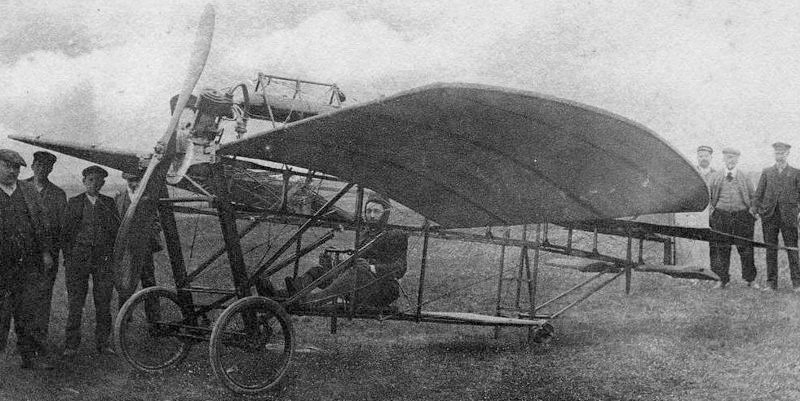
A monoplane with a two-cylinder Anzani engine, built by Victor-Thomas Lamotte of Luçon, France. A postcard gives the date as 1907.
Lambert Aircraft Engineering Mission M212
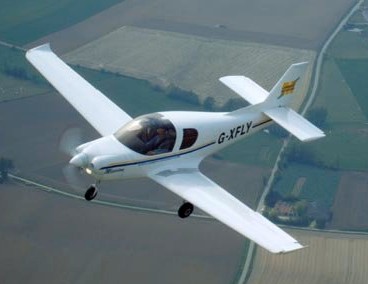
The Mission M212 is a single engine light aircraft of conventional configuration. It has an unswept straight-tapered low wing. The fuselage provides side-by-side seating and has sufficient room to accommodate four adults. In the initial design stages, significant attention was paid to visibility, comfort and ergonomics. The single piece forward hinging canopy provides excellent visibility in level flight as well as in turns. In addition, the clean arrangement ensures a good and water proof seal and keeps aerodynamic noise low. Both the seats and rudder pedals are adjustable. Elevator and aileron control is by sticks. The aircraft is standard equipped with full dual controls.
Control surfaces are conventional with single slotted flaps and an all-moving horizontal tail. The main landing gear consists of a cantilever leaf spring and the steerable nosewheel is of the telescopic oleo-pneumatic type. The airframe is all composite. Construction is mainly of glass fibre and epoxy. Carbon reinforcements are used in spars and longerons where additional stiffness is required.
The development of the Mission M212 started in mid 1992 with a thorough study, which investigated the impact of a light aircraft’s engine on the efficiency of the aircraft as a whole, and which evaluated the potential use of several engines as alternative to the traditional engines.
The project moved to the Cranfield Institute of Technology (now Cranfield University) in October 1992 where the design was started after an extensive market analysis. The specification of the M212-series are mainly based on the results of this market research.
In April 1993 the conceptual design of the Mission was started. A full scale mock-up of the fuselage was built in July 1993 to check for cockpit size, accessibility, visibility and ergonomics. In September 1993 a 1/14 wind tunnel model was built and extensive wind tunnel testing was done during the following months. The conceptual design was completed in January 1994 and the preliminary design in May 1994. Although the Mission was initially not intended for the competition, in the same month, the conceptual design was declared a joint winner in the first stage of the Light Aircraft Design Competition organised by the Royal Aeronautical Society.
The structural design of the Mission was completed by July 1995, after which final drawings were produced. The complete design file of the M212-100, (at that time) the two-seater version, was submitted for the second stage of the Design Competition, and reached a first place.
The construction of tooling was started in January 1996. Fuselage, wing and tailplane plugs were built, of which a set of female moulds were taken. Next, development was concentrated on the wings. All tooling to produce and assemble the components for the wing structure was built.
Concurrently a structural testing programme was set up. Composite materials testing was started early in 1997. Initially work focused on the development and testing of time-saving, reliable and durable manufacturing and assembly methods. Alongside the test work, manufacturing parameters, processes, component lay-up and assembly procedures, quality standards and a quality control system were worked out. In contrast to most proof-of-concept prototypes, the Mission prototype is not a ‘hand carved’ example. Instead all components are produced from production tooling and assembled in the jigs that will be used for series production. In December 1998 a milestone in the development of the Mission was achieved when an assembled wing structure was loaded to the design ultimate load (8.55 g) at 900 kg (2 000 lb), the MAUW (max. all up weight) of the M212-100.
With the prototype wings and control surfaces completed by mid 1999, the work on the fuselage structure was tackled. Again, for all composite parts, moulds were made and an assembly jig for the fuselage was built. The jig ensures correct alignment of the components during assembly. As of July 2001, all structural subassemblies (i.e. wings, fuselage, empennage and control surfaces) were ready for rigging. A jig for matching the wings to the fuselage with the proper incidence and dihedral was built.
While the work on the structure was taking place, the development of the aircraft systems steadily progressed and detail drawings were produced. Subsequently, components for controls and fuel system were manufactured and the subassemblies were ready for installation.
In January 2002, the structural work was finished. With the fuselage standing on the main landing gear, the wings and control surfaces had been rigged and the control systems had been installed. This milestone was celebrated with a roll-out of the Mission M212 prototype on February 8th.
In late February 2002, the firewall forward section was tackled. The engine mount was built. A plug for the cowlings was built, of which female moulds were taken which in turn allowed the cowlings to be made. The prototype was moved to another facility by the end of May for painting. The aircraft was displayed for the first time at the PFA Rally at Cranfield on 21-23 June 2002.
In September and October 2002, structural testing was carried out on the prototype fuselage. Testing was in accordance with FAR-23/JAR-23 airworthiness standards. Stiffness of the structure proved to be very high. Behaviour was entirely to the expectations with no sign of cracks, buckling or wrinkling.
Subsequently the engine was bolted to the engine mount and all accessories onthe engine were installed and connected. Nosewheel steering was also installed. Various improvements were worked out such a redesigned control system for the elevator trim, which meets FAR-23/JAR-23 requirements.
Between December 2002 and June 2003, significant progress was made with installation and completion of various systems and equipment such as cabin heating/ventilation, electrical system, instruments, adjustable front seats and interior. The main landing gear was redesigned to increase its stiffness and raise the maximum landing weight.
Prototype G-XFLY was on display all day on the Grote Markt (Grand Place) in Kortrijk on 25 June, where it attracted lots of attention of public and press. After returning from the PFA Rally 2003, the aircraft moved to Hangar 63 at Kortrijk-Wevelgem airfield for ground testing and preparations for flight testing. With the aircraft now permanantly assembled, further testing was carried out on control systems. Full ground vibration tests were run in February 2004. The aircraft was inspected several times and subsequent improvements or modifications were designed and integrated. The final version of the design work, the test reports and the JAR-23 compliance list was submitted to PFA Engineering, where a massive effort was undertaken to review drawings and double check all the stressing.
On 23 June, the Mission M212 prototype G-XFLY was given a final inspection. That evening, the inspector, Finbar Colson, signed off all paperwork and declared the aircraft fit for flight. All documents were sent to the PFA headquarters, together with the application for a Permit to Test.
The aircraft was trailered to Cranfield where it was prepared for its maiden flight. The Permit to Test came on 7 July, but bad weather prevented us to fly the aircraft before the PFA Rally two days later.
The first flight was made on Tuesday 13 July 2004 with Roger Bailey, test pilot at Cranfield University, at the controls. The flight lasted 40 minutes and the aircraft behaved very much as expected.
During the following months, the Mission M212 prototype was flown from Cranfield for flight testing. Flight testing was concluded in april 2005 with PFA type approval.
Aircraft performance varies with type of propeller fitted. Engines may be limited to 2500 rpm for optimum noise reduction.
Mission M212
Engine: DeltaHawk DH200A4 XP-360, 147 kW (200 HP) at 2700 rpm
Fuel type: Jet Fuel, Diesel
Wing span: 9.80 m (32 ft 2 in)
Wing area: 12.00 sq.m (129 sq.ft)
Aspect ratio: 7.7
Length: 7.40 m (24 ft 3 in)
Height: 2.90 m (9 ft 6 in)
Tailplane span: 3.20 m (10 ft 6 in)
Wheeltrack: 2.80 m (9 ft 2 in)
Baggage capacity: 200 lt (7 cu ft) approx.
Cabin width: 1.12 m (44 in)
Cabin height: 1.25 m (49 in)
Fuel capacity (std): 160 lt (42 us gal)
Fuel capacity (opt): up to 280 lt (72 us gal)
Never exceed speed: 183 kt (338km/h)
Limit load factors: 3.8/-1.9
Empty weight: 735 kg (1620 lb)
Max. all up weight: 1150 kg (2535 lb)
Max. level speed at S/L: 144 kt (268 km/h)
Max. S/L rate of climb: 1020 ft/min (5.1 m/s)
75% cruise at 8000 ft: 141 kt (261 km/h)
60% cruise at 8000 ft: 130 kt (241 km/h)
Range at 75% (std fuel): 655 nm (1215 km)
Range at 60% (std fuel): 760 nm (1410 km)
Range at 60% (opt. fuel): 1360 nm (2520 km)
Fuel flow at 75%: 32 l/h (8.5 us gal/h)
Fuel flow at 60%: 26 l/h (6.8 us gal/h)
Stall speed, full flaps: 53 kts (98 km/h)
T-O ground roll: 250 m (820 ft)
Mission M212
Engine: Lycoming O-360, 133 kW (180 HP) at 2700 rpm
Fuel type: Avgas 100LL, Unleaded mogas
Wing span: 9.80 m (32 ft 2 in)
Wing area: 12.00 sq.m (129 sq.ft)
Aspect ratio: 7.7
Length: 7.40 m (24 ft 3 in)
Height: 2.90 m (9 ft 6 in)
Tailplane span: 3.20 m (10 ft 6 in)
Wheeltrack: 2.80 m (9 ft 2 in)
Baggage capacity: 200 lt (7 cu ft) approx.
Cabin width: 1.12 m (44 in)
Cabin height: 1.25 m (49 in)
Fuel capacity (std): 160 lt (42 us gal)
Fuel capacity (opt): up to 280 lt (72 us gal)
Never exceed speed: 183 kt (338km/h)
Limit load factors: 3.8/-1.9
Empty weight: 722 kg (1590 lb)
Max. all up weight: 1150 kg (2535 lb)
Max. level speed at S/L: 140 kt (260 km/h)
Max. S/L rate of climb: 900 ft/min (4.5 m/s)
75% cruise at 8000 ft: 137 kt (254 km/h)
60% cruise at 8000 ft: 126 kt (232 km/h)
Range at 75% (std fuel): 480 nm (890 km)
Range at 60% (std fuel): 550 nm (1020 km)
Range at 60% (opt. fuel): 1000 nm (1850 km)
Fuel flow at 75%: 42 l/h (11.0 us gal/h)
Fuel flow at 60%: 34 l/h (8.9 us gal/h)
Stall speed, full flaps: 53 kts (98 km/h)
T-O ground roll: 280 m (920 ft)
 All Aero