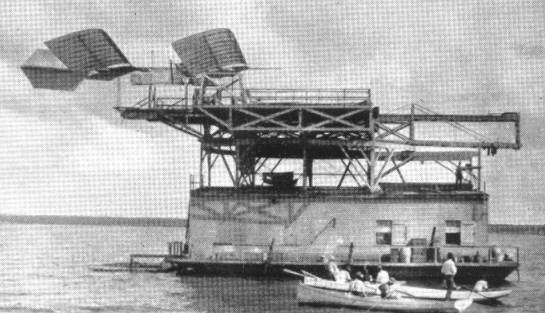
Langley Aerodrome A

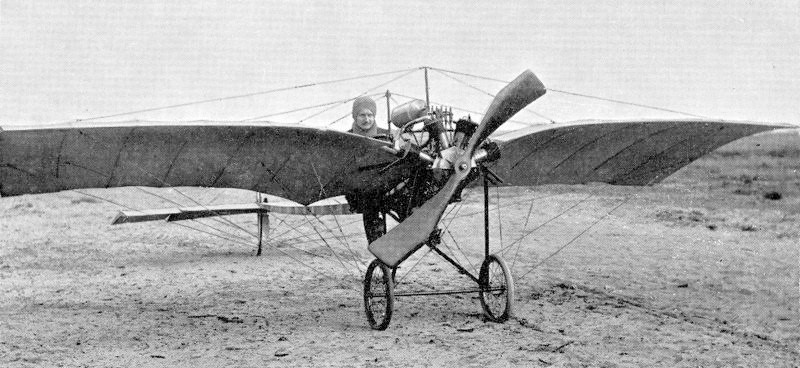
Samuel Langley’s successful flights of his model Aerodromes Number 5 and Number 6 in 1896 led to plans to build a full-sized, human-carrying airplane. Langley’s simple approach was merely to scale up the unpiloted Aerodromes to human-carrying proportions. This would prove to be a grave error, as the aerodynamics, structural design, and control system of the smaller aircraft were not adaptable to a full-sized version. Langley’s primary focus was the power plant. The completed engine, a water-cooled five-cylinder radial that generated a remarkable 52.4 horsepower, was a great achievement for the time. This machine was a scaled-up petrol-engined version of a small steam-powered model flown with great success by Langley in 1896, and had been financed to the extent of $50,000 by the US War Department.

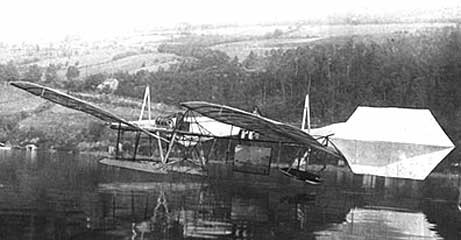
The Aerodrome has a steel tubing fuselage and wooden wings and tail. The covering was Percaline (a light-weight cotton) with a natural fabric finish; no sealant or paint of any kind.
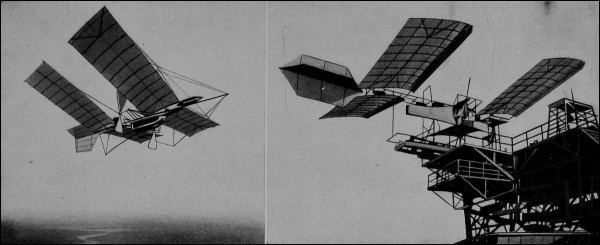
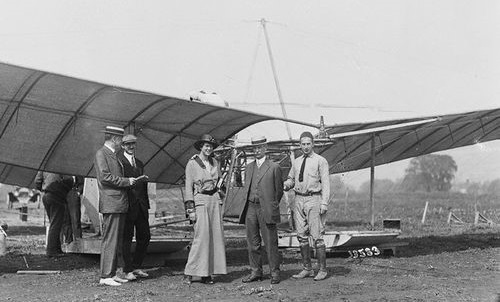
Charles Manly (designer of the engine) attempted to fly from a houseboat on the Potomac River but despite the excellent engine, the Aerodrome A, as it was called, crashed on takeoff on October 7, 1903, and again on December 8. Langley blamed the launch mechanism. While this was in some small measure true, there is no denying that the Aerodrome A was an overly complex, structurally weak, aerodynamically unsound aircraft. This second crash ended Langley’s aeronautical work entirely.
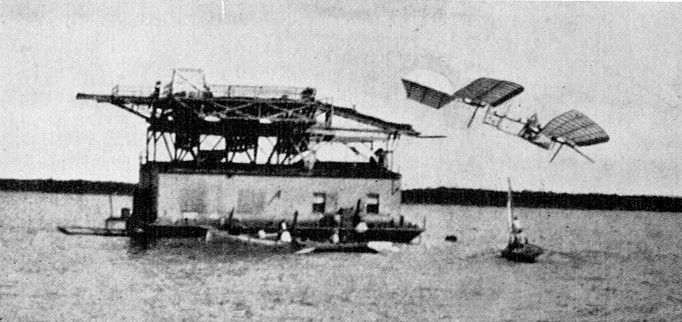
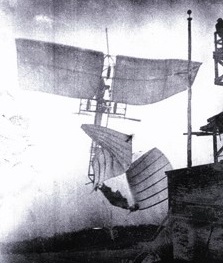
8 December 1903

Glenn Curtiss rebuilt the Langley Aerodrome in 1914 and flew it as a seaplane. These flights were possible only because Curtiss made important changes in its design.
Engine: 5 cylinder radial, 52 hp.
Propellers: two pusher propellers via geared transmission system
Wingspan: 14.8 m (48 ft 5 in)
Length: 16.0 m (52 ft 5 in)
Height: 3.5 m (11 ft 4 in)
Weight: 340 kg (750 lb), including pilot
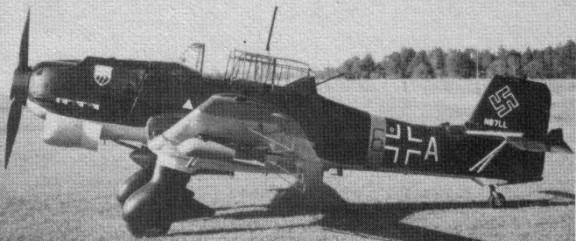
Langhurst JU87-B2 Stuka

Like the original, the Langhurst replica Stuka is a two-place aircraft with a single control from the front seat. The rear seat faces the tail. The replica is completely of metal construction. Basically, it is a com¬posite. It has an inner steel-tube frame and an aluminum skin. Because the original rib type was unknown, Langhurst utilized the NACA 2415, which looks very much like the original.

The 7/10 Stuka is actually a full-sized airplane by most homebuilt standards. It has a full electrical system, full hydraulic system and complete fuel manage¬ment system. The landing gear and tailwheel units are standard from a PT-19.

Registered N87LL, the Stuka first flew on 19 July 1978.

The aircraft is now on loan to the San Diego Aerospace Museum.

Engine: 220-hp Lycoming GO-435
Wingspan: 32’6”
Length: 24’0″
MTOW: 2275 lb
Empty weight: 1680 lb
Top speed: 137 mph
Cruise: 120 mph
Stall: 62 mph
Climb rate: 1100 fpm

Lange Antares 20E / Antares 23E / E1 Antares

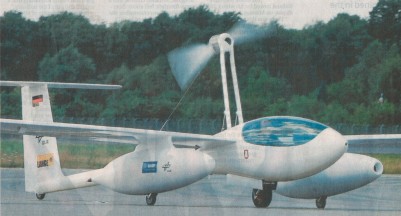
The E1 Antares is a composite single-seat self-launching powered glider with an electric motor. The E1 Antares (also known as the “Antares 20E”) is an all new design with a shoulder-mounted 20 metre span wing with flaperons and winglets. The aircraft is constructed from CRP/GRP-composites, with a T-shaped horizontal tailplane with fin and elevator, Schempp-Hirth airbrakes on the upper wing, and wing water ballast tanks. The retractable landing gear is equipped with brake and spring suspension.

The EA 42 electric drive system consists of the electric motor EM42, power-electronics LE42, engine control system EDCS2 and the sensor, data and power cables. The 42kW brushless DC electric motor is powered by a SAFT lithium-ion battery system, spilt into two packs positioned in the leading edge of both wings and composite two-blade fixed-pitch two metre diameter propeller.

E1 Antares EASA Type Certificate A.092, and includes the EA 42 engine based on EASA Type Certificate E.015 and the LF-P42 propeller based on EASA Type Certificate P.015.

The Lange EA 42 is an electrical aero engine designed for self launching gliders. It is produced in Germany by Lange Aviation for their Antares 20E glider.

E1 Antares
Engine: Lange EA 42
Propeller: Lange LF-P42
MCTOW: 660 kg (with water ballast)
MCTOW: 602 kg (without)
No. of Seats: 1

Lang Skylark

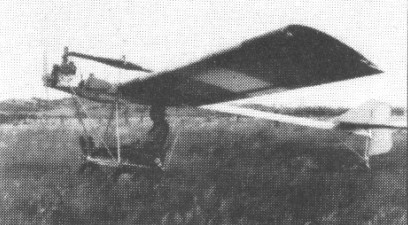
The Skylark lightweight ultralight was deve¬loped by Ron Lang of Skylark engine fame. The double surface wings have leading and trailing edge spars made of aluminium tube which have compression struts diagonally braced with cables and formed tube ribs are riveted to the spars.

Engine: Skylark 28 hp.
Prop: 121 cm x 66 cm pitch.
Wing span: 8.5 m.
Econ cruise speed: 35-40 kts.
Stall: 22 kts.
Construction time: 30 hrs.