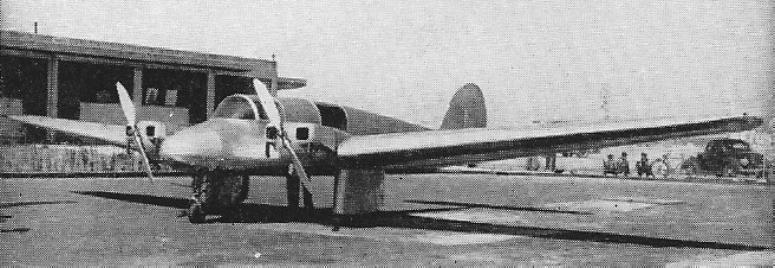
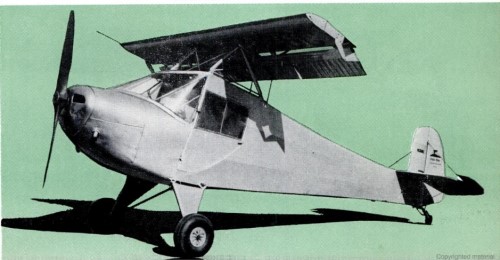
Latécoère Late 17

Laté 17: 1924 high-winged monoplane mailcarrier, 4 pax cabin, 23 built

Laté 17
Prototype, 1 x 300 hp Renault 12Fe, 2 built (F-ESDF & F-AHFG)

Laté 17-1R
280 hp Renault 12Fc

Laté 17-1J
380 hp GR Jupiter 9Aa

Laté 17-3J
380 hp GR Jupiter 9Aa

Laté 17-3R
300 hp Renault 12Fe

Laté 17 prototype 601/F-AIEG (ex-Laté 15) becomes first Laté 17-3R conv.

Laté 17-4R
450 hp Renault 12Ja

Latécoère Late 15

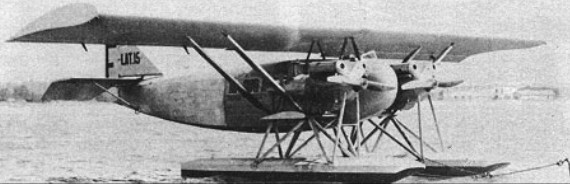
The first successful Latecoere design was the 1924 Late 15, the prototype being flown in 1924 and being followed by nine series aircraft. The Late 15 had a parasol wing spanning 18.00m and a lower stub wing, landing gear with twin-wheel main units, and power provided by two 230 hp / 194kW Lorraine 8-Bd engines. Accommodation comprised an open cockpit for the pilot, just forward of the wing leading edge, with a cabin for six passengers to the rear.

The Late 15s were operated on the Casablanca-Oran stage of the air routes flown by the Latecoere airline subsidiary. The Laté 15M were 5 a/c equipped with twin floats for the Alicante-Oran run. One Late 15 was temporarily redesignated Late 15H after float landing gear had been installed, but was soon restored to its original landplane configuration. The initial success of the Late 15 was shortlived as the aircraft was soon found to be underpowered.

Engines: 2 x 194kW Lorraine 8-B1
Max take-off weight: 3530 kg / 7782 lb
Empty weight: 1900 kg / 4189 lb
Wingspan: 18.00 m / 59 ft 1 in
Length: 11.85 m / 38 ft 11 in
Height: 3.82 m / 12 ft 6 in
Wing area: 56.48 sq.m / 607.95 sq ft
Max. speed: 180 km/h / 112 mph
Cruise speed: 151 km/h / 94 mph
Ceiling: 4500 m / 14750 ft
Range: 600 km / 373 miles

Lascurain Aura

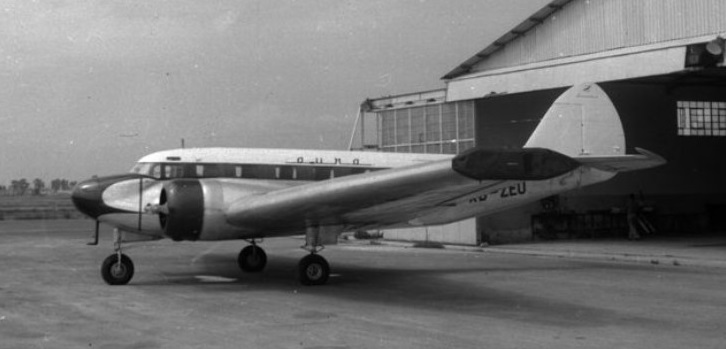
Ángel Lascurain y Osio wanted to manufacture an aircraft designed for the regional airlines of some parts of Mexico that required short airstrips in rugged terrain.

Lascurain determined that regional airlines required a twin-engine plane with fixed landing gear that was affordable, capable of landing at low speed on short runways. The aircraft had to have a high rate of climb to overcome the mountainous areas.

In 1955 Ángel Lascurain went with the architect Juan Cortina Portilla, beginning the design of the aircraft based on the Turkey Buzzard, a bird for which Lascurain had fascination.

The aircraft was a twin-engine monoplane with a mid-wing monocoque fuselage built in duralumin that was capable of holding 12 people in 2 rows of 6 seats plus a bathroom lobby, with the option of 14 seats without the bathroom, plus two pilots. The fuselage was part of the wings through beams. Each wing had between the engine and the fuselage two compartments for luggage of 0.65 cubic meters each, the aircraft had two tanks of fuel of 200 liters each that fed to the Jacobs R-755 engines by gravity and pumps besides two auxiliary tanks located at the outer wing of 50 liters each.

It was the largest aircraft designed and built in Mexico.

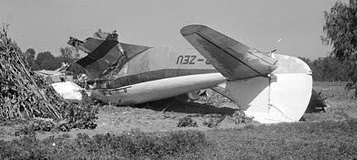
On December 24, 1957, during a routine flight of the Lascurain Aura XB-ZEU at the Mexico City Airport for no apparent reason, both engines of the aircraft were stopped and the pilot attempted to land at the airport. planning for runway 13, they crashed a few meters before the runway, killing the pilot Carlos Castillo Segura and Angel Lascurain.

Powerplants: 2 × Jacobs R-755-A1, 245 hp (183 kW)
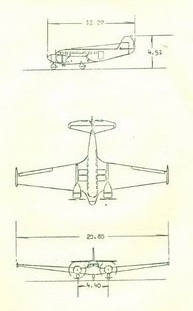
Wingspan: 68 ft 3 in (20.8 m)
Length: 40 ft 1 in (12.22 m)
Height: 14 ft 10 in (4.51 m)
Gross weight: 4,409 lb (2,000 kg)
Fuel capacity: 132 USgal. (500 L) (with reserves)
Maximum speed: 120 kn (140 mph, 220 km/h)
Cruise speed: 107 kn (123 mph, 198 km/h) at 75% thrust
Minimum control speed: 30 kn (35 mph, 56 km/h)
Range: 430 nmi (500 mi, 800 km)
Service ceiling: 26,900 ft (8,200 m)
Rate of climb: 1,033 ft/min (5.25 m/s)
Crew: two
Capacity: 12 or 14 passengers
Lascurain XB-1

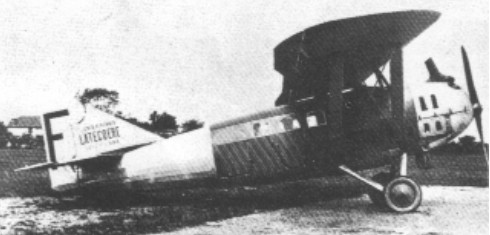
The Lascurair XB-1 was a four-seat cabin monoplane built in 1939 as a small charter aircraft but only one prototype was completed.

Of all-wood construction with fabric and plywood covering, power was provided by two 65 hp Continental C65.

This was employed by a small airline in South-East Mexico for several years before becoming privately owned.

Engines: 2 x Continental C65, 65 hp
Max speed: 130 mph
Cruise: 112 mph
Service ceiling: 19,685 ft

Las Brisas Mohawk

The Las Brisas Mohawk is an American homebuilt aircraft that was designed and produced by Las Brisas Sales of Ozark, Missouri. When it was available the aircraft was supplied in the form of plans for amateur construction.

Based upon the Avid Flyer, which it greatly resembles, the Mohawk features a strut-braced high wing, a two-seats-in-side-by-side configuration enclosed cockpit accessed via doors, fixed conventional landing gear and a single engine in tractor configuration.

The aircraft is made from metal tubing, with its flying surfaces and fuselage covered doped aircraft fabric. Its 30.00 ft (9.1 m) span wing features Junkers flaperons, has a wing area of 124.5 sq ft (11.57 m2) and is supported by “V” struts with jury struts. The plans specify standard hydraulic brakes, a steerable tailwheel and wings that fold for ground transport or storage. The standard engine used is the 50 hp (37 kW) Rotax 503 two-stroke powerplant, which gives a standard day, sea level takeoff distance of 100 ft (30 m) and a landing roll of 150 ft (46 m).

The Mohawk has a typical empty weight of 450 lb (200 kg) and a gross weight of 1,000 lb (450 kg), giving a useful load of 550 lb (250 kg). With full fuel of 12 U.S. gallons (45 L; 10.0 imp gal) the payload for pilot, passenger and baggage is 478 lb (217 kg).

The manufacturer estimated the construction time from the supplied plans as 900 hours. In 1998 the designer indicated that the aircraft could be completed for US$6,500 excluding labor. In 1998, plans were sold for US$229.00 but by 2014 were no longer available.

Mohawk
Engine: 1 × Rotax 503, 50 hp (37 kW)
Propeller: 2-bladed wooden
Wingspan: 30 ft 0 in (9.14 m)
Wing area: 124.5 sq ft (11.57 m2)
Length: 18 ft 0 in (5.49 m)
Empty weight: 450 lb (204 kg)
Gross weight: 1,000 lb (454 kg)
Fuel capacity: 12 U.S. gallons (45 L; 10.0 imp gal)
Maximum speed: 130 mph (209 km/h; 113 kn)
Cruise speed: 85 mph (137 km/h; 74 kn)
Stall speed: 30 mph (48 km/h; 26 kn) flaperons down
Range: 320 mi (278 nmi; 515 km)
Service ceiling: 12,000 ft (3,700 m)
Rate of climb: 1,200 ft/min (6.1 m/s)
Wing loading: 8.0 lb/sq ft (39 kg/m2)
Crew: one
Capacity: one passenger

Larson Model C Speedbird

The Model C Speedbird (N38C or NX38C) by Merle Larson of Oakland, Ca. had a small wing (wingspan 12ft) designed to work within the slipstream of the propeller and featured very large flaps for lift.

The Speedbird aircraft was modified from a Taylorcraft BC-12.

The aircraft flew, but on that first flight on 7 December 1953 the engine stopped and the aircraft stalled. Larson escaped serious injury and later designed the (Larson-Holmes) D-1 Duster.