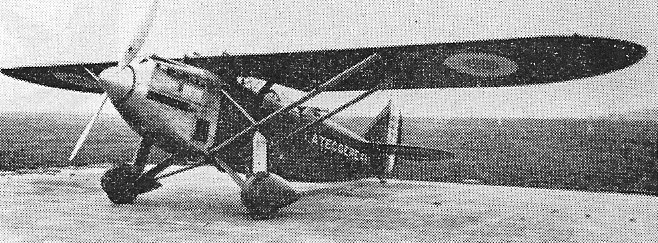
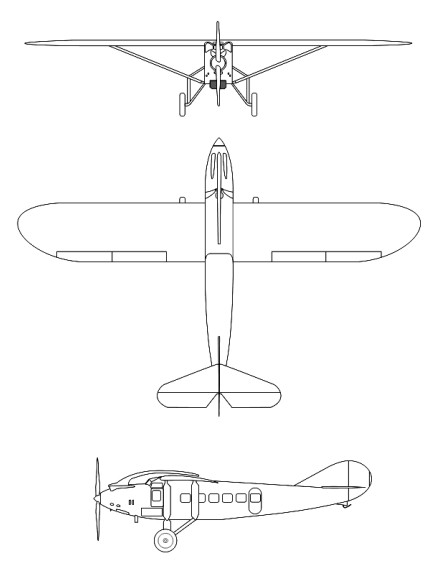
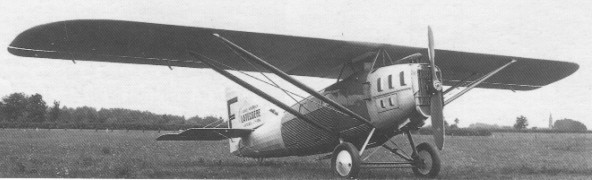
The Laté 49 was a 1931 parasol monoplane 2-seat recce a/c for R.2 contest (Bre.19 repl.)
Laté 49-0: 1931 aka Laté 490, all-Duralumin, 1 x 650 hp HS.12Nb Laté 49-1: 1932 aka Laté 491, slightly longer but lighter loaded weight Both Laté 49-0 and 49-1 too heavy, rejected in favour of ANF-Mureaux 111
Latecoere 49-1 Engine: 650 hp Hispano-Suiza 12Nb Span: 47 ft 10 in Length: 31 ft 10 in AUW: 5656 lb Max speed: 171 mph Seats: 2
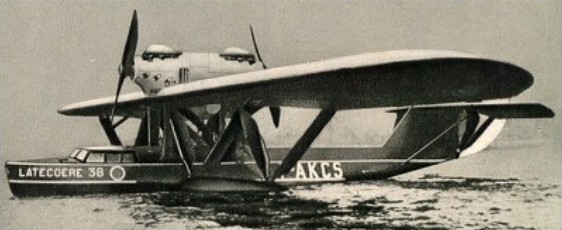
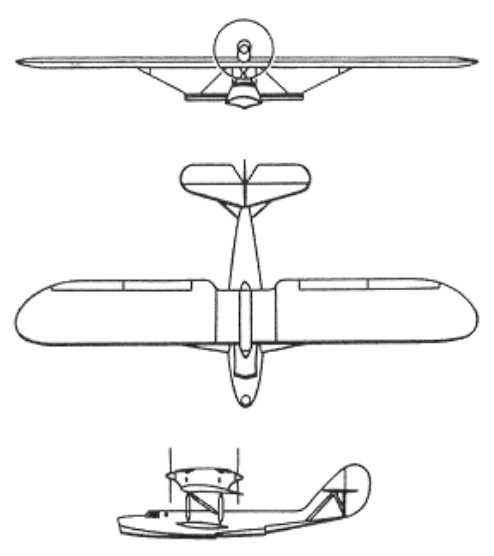
The Laté 38 Series were 1929 postal parasol flying boat, 2 x push/pull engines.
Laté 38-01: 1930 prototype, trialled at St Raphaël (Nov 1930) F-AKCS aka Laté 38-0-01 or Laté 380-01, first flight 14 Sept 1930 Laté 380bis: Laté 38-01 mod. for Aéronavale, crashed 16 Mar 1933 Laté 380bis modifications incl. lengthened hull and larger tailplane Laté 38-02: 1931 prototype, F-ALRP to Aéropostale, 1934 to Air France Laté 38-1: 1934 recce flying boat, 2 x 650 hp HS.12Nbr, 3 built aka Laté 381, as Laté 380bis but hull widened and further lengthened
Engine: 2 x HS 12 Ydrs 2, 685kW Max take-off weight: 9475 kg / 20889 lb Empty weight: 5475 kg / 12070 lb Wingspan: 31.4 m / 103 ft 0 in Length: 17.2 m / 56 ft 5 in Wing area: 130.0 sq.m / 1399.31 sq ft Max. speed: 209 km/h / 130 mph Ceiling: 4700 m / 15400 ft Range w/max.fuel: 4000 km / 2486 miles Crew: 3
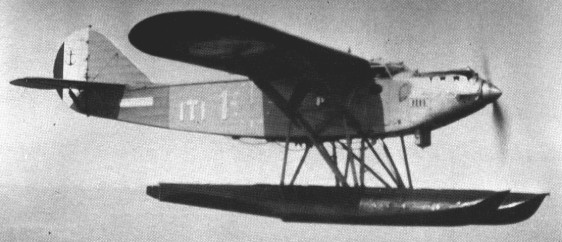
Developed from the Latécoère 28.3, the Latécoère 29 design in 1928 won a French Navy competition for a new torpedo-bomber floatplane. The Latécoère 29.01 prototype was fitted temporarily with a wheeled landing gear arrangement and first flew in October 1931. After successful land-based and waterborne trials, the type entered production. Twenty Latécoère 290s were ordered in 1932 and another 10 in the following year as the equipment of two squadrons. Survivors were relegated to the training role early in 1939, but became operational again after the outbreak of World War II, serving as coastal anti-submarine aircraft. One-off variants were the Latécoère 293 with the 540-kW (750-hp) Gnome-Rhone l4Kcrs radial and a larger rudder, the Latécoère 294 with a l4Kdrs engine, modified nose and redesigned vertical tail, and the Latécoère 296 with a 641 -kW (860-hp) Hispano-Suiza l2Ydrs-1 engine.
Laté 29 Series – 1930 design, torpedo-patrol bomber adaptation of Laté 28 Laté 29-0: 1931 torpedo floatplane, 1 x 650 hp HS.12Nbr, 32 built Laté 29-0 exp.: 1 x Ratier var.-pitch prop; 1 x stainless floats aka Laté 290 Laté 29-1: ordered for Marine but Laté 29-0 often listed as prod. model Laté 29-2: [??] Laté 29-3: 1932-33 torpedo floatplane, 1 x 725 hp G-R 14Kcrs, 1 built aka Laté 293, some sources give 800 hp as power for G-R 14Kcrs Laté 29-3 lost wing in 1933 while flown by Antoine de Saint-Exupéry Laté 29-4: 1934 torpedo floatplane, 1 x 740 hp G-R 14Kdrs, 1 built Laté 29-4: redesigned rear fuselage (to improve gunner’s field of fire) aka Laté 294, some sources give 830 hp as power for G-R 14Kcrs Laté 29-5: [??] Laté 29-6: torpedo floatplane, 1 x 860 hp HS.12Ydrs, 1 built aka Laté 296 [rear fuselage as per Laté 29-0 or Laté 29-4 ?] Laté 29-7: [??]
Spacifications:
Latécoère 290 Engine: 1 x Hispano-Suiza l2Nbr, 485kW (650 hp). Span: 19.25m (63ft 1.75 in) Length: 14.62m (47ft 11.5 in) Armament: 3×7.7-mm (0.303-in) machine-guns plus 1×670-kg (1,477-lb) torpedo or 2×150-kg (330-lb) bombs. Max T/O weight: 4800 kg (10,582 lb) Max speed: 131 mph at sea level. Operational range: 435 miles with maximum warload. Seats: 3
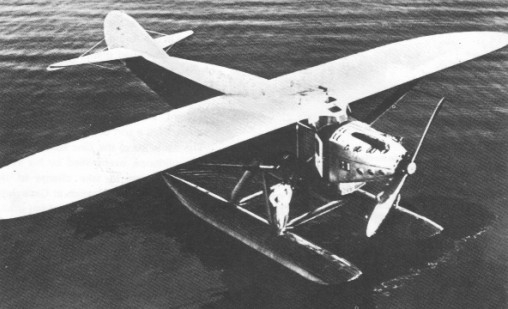
Developed from the Latecoere 26, the Latecoere 28.0 was a braced high-wing monoplane powered by a Renault 12Jbr engine. The enclosed cockpit accommodated a pilot and co-pilot/ engineer, and the cabin was furnished for eight passengers. Seventeen Late 28.0s were followed by 29 Late 28.1 aircraft with a 373kW Hispano-Suiza 12Hbxr engine. A number of Late 28.0s were converted subsequently to Late 28.1 standard. The sole Late 28.2 was a mail carrier and established several payload/speed world records in 1931. The first of five Late 28.3 mail carriers was flown by Jean Mermoz on 11/12 April 1930 to achieve a world closed-circuit distance record for seaplanes of 4308km. The remaining Late 28.3s were used on Mediterranean routes and charter services. The Late 28.1/H was a wheel landing gear version of the Late 28.3. Two one-off aircraft were the Late 28.3-I, a passenger version of the Late 28.3, and the Late 28.4-I, also developed from the Late 28.3 but powered by a Gnome-Rhone 14Kbr radial engine of 522kW. In 1930 there appeared the Late 28.5, structurally strengthened and powered by a 485kW Hispano-Suiza 12Nbr, followed by three Late 28.6 aircraft, also Hispano-powered and built for Venezuela, which had already purchased two Late 28.1s.
Variants:
Laté 28 Laté 28-0: 1 x 500 hp Renault 12Jb V12, 2 crew + 8 pax Laté 28-1: 1 x 500 hp Hispano-Suiza 12Hbr, 2 crew + 8 pax Production of Laté 28-0 and ’28-1 totalled at least 47 a/c* Laté 28-2: record aircraft (5 Int’l speed records, 1 x 650 hp HS.12Nbr, 1 built Laté 28-2 had Lamblin radiators, carried twice Laté 28-1’s payload Laté 28-3: twin-float seaplane airmail transport, 600 hp HS.12Lbr V12 Laté 28-3 ‘Comte-de-La Vaulx’ F-AJNQ, trans-South Atlantic, 12-13 May 1930 Laté 28-4: Laté 28-4-01, 1 x 700 hp Gnome-Rhone 14KB radial, 1 built Laté 28-5: military floatplane for Aéronavale, 1 x 650 hp Hispano-Suiza 12Nb Laté 28 c/n 92 ‘La Frégate’ record breaker flown by Lt de Vaisseau Pâris Laté 28-6: Laté 28-6-1, 3 x HS.12Nb-powered a/c for Venezuela, conv to Laté 28-9 Laté 28-7: [Project] Laté 28-0 with 700 hp Renault 12Mc, not built Laté 28-8: 1930 record attempt a/c, 1 x 650 hp Hispano-Suiza 12 Nbr, 1 built Laté 28-8 c/n 916** F-AJXL had and enlarged wing, it broke up in flight Laté 28-9: Laté 28-9-1, 3-seat bomber with dorsal machine gun mounting
Production for Aéropostale x 38, Aviacion Nacional Venezolana x 3, Linea Aeropostal Venezolana x 2, and Aeroposta Argentina (an Aéropostale subsidiary) x 4.
** NB: It’s difficult to pin down exact Laté 28 variant numbers. In part, this is because of individual airframes being modified between variants. In other cases there is c/n duplication in registration records – eg: c/n 918 is listed both as the record-breaking Laté 28-8 airframe and as Aeroposta Argentina’s F-AJPD which crashed in Rio Plate estuary.
Specifications:
Late 28.1 Engine: 1 x Hispano-Suiza 12Hbxr, 500hp Max take-off weight: 4040 kg / 8907 lb Empty weight: 2440 kg / 5379 lb Wingspan: 19.25 m / 63 ft 2 in Length: 13.64 m / 44 ft 9 in Height: 3.58 m / 11 ft 9 in Wing area: 48.60 sq.m / 523.13 sq ft Max. speed: 232 km/h / 144 mph Cruise speed: 200 km/h / 124 mph Ceiling: 5200 m / 17050 ft Range: 1000 km / 621 miles Range w/max.fuel: 1000 km / 621 miles Crew: 3 Passengers: 8
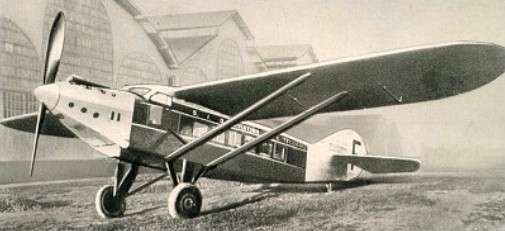
The Late 26 (about 70 were built during 1928-30 mainly for Aeropostale) was primarily a mailplane, although it accommodated two passengers. A Laté 25 development, the Late 26 featured three open cockpits in line and power was provided by a 450hp Renault 12Ja engine in the Late 26.2R and a 500hp Renault 12Jb in the Late 26.6R. Square- replaced the round-section fuselage of the Laté 25.
Late 26.2R Engine: 1 x 450hp Renault 12Ja Max take-off weight: 3364 kg / 7416 lb Empty weight: 1590 kg / 3505 lb Wingspan: 17.40 m / 57 ft 1 in Length: 12.20 m / 40 ft 0 in Height: 3.90 m / 12 ft 10 in Wing area: 48.60 sq.m / 523.13 sq ft Max. speed: 188 km/h / 117 mph Cruise speed: 157 km/h / 98 mph Ceiling: 4500 m / 14750 ft Range: 680 km / 423 miles
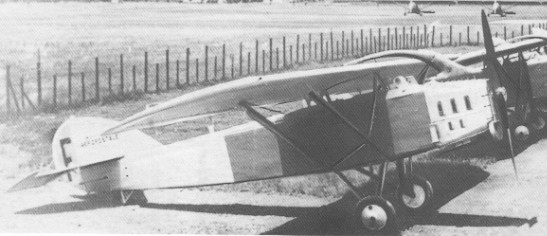
The 1926 Latecoere 25 monoplanes had a four-seat cabin, single 450hp Renault and a one ton payload.
Laté 25-1R: 1927 prototype Laté 25-1 conv. from Laté 17 (603/F-AIEH) Laté 25-2R: 1929 production version, 1 x 450 hp Renault 12Ja Laté 25-2R were conv. from Laté 17, Laté 17, and Laté 17-3R Laté 25-3R: 1931, 1 x 450 hp Renault 12Ja Laté 25-3R were conv. from Laté 17, Laté 17-1J, Laté 17-3R NB: Laté 25/4R listed as Laté 17-1J 607/F-AIHF conv. [typo?]
From the basic Late 15 design was developed the Late 19 twin-engined two-seat night-bomber, which dispensed with the lower stub wings and had open defensive machine-gun positions situated in the nose and amidships. Two were built in 1926 for the Armee de I’Air, as was the sole Late 20, an ambulance variant.
 All Aero