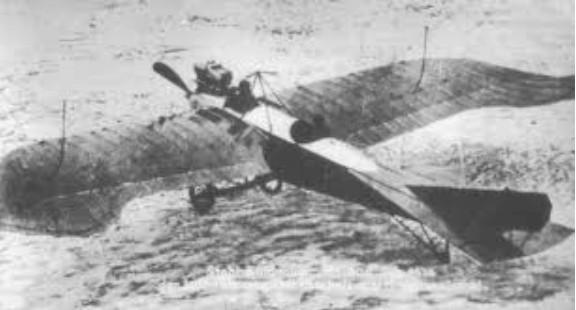
Reconnaissance and training aircraft, Germany, 1913
Engine: Argus As I, 99 hp Length: 31.791 ft / 9.69 m Height: 9.744 ft / 2.97 m Wingspan: 45.505 ft / 13.87 m Wing area: 387.504 sq.ft / 36.0 sq.m Max take off weight: 1874.3 lb / 850.0 kg Weight empty: 1323.0 lb / 600.0 kg Max. weight carried: 551.3 lb / 250.0 kg Max. speed: 62 kt / 115 km/h Cruising speed: 54 kt / 100 km/h Wing load: 4.92 lb/sq.ft / 24.0 kg/sq.m Range: 162 nm / 300 km Crew: 2
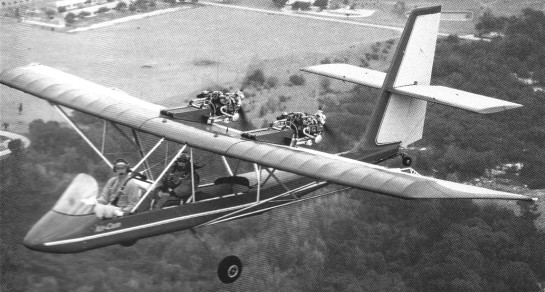
Air Cam probably never would have been built period had the Na¬tional Geographic Society not come call-ing, asking Lockwood about a camera-ship for an upcoming special on the Con¬go’s Ndoki Rain Forest. They weren’t pi¬lots, but they knew what they wanted: a two place airplane that could be outfitted with a relatively heavy motion picture camera, that could take off from an im¬provised one way strip carved out of the river bank, then fly some 70 miles into the jungle, loitering for hours over the canopy while the cinematographer cap¬tured never before seen footage of a for¬merly impenetrable land.
Within six months Lockwood had constructed the first Air Cam, an airplane that, while substantially different from the current model, had all the key elements in place. Chief among them were twin pusher engines mounted so close to each other that the loss of either one has minimal impact on the control-lability of the airplane. On the first air¬ plane, the engines were 65 horsepower two stroke Rotax 582s.
The construction of that first airplane was based on what Lockwood knew best, ultralight technology. In general, this consists of ladder construction wings with spars, battens and ribs made of aluminum tubing and covered with sailcloth. The fuselage was built out of steel (chromoly) tubing covered with aluminum, and the tail, of built up alu¬minum tubing. With wings that de¬tached easily for transport, the Air Cam was a design that would hopefully meet the challenges of life in the rain forest. In the fall of 1994 Lockwood had the Air Cam shipped to Africa for the mis¬sion. Flying in the remotest sections of Congo.
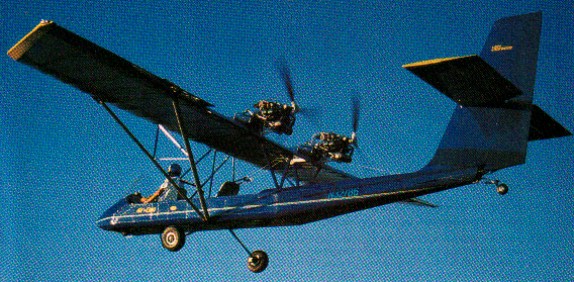
Lockwood started on an airframe redesign, making the now longer fuselage out of riveted built up aluminum con¬struction, just like Cessna does it. He made the vertical tail larger for even bet¬ter single engine performance (and to account for the possible addition of floats later on). He beefed up the cruci¬form tail (that placement, he says, optimizes the airplane’s slow speed han¬dling while maximizing its strength), and he stretched the wings, from 32 feet to 36 feet in span to carry both the addi¬tional weight of the new design and the larger, aluminum fuel tanks (29 gallons total). The redesign added only a bit of weight while maintaining or improving the airplane’s performance across the board.
It had taken Lockwood a couple of years and dozens of design changes to get to the point where he was happy, but by 1997 the tooling was complete, the computerized drawings were done, the suppliers were lined up and Lockwood pronounced that the airplane was ready.
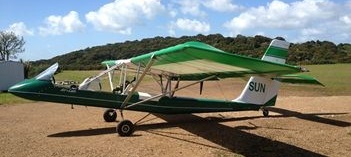
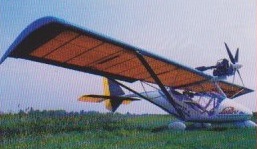
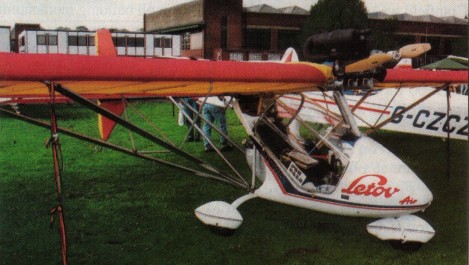
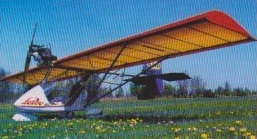
The quick build kit Leza AirCam aeroplane comes with a twelve-volume manual. Each volume covers a particular section of the aeroplane complete with exploded drawings designed on AutoCAD. The fuselage construction is an all-metal riveted monocoque, made up of preformed bulk¬heads, stringers and skins, with pre-located holes. The nose cone is a finished fibreglass moulding. and the windscreen is pre-cut Lexan. The wing centre section is all-metal. All other flying surfaces use pre-cut and drilled aircraft grade 6061 T-6 aluminium tubing and preformed aluminium ribs, covered by pre-sewn fabric envelopes. The constant chord swept tip wings are supported on a mixture of round section and faired centre section struts, with the flight loads taken to the bottom of the fuselage by long diagonal struts with centre jury struts. All controls are cable operated, in the case of the ailerons to bell cranks and then push rods. Large plain flaps are operated by a single electric screw jack. The elevator trim tab on the port side is also electrically operated. The big rudder has no trim tab. It is possible to remove the outer wings for transportation, but it is not a five minute job. The undercarriage has tapered spring steel legs, fitted with hydraulic disc braked wheels carrying 600A tyres. At the back, the tail wheel is a steerable and castoring Maule item. Power is usually supplied by two Rotax 582 water-cooled, two-cylinder, two strokes, or optionally, two Rotax 912S four stroke flat fours with water-cooled heads driving three-blade Warp Drive ground adjustable props. The 912 engines are un-cowled with the flush mounted radiators fed by NACA ducts on the underside of the wings. Each engine has a 14 US gallon tank in the wing with an auxiliary booster pump, electric primer, electric starter and an alternator. The fore and aft two seat cockpit has dual controls, the rear seat can be fitted with a single row of instruments. Behind the rear seat is a large open topped baggage bay, 24.75-in wide by 42-in long with tie down points. As this and the rear seat are close to the datum, loading has only small effect on C of G. Both fibreglass moulded seats can be ground adjusted fore and aft by re¬moving two pip pins. They are covered by padded fitted covers and were surprisingly comfortable. The front cockpit is roomy enough for large people and well laid out. Small pilots need a booster cushion to comfortably reach the pedals. The pedals rock to operate the brakes. There is no parking facility. The throttles are mounted on the left cockpit rim, along with a bank of weatherproof switches for ignitions, fuel pumps and primers. On the right side are all the switches for nay and landing lights. The instrument panel contains the flap and trim switches and the flap position indicator. There is room for basic flight instruments, a VHF com and a transponder. The centre console has all the circuit breakers, oil pressure, temperature and CHT gauges. As the cockpit rim is below your elbows, the visibility is truly magnificent in all directions, except for immediately underneath, and back and up where the wing intrudes.
The first four customer built Air Cams were at Sun ‘n Fun in April of 1999. While the Air Cam is available with the two stroke 582s, almost every customer has asked for the 100 horse Rotax 912S engines.
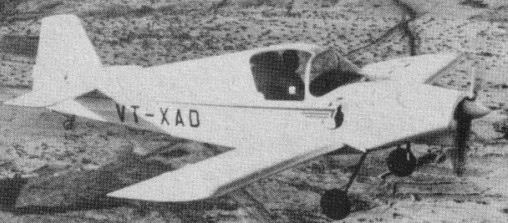
This two-place, low-wing taildragger was first built in India by an Italian engineer who studied in England and France and was available to American homebuilders through Canadian company Aie-Craft Supplies. It is of conventional all-wood construction and covered with fabric. The prototype, VT-XAD, was powered by a Continental 85-hp engine. Some are also built to house a 125-hp Lycoming.
Gross Wt. 1500 lb Empty Wt. 870 lb Fuel capacity 28 USG Wingspan 25’l0” Length 20’3” Top speed 130 mph Cruise 115 mph Stall 45 mph Climb rate 800 fpm Takeoff run 500 ft Landing roll 700 ft Range 600 miles
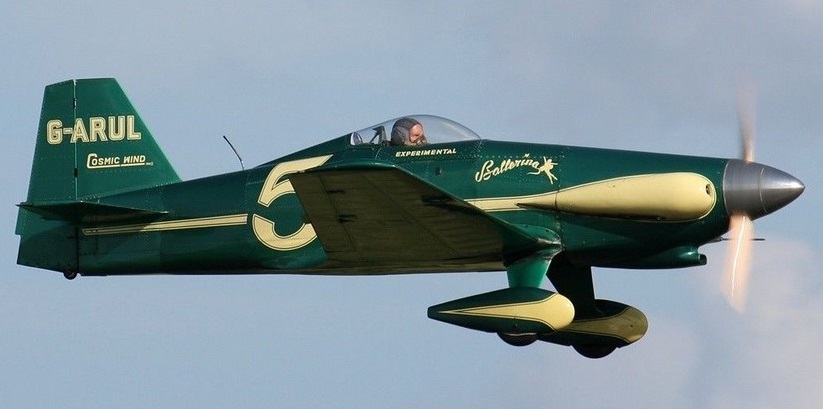
The Le Vier Cosmic Wind is an all-metal Formula One racing aircraft designed by Toni Le Vier and built by a consortium of Lockheed employees at Burbank.
1948 Levier W-5 “Cosmic Wind” N99CW
Three were imported to the UK; c/n 101 ‘Little Toni’ first flown as NX67888, later re-registered N20C. Sold to Pacific Air Racers, then to M.Blair. Sold to R.McCowen in 1971 and moved to the UK as G-AYRJ. Modified and fitted with a Rolls-Royce/Continental O-200-A and first flown as such on 28 January 1971 at Blackbushe.
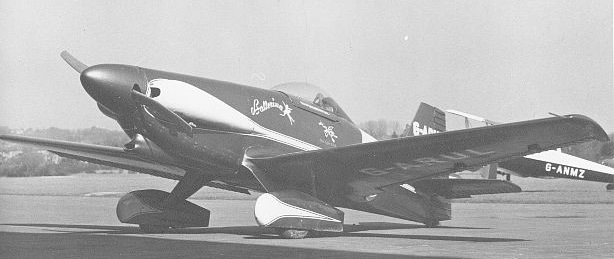
c/n 103 ‘Ballerina’ Registered N22C and sold to Pacific Air Racers, then to M.Blair. Sold to the Tiger Club in 1961 and moved to the UK as G-ARUL. Sold to P.G.Bannister but badly damaged in a crash at Halfpenny Green on 17 April 1968. Rebuilt from 1969 onwards as PFA.1511. It flew again in 1973 as ‘Ballerina II’.
c/n 1067 A fifth airframe built under Lockheed supervision to meet the USAF ‘Mighty Mouse’ specification for an ultra-small counter-insurgency aircraft. It was not finished. The hulk was bought by Robin Voice and moved to the UK in 1973 as G-BAER. It was completed as PFA.1571. First flew at Redhill in 1973 with a Continental C90, named ‘Filly’ after Robin’s wife.
Le Vier Cosmic Wind, G-ARUL ‘Ballerina’ at Redhill in the summer of 1963.
Final product of the company was the PL 400, built to an Armee de I’Air requirement, inspired by the German Fieseler Fi 156 Storch, for a STOL observation machine. A high-wing cabin monoplane powered by a Potez 9C radial of 164kW, the PL 400 flew for the first time on 19 December 1939, but German occupation put an end to construction of the PL 401 development with a Renault 6Q-09 engine of similar power.
The PL 200 monoplane was intended as an advanced reconnaissance seaplane, with a shoulder-wing mounted on a short nacelle for the three crew members, at the front of which was the 537kW Hispano-Suiza 9Vbrs radial engine.
Test-flown in February 1935, the PL 200 achieved a maximum speed of 225km/h by comparison with the 208km/h of the production PL 15. It was re-engined with a 552kW Gnome-Rhone 9Kfr engine in October 1935 as the PL 201, but development was abandoned soon afterwards
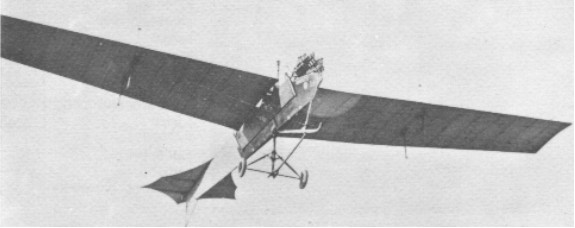
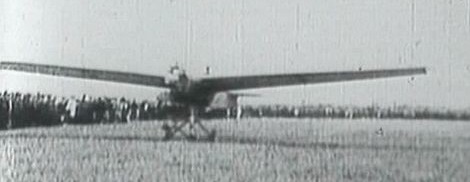
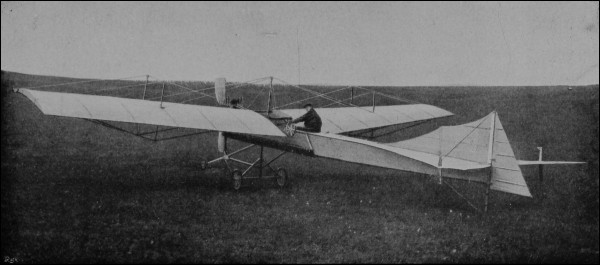
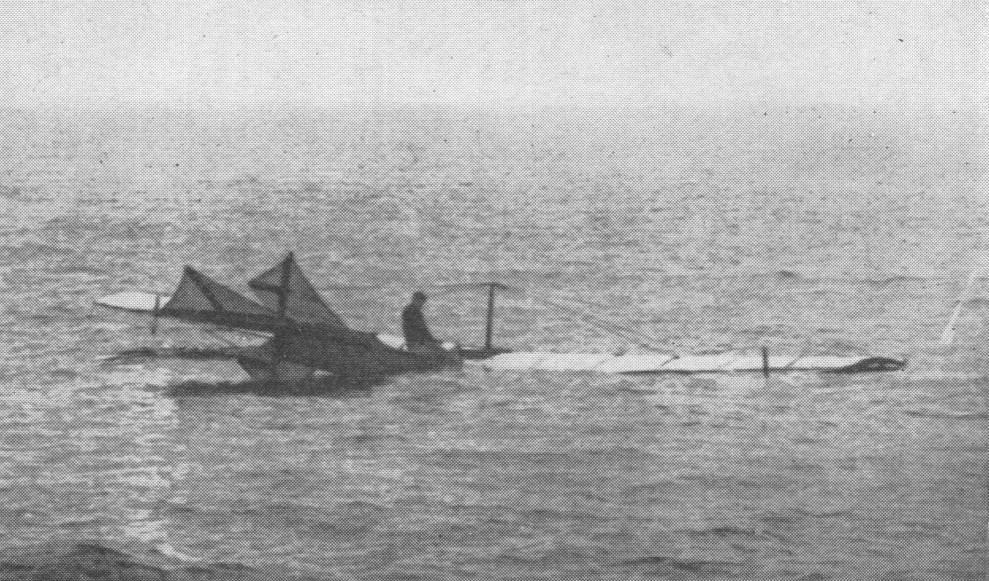
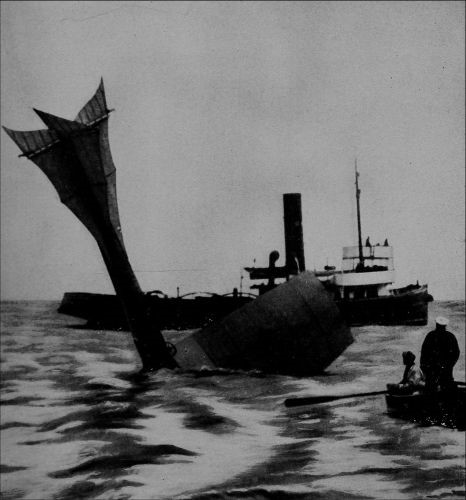
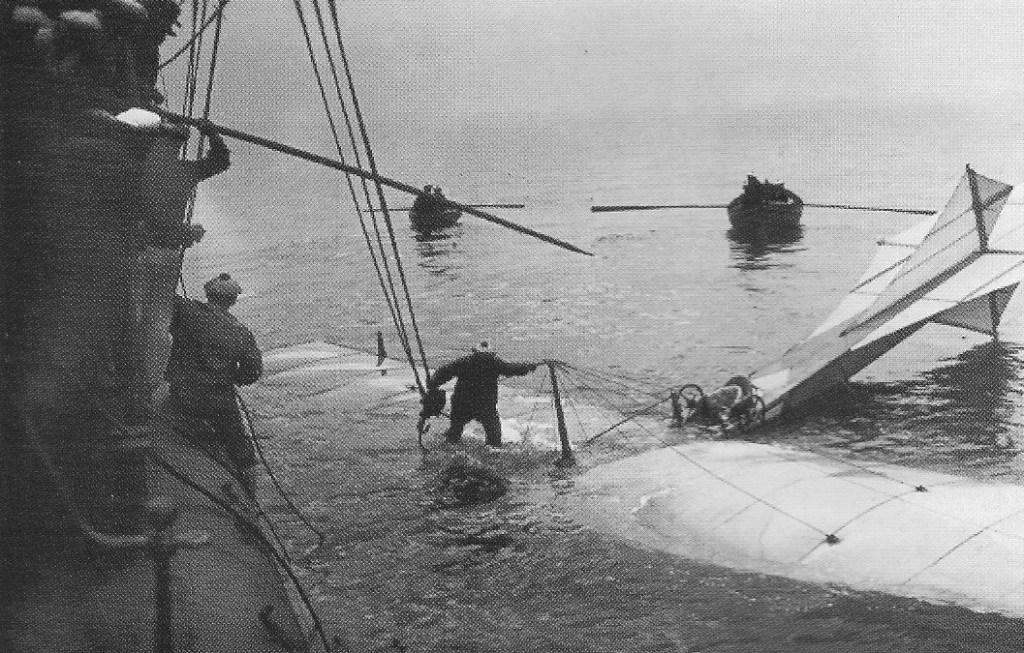
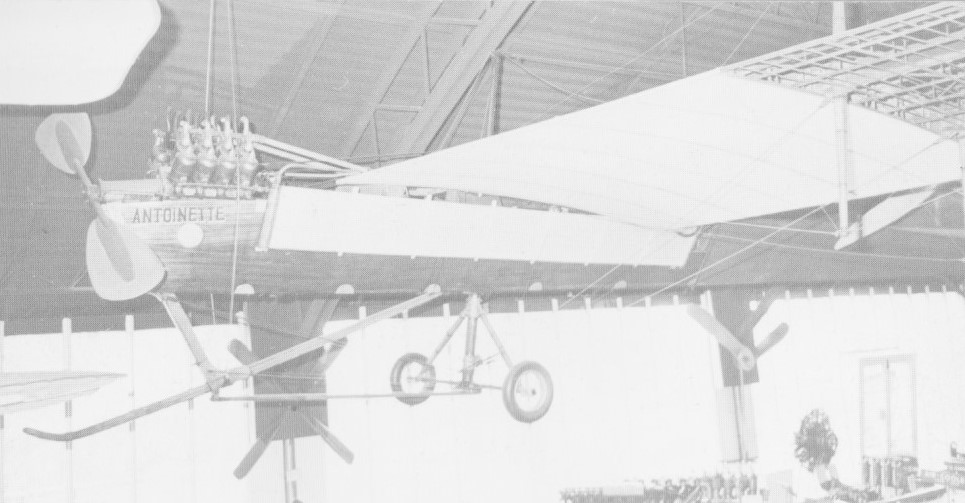
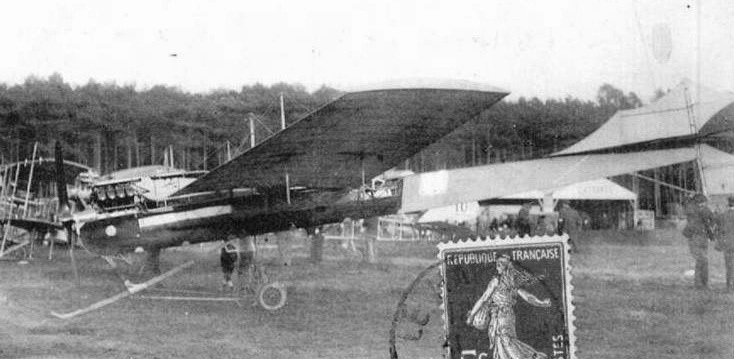
Designer Leon Levavasseur produce the first Antoinette (model IV) in 1908. The Antoinette IV was a single-engine one-seat monoplane with aft-mounted aileron surfaces. It was first flown at Issy on 9 October 1908 but was not demonstrated to the public until early 1909. English pilot Herbert Latham made a number of test flights with the type IV and attempted a Chsnnel crossing on 19 July 1909 but landed in the sea.
Several records were flown, like the first German cross country and the first time at 1000m height.
Antoinette IV
The Antoinette V, first flown on 20 December 1908, was a variant of Antoinette IV with wing warping instead of ailerons. The Antoinette would set a world distance record 96 miles in 2 hours 19 minutes.
The 1909 Antoinette VI was similar to the Type IV & V but with true ailerons (later converted to wing warping)
Antoinette VI
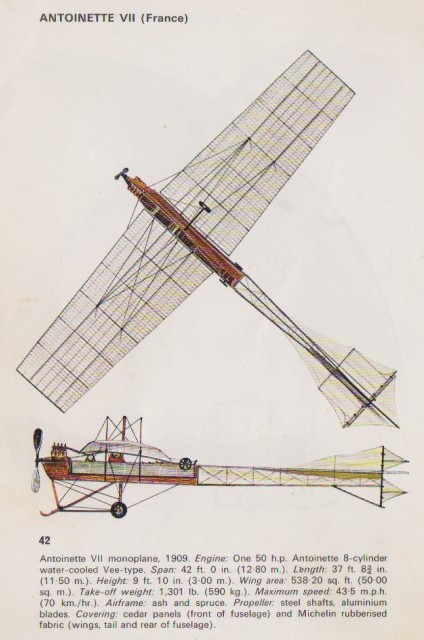
Latham flew the improved Type VII in July 1909. This featured a warping wing control system, larger engine, and other minor changes.
Latham’s “Antoinette”
On 19 July 1910 it too landed in the sea one mile short of the English coastline.
Latham’s Fall into the Channel
Latham’s Fall into the Channel
Antoinette VII
In 1910 Latham built his own Type VII using original Antoinette plans and it was flown regularly for several years in his experiments with monoplane designs.
Latham Antoinette VII
Küller’s Antoinette VII
Gijs Küller flew an Antoinette VII with an 50 hp E.N.V. engine at the 1910 Rouen meeting.
Küller’s Antoinette VII
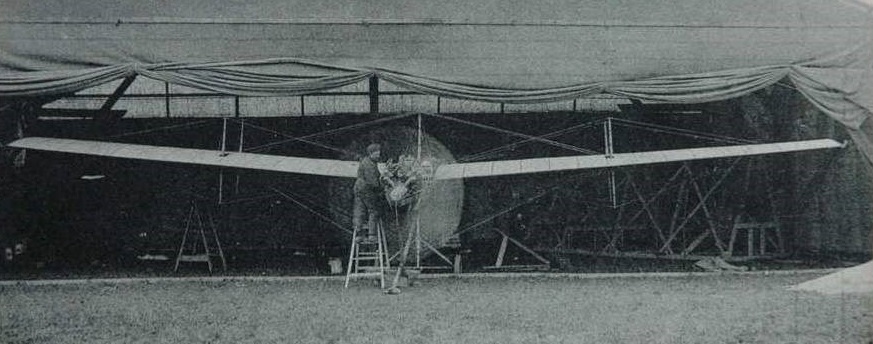
Antoinette VIII
The 1909 Antoinette VIII monoplane was similar to the previous types but the wing span was 46 feet.
Engine One 50 hp Antoinette. Length 37 ft. (11.5m) Wing span 42 ft (12.8m) Weight empty 992 lb (450 kg) Seats: 1. Speed: 43 mph (70 kph) Range 96 miles (155 km)
Latham Type VII Engine: Antoinette V-8, 50 hp Wingspan: 42 ft Length: 37 ft 8 in All up weight: 1300 lb Max speed: 44 mph
 All Aero