Light Aero Avid Flyer

Light Aero Avid Flyer

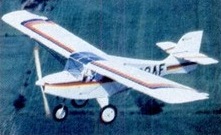
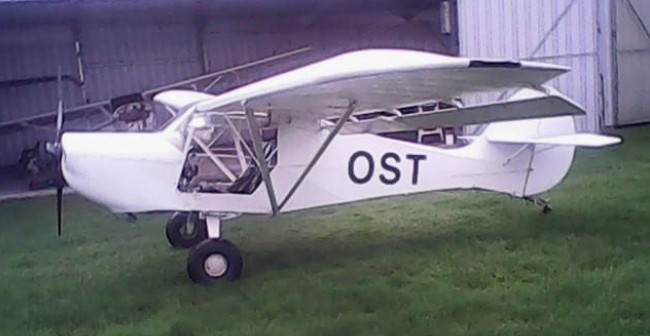
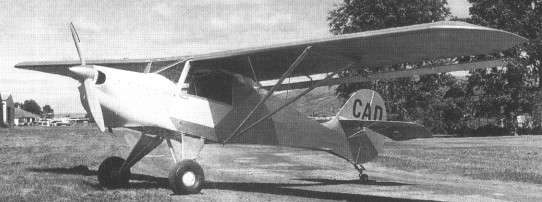
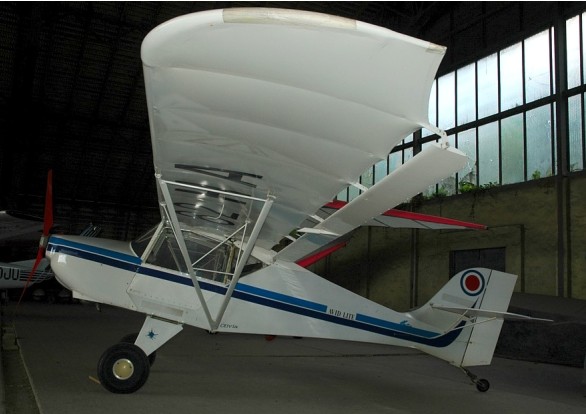
Designed by Dean Wilson and introduced at Oshkosh ’83 with a gear reduction Cuyuna, the Avid Flyer is an easy-to-build kit taildrag¬ger or trike gear high-wing monoplane, with wings that fold for towing. Front wing spar pins are removable, and the rear spar and the bottom of the struts are on the same vertical line, so after quick removal of a light sheet metal centre section cover, all that’s necessary is the pulling of two pins and both wings pivot aft, without disconnecting any controls, to sit alongside the fuselage. In this condition it is narrow enough to be towed and, since the gear is based on bike wheels and brakes, it takes nothing more than a steel bar that clamps the bottom of the tail to a rear bumper, as it rolls on its own wheels.

Most of the gear components are the same on the tail dragger version which can be converted back and forth in a few hours.

The wing has full-span flaperons.

Light Aero Avid Light

The Avid Lite is in the microlight category. The fuselage is a welded steel spaceframe and the wings consist of two tubular spars linked by plywood ribs. Recommended power is a Rotax 582 as flight qualities suffer with higher power.

The 1983 Avid Flyer prototype N99AF cruised at 80 mpg with a 43 hp Cuyuna 430 engine and the kit cost $8496.

1983 Avid Flyer

The Avid Litephib uses the same configuration as the Avid Lite, and allows water operation.

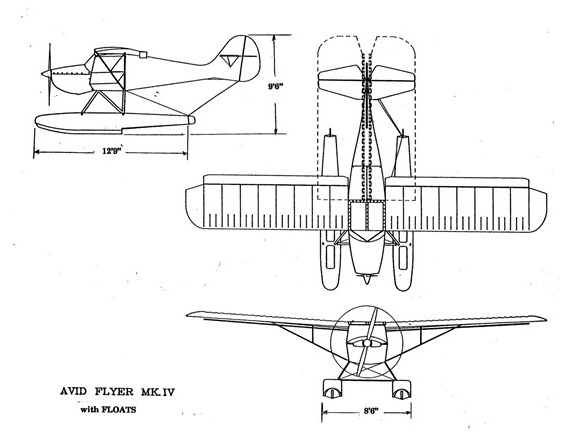
Avid Flyer IV
Avid Flyer IV

Gallery

Engine: Rotax 532.
Empty wt.: 380 lbs
Max wt.: 911 lbs
Wing span: 29ft 10.5 in
Length: 17’.
Wing area: 122.46 sq.ft
Wing loading: 6.94 lbs/sq.ft
Power loading: 14.23 lbs/hp
Max speed: 90 mph
Cruise: 85 mph
Stall: 25 mph
Vne: 90 mph
Seats: 2

Engine Cuyuna 430, 43 hp.
Cruise 80 mph
Stall 25 mph
Climb rate 1400 fpm
Service ceiling 19,000 ft
Takeoff run 75 ft
Landing roll 100 ft

Airdale Avid Plus
Engine: Rotax 582, 65 hp
Hp range: 65-110
Cruise: 90 mph
Stall: 35 mph
Range: 350 sm
ROC: 890 fpm
To dist: 630 ft
Ldg dist: 500 ft
Empty wt: 450 lb
Gross wt: 1200 lb
Length: 18.3 ft
Wingspan: 29 ft
Wing area: 122.5 sq.ft
Cockpit width: 43 in
Seats: 2
Landing gear: tail or nose wheel.

Avid Lite
Empty weight: 180 kg
Wing span: 9.10 m
Wing area: 13.5 sq.m
Fuel capacity: 53 lt
Certification: Vz
Engine: Rotax 503, 52 hp
MAUW: 431 kg
Seats: 2
Max speed: 145 kph
Cruise speed: 130 kph
Minimum speed: 56 kph
Climb rate: 5 m/s
Fuel consumption: 17 lt/hr
Kit price (1998): 130 750 Fttc

Avid Litephib
Empty weight: 272 kg
Wing span: 11 m
Wing area: 16.6 sq.m
Fuel capacity: 66 lt
Engine: Rotax 618, 74 hp
MAUW: 344 kg
Seats: 2
Max speed: 160 kph
Cruise speed: 120 kph
Minimum speed: 57 kph
Climb rate: 2.5 m/s
Fuel consumption: 17 lt/hr
Kit price (1998): 192 200 Fttc

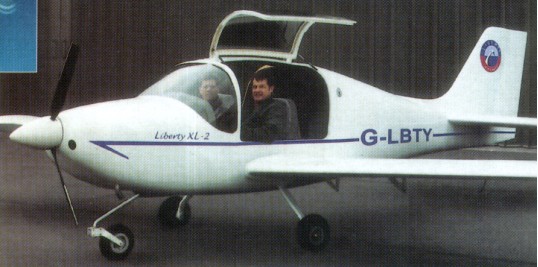
Liberty Aircraft XL-2

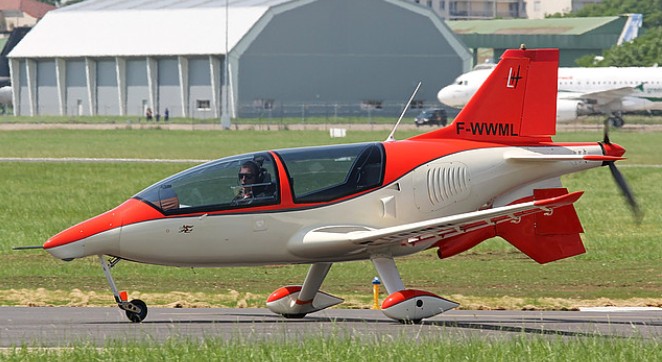
The Liberty XL-2 two-seat touring airplane. The XL-2 was designed by the same team that created the Europa kitplane. The tri-gear Liberty features a composite fuselage and bonded aluminum wing. Fuel is carried in a fuselage tank behind the cockpit. Liberty will certify the XL-2 in the normal category with ap-proval for night and IFR flight.

The XL2 is constructed using the same Toray composites used for the Boeing 787, providing both light weight and exceptional durability and performance. Our fuselage weighs only 70 pounds, but is stronger than a comparable aluminum fuselage, contributing to the exceptional performance and fuel efficiency of the XL2.

The XL2 has three major components – the fuselage, a rolling chasis, and the wings, that come together to efficiently manufacture a high technology aircraft. The wings of the aircraft are removable in about 10 minutes by a licensed mechanic, enabling multiple aircraft to be stored in a small hangar footprint for flight schools in the event of severe weather.

The wing can be folded by one person in about a minute, allowing the airplane to be trailercd to and from the airport and to he stored in a one-car garage. That wing, however, will not be on the first XL-2s, because of cerfi¬fication delays such a feature might cre¬ate. The Liberty XL2 first flew on April 2, 2001.

Scaled Technology Works of Mon¬trose, Colorado, was to do much of the manufacturing and assembly of the air¬plane.

Using a carbon fiber fuselage, advanced FADEC equipped engine to optimize performance, and advanced avionics, the Liberty XL-2 was awarded FAA Part 23 IFR type certification on February 19, 2004

This two-seater was the first aircraft to be certified with FADEC, or Full Authority Digital Engine Control. A single lever combines throttle and mixture allowing a computer to control ignition and fuel injection, as well as other vital engine parameters. The aircraft owes much of its design history to the Europa kit plane, though the metal winged, all-composite fuselage XL2 has evolved considerably.

In 2007, Liberty signed a contract with Anyang Angel Aero in Beijing, Peoples Republic of China to produce 600 Liberty XL-2 aircraft under license.

On February 27th, 2008, the 100th Liberty XL-2 was delivered.

In April 2008, the Vanguard Edition XL-2 was introduced, with increased gross weight, a 420 lb. useful load with full fuel, and toe, rather than finger brakes. All aircraft after serial #120 will be Vanguard Edition aircraft.
The undercarriage is fixed tricycle with a spring steel nose gear with castoring wheel. The spring aluminum main gear has differential brakes

Liberty XL2
Engine: Rotax 912S, 100 hp.
Fuel cap: 20 USG.
Cruise: 120 kts.
Range: 500 sm.

Liberty XL2
Seats 2
Gross wt. 1,653 lb
Empty wt. 1,065 lb
Fuel capacity 29.5 USG
Engine 125-hp Continental IOF 240-B (FADEC)
Top Cruise 132 kts
Stall 43 kts
Initial climb rate 682 fpm
Range 500 nm
Takeoff roll 822 ft
Landing roll 841 ft

2006 Liberty XL-2
Base price 2009: $159,900
Engine: Continental IOF-240, 125 hp
TBO: 2000 hr
Fuel type: 100/100LL
Propeller: 2-blade, FP Sensenich
Landing gear: Tri./Fixed
Max ramp weight: 1653 lb
Gross weight: 1653 lb
Landing weight: 1653 lb
Empty weight, std: 1065 lb
Useful load, std: 588 lb
Payload, full std. fuel: 420 lb
Useful fuel, std: 28 USgal
Wingspan: 28 ft. 9 in
Overall length: 20 ft. 4 in
Height: 7 ft. 5 in
Wing area: 112 sq. ft
Wing loading: 14.8 lbs./sq. ft
Power loading: 13.3 lbs./hp
Seating capacity: 2
Cabin doors: 2
Cabin width: 48 in
Cabin height: 46 in
Wheel track: 70.3 in
Wheel base: 57.2 in
Baggage capacity: 100 lb
Cruise speed 75% power: 132 kt
Cruise speed 60% power: 120 kt
Max range 75% power: 450 nm
Max range 55% power: 500 nm
Fuel consumption 75% power: 6.0 USgph
Fuel consumption 60% power: 5.3 USgph
Stall speed (flaps up): 50 kt
Stall speed (flaps down): 43 kt
Best rate of climb (SL): 682 fpm
Service ceiling (ft.): 14,000
Takeoff ground roll: 750 ft
Takeoff over 50-ft. obstacle: 1250 ft
Landing ground roll: 750 ft

Vanguard
Engine: Teledyne Continental IOF-240-B: 125 hp at 2,800 RPM
Propeller: 2-Blade MT Propeller 69″ / 1.75 m diameter, Fixed Pitch
Overall Height (max) : 7′ 5″ / 2.26 m
Overall Length : 20′ 3.8″ / 6.19 m
Wing Span (overall): 29 ‘ / 8.76 m
Area: 112 ft / 10.41 sq.m
Aspect Ratio: 7:1
Cabin Height (max): 34″ / 0.86 m
Cabin Length (firewall to aft baggage area): 91.9″ / 2.33 m
Cabin Width: 48″ / 1.22 m
Fuel: AvGas 100LL / 100
Fuel Capacity: 29.5 US Gal / 111 L
Total usable fuel: 28 US Gal / 106 L
Baggage Allowance : 100 lbs / 45 Kg
Standard Empty Weight : 1165 lbs / 529 Kg
Max. T/O Weight: 1750 lbs / 794 Kg
Useful Load : 588 lbs / 265 Kg
Landing Weight: 1750 lbs / 794 Kg
Full Fuel Payload: 417 lbs / 189 Kg
Ground roll: 1472 ft / 448 m
Total distance over 50 ft obstacle: 2,564 ft / 781 m
Landing Ground roll: 708 ft / 215 m
Total distance over 50 ft obstacle: 1,453 ft / 442 m
Rate of Climb, Sea Level: 669 ft/min
Best Rate of Climb: 76 kts / 87 mph / 141 kph
Best Angle of Climb: 69 kts / 79 mph / 127 kph
Maximum Operating Maneuvering Speed: 103 kts / 119 mph / 191 kph
Maximum Flap Extended Speed: 86 kts / 99 mph / 59 kph
Maximum Takeoff Flap Extended Speed: 90 kts / 104 mph / 167 kph
Maximum Structural Cruising Speed: 122kts / 140 mph / 226 kph
Never Exceed Speed: 157 kts / 180 mph / 291 kph
Stall Speed, IAS Flaps up / Vs / Clean: 50 kts / 58 mph / 93 kph
Stall Speed, IAS Flaps down / Vso / Dirty: 44 kts / 51 mph / 81 kph
Cruise Range (30 min Res – 65% Power): 505 nm / 935 km
Maximum Range (55% Power): 588 nm / 1,089 km
Max Cruise at Sea Level: 125 kts / 144 mph / 152 kph
Economy Cruise – 55% Power: 105 kts / 121 mph / 194 kph
Economy Cruise – 55% Power: 5.1 hrs
Economy Cruise – 55% Power Range: 535 nm / 990 km
Cruise – 65% power: 113 kts / 130 mph / 222 kph
Cruise – 65% power: 4.4 hrs
Cruise – 65% power Range: 497 nm / 920 km
Cruise – 75% power: 120 kts / 138 mph / 240 kph
Cruise – 75% power: 3.7 hrs
Cruise – 75% power Range: 444 nm / 822 km
Fuel consumption @ 55% Power: 4.7 US gph / 18.9 lph
Fuel consumption @ 65% Power: 5.5 US gph / 20.8 lph
Fuel consumption @ 75% Power: 6.5 US gph / 23.5 lph
Power Loading: 14.00 lb/hp
Service Ceiling : 12,500 ft / 3,350 m
Max. Demo Crosswind: 15 kts / 17 mph / 28 kph
Wing Loading: 15.63 lb/sq.ft

2009 Liberty XL-2 Vanguard Edition
Base/Used Price: 2009 $188,000 (includes standard IFR with Garmin 430 and SL 40)
Price with Aspen Evolution Pro PFD and Garmin 530 upgrade: 2009 $212,000
Engine: 4-cylinder TCM IOF-240-B with FADEC
Horsepower: 125 hp@2800 rpm
Fuel type: 100/100LL
Propeller type/diameter: 2-blade, fixed-pitch, 69-inch MT propeller wood/composite core
Landing gear type: Tri./Fixed
Max ramp weight: 1750 lb
Max takeoff weight: 1750 lb
Landing weight: 1750 lb
Empty weight, std: 1165 lb
Useful load, std: 588 lb
Usable fuel, std: 28 USgal
Payload, full std. fuel: 420 lb
Wingspan (ft): 29
Overall length: 20 ft. 3.8 in.
Overall Height: 7 ft. 5 in
Wing area: 112 sq. ft
Wing loading: 15.63 lbs./sq. ft
Seating capacity: 2
Cabin width: 48 in
Baggage capacity: 100 lb
Cruise speed 75% power: 120 kt/138 mph
Cruise speed 65% power: 113 kt/130 mph
Cruise speed 55% power: 105 kt/121 mph
Fuel consumption 75% power: 6.5 USgph
Fuel consumption 65% power: 5.5 USgph
Fuel consumption 55% power: 4.7 USgph
Max range 75% power: 444 nm
Max range 65% power: 497 nm
Max range 55% power: 535 nm
Vso: 44 kt
Best rate of climb, SL: 669 fpm
Service ceiling: 12,500 ft
Takeoff ground roll: 1472 ft
Landing ground roll: 708 ft
Max demo crosswind: 15kt
Libański Jaskółka

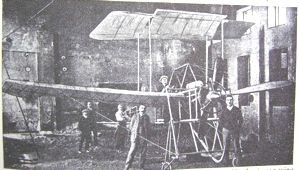
In the workshop at Lwów (Lemberg)

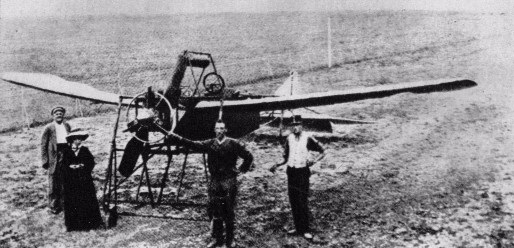
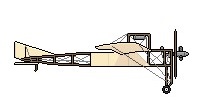
In 1910 Edmund Libański of Lwów (then under Austrian rule, presently in Ukraine) designed an aircraft that was supposed to have advantages of both mono- and biplane through use of lift areas of different size (with upper plane much smaller than the lower one). The 1911 Polish Libański Jaskółka featured a 3-cylinder Delfose rotary engine placed ahead of its propeller. During the take-off to first flight the engine exploded leading to crash. Designer dropped the idea of rebuilding the plane and instead designed a year later a much more succesful two-seat airplane named Jaskółka (Swallow). It was later transported to Vienna where it made many succesful flights. The Jaskółka (Swallow) never flew with the additional upper wing, although it did fly in August 1911 as a monoplane at Wiener Neustadt – without its proven-to-be-impractical top plane.

Span: 34’9″
Length: 25’11”
Weight empty: 530 lb

Liaoning Ruixiang RX1E

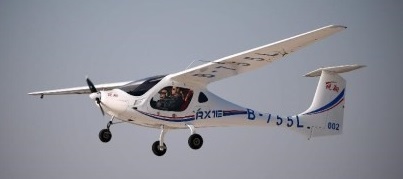
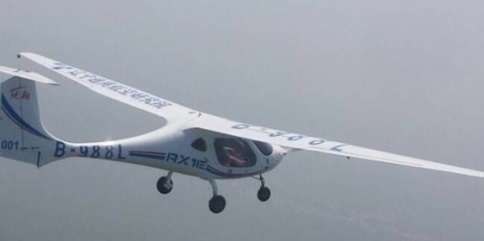
The Liaoning Ruixiang General Aviation Manufacture Company RX1E is a Chinese two-seat electric aircraft, designed by the Liaoning General Aviation Academy at Shenyang Aerospace University and manufactured by the Liaoning Ruixiang General Aviation Manufacture Company Limited of Shenyang.

The result of a three-year development process started in June 2012, the RX1E is an electric powered, two-seat side-by-side configuration, carbon fibre composite construction aircraft with a T-tail and tricycle landing gear and is one of the first electric airplanes in production. The RX1E is powered by rechargeable lithium batteries. One 90 minute charge means that the aircraft can operate for around 45-60 minutes.

The aircraft was first shown at the Zhuhai China Airshow, in November 2012 and in 2015 at the AERO Friedrichshafen show in Germany. The manufacturer claimed that the aircraft conforms to US Light-sport Aircraft requirements and has a Type Design Approval from the Civil Aviation Administration of China, issued in 2015. As of September 2016 it does not appear on the US Federal Aviation Administration list of approved LSAs and, in fact, the category excludes electric-powered aircraft and requires a single reciprocating engine. Several electric airplanes have obtained certification including the RX1E (LSA).

In production since 2015, the company said in April 2015 that they had 28 orders for the design. The first two customer aircraft were delivered in June 2015. The launch customer was the Liaoning Ruixiang General Aviation Co., which will employ the aircraft in the flight training role. The 2014 unit cost being US$163,000.

Gallery

RX1E
Propellers: 2-bladed wooden fixed pitch
Wingspan: 14.5 m (47 ft 7 in)
Wing area: 12 m2 (130 sq ft)
Length: 6.58 m (21 ft 7 in)
Height: 2.45 m (8 ft 0 in)
Empty weight: 270 kg (595 lb)
Gross weight: 500 kg (1,102 lb)
Crew: one
Capacity: one passenger
Cruise speed: 110 km/h (68 mph; 59 kn)
Stall speed: 73 km/h (45 mph; 39 kn)
Never exceed speed: 160 km/h (99 mph; 86 kn)
Endurance: 60 minutes
Service ceiling: 1,400 m (4,600 ft)
Wing loading: 41.7 kg/m2 (8.5 lb/sq ft)

LGT Aeronautical Stratos

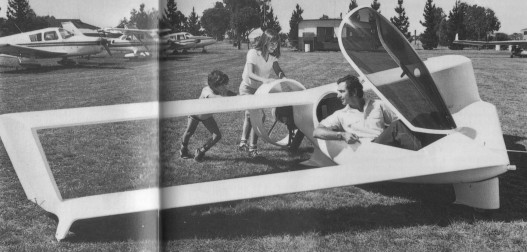
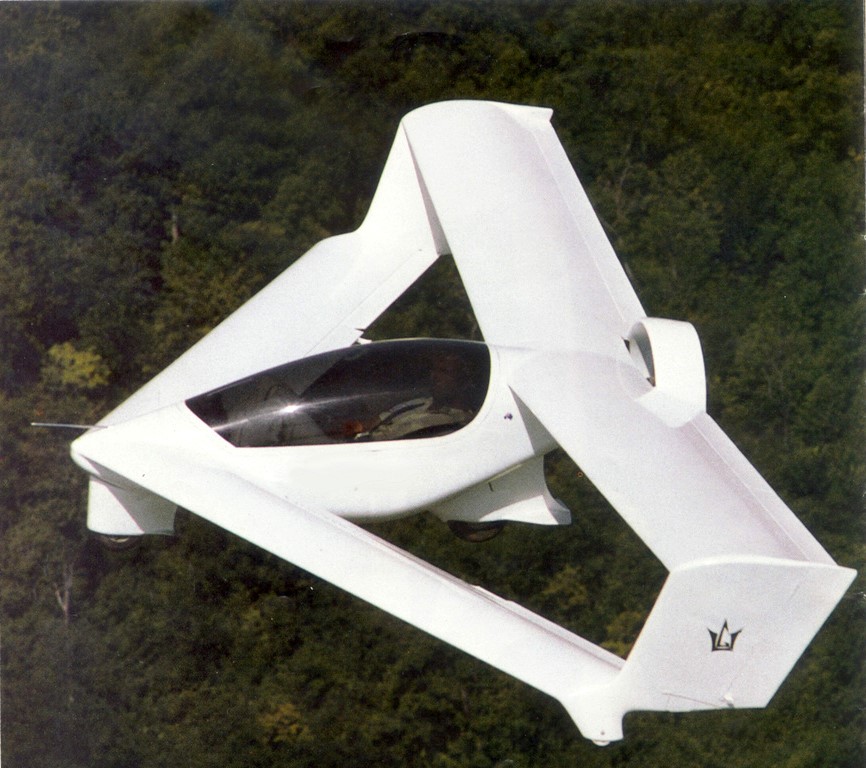
The LGT Stratos is a high performance ultralight developed and constructed by Charles Ligeti. It is a single seat with a swept-back canard joined to the high main wing at the wing tips by split flap rudders. Construction is of composite materials and controls are conventional 3-axis.

A lightplane prototype, although its future remains in doubt following the death of its designer.

The Stratos is an Australian type that first flew in April 1985. The aeroplane was designed to confirm Mr Ligeti’s conviction of the aerodynamic and structural advantages inherent in such a hybrid type, which combines the efficiency of the canard configuration, the combined large wing area and small overall span of the tandem-wing configuration, and the strength of the braced biplane configuration. The compact dimensions of the Stratos make it possible for the fully assembled machine to be towed on a trailer. The core of the Stratos is the short but streamlined fuselage, which is an all-composite structure built up of Kevlar and glassfibre skins over shaped rigid foam. The fuselage supports the bicycle main units of the fixed landing gear, which are supplemented by outrigger stabilizers under the tips of the canard foreplanes, as well as the powerplant and flying surfaces. The powerplant comprises a small piston engine driving a pusher propeller enclosed, for improved efficiency, in a circular duct of 25.5-in (0.65-m) internal diameter. The flying surfaces are of the same basic construction as the fuselage, with carbonfibre spars, and comprise straight rear-mounted wings ending in vertical surfaces that stretch down to form the wings’ physical and aerodynamic link with the canard foreplanes, which run back from the nose just forward of the cockpit.

Engine: Konig 430 3-cyl.
Prop: 3-6 blade ducted fan 61 cm dia.
Wing span: 5.31 m.
Length: 2.42 m.
Fuel capacity: 22 ltr.
Econ cruise speed: 90 kts.
Stall: 28 kts.
Seats: 1.

Engine: Konig SD 570 four-cylinder air-cooled radial piston, 28-hp (21 -kW)
Seats: 1
Maximum speed 124 mph (200 km/h)
Initial climb rate 670 ft (205 m) per minute
Service ceiling 14,760 ft (4500 m)
Range 447 miles (720 km)
Empty weight: 172 lb (78 kg)
Maximum take-off weight: 414 lb (188 kg)
Wingspan 17 ft 7 in (5.36 m)
Length 8 ft 2 in (2.49 m)
Height 3 ft 3 in (0.99 m)
Wing area 81 sq.ft (7.53 sq.m) including canard foreplanes.

LIBIS KB-17 / LIBIS-17

Formerly known as the KB-17, this Yugoslav two seater high performance trainer was designed and built by the Letalski Institut Branko Ivanus, Slovenija – LIBIS at Ljubljana.

Of largely wooden construction, with a fabric covered welded steel tube fuselage, the LIBIS-17 has a cantilever single-spar high-set wooden wing, with a plywood covered leading edge torsion box supported by Styrofoam, the remainder of the wing being fabric covered. The fabric covered wooden Frise ailerons are also filled with Styrofoam, and there are Hiittertype wooden plate spoilers in the wing upper surfaces immediately aft of the spar. The angular tail unit is also a wooden structure filled with Styrofoam, and is made up of an all-moving one-piece fin and tailplane, each with a servo tab. The landing gear consists of a non-retractable unsprung Borovo main wheel and nose sheel in tandem, with a LIBIS mechanical brake. The two pilots are seated in tandem under a forward-hinged one-piece blown canopy; a ventilation system is provided and blind flying instrumentation, radio and oxygen equipment can be fitted if required.

It is cleared for looping, spinning and cloud flying as well as normal flight; it is also suitable for flying solo up to the Silver and Gold C standards.

The prototype LIBIS-17 first flew on October 1961, and the first production aircraft flew in June 1963; by 1972 there were 23 examples of the type on the Yugoslav civil register.

Span: 55 ft 9 in
Length: 25 ft 1 in
Height: 8 ft 11.5 in
Wing area: 237.9 sqft
Aspect ratio: 13.0
Empty weight: 739 lb
Max weight: 1,135 lb
Max speed: 138 mph (in smooth air)
Max aero-tow speed: 87 mph
Min sinking speed: 2.82 ft/sec at 47 mph
Best glide ratio: 27:1 at 58 mph

LIBIS KB-11 Branko

The LIBIS KB-11 Branko was a 1950s Yugoslavian four-seat monoplane. The aircraft design office of the Letalski Institut Branko Ivanus Slovenija brought together teachers and students of the Ljubljana technical high school for the KB-11 Branko.

The KB-11 Branko was a development of the earlier two-seat KB-6 Matajur. First flown in December 1959 the KB-11 was an all-metal cantilever low-wing monoplane with retractable tricycle landing gear and an enclosed heated and ventilated cockpit for four persons. Intended for use as an air-taxi our business use but only small numbers were built.

Engine: 1 × Lycoming O-435-1, 138 kW (185 hp)
Wingspan: 10.59 m (34 ft 9 in)
Length: 8.23 m (27 ft 0 in)
Height: 2.45 m (8 ft 0 in)
Wing area: 1.152 sq.m (12.40 sq ft)
Aspect ratio: 7.76:1
Airfoil: NACA 3415 at root, USA 35B at tip
Empty weight: 800 kg (1,764 lb)
Gross weight: 1,250 kg (2,756 lb) normal loaded without tip tanks
Maximum speed: 214 km/h; 116 kn (133 mph) at sea level
Cruise speed: 171 km/h; 92 kn (106 mph) at 1,525 m (5,000 ft) and 75% power
Stall speed: 98 km/h; 53 kn (61 mph)
Range: 950 km (590 mi; 513 nmi)
Service ceiling: 5,334 m (17,500 ft)
Rate of climb: 4.3 m/s (850 ft/min)
Crew: 1
Capacity: 4 total