Lilienthal Glider / Dart Aircraft Lilienthal Glider

In five years between 1891 and 1896 Otto constructed seven gliders (five monoplanes and two biplanes) and made over 2000 ever-improving flights from hill sites at Stieglitz and in the Rhinow Mountains near Stöllen. He flew distances up to 400 m (1312 ft) and reached heights of 25 m (82 ft). He dis¬covered and made use of up-currents of air for soaring flight.

His first means of launching was a spring board, but this he soon abandoned in favour of hill launching. Some of his tests were made from the Rhinower Hills, near Stollen, but he also had constructed an artificial hill near Berlin.

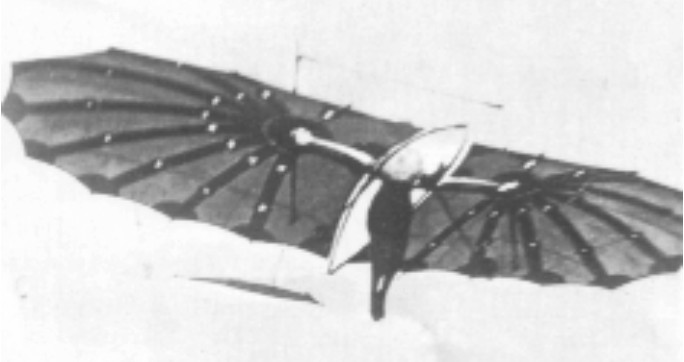
In 1891 Lilienthal completed glider no.3, a monoplane glider constructed from peeled willow wands with a covering of waxed cotton. Its wings spanned 7 m (23 ft), with Lilienthal supporting himself within its centre section on parallel bars — literally a hang-glider — and controlling his flight path by shifting his body mass and thus altering the craft’s centre of gravity.
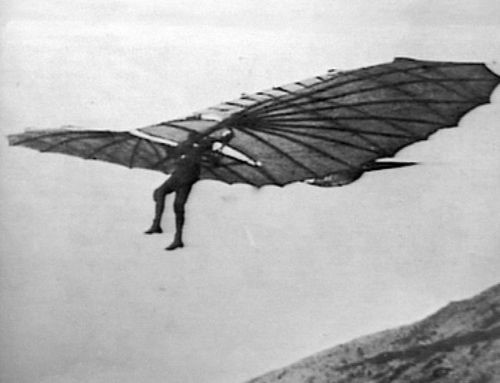
Otto Lilienthal Segelflugzeug N°3

Lilienthal’s first tentative hops were made with the aid of a springboard launcher, but soon flew from a specially constructed 15-m (49-ft) hill on the outskirts of Berlin.

Between 1891 and 1896 Lilienthal constructed five types of monoplane glider and two biplane types (1891 and 1892).
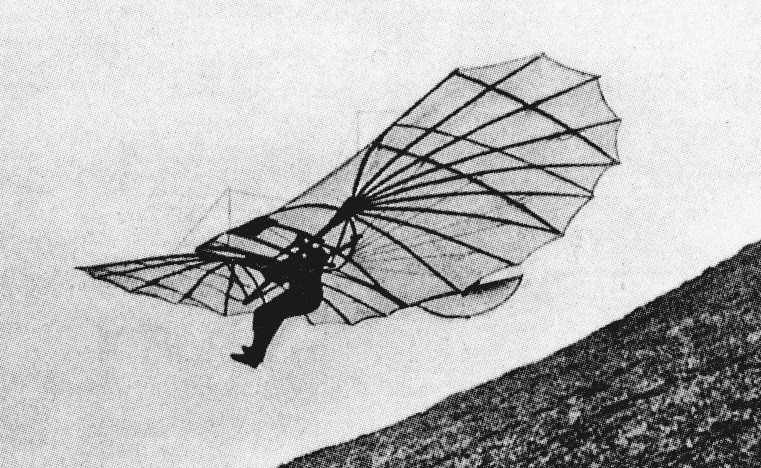
Lilienthal supported himself in his gliders by his arms, so that after a running take off his hips and legs dangled below the aircraft, allowing him to swing his body in any desired direction to achieve stability and control. After 1893 he was achieving glides of 300-750 ft (90-230 m), with remarkable ease of control.
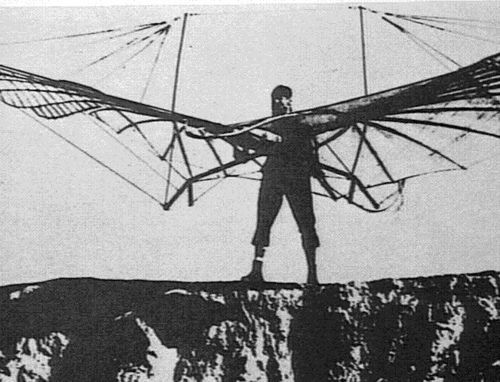
Otto Lilienthal Segelflugzeug N°11 (1894)

The 1894 monoplane hang glider was a single surface fabric covering over exposed framework. Wings fold for storage. Natural fabric finish; no sealant or paint of any kind.
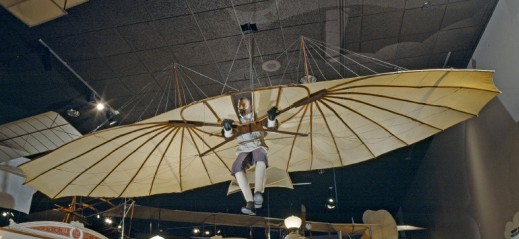
1894 Glider

In 1895 he was developing a type of body harness to work a rear elevator. The purpose of this was to give better control in rising or descending by increasing the effect of the occupant swinging his body forwards or backwards and thus altering the centre of gravity. Lilienthal also tested a glider which had flapping wing tips, driven by a small carbonic acid gas engine. This system could never have equalled in efficiency the new petrol engines and propellers which were soon to come into being; but the great German inventor/ pilot was never to become aware of this, for he crashed in one of his gliders in the Rhinower Hills on 9 August 1896, and died in a Berlin clinic on the following day. His last words were ‘Opfer mussen gebracht werden’ (‘Sacrifices must be made’).
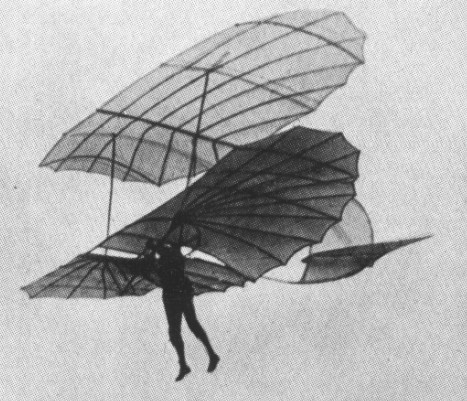
In 1895 produced his thirteenth design, a biplane. On the evening of 9 August 1896, Otto was at Stöllen testing a new kind of head-movement control arrangement when a sudden gust upturned his No. 11 monoplane glider and he crashed heavily from 15 m (49 ft) breaking his spine. He died the next day.

Otto Lilienthal (1848 1896) made approximately 2,500 successful glides in 1893 96, mostly in monoplane ‘hang gliders’ types, in which he flew distances of up to 985 ft (300 m).
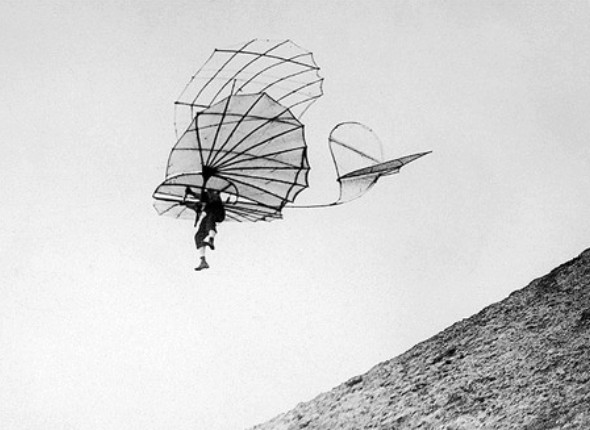
In 1937 Dart Aircraft built for Alexanda Korda’s film production, Conquest of the Air, two Lilienthal biplane glider replicas. They ‘flew’ suspended by piano wire. In the end the film was never completed.
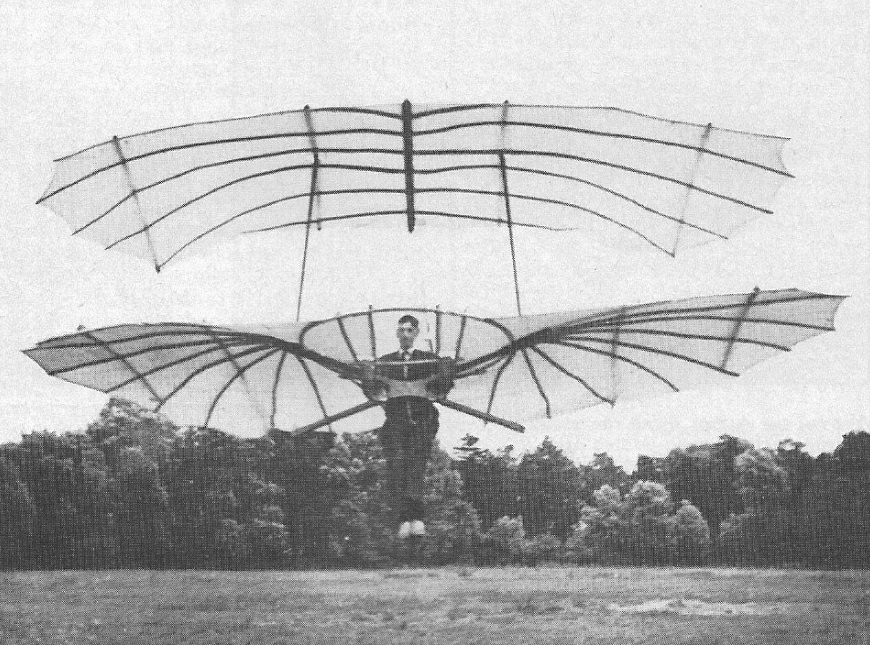
Dart Aircraft Lilienthal Glider

Gallery

Replica: Platzer Doppeldecker

1893 monoplane glider
Wing span: 22 ft 11.5 in (7.00 m)
Wing area: 150.7 sq ft (14.0 sq.m)
Wing chord (max): 8 ft 21 in (2.50 m)
Length: 16 ft 4.75 in (5.00 m)
Weight without pilot: 44 lb (20 kg)
Accommodation: Crew of 1.

1894 Glider
Wingspan: 7.9 m (26 ft)
Length: 4.2 m (13 ft 9 in)
Height: 1.5 m (5 ft)
Weight: 20 kg (44 lb)
Materials:
Airframe: Wood
Fabric Covering: Cotton-twill
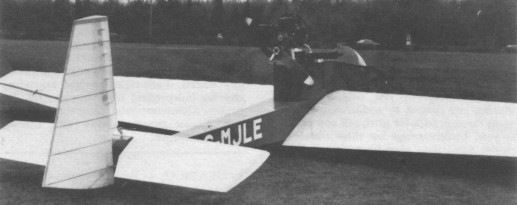
Lightwing Rooster II

The Rooster2 is John Lee’s two seater and, although it looks totally different from the Rooster 1, it uses similar constructional techniques and materials, and its steering arrangements are also similar; braking, however, comes not from a nose skid but relies solely on the air resistance of the thick section wing. Along with its ‘boxy’ fuselage, the thick wing section (entirely a John Lee creation), the aircraft is fitted with a Robin EC44 engine which, because of the engine’s position, is mated to a smaller than ¬ideal prop. Conceived largely as a trainer, the Rooster 2 has a certain degree of flexibility built into its construction, to enable it to cope with bad landings by inexperienced pilots. The thick cantilever wing was chosen largely to simplify construction it eliminates the need for rigging wires. While the aircraft can be re rigged for trailer transport, portability is not a high priority. This aircraft does not in anyway pretend to be car toppable.
Tandem two seat single engined low wing with conventional three axis control. Wing has unswept leading edge, swept forward trailing edge and tapering chord; conventional tail. Pitch control by fully flying tail; yaw control by fully flying rudder; rod control by fully flying rudder; roll control by 40% span ailerons; control inputs through stick for pitch/roll and pedals for yaw. Cantilever wing; wing profile; 100% double surface. Undercarriage has two wheels with tailskid and nose-skid; no suspension on either wheel. No ground steering. No brakes. Wood fusel¬age, partially enclosed. Engine mounted above wing driving pusher propeller.

Engine: Robin EC44, 50hp at 6500rpm.
Propeller diameter 48 inch, 1.22 m.
Toothed belt reduction, ratio 2.0/1.
Max static thrust 180 lb, 82 kg.
Power per unit area 0.28hp/sq.ft, 3.0hp/sq.m.
Fuel capacity 13.2 US gal, 11.0 Imp gal, 50.0 litre.
Length overall 23.0 ft, 7.00 m.
Height overall 5.7ft, 1.75m.
Wing span 36.7ft, 11.20m.
Chord at root 6.0ft, 1.82 m.
Chord at tip 3.2ft, 0.97m.
Dihedral 2 deg.
Sweepback 0 deg.
Tailplane span 10.2 ft, 3.12 m.
Rudder height 5.1ft, 1.54m.
Total wing area 18. 1 sq.ft, 16.8 sq.m.
Total aileron area 12.9 sq.ft, 1.2 sq.m.
Rudder area 11.5 sq.ft, 1.07 sq.m.
Total elevator area 21.9 sq.ft 2.03 sq.m.
Wing aspect ratio 7.5/1.
Wheel track 6.6ft, 2.00m.
Main wheels diameter overall 11 inch, 28 cm.
Empty weight 3231b, 147kg.
Max take off weight 773 lb, 351 kg.
Payload 450 lb, 204 kg.
Max wing loading 4.27 lb/sq.ft, 20.9 kg/sq.m.
Max power loading 15.5 lb/hp, 7.0kg/hp.
Load factors +4.0, 2.0 design.
Max level speed 50 mph, 80 kph.
Never exceed speed 60 mph, 97kph.
Max cruising speed 50mph, 80kph.
Economic cruising speed 40 mph, 64 kph.
Stalling speed 25 mph, 40 kph.
Best glide ratio with power off 10/1 at 35 mph, 56 kph.
Take off distance 110ft, 35 m.
Landing dis¬tance 110 ft, 35 m.
Range at average cruising speed 100 mile, 161 km.

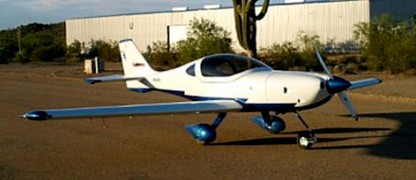
Lightning West Lightning

Lightning
Engine: Jabiru 3300, 120 hp
Maximum Speed: 190 mph
Cruise Speed: 175 mph
Vne: 208 mph
Stall (Full Flap): 45 mph
Stall Clean: 56 mph
Glide Ratio: 17:1
Take Off Roll: 315 ft.
Landing Roll (with brakes): 500 ft
Climb Rate (at gross): 1200 ft./min
Turn Rate 45/45°: <1 second
Maneuvering Speed: 140 mph
Endurance: 4 hr
Range w/ res: 700 sm

Lightning Sport 3300
Engine: Jabiru 3300, 120 hp
Maximum Speed: 150 mph
Cruise Speed: 138 mph
Vne: 208 mph
Stall (Full Flap): 40 mph
Stall Clean: 51 mph
Glide Ratio: 17:1
Take Off Roll: 275 ft.
Landing Roll (with brakes): 350 ft.
Climb Rate (at gross): 1800 ft./min.
Turn Rate 45/45°: <1 second
Maneuvering Speed: 140 mph
Endurance: 5 hr
Range w/ res: 700 sm

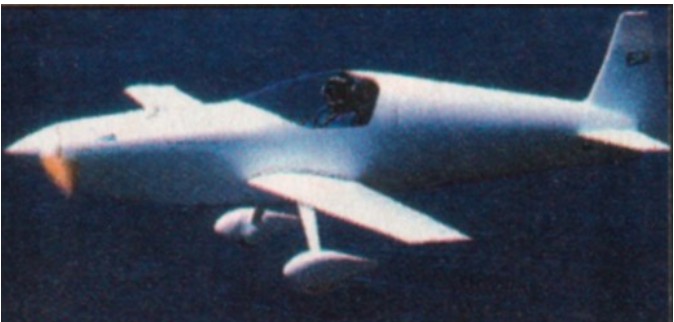
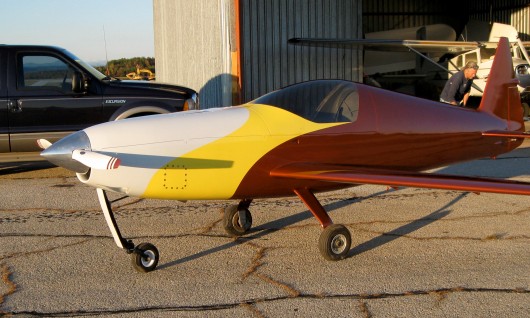
Lightning Bug Aircraft Lightning Bug / Reflex Fibreglass Works / RFW Lightning Bug / MaD Aviation Lightning Bug

Designed by Howell C. “Nick” Jones Jr, single place composite. Aerobatics capable. The original production engine was the AMW808FIG.

In 2011, all rights, molds, tooling and spare parts inventory for the Lightning Bug was purchased by MaD Aviation LLC. An original Lightning Bug, N44XM is being re-engined with a 100hp Rotax 912ULS to test this engine/airframe combination with a view to making a new Lightning Bug kit available, using this reliable four stroke engine.

Engine: AMW808FIG, 100 hp.
Speed max: 250 mph.
Cruise: 225 mph.
Range: 800 sm.
Stall: 62 mph.
ROC: 1200 fpm.
Take-off dist: 800 ft.
Landing dist: 1000 ft.
Service ceiling: 20,000 ft.
Fuel cap: 23 USG.
Weight empty: 375 lbs.
Gross: 800 lbs.
Height: 5.08 ft.
Length: 17.46 ft.
Wing span: 17.83 ft.
Wing area: 40 sq.ft.
Seats: 1.
Landing gear: tail or nose, retractable wheel.

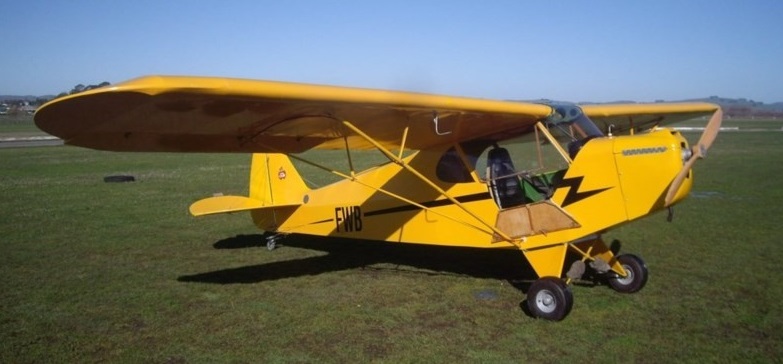
Light Miniature Aircraft LM-J3-W

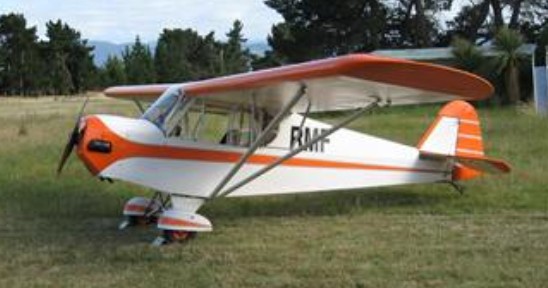
LMA’s Piper Cub LM-J3-W is an exact, full scale, two place tandem replica in wood. It may be built to conform to the New LSA Rules, with a Rotax 65 hp 582 Engine or use up to and including a 65 HP Continental or equivalent. The Kit is a materials kit, but most of the metal parts are cut from Aluminum Extrusions, making fabrication very fast and inexpensive, with no welding (except for the Engine Mount).

All of the Light Miniature Aircraft Manuals, are approximately 200 pages. Each manual has step-by-step instructions, for each section of the plane, as well as figures, drawings and full size templates to guide the builder through the building process. Each manual also comes with a complete set of full size plans for the fuselage and tail feathers as well as full size templates for the wing ribs, landing gear and items such as the wind shield.
The wooden planes are constructed in the same manner.
Plans and manuals are still available for our metal planes, however, due to rising aluminum costs and availability problems, Light Miniature Aircraft no longer supply kits for the air frames of the metal planes. Some partial kits, for items like the controls or landing gear were still available.

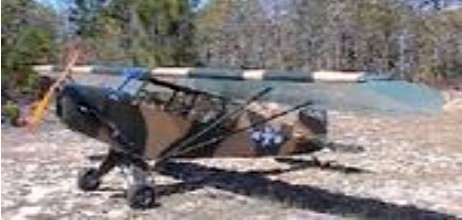
Light Miniature Aircraft LM-5 Super Cub

Designed by Fred McCallum, LMA’s LM-5X-W Super Cub is a full size, exact scale replica fashioned in wood. It conforms to the new LSA rules and first flew in 1991. A two place tandem, it may be built to conform to the New LSA Rules, with a Rotax 65 HP 582 Engine up to and including a 90 Continental or equivalent. The Kit is a materials kit, but most of the metal parts are cut from Aluminum Extrusions, making fabrication very fast and inexpensive, with no welding (except for the Engine Mount).

All of the Light Miniature Aircraft Manuals, are approximately 200 pages. Each manual has step-by-step instructions, for each section of the plane, as well as figures, drawings and full size templates to guide the builder through the building process. Each manual also comes with a complete set of full size plans for the fuselage and tail feathers as well as full size templates for the wing ribs, landing gear and items such as the wind shield.
The wooden planes are constructed in the same manner.
Plans and manuals are still available for our metal planes, however, due to rising aluminum costs and availability problems, Light Miniature Aircraft no longer supply kits for the air frames of the metal planes. Some partial kits, for items like the controls or landing gear were still available.

LM-5X
Engine: Rotax 582, 65 hp.
Speed max: 100 mph.
Cruise: 80 mph.
Stall: 38 mph.
ROC: 750 fpm.
Take-off dist: 300 ft.
Landing dist: 300 ft.
Fuel cap: 10 USG.
Weight empty: 620 lbs.
Gross: 1025 lbs.
Height: 6.58 ft.
Length: 22.58 ft.
Wing span: 35.16 ft.
Wing area: 178 sq.ft.
Seats: 2.
Landing gear: tail wheel.
Tube and fabric.

LM-5X-W
Engine: Rotax 582, 65 hp
HP range: 65-75
Cruise: 80 mph
Stall: 42 mph
Range: 290 sm
Rate of climb: 750 fpm
Takeoff dist: 350 ft
Landing dist: 400 ft
Fuel capacity: 12 USG
Empty weight: 775 lb
Gross weight: 1275 lb
Length: 22.6 ft
Wing span: 36.1 ft
Wing area: 178 sq.ft
Seats: 2 tandemCockpit width: 27 in
Landing gear: tailwheel

Light Miniature Aircraft LM-3

LM-3U

A 75% scale single seat Aeronica ultralight, designed by Fred McCallum.
All of the Light Miniature Aircraft Manuals, are approximately 200 pages. Each manual has step-by-step instructions, for each section of the plane, as well as figures, drawings and full size templates to guide the builder through the building process. Each manual also comes with a complete set of full size plans for the fuselage and tail feathers as well as full size templates for the wing ribs, landing gear and items such as the wind shield.
The wooden planes are constructed in the same manner.

Plans and manuals are still available for our metal planes, however, due to rising aluminum costs and availability problems, Light Miniature Aircraft no longer supply kits for the air frames of the metal planes. Some partial kits, for items like the controls or landing gear were still available.
The LM-3X-W is of wooden construction.

LM-3U
Engine Rotax 447
Cruise 55 – 60 mph
Fuel burn 12 Liters / hr.

LM-3X
Engine: Rotax 377
Empty wt.: 325 lbs
Max wt.: 500 lbs
Wing span: 28.5ft
Wing area: 114 sq.ft
Wing loading: 5.2 lbs/sq.ft
Power loading: 17.1 lbs/hp
Max speed: 75 mph
Cruise: 65 mph

LM-3X
Engine: Rotax 447, 40 hp
HP range: 35-40
Top speed: 75 mph
Cruise: 65 mph
Stall: 26 mph
Range: 150 sm
Rate of climb: 550 fpm
Takeoff dist: 100 ft
Landing dist: 300 ft
Fuel capacity: 5 USG
Empty weight: 325 lb
Gross weight: 600 lb
Height: 5.8 ft
Length: 17.8 ft
Wing span: 30 ft
Wing area: 120 sq.ft
Seats: 1
Landing gear: tailwheel

LM-3X
Scale: 75%.
Speed max: 75 mph.
Cruise: 65 mph.
Range: 150 sm.
Stall: 26 mph.
ROC: 550 fpm.
Take-off dist: 100 ft.
Landing dist: 300 ft.
Engine: Rotax 447, 40 hp.
HP range: 35-40.
Fuel cap: 5 USG.
Weight empty: 325 lbs.
Gross: 600 lbs.
Height: 5.8 ft.
Length: 17.8 ft.
Wing span: 30 ft.
Wing area: 120 sq.ft.
Seats: 1.
Landing gear: tail wheel.

LM-3X-W
Engine: Rotax 503

Light Miniature Aircraft LM-2

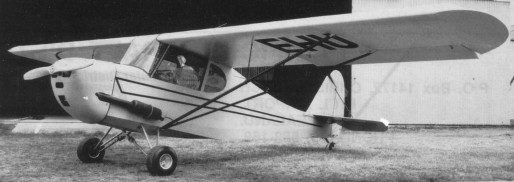
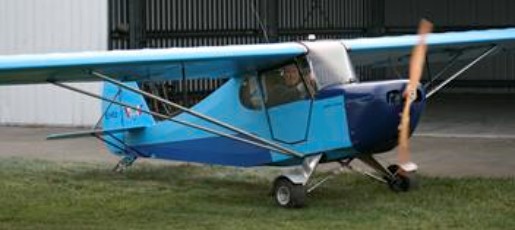
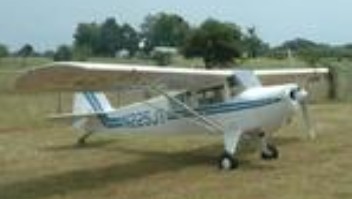
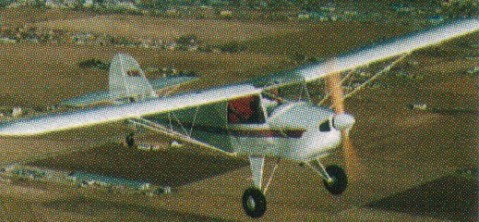
Designed by Fred McCallum, LMA’s scaled Taylorcraft LM-TC-W is a full size, exact scale replica fashioned in wood, and first flown in 1987. It is a two place side by side that may be built to conform to the New LSA Rules, with a Rotax 65 HP 582. Engine options are up to and including a 90 HP Continental or equivalent. The Kit is a materials kit, but most of the metal parts are cut from Aluminum Extrusions, making fabrication very fast and inexpensive, with no welding (except for the Engine Mount).

All of the Light Miniature Aircraft Manuals, are approximately 200 pages. Each manual has step-by-step instructions, for each section of the plane, as well as figures, drawings and full size templates to guide the builder through the building process. Each manual also comes with a complete set of full size plans for the fuselage and tail feathers as well as full size templates for the wing ribs, landing gear and items such as the wind shield.
The wooden planes are constructed in the same manner.
Plans and manuals are still available for our metal planes, however, due to rising aluminum costs and availability problems, Light Miniature Aircraft no longer supply kits for the air frames of the metal planes. Some partial kits, for items like the controls or landing gear were still available.
The LM-2X-2P, first flown in 1987, has a bonded aluminium airframe.

LM-2X
Scale: 75%.
Engine: Rotax 447, 40 hp.
Speed max: 75 mph.
Cruise: 65 mph.
Range: 150 sm.
Stall: 26 mph.
ROC: 550 fpm.
Take-off dist: 200 ft.
Landing dist: 300 ft.
Fuel cap: 5 USG.
Weight empty: 325 lbs.
Gross: 600 lbs.
Height: 5.8 ft.
Length: 16.5 ft.
Wing span: 30 ft.
Wing area: 120 sq.ft.
Seats: 1.
Landing gear: tail wheel.

LM-2X-2P
Scale: 87%.
Engine: Hirth, 65 hp.
HP range: 65-85.
Speed max: 100 mph.
Cruise: 85 mph.
Range: 175 sm.
Stall: 40 mph.
ROC: 550 fpm.
Take-off dist: 350 ft.
Landing dist: 450 ft.
Fuel cap: 9.5 USG.
Weight empty: 450 lbs.
Gross: 875 lbs.
Height: 5.75 ft.
Length: 18.25 ft.
Wing span: 32.5 ft.
Wing area: 143.5 sq.ft.
Seats: 2.
Landing gear: tail wheel.

LM-2X-2P –W
Engine: Hirth, 65 hp
HP range: 65-85
Top speed: 100 mph
Cruise: 85 mph
Stall: 40 mph
Range: 175 sm
Rate of climb: 550 fpm
Takeoff dist: 350 ft
Landing dist: 450 ft
Fuel capacity: 9.5 USG
Empty weight: 450 lb
Gross weight: 875 lb
Height: 5.9 ft
Length: 18.3 ft
Wing span: 32.5 ft
Wing area: 143.5 sq.ft
Seats: 1
Landing gear: tailwheel

Light Miniature Aircraft LM-1

LM-1A

A three quarter scale Piper J/3 Cub look alike by Fred McCallum and Fred Latulip of Opa Locka, Florida. When first shown at Oshkosh in 1983 the all wood design of +5 -4.5G wing was too heavy for the US ultralight category but several years later the construction was altered to aluminium alloy tube to over-come this problem. Power comes from a 28hp Rotax 277 engine.

All of the Light Miniature Aircraft Manuals, are approximately 200 pages. Each manual has step-by-step instructions, for each section of the plane, as well as figures, drawings and full size templates to guide the builder through the building process. Each manual also comes with a complete set of full size plans for the fuselage and tail feathers as well as full size templates for the wing ribs, landing gear and items such as the wind shield.
The wooden planes are constructed in the same manner.
Plans and manuals are still available for our metal planes, however, due to rising aluminum costs and availability problems, Light Miniature Aircraft no longer supply kits for the air frames of the metal planes. Some partial kits, for items like the controls or landing gear were available.

Gallery

LM-1
Engine: Rotax 503
Wing span: 29 6″
Stall: 26 knots
Climb: 40 knots
Cruise: 55-65 knots
VNE: 78 Knots
Range: 200 miles

LM-1A
Scale: 85%.
Engine: Zenoah, 45 hp.
HP range: 45-52.
Speed max: 90 mph.
Cruise: 80 mph.
Range: 200 sm.
Stall: 26 mph.
ROC: 650 fpm.
Take-off dist: 175 ft.
Landing dist: 300 ft.
Fuel cap: 9 USG.
Weight empty: 350 lbs.
Gross: 600 lbs.
Height: 5.9 ft.
Length: 19 ft.
Wing span: 27 ft.
Wing area: 120 sq.ft.
Seats: 1.
Landing gear: tail wheel.

LM-1A
Engine: Rotax 503, 45 hp
HP range: 45-52
Top speed: 90 mph
Cruise: 80 mph
Stall: 26 mph
Range: 200 sm
Rate of climb: 650 fpm
Takeoff dist: 175 ft
Landing dist: 300 ft
Fuel capacity: 9 USG
Empty weight: 350 lb
Gross weight: 600 lb
Height: 5.9 ft
Length: 19 ft
Wing span: 27 ft
Wing area: 120 sq.ft
Seats: 1
Landing gear: tailwheel

LM-1U
Scale: ¾.
Empty wt. lbs: 250
Max wt. lbs: 500
Wing span: 30ft
Wing area sq.ft.: 120
Wing loading lbs/sq.ft: 4.17
Power loading lbs/hp: 17.86
Engine: Rotax 277
Max speed: 63 mph
Cruise: 55 mph
Stall: 24 mph
Vne: 85 mph
Seats: 1

LM-1X
Scale: 75%.
Engine: Rotax 447, 40 hp.
HP range: 35-52.
Speed max: 75 mph.
Cruise: 65 mph.
Range: 150 sm.
Stall: 26 mph.
ROC: 550 fpm.
Take-off dist: 100 ft.
Landing dist: 300 ft.
Fuel cap: 5 USG.
Weight empty: 325 lbs.
Gross: 600 lbs.
Height: 5.6 ft.
Length: 17.7 ft.
Wing span: 30 ft.
Wing area: 120 sq.ft.
Seats: 1.
Landing gear: tail wheel.

LM-1
Engine: Rotax 503 SCSI.
Prop: Tennessee 64/34
VNE: 80mph
Cruise: 65/75mph 5000/5500rpm
Stall: 30mph
Climb: 45mph
Approach: 45mph
Steerable tail wheel
Max weight: 600 lb
Empty weight: 335lb
Fuel cap: 37 lt.
Endurance: 2.5hrs with res.
Seats: 1

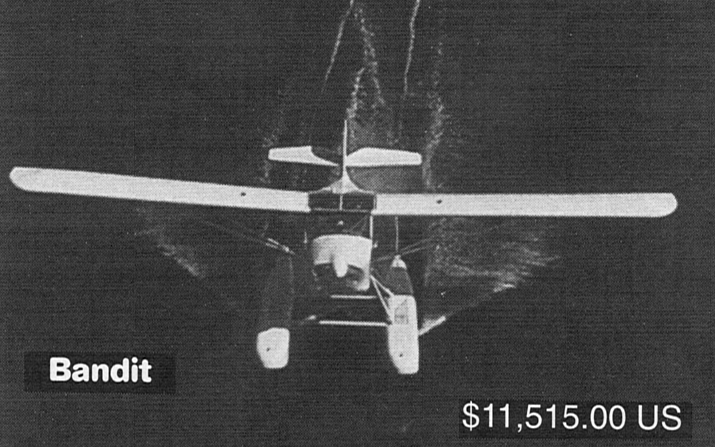
Light Aero Bandit / Avid Bandit

Folding wings. Designed by Dean Wilson.

March 1999

Engine: Rotax 503, 53 hp
HP range: 53-100
Speed max: 95 mph
Cruise: 80 mph
Range: 350 sm
Stall: 30 mph
ROC: 1000 fpm
Take-off dist: 150 ft
Landing dist: 200 ft
Service ceiling: 12,500 ft
Fuel cap: 14 USG
Weight empty: 425 lbs
Gross: 1000 lbs
Height: 5.91 ft
Length: 17 ft
Wing span: 29.67 ft
Wing area: 122.5 sq.ft
Seats: 2
Landing gear: nose or tail wheel