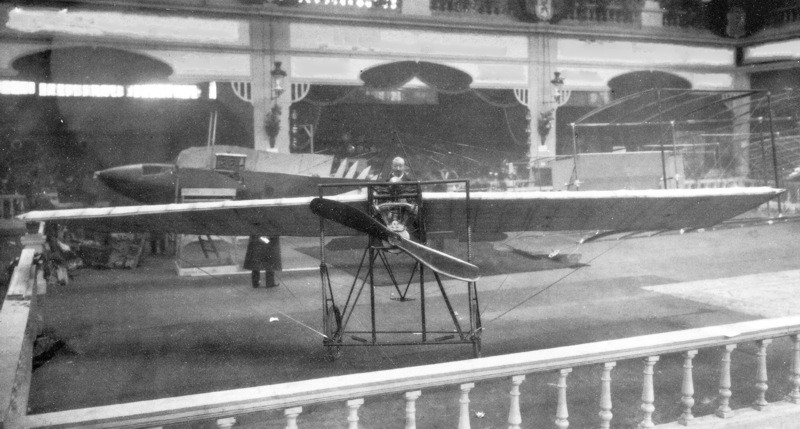
Lippisch Zögling / Pander PH-1

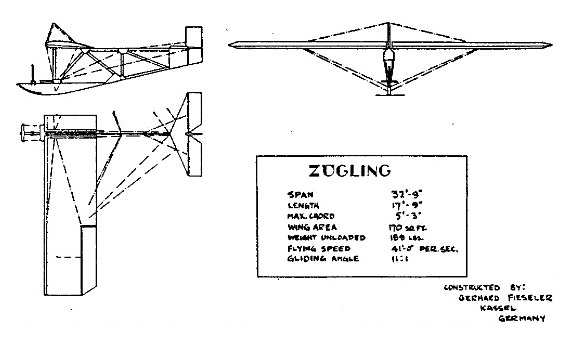
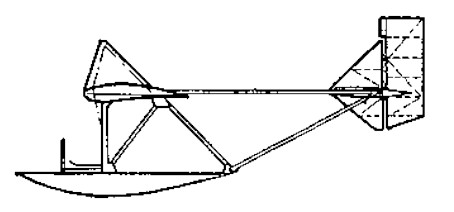
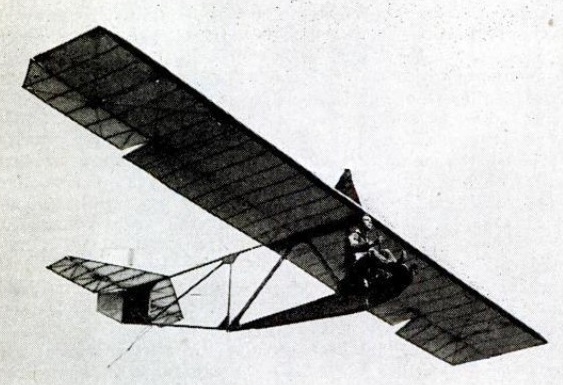
The 1926 Zögling was a simple lightweight glider for basic flight instruction. It was designed to start with rubber ropes, a common way to start a glider in the years short after WWI. It was designed by Alexander Lippisch.

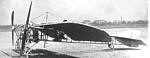
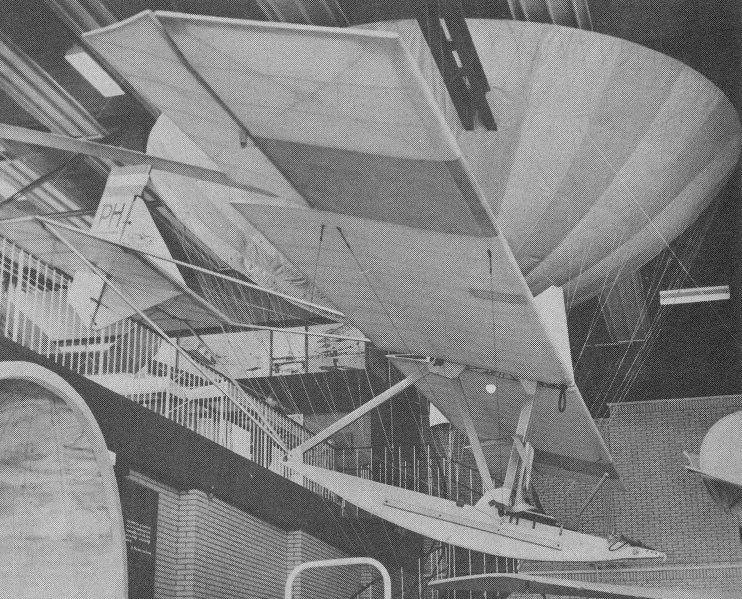
On 27 December 1929 the Dutch Gliding Club was founded. For a few guilders, Theo E. Slot, an aircraft designer at the Pander Aircraft Factory, bought the construction rights to the Zogling glider and on 21 January 1930, the construction of this machine began. By April the PH-1 was completed and flew for the first time in Holland on 6 April, piloted by J. E. van Tijen. A record flight of 43 min 25 sec was made on 4 October with van Tijen at the controls.

Pander PH-1

Zögling
1926
Length : 17.356 ft / 5.29 m
Height : 6.594 ft / 2.01 m
Wingspan : 32.94 ft / 10.04 m
Crew : 1

Zögling 33
1933
Length : 17.356 ft / 5.29 m
Height : 6.988 ft / 2.13 m
Wingspan : 32.94 ft / 10.04 m
Crew : 1

Zögling 35
1935
Length : 17.356 ft / 5.29 m
Height : 7.612 ft / 2.32 m
Wingspan : 32.94 ft / 10.04 m
Crew : 1

Lipnur NU-200 Sikumbang

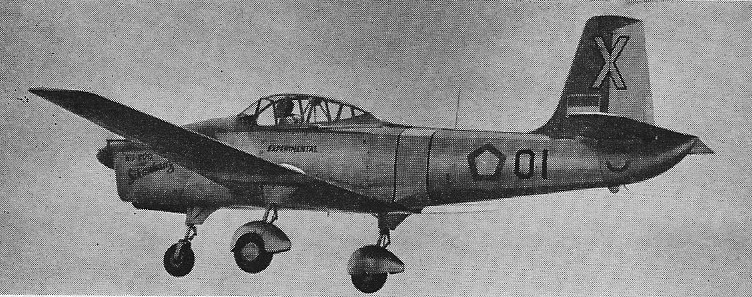
The NU-200 Sikumbang (Bee) was designed in 1953 by Major Nurtanio Pringgoadisuryo of the Experimental Section of the Indonesian Air Force’s Technical Staff.

Of mixed construction, the wing being of all-wood construction with plywood covering and the fuselage being a welded steel-tube structure with metal covering. The Sikumbang was to carry a fixed forward-firing armament of two machine guns and various underwing stores.

The prototype Sikumbang was first flown on 1 August 1954 and the type was intended as a light ground support monoplane.

Engine: 200 hp de Havilland Gipsy Six
Wingspan: 34 ft 9.5 in
Length: 26 ft 9 in
Height: 11 ft
Loaded weight: 2400 lb
Max speed: 160 mph at SL
Cruise: 140 mph
ROC: 1000 fpm
Service ceiling: 16,500 ft
Range: 600 mi
Seats: 2

Lioré-et-Olivier LeO 45 / LeO 451

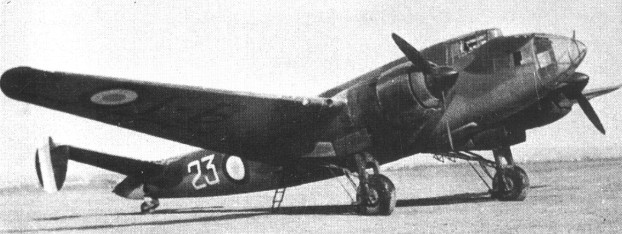
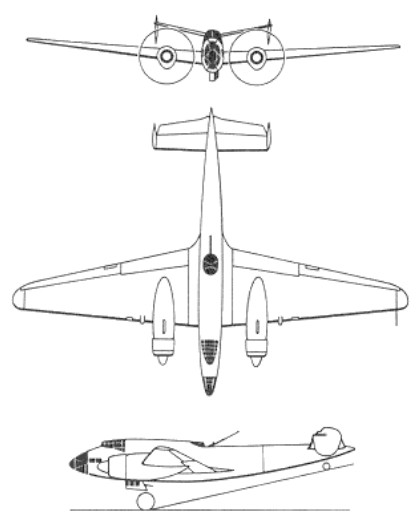
The LeO 45.01 B4 – designed by Jean Mercier to Armee de l’Air Programme A21 (1934) – first flew on 16 January 1937. It was an all-metal low-wing monoplane powered by two 805-kW (1,080-hp) Hispano¬Suiza 14Aa radial radial engines. The wings had considerable dihedral and the streamlined elliptical monocoque fuselage had a pointed and fully glazed nose. The landing gear was fully retractable. Accommodation provided for a pilot in an enclosed cockpit, behind which was the radio operator’s panel and below the retractable ventral gun turret.
Trials revealed that the tail needed revision, and development problems with the Hispano-Suiza engine led to the decision in favour of Gnome-Rhone 14 radials in the LeO 451, which was built by SNCASE, the nationalised organisation into which LeO had been absorbed.

Production LeO 451s had two 849.5kW Gnome-Rhone 14N 48/49 or 38/39 radial engines in specially designed Mercier cowlings. Despite excellent performance, construction of the type was slow. The first production aeroplane flew in March 1939, and although 1,783 aircraft were ordered only 452 had been produced by the fall of France. Only five LeO 451s were on first-line strength by 3 September 1939. Subsequent production amounted to 225 more aircraft.

Liore et Olivier LeO 451 Article

A number of modifications were incorporated during series production, the principal being a totally redesigned fin and rudder assembly. Armament included a fixed 7.5mm MAC 1934 nose machine-gun, another gun of the same type flexibly mounted in the ventral gondola, and a somewhat troublesome 20mm HS-404 on a special mounting in the dorsal position. Maximum bomb load – carried in fuselage and wing bomb bays – was 2,400kg.
The LeO 451s were used initially for long-range reconnaissance missions, then for daylight bombing during the Battle of France and in night raids on Italian targets during June 1940. A further 225 were ordered by the French Vichy regime, the type serving in French overseas territories, later relegated to transport and liaison duties (a number flown in these roles by the Luftwaffe). Twenty-seven LeO 451s were ceded to Italy in 1941 but saw little service.

Variants with different engines reached prototype form, and some production aircraft were modified as transports, glider tugs, mailplanes and trainers. There were numerous experimental conversions of the basic design. Several examples remained in use in secondary roles for several years following the end of the Second World War.

LeO 451
Engines: 2 x Gnome-Rhone 14N-48/49, 850kW (1,140 hp).
Span: 22.5m (73 ft 9.75in).
Length: 17.17m (56 ft 4in).
Max T/O weight: 11400 kg (25,133 lb).
Max speed: 308 mph at 15,750ft.
Operational range: 1,429 miles.
Armament: 1×20-mm Hispano¬Suiza cannon and 2×7.5 mm (0.295-in) MAC machine-guns plus up to 1500 kg (3,307 lb) bombs internal.

LeO 451 B.4
Engine: 2 x Gnome-Rhone 14N 48/49, 850kW
Max take-off weight: 11400 kg / 25133 lb
Loaded weight: 7815 kg / 17229 lb
Wingspan: 22.5 m / 73 ft 10 in
Length: 17.17 m / 56 ft 4 in
Height: 5.24 m / 17 ft 2 in
Wing area: 68.0 sq.m / 731.95 sq ft
Max. speed: 495 km/h / 308 mph
Ceiling: 9000 m / 29550 ft
Range: 2300 km / 1429 miles
Crew: 4
Armament: 2 x 7.5mm machine-guns, 1 x 20mm cannon, 1500kg of bombs
Lioré-et-Olivier H-246

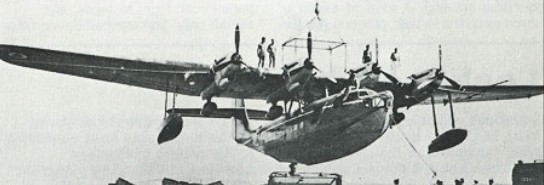
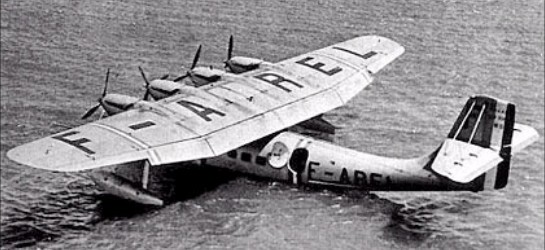
In January 1938, Air France ordered six H-246.1 aircraft in addition to the prototype, and two aircraft were about to enter service on the Marignane-Algiers route when war broke out. The French navy intended to impress all six series aircraft for maritime reconnaissance, but in the event only one was converted. This was the third series aircraft, which flew in June 1940, and then went into service with Escadrille 9.E with a modified extended glazed nose section. It was armed with four 7.5mm Darne machine-guns and 600kg of bombs.

From October 1939 to November 1942 the civil LeO boats operated the route to Algiers for Air France. After that they were seized by the Luftwaffe, converted to carry 21 troops or 14 stretcher cases, and armed with five 7.92mm MG 15 machine-guns, one in a bow turret, two in lateral positions and two more firing through windows at the rear of the flight deck. They were used on a variety of tasks, including brief operations in Finland. Post-war, two surviving LeO H-246.1s were used for a time on the Air France Marignane-Algiers route.

Designed to an official requirement of 1935, the Liore-et-Olivier LeO H-246.01 flying-boat prototype flew on 30 September 1937. A graceful parasol-wing monoplane, its metal hull incorporated a flight deck for the four-man crew and a main cabin for 26 passengers.

H-246.1
Engine: 4 x Hispano-Suiza 12Xgrs/Xhrs V-12, 537kW
Max take-off weight: 15000 kg / 33070 lb
Loaded weight: 9800 kg / 21605 lb
Wingspan: 31.72 m / 104 ft 1 in
Length: 21.17 m / 69 ft 5 in
Height: 7.15 m / 23 ft 5 in
Wing area: 131.0 sq.m / 1410.07 sq ft
Max. speed: 330 km/h / 205 mph
Ceiling: 7000 m / 22950 ft
Range: 2000 km / 1243 miles

Lioré-et-Olivier LeO.9

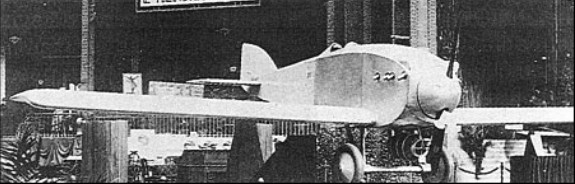
Derived from a 1917 project designated LeO 3, the LeO 9 single-seat cantilever monoplane fighter was of metal construction and of advanced aerodynamic concept. Powered by a 300hp Hispano-Suiza 8Fb eight-cylinder water-cooled engine, the LeO 9 was exhibited, prior to first flight at the Paris Salon in 1921. Flight testing was initiated in the following year, but, on 24 September 1923, the wing folded during a very sharp turn and the aircraft crashed at Villacoublay with the death of the pilot, Gaston Martin. Further development of the LeO 9 was then discontinued.

Engine: 300hp Hispano-Suiza 8Fb
Empty weight: 1175 kg / 2590 lb
Wingspan: 10.94 m / 35 ft 11 in
Length: 6.59 m / 21 ft 7 in
Height: 2.18 m / 7 ft 2 in
Wing area: 17.20 sq.m / 185.14 sq ft

Lioré-et-Olivier LeO.8

In April 1919, the Direction de l’Aeronautique established a new programme for the development of successors for the World War I aircraft types then equipping the Aeronautique Militaire. Among several categories of fighter included in this programme was a two-seat night fighter and reconnaissance aircraft (CAN 2), the specification for which demanded a max speed of at least 200km/h at 3000m.
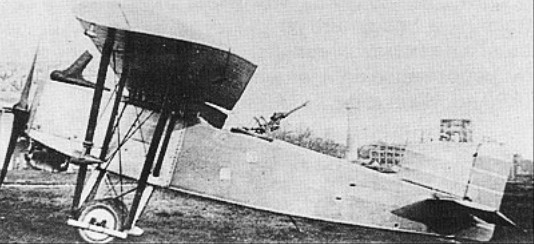
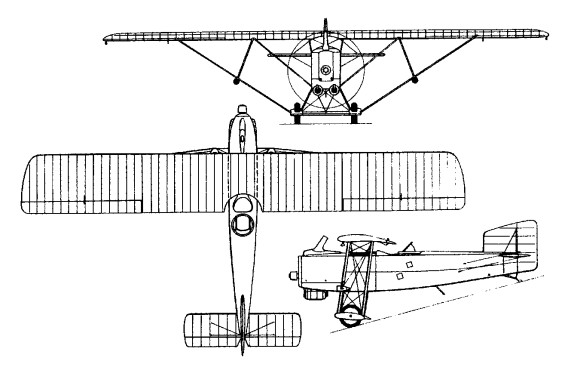
To meet this requirement, Liore et Olivier developed a large, angular parasol monoplane powered by a 300hp Renault 12F 12-cylinder water-cooled engine and designated LeO 8 CAN 2. Of metal construction and with provision for two forward-firing Vickers guns and two Lewis guns in the rear cockpit, the LeO 8 was flown for the first time at Villacoublay in April 1923.
Although no production order was placed, the prototype was prepared for an attempt on the world altitude record with a 500kg payload. This attempt, which took place in 1925, ended in a tragedy with the death of the pilot.

Engine: 300hp Renault 12F
Max take-off weight: 1877 kg / 4138 lb
Empty weight: 1274 kg / 2809 lb
Wingspan: 15.50 m / 50 ft 10 in
Length: 8.70 m / 28 ft 7 in
Height: 3.00 m / 9 ft 10 in
Wing area: 32.00 sq.m / 344.44 sq ft
Max. speed: 215 km/h / 134 mph

Linon 1910 monoplane

After a visit to the Grande Semaine de Reims in 1909 Linon became interesting in flying and constructed a full scale model, which was exposed on the Brussels salon in the beginning of 1910. After tests of the machine it was modified and fitted with a more powerful three-cylinder Delfosse engine. The machine was shown and flown during the “Semaine de Verviers” from 11 to 17 September 1910, likely by the Italian aviator Darioli.