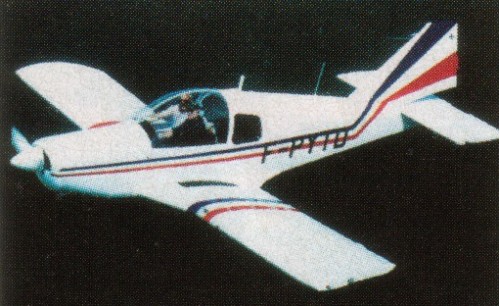
Lucas L7

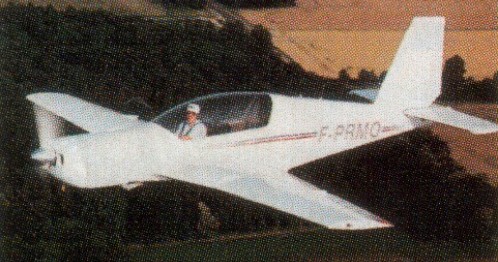
Designed in 1988, the retractable L7 can fit up to 200 hp without modification. The 5 x 4 ft door permits large item loading, or parachute dropping.

Top speed: 142 mph
Cruise: 110 mph
Stall: 44 mph
Range: 560 nm
Rate of climb: 500 fpm
Takeoff dist: 1540 ft
Landing dist: 1700 ft
Service ceiling: 13,00 ft
Engine: Lycoming O-235, 115 hp
HP range: 115-180
Fuel capacity: 30 USG
Empty weight: 1150 lb
Gross weight: 1750 lb
Height: 8 ft
Length: 21 ft
Wing span: 34 ft
Wing area: 133 sq.ft
Seats: 2
Landing gear: nose or tail wheel/retractable

Lucas L6

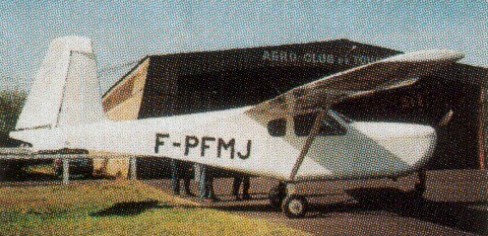
A motorglider with either nose or tail wheel. It can be flown with a 28 ft wing and O-235 engine. A removable wing extension was optional. The wings fold and detach.
The US agent for plans and kits was Micro Technologies Inc.

Top speed: 110 mph
Cruise: 98 mph
Stall: 44 mph
Range: 621 nm
Rate of climb: 450 fpm
Takeoff dist: 1480 ft
Landing dist: 1600 ft
Service ceiling: 14,000 ft
Engine: Limbach, 80 hp
Fuel capacity: 20 USG
Empty weight: 990 lb
Gross weight: 1480 lb
Height: 8 ft
Length: 22 ft
Wing span: 15 ft
Wing area: 180 sq.ft
Seats: 2
Landing gear: nose or tail wheel

Engine: Lycoming O-235
Wing span: 9 m
Wing area: 13 sq.m
MAUW: 750 kg
Empty weight: 490 kg
Fuel capacity: 150 lt
Max speed: 260 kph
Cruise speed: 230 kph
Minimum speed: 100 kph
Climb rate: 3 m/s
Seats: 2
Fuel consumption: 28 lt/hr
Plan price (1998): 2500 Fttc

Lucas L5

Designed as a 2, 3, or 4 place with and identical airframe. Was available as either nose or tail wheel.
The US agent for plans and kits was Micro Technologies Inc.

Top speed: 165 mph
Cruise: 118 mph
Stall: 54 mph
Range: 620 nm
Rate of climb: 520 fpm
Takeoff dist: 1450 ft
Landing dist: 1600 ft
Service ceiling: 13,000 ft
Engine: Lycoming O-320, 150 hp
HP range: 108-180
Fuel capacity: 50 USG
Empty weight: 1150 lb
Gross weight: 1900 lb
Height: 6 ft
Length: 20 ft
Wing span: 31 ft
Wing area: 133 sq.ft
Seats: 2-4
Landing gear: nose

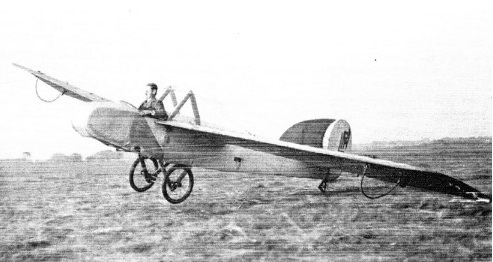
LPW / Leeming-Prince-Wood Glider

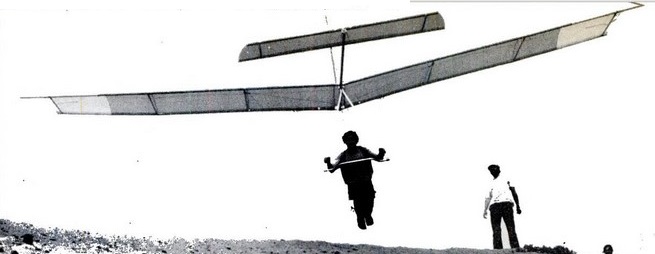
In 1922 John Leeming started to design his fifth glider, which became the LPW Glider, as the cheapest possible way to get airborne, but even the cost of materials worried him. He knew that Avro had made 8,340 Avro 504K trainers, and many were then stored but unwanted.

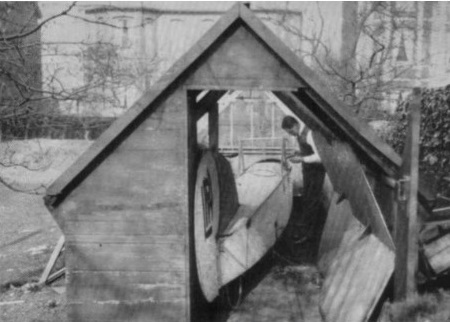
Leeming approached Avro to seek scrap materials, and met Clement Wood of the Sales staff, who turned out to be a kindred spirit. They raided the “scrap pile” and probably got major components needing minor repairs. The most costly items were two bicycle wheels that cost full price.

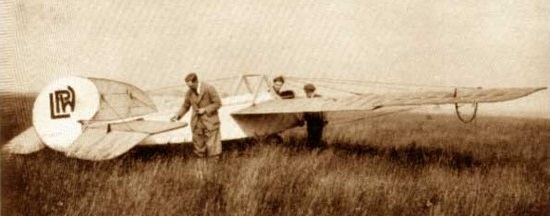
The LPW Glider was built by John Leeming, Tom Prince, and Clement Wood who later formed the Lancashire Aero Club.

The original was converted from an Avro 504K trainer.

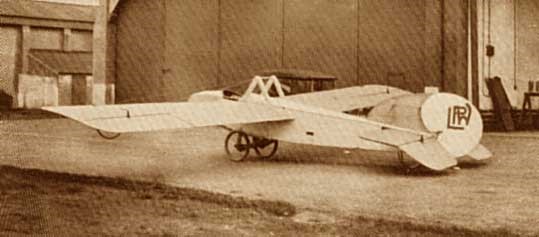
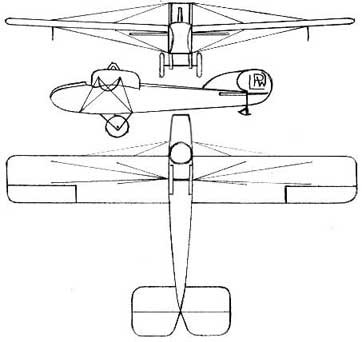
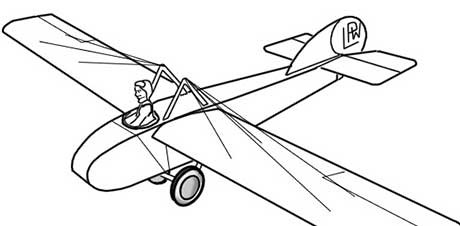
Leeming cut off the nose and front cockpit, and faired it in. Wing panels were fixed to the top fuselage longerons and braced from upper pylons and the bottom of the fuselage.

The thin wings had two spars, so the lift bracing wires also added torsional stiffness; a picture shows that the outer wings twisted nose-up.

The result was an enclosed body rather than the later open framework. But gliding performance wouldn’t be too good, with a large fuselage and so many bracing wires. The glider flew on 24 May 1924 from Alexandra Park Aerodrome in Manchester being towed into the air by a car. Based on simple assumptions, it probably stalled at 25 knots, had minimum sink of 3 knots at 30 knots, and maximum glide 12 to 1.

Flying took place at Alexandra Park aerodrome, in the middle of Manchester, starting 24 May 1924, car towing, having trouble with the long grass.

Rope length was quoted as 200 feet, so straight hops were all that was possible. Several pilots flew on many occasions. Leeming crashed the LPW in September 1924 when flying for press photographers on a windier day than usual. Struggling to fly level in the gusts, he didn’t notice how high he had reached so quickly.

The driver looked back and saw the glider above, probably feared that the rope would fall on him, stopped the car and ran away. The glider stalled, and didn’t recover, probably through the wind gradient; Leeming wasn’t hurt, but the glider was badly smashed.

The wreck was rebuilt, fitted with an engine, and used for taxiing practice for new recruits, but it never flew. Leeming says that it was too heavy, probably too nose-heavy.
Loving WR-1 Love

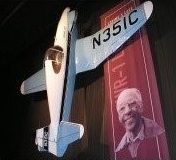
1954 Loving-Wayne WR-1 Love N351C

The Love racer features reverse-gull wings and full wheel covers. It is built from fabric around a wood frame. With an 85-hp Continental powerplant, it is capable of speeds in ex¬cess of 200 mph.

Engine: 85-hp Continental
Gross Wt. 885 lb
Empty Wt. 613 lb
Fuel capacity 15 USG
Wingspan 20 ft
Length 17 ft 2 in
Top speed: 215 mph.
Cruise 142 mph.
Stall 58 mph.
Climb rate 2100 fpm
Takeoff run 500 ft.
Landing roll 1200 ft
Range 450 miles

Lovegrove Cloudhopper

Cloudhopper Mk.II

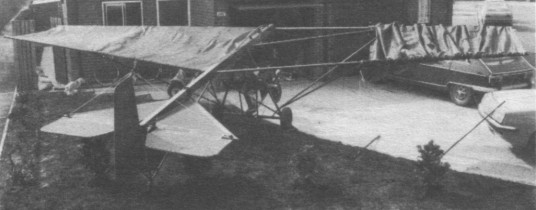
Single seat single engined high wing mono¬plane with two axis control. Wing has swept back leading edge, unswept trailing edge and tapering chord; conventional tail. Pitch control by elevator on tail; yaw control by fully flying rudder; no separate roll control; control inputs through stick for pitch/yaw. Wing braced from below by struts; wing profile; 75% double surface. Undercarriage has three wheels in tricycle formation; no suspension on any wheels. Push right go right nosewheel steering independent from yaw control. No brakes. Aluminium tube framework, without pod. Engine mounted below wing driving pusher propeller.

The Cloudhopper is a simple homebuilt tube and dacron design with pedals reserved for ground steering, all flying being done with the stick. The machine has progressed through various stages Mk.I, II and III, the principal difference between the machines is the tailplane design, which was initially a tubular structure. Peter was not satisfied with the rigidity of this and replaced it with a fabricated box section structure to create the MkII.

Although this proved more rigid than its predecessor, it too was rejected as too complex and in 1983 Peter was working on a MkIII design, reverting to a tubular empennage but with greater rigidity than the MkI. The Mk.III will also feature stronger engine mountings, which are being designed to withstand 15g in accordance with the UK microlight airworthiness regulations.

Cloudhopper Mk.II
Engine: Robin EC25PS, 18.5 hp at 5500 rpm.
Propeller diameter 42 inch, 1.06 m (3 blade).
V belt reduction, ratio 2.2/1.
Power per unit area 0.11 hp/sq.ft, 1.3 hp/sq.m.
Fuel capacity 2.4 US gal, 2.0 Imp gal, 9.1 litre.
Length overall 14.4 ft, 4.39 m.
Height overall 4.8ft, 1.45m.
Wing span 27.7ft, 13.12m.
Chord at root 7.64ft, 2.33m.
Chord at tip 4.0ft, 1.22m.
Dihedral 6 degs.
Sweepback 15 degs.
Tailplane span 8.2 ft, 2.51 m.
Rudder height 4.1 ft, 1.26 m.
Total wing area 161 sq.ft, 15.0 sq.m.
Rudder area 6.7 sq.ft, 0.63 sq.m.
Tailplane area 13.5 sq.ft, 1.26 sq.m.
Total elevator area 9.2 sq.ft, 0.86 sq.m.
Wing aspect ratio 5.8/1.
Wheel track 4.4ft, 1.33m.
Nosewheel diameter overall 10 inch, 25 cm.
Main wheels diameter overall 10 inch, 25 cm.
Empty weight 217 lb, 98 kg.
Max take off weight 450 lb, 204kg.
Payload 233 lb, 106 kg.
Max wing loading 2.80lb/sq.ft, 13.6 kg/sq.m.
Max power loading 24.3 lb/hp, 10.9kg/hp.
Load factors +4.0, 2.0 design.