The Colt 190 design rights and fuselage, wing alignment, and gear jigs were purchased by Spibec Corp for $30,000, according to Carroll S Bechtel, one of Spibec’s three owners. By 1958 the prototype had been flown more than 350 hours. Engineering data necessary for FAA approval, with the exception of static wing-loading tests, had been completed. Although with no firm orders, Bechtel production schedule called for 50 Colts the first year (1960) and another 50 the second year at one of several airports in the Philadelphia area, with subsequent output depending on demand for the plane. The projected base price $7,995
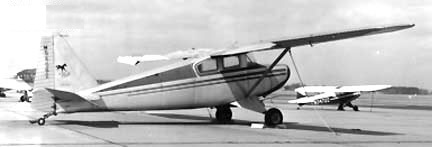
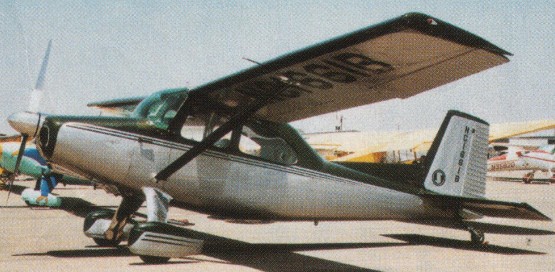
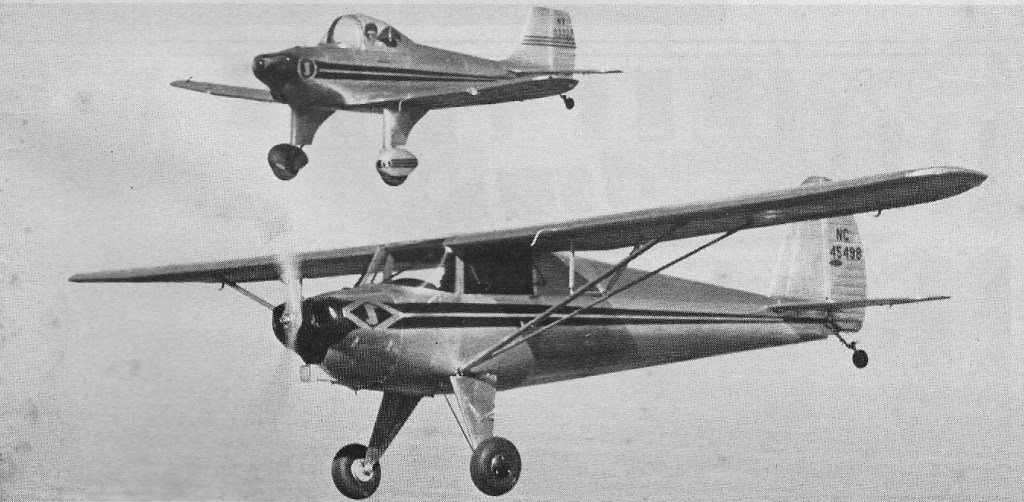
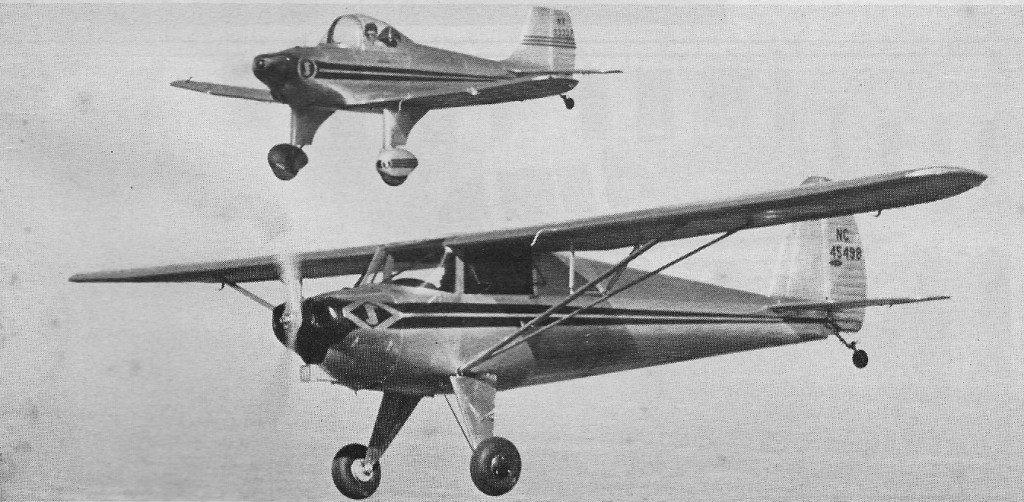
Ray Weatherley acquired plans of the Colt 4-seater NX54082 from Luscombe Airplane Corporation in 1942. A high wing cabin monoplane, designed by Fred Knack and completed post-war, the aircraft was still active into the ’90s.
Engine: 190hp Lycoming O-435 or 215hp Franklin Wingspan: 36’3″ Length: 23’11” Useful load: 685 lb Max speed: 160 mph Cruise speed: 140 mph Stall: 52 mph Range: 750 mi
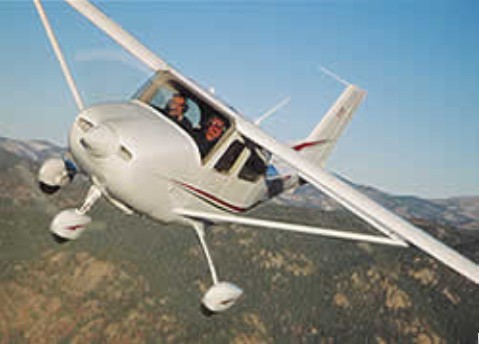
Alpha Aviation Co was established early 1970s to manufacture a re-engined and updated version of the Luscombe 11A Sedan under the designation Alpha 11D. Primary changes were the introduction of a fixed tricycle landing gear and provision of a 180 hp engine. The Alpha Aviation prototype use a variable pitch prop, although a fixed-pitch, two-blade prop will be fitted to production aircraft.
2002 Luscombe Model 11E
1998 Luscombe Spartan 185 IIE Price: $138,500 Engine: Continental IO-360-ES4, 185 hp @ 2550rpm@SL TBO: 1800 hr Fuel type: 100/100LL Propeller: Three-blade CS Landing gear type: Fixed/Tri Max ramp weight: 2286 lb Gross weight: 2286 lb Max landing weight: 2286 lb Empty weight, std: 1350 lb Payload, full std. fuel: 696 lb Usable fuel: 39 USgal Oil capacity: 8 qt Wingspan: 38 ft. 6 in. Overall length: 24 ft. Height: 8 ft. 10 in. Wing area:167 sq. ft Wing loading: 13.7 lb/sq. ft Power loading: 12.3 lb/hp Wheel track: 7 ft. 4 in. Wheel size: 6.00 x 6 in Seating capacity: 4 Cabin doors: 2 Cabin width: 45.5 in Cabin height: 51.3 in Baggage capacity: 100 lb Cruise speed 75% power: 126 kt Cruise speed 65% power: 121 kt Cruise speed 55% power: 110 kt Max range (w/ reserve) 75% power: 375 nm Max range (w/ reserve) 65% power: 420 nm Max range (w/ reserve) 55% power: 440 nm Fuel consumption 75% power: 11.5 US gph Fuel consumption 65% power: 9.8 US gph Fuel consumption 55% power: 8.2 US gph Stall speed (flaps up): 47 kt Stall speed (flaps down): 43 kt Best rate of climb: 1050 fpm Best rate of climb at 8000 ft: 800 fpm Service ceiling: 18,000 ft Takeoff ground roll: 670 ft Takeoff over 50-ft. obstacle:1140 ft Landing ground roll: 500 ft Landing over 50-ft. obstacle: 800 ft
2002 Luscombe Model 11E Base price (incl. basic avionics):$158,900 Engine: Continental. IO-360-ES4, 185 hp Fuel type: 100/100LL Propeller type: FP Landing gear type: Tri/Fixed Gross weight: 2280 lb Landing weight: 2280 lb Empty weight, std: 1450 lb Useful load, std: 830 lb Payload – full std. fuel: 590 lb Useable fuel, std: 40 USgal Height: 8 ft. 10 in. Overall length: 24 ft. Wingspan: 38 ft. 6 in. Power loading: 12.3 lb/hp Seating capacity: 4 Cabin doors: 2 Cabin width: 45.5 in Cabin height: 51.3 in Baggage capacity: 100 lb Cruise speed @ 7,500 ft 70% power: 117 kt Cruise speed @ 7,500 ft 60% power: 110 kt Fuel consumption 70% power: 7.4 USgph Fuel consumption 60% power: 7.0 USgph Vs: 47 kt Vso: 49 kt Best rate of climb: 876 fpm Best rate of climb, 8000 ft: 800 fpm Service ceiling (ft.): 16,000 Takeoff ground roll: 900 ft Takeoff over 50-ft. obstacle: 1375 ft Landing ground roll: 800 ft Landing over 50-ft. obstacle:1901 ft
Luscombe tried a postwar single-seater with the model 10, which used cut-down components of the Silvaire two seat. The model 10 did not go beyond the prototype.
The 1937-1938 Model 8a, of which 1,100 were built, and the 1940 Silvaire, of which production had reached 6,000 by 1961.
The Luscombe Model 8 was the result of the new Continental A-50, dual ignition, 50 hp, flat four engine of 171 Cu.in that became available in early 1937. To promote the new engine, Continental made arrangements with Don Luscombe to accept (on loan) one of the new engines, hoping he might consider designing an engine around it. He accepted and engineers Fred Knack and Jim Rising designed the craft.
The Luscombe 50 (named after the engine) was designed as a high wing monoplane of all metal construction but with metal framed two-seat all-metal light aircraft.
As this was taking place, the metal framed, fabric covered ailerons were changed to corrugated metal, as were the rudder and elevator.
The prototype featured a control wheel on the left side of the cockpit. This was later replaced with a stick after complaints of poor control inputs.
The first flight of the production prototype Luscombe Model 8, NX1327, was made on 6 June 1938. On 11 August 1938, CAA Certificate #693 was issued.
The first Model 8 was basic, with only a tachometer, engine oil temperature gauge, altimeter, and airspeed indicator. Optional was a compass. The series was delivered standard with a tail skid. Floorboards were covered with carpet. Behind the cockpit a baggage compartment was beneath a 14 US gallon fuel tank, the seat swinging forward for access. The seat sat on the cabin floor and wasn’t fastened in any way.
By the end of 1938, Luscombe had built 71 Model 8s. The first of the series, models A-C, were fitted with fabric covered wings on a metal frame. The Model E used a forward squared wingtip, while models A to C were rounded. Model F had squared tips for and aft. The model 8E of 1946 2 place side-by-side high wing metal monoplane.
In all there were 15 model, each differentiated by engine or other changes. Engines varied from 50 to 90 hp with cruise speeds ranging from 95-110 mph. 113 Luscombe 50 were built.
Late in 1938, Continental introduced the 65 hp A-65 engine, with increase power through raising the A-50 rpm to 2300.
One of the first A65s was installed in January 1939 proving successful, and the Luscombe Model 8A replaced the Luscombe 50, which was then phased out.
At end of Second World War production tooling for Model 8 Silvaire was moved by Luscombe Airplane Corporation to Dallas, Texas. The postwar company, based at Dallas, Texas, went bankrupt in 1949 and was brought by Temco Aircraft Corporation which built about 50 Silvaires under the old name. In 1955 the Silvaire Aircraft Company acquired rights and equipment for Model 8 Silvaire, inaugurated production at Fort Collins, Colorado, and flew first model 8-F aircraft off line September 1956, production continuing until 1960.
In 1962 Alaska International Corp acquired from Silvaire Aircraft Company all rights to the Luscombe Silvaire
In 1964 M.A.Larson, president of Larson, Luscombe Corp, Belleville, Michigan, announced that his firm purchased the type certificate and all rights for manufacturing Luscombe aircraft. First production models of 8-F and 8-G were due early in 1965.
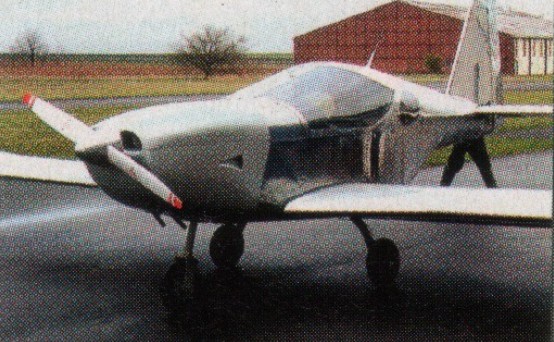
Renaissance Aircraft announced in 2002 the plan to manufacture an updated version of the single engine, two seat, tail wheel Luscombe 8F, claiming improvements over the original version.
Renaissance Luscombe 8F
Luscombe Models 8A, 8B, and 8C meet the criteria for a Light Sport Aircraft.
More known for his carriages, automobiles and racers, and motors, Velie (grandson of John Deere) also capitalized and manufactured the initial 55-65hp Monocoupe aircraft upon acquisition of controlling interest in Central States Aircraft Co in 1927, hence early popular reference to “Velie Monocoupes” signifying not only the powerplant but the constructor.
Mono production
When Velie died of an embolism in Oct 1928, his son took the reins but he, too, suffered a heart attack in Mar 1929 and Don Luscombe took over.
Don A. Luscombe’s first aircraft, the Monocoupe, was built by the Central States Aero Company of Davenport, Ohio. It was a small two-seat sporting monoplane known as the Central States Monocoupe. Powered by a 70 hp engine, it was reputedly able to become airborne within five seconds of starting its take-off run.
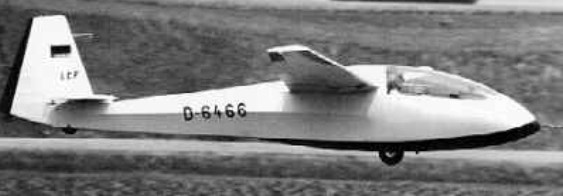
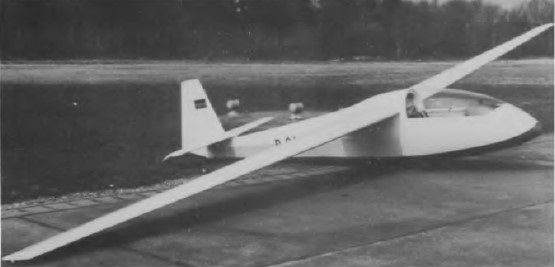
This single-seat Club Class sailplane is intended for use as a trainer, for competition flying and for aerobatics; it was designed in 1971 as a successor to the earlier LO 100 and the prototype was built in approximately 4,000 hours by five engineer members of the Luftsportclub der Zeppelinstadt Friedrichshafen. It first flew on 22 March 1975 and won first prize at that year’s meeting of the CUV or Oskar-Ursinus-Vereinigung, Germany’s equivalent of the Experimental Aircraft Association.
The cantilever shoulder wings are single-spar wooden structures, with Conticell foam ribs and plywood covering; there are Schempp-Hirth air brakes on the wing upper surfaces. The oval-section fuselage is a welded steel tube structure with glassfibre covering of the nose section and fabric covering of the rear half. The plywood tail unit is filled with Conticell foam, and the landing gear consists of a semi-recessed non-retractable monowheel and a tailwheel. The pilot sits under a one-piece flush fitting cockpit canopy.
There were plans for production of the LCF II by Scheibe if sufficient orders for it had been received, but these were dropped.
LCF 2 Wing span: 13m / 42 ft 7.75 in Wing area: 10sq.m / 107.6 sqft Aspect ratio: 16.9 Wing section: Wortmann FX-60-126 Length: 6.35 m / 20 ft 10 in Height: 0.9 m / 2 ft 1.5 in Empty Weight: 190kg / 419 lb Gross Weight: 300kg / 661 lb Water ballast: None Wing Load: 30kg/sq.m / 6.14 lb/sq ft Max speed: 174 mph / 135 kt / 250 km/h Max aero-tow speed: 105 mph Stalling speed: 33.5 kt / 62 km/h MinSink: 0.70 m/s / 2.30 ft/sec at 68 kph / 42.5mph / 36.5 kt Best glide ratio: 30:1 at 53 mph / 85 kph / 46 kt No. built: 1 Seats: 1
The Beta 1 was designed by Hans Luenger and Josef Kohler with the intent of being the first US production fiberglass sailplane. The semi boom-and-pod fuselage was composed of two fiberglass half-shells that join top and bottom. It featured a fully-reclined pilot position, T-tail with mass-balanced elevators, fixed gear and Schempp-Hirth speed-limiting dive brakes. The Beta 1 has been donated to the National Soaring Museum.
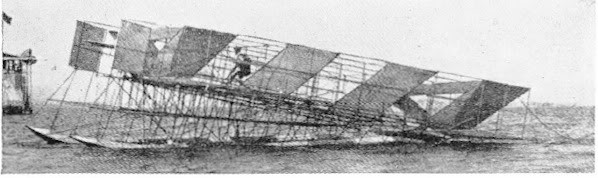
Israel Ludlow’s Jamestown Exposition Glider on floats during its unsuccessful trials on Hampton Roads, piloted by the aeronaut Capt. T. T. Lovelace and towed by the tug Potomac on August 21, 1907.





 All Aero