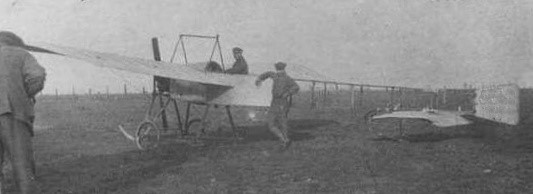
A conventional monoplane built by L. (probably Lazare) Montéry, who ran a flying school in Chalon-sur-Saône in central France. This was probably his second design, the previous being a quite faithful Blériot copy.
A conventional monoplane built by L. (probably Lazare) Montéry, who ran a flying school in Chalon-sur-Saône in central France. This was probably his second design, the previous being a quite faithful Blériot copy.
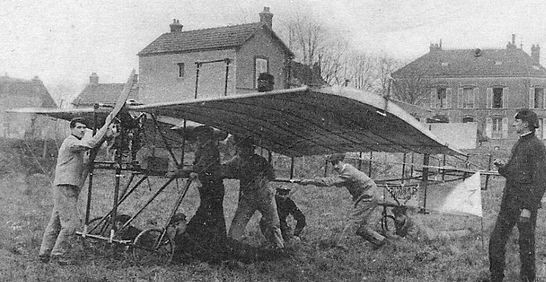
Apart from some data, little is known about this monoplane, which was built at in northern central France by a group of young mechanics.
Span: 7.75 m
Length: 7.35 m
Wing area: 19.9 sq.m
Weight: 250 kg
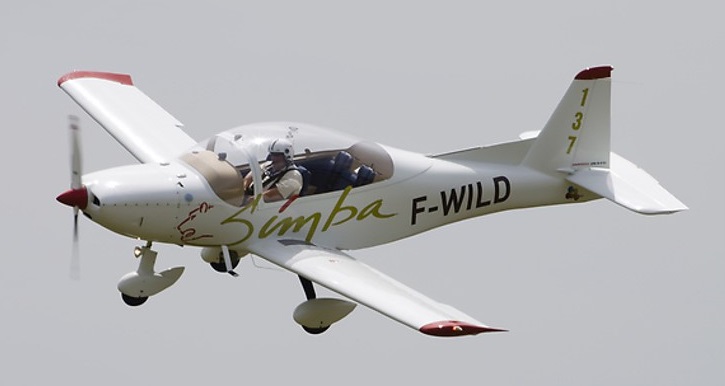
Designed by Philippe Moniot, the 2009 APM 40 Simba: prototype was built by Rex Composites. It is a derivative of the 2-seater APM 20 Lionceau and 3-seater APM 30 Lion.
The Issoire APM 40 Simba is a four-seat light aircraft manufactured by Issoire Aviation. It is entirely built from carbon-fiber-reinforced polymers. The aircraft’s first flight was on 19 May 2009, and it made its public debut at the Paris Air Show in June 2009.

The 2017 APM 41 Simba is the APM 40 re-powered with a 140 hp Rotax 915iS.
The APM 50 Nala is an aerobatic derivative of the APM 41.
The APM 51 Cheelaar is a multi-purpose APM 41 derivative intended for surveillance, training, etc.
APM 40
Engine: Teledyne Continental Motors IO-240F, 93 kW (125 hp)
Wingspan: 8.66 m (28 ft 5 in)
Length: 7.7 m (25 ft 3 in)
Empty weight: 490 kg (1,080 lb)
Max takeoff weight: 1,000 kg (2,205 lb)
Cruise speed: 220 km/h (140 mph, 120 kn)
Range: 700 km (430 mi, 380 nmi)
Crew: 1
Capacity: 3 passengers
APM 41 Simba
Engine: Rotax 915iS, 140 hp
Wingspan: 8.66 m (28 ft 5 in)
APM 50 Nala
APM 51 Cheelaar


The APM 30 Lion was designed by Philippe Moniot and is the three-seater version of the APM 20 Lionceau. It is made entirely of GRP and is the first aircraft made of GRP and the only three-seat aircraft that has been approved in the VLA class. A Rotax 912s is installed as the engine, which together with the MT-Prop-Twin-Propeller enables a cruising speed of 110 kn (204 km / h). It is also approved for NVFR.
The cockpit has flight instruments in the classic “six-pack arrangement”. A glass cockpit is optionally available.
The APM 30 Lion, certified in 2007, is an extension of the Lionceau certification using the same airframe and the same wing, changing engine and introducing a third place.

Following feedback from pilots, the manufacturer carried out a series of tests required by EASA, which made it possible to increase the maximum take-off weight from 736 to 750 kg. Furthermore, the flight controls were modified, which led to better handling of the aircraft.
APM 30 Lion
Engine: Rotax 912s
Propeller: MT Prop Twin
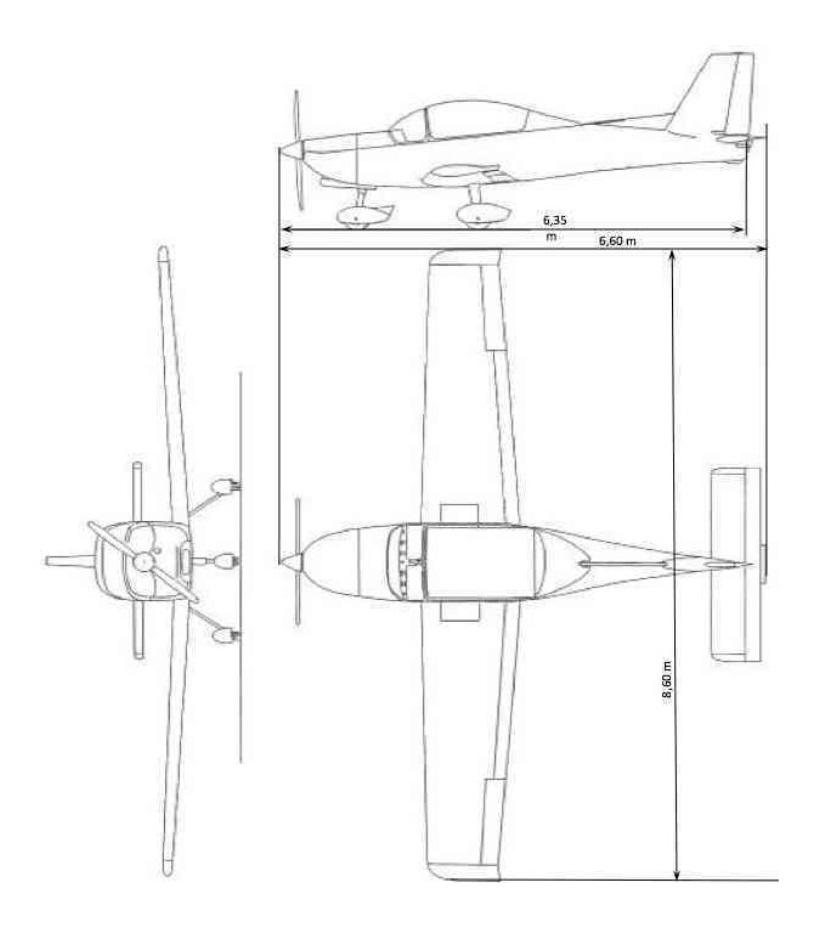
Wingspan: 8.6 m
Wing area: 9.5 m²
Length: 6.6 m
Height: 2.4 m
Empty weight: 430 kg
Max take off weight: 750 kg
Fuel capacity: 70 l
Top speed: 143 kn (265 km / h)
Cruising speed: 110 kn (204 km / h)
max. rate of climb: 800 ft / min
Service ceiling: 14,000 ft (4,267 m)
Range: 430 NM (796 km)
Crew: 1
Passengers: 2
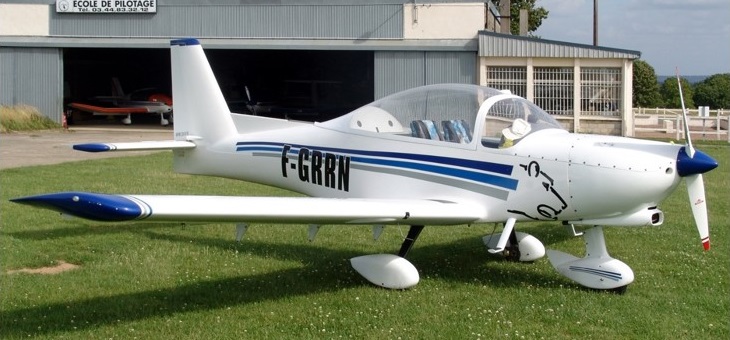
The APM 20 Lionceau began as the Moniot APM-20 in 1992, by Les Industries de Composites d’Auvergne Reunites (ICAR).
Designed by Philippe Moniot at Rex Composites and certified in 1999 EASA CS-VLA, the APM 20 Lionceau is a very light (400 kg empty, 634 kg loaded) and economical 73.5 kW (98.6 hp) Rotax 912 ULS powered aircraft is primarily intended to be used to learn to fly, but also to travel with a relatively high cruise speed (113 knots).
Manufactured by the French manufacturer Issoire Aviation, it is entirely built from composite materials, especially carbon fibers. Design (as Moniot APM-20) was started 1992 by Les Industries de Composites d’Auvergne Reunites (ICAR).
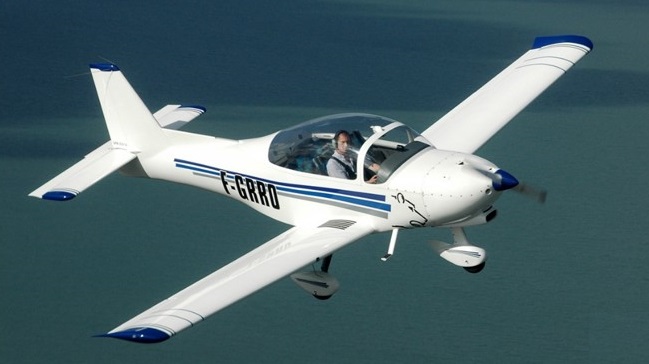
The design features a low wing, NACA 63618 aerofoil, thickness/chord ratio 18 per cent, dihedral 3o, incidence 2o, twist 1o. The structure is Carbon fibre/epoxy. Flying controls are conventional and manual. Spring elevator tab for pitch trim. Electrically operated slotted flaps to about two-thirds span. A refuelling point is on the port side of fuselage.
The landing gear is fixed tricycle type with spats; oleo-sprung steerable nose leg, composites main legs. Mainwheels and nosewheel diameter 330 mm; maximum pressure 2.35 bar (34 lb/sq in).
Two, side by side seats are under rearward-sliding tinted canopy. Dual controls standard. Baggage compartment at rear of seats. Fixed step forward of wing leading-edge on each side.
The prototype (F-WWMP) exhibited at Paris Air Show 1995 before first flight on 21 November 1995; third (second flying) aircraft (F-WWXX) exhibited statically at Paris Air Show, June 1997, fitted with JPX flat-four engine, which is not offered on production aircraft.
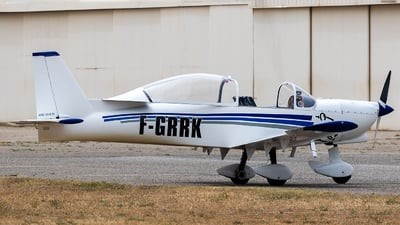
No.4 (also registered F-WWXX) was exhibited at Paris in June 1999 and No.5 (F-GRRE) in 2001.
They were certified to JAR-VLA on 17 May 1999 and to JAR-21 in 2000. The first all-carbon fibre, single-engine aircraft to gain JAR-VLA certification.
Development cost around FFr10 million. Unit cost FFr620,000, minimally equipped or FFr700,000 with standard equipment (2001). Operating cost FFr350 per hour (1998).
First flying in December 1995, the Issoire Aviation APM 20 Lionceau is entirely built from composite materials, especially carbon fibers. Production is carried out by Issoire Aviation.
The APM-22 Liondo was the prototype APM-21 F-WWMP equipped with large winglets and exhibited at Paris, 15-22 June 2003, as representative of this UAV proposal, with 24-hour endurance and 556 kg (1,225 lb) MTOW.
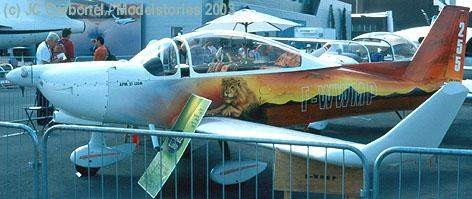
A three-seat version, the APM 30 Lion, was presented at the 2005 Paris Air Show.
Issoire APM-20 lionceau
Engine: Rotax 912A, 59.6 kW (80 hp)
Propeller: Evra AL1 two-blade, fixed-pitch wooden
Wingspan: 8.66 m (28 ft 5 in)
Wing area: 9.5 m2 (102 sq ft)
Aspect ratio: 7.9
Airfoil: NACA 63-418
Length: 6.6 m (21 ft 8 in)
Height: 2.4 m (7 ft 10 in)
Empty weight: 380 kg (838 lb)
Max takeoff weight: 620 kg (1,367 lb)
Fuel capacity: 68 litres (18.0 US gallons; 15.0 Imp gallons)
Usable fuel: 65 litres (17.2 US gallons; 14.3 Imp gallons)
Cruise speed: 230 km/h (140 mph, 120 kn)
Stall speed: 80 km/h (50 mph, 43 kn)
Never exceed speed: 250 km/h (160 mph, 130 kn)
Endurance: 4–5 hours
Rate of climb: 3.4 m/s (670 ft/min)
Seats: 2
APM-21 Lion
Engine: 73.5 kW (98.6 hp) Rotax 912 ULS engine
Propeller: two-blade, constant-speed Hoffmann
The 1989 Avions Philippe Moniot APM 10 Flamingo was only a prototype.
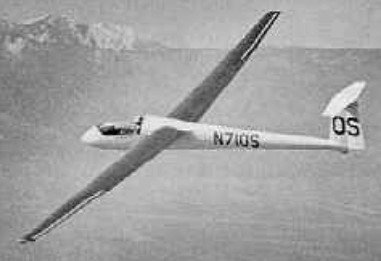
Designed by Richard Monaghen, the Osprey, a Standard Class sailplane which made its first flight in 1973, featuring retractable gear, 90 degree flaps and a T-tail. The structure was all-aluminum except for a fiberglass-foam-sandwich cockpit area.
Wing span: 15m / 49.2 ft
Wing area: 9.66 sq.m / 104 sq.ft
Empty Weight: 200 kg / 440 lb
Payload: 90 kg / 200 lb
Gross Weight: 290 kg / 640 lb
Wing Load: 30.02 kg/sq.m / 6.1 lb/sq.ft
Aspect ratio: 23.3
Airfoil: Wortmann 163/126
Seats: 1
Number built: 1
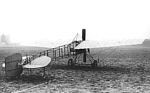
The 1911 Molon monoplane was designed and built by Molon in France.
The Soviets began constructing this spacecraft in response to a 1972 announcement by President Nixon that NASA would try building its own new spacecraft. The shuttle’s first launch attempt came on October 29, 1988 but ended with a mechanical failure.

NPO Molniya was created 1976 to develop the Buran, Russia’s first reusable spacecraft. With less work on Buran in later years, began developing civil aircraft.
Möller Flugzeugbau was founded at Bremen late 1930s, built Stomo 3 single-seat cabin monoplane powered by 18 hp Kroeber M.4 engine. Similar Moller Sturmer had a 53 hp Zundapp engine.
 All Aero