
The 1981 PIK-21 Super-Sytky is a mid-wing monoplane Formula V racer, powered by a 53 hp VW-1600 engine. A Tavastia College student project of wooden construction, the two built, OH-XTM & OH-XMR, have a wing span of 5.3 m.
The 1981 PIK-21 Super-Sytky is a mid-wing monoplane Formula V racer, powered by a 53 hp VW-1600 engine. A Tavastia College student project of wooden construction, the two built, OH-XTM & OH-XMR, have a wing span of 5.3 m.

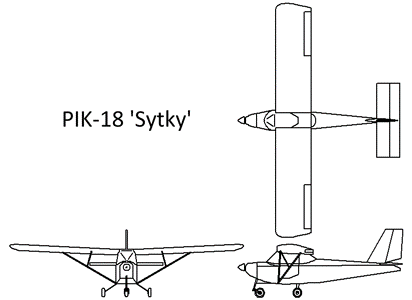
The PIK-18 Sytky is a 1950 designed ultralight. It is a single-seat, high-wing monoplane, powered by a VW 1500 conversion.
Designed by Ilkka Lounamaa, the one built, OH-XTI, flew in 1976.
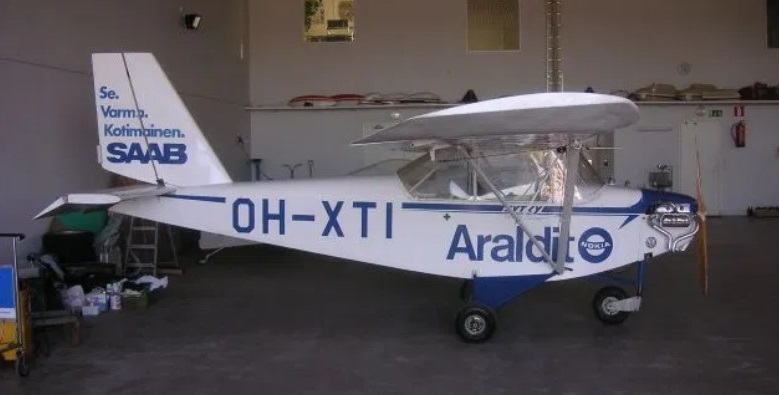
The name Sytky (Phon) is the phonetic sound of a VW motor running.
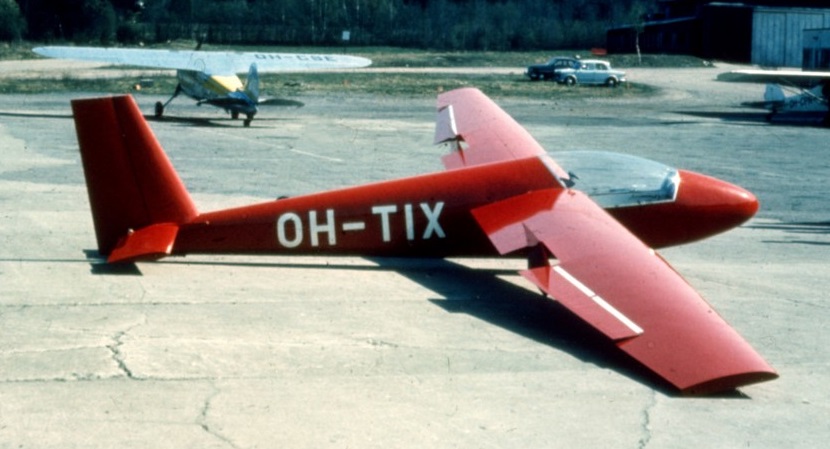
The 1966 PIK-17a Tumppi (‘Shorty’) was a single-seat shoulder-wing sailplane of wooden construction. With a Wortmann luminaire wing profile, the max speed was 235 km/h.
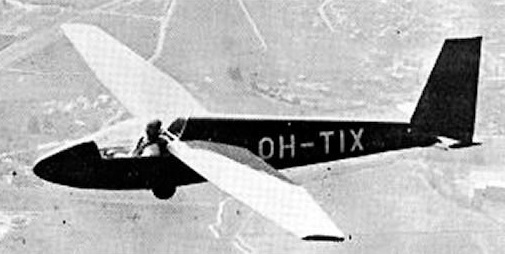
The 1968 PIK-17b Tintti (Thermal Updraught) was of GRP construction.
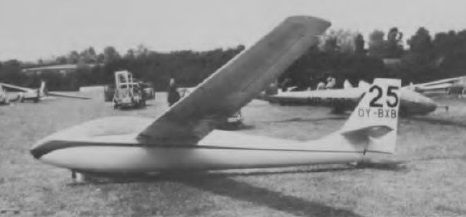
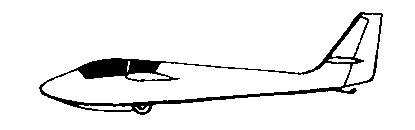
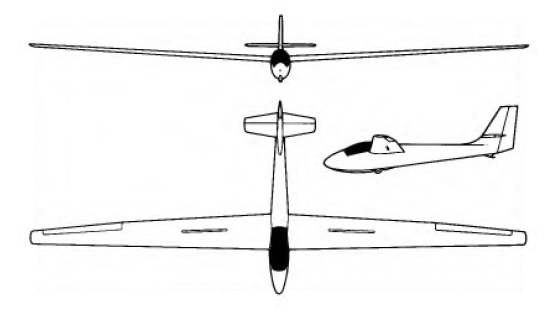
The PIK-16C Vasama (or Arrow) single-seat Standard Class sailplane was designed by Tuomo Tervo, Jorma Jalkanen and Kurt Hedstrom. The prototype first flew on 1 June 1961 and had a ‘butterfly’ V-tail; the PIK-16A and PIK-16B were followed by the major production version the PIK-16C, which has a conventional tail unit instead of the earlier V-tail, and several other improvements, such as a sandwich-type construction for the wing leading edge. In 1963 the PIK-16C was awarded the OSTIV prize for the best Standard Class sailplane, and at that year’s World Gliding Championships held at Junin, Argentina, a PIK-16C was flown into third place in the Standard Class by Juhani Horma of Finland; the type also set up several Finnish records.
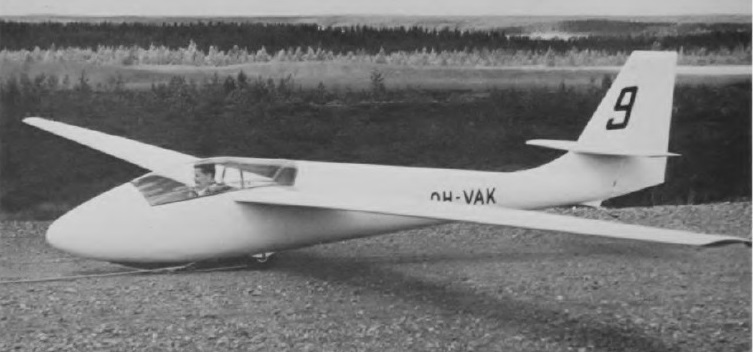
The PIK-16C was put into production by K. K.Lehtovaara O/Y of Hameenlinna and a total of 56 of all variants were built. The Vasama is of all-wood construction, the cantilever shoulder wings being built of pine and birch wood and having an exceptionally low (for a sailplane) thickness/chord ratio of 14% at the root to give a good optimum glide angle. The shaped box spar of birch plywood forms 40% of the chord and takes the bending and torsion loads. Aft of the spar the top surfaces are plywood-covered and the under surfaces fabric-covered, and there are spoilers in the top and bottom wing surfaces. The plain ailerons are of ply-covered wooden construction, and all the Vasama’s surface areas are highly polished to help give it a higher performance. The monocoque fuselage is of plywood construction with a glassfibre nose-cap, and the pilot sits in a semi-reclining seat under a removable blown Perspex canopy that extends some way back past the wing leading edge. Landing gear consists of a non-retractable monowheel with a brake, and a skid under the nose section. The tail unit is also of wood, with a trim tab in the port elevator.
PIK-16C
Span: 15.0 m / 49 ft 2.5 in
Length: 5.97 m / 19 ft 7 in
Height: 1.45m / 4ft 9 in
Wing area: 11.7 sq.m / 125.9 sq.ft
Aspect ratio: 19.2
Wing section: Wortmann FX-05-188/NACA 682615
Empty weight: 190 kg / 419 lb
Max weight: 300 kg / 661 lb
Water ballast: None
Max speed: 155 mph / 135 kt / 250 km/h (in smooth air)
Max rough air speed: 92 kt / 170 km/h
Stalling speed: 33.5 kt / 62 km/h
Min sinking speed: 0.59 m/sec / 1.94 ft/sec at 45.5 mph / 39.5 kt / 73 km/h
Best glide ratio: 34:1 at 53 mph / 46 kt / 85 km/h

PIK has also built several low-wing single-engine monoplanes, including the PIK-15 glider tug in 1964, and the PIK-19 glider tug and two-seat trainer in 1972.
Ten of the PIK-15 Hinu (Hinauslentokone = tow a/c) single-engine, low-wing monoplane were built. Design by Kai Mellén, Ilkka Lounamaa and Jussi Rinta, the wooden aircraft were powered by a 150 hp Lycoming O-320A HO4 engine and had a 10.00 m wingspan.

Designed by Tuomo Tervo, Jorma Jalkanen and Kurt Hedstrom, the all-wood Pik-14 was first flown 1961, the Vasama was designed to the then Standard rules with fixed gear and top and bottom surface airbrakes. It won the 1963 OSTIC prize at the World Championship at Junin, Argentina, and placed third in its class at the contest.
56 were built.
Wing span: 15m / 49.2ft
Wing area: 11.71sq.m / 126sq.ft
Aspect ratio: 19.2
Empty Weight: 204kg / 450lb
Payload: 100kg / 220lb
Gross Weight: 304kg / 670lb
Wing Load: 25.96kg/sq.m /5.3lb/sq.ft
L/DMax: 34 97 kph / 52 kt / 60 mph
MinSink: 0.67 m/s / 2.2 fps / 1.30 kt
Seats: 1
Airfoil: Wortmann FX-05-168 (14%), root; NACA 63 (2)-165, tip

Designed by Antti Koskinen, the PIK-13 was a sailplane constructed in Finland by Polyteknikkojen Ilmailukerho to compete in the 1954 World Gliding Championships, held at Camphill Farm, Great Hucklow, UK.
It was a conventional mid-wing design of “workmanlike” construction and underwent five test flights in the course of 1954 before its entry in the competition.
In the championships, the PIK-13 was flown by Antti Koskisen, who was placed 16th with 931 points. The PIK-13 was destroyed in an accident on 26 March 1956 when the control stick broke in flight. Pilot Jorma Jalkanen parachuted to safety.
Wingspan: 17.6 m (57 ft 9 in)
Wing area: 14.6 m2 (157 sq ft)
Aspect ratio: 21
Airfoil: root:Göttingen 549, tip:Göttingen 693
Length: 7.3 m (23 ft 11 in)
Height: 1.55 m (5 ft 1 in)
Empty weight: 197 kg (434 lb)
Gross weight: 300 kg (661 lb)
Never exceed speed: 250 km/h (160 mph, 130 kn)
Auto-tow maximum speed: 115 km/h (71 mph; 62 kn)
Aero-tow maximum speed: 130 km/h (81 mph; 70 kn)
g limits: +8
Maximum glide ratio: 33:1 at 85 km/h (53 mph; 46 kn)
Rate of sink: 0.7 m/s (140 ft/min) at 62 km/h (39 mph; 33 kn)
Wing loading: 20.5 kg/m2 (4.2 lb/sq ft)
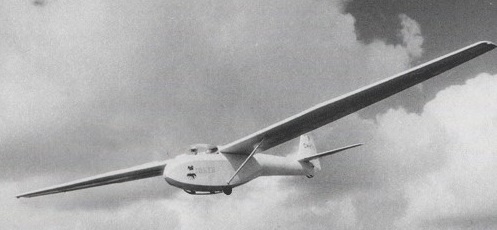
PIK-12 is a two seater primary and intermediate training sailplane. It was only two seater in the PIK-range. It started with design competition in the year 1952. The competition was won by Ilkka Lounamaa. The model’s fuselage was designed to resemble PIK-5 and the basic structure of the wings was copied also from PIK-5. Only major difference being forward pointing arrow shape which also caused models nickname ‘Gabriel’. Model collected several nicknames of which most used was ‘bus with 12 seats’. That was caused by an upright sitting position and extremely high fuselage.
The model was built and it was in flight on 27 May 1956. The machine was type-approved in 1959 and three were built between 1957 and 1965 in addition to the prototype.
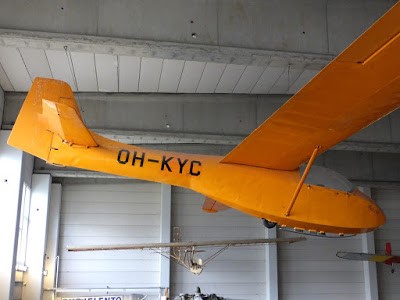
The machine had many nicknames. One of them was “Gabriel”, which came in the form of a wing that brought to mind an angel (the archangel Gabriel). The nickname “twelve-seater” and its longer form “the world’s only standing two-seater mail glider” were also used.
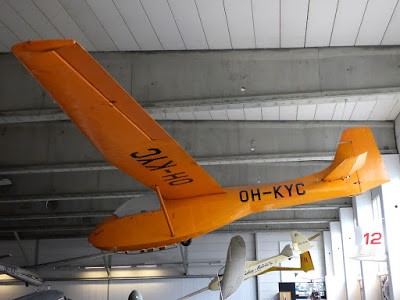
Designed by Ilkka Lounamaa, the Pik-12 used the same wing shape/profile as the PIK-5c but 1.0 m more span.

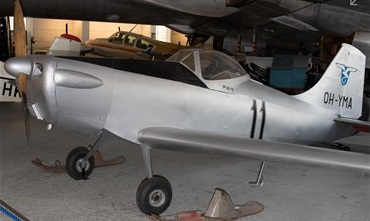
PIK has also built several low-wing single-engine monoplanes, including the Pik-11 in 1953.
The PIK-11 Tumppu is a single seat, sports aircraft, capable of aerobatics. It was designed in the 1950’s by two students and members of the student flying club of the Helsinki University of Technology (PIK or Polyteknikkojen Ilmailukerho), Kai Mellén and Ilkka Lounamaa.
Four aircraft of this type were built, one of which was still in operation in 2006.

Wingspan: 8.0 m


Mr. Carl Stude designed and Polyteknikkojen Ilmailukerho built the PIK-10 variant of the Grunau Baby II and the first single-seater powered sailplane designed in Finland. The basis of the project was Grunau Baby II glider OH-BAB. The machine was built with a BMW motorcycle engine, later re-powered by an Aubier & Dunne V2D 17-hp (a French 540 cc 2-cyl inline motorcycle engine, and finely re-engined with a 28 hp Pincard engine.
Nicknamed “Paukkulauta” (“Bang Board”), the sole PIK-10 (OH-PXA) flew first time in 1949.
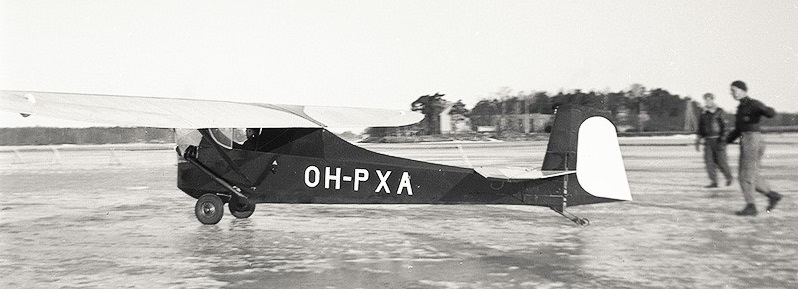
The aircraft had seven owners during the next 20 years. The Korso Flying Club with the help of the Finnair Flying Club restored it in 1969. Before that the aircraft has got the wings of another Grunau Baby (OH-BAF).
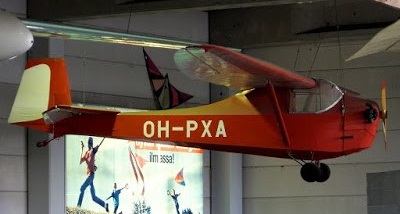
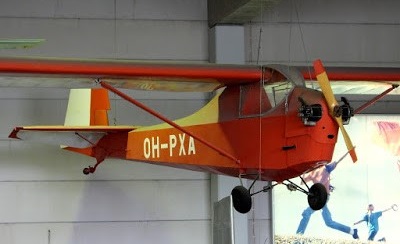
The restored aircraft is on the show at the Finnish Aviation Museum.
 All Aero