PWS 3

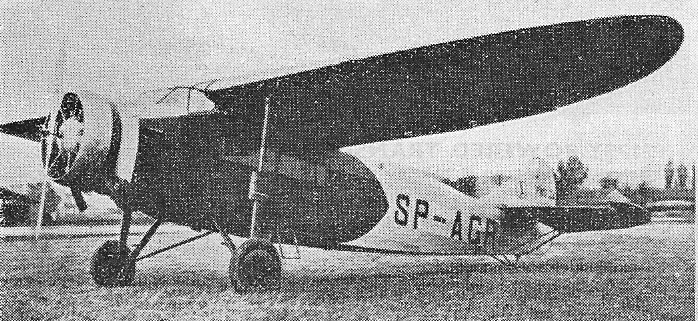
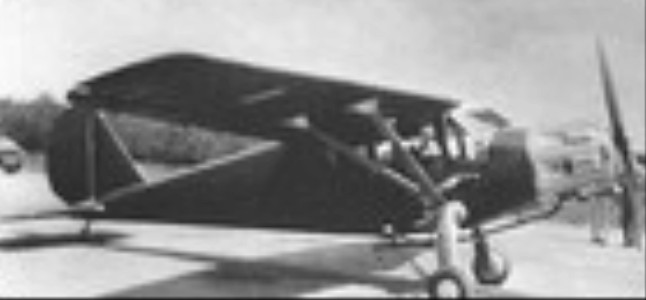
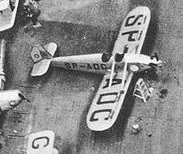
The PWS 3 was the first sports aircraft manufactured by the Polish aerospace industry not counting earlier amateur designs. It was designed by Stanislaw Cywinski in the PWS factory in 1927. The fuselage is built upon a bottom boom, what made possible changing of upper fuselage part with cockpits, and developing single-seater, two-seater or other specialized variants.

The PWS 3 was a two-seater parasol wing braced monoplane of wooden construction. The fuselage was built around a box-section wooden boom, with a superstructure of wooden laths, covered with plywood and fabric the front fairing of the aircraft in the rear. The engine compartment was covered with duralumin plating. The empennage was wooden, with a fixed surface, made of plywood and fabric on the control surfaces. The rectangular wooden wings had two spars and was covered with plywood in front and cloth in rear. Originally slotted ailerons on the whole wingspan, later to be shortened. The fuselage had a cockpit for two in tandem, with windscreens and dual controls. The chassis consisted of a fixed split axle conventional chassis, with a rear skid. Both main landing gear and wing struts were installed a small horizontal winglets at the bottom of the fuselage. Fuel in two tanks, 100 litres in total, in the Central section of the wing.

The 5-cylinder Walter NZ 60 radial air-cooled engine provides a nominal power of 60 HP and take-off power of 65 HP, driving a two-bladed wooden fixed pitch propeller. The cruise fuel consumption was 22 l / h.

Prototype 3 PVA designated 3B and issued registration number R-PWSS, was flown on May 20, 1927 in Biała Podlaska. After testing, the handling improved. In 1928, the aircraft underwent modifications, having a rounded tip rather than square, and less aileron.

It took part in the 1st competition of the Polish light aircraft from 6 to 9 October 1927, finishing in 2nd place.

Re-registered SP-ACJ in 1930.

Later it was bought by the Lopp paramilitary organization in Lublin and used for propaganda flights.
PWS 33 Wyzel

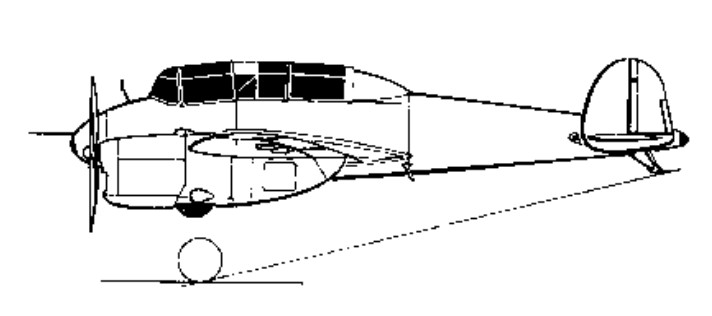
Reconnaissance and Liaison Aircraft, Poland, 1936

Engines: 2 x De Havilland Gipsy Major 4 B, 128 hp
Length: 22.769 ft / 6.94 m
Height: 8.399 ft / 2.56 m
Wingspan: 30.381 ft / 9.26 m
Wing area: 136.703 sq.ft / 12.7 sq.m
Max take off weight: 3219.3 lb / 1460.0 kg
Weight empty: 1014.3 lb / 460.0 kg
Max. speed: 170 kts / 315 km/h
Cruising speed: 140 kts / 260 km/h
Service ceiling: 14764 ft / 4500 m
Wing loading: 23.58 lb/sq.ft / 115.0 kg/sq.m
Range: 626 nm / 1160 km
Crew: 2
Armament: 2x MG

PWS 24T

Designed to seat six passengers and crew, the PWS-24T was operated by LOT Polish airline on the feeder route from Warsaw to Posan.

First flown in 1931, the PWS-24T was initially powered by a 220 hp Skoda-Wright Whirlwind. Experience showed the Whirlwind-PWS 24T was under-powered and the engine was replaced by the 420 hp Pratt & Whitney Wasp Junior.

Performance was improved to give a cruising speed of 110 mph and maximum speed of 139.5 mph, for an AUW of 4800 lb. Service ceiling was 11,400 fpm.

Some PWS-24T retained the lower power Whirlwind and served as crew trainers and for aerial mapping duties undertaken by LOT on behalf of the Government.

PWS 10

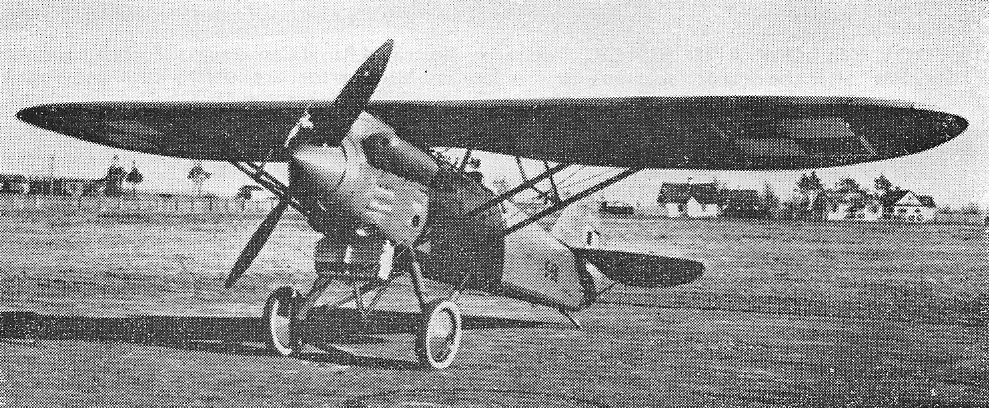
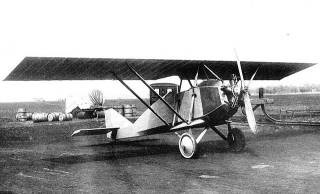
The PWS-10 was the first Polish-designed fighter intended for military service as a replacement for the numerous foreign designed, Polish constructed aircraft then operated.

A single-seat fighter, the PWS-10 was first flown in 1928. Sixty-five were delivered to the Polish Air Force.

The parasol-winged inline-engined PWS-10, the first Polish fighter to enter series production, served in the Spanish Civil War.

Engine: 450 hp Skoda-Lorraine 12 cyl W
Span: 36 ft 0 in
Length: 24 ft 7.5 in
Height: 8 ft 6 in
MAUW: 3290 lb
Max speed: 152 mph
Time to 16,300ft: 15 min 15 sec
Service ceiling: 21,300 ft

Podesva Tulak

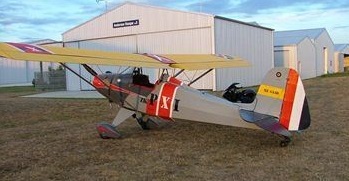
The Tulák Dandy is a 2-seat high-winged ultralight monoplane of the classic construction (side by side seats).

The fuselage is welded lattice-work steel tubes, covered by fabric and partly by metal. Dual controls are fitted.
The wooden wings, with flaps and ailerons, are covered by fabric.

Powered by Rotax 503 or 912 and similar powerplants, at least 68 have flown.

Tulak Dandy
Span: 9,80 m
Length: 5,60 m
Wing area: 10,80 sq.m
Empty weight: 255 kg
Cruising speed: 100 − 140 km/h

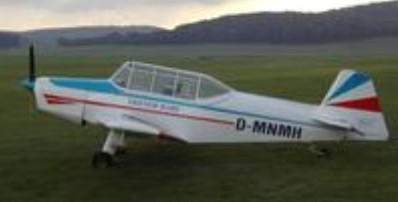
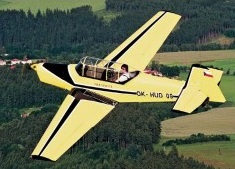
Podesva Trener Baby

Replica of the Czech Zlin 126 Trener, 2009 Price: 47000 EURO

Stall: 35 kt / 40 mph / 65 kmh
Cruise: 86 kt / 99 mph / 160 kmh
VNE: 113 kt / 130 mph / 210 kmh
Empty Weight: 296 kg / 653 lbs
MTOW Weight: 472 kg / 1041 lbs
Climb Ratio: 400 ft/min / 2,5 – 5 m/s
Take-off distance (50ft obstacle): 980 ft / 300 m
Landing distance (50ft obstacle): 980 ft / 300 m

Pobjoy Pirate

Until 1935 Pobjoy Airmotors Ltd had not previously built an aircraft, but concentrated successfully on engines. In June 1935 the company name was changed to Pobjoy Airmotors and Aircraft Ltd and at the same moment they introduced their only original aircraft design, the Pobjoy Pirate, aimed at the Leopard Moth market. They chose to power it with one of their own seven cylinder radial engines. At the time, the most powerful variant was the 90 hp (67 kW) Niagara III, much less powerful than the 145 hp (108 kW) Gipsy Major 10 of the Leopard Moth. The Pobjoy, though was less than half the weight of the de Havilland engine and Pobjoy believed that with the advantage of this weight saving (about 160 lb or 73 kg) they could build a lighter and smaller aircraft that would perform as well.

The designer of the Pirate was the experienced Harold Boultbee, who had recently produced the Civilian Coupé, and construction began early in 1935. The high wings were straight edged, but tapered, slightly swept on the leading edge and fully slotted. The trailing edge carried differential ailerons and interacting flaps. A pair of V shaped lift struts ran from the two wing spars down to the lower fuselage side where there was a universal joint to facilitate wing folding. The folding mechanism was unusual: unlocked, the wings slid forward and tipped leading edge down, so that when the front spar was released from its fitting the wings could fold rearwards and downwards about the rear spar. Because of the initial forward movement, the folded length was less than it would have been with conventional geometries.

The fuselage was of wooden construction, plywood covered and tapering strongly in elevation to the tail. The fin was triangular and carried a semicircular rudder moving above the tailplane and elevators. The main undercarriage oleo legs were attached close to the fuselage end of the lift struts. A glazed cabin placed the pilot ahead of the two side-by-side seated passengers. Ahead of them, the Niagara, under a characteristically neat Pobjoy cowling with “helmet” exhaust ports drove a two-bladed propeller.

In mid-1935 Pobjoy were collaborating with Shorts over the Pobjoy powered Short Scion, so Short’s test pilot, John Lankester Parker was available to try the Pirate. It first flew on 25 June and by 10 July had been in the air for a total of 70 minutes. Parker reported that the machine was underpowered and uncompetitive and it was never flown again. It was registered as G-ADEY but never carried these letters; it was broken up the following summer.

The Pirate was lighter and smaller than the Leopard Moth: the span was 3 ft 6 in (1.07 m) or 10% smaller and the all up weight 624 lb (283 kg, 28%) lighter, but this did not make up for the 38% decease in power.

Engine: 1 × Pobjoy Niagara III, 90 hp (67 kW)
Wingspan: 34 ft 0 in (10.36 m)
Wing area: 180 sq ft (17 sq.m) estimate
Gross weight: 1,600 lb (726 kg)
Maximum speed: 125 mph (201 km/h; 109 kn)

Poberezny Little Audrey

Little Audrey, built by Paul Poberezny, was derived from Benny Howard’s Pete racer, after rebuild as the Baker Pete / Special.

It was bought by EAA in 1953, and redesigned as Pober Little Audrey with a replica fuselage and Luscombe shoulder-wings. The original fuselage and tail, plus some miscellaneous parts, went into a rebuild of the 1930 configuration by Repeat Aircraft, Riverside CA.

Engine: Continental, 75 hp
Wing span: 18 ft
Weight: 800 lb
Top speed: 140 mph

Pober P-9 Pixie / Acro Sport Inc Pober Pixie

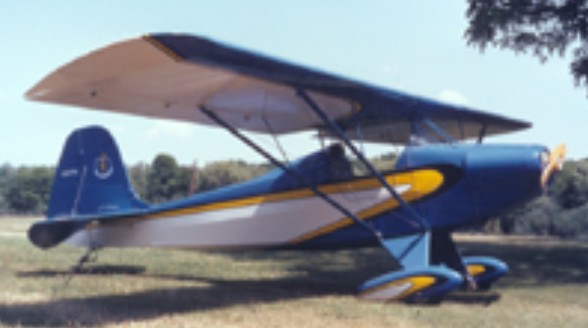
The single-seat Pober Pixie is another homebuilt designed by Paul Poberezny. It originally started as an effort to help pilots beat high operational costs and was designated Project Econoplane in 1974. Inspired by a Heath Parasol LN, the Pixie is a parasol monoplane powered by a Limbach VW engine rated at 50 to 75 hp. Full-span ailerons give excellent roll with little yaw on entry and recovery. This is a beginner’s project for construction, with highly detailed plans, and the cost level is low. Can be powered with a VW conversion or Continental A-65.

Pober P-9 Pixie Article

The fuselage is 4130 steel tube, wings are Sitka spruce, covering is with Stits Poly-fiber.

Gallery

Engine: VW, 55 hp
HP range: 50-75
Speed max: 133 mph
Cruise: 83 mph
Range: 290 sm
Stall: 30 mph
ROC: 500 fpm
Take-off dist: 300 ft
Landing dist: 300 ft
Service ceiling: 13,500 ft
Fuel cap: 12.3 USG
Weight empty: 543 lbs
Gross: 900 lbs
Height: 6.2 ft
Length: 17.25 ft
Wing span: 29.83 ft
Wing area: 134.2 sq.ft
Seats: 1
Landing gear: tail wheel

Acro Sport Inc Pober Pixie
Top speed: 130 mph
Cruise: 83 mph
Stall: 30 mph
Range: 290 nm
Rate of climb: 500 fpm
Takeoff dist: 300 ft
Landing dist: 300 ft
Service ceiling: 13,000 ft
Engine: Continental A-65, 65 hp
HP range: 50-75
Fuel capacity: 12.3 USG
Empty weight: 543 lb
Gross weight: 900 lb
Height: 6.2 ft
Length: 17.3 ft
Wing span: 29.8 ft
Wing area: 134.2 sq.ft
Seats: 1
Landing gear: tailwheel