Poncelet Castar

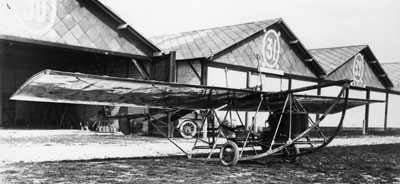
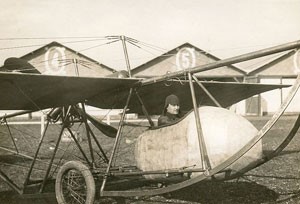
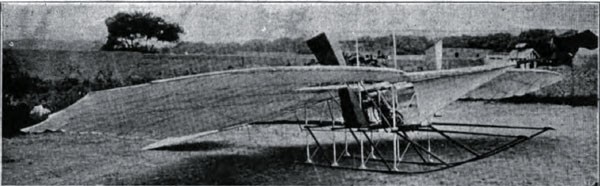
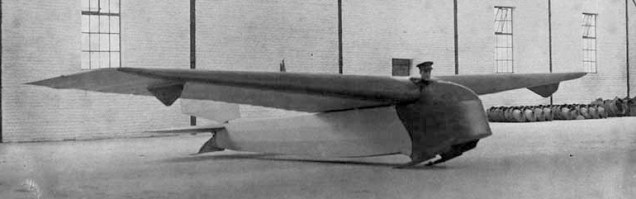
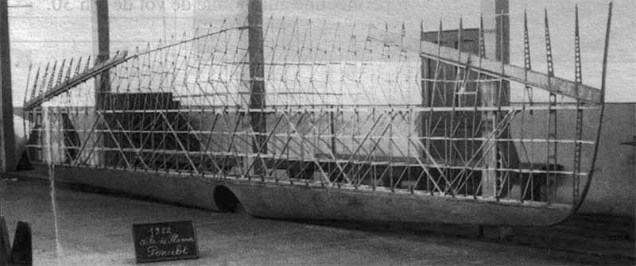
The Castar in its very first glider configuration.

Paul Poncelet, Belgian craftsman expert in woodworking, had already made a first plane, inspired by the Antoinette, in 1908. He was hired at the SABCA (Société Anonyme Belge de Constructions Aéronautiques, which had been created in 1920) as foreman, quickly becoming head of the timber section of the company. Passionate about gliding, which began across the Rhine, it was not long before he designed a glider. It began construction in June 1922, in a cellar on rue Saint-Vincent, in Brussels, with rudimentary means. He devoted all his free time and evenings to it for eight months.

The Castar is made entirely of wood (except wheels, axle and stick). The fuselage of rectangular section, with slightly rounded sides, is profiled at the front with a plywood covering 1.5 mm by 1.5 meters long and canvas on the rear. The canvas is placed on longitudinal rails. The cockpit is embedded in the leading edge of the indented wing which serves as the back of the pilot’s seat.
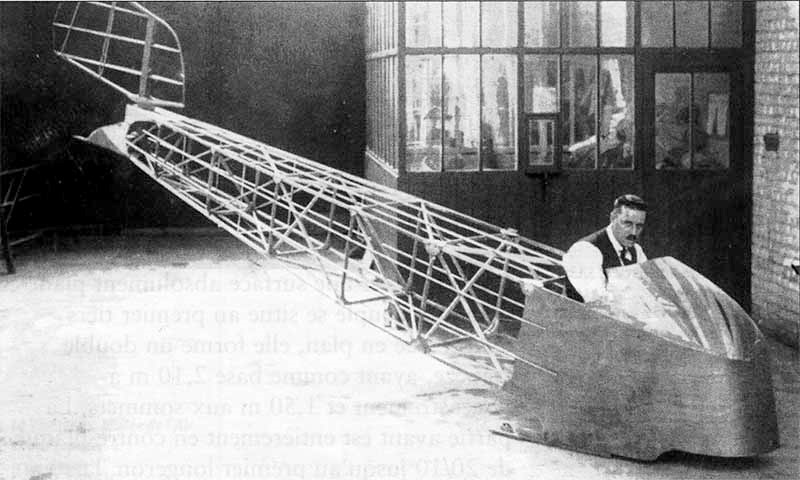
The aircraft is a monoplane with a 20 sq.m thick cantilever wing. The depth is 380 mm at the root, gradually decreasing towards the tips. The wing seen in plan forms a double trapezoid of 2.10 m chord at the root and 1.50 m at the ends.

The front part is formed in 2 mm plywood up to the first spar, the rest is canvas. The trailing edge is a 2mm string.
The final assembly of the machine is done in the SABCA workshops in Haren-Evère. On February 10, 1923, on Evère aerodrome, Lieutenant Victor Simonet, pilot at SABCA, made it take off over a distance of 115 meters, launched with the bungee cord, despite the total absence of wind.
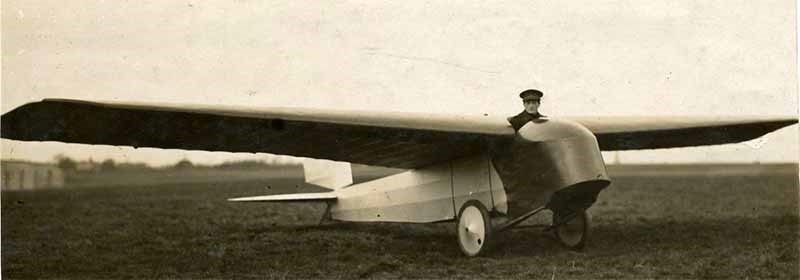
Poncelet glider – probably in February 1923, on the Evère aerodrome

“Finally, on February 10, 1923, in front of many enthusiasts and photographers who suspected that we would proceed to tests, that day at 2 pm, everything is ready. We try the controls, the control surfaces work well and the aircraft is driven on the plain of Haren. Mr. Simonet, who must pilot it, designates the place and the direction in which he wishes to carry out the tests. He stops the details of the launch mode, the placement and the tension of the bungee cords, restraint of the device and the various commands it will give.
promptly executed, the glider frees itself and performs its first flight, gliding in a straight line, a few meters above the ground, for a few seconds. Despite the falling night and the weak wind, Victor Simonet carried out three new very successful flights, one of which was 115 meters at heights of about 5 meters. “
La Conquète de l’Air, March 1, 1923

Note: Note that this was the first flight of a glider ever designed and built in Belgium.
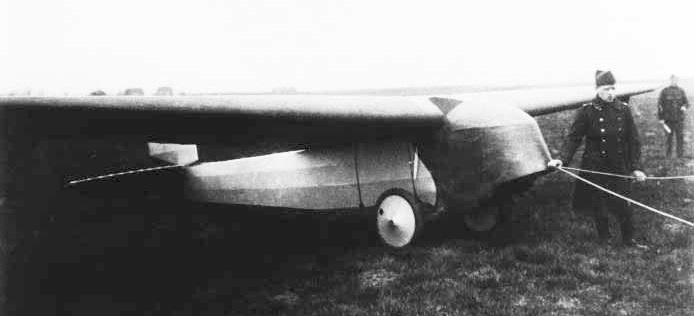
February 10, 1923: preparations for the first launch at the bungee cord – Evère aerodrome

On February 11, 1923, despite a total lack of wind, towed by a car, Simonet made a dozen flights, the most noticeable of which was 225 meters at a height of 20 meters.

In its edition of February 22, 1923, the Flight review reports on the first flights of the Poncelet glider:
“FEBRUARY 10 will go down in history as the first occasion on which a motorless flight was made in Belgium. The monoplane glider used in the flight was built by M. Poncelet, who is, we understand, a foreman in the works of the S.A. .Belge de Constructions Aeronautiques. The wind was only very light, and as the flight was made over the Brussels aerodrome, or, in other words, over flat country, no extended flight was expected nor attempted. With the rubbers pulled out to half their length only the machine got off well, and made a hop of about 120 yards, piloted by Lieut. Simonet, who is a test pilot in the Belgian Army Air Service. During the short flight the machine was found to be well balanced, and seemed to answer its controls readily.


ON February 11 there was a flat calm, and it was not though advisable to launch the glider in the ordinary way. Tests were, however, made with towing the glider behind a motor-car, and hops of 300 yards or so were made, the machine reaching a height of 40 to 50 ft. The pilot took the opportunity to test the rudder and ailerons, doing left and right-hand banked turns. We understand that Lieut. Simonet is now going to the Ardennes to look for a suitable place where he can do some real gliding and soaring. “
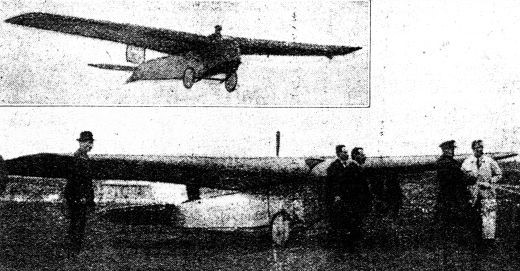
After these few tests, Poncelet and Simonet are eager to test the glider on longer flights. After prospecting, the glider is tested on a site located near the Remouchamps station, on a drop of 65 meters, where the most promising flight was 3 minutes.

Then transported to Lixhe (near Visé), on the banks of the Meuse, It made four flights of one to two minutes, and altitude gains of around 50 meters.

At the start of the fifth flight, the glider crashes. The fuselage is destroyed, but Simonet comes out unscathed.
Not at all discouraged, Poncelet immediately undertook the construction of a new fuselage, this time providing a place for mounting an engine. An Anzani engine, flat twin, developing 7 hp was chosen.
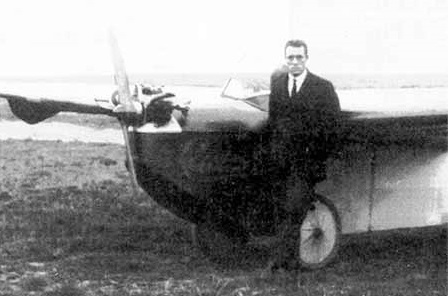
Paul Poncelet with the Castar and Anzani

Simonet flies with the new motorized Castar from Saturday July 7, 1923. The following Tuesday he performs a 45-minute flight, ascending to an altitude of 1100 meters in 20 minutes and flying over Brussels.

On July 12, 1923, the Flight magazine announced:
“Some Climb!
ACCORDING to reports in the daily Press the ” Motor Glider” looks like putting real aeroplanes completely in the shade. It is stated that Lieut. Simonet ascended from Evere aerodrome on Tuesday and climbed to 2,600 ft. in less than one minute (sic) —in a tiny monoplane fitted with a 7 h.p. engine.”

Simonet corrects the error and gives details: [Flight 2 August 1923]
“I have just read in your interesting paper your article ‘Some Climb ‘ regarding my performances on the Belgian glider ‘ Poncelet,’ fitted with a 7-10 h.p. Anzani engine. ” I have not climbed at 2,600 ft. in one minute ! It is, of course, a mistake on the part of the daily press. The truth is this :
— ” Saturday, July 7, I tried for the first time the Poncelet light ‘plane (tried before successfully as a glider). I flew 17 minutes at 100 to 200 metres ; next day I flew 15 minutes ; the Monday I flew 28 minutes and reached 800 metres. Tuesday I flew 45 minutes and reached easily (in about 20 minutes) a height of 1,100 metres.
The machine is very well balanced, possesses a wide speed range (40 to 85 kms.), lands at 35 kms per hour, and climbs at a rate of 60 to 75 m. per minute. The machine can be readily transformed to a pure glider by only removing engine and gasoline tank, which is placed behind pilot’s head. The balance is exactly the same ; this seems extraordinary as the pilot’s seat is in front of the wing and the engine weighs 32 kgs.
I propose, as you know already, to pilot this machine at the French gliding competition at Cherbourg.
The ‘ Poncelet ‘ light ‘plane characteristics are as follows : span, 11 m. 20; length, 6 m. 70; weight: with engine, 100 kgs. ; without engine, tank, etc., 155 kgs. ; surface, 20 m2 ; engine, 7-10 h.p. Anzani 1,100 c.c, developing 10 h.p. at max. revs. (1,550) ; petrol tank, 18 litres, oil tank, 3 litres, giving about 3 hours’ flight duration. Wing: Gottingen section—deepest section, 38 mm. “
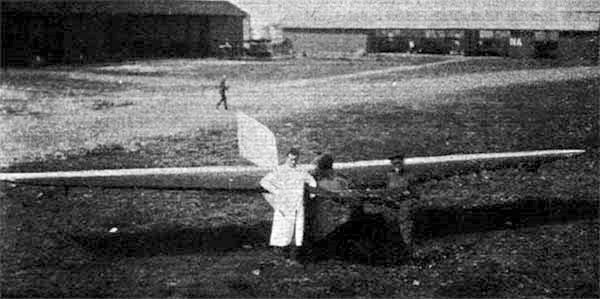
Paul Poncelet (on the left) and Victor Simonet present the rebuilt and motorized Castar [Flight 2 August 1923]

The Castar was registered O-BAFG on July 28, 1923.

The SABCA decided to have Paul Poncelet’s glider participate in the Second Experimental Motorless Flight Congress, which was to take place in Vauville (near Cherbourg-France) from August 5 to 26, 1923, and it was registered with the n° 7. The machine, which took the name of Poncelet-Castar (“castar” being a typical Brussels Belgian euphemism for “beefy” in a somewhat pejorative sense). after its motorization, leaves Brussels by air to go to Vauville. The conveyance, as we will see, will not be easy.

On August 9, 1923 Victor Simonet and the Poncelet plane left Brussels in excellent conditions and landed in Valenciennes where he was prevented from going further, the Belgian pilot not having the necessary papers for customs. It took three days to settle the matter. Simonet set off again, headed for the coast, stopping at Douai, then Calais and Boulogne, and which he followed to Crotoy. Since then, we have been waiting for him every day in Vauville.

Victor Simonet was ill in Montreuil-sur-Mer where he landed with the glider. On August 12 1923 Simonet, recovered, had resumed his flight when he was the victim of an engine accident: the bursting of a cylinder.
From Saint-Valéry-en-Caux where the damage we have reported occurred, the glider was transported by road to Le Havre by the care of Mr. Mathieu Demonty, technical director of SABCA.
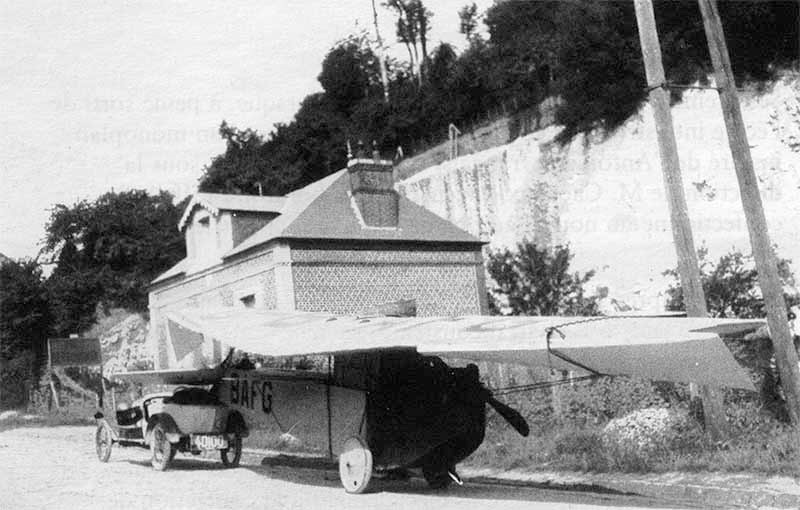
The Castar whose engine broke down in Saint-Valéry-en-Caux is transported to Le Havre by Mr. and Mrs. Demonty

August 17, 1923, at Vauville, Victor Simonet took his place in the aircraft and at 3.52am took off, in a few meters, almost on the spot. The wind was finally blowing from the west at an average speed of about 10 m / s.
The upwelling of the wind was remarkable and in two or three minutes Simonet was over 150 meters high. After staying a while there, he began to sail along the ridge. When he made up his mind to land, Simonet performed one of the most beautiful maneuvers we have seen, tacking, veering above the camp before “taking his ground”. He finally arrived in the line of hangars, crossed the camp at 1 meter above the ground, grazed the ground and, caught up by the updraft, set off again 100 meters high. It really felt like a powered plane with the pilot “pouring the sauce” at the right time. Simonet landed on the beach, in front of the camp, after having glided 47 min 35 sec.
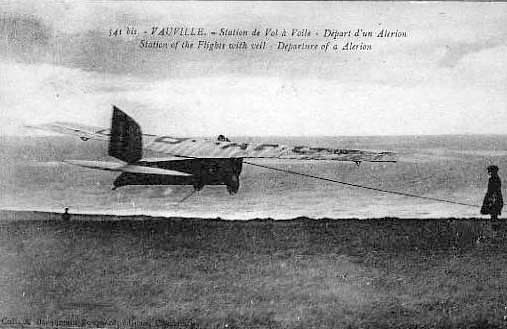
Castar O-BAFG at Vauville

On August 18 the Poncelet glider had been brought up from the beach in the morning; by early afternoon he was ready for another flight. And indeed, Simonet flew away like the day before, with the same ease, in a style of great beauty. He thus flew 1 hour 2 minutes 3 seconds, during which he reached the altitude of 182 meters above his starting point, becoming by this performance holder of the Louis Bréguet Prize.

At 8:30 am on August 19, Simonet takes off for a flight that will last 50 minutes 17 seconds. The good Belgian pilot has advanced too far above Vauville and the sea. He left the favorable zone and after ten minutes of admirable efforts, unable to climb the coast, he decides to land on the beach. Belgium came back to the top of the total with 2 h 48 m 55 s.

At 2:17 p.m., the Poncelet glider having been brought up to the camp, Simonet took off again. His mastery visibly increases with experience. His knowledge of the terrain now allows him to make much more daring evolutions forward as well as behind the ridge.

Simonet who turned towards Vauville, comes back at full speed, initiates a new turn, dives, straightens up, and lands gently on the ground. Simonet flew 2 hours 58 minutes 43 seconds, bringing his total number to 5 hours 47 minutes and 8 seconds.
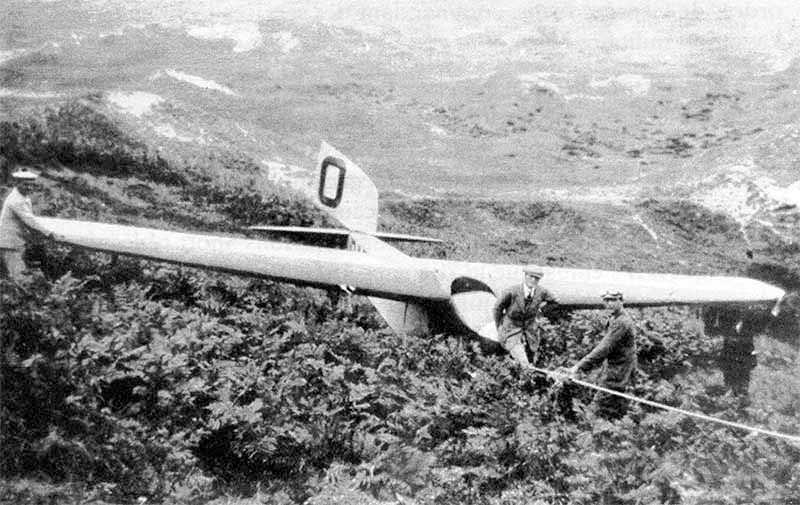
Castar on the dunes of Vauville

On 20 August 1923, Simonet left at 9:11 am. It flew 54 minutes, stopped at the end of this time by the mist and the famous drizzle. Forced to land on the beach, he tried to prolong his flight as much as possible and succeeded quite well since he was going to land at 3 km 200 from its starting point. Simonet therefore took first place in long distance flights. In the afternoon, the weather improved. The Belgian pilot took off again at 3.30 pm but the mist returned with more intensity than ever, interrupting a well-started flight. Simonet was going to be forced to land. He decided to do this by trying to improve the distance performance he had achieved in the morning.
Heading towards Siouville, he approached the beach where the high cliff gives way to small dunes 3 to 6 meters high. And above these dunes, Simonet still found a current sufficient to carry it, between 4 and 5 meters of altitude, two kilometers further, where it landed definitively. The experience was remarkable: dunes less than 6 m high, sometimes less than 3 m, allow a glider to sustain itself without the aid of an engine. Simonet, whose flight had lasted 40 minutes, had landed 5 km 10 from his point of departure.

21st of August, a little after 8 p.m., Simonet, chilled and tired, returns to land: he has flown 4 hours 6 minutes 20 seconds. Simonet’s digits are 4 hours 6 minutes 20 seconds and 11 hours 27 minutes 28 seconds. Simonet also reached the height of 221 meters.

August 22, Simonet, for his part, left at 9.26 am and made a flight of 50 m. 50 s. on his Poncelet glider. He thus regained first place in the total with 12 h 27 m 18 s. The barograph indicated a height of 180 meters.

23 August, the wind has turned to the south, now sliding on the cliffs of Vauville instead of attacking them head-on. But the Poncelet glider nevertheless took to the air for a flight that Simonet managed to extend for 1 h 33 m 10 s. With its nice flight of the morning, the glider Poncelet now totals the respectable figure of 17 h 39 m 58 s.

On 24 August Simonet took-off but following a sudden return of the bungee cord, it remained attached to the apparatus and went away with it. Simonet who “felt that something was wrong” did not notice his unexpected overload … He held the air for 10 minutes, but not managing to gain height, he landed in the meadow of … The bungee cord which weighed more than 15 kg and was 40 to 50 meters long offered enormous resistance to the advancement of the machine and it is even remarkable that it was able to fly for so long in such conditions.
The Belgian team, who had come with a few sailors, helped Simonet to bring the glider back to the camp, from where it set off again without incident this time, for a fine flight of 1 h 44 m 50 s.

Simonet increased his total by flying 2 h 39 m 20 s on August 25.

Around 1 p.m., on August 26 the weather improved slightly. Simonet took-off on his Poncelet glider. Simonet for his last flight, will hold the air for 2 hours 11 minutes. It will thus have totalled during the last ten days of the Congress, 24 hours 25 minutes 8 seconds. The valiant Belgian driver broke the totalization record set at Biskra by Descamp

Finally the results of Victor Simonet on the Poncelet Castar were as follows:
Flight duration: 3rd with 4 h 6 m 20 s (Prize of the City of Cherbourg)
Totalization: first with 24 h 25 m 8 s (4000 francs, Prix du Conseil Général de la Manche)
Height: 1st with 295 meters (5,000 francs, Louis Bréguet Prize, vermeil plaque from the Aéro-club de France)
Distance: 2nd with 5 km 100 (4000 francs, Charles Renard Prize)

In September, the Castar returned from Vauville, but its engine was not repaired even though we were eight days away from the Meeting de moto-aviettes that the Aéro-Club de Bruxelles organized. In an emergency, Poncelet mounted a Coventry Victor engine on the Castar, kindly donated by the Belgian motorcycle manufacturer “Jeecy Vea”. But the aircraft has all the trouble in the world to take off and only manages to complete a runway three meters above the ground.
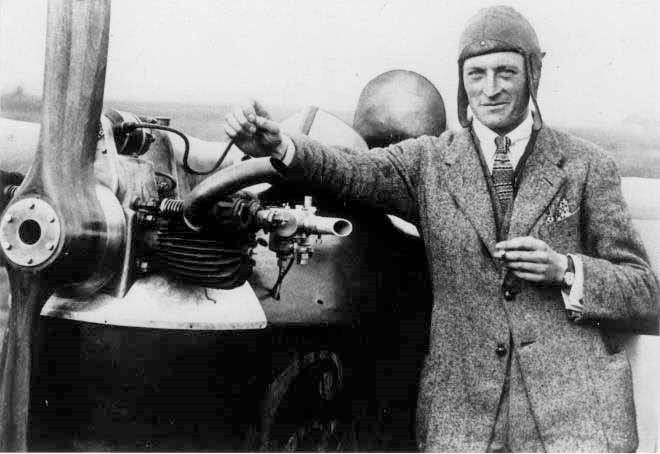
Victor Simonet, in front of the Castar with Coventry Victor engine, 1923

Characteristics of the Coventry Victor engine: two opposed cylinders, 680 cc developing 16 HP at 3500 rpm and 10 HP at 2000 rpm

“On September 16, in Brussels, the Competition was held between Maneyrol on Peyret, Van Opstal and Van Cottem on SABCA-Jullien, Simonet on Poncelet and Captain Lambert; but in fact Maneyrol alone had fulfilled the conditions: qualified by an ascent to 1600 m and a descent, carried out in 28 ’25 “, he had covered the 5o km of the circuit for the test of consumption by burning 1.212 L of gasoline, in 36′; then in a test of 30 ‘of flight, it had consumed 1.983 L, thus winning the various prizes of the Competition. “[L’Aéronautique n ° 54, November 1923]
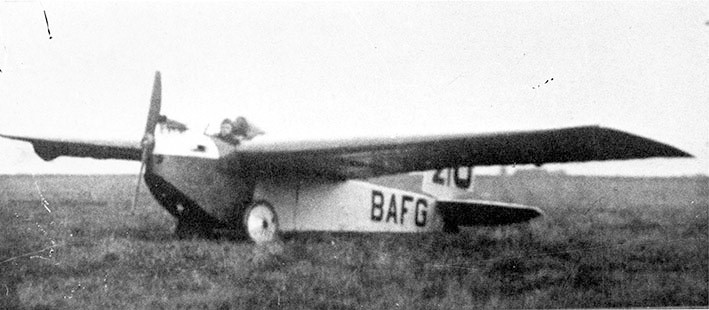
Poncelet Castar O-BAFG

The British Royal Aero-Club organized in October 1923, in Lympne, Kent, a richly endowed competition reserved for moto-aviettes (light planes equipped with low-power engines. These were often motorized gliders).

Three prizes were contested: a distance competition with given consumption, a speed competition and an altitude competition.

The motorized gliders of Paul Poncelet, Castar and Vivette were entered in this Lympne meeting by J.B. Richard and J.A. de Ro respectively, but only for the altitude competition.

The performance of the Coventry-Victor engine having been disappointing, the Castar was fitted with a Sergant engine, (4 vertical cylinders, air-cooled, 750 cc is used. A reduction gear is integrated into this engine).
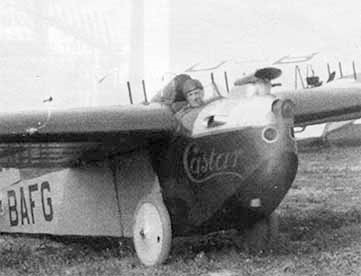
The Castar, went to England on its own, crossing the Channel, in the company of the Vivette (equipped with the same engine).
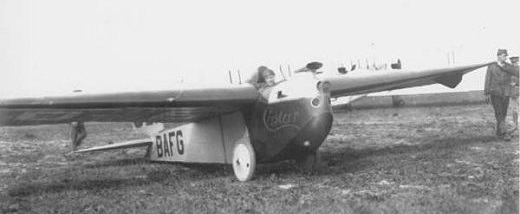
Victor Simonet at the controls of the Castar equipped with the Sergant engine – October 1923
at Evère aerodrome

The Castar, piloted by Victor Simonet, made an excellent start to the competition, but did not break a record in this event. It should be noted, however, that he flew at a speed of 58 mph (over 100 km / h) which would have placed him fifth in the speed contest.

The motorized gliders of Paul Poncelet, Castar and Vivette were registered for the A.F.A. (French Air Association) meeting from July 26 to August 9, 1925, by Jean-Baptiste Richard and J.A. de Ro, respectively, but only for the altitude competition. The Vivette went to England on its own, flying over the English Channel, together with the Castar piloted by Victor Simonet.
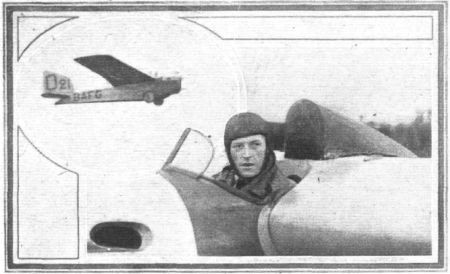
Victor Simonet, in the cockpit of his Castar during the Lympne meeting [Flight].

The Poncelet Castar, piloted by Victor Simonet, made an excellent start to the competition, but did not break a record in this event. However, it should be noted that he flew at a speed of 58 mph (over 100 km / h) which would have placed him fifth in the speed contest.
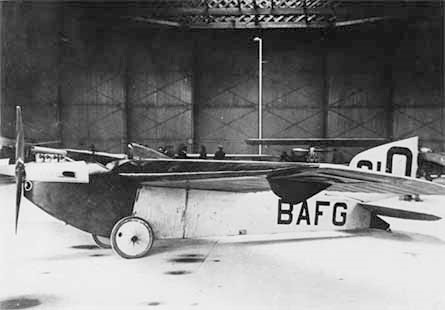
The Castar equipped with the Sergant engine, bearing the n° 21 of the Lympne competition
Photos taken in Lympne’s hangar. Note the removable fuel tank serving as the pilot’s headrest.
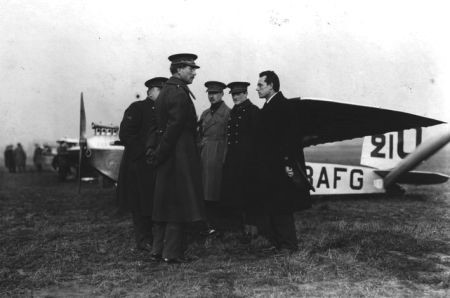
King Albert of Belgium visiting Evère aerodrome, November 10, 1923, in front of the Castar equipped with the Sergant engine. The plate still bears the n° 21 of Lympne’s competition.
From left to right: Major Smeyers, Commander of the Belgian Air Force (hidden by the king), King Albert I of Belgium, Lieutenant baron Kervin de Lettenhove, Lieutenant Victot Simonet and Paul Poncelet
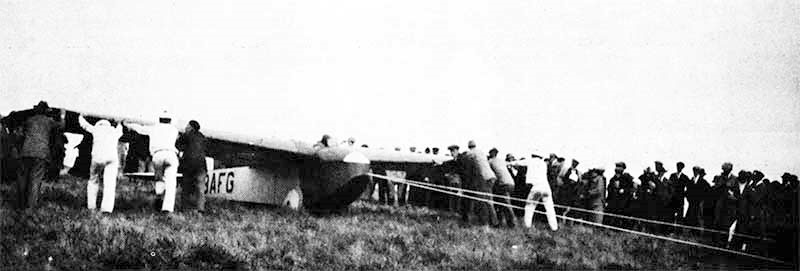
Simonet is about to take off – Vauville 1925 Helpers (many are sailors) hold out the bungee cords

In July 1925 the Castar was in competition between Vauville and Siouville with the Ferber glider, the Poncelet-Vivette glider, the Glymes glider, the Nessler glider, then a little later the Sablier glider.

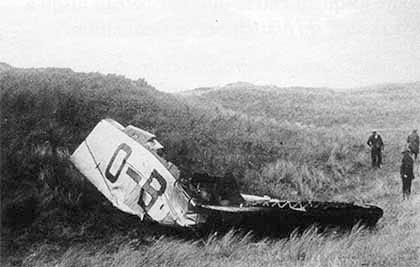
On Saturday July 25, 1925 Simonet failed to return. Simonet was found killed next to his broken glider. The accident due to a break in the elevator control.
Gallery

Castor glider
Wingspan: 11,12 m
Length: 6,55 m
Wing area: 20,0 m²
Empty weight: 96 kg
MTOW: 158 kg
Ballast: 0

Castor
Engine: Coventry Victor, Two cyl, 1100 cc, 7 hp at 900 rpm / 10 hp at 1,200 rpm
Propeller: Dorant n° 11
Prop diameter: 2.4 m
Prop pitch: 1.05 m
Fuel capacity: 18 lt
Endurance: 3 hr

Castor
Engine: Anzani

Castor
Engine: Sergant 17 HP
Empty weight: 160 kg
MTOW: 222 kg
Climb to 1000m: 17 min
Ceiling: 1500 m
Range: 300 km
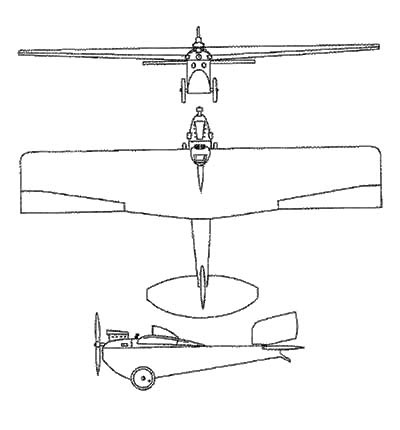
Ponche & Pimard Tubavion

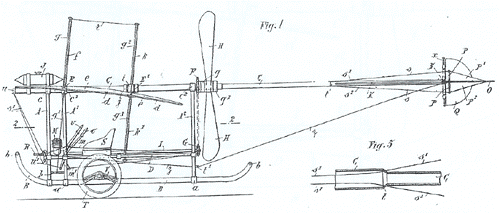
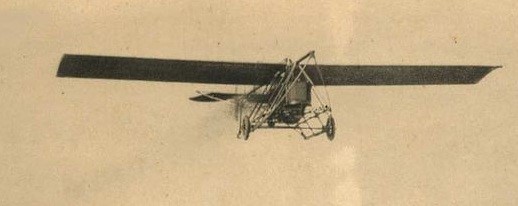
The all-metal Tubavion of Charles Ponche & Maurice Primard, the first 100% metal aeroplane built in France, went through a number of variations from 1911 onward, well into WWI.

Ponche & Pimard Tubavion Article

This photograph represents the 1912 version flown by Marcel Goffin at Reims or Amiens. The undercarriage and metal framework around the nacelle containing the engine and pilot are distinctive.

Development of the Tubavion halted when Ponche was killed in an aircraft accident on February 10, 1916.

Pompéïen-Piraud 1900 Aéroplane

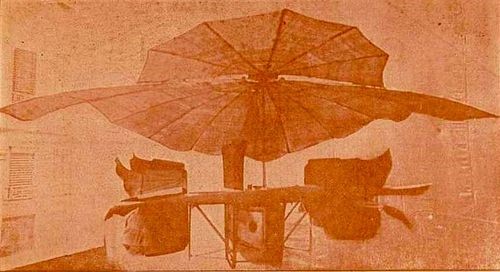
Jean-Claude Pompéïen-Piraud lived in Lyon and was of profession a dentist. His aviation journey started in earnest in 1883 when he wrote the first of his 12 works on the subject, published between 1883 and 1909. He studied the flight of birds and especially bats, making designs and models of ornithopters. Later changing somewhat to a balloon-ornithopter combination and in the end designing this machine, presented at the Exposition Internationale 1900 de Paris. Pompéïen was somewhat unlucky as besides his machine was the Avion 3 of Clément Ader (who got a “medaille d’or”). Pompéïen only received a honourable mention. As the bat-like machines of Pompéïen were continually evolving, this is most likely the second edition.

Polyteknisk Flyvegruppe Polyt V

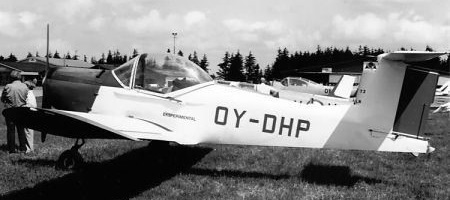
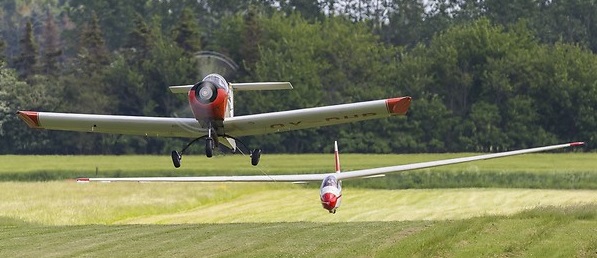
The Polyt V, sometimes written as Polyt 5, was intended from the start as a glider tug. It was designed by six graduates and student members of the Flying Group of the Technical University of Denmark, Copenhagen, (Led by Helge Petersen) a group comprising about 50 students and graduates of that University. As many as 20 other Group members built the aircraft.

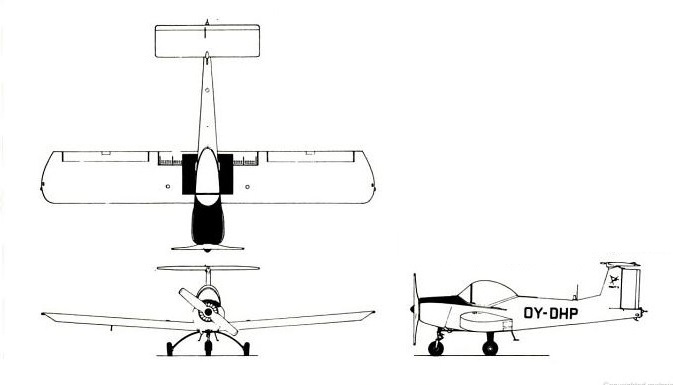
It is a low wing, single-seat monoplane with a fixed tricycle undercarriage and a high T-tail, powered by a 200 hp (150 kW) Lycoming IO-360-A2B flat four engine, driving either a Polyteknisk two-blade fixed-pitch wooden propeller or a Hoffmann HO27-HM-205B-105 two-blade propeller.

For cooling the engine during low-speed flight, a 21 in (53 cm) diameter fan with 16 plastic blades is mounted in the circular air intake behind the propeller and is capable of blowing some 3,500 cu.ft (99 cu.m) of air per minute – about four times the normal cooling flow. To prevent excessive cooling the under-nose cooling flap aft of the cowling closes automatically during a dive. Fuel in two aluminum tanks in the wings, total capacity 23.24 gal (88 l). Overwing refueling point in each tank. Oil capacity 1.98 gal (7.5 l).

Its wings are built around a wooden box spar and plywood covered except for fibreglass leading edges. Wing section NACA 63-618 at root, NACA 63-218 at tip. Dihedral 4° from roots. Incidence 2°. No sweepback. They carry wide span ailerons with centrally-located trim tabs; inboard are glider style aluminium spoilers or airbrakes which can be extended to 50° to slow the aircraft after a diving release of the glider. When deployed, the spoiler surfaces extend both below and above the wing, the upper part perforated. These surfaces are carried on a shaft at 80% chord, the portion ahead of this shaft being perforated and the rear portion plain. Of aluminum construction, they have a maximum deflection of 50°; their use has no affect on lift or trim.

The tail surfaces are all wood structurally, with plywood covered fixed surfaces and a fabric covered rudder with a short trim tab. The all moving, fabric covered, constant chord tailplane carries full span anti-tabs. Trim tab in rudder.

The fuselage of the Polyt V is a plywood covered box structure, the pilot sitting over the wing under a single piece, rearward-sliding canopy. An electrically driven winch at the rear retrieves the launch cable, which exits the aircraft at the narrow extreme stern of the fuselage, at a rate of about 1 m/s.

Non-retractable tricycle type landing gear. The main wheels are mounted on a 3 m diameter semi-circular glass fibre gear legs one-third arc of a circle of 6 ft 6.5 in (2.00 m) diameter attached to the fuselage underside Cessna CFP 4097 main wheels. The nose wheel unit (leg, wheel and shock-absorber) is largely that of a Piper Colt, fitted with shimmy damper from a Cessna 172. All tires size 600 x 6, pressure 24 lb/sq.in (1.69 kg/sq.cm).

Accommodation is a single seat for pilot under fully-transparent rearward-sliding canopy. Cockpit heated and ventilated. Electrical system includes AC alternator and 12V battery for engine starting, instruments, lights and towing winch. Vacuum pump for directional gyro. Equipment includes an electrically-operated winch in the rear fuselage, which can reel in over 130 ft (ca. 40 m) of nylon tow line in 40 sec after sailplane is released. Aircraft can make seven or eight launches an hour.

The Polyt V flew for the first time on 12 April 1970, construction having started in 1965. The Polyteknisk Flyvegruppe have used the sole Polyt V to launch their various gliders from 1970 to at least 2006. OY-DHP (c/n 12001) remained on the Danish register in 2010 and was still active as a glider tug. Some modifications have been made: the original Polyteknisk designed propeller, optimised for low speed flight has been replaced by a quieter Hoffmann one and the rudder trim tab has been extended to half rudder height.

Specifications
Engine: 1 × Lycoming IO-360-A2B, 150 kW (200 hp)
Propeller: 2-bladed Polyteknisk designed wooden fixed pitch
Prop diameter: 2.05 m (6 ft 9 in)
Length: 6.20 m (20 ft 4 in)
Wingspan: 9.60 m (31 ft 6 in)
Wing aspect ratio: 6.35
Wing chord, constant: 4 ft 11 in (1.50 m)
Height: 2.60 m (8 ft 6 in)
Wing area: 14.4 m2 (155 sq ft)
Empty weight: 615 kg (1,356 lb)
Max takeoff weight: 760 kg (1,676 lb)
Wing loading: 10.8 lb/sq.ft (52.8 kg/sq.m)
Power loading: 8.38 lb/hp (3.8 kg/hp)
Tailplane span: 9 ft 10 in (3.00 m)
Ailerons area (total) : 17.87 sq.ft (1.66 sq.m)
Air-brakes/flaps area (total): 10.98 sq.ft (1.02 sq.m)
Fin area: 12.92 sq.ft (1.20 sq.m)
Rudder area, incl. tab: 5.06 sq.ft (0.47 sq.m)
Tailplane area, incl. tab: 29.06 sq.ft (2.70 sq.m)
Wheel track: 7 ft 0.5 in (2.15 m)
Wheel base: 4 ft 9 in (1.5 m)
Propeller ground clearance: 6 in (15 m)
Maximum speed: 200 km/h (124 mph; 108 kn) at sea level
Max dive speed: 144 mph (232 kmh)
Cruising speed: 185 km/h (115 mph; 100 kn) maximum at sea level
Econ cruise speed: 103.5 mph (166 kmh) at sea level
Stall speed: 46 mph (74 kmh)
Endurance: about 2 hrs
Service ceiling: 5,500 m (18,045 ft)
Climb, solo: 1,575 ft (480 m)/min
Climb, with single-seat glider: 1,050 ft (320 m)/min
Climb, with two-seat glider: 820 ft (250 m)/min
Takeoff run, solo: 280 ft (85 m)
Takeoff run, with single-seat glider: 510 ft (155 m)
Takeoff to 50 ft (15 m), solo: 460 ft (140 m)
Takeoff to 50 ft (15 m), with single-seat glider: 900 ft (275 m)
Landing run from 50 ft (15 m): 920 ft (280 m)
Landing run: 460 ft (140 m)
Crew: 1

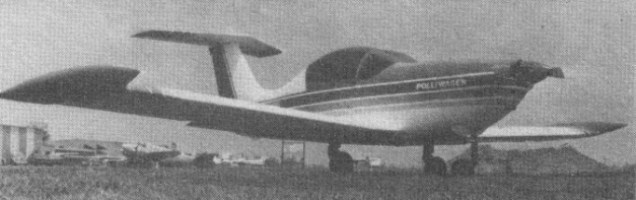
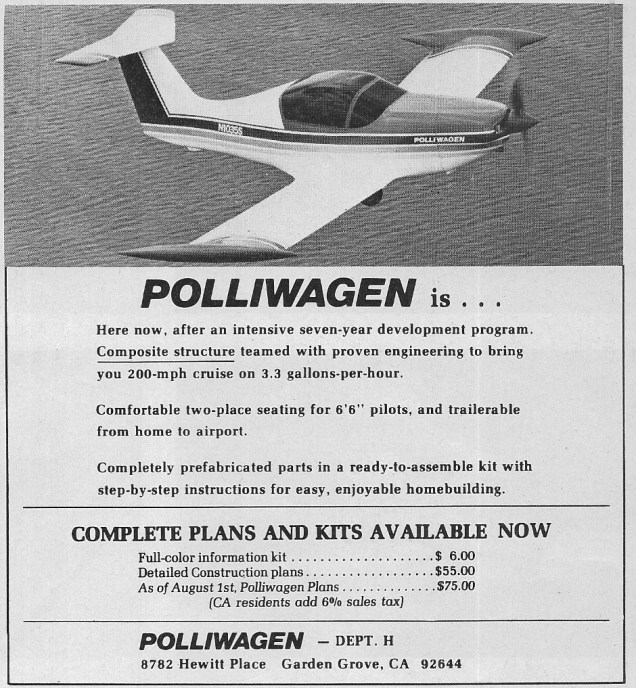
Polliwagen Polliwagen

Designed by Argentine-born Joseph Alvarez in 1973, the Polliwagen derives its name from its appearance and its engine type. It is powered by a Revmaster R-2100-D turbocharged Volkswagen conversion. The Revmaster is closely cowled behind a two-position, constant-speed Maloof metal propeller of 59 inches diameter. The Polliwagen’s ex¬ceptionally clean lines give it an excellent speed-to-power ratio as well as fine aerodynamic handling characteristics. The wings are Wort¬mann FX-67-K-1 50 wing section with full-span trailing edge flaps and ailerons. Both the wings and fuselage make use of foam/epoxy com¬posite construction. Prefabricated parts are also offered in the Polliwagen kit including: molded windshield and canopy, landing gear, disc brakes, complete panels, composite structure wingtip fuel tanks, outward-breaking cabin structure, T-tail, etc.
First year built: 1978. Units delivered to June 1981: 300 kits, 65 flying. Price 1982: $5,500 (Excludes engine).

April 1982

Engine 78-hp Revmaster VW
Gross Wt. 1250 lb
Empty Wt. 650 lb
Fuel capacity 25 USG
Wingspan 26 ft
Length 16 ft
Wing area: 90 sq.ft
Top 200+ mph
Cruise 180 mph
Stall 51 mph
Climb rate 925 fpm
Range 1000 fpm
Takeoff run 500 ft
Landing roll 500 ft
Seats: 2

Polikarpov MP

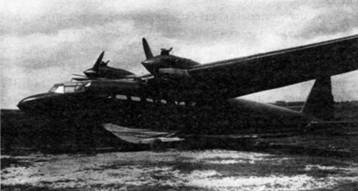
The excellent results obtained during Aeroflot’s experimental use of the BDP-2 prototype as cargo transport made Polikarpov think about the possibility of developing a motorized model, especially that there was talk of the possibility of producing a small series.

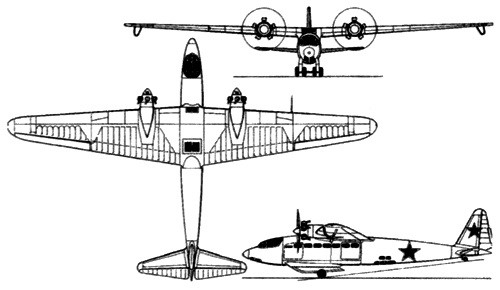
To achieve this goal, two cowled 145 hp M-11F engines were installed on the wing leading edge. The new model was called MP (Russian: Поликарпов М П), short for Motoplanior (motor glider).

In the MP operation, the autonomous take-off variant was envisaged, but with the full load capacity the low power of the engines was unable to guarantee take-off. Generally, the MP had to take off and even arrive at the site of operations dragged by a tow plane, but after dropping its load, unlike conventional gliders, it could return to its airfield using the installed motive power.

As a small capacity transport aircraft, the MP could carry 12 equipped soldiers or a similar weight capacity.

The MP motor glider generally maintained the constructive characteristics of the BDP glider. It was designed as a monoplane with a high wing of 20 meters of wingspan and a fuselage with an aerodynamic design. The entire construction was made of wood.

The fuselage was entirely made of wood and featured monocoque construction.

The exit of personnel and cargo was carried out through two doors of 860 x 900 and 850 x 950 mm, one located in the front region on the right and the other in the rear on the left. In the lower part of the fuselage, behind the cargo area, a hatch was prepared to leave the parachute glider.

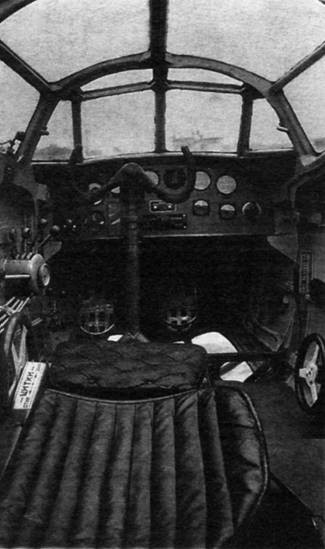
The pilot had an emergency cover with a structure also in wood. To improve visibility during landing, the lower area of the cabin was glazed. People sat on benches located on the sides of the glider, attached to the fuselage frame. Between the two benches there was a 600 mm wide corridor.

The wing of the BDP was made of wood and featured a double-spar centre and single-spar consoles. The coating of the leading edge and the force points was done with plywood. The rest of the wing was covered with fabric. The wing profile used was the NACA 230. In order to reduce the landing speed in the section between the ailerons and the fuselage, Shrenk-type flaps were installed.

The tail was monoplane and cantilever, constructed of wood covered with plywood and fabric.

The landing gear on this model was modified with the addition of wheels to the basic glider ski gear. These wheels were installed in two rows under the fuselage and featured rubber cushioning.

The powerplant consisted of two 145-hp M-111M-11F engines located on the wing leading edge and cowled, moving 2.35-meter propellers from Polikarpov U-2 training aircraft. The fuel capacity allowed for 7 hours.

The glider did not have its own weapons, but did have attachment points for seven DP-type infantry machine guns. Two machine guns could be installed in special hatches located in the area of the leading and exit edges of the wing to defend the upper hemisphere. To defend the tail a section of the upper rear fuselage could be raised and become a firing point for the gunner. Two other positions were located to the sides.

Inside the fuselage were 12 5.5 mm armored plates of 480 x 550 mm. The pilot had armor on the back of the seat. All this armor added 127 kg to the weight of the glider.

The motor glider was built ay the Novosibirsk Factory No.51 in the summer of 1943. The acceptance tests were carried out at the Moscow Central Airfield with flights to the Air Landing Forces (VDV) airfield at Medvied Lake and to the LII airfield in Ramenskoye. These flights were developed by the chief of flights and test pilot of the OIAE VDV Captain SA Anojin.

Between July 12 and September 10 of 1943 70 flights with a total duration of 40 hours and 10 min were performed. In flights towed by an SB bomber, heights of 4500 meters and speeds of 270 km / h were reached.

As a conclusion of the tests the pilots VN Yuganov, VL Rastorguyev, GM Shiyanov, AN Grinchik, PF Fedrova, PM Stefanovski, VV Shevchenko, AK Dolgov, PG Savtsov, Gavrilov, Romanov and Borodin wrote that the MP had good stability, it was simple in the piloting, accessible to pilots of low qualification. With a single engine and a flight weight of 3000 kg the aircraft was easily controllable, keeping its flight horizontal and responding to turns.

Between September 10 and 13, 1943 the MP was tested by the VDVs. Load tests were carried out with 4000 kg in different variants:
11 armed infantry soldiers with light weapons;
A group of anti-tank artillery made up of 6 soldiers with a 45 mm piece and two shell boxes (40 units). Assembly of the barrel to its operational state took 8-10 minutes;
A DShK antiaircraft battery with its 5 servers and ammunition;
A light anti-tank group with 10 soldiers and three anti-tank weapons;
Two or three motorcycles (3 of the Velosiet type or 2 Indiana).

The excellent layout of the motor glider for these configurations was highlighted and its use was recommended for VDV units and transport aviation. Series production of the model was also proposed.

Despite these results, the MP was never produced. By that time the Red Army had liberated a large part of the territory occupied by the Germans and the supply needs of the guerrilla groups had diminished.

Only the prototype was produced.

Polikarpov MP
Engines: Two 145 hp M-11F
Wingspan: 20.00 m
Wing area: 44.72 m²
Length: 13.60 m
Height: 3.20 m
Empty weight: 2420 kg
Normal loaded weight: 3500 kg
Payload capacity: 1280 kg
Wing loading: 78.5 kg / m²
Maximum speed at sea level: 185 km / h
Maximum speed at 1000 m: 179 km / h
Range: 390 – 700 km
Endurance: 7 h
Time to 1000 m: 12.5 min
Service ceiling: 2,700 m
Take-off run with 3500 kg: 480 m
Crew: 1

Polikarpov BDP

The 23 of January of 1940 the Commissariat of Aviation Industry created the Directorate for creating landing gliders. In the autumn of that year, in an extraordinary meeting, with the presence of Stalin, the decision was made to launch a competition for the development of airplanes of this type and their series production. The best would be mass-produced and used successfully in operations during the Great Patriotic War.

Nikolai Polikarpov had no experience in glider design, so he did not participate in the competition. Despite this, at the beginning of June 1941 its construction bureau, unexpectedly for many, presented a project for a landing glider. The production of gliders was carried out not in aviation factories, but in carpentry and furniture factories.

The Polikarpov glider was designed as an aircraft to support penetration units. After analyzing the losses of the Germans during the landing operations, the Soviet aircraft manufacturer came to the conclusion that it was possible to reduce them by using well-protected and armed means of landing. To achieve this objective, he designed a glider from which the landing troops, before launching themselves, could direct fire against enemy positions, using their light weapons. The protection of the device was obtained through the use of removable armoured plates, which once landed the glider allowed to create a defensive barrier for the soldiers.

The new glider was named BDP (Russian: Поликарпов БДП), after Boyevoi Disantni Planior or Military Landing Glider.

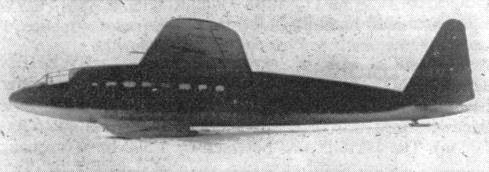
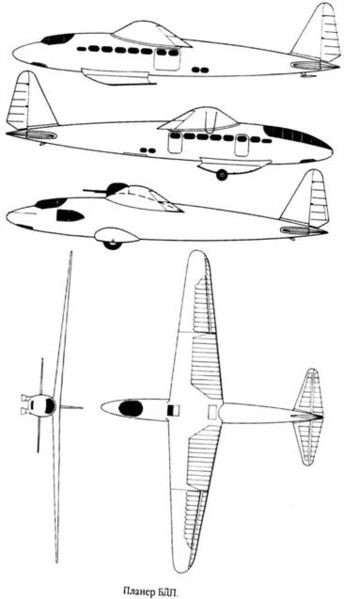
The BDP landing glider was desiigned as a high-wing monoplane with a 20-meter wingspan and an aerodynamically designed fuselage. The entire construction was made of wood.

Designers put special emphasis on making an airplane cheap and easy to produce. Due to its dimensions, the BDP was capable of transporting 16 soldiers with their equipment and its towing had to be carried out by Túpolev SB or Ilyushin DB-3 bombers. The fuselage was entirely made of wood. The pilot had an emergency cover with a structure also in wood. To improve visibility during landing, the lower part of the cab was glazed.

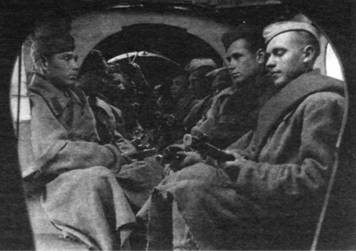
The landing troops sat on benches located on the sides of the fuselage, forming part of the structure. Between the two rows of benches there was a 600mm corridor. The exit of personnel and cargo was carried out through two 900 x 950 mm doors, one located in the front region on the right and the other in the rear on the left. In the first BDP copy there were two small doors on the right and two on the left.

In the lower part of the fuselage, behind the cargo area, a hatch was prepared to parachute from the glider.

The wing of the BDP was made of wood and had a single spar. The coating of the leading edge and the force points was done with plywood. The rest of the wing was covered with fabric. The wing profile used was the NACA 230. In order to reduce the landing speed in the section between the ailerons and the fuselage, Shrenk-type flaps were installed.

In the area of the leading and trailing edges of the wing, special hatches were located to allow firing with light weapons, covering the upper hemisphere. To defend the tail a section of the upper rear fuselage could be raised and become a firing point for the gunner.

The tail was monoplane and cantilever, constructed of wood covered with plywood and fabric.

The landing gear consisted of two ash skis placed on leaf springs to absorb the impact. The junction of the skis and the fuselage was covered by fabric covered fairings. For landing the BDP used a 400 x 150 mm four-wheel detachable wheelbarrow.

The glider did not have its own weapons, but did have attachment points for seven DP-type infantry machine guns. Two machine guns could be installed to defend the upper hemisphere, one in the lower hatch and two on the sides.

Inside the fuselage were 12 5.5 mm armored plates with dimensions of 480 x 550 mm. The pilot had armor on the back of the seat. All this protection added 127 kg to the weight of the glider.

The development of the BDP project was carried out by Polikarpov and his collective during the month of June 1941.

The project was approved by the NKAP management and it was decided to carry out the construction of the prototype at Factory No.51.

By the end of the summer of 1941 the glider was finished and ready for flight tests. The first flights were carried out in September and took place from the LII airfield in the Moscow suburbs. As a tug, an SB bomber with M-103 engines was used. The glider was piloted by VP Fyodorov.

Only 14 flights were made, which were interrupted on October 14 due to the advance of the Germans and the beginning of the evacuation.

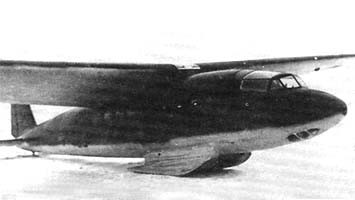
First BDP copy during tests near Moscow in September 1941.

As a result of the tests, defined as inconclusive, it was concluded that the BDP was stable in flight and that it could be maintained with free controls. The effectiveness of the rudders was acceptable, both during flight and on landing. The piloting technique was simple and did not demand a great qualification from its pilot, which ensured its control by pilots who had flown training gliders.

The negative aspects were the lack of structural strength at various points on the wing and fuselage. This caused that during the tests the flight weight was limited to only 2200 kg and the speed up to 220 km / h (the glider having been calculated for 3200 kg and 320 km / h respectively). The pilot pointed out that the curved glass in the windshield distorted the vision and proposed to replace it with a normal one made of straight pieces. When the aerodynamic brakes were extended, there was creaking in the tail area.

It was recommended to work on solving these problems and then present the model for series production. In relation to this process, there were no difficulties, since the construction could be carried out in carpentry with basic equipment. TsAGI specialists warned that the production cost of the Polikarpov model exceeded that of other similar gliders.

This first specimen was evacuated by air in October 1941 to the west. Curiously, during the flight of this unknown aircraft towed by an SB bomber, a group of fighters from Moscow’s anti-aircraft forces (PVO) went out to intercept, forcing the glider to land near Kashira. The glider was looted by the local inhabitants and in that condition it was returned to Moscow shortly thereafter.

The second specimen, called BDP-2, was built in Novosibirsk, where Factory No. 51 in Moscow and the KB in Polikarpov were evacuated.

The glider was delivered for testing to the LII affiliate on February 6, 1942 and flown by II Shelest.

The BDP-2 presented a reinforced construction in relation to the original model, which brought with it a certain increase in weight. Externally it was also something different. The pilot’s windshield featured flat glass pieces and various elements were simplified. The trailing edge of the height and steering rudders was made by means of a steel cable as was the style in the first Soviet aircraft.

The tests of the BDP-2 with ski landing gear lasted until March 14, 1942. During this time several attempts were made to lessen the problem of tail creaking. The results improved after drilling a series of holes in the aerodynamic brakes, thus reducing the turbulence of the airflow.

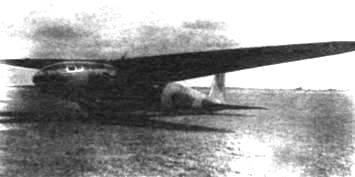
Second BDP-2 prototype tested in Novosibirsk in the winter of 1941 – 1942.

The test conclusions again emphasized the simplicity of the piloting, the high payload capacity, good manoeuvrability and stability in different centering regimes. Serial production of the model was recommended.

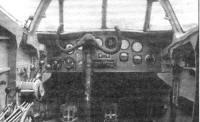
Interior layout in the cabin of the BDP-2 glider.

Almost in parallel with the flight tests, the search began for a possible production base to develop series production. After reviewing various factories and companies in the region near Novosibirsk, it was decided to select the Siberian Military Region Workshops. These facilities had previously functioned as auxiliary production capacity for Factory No.153, dedicated to the manufacture of skis.

The first figures showed a number of 100 gliders with a unit cost of 41,125 rubles.

While negotiations were taking place, a new production site was defined. It was the Stalingrad Factory No. 490. In the middle of the summer of 1942 the plans and all the technical documentation were transferred there from Novosibirsk. Soon the military situation changed and the arrival of the Germans in Stalingrad thwarted production plans.

Along with the inability to produce in Stalingrad the opinion of the VVS was a lack of need to produce the BDP. The course of the war had shown little chance of success and there were already produced successful models A-7 of Antonov and G-11 of Gribovski.

In July 1942 the BDP-2 was destined to serve as a transport in the direction of the Moscow – Irkutsk air force. Several flights were carried out towed by a PS-40 (postal Ant-40) on the Novosibirsk – Omsk – Sverdlovsk route and vice versa. This route was also covered by several Antonov A-7s . The results of these experimental flights were impressive and it was proposed to build several examples of transport gliders for civil use with Aeroflot.

In 1943, at Factory No.51, the assembly of 10 copies of the BDP began. It is known that until the end of the year only two copies had been delivered. A third and fourth specimens were 98% complete, the fifth at 80%, the sixth at 28%, and the seventh only at 10%. No evidence has been found after that date.

Polikarpov, in an attempt to achieve full autonomy for the BDP, decided to develop a motorized model that was named MP. A prototype was successfully built and flown, but it was not mass-produced either.

Polikarpov BDP
Wingspan: 20.00 m
Length: 13.60 m
Wing area: 44.72 m²
Empty weight: 1470 kg
Normal weight: 3408 kg
Crew: 1
Payload Capacity: 16 Soldiers Equipped

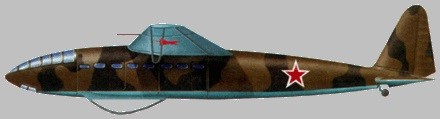
Color scheme of the first BDP prototype without the ski train fairings.
Color scheme of the second BDP-2 prototype.