Saunders-Roe A-17 Cutty Sark

A-17C

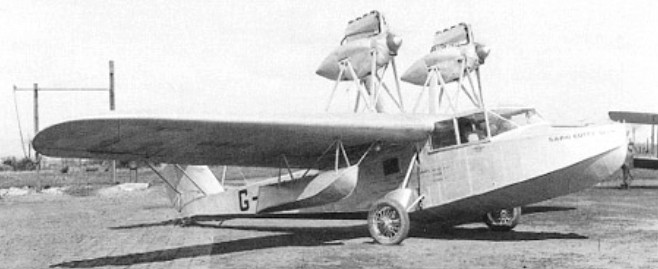
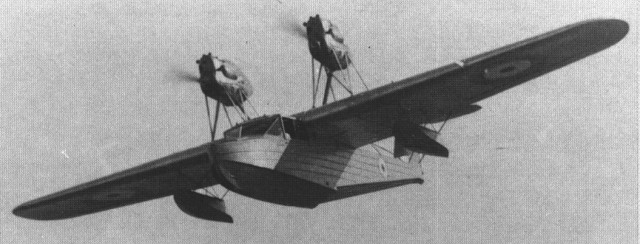
Saro or Saunders-Roe produced the Cutty Sark four-seat cabin flying-boat (or amphibian) as its first new design after formation in 1928. It was adopted for flying-boat and navigational training by Air Service Training Ltd (two 112kW Armstrong Siddeley Genet Major engines) and was exported as a coastal-reconnaissance aircraft (de Havilland Gipsy Major engines).
A-17MK

A-17C
Engines: 2 x Armstrong Siddeley Genet Major I, 104kW
Max take-off weight: 1769 kg / 3900 lb
Empty weight: 1236 kg / 2725 lb
Wingspan: 13.72 m / 45 ft 0 in
Length: 10.46 m / 34 ft 4 in
Height: 3.4 m / 11 ft 2 in
Wing area: 29.73 sq.m / 320.01 sq ft
Max. speed: 172 km/h / 107 mph
Ceiling: 2745 m / 9000 ft
Range: 507 km / 315 miles

Engines: 2 x Cirrus Hermes, 104 hp
Seats: 4
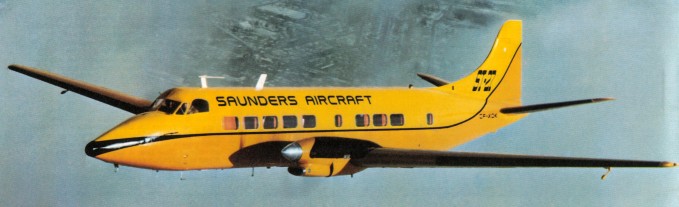
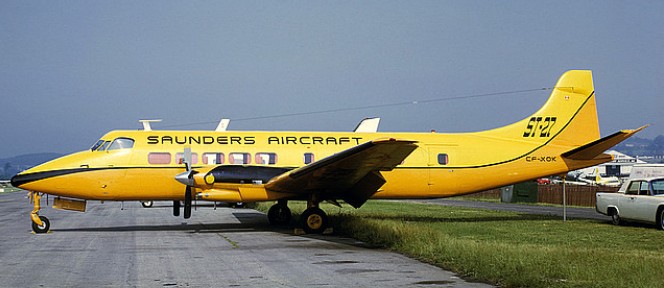
Saunders ST-27A

Saunders Aircraft Corporation in Canada flew the ST-27A prototype (CF-FYBM-X) for the proposed ST28 on 18 July 1974. The ST-27A was a lengthened fuselage conversion of the de Havilland D.H.114 Heron with turboprop powerplant, but production ST-28s were intended to be newly-built; because of financial problems no series aircraft were manufactured. Saunders Aircraft Corporation produced 13 completed ST 27s.

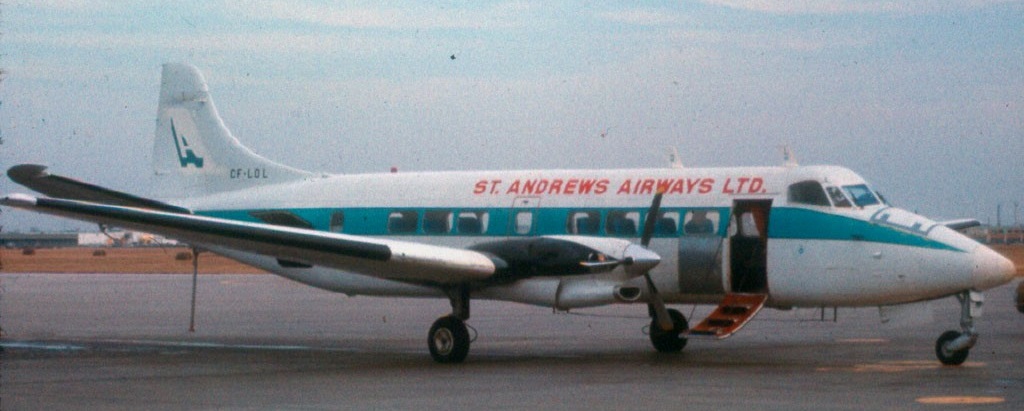
The Heron has been stretched by 8 ft 6 in (2.59 m) to carry 24 passengers, and re engined with two PT6A 27 turboprops instead of four Gipsy Queen piston engines.

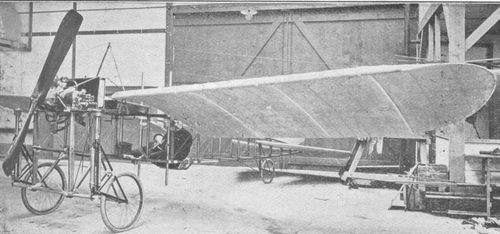
Saulnier 1910 Monoplane

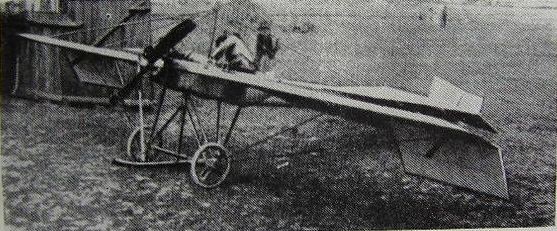
Raymond Saulnier did design work on the Blériot VIII and XI (the famous Channel machine). Some sources say he did most or all of the designing of the Type XI. He then started his own aeroplane construction firm at Courbevoie. His monoplane – which looks like a development of the Blériot XI – was an excellent flyer. The pilot was seated low in the completely open fuselage, a great difference with the Blériot. The machine was fitted with a two-cylinder Darracq engine and later with an Anzani 3-cylinder. The machine was mostly piloted by Emile Duval.

Saul Triad

Saul Triad NX808M

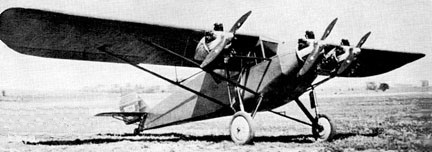
The sole Triad 1000 (ATC 2-229) of 1930 was registered NX/NC808M c/n 1001.

It was reportedly scrapped in 1936 after its motors were traded for a new Porterfield. Assets of the corporation were liquidated in 1939 after the death of Irving Saul in 1933, but several accounts indicate that the aircraft was still operational long after that time.

Engines: three 65hp LeBlond 5D, later 180hp Lycoming O-360-A1A
Wingspan: 36’0″
Length: 28’8″
Useful load: 1650 lb
Stall: 68 mph
Seats: 5

Saru-Ionescu Monoplane

Powered by a 25 hp Anzani, tests of this machine were conducted between July 22 and August 28, 1911, at Cotroceni, Romania. Nicolae Saru was a bank clerk who as Ionescu, in his free time and out of his own pocket, built this machine. Unfortunately Saru was the only person available to fly the aeroplane, but had no flying experience. Therefore, after a few minor mishaps which could be repaired, he finally wrecked the machine on August 28, 1911. Lacking the money to (re)build a new monoplane he left aviation.

Saren 4SB

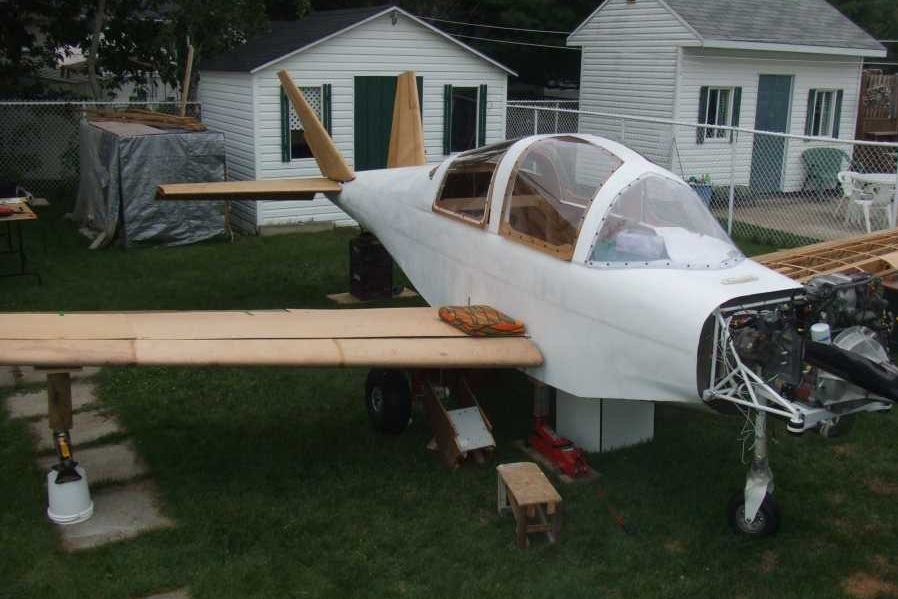
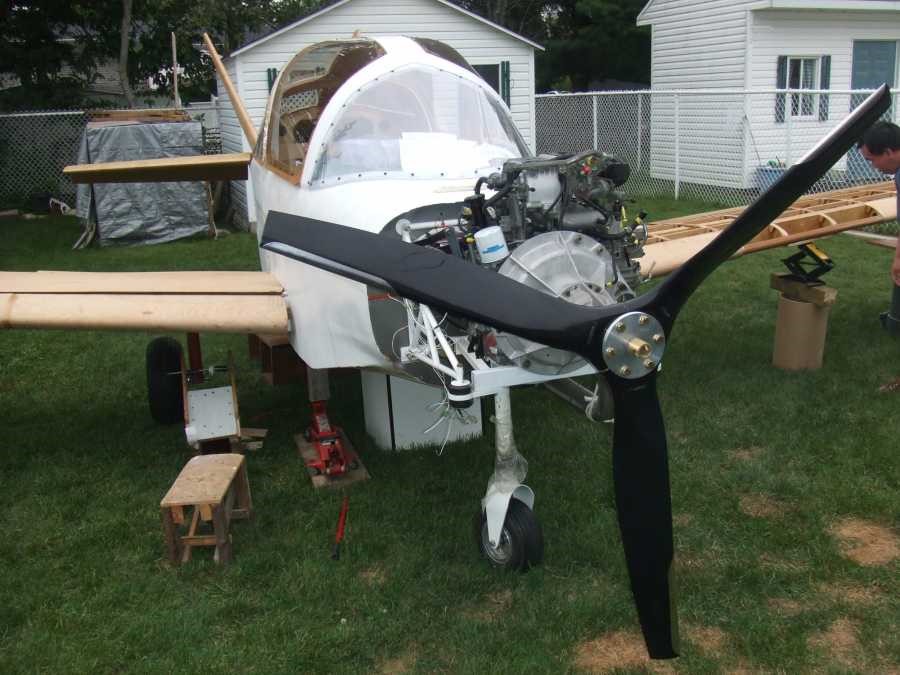
Saren is a all wood, four seater, dual control, low wing with dual vertical stabs and full wing flaps owned by Ramon Collado of Mirabel, QC, Canada.

It has spoiler for aileron controls. The undercarriage is fixed.

Approximate cost to build was $10,000-$20,000.

Engine: Mazda Rotary
Prop: Warp Drive