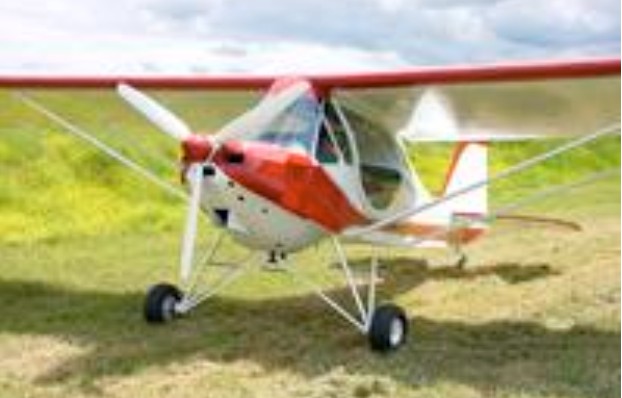
Regularly updated, Sauper engineers have lately developed the 4th series with better manoeuvrability and responsiveness thanks to its shortened wings.
As a simple UL aircraft, it was sold only in a ready-to-fly version.
A classic design microlight single-engined aircraft with a high wing, two side-by-side seats, the structure is made of 25CD4S tubes of aeronautics steel. TIG weldings and tubes are protected from corrosion. The fuselage is covered with aeronautics Diatex 100 and 1500 fabric.
Fitted with complete double controls, 2 points security seatbelts, and Lexan F 5006 windscreen and windows, there is a large luggage area behind the seats. The mains have 600×6 tires with disc brakes. Two aluminium seat-tanks of47 litres are fitted.
J300 Joker 2009 Price: 40000 EURO J300 Srs 2 2009 Price: 42000 EURO
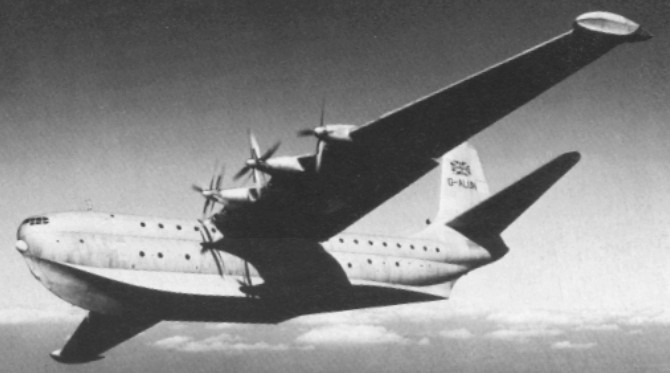
The Saunders Roe Princess was intended as a flagship for British Overseas Airways Corporation; weighed 152 tonnes (150 tons) and was to have carried 105 passengers in its two deck, pressurized hull. The three prototypes were, ordered in May 1946, were intended for non-stop transatlantic service. The Princess was powered by ten Bristol Proteus turboprop engines. Eight of the engines coupled in pairs driving contra-rotating propellers. The flight deck crew consisted of two pilots, two flight engineers, a radio operator and a navigator. Two decks carried 105 passengers in first and tourist class. By the time the first example flew, years behind schedule, on 22 August 1952 the programme cost had nearly quadrupled to £11,000,000.
Meanwhile BOAC had given up flying boat operations. Instead, the boats were to be completed as long-range military transports for the RAF, but the lack of a suitable powerplant brought even these optimistic hopes to an end. Larger than the Martin Mars and heavier than the Bristol Brabazon I, the Princess prototype was flown for the first time on 22 August 1952 and spanned 66.90m with its wingtip floats retracted, weighed 156,492kg on take-off. It could attain a maximum speed of 579km/h on the power of its 10 2386kW Bristol Proteus 600 turboprop engines.
Development problems with the gearboxes of the inboard engines contributed to the decision to end development. No one wanted the Princess or her two sisterships which had been completed at Saunders -Roe’s Isle of Wight factory, and the three Princesses sat cocooned at Calshot for 15 years before the cutters’ torches finally destroyed them. The second and third Princesses did not fly.
Saunders-Roe SR.45 Princess Engines: 10 x Bristol Proteus 2 turboprop, 3780hp Span: 210 ft 6 in / 66.90 m Length: 148 ft / 45.11 m Height: 17.37 m / 57 ft 0 in Max take-off weight: 156500 kg / 345025 lb Max. speed: 612 km/h / 380 mph Cruise speed: 579 km/h / 360 mph Range: 8484 km / 5272 miles Pax cap: 105 Crew: 6
By 1952 Saunders-Roe produced the SR.53 design for a single-seat target defence interceptor combining a liquid-fuel rocket motor with an auxiliary turbojet. Submitted to the Ministry of Supply (MoS) the design based on the pairing of the de Havilland Engines DGJ.1OR Gyron junior turbojet and Spectre rocket motor, to meet the requirements of Specification F.124T. This was accepted with high regard, and Specification F.177D was written around it to meet Operational Requirement (OR) 337. Furthermore, naval requirement NR/AA7 was combined in the specification, the designation SR.177R being applied to the RAF aircraft and SR. 177N to those for the Fleet Air Arm (FAA). The SR.53 was recipient of a three-prototype contract in October 1952. Armament proposed was a Red Top missile on each wingtip.
On September 4, 1956, Saro received an initial order for nine aircraft, and West Germany expressed enough interest for the eventual figure of 600 production aircraft to be mooted. Production was to be shared among Saro and other companies, and German companies were to manufacture that nation’s variant, so the whole programme would benefit a large European workforce.
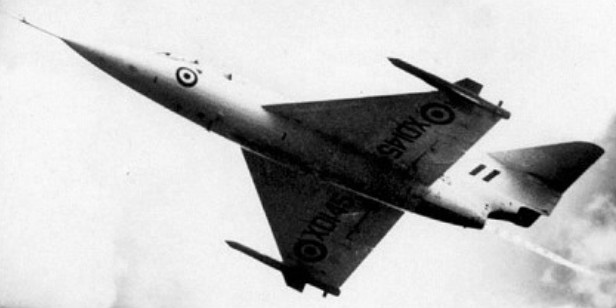
With one 8,0001b-thrust de Havilland Spectre rocket engine and one 1,6401b-thrust Armstrong Siddeley Viper turbojet. Of clipped delta wing configuration with a specified armament of two wingtip-mounted Blue Jay (de Havilland Firestreak) AAMs, the SR.53 was powered by an 3629kg de Havilland Spectre HTP rocket and a 744kg Armstrong Siddeley Viper turbojet superimposed one above the other in the rear fuselage.
In the event, only two of the SR.53s were to be completed (XD145 and XD151), these making their initial flights on 16 May and 8 December 1957, prior to which, in April 1957, all rocket-powered fighter development in the UK had been cancelled.
Duncan Sandys’ Defence the White Paper of 1957 resulted in the cancellation of the whole project. When a British request to the USA for funding under the Mutual Weapons Development Program (MWDP) was turned down, West Germany dropped out and turned to the Lockheed F-104 Starfighter.
Nonetheless, the two SR.53s performed 42 test flights before, on 15 June 1958, the second aircraft crashed, the surviving aircraft then being permanently grounded.
SR.53 Max take-off weight: 8618 kg / 19000 lb Empty weight: 3357 kg / 7401 lb Wingspan: 7.65 m / 25 ft 1 in Length: 13.72 m / 45 ft 0 in Height: 3.29 m / 11 ft 10 in Wing area: 25.45 sq.m / 273.94 sq ft Max. speed: 2135 km/h / 1327 mph
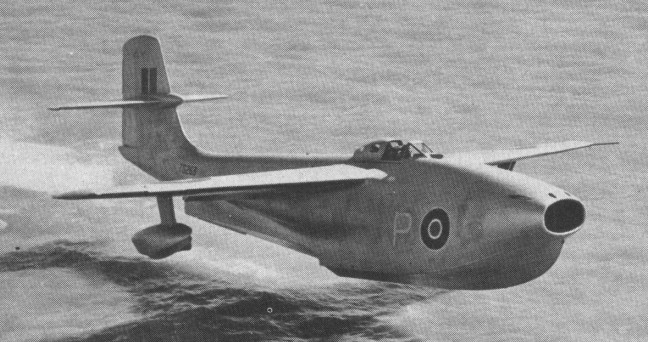
Following discussions between Hugh Francis of the Marine Aircraft Experimental Establishment (MAEE) and Henry Knowler, chief designer of Saunders Roe, the idea of a flying boat fighter was generated. It was then schemed and serious work was started at the beginning of 1944 in Beaumaris, Anglesey, where Saunders Roe had their Design Office. The official specification was E.6/44 and the aircraft’s designation SR A/1 followed the then new nomenclature of the SBAC for the drawing system for each company, A/1 signifying the first aircraft of Saunders Roe under that system.
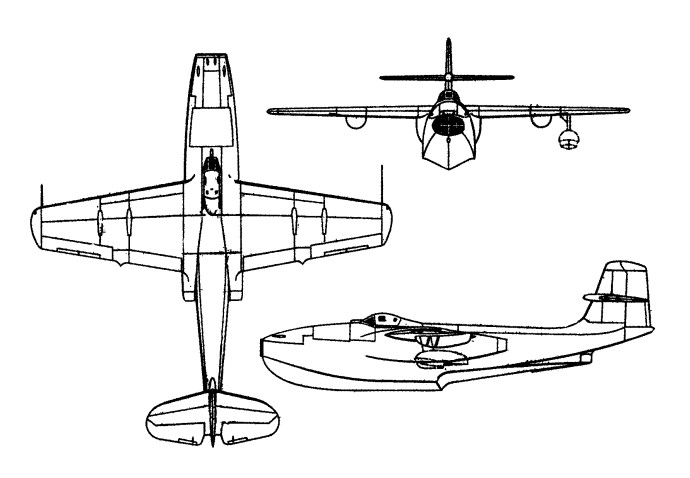
The new aircraft was designed around two Metropolitan Vickers F2/4 Beryl turbojets designed under the direction of Dr D. M. Smith, chief engineer of that company’s Gas Turbine Department. These engines, the first British axial flow engines, delivered 3,3001b thrust initially, raised later to 3,8501b following successful type tests. They were small in diameter by comparison with the centrifugal type compressors favoured at that time by other engine makers. Two could therefore be installed side by side without making the hull’s beam unduly great. The intake was provided with an extendable lip which was intended to overcome water ingestion troubles, should they occur. In the event, they did not and, although the lip was used on test, it was pot normally needed, as the SR A/1 was intended for operation from sheltered or inland waters. Both engines shared the oval shaped intake. The hull shape was of faired vee form, entirely of metal construction, made up of strong keel members, closely spaced frames, light upper longitudinals and carefully filled skin rivetting. The engine exhausts were toed out five degrees each side of the centre line. The pilot’s cockpit was pressurised and air conditioned by air tapped from both power unit compressors. Provision was also made for a “G” suit.
Another “first” was the Martin Baker ejector seat, which was the first to be delivered to an aircraft manufacturer from the works. The pilot had four 20mm Hispano cannon mounted immediately ahead of him in the nose, each gun having 240 rounds. In addition, two 1,000 lb bombs or eight rockets could be carried.
The wing was a single spar structure, fitted with dive brakes and dive recovery flaps, as well as ailerons and landing flaps. The tail unit was of similar construction to the wing. The aircraft had a Mach Number of 0.81. The uniqueness of the controls lay in the, combined use of geared and spring tabs, allowing a simple and neat type of manual control without fine balance or trailing edge troubles.
Control on the water was by means of a small rudder integral with the rear step. It could be locked centrally when in flight or, when on the water, linked to the rudder pedals. Lateral support was by means of hydraulically retractable floats which were rotated mechanically as they retracted inwards so as to lie inverted in the under surface of the wing, thus creating minimum drag. The four main wing fuel tanks together with two overload drop tanks gave an endurance of around 212 hours.
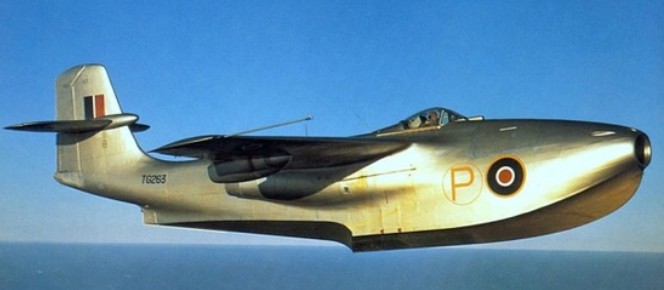
When it was agreed that construction of the SR A/1 should proceed, three prototypes were authorised. These were allocated the serials TG263, TG267 and TG271. The design was completed at the Beaumaris Works and the components were made there. They were transported to Cowes for assembly and test flying.
Geoffrey Tyson undertook the flight testing of the new flying boat. He first taxied TG263 on July 16, 1947 and, finding everything in order, took it off.
The SRA/1 was improved later by the fitting of an “acorn” at the intersection of the fin and tailplane to cure a slight buffet. The first take off had taken only twelve seconds and the rate of climb was exceptional. Apart from this, the only other visible alteration was the fitting of a metal cockpit canopy following the loss of a transparent hood in the course of a test flight. This was one of the earliest sliding hoods to be pressurised as high as 6.75 lb/sq ft.
So well did the flight testing go that Tyson was able to demonstrate the prototype at the SBAC Show at Farnborough two months after its first flight. Testing continued steadily through 1948 and the prototype was joined by TG267 and TG271. The second flew on 30 April 1948 with 1587kg Beryls and the third followed on 17 August 1948 with fully rated Beryls of 1746kg. The second to be built, TG267, was lost with its pilot at the Marine Aircraft Experimental Establishment at Felixstowe on 17 September 1949. He had been practising for a local air display in conditions of poor visibility and crashed into the sea. Squadron Leader ‘Pete’ Major took TG267 up that morning to prepare for the aerobatic routine he planned to perform for the public that afternoon. During a slow roll, he let the nose slip down while inverted, then instinctively pulled on the stick rather than pushing out from his upside-down position. The aircraft broke up on impact, and no trace of Major was found; much of the aircraft was salvaged over the next ten days.
Engine development continued on the other two with simulated failures (and one or two genuine ones), re-lighting sometimes being a problem. On one occasion Tyson suffered a double flame out at about 20,000ft and was unable to relight either engine. He had been some 20 miles South of the Isle of Wight and managed to glide home.
Chief Naval Test Pilot Lt Cmdr Eric “Winkle” Brown flew the third SR A/1, TG271, for the first and only time on 12 Aug 1949 at the behest of Saunders-Roe. He wrung out the tubby little ‘boat, reaching Mach .82, pretty much the top speed of the SR A/1, in a dive. approaching to land at Cowes and, at the very last moment when he was committed to the touch down, he saw a half submerged baulk of timber. The log tore a 4 5ft gash in the starboard front hull and ripped off the starboard stabilizing float. Despite his best efforts, Brown could not keep the starboard wing from digging in and cartwheeling TG271 onto its back. Struggling free underwater, Brown almost succumbed, but was held up by Geoffrey Tyson, the Saro test pilot responsible for the majority of the SR A/1 testing, who had leapt off the supporting launch when he saw Brown in trouble. Despite extensive searching, the sunken third SR A/1 prototype was never located, such are the peculiarities of the Solent tides.
Although the design of the SR A/1 was begun before the end of World War 2, its construction was authorised after hostilities ended. Export orders were hoped for. It became clear that exports were unlikely and this, together with the loss of the two aircraft brought the development programme to a halt.
Tests were resumed for a short period beginning in November, 1950, after a brief revival of interest during the Korean War.
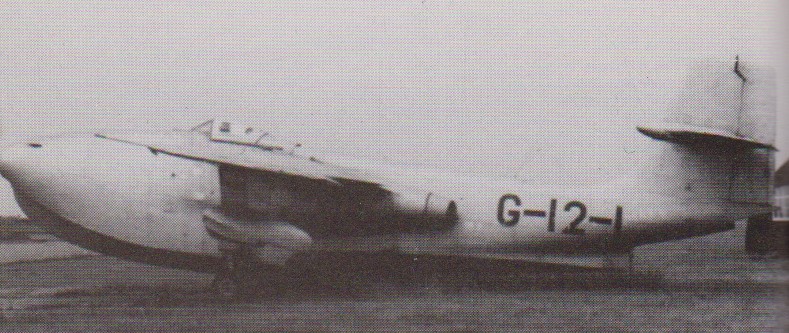
The last public appearance of a SR A/1 was in June, 1951, when Geoffrey Tyson took the remaining prototype to London for display at the Festival of Britain. He landed on the Thames in Woolwich Reach and was towed to a mooring opposite where the Royal Festival Hall now stands. The aircraft, TG263, then bearing the registration G 12 1, remained for three days and was then towed back to Woolwich Reach.
The last remaining SR A/1 came to the end of its working life in June 1951 and it was presented to the College of Aeronautics at Cranfield. Its engines were removed and given elsewhere for a speed record attempt. Some time later, it passed to the Skyfame Museum at Staverton, near Cheltenham, and into the care of Mr Peter Thomas, its founder.
The completely restored first prototype, TG263, resides today at the Southampton Hall of Aviation, along with an example of its ejection seat (the first delivered by Martin-Baker to an aircraft manufacturer) and a MetroVick Beryl powerplant, both exhibited outside the airframe.
SR.A/1 Engines: 2 x Metropolitan-Vickers F2/4 Beryl turbojets, 1474-1746kg Wingspan: 14.02 m / 46 ft 0 in Length: 15.24 m / 50 ft 0 in Height: 5.11 m / 17 ft 9 in Wing area: 38.60 sq.m / 415.49 sq ft Max take-off weight: 8633 kg / 19033 lb Empty weight: 5108 kg / 11261 lb Max. speed: 824 km/h / 512 mph Crew: 1
After designing the S.38 four-engined patrol flying-boat to Specification R.5/39, Saro built, as a private venture, a two-seat half-scale model as the Saro A.37, often called the Shrimp. The R.5/39 programme did not go ahead, but the Saro A.37 was completed in time to make its first flight in October 1939. Powered by four 63kW Pobjoy Niagara III engines, it was later modified to have a single fin and rudder, and other features representative of the Shetland flying-boat jointly developed by Shorts and Saro. In this guise, it acquired the serial TK580, and was tested from early 1944 until after the war had ended. The Shrimp was dismantled in Felixstowe in 1949.
Saunders-Roe A.37 Engines: 4 × Pobjoy Niagara III, 95 hp / 71 kW Length: 42 ft 3.25 in / 12,89 m Wingspan: 50 ft / 15,24 m Wing area: 340 sq.ft / 31,6 sq.m Height: 12 ft 8.75 in / 3,88 m Empty weight: 4,362 lb / 1,983 kg Loaded weight: 5,700 lb / 2.591 kg Maximum takeoff weight: 6,200 lb / (2,818 kg Maximum speed: 113 kt / 130 mph / 209 km/h Climb rate: 635 m/min / 3,22 m/s Wing loading: 16,8 lb/sq.ft / 82 kg/sq.m Power loading: 0,067 hp/lb / 0,11 kw/kg Endurance: 3 hours Seats: 2
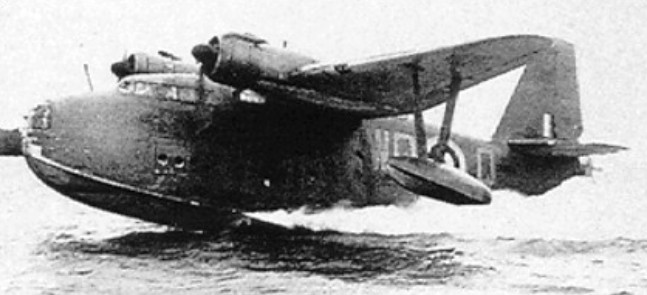
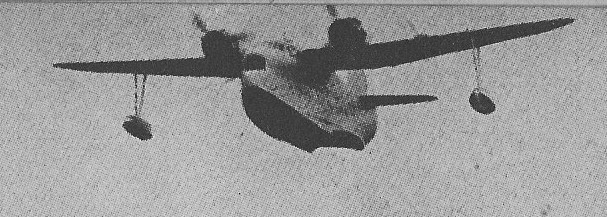
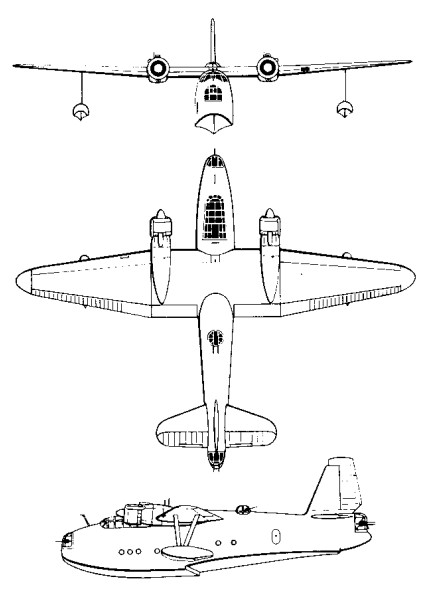
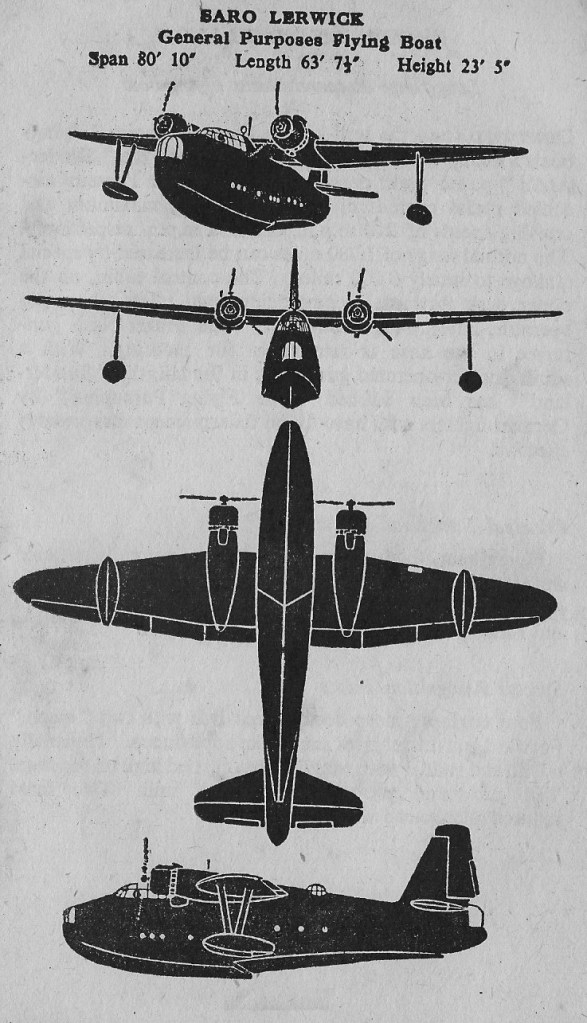
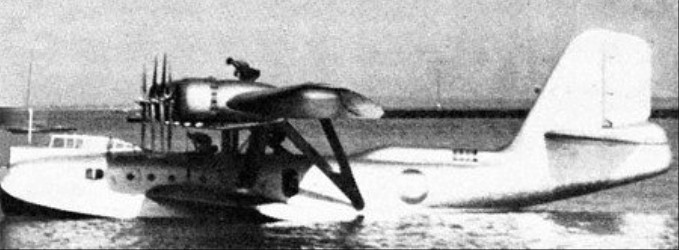
The twin-engine Sarò Lerwick was intended to meet a medium-range maritime reconnaissance requirement, Specification R. 1/36. First flown before the end of Ì938, the prototype featured twin fins and. rudders but from the outset was found to be lacking m lateral stability, and displayed a determination to roll and yaw in cruising flight, making the aircraft impossible to fly ‘hands off”. In due course a single fin and rudder was fitted, but not until this was considerably enlarged was there any improvement in the handling.
Starting with the seventh production example, wing incidence was increased and enlarged propellers fitted to the Hercules II radials, but the propellers were found unsuitable for operating on rough water. Stalling tests showed the Lerwick to have vicious traits, the stall under alighting conditions being accompanied by sharp wing-drop.
Twenty one examples were produced and the Lerwick was first delivered for service with No, 209 Squadron in December 1939 at Oban, but after the type had flown a small number of semi-operational patrols it was decided to abandon further efforts to rectify its problems. The last eight aircraft were powered by Hercules IVs and the final example was completed in November 1940. One aircraft was flown by No, 240 Squadron but was lost on 20 February of that year, and some flew with No. 4 Operational Training Unit at Invergordon.
Saunders Roe S 36 Lerwick Engines: 2 x Bristol Hercules II, 1356 hp Length: 63.615 ft / 19.39 m Height: 20.013 ft / 6.1 m Wingspan: 80.84 ft / 24.64 m Wing area: 844.974 sq.ft / 78.5 sq.m Max take off weight: 33205.1 lb / 15059.0 kg Max. speed: 188 kts / 348 km/h Cruising speed: 144 kts / 267 km/h Service ceiling: 13993 ft / 4265 m Wing loading: 39.36 lb/sq.ft / 192.0 kg/sq.m Crew: 6 Armament: 7x cal.303 MG (7,7mm), 907kg Bombs
A.33 Engines: 4 x 830hp Bristol Perseus XII Max take-off weight: 18824 kg / 41500 lb Wingspan: 28.96 m / 95 ft 0 in Length: 22.86 m / 75 ft 0 in Height: 6.71 m / 22 ft 0 in Wing area: 110.93 sq.m / 1194.04 sq ft Max. speed: 321 km/h / 199 mph Cruise speed: 280 km/h / 174 mph Ceiling: 4352 m / 14300 ft Armament: 3 x 7.7mm, bombs or deep charges Crew: 7
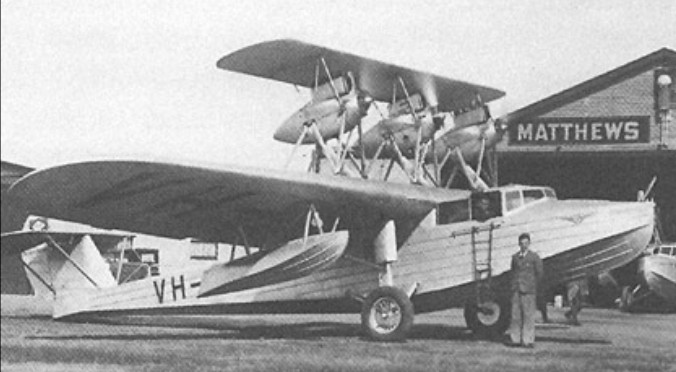
The Windhover was a six-seat three-engined flying-boat with an auxiliary upper wing first flown in 1931. One built. It crashed in 1936 during attempted night landing in Currie Harbour, King Island in Bass Strait, Australia. A total loss
Engines: 3 x de Havilland Gipsy II, 89kW Passengers: 6 Crew: 2
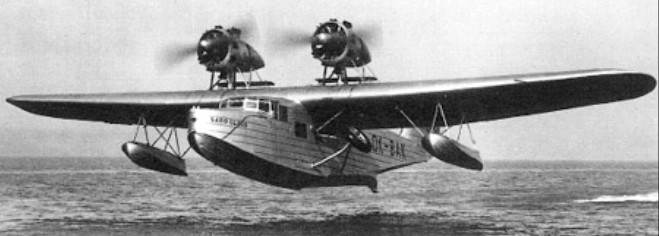
The 1931 Cloud amphibious flying-boat was produced in two forms: as a civil eight-seater and as a military trainer. In the latter role the RAF received 16 from 1933. The large cabin provided accommodation for eight pupils; six pupils and wireless and electrical equipment, navigation instruments and signalling apparatus; or four pupils and the above equipment for navigational training. Alternatively, the Cloud could be used for flying training, to simulate the conditions to be met with a larger service type of flying-boat. Power was provided by two 253kW Armstrong Siddeley Double Mongoose engines.
The Monospar S.T.7 designation covered the wing structure of the Saro Cloud.
A.19 Engines: 2 x Armstrong-Siddeley Serval V, 254kW Max take-off weight: 4309 kg / 9500 lb Empty weight: 3084 kg / 6799 lb Wingspan: 19.51 m / 64 ft 0 in Length: 15.28 m / 50 ft 2 in Height: 5 m / 16 ft 5 in Wing area: 60.39 sq.m / 650.03 sq ft Max. speed: 190 km/h / 118 mph Ceiling: 4265 m / 14000 ft Range: 612 km / 380 miles