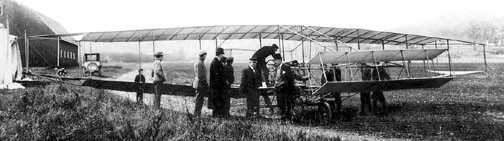
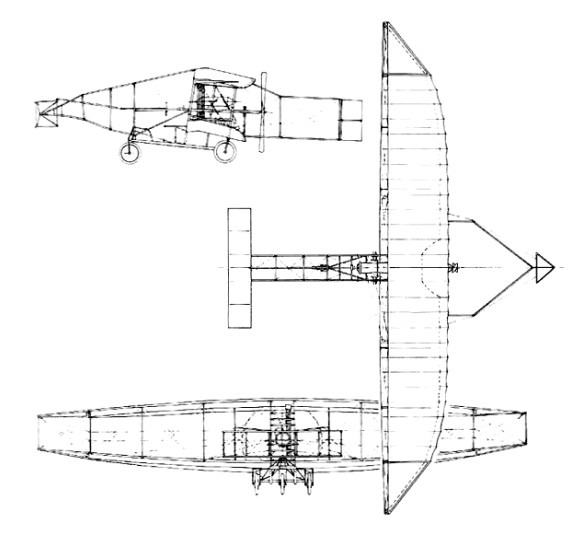
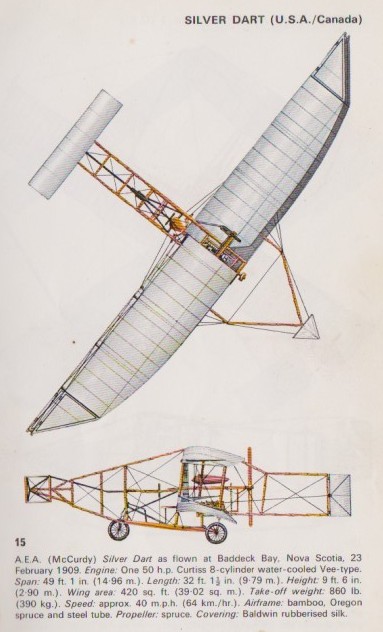
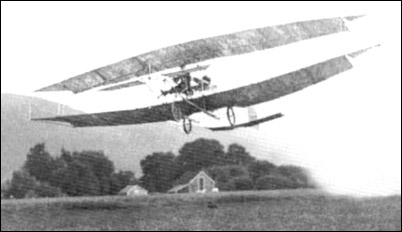
Aerial Experiment Association 2005 Welland Silver Dart Replica

The team began worked on the construction of the Silver Dart in July 2004.
The replica’s maiden flight was on February 22, 2009 in Baddeck, Nova Scotia, the location of the original plane’s inaugural flight in 1909.
The Welland Silver Dart replica – C-IIGY – drew hundreds of admirers on Saturday and Sunday, June 6 and 7 at the Russell Aviation Group’s Friendly Foes Above the Falls 2009 annual air show at Niagara Falls South Airport.

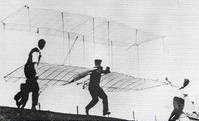
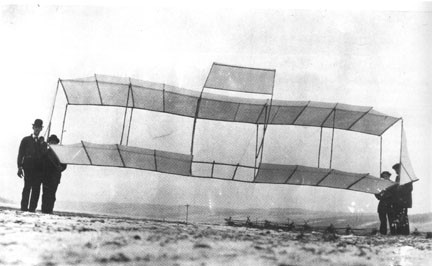
Aerial Experiment Association 1907 Glider

Alexander Graham Bell, inventor of the telephone, had a passionate interest in aviation and had experimented with scientific kites since 1891. He was also a good friend of the Dr. Samuel P. Langley, the builder of the unsuccessful Aerodrome. Bell was Langley’s successor determined to develop a practical airplane with the apparent blessing of the U.S. Army.

In September of 1907, he organized the Aerial Experiment Association to build a practical airplane.

Initial plans were to build four flying machines, and for each member to personally oversee at least one project. The first of these was to be Bell’s kite, equipped with one of Curtiss’ motors. It took shape by December of 1908, but Bell wanted to test it as a glider before engine installation, so Selfridge, somewhat experienced in flight, was towed by a motorboat across a lake near Baddeck. The kitelike machine rose to an estimated height of about 170 feet, but then settled in the water still on tow, ruining many of its silk cells. While it was tediously undergoing repair, the group’s thoughts shifted to more conventional aircraft, such as those being flown in Europe at the time.

Aerial Experiment Association Silver Dart

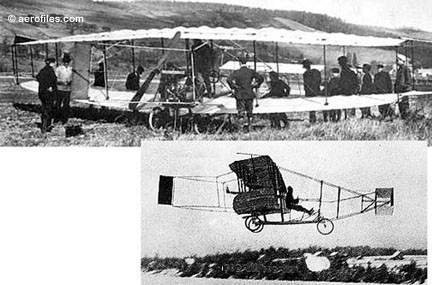
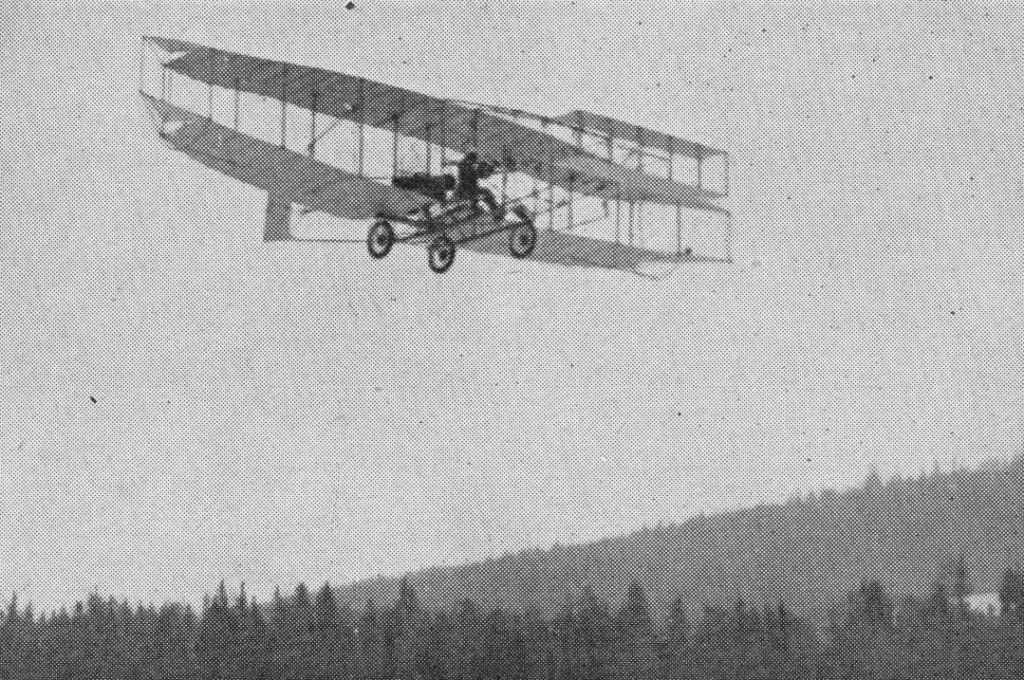
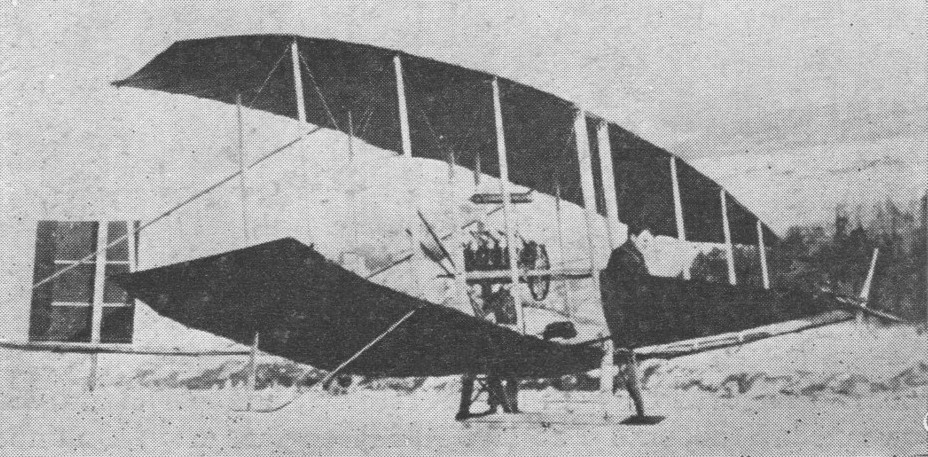
The AEA’s fourth effort was the Silver Dart, designed and piloted by John Alexander Douglas (J.A.D.) McCurdy. Made from steel tube, bamboo, friction tape, wire and wood, it was covered with silvery rubberized silk balloon-cloth, its propeller was carved from a solid block of wood, and it had no brakes. It was first test-flown in Hammondsport, NY, on 6 December 1908 and was then shipped to Dr. Bell’s summer home in Baddeck on 6 January 1909.
The Silver Dart was made principally of bamboo, ash, spruce, metal tubing, and wire cable. The wings were covered with silver-coloured, rubberized balloon cloth – hence the name Silver Dart.
Its engine was a Curtis V-8 water-cooled engine that probably put out no more than 35 or 40 horsepower at 1,600 rpm. It spun a 2.43 m-diameter (8’) propeller. The Silver Dart had its two-plane elevator mounted on the front – canard style. It was 3.65 m (12’) wide and made the aircraft sensitive around its pitch axis.
On February 23rd, 1909 it made history with McCurdy at the controls when it became the first controllable powered aircraft to fly in Canada. About two weeks later on March 10th 1909, McCurdy flew the aircraft on a 20-kilometer circular flight around Baddeck Bay.
The Silver Dart made about 30 flights in the Baddeck area before the AEA proposed a demonstration to the Canadian Army. The Army was not all that enthusiastic but did invite the AEA to Petawawa, ON. The sandy and hilly take-off and landing areas made getting off the ground very difficult. On their 5th demo flight – with Casey Baldwin on board as a passenger – McCurdy struck a rise in the ground and crash-landed (on August 2, 1909).

That was the end of the Silver Dart’s career after 50 flights.
Only four pieces of the original aircraft remain – the fuel tank and radiator in the Bell Museum in Baddeck, and the engine and propeller in the Canadian Aviation Museum in Ottawa.

On 3 February 1959, Canada celebrated the 50th anniversary of the Silver Dart flight by flying a replica Silver Dart over the same ground, and J.A.D. McCurdy was made an Honourary Air Commodore.

1959 replica

Engine: 50hp Curtiss water-cooled V-8
Wing Span: 49 ft 1 inch (15 m)
Length: 39 ft 4 in (12 m)
Height: 9 ft 7 in (2.9 m)
Empty weight: 610 lb (277 kg)
Gross weight: 860 lb (360 kg)
Take off speed: 38 mph (61 km/h)
Cruise speed: 43 mph (69 km/h)
Ceiling: 70 ft

Aerial Experiment Association June Bug / Loon

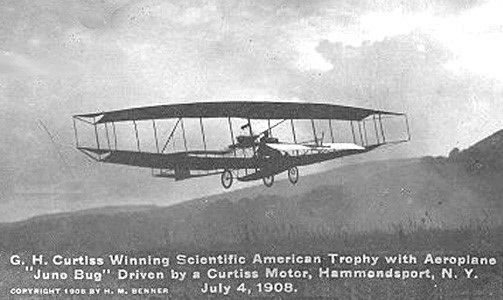
When in late 1907 the Scientific American had announced a magnificent silver trophy (it featured a world globe and a replica of Langley’s ill-fated Aerodrome) as an annual award for aviation competition, it went pretty much ignored by America’s relatively small fraternity of aeronauts until AEA decided to try for it. To this goal Curtiss’ “June Bug” design was dedicated.

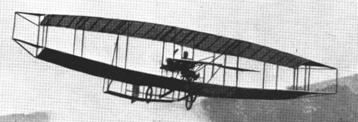
The June Bug was one of the lightest of biplanes, having a wing spread of forty-two feet and an area of 370 square feet. The wings were transversely arched, being furthest apart at the center: an arrangement which has not been continued. It had a box tail, with a steering rudder of about six square feet area, above the tail. The horizontal rudder, in front, had a surface of twenty square feet. Four triangular ailerons were used for stability. The machine had a landing frame and wheels, and weighed, in operation, 650 pounds.

Coincidentally, aviation’s “dope” also originated here when plain varnish used to water-proof fabric coverings soon cracked with use and a more flexible replacement was created by AEA from a test mixture of paraffin, turpentine, and gasoline. Over the years that basic formula was much modified and improved, but June Bug had the first coat of actual dope. How they came to choose that word, which stems from the Dutch term “doop,” for a sauce or mixture, is not known.

The June Bug was a further refinement of White Wing, was sponsored by Curtiss and was more successful with the same 40 hp lightweight V-8 engine. First flown on 21 June, it made numerous flights, including a straight run of 1042m on the seventh flight. On 4 July1908, Curtiss made a pre-arranged flight to win the first task, or ‘leg’, of the Scientific American Trophy, which called for a straightaway flight of one kilometre. After a couple of false starts, he won this with ease by flying 1.6km at a speed of 62.76km/h in 1 minute 42.5 seconds.

The machine made several test flights from 450 to 3,420 feet, which Scientific American reported as the longest flights ever “publicly accomplished by a heavier-than-air flying machine in America at any accessible place.” (Hammondsport was likely more “accessible” to the magazine than was Huffman Prairie, Ohio, whence the Wrights had made flights in 1905 up to 24 miles over the heads of any public that cared to look up!)

However, on his eighth venture into the sky, and in the USA’s first officially-recorded “public flight,” Curtiss travelled 6,000 feet in 01m:42s at 39 mph to win the trophy on July 4, 1908. Yet, to dull the flush of victory, this event precipitated a letter from the Wright Brothers warning of patent infringement on their control system. Despite this legal snarl, AEA managed to get the aileron system patented in 1911, which was later transferred to Curtiss, and which would eventually lead to a full-blown court battle between the brothers and Curtiss that would drag on for years until the Wrights finally won.

In 1909 Curtiss exhibited intricate curved flights at Mineola, and circled Governor’s Island in New York harbor. In 1910 he made his famous flight from Albany to New York, stopping en route, as prearranged. At Atlantic City he flew fifty miles over salt water. A flight of seventy miles over Lake Erie was accomplished in September of the same year, the return trip being made the following day.

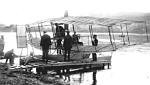
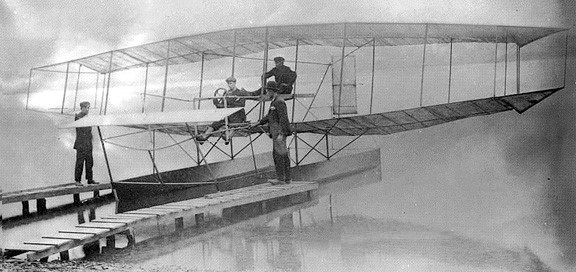
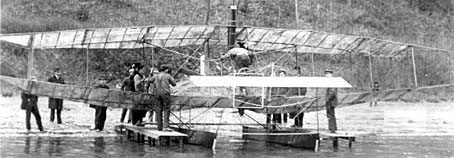
Curtiss fitted twin pontoons to his June Bug, renamed it Loon, and tested it in June 1909. It attained a surface speed of 27mph would not leave the water. During subsequent attempts it went out of control, sank in the shallows, and became frozen in the ice.

On January 26, 1911, Curtiss repeatedly ascended and descended, with the aid of hydroplanes, in San Diego Bay, California.

The June Bug was used by Curtiss for a total of 32 flights. It then crashed on 2 January 1909 and went into retirement.

Wingspan: 12.95 m / 42 ft 6 in
Wing area: 34.37 sq.m / 369.96 sq ft
Length: 8.4m / 27ft 6in
Take-off weight: 279 kg / 615 lb
Aerial Experiment Association White Wing

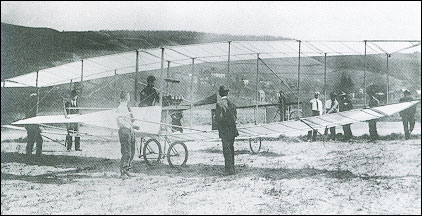
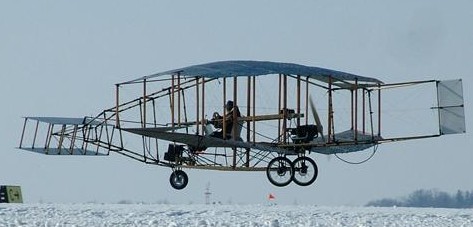
The second AEA aeroplane was White Wing, sponsored by Canadian F.W Baldwin, jointly designed by Baldwin and Curtiss. It was similar to Red Wing, except for the substitution of three wheels for the ice runners, and used the same Glenn Curtiss built engine.

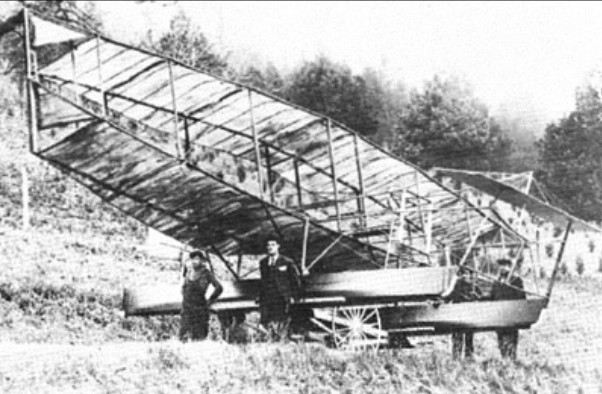
“White Wing,” as a biplane with front elevator and rear stabilizers and rudder connected by wires to a four-axis steering wheel, and a rudimentary aileron system controlled by body motions of the pilot. Its three-wheel, rubber-tired undercarriage was Curtiss’ idea, a carryover from sidecar motorcycles.

An innovation was the addition of movable lateral control surfaces on all four wingtips that later came to be called ailerons. In principle, these had the same effect as the Wright’s wing-warping, but Curtiss claimed mechanical and control differences. The method of control reflected Curtiss’s motorcyle experience – a yoke embracing the pilot’s shoulders. When he wanted to bank for a turn, he leaned in the desired direction and the proper control movement was automatically applied.

After many reassessments and revisions, White Wing made four flights, the first on 18 May, 1908, with Baldwin at the controls. The distance covered was 85m at a height of 3m. The third flight was the longest, at 310m with Glenn Curtiss flying. White Wing crashed on 23 May after McCurdy had flown 167m.

Take-off weight: 274 kg / 604 lb
Wingspan: 12.87 m / 42 ft 3 in
Wing area: 37.9 sq.m / 407.95 sq ft

Aerial Experiment Association Red Wing

The first aeroplane of the AEA was the White Wing, designed and sponsored by Lt Thomas.E. Selfridge.

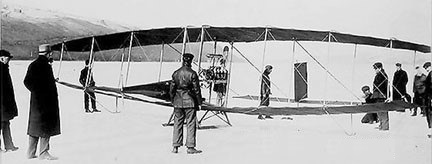
Named for its red fabric coloring, Glenn Curtiss built the engines for the Aerial Experiment Association Red Wing and the White Wing early in 1908.

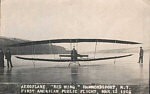
Dubbed “Red Wing” after its amber fabric sealant, and it was finished in three months at Curtiss’ shop at Hammondsport. Ready for a trial run on March 10, 1908, Selfridge and Bell were on business in Washington DC, so the honors were handed to Baldwin. Powered by a 20-hp Curtiss motorcycle engine, Red Wing ran across the ice on its steel skids for about 250 feet, then lurched into the air to fly about 300 more feet at an altitude of six feet before finally stalling and crumpling into a heap.

Having no lateral control, it crashed on its first flight at Lake Keuka NY on 12 March 1908 after flying a distance of 318’11” (p: Baldwin).

The first public flight of an airplane in the US.

Aerodrome #1, Red Wing
Engine: Curtiss B8 air-cooled V-8 40hp pusher. Actual flight efficiency est. less than 20hp.
Wingspan: 43’4″
Length: 26’3″
Useful load: 185 lb
Seats: 1

AEG R.I

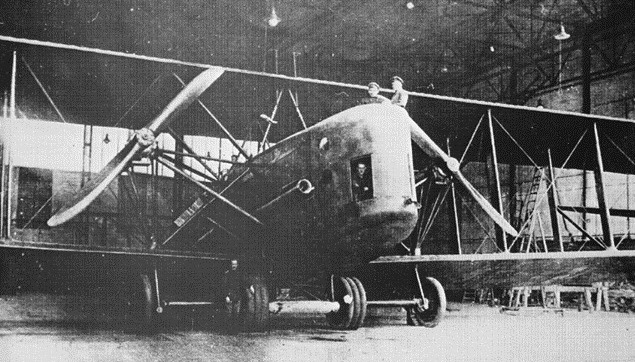
During 1916 AEG received an order for two R.I Giant four engine heavy bombers. R was an abbreviation of “Riesenflugzeug” (giant aircraft). All four engines were grouped inside the fuselage and drove four blade propellors at 750 rpm via shafts and gearboxes; a combination leather cone and dog clutch. Two blade propellors were installed later.

AEG R.I Article

One R.I was completed (R.I 21/16) and made its first flight in 1916. During a trial night flight on 3 September 1916 this aircraft broke up in the air with a loss of all seven crew. This crashed was caused by propellor delaminating because of insufficient hardening of the glues. A second machine, R.I 22/16, was still incomplete at the end of World War 1 and eventually scrapped.

Engine: 4 x Mercedes D.IVa, 260 hp
Wing span: 118 ft 1.5 in
Length: 63 ft 11.5 in
Empty weight: 19845 lb / 9000 kg
Loaded weight: 28,003 lb / 12,500 kg

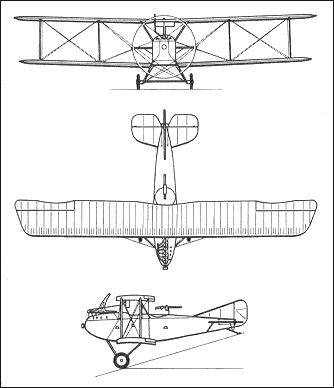
AEG DJ.I

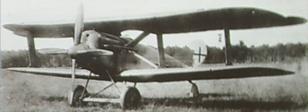
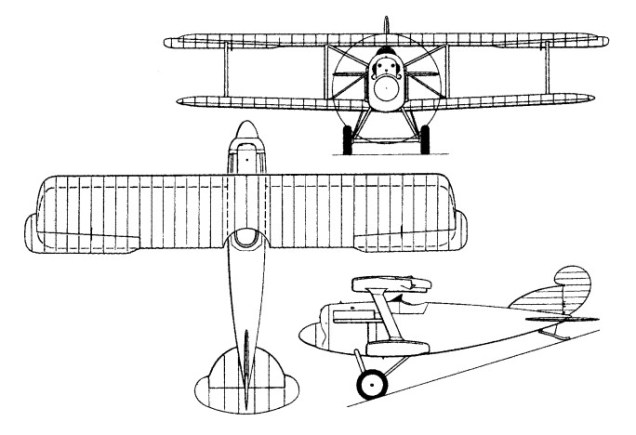
Before flight testing of the AEG PE, development continued in the DJ.I. The DJ.I was a two bay biplane, of unequal span using I-section aerofoil section interplane struts. The fabric covered wings had dural spars, the fuselage utilising aluminium sheet skins and some armour protection for the engine, fuel tank and pilot.
Three DJ.I prototypes were built, the first flying in July 1918. The first two were fitted with Benz Bz.IIIb V-8 engines of 195 hp and fitted with 4-blade propellors, while the third had a Maybach Mb.Iva engine of 240 hp.
Flight testing was not completed by the end of World War 1 in November 1918.

Engine: 1 x Benz Bz.IIIb, 195hp
Wing span: 32 ft 9.75 in / 10 m
Length: 21 ft 11 3/8 in / 5.69 m
Height: 9 ft 10 in / 3 m
Max take-off weight: 1375 kg / 3031 lb
Empty weight: 1182 kg / 2606 lb
Max. speed: 180 km/h / 112 mph
Cruise speed: 146 km/h / 91 mph
Climb to 3280 ft / 1000m: 4 min
Armament: 2 x 7.92mm mg
Crew: 1

AEG J.II

The J.II was similar to the J.I but introduced an improved control system and horn-balanced control surfaces. To to improve directional stability the fin area was also increased. These improvements increased the weight by 55 lb / 25 kg.
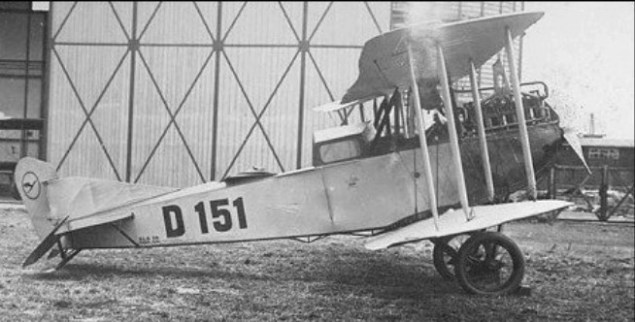
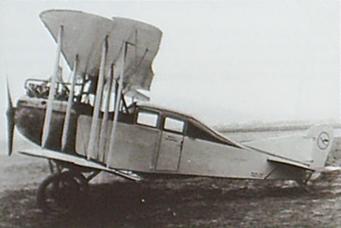
After the armistice a number of J.IIs were used as transports (with the armour removed) by Deutsche Luft-Reederei. The J.II civil cabin biplane built 1918 had a two-seat cabin in place of the gunner’s position, as well as
a door and steps.

AEG built more than 600 J.Is and J.IIs.

Passenger conversion
Crew: 1
Pax cap: 2

Engine: 1 x 220hp Benz Bz.IV
Length: 7.92 m / 26 ft 0 in
Height: 3.35 m / 11 ft 0 in
Wing area: 34.50 sq.m / 371.35 sq ft
Max take-off weight: 1819 kg / 4010 lb
Wingspan: 13.46 m / 44 ft 2 in
Max. speed: 152 km/h / 94 mph
Cruise speed: 140 km/h / 87 mph
Ceiling: 4500 m / 14750 ft
Rate of climb: 170 m/min / 550 ft/min
Range: 590 km / 367 miles
Armament: 3 x 7.92mm mg
Crew: 2

AEG J.I

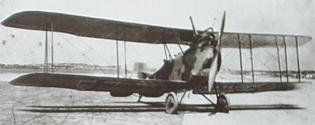
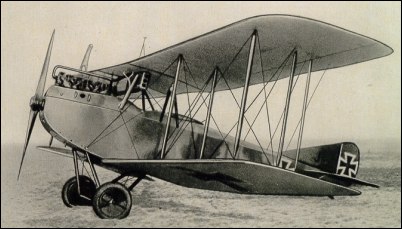
Late 1915 the German army air service introduced what could be called ground support units. Proving effective on a small scale during the Battle of Verdun in early 1916, a high priority expansion programme began. The AEG J.I was developed to meet this task until more suitable aircraft became available.

The J.I was essentially a C.IV with a more powerful Benz Bz.IV of 200 hp to offset the weight of 860 lb 390 kg) of armour plate crew and engine protection. This 2 in (51mm) thick steel sheet protection extended from the nose to the rear of the cockpit. Armament was 2 LMG 08/15 mounted in the rear cockpit floor pointing downward and forward at about 45 degrees. These could be used to strafe trenches or columns of troops. The observer had also a trainable LMG 14 on a ring mounting.

The increased weight caused ailerons to be added to the lower wings to improve lateral control.

AEG built more than 600 J.Is and J.IIs.

Engine: Benz Bz.IV, 200 hp
Wingspan: 44 ft 2 in / 13.46 m
Length: 23 ft 7.5 in / 7.2 m
Height: 10 ft 11.5 in / 3.3m
Wing area: 357.16 sq.ft / 33.18 sq.m
Empty wt: 3280 lb / 1455 kg
MTOW: 3836 lb / 1740 kg
Max speed: 94 mph / 150 kph
Climb to 3280 ft / 1000m; 6 min
Service ceiling: 14,765 ft / 4500 m
Max range: 233 sm / 375 km
Max endurance: 2.5 hr
Crew: 2
Armament: 2 x fixed forward/downward firing 7.92mm MG 08/15 machine guns / 1 x trainable 7.92mm LMG 14 Parabellum