After the First World War, Aeromarine had completed over 300 aircraft. Production was centered around seaplanes for sport and commercial use. President Inglis M. Uppercu, marketed the seaplane based in its luxury interior.
The models 50, 52, and 55 represented an ultimately unsuccessful attempt to offer civil versions utilising components of the Navy A40 trainer utilising the wings, tailplane, and general hull structure of the model 40F.
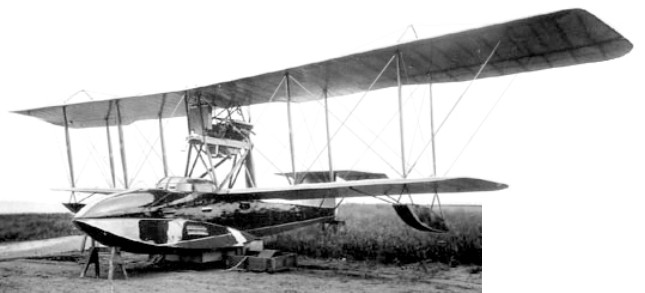
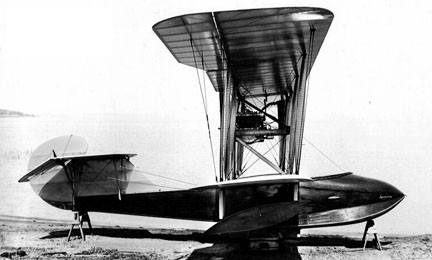
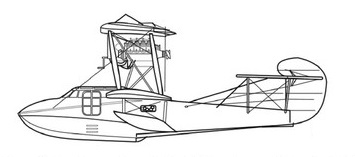
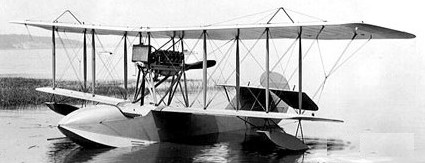
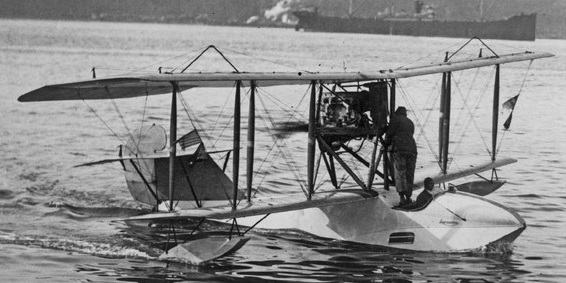
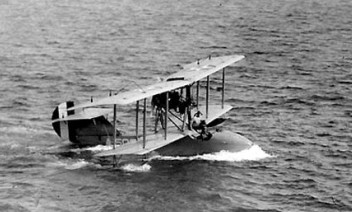
The Aeromarine 50, also called the Limousine Flying Boat, was a luxury seaplane first flown in 1919 and introduced at the Chicago Air Show. The aircraft was a biplane seaplane with a two-pilot open cockpit and enclosed seating for three passengers. The 150hp Hispano Suiza engine was mounted in a pusher configuration.
The 50B of 1919 was a fully enclosed variant (also called Cabin Flying Boat) with 180hp Aeromarine U-8 (>B-8) pusher. An undocumented 50-B-2 Limousine Flying Boat version was also built.
Aeromarine 50-C
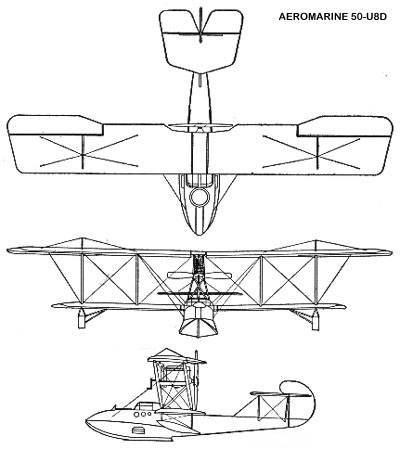
Other versions include 50-C, 50-L, and 50-S Limousine Flying Boat also known as Model 50-U8D; all-metal fuselage; 180hp U-8D or Hisso pusher. The model 50-S entered airline service with Aero Limited over the 100 mile route from New York to Atlantic City, New Jersey during 1919. Ostensibly as a passenger carrier, but more likely for the purpose of moving alcoholic beverages following the passage of the Prohibition Act earlier the same year. Those built included N2990 and N7691.
Aeromarine Airways also operated Model 50 flying boats on NYC-Atlantic City service.
A total of 4 or 5 of the 3 or 4 place 1919 Aeromarine 50 / 52 / 55 Limousine Flying Boat were built.
50 / Limousine Flying Boat 1919 Engine: Hisso A, 150hp Seats: 3 Wing span: 48 ft 6 in Length: 28 ft 11 in
50 1919 Engine: 1 × Aeromarine V-8 , 130 hp (97 kW) Upper wingspan: 48 ft 6 in (14.78 m) Lower wingspan: 37 ft 8 in (11.48 m) Height: 12 ft 7 in (3.84 m) Empty weight: 2,280 lb (1,034 kg) Gross weight: 3,000 lb (1,361 kg) Fuel capacity: 40 U.S. gallons (150 L; 33 imp gal) Maximum speed: 65 kn; 121 km/h (75 mph) Stall speed: 38 kn; 71 km/h (44 mph) Endurance: 3.5 hr Rate of climb: 220 ft/min (1.1 m/s) Crew: 2 Passengers: 3
50-B 1919 Engine: Aeromarine U-8, 180hp
50 B-2
50-C Engine: 150 hp (112 kW) Hispano Suiza
50-L
50-S / 50-U8D 1919 Engine: Hisso or Aeromarine U-8D, 180hp
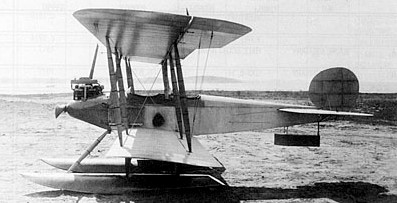
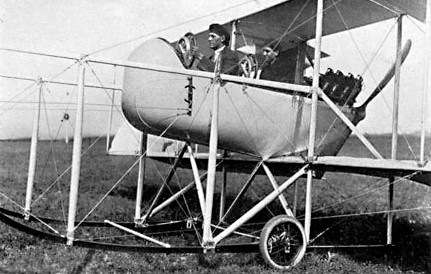
The Aeromarine Model 40 was a two-seat floatplane trainer aircraft serving the United States Navy. The aircraft was produced by the Aeromarine Plane and Motor Company of Keyport, New Jersey, and had already made a name for itself by supplying the US Navy with its first carrier-landed aircraft in the Aeromarine Model 39. Whereas the Model 39 could be utilized as a land-based and floatplane aircraft equally (requiring the conversion of the undercarriage to suit each task), the Model 40 was a dedicated flying boat using wing panels and struts of Model 39 on a new flying boat hull.
One or two 40-F may have been tested by the Coast Guard.
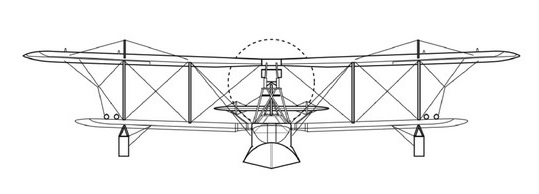
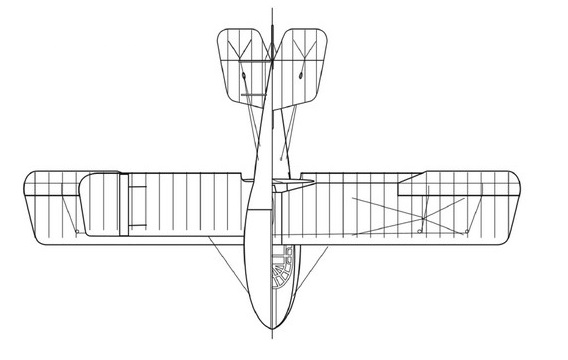
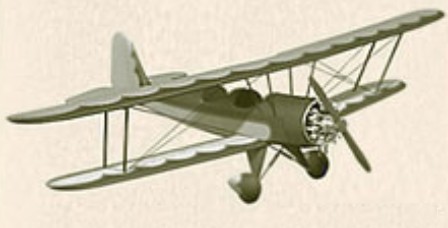
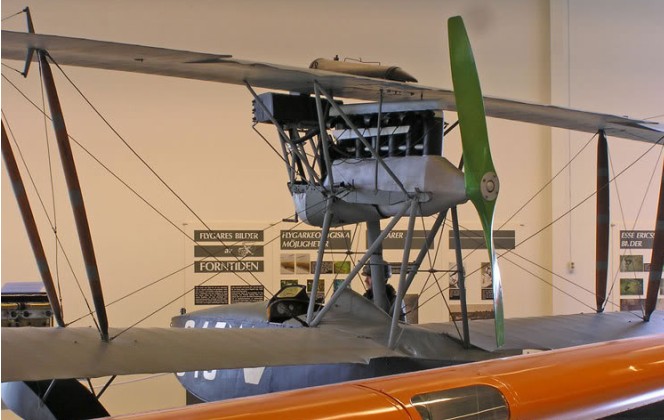
Design was conventional for the time, consisting of a contoured boat-like hull fitted to a boxy fuselage mounting a large unequal-span biplane wing configuration. Single pontoons were fitted as outrigger floats, one per each lower wing assembly. The upper and lower wing assemblies were joined by parallel struts making up two bays and fitting appropriate cabling. The student and instructor sat side-by-side just behind the nose and in front of the wing structure in an open-air cockpit. The view was superb from this position with their forward views protected by two simple curved windscreens. The empennage was adorned with a conventional large-area vertical fin and horizontal tailplane system showcasing rounded edges. The powerplant was placed within a strut configuration supporting the upper and lower wing assemblies at mid-span. The engine was situated well above and just behind the pilots, sporting a two-bladed pusher propeller system powered by a single Curtiss OXX-6 series V-8 water-cooled engine producing an output of roughly 100 horsepower (some later Model 40’s were known to fit a Hispano-brand engine in its place). Performance from this pusher arrangement allowed for speeds of up to 71 miles-per-hour with a service ceiling of nearly 1,900 feet. Endurance was listed at about 4.5 hours of flight time.
The Model 40 was designed and built in response to a 1918 Navy Department order for a two-seat seaplane trainer, 200 Model 40’s were initially ordered by the US Navy in 1918.
Very similar in general design to the Curtiss model MF trainer, which it was intended to augment, serialed A5040-5089, fifty 40-Fs were built.
Although the first civil model 40 may have flown in 1918 with a 150 hp Aeromarine U-8 engine, the first documented flight of the Navy model 40F occurred in 1919. When World War I ended, the original Navy order for 200 aircraft was reduced to 50, and all examples were delivered after the armistice. The model 40-F was operated by the US Navy as a trainer. The end of the war in November ultimately signified the end of the production contract, leaving only 50 Model 40 examples produced. Model 40’s still managed to see service in the post-war world solely with the United States Navy. Overall, their operational use proved the airframe too fragile for the constant rigors of water-born operations, to which these results helped in future American flying boat designs. During service, some model 40Fs were reportedly refitted with 150 hp Hispano-Suiza engines to improve performance and payload.
The civil versions (40 and 40B, 140 hp Hispano-Suiza engine; 40C, 150 hp Aeromarrine engine; 40L 130 hp Aeromarine L engine; 40T, 100 hp Curtiss OXX-6 engine; and 40U, 100 hp Aeromarine U-6 engine) were produced in 1919 and sold for around $9000 each. An estimated six civil models were built.
The Aeromarine Model 40 was further developed into the Model 41 to which some existing Model 40’s were converted to this newer design.
The Aeromarine 41 flying boat were conversions of Model 40s mentioned in 1922.
40 1919 Engine: Hisso, 150hp Span: 48 ft 4 in Length: 28 ft 11 in Seats: 2 Speed: 85 mph New price: US$9,000
40 Engine: Curtiss OXX-6, 100 hp Prop: 2 blade wooden fixed pitch Upper wingspan: 48 ft 6 in Length: 26 ft 11 in Empty weight: 201 lb Loaded weight: 2592 lb Max speed: 71 mph at SL Ceiling: 3500 ft Range: 250 mi
40-B 1919 Engine: Hisso, 150hp Span: 48 ft 4 in Length: 28 ft 11 in Seats: 2 Speed: 85 mph New price: US$9,000
40-C 1918 Engine: Aeromarine U-8, 150hp Seats: 2
40-F 1919 Engine: Curtiss OXX-6, 100hp Wing span: 48 ft 6 in / 14.80m Length: 28 ft 11in / 8.8m Height: 11.48ft / 3.50m Empty Weight: 2,061lbs / 935kg Maximum Take-Off Weight: 2,590lbs / 1,175kg Maximum Speed: 71mph / 114kmh / 62kt Maximum Range: 314miles / 506km) Service Ceiling: 1,903ft / 580m) Seats: 2 New price: US$8,100
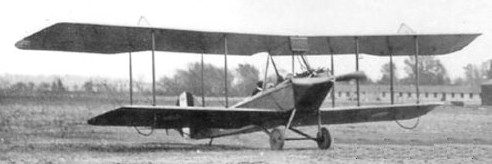
The Aeromarine 39 was a seaplane primary trainer version of the M-1 with the wingspan increased to carry the weight of twin floats. One was built.
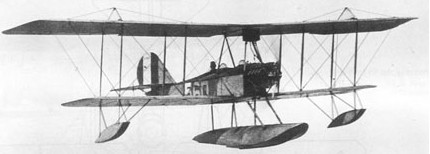
In 1917 the Navy placed with the Aeromarine Plane and Motor Company of Keyport, NJ, what was at that time the largest single order for Navy aircraft – 50 of the Model 39-A and 150 39-B trainers. These were conventional two-bay wood and fabric biplanes and could be fitted with wheels or floats. The 39-As used the four-cylinder Hall-Scott A-7A engine of 100 hp and the seaplane versions had twin wooden floats. The 39-B was powered by the 100 hp Curtiss OXX-6 engine, the seaplanes having the single main pontoon with small wingtip floats for stability which the Navy preferred for its training and service seaplanes and was to retain until seaplane trainers were dropped from the inventory in 1960.
39b
Fifty of the originally built designs were reassigned under the designation of 39A. The 39A models featured twin floats and the plane was powered by a Hall-Scott A-7 engine. Fifty were built with the 100hp Hall-Scott A-7 [A450/499]. The Hall-Scott A-7 was an early aircraft engine with a straight 4 configuration and could produce a maximum of 100 horsepower (75 kW). These engines suffered from consistency problems and many were prone to catch fire while in operation forcing the manufacturer to start using the Curtiss OXX powerplant. The Aeromarine 39-A was equipped with various engines: Aeromarine, Beardmore, Hisso, OX-5, OXX-6.
Model 39-B
Other redesigns increased the wingspan for more lift needed for those water take-offs. This became known as the 39B. Additional changes included a single pontoon with outrigger floats, plus an enlarged vertical tail surface.
The single Sportsman built in 1917 was a civil version of Aeromarine 39-B by Burnelli. Refitted with floats, it made the first aerial delivery of mail to a ship at sea on 14 August 1919.
In 1917 Aeromarine received from US Navy largest single order for aircraft then placed by that service: 50 Model 39-A and 150 Model 39-B biplane trainers (wheel or float undercarriage).
39-BL
In 1921 they cost US$9650 and 150 were built (A500-A649).
The Aeromarine 39 was purchased by the USN for $9,688, sold surplus in 1921 for $1,500, and reduced to $800 in 1928. About 30 of these received registration.
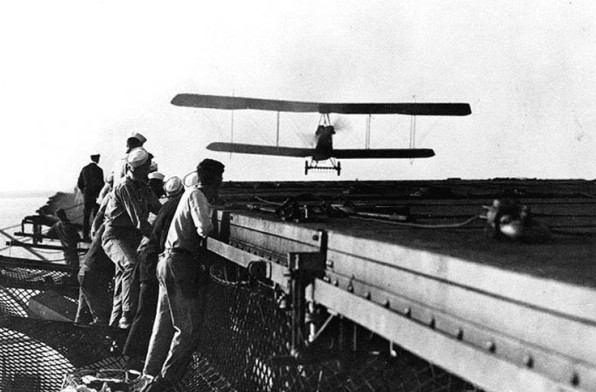
A number of the 39-Bs survived World War I, and two were used for the Navy’s early experiments in deck landing. Various types of arrester gear were tried on a dummy carrier deck at Langley Field, Virginia, in 1921. The aeroplane was fitted with the forerunner of the modern hook that engaged the cross-deck arrester cables, while alignment hooks were fitted to the undercarriage to engage longitudinal wires on the deck to keep the machine running straight. In anticipation of forced landings at sea in the course of later operations from shipboard, a hydrovane was fitted ahead of the wheels to prevent nosing over on alighting.
On October 26, 1922, a 39-B piloted by Lt Cdr Geoffrey DeChevalier, Naval Aviator No.7, made the first landing on the deck of the Navy’s first aircraft carrier, the USS Langley, a converted collier. De.Chevalier circled the USS Langley as the ship was underway at 10 knots. Chevalier successfully landed his plane on the moving deck of the Langley. The first such landing on an American carrier. This was nine days after the first take-off had been made in a Vought VE-7.
The 39-BL was also a two seat trainer.
The 1921 39-R sold for US$10,300 and 14 were built.
Aeromarine 39A Engine: 1 x Hall Scott A-7, 100 hp Length: 30 ft 4 in (9.25m) Wingspan: 46.98ft (14.32m) Height: 14.76ft (4.50m) Empty Weight: 1,940lbs (880kg) Maximum Take-Off Weight: 2,504lbs (1,136kg) Maximum Speed: 73mph (117kmh; 63kts) Maximum Range: 273miles (439km) Service Ceiling: 8,202ft (2,500m) Armament: None. Accommodation: 2
39-B Engine: Curtiss OXX, 100hp Wing span: 47 ft 0 in Length: 30 ft 5 in Speed: 68 mph
39-BL Seats: 2
Sportsman Engine: Aeromarine V-8, 100 hp Wing span: 47 ft 0 in Length: 26 ft 8 in Payload: 700 lb Max speed: 78 mph Stall speed: 48 mph Seats: 2
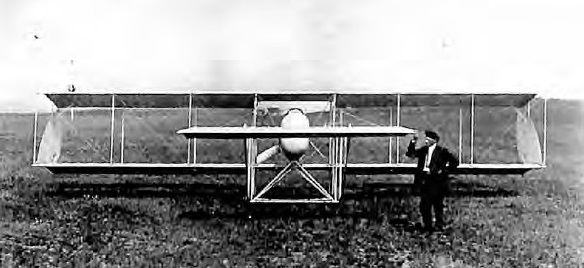
Circa 1910 the 2 seat Aeromarine 8 was powered by a pusher motor, and controlled by canard stabilisers with twin rudders between the wingtips. One was built.
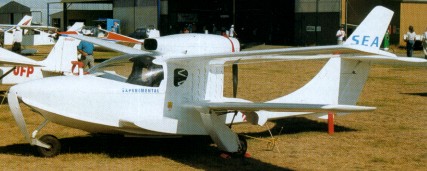
Garry Le Gare’s “Sea Hawk” amphibian progressed to the “Sea Hawker”, marketed by Aero Composite Technologies Inc. A two-seat, staggered biplane.
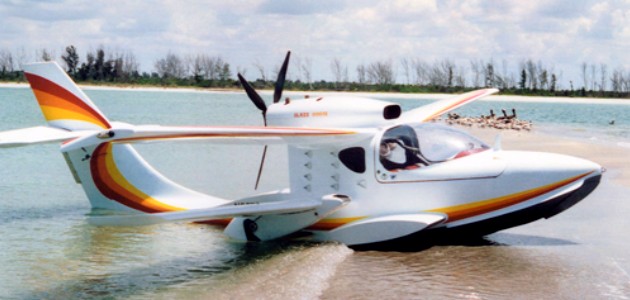
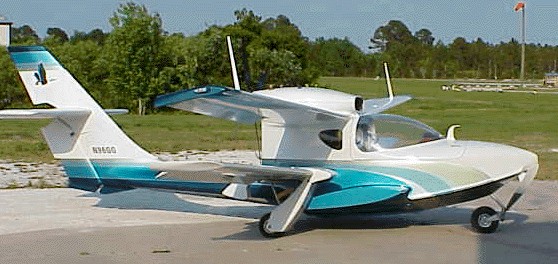
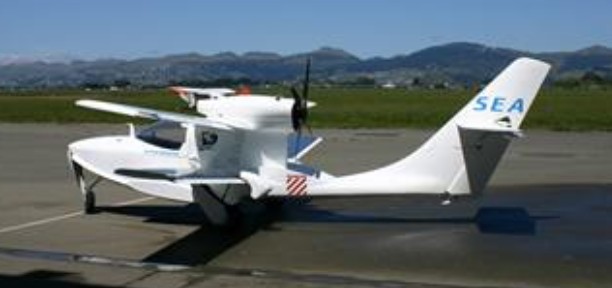
The Quikkit Corp Glass Goose is a composites-constructed two-seat amphibious biplane (introduced in kit form in 1992) from the former Aero Composites Sea Hawker first flown in July 1982 (N82SO).
The two place Quikkit Corp Glass Goose first flew in 1986, and has an empty weight of 950 lbs and gross weight of 1,800 lbs. The aircraft has a cruise speed of 140 mph and a range of 1000 miles. Powerplant options include 160 hp Lycoming 0-320 and 185 hp Subaru engines. Estimated build time is 1000 hours. Assembly instructions are clear and concise and there is no welding and machine shop work. Up to the final wing attachment, you can build the Glass Goose with common hand tools in a two car garage.
Quikkit Corp Glass Goose
Construction is of composite-fiberglass, kevlar, and carbon fiber control surfaces. There are four flaperons (pre molded carbon fiber flapperons available) and the landing gear is retractable – electric/hydraulic – with rough terrain dual main wheels. The sponsons are solid core short wings attached to lower fuselage at waterline.
32 known flying by Mar 1988.
Kit Contents Premolded Parts, Stainless Steel Weldments, Additional required foam and composite materials, Landing gear, control system, AN hardware, wheels, tires, brakes and full assembly instructions. Also a starter amount of glass and epoxy.
Building Time The factory staff builds a Goose in less than 1000 Hours, with no special jigging or equipment. Homebuilder times will vary depending on builder experience. The many pre-molded parts, and composite construction, make the Goose a ‘fast build’ kit. To further cut time there are several Quick Build Options.
Engine options include Lycoming O-320, 160 – 180 hp; Jabiru 5100, 180 hp, and several builders were experimenting with auto conversions.
Seahawk Glass Goose
A two seat amphibious aircraft. All composite featuring kevlar hull, carbon main spars and fibreglass airframe. Hyraulic retractable gear.
Quikkit Corp Glass Goose Engine: Subaru-Lycoming Wing span: 8.23 m Wing area: 12 sq.m MAUW: 816 kg Empty weight: 408 kg Fuel capacity: 265 lt Max speed: 257 kph Cruise speed: 225 kph Minimum speed: 68 kph Climb rate: 6 m/s Seats: 2 Fuel consumption: 35 lt/hr Plan price (1998): $300 Kit price (1998): $25,000
Quikkit Corp Glass Goose Engine: Lycoming, 160 hp HP range: 150-185 Height: 7.5 ft Length: 19.5 ft Wing span: 27 ft Wing area: 151 sq.ft Weight empty: 900 lb Gross: 1800 lb Fuel cap: 70 USG Speed max: 160 mph Cruise: 145 mph Range: 1100 sm Stall: 50 mph ROC: 1500 fpm Take-off dist: 700 ft (700 ft water) Landing dist: 900 ft (800 ft water) Service ceiling: 13,000 ft Seats: 2 side by side Landing gear: retractable nose wheel Cockpit width: 42 in
Quikkit Corp Glass Goose Length: 19.5 ft Height: 7.5 ft Wing Span: 27 ft Propeller: Aluminum Hub, 4 Blade Carbon Fiber Ground Adjustable Cruise: 140 mph Vmax,Vne: 160 mph Takeoff Roll: 800 ft Landing: 900 ft Climb rate: 1200 fpm Stall Clean: 50 mph Stall Full Flaps 45 mph Empty Weight: 900 lb Gross Weight: 1800 lb Useful Load: 900 lb Fuel Capacity: 70 Gal Standard (Wet Wings); Four Tanks Range: 1100 Stat Miles + Service Ceiling: 12000 ft
Three years of design work and almost eighteen months construction by Aero Gare of California saw two prototypes constructed, and resulted in flight testing in 1985. A Sea Hawk wing kit, assembled and static load tested, failed in excess of 9.5G loading. Analysis revealed deficiencies in construction technique with changes resulting in a wing capable of withstanding loads in excess of 10G’s without weight penalty. The Sea Hawk was designed from the beginning to utilize composite construction. The Sea Hawk’s unusual biplane appearance has not detracted from its popularity with 150 kits sold in three months from release date. The design has the ability to use many different engines in the 100 to 160hp range.
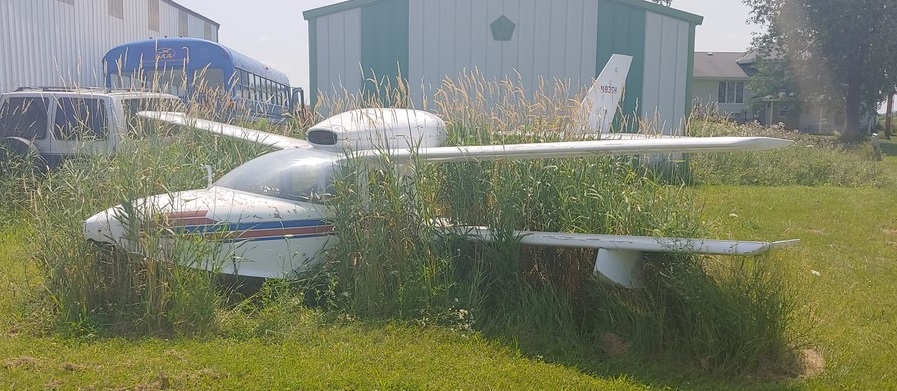
Tim Good was at AirVenture 2019 and spotted the original prototype Sea Hawk by Garry LeGare hidden behind a garage just off Ripple Ave near Camp Scholler.
prototype Sea Hawk courtesy Tim Good
Engine: 100-160 hp Gross weight: 1600 lb Empty weight: 850 lb Fuel capacity: 70 USG Wingspan: 24 ft Length: 21 ft Height: 76 in Cruise: 120 kt Stall: 42 mph Climb rate: 1200 fpm Ceiling: 18,000 ft Takeoff distance: 500 ft Landing distance: 600 ft Range: 1320 sm
The Macchi M.5 was Italy’s first flying-boat fighter and first single-seat aircraft. A total of 244 M.5s were built, equipping five Italian maritime patrol squadrons from early 1918 until after the Armistice. The M.5mod was equipped with a 250hp engine.
Replica: Petroelje Macchi M.5
Macchi M.5mod Engine: 1 x 250hp Isotta-Fraschini V6B liquid-cooled Take-off weight: 1080 kg / 2381 lb Wingspan: 9.95 m / 32 ft 8 in Length: 8.10 m / 26 ft 7 in Height: 2.95 m / 9 ft 8 in Max. speed: 209 km/h / 130 mph Ceiling: 5000 m / 16400 ft Climb to 4000m: 20 min Armament: 2 x 7.7mm mg Crew: 1



 All Aero