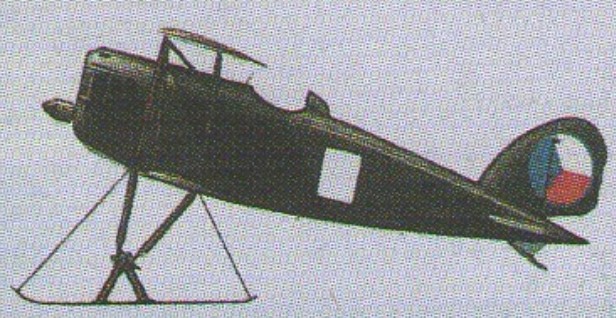
First Czech fighter in service.
Operated in the Czech fighter school in 1930.
First Czech fighter in service.
Operated in the Czech fighter school in 1930.
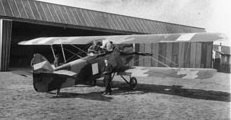
The Aero A-11 type came into existence by fitting a 240 hp Walter W-IV engine in the Aero 12 airframe. This aircraft was being built until 1930 year and used by the Czechoslovak Air Force in recce-, training- ground attack- and bomber versions. Observer armed by one rearward-firing machine gun and pilot by a fixed synchronized one.
The Aero A.11 was for the Czech Army Air Force in the interwar years between World War One and World War Two. The A.11 was designed from the outset as a multi-purpose airframe and would see no fewer than 20 different variant types since first flying in 1923.
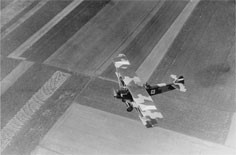
The A.11 pilot and gunner sat in tandem along the box-type fuselage. The biplane wing structure was fitted just in front and around the pilot’s position with the single liquid-cooled engine mounted forward. A single .303 caliber machine gun was fitted for self defence.
The Aero A.11 was seen in its typically reconnaissance platforms but was adept to day or night bombing. Other notable variants would go on to include a target tug (in the form of the A.29) and several day and night bombers of similar design.
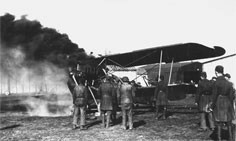
The A.29 target-tug variant would also form the basis for the first Czech sea-operating float plane.
440 were built.
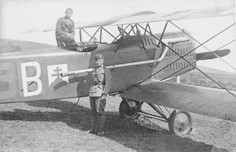
Aero A.11
Engine: 1 x Walter W.IV 8-cylinder liquid-cooled, 240hp
Length: 26.90 ft (8.2 m)
Span: 41.90 ft (12.77 m)
Height: 10.17 ft (3.10 m)
Empty Weight: 3,263 lbs (1,480 kg)
Maximum Speed: 133 mph (214 kmh; 116 kts)
Maximum Range: 466 miles (750 km)
Service Ceiling: 23,600 ft (7,193 m)
Range: 750 km
Armament: 1 x 7.62 mm machine gun
Accommodation: 2
Aero A.12
Engine: Maybach Mb-IV, 240 hp
Span: 12.80 m
Length: 8.34 m
Empty weight: 1080 kg
Maximum speed: 200 kph
Service ceiling: 7500 m
Range: 760 km
Armament : A fixed synchronized machine gun and one firing rearward
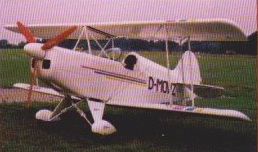
The Cobra S1 single seat biplane is built from Dacron covered wood. The S1 is aerobatic.
Empty weight: 230 kg
Wing span: 9 m
Wing area: 10 sq.m
Fuel capacity: 80 lt
Certification: vVz
Engine: Hirth F 30, 110 hp
MAUW: 300 kg
Seats: 1
Max speed: 220 kph
Cruise speed: 180 kph
Minimum speed: 50 kph
Climb rate: 8 m/s
Fuel consumption: 10 lt/hr
Plan price (1998): 1800 DM
Early in 1912 the twin-propeller Viking biplane was built. This was the last of Barber’s designs.
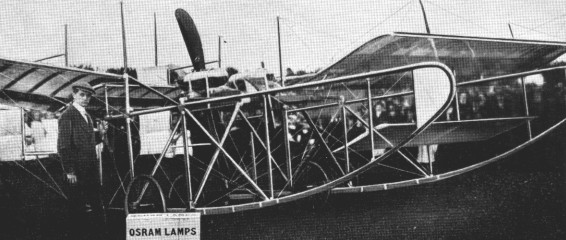
The Aeronautical Syndicate Ltd constructed Horatio Barber’s Valkyrie, tail first, monoplane circa 1911.
Horatio Barber’s Aeronautical Syndicate Limited’s Valkyrie B became the first aircraft to transport aerial cargo in Britain on 4 July 1911, when it flew a box of lightbulbs from Shoreham to Hove in Sussex.
Several Valkyrie canard pushers were built. Not easy to fly, but used successfully for training.
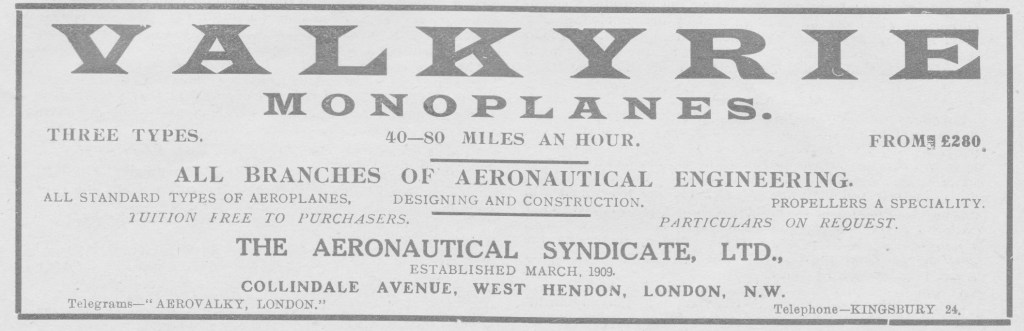
Aeronautical Syndicate Valkyrie Article

Designed by Horatio Barber and powered by a Green 35 hp engine, the type A was the second of the successful Valkyrie type machines.
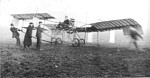
The 1911 ASL Valkyrie monoplane Type B – two-seater was designed and built by Aeronautical Syndicate Ltd.

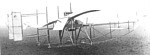
Type A
Engine: Green 35 hp
Propellor: Mahogany
Span: 34 ft 0 in / 10.36 m
Length: 22 ft 0 in / 6.71 m
Height: 8 ft 6 in / 2.59 m
Wing area: 190 sq.ft / 17.65 sq.m
Loaded weight without pilot: 520 lb / 230 kg
Speed: 45 mph / 72 kph
Seats: 1
Airframe: Honduras mahogany and ash
Fabric: un-proofed Egyptian cotton
Type B
Span: 31′
Length: 26′
Weight: 550 lb
Speed: 70 mph
Price: £920
Type C
Span: 39′
Length: 29’9″
Weight: 800 lb
Speed: 70 mph
Seats: 3

Reportedly an experiment with variable-camber wing using a De Havilland 4B. It is uncertain if it actually flew.
Engine: Liberty 12, 400 hp
Seats: 1
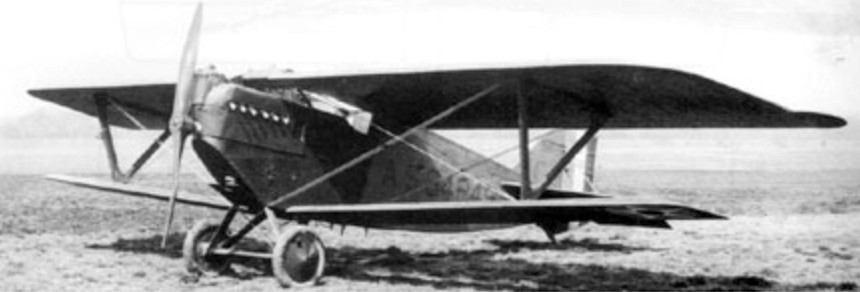
Built by Engineering Division and Boeing in 1922 as an army ground-attack pursuit aircraft, the PG-1 had a 37mm cannon in its propshaft and lots of armor plate. Ultimately it was rejected because of pilot’s lack of forward visibility. First flying on 22 August 1922, three were built (AS64245-64247). The first PG-1 went to McCook Field as project P-240. The only pursuit aircraft with a “PG” designation, which was later transferred to the Powered Glider category. A second type of engine was tried in the PG-1; the Packard 1A of 350 hp.
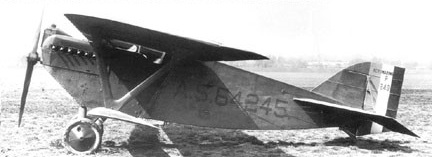
Engine: Wright K-2, 330hp / Packard 1A-1237, 350hp
Wing span (upper): 40 ft 1 in
Wing span (lower): 37 ft 2 in
Length: 24 ft 6 in
Payload: 888 lb
Max speed: 130 mph
Cruise speed: 124 mph
Stall speed: 58 mph
Range: 195 sm
Ceiling: 17,000 ft
Seats: 1
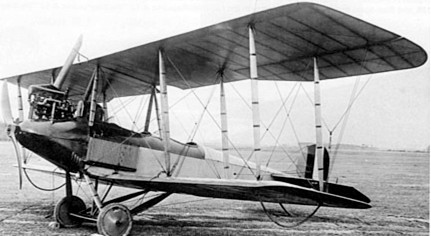
A two seat advanced trainer with six built by Charles F. Willard in 1917.
Six were built; AS265 to AS270.
Engine: Hall-Scott A-7A , 100 hp
Wing span: 37 ft 3 in
Length: 25 ft 11 in
Seats: 2
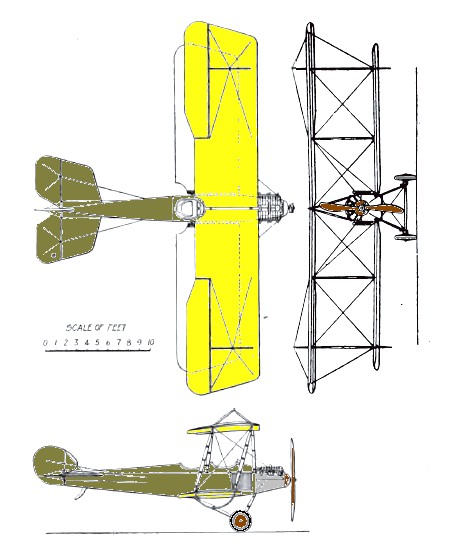
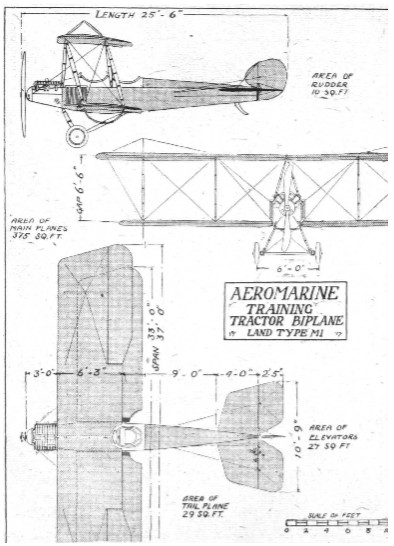
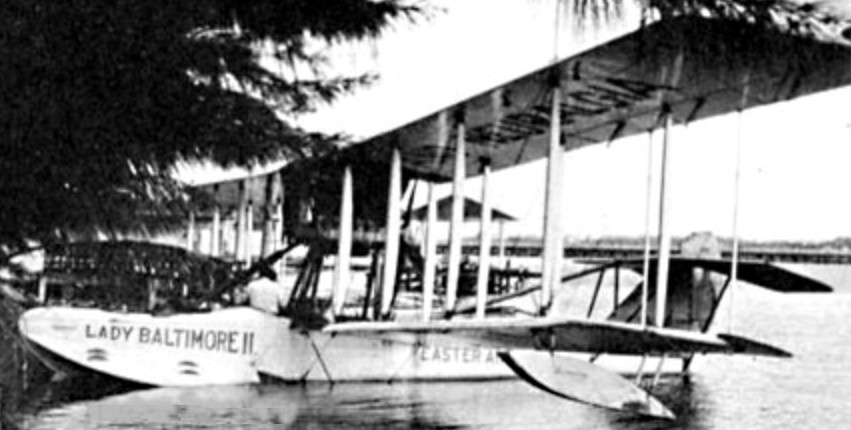
The Aeromarine HS of 1921 was an Aeromarine conversion of surplus Curtiss HS-2L open cockpit flying boat, using the wings and engine structure with an Aeromarine hull. Possibly only one was built.
Lady Baltimore II pictured here was the short-lived Easter Airways’ plane, displaying part of a commercial “FOR NEURALGIA” message on the underside of its top wing… an additional source of revenue.
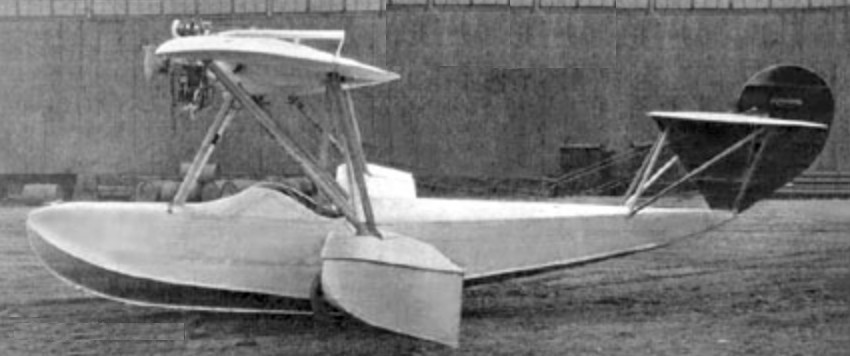
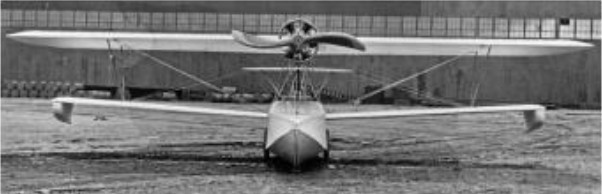
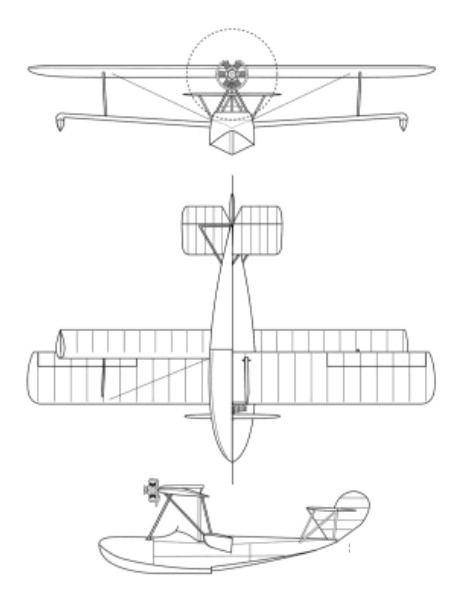
The Aeromarine aluminum hulled EO was built in 1924 and first flown in that June, with a shoulder mounted 80 hp Anzani radial engine. Developed from the Aeromarine AMC, the EO was a sesquiplane, the wings were braced by V-struts.
The EO is an open cockpit aluminum-hulled biplane seaplane with a single tractor engine center mounted in a nacelle on the top wing which also housed the fuel tank and oil tank. The upper wing is staggered well forward of the lower wing. The wings are constructed with spruce I-beam spars and ribs with aircraft fabric covering. The hull is built with four watertight compartments. The tip floats are all-aluminum. A cross-through tube accepted a wheel assembly for ground movement.
The Aeromarine EO was designed as an updated replacement to the Aeromarine Model 44 for the customer Earl Dodge Osborn. Osborn was a former accountant for Aeromarine, assistant editor of Aviation magazine and future founder of Edo Aircraft Corporation. The aluminum hull was scaled down from the Aeromarine AMC design, offering advantages in durability, weight and the inability to become waterlogged.
One EO is known to have been completed in 1924, re-engined with a 90 hp Kinner K-5 in 1929 and was destroyed in a crash at Cape May NJ on 12/15/31.
The first flight tests were performed by Osborn in June 1924. The EO was used for demonstration flights for the EDO company. It then transferred ownership several times with a planned flight to Peurto Rico. It was listed as “Washed Out” at Cape May, New Jersey and its registration was cancelled on 21 January 1932.
A reported second or modification to a larger fin, and increased dihedral may have become the Edo Model B.
1924
Aeromarine EO
Engine: 1 × Anzani 6.A.3 Double row radial, 80 hp (60 kW)
Length: 25 ft 2 in (7.67 m)
Upper wingspan: 38 ft (12 m)
Lower wingspan: 34 ft (10 m)
Height: 8 ft 7 in (2.62 m)
Wing area: 145 sq ft (13.5 sq.m)
Airfoil: Aeromarine Nbr. 2a upper, Aeromarine Nbr. 6 lower
Empty weight: 1,040 lb (472 kg)
Gross weight: 1,750 lb (794 kg)
Fuel capacity: 25 U.S. gallons (95 L; 21 imp gal)
Maximum speed: 65 kn; 121 km/h (75 mph)
Stall speed: 30 kn; 56 km/h (35 mph)
Endurance: 4 hours
Service ceiling: 16,500 ft (5,000 m)
Rate of climb: 280 ft/min (1.4 m/s)
Wing loading: 6.58 lb/sq ft (32.1 kg/m2)
Seats: 3
 All Aero