Aichi D1A

Aichi Tokei Denki Kabushiki Kaisha, which was to become a significant aircraft design and construction company during World War II, had been established in Japan during 1899 as a manufacturer of electrical equipment and watches.

Aichi established a working relationship with Ernst Heinkel Flugzeugwerke in Germany and wishing to contend in early 1931 for an Imperial Japanese navy requirement for a two-seat carrier-based dive-bomber, requested Heinkel to design and build an aircraft to meet the navy’s specification. Required for operation with float or wheel landing gear, the resulting Heinkel He 50 prototype flew in the summer of 1931 with twin floats. A second version, with wheel landing gear, was supplied to Aichi under the export designation He 66.

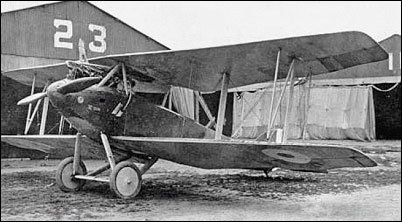
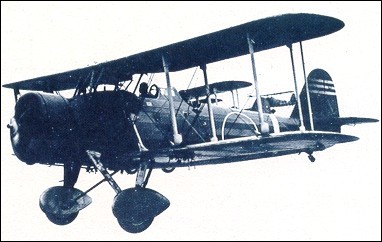
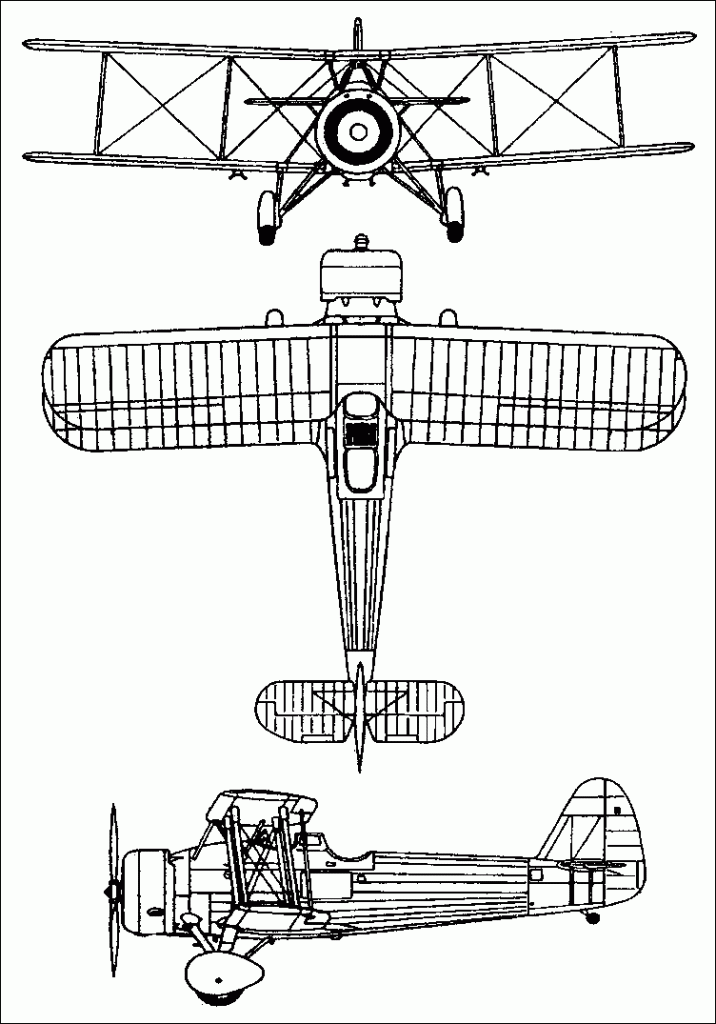
The He 66 was a two-bay biplane of metal construction with metal and fabric covering. The braced tail unit was conventional, and landing gear of fixed tailskid type. As supplied it was powered by a 365kW Siemens SAM-22B (Jupiter VI) radial engine. Modifications carried out by Aichi included strengthening of the landing gear, and installation of a 418kW/580 hp Nakajima Kotobuki 2 Kai 1 radial engine. In this form the Aichi Special Bomber was successful in trials against competing prototypes from Nakajima and Yokosuka, and was ordered into production as the Navy Type 94 Carrier Bomber (Aichi D1A1) in 1934. By 1937 162 production aircraft built, had the radial engine enclosed by a Townend ring, and other modifications included the introduction of slightly swept wings, and replacement of the tailskid by a non-castoring tailwheel. The last 44 had 433kW Kotobuki 3 engines.

Aichi’s design team under Goake created an improved D1A2 with 730¬hp Nakajima, Hikaru 1 engine in a full length NACA cowl, spats and improved windshields. Production of this version totalled 428.

Aichi D1A2

The first A2 flew late in 1936 and by 1940 Aichi had delivered no fewer than 428 as Type 96 carrier bombers. Most saw action in China, one unit dive bombing and sinking the US gunboat Panay in the Yangtze in 1937.
Only a small number of D1A1s remained in use with training units at the time of Japan’s attack on Pearl Harbor, on 7 December 1941. By December 1941 only 68 D1A2s were the serving in second-line units, and these were allocated the Allied codename ‘Susie’.
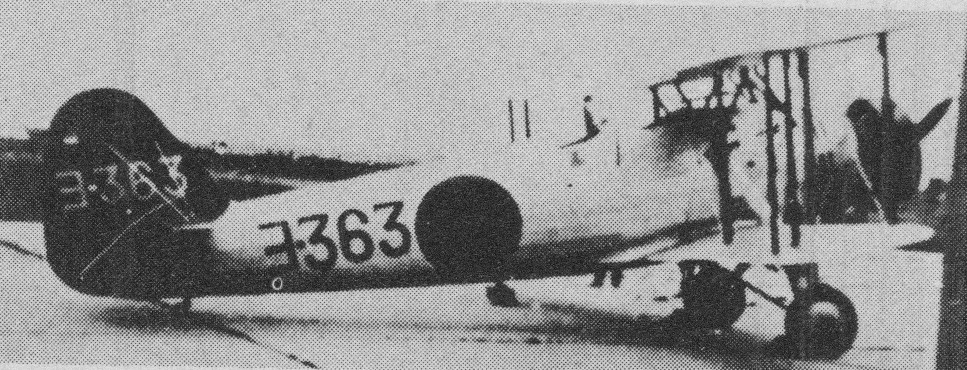
D1A1
Engine: Nakajima Kotobuki 2 Kai 19 cylinder radial 580 hp
Span: 11.4 m / 37 ft 4.75 in
Length: 9.3 m / 30 ft 6 in
Armament: two synchronized 7.7 mm (0.303 in) Type 92 machine guns, one 7.7 mm (0.303 in) Type 92 machine gun in the rear cockpit. 1 x 250 kg (551 lb) bomb under fuselage, 2 x 30 kg (66 lb) bombs under wings.

D1A2
Engine: 1 x Nakadjima “Hikari 1”, 545kW
Wingspan: 11.1 m / 36 ft 5 in
Length: 9.3 m / 30 ft 6 in
Height: 3.41 m / 11 ft 2 in
Wing area: 34.7 sq.m / 373.51 sq ft
Take-off weight: 2610 kg / 5754 lb
Empty weight: 1516 kg / 3342 lb
Max. speed: 310 km/h / 193 mph
Ceiling: 6800 m / 22300 ft
Range: 930 km / 578 miles
Crew: 2
Armament: 3 x 7.7mm machine-guns, 1 x 250-kg bomb, 2 x 30-kg bombs
Aichi E11A

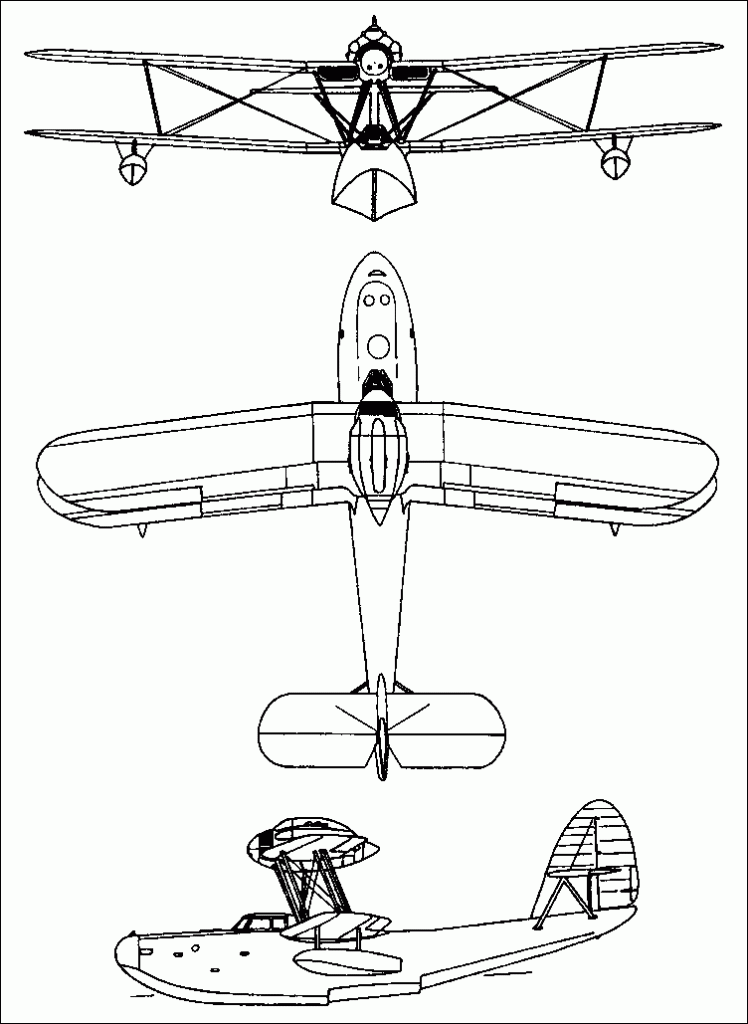
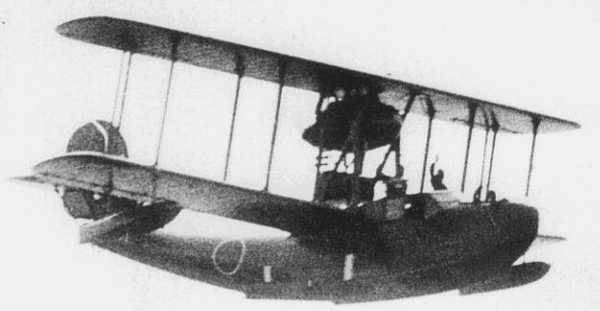
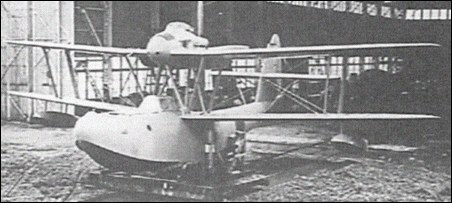
The E11A was planned to a 1936 requirement for a successor to the same company’s E10A as the noctur-nal spotter carried by Japanese battleships and cruis¬ers, and first flew in June 1937. The Aichi prototype was evaluated competitively against the Kawanishi El1K, and ordered into production during April 1938 with the full designation Navy Type 98 Night Recon¬naissance Seaplane, and the short designation E11A1 (reconnaissance seaplane, 11th in series, built by Aichi, 1st model). Including prototypes, production up to 1940 amounted to just 17 aircraft, and these saw limited operational service in the opening rounds of Japan’s Pacific campaign in the Second World War.
Of biplane configuration, the two-step hull carried a braced tail unit, with the tail-plane and elevator mounted almost halfway up the fin. Accommodation was provided for a crew of three, and there was an open bow position that could be used during on-water manoeuvres, or mounting a defensive machine gun. Balancer floats were mounted beneath each lower wing, close to the wingtip. The engine was a Hiro Type 91 Model 22 inline engine, mounted at the centre-section of the upper wing, and driving a pusher propeller with spinner.

E11A1
Engine: 1 x Hiro Type 91 Model 11 inline piston, 620-hp (462-kW)
Maximum speed: 135 mph (217 kph) at 7,875 ft (2,400 m)
Climb to 9,845 ft (3,000 m): 18 min 32 sec
Service ceiling: 14,520 ft (4,425 m)
Range: 1,209 miles (1,945 km)
Weight empty: 4,248 lb (1,927 kg)
Maximum take-off weight: 7,275 lb (3,300 kg)
Wing span: 47 ft 6.5 in (14.49 m)
Length: 35 ft 1.75 in (l0.7lm)
Height: 18ft 0.5 in (5.50m)
Armament: one 7.7-mm (0.303-in) machine-gun

Aichi E10A

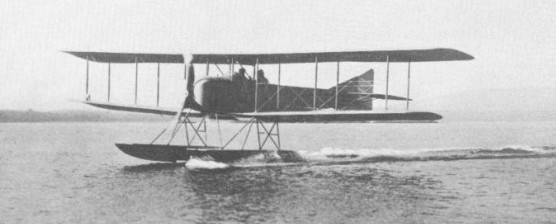
In 1934, based on experience of testing the Experimental 6-Shi Night Reconnaissance Flying boat, the Imperial Japanese Navy drew up a specification for a new night reconnaissance aircraft, intended to shadow enemy fleets during the cover of darkness, with orders being placed with Aichi and with Kawanishi.

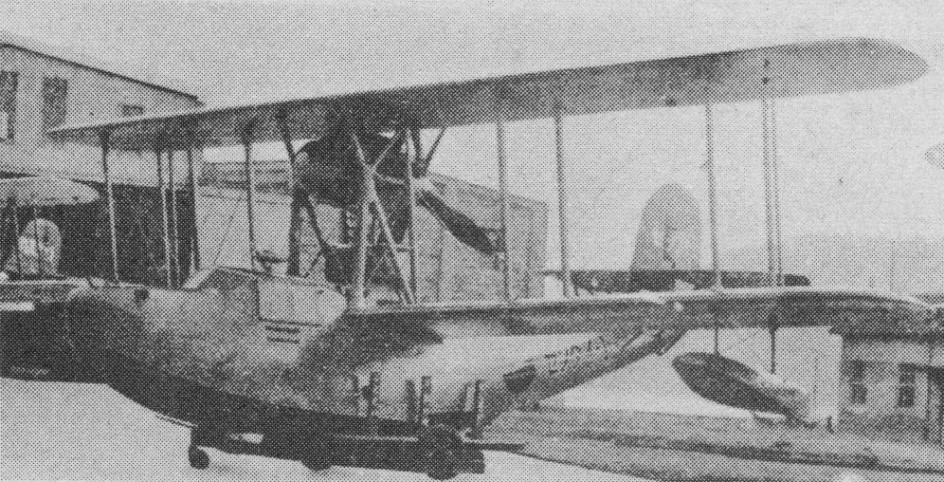
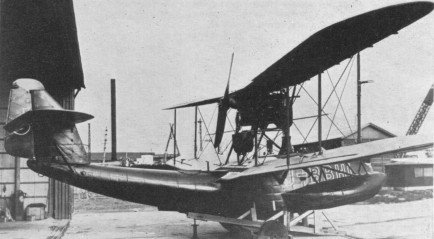
Aichi’s design, with the company designation AB-12, was a single-engined biplane flying boat of all-metal construction. Its two-bay wings folded rearwards to save space on board ship, while its crew of three were accommodated in an enclosed cabin. It was powered by a pusher water-cooled Aichi Type 91 engine, driving a four-blade wooden propeller.

The first prototype flew in December 1934, and when tested proved to have superior stability to the competing Kawanishi E10K, and so was ordered into production.

The AB-12 entered service in August 1936 with the Japanese Navy as the Type 96 Night Reconnaissance Seaplane, with the short designation E10A. The allied code name ‘Hank’ was assigned before its appearance or manufacturer was known.

Fifteen aircraft were built for the Imperial Japanese Navy serving from 1936, remaining in service until 1941, being phased out in 1941 before the Japanese attack on Pearl Harbour.

E10A
Powerplant: × Aichi Type 91 W-12, 370 kW (500 hp) to 485 kW (650 hp)
Propeller: 4-bladed wooden fixed-pitch pusher
Wingspan: 15.5 m (50 ft 10 in)
Wing area: 52.1 m2 (561 sq ft)
Length: 11.219 m (36 ft 10 in)
Height: 4.5 m (14 ft 9 in)
Empty weight: 2,100 kg (4,630 lb)
Gross weight: 3,300 kg (7,275 lb)
Wing loading: 63.2 kg/m2 (12.9 lb/sq ft)
Power/mass: 0.113 kW/kg (0.069 hp/lb)
Maximum speed: 206 km/h (128 mph, 111 kn) at sea level
Cruise speed: 106 km/h (66 mph, 57 kn) at 1,000 m (3,281 ft)
Range: 1,852 km (1,151 mi, 1,000 nmi)
Service ceiling: 4,120 m (13,520 ft)
Time 3,000 m (9,843 ft): 17 minutes 42 seconds
Guns: 1× 7.7 mm machine gun flexibly mounted in nose
Crew: 3

Ago C.IV

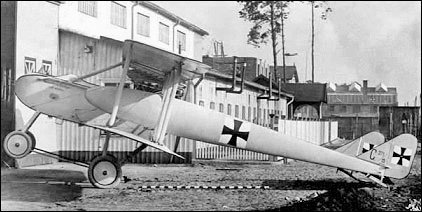
The C.IV was a two-seat reconnaissance aircraft, with a conventional cross-axle landing gear and tapered biplane wings. Powered by a 220hp Benz Bz.IV engine driving a two-blade propeller fitted with a spinner, armament was a forward-firing Spandau and a rear-mounted Parabellum machine-gun. About 70 production aircraft became operational from early 1917, although large orders had been placed with three manufacturers.

Ago C.I / C.II      

C.II

Designed by Swiss engineer A. Haefeli (earlier with Farman) the C.I and C.II series of twin-boom reconnaissance biplanes were each armed with one machine-gun in the nose. C.I and C.II land-planes had a four-wheel landing gear under the central two crew nacelle and a tailskid under each boom. Power was provided by a 160hp Mercedes D.III and 150hp Benz III or 220hp Benz Bz.IV pusher engine respectively.

C.Is and C.IIs became operational over the Western Front in the latter half of 1915. Serving just a short span, the C.II performed from 1915 on, replaced by more conventional and modernised types before the end of the war.

The similarly powered C.I-W (one built) and C.II-W (two built) twin-float seaplane versions were operated by the German Navy in a coastal reconnaissance and defence role.

Aerowerke Gustav Otto AGO C.II
Engine: 1 x Benz IV 6-cylinder liquid-cooled inline, 220hp.
Length: 32.28ft (9.84m)
Wingspan: 47.57ft (14.50m)
Height: 10.40ft (3.17m)
Empty Weight: 2,998lbs (1,360kg)
Maximum Take-Off Weight: 4,290lbs (1,946kg)
Maximum Speed: 80mph (128kmh; 69kts)
Maximum Range: 360miles (580km)
Service Ceiling: 14,764ft (4,500m)
Armament: 1 x 7.92 Parabellum machine gun
Accommodation: 2