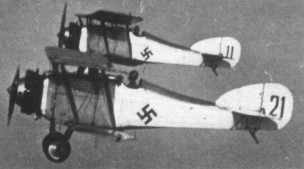
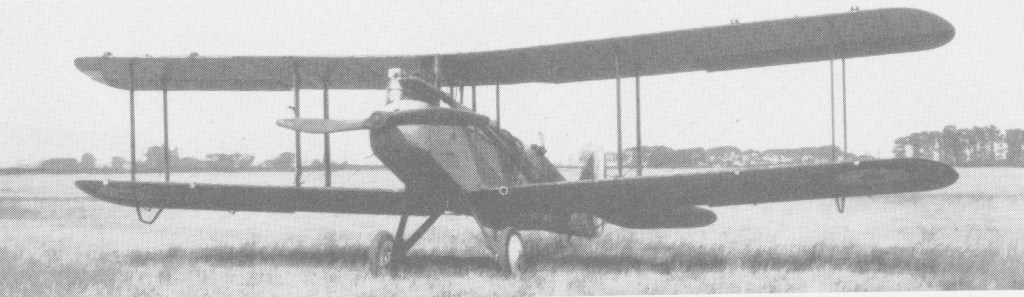
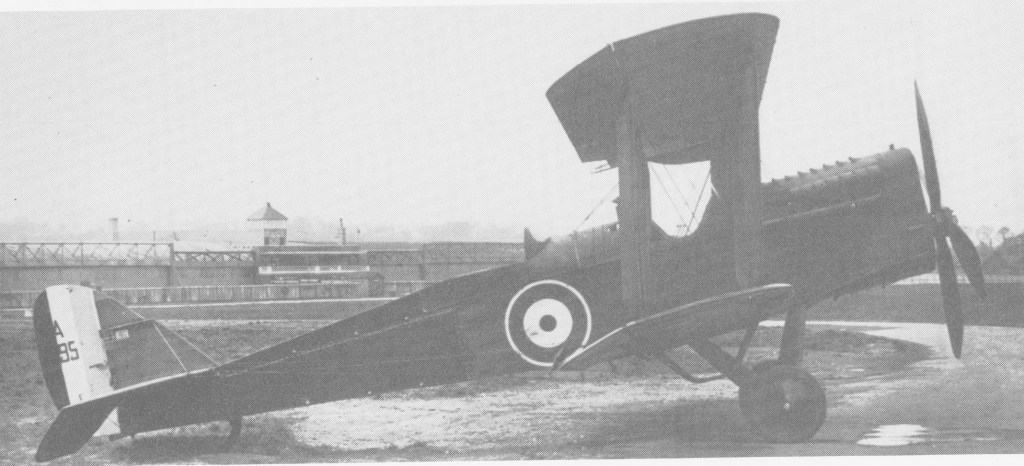
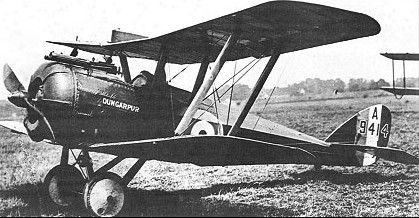
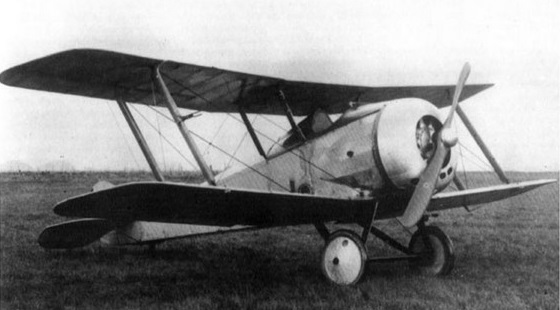
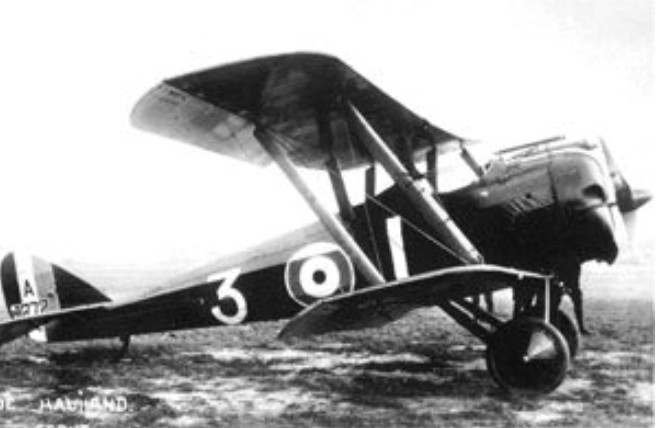
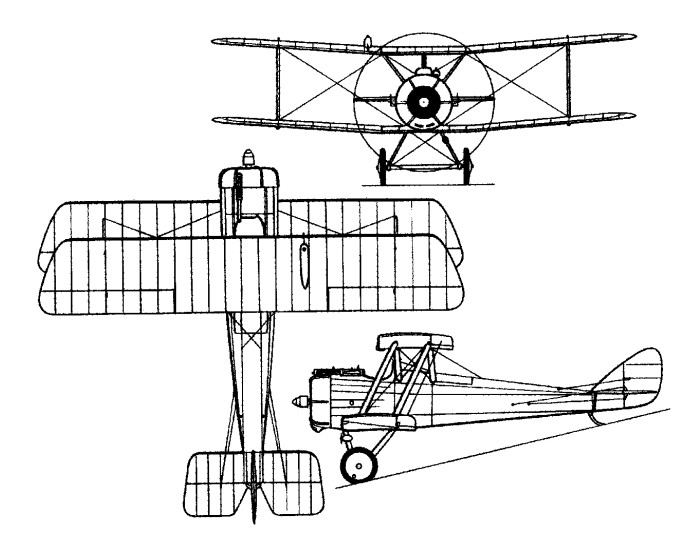
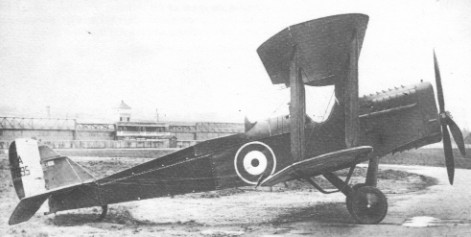
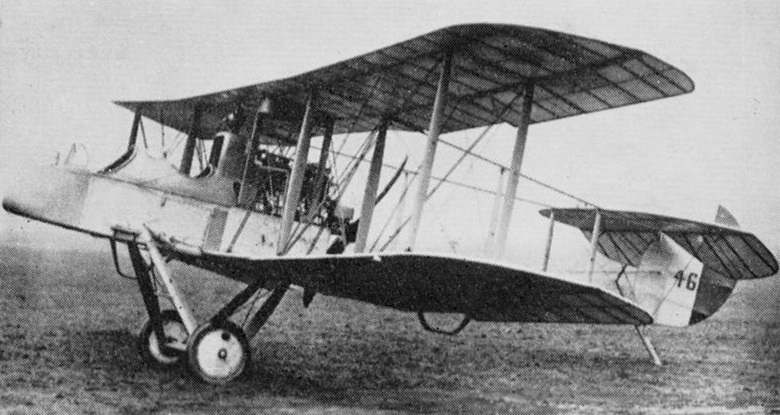
With the liquidation of the Martinsyde Company in February 1924, and the acquisition of its stores, stocks and goodwill by the Aircraft Disposal Company (A.D.C.), development of the Buzzard continued under the design leadership of John Kenworthy. This resulted in the A.D.C.1, which was fundamentally an F.4 Buzzard airframe with a 380 hp Armstrong Siddeley Jaguar radial engine. The prototype A.D.C.1 was first flown on 11 October 1924, subsequently participating in the 1925 and 1926 King’s Cup races, and considerable foreign interest was displayed in the type. In the event, only one order for the A.D.C.1 materialised, from Latvia and comprising eight aircraft which were delivered in 1926, at least two of these surviving until 1938.
Engine, Armstrong Siddeley Jaguar radial, 380 hp Span, 32 ft 9 in (9,98 m) Length, 25 ft 0 in (7,62 m) Wing area, 320 sq ft (29,73 sq.m) Empty weight, 1,865 lb (846 kg) Loaded weight, 2,650 lb (1202 kg) Max speed, 163 mph (262 km/h) at sea level Time to: 5,000 ft (1525 m), 2.42 min Time to 10,000ft: 5min 30sec Time to 15,000ft: 17min 30sec Service ceiling; 27,000ft Armament: two synchron¬ised 0.303-in (7,7 mm) Vickers guns
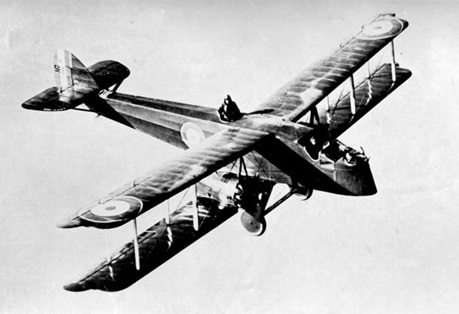
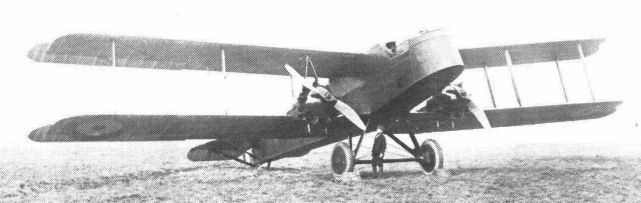
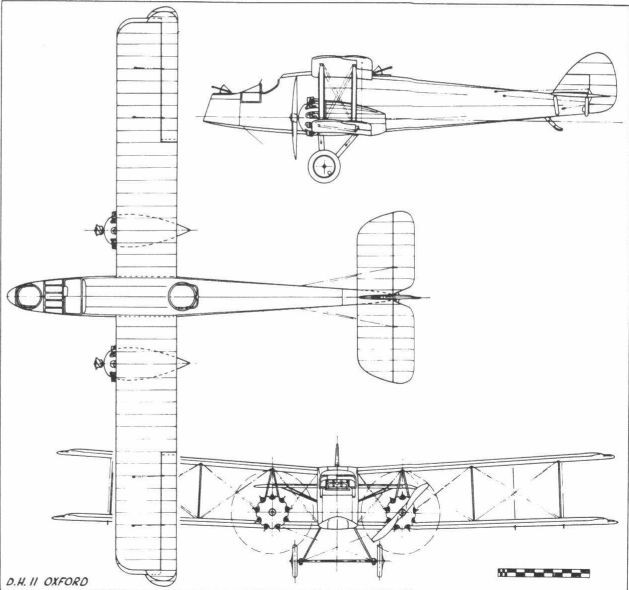
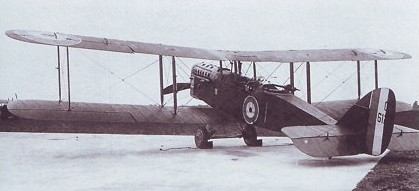
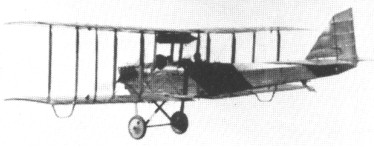
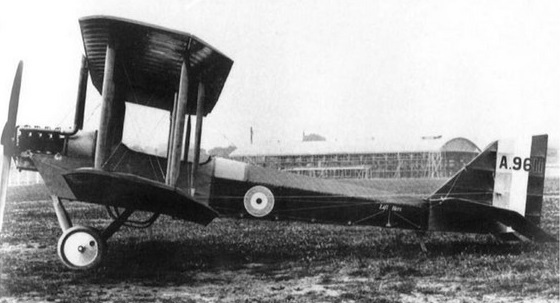
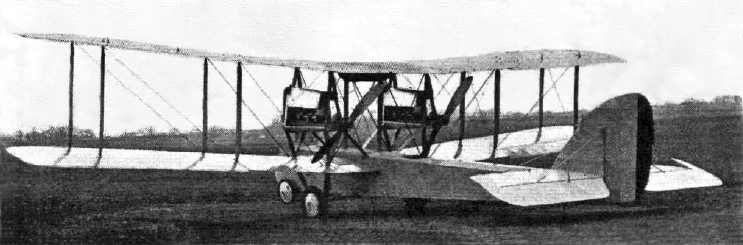
The DH.11 Oxford was designed by Geoffrey de Havilland for the Aircraft Manufacturing Company as a twin-engined day bomber to replace the Airco DH.10. It was designed (as required by the Specification) to use the ABC Dragonfly radial engine which promised to give excellent performance and had been ordered in large numbers to be the powerplant for most of the new types on order for the Royal Air Force.
Designs began early in 1918 when a contract was placed for three aircraft (Contract 35a/2150/C.2485) and by August the fuselage of the prototype, H5891, was well advanced in the Hendon factory. In September all work ceased because the Dragonfly engines were beset by problems and in November Siddeley Puma in-line, high compression engines were considered and the necessary engine bearer modifications were put in hand.
The D.H.11 had fabric covered, wooden airframes incorporating steel tubing for highly stressed or vulnerable members such as engine mountings, undercarriage and the empennage trailing edges. The type had horn balanced ailerons and the characteristic de Havilland rudder, and four degrees of dihedral on the upper mainplane compared with two degrees on the lower, gave the wings of the D.H.11 a diverging appearance and the fuselage filled the whole mainplane gap, making it possible to put the rear gunner on a raised floor in the mid upper position with a commanding field of fire in all upward directions.
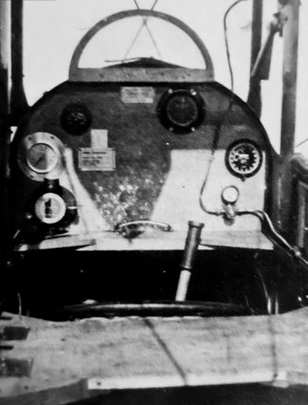
A fuselage 6 ft. 0 in. deep and 4 ft. 0 in. wide enabled main fuel tanks of 170 gallons capacity to be slung from the top longerons of the centre fuselage with a walk way beneath. This gave the rear gunner access to the cockpit, in which the pilot sat on the starboard side, and thence to the front gunner. Entry to the aircraft was gained through a trap door between the spars of the lower wing which opened on to this catwalk. Armament consisted of a Scarff-ring-mounted Lewis gun fore and aft and approximately 1,000 lb. of bombs carried internally. Two 320 h.p. A.B.C. Dragonfly radial engines were housed in nacelles fixed directly to the lower mainplane but the eminently business-like and efficient divided undercarriage of the D.H.10 gave place to a narrow track.
By 1919 the machine, H5891, was ready and the mainplanes were being covered yet despite recurring magneto trouble it was decided to fit the Dragonflies after all. After the first few flights in January 1919 H5891 went back into the works for the engines to be repositioned but was short lived. Its last flight came when a connecting rod broke in one of the engines, which seized up just as the aircraft became airborne, but the pilot, F. T. Courtney, made a forced landing without damage.
Two further prototypes, Mk. IIs, H5892 and H5893, with Puma high compression engines, were cancelled in 1919, with no aircraft in the end being purchased to replace the DH.10. Serials later allotted to Sopwith Buffaloes.
Oxford Mk I Engines: 2 × ABC Dragonfly, 320 hp (239 kW) each Wingspan: 60 ft 2 in (18.34 m) Wing area: 719 ft² (66.8 m²) Length: 45 ft 2¾ in (13.79 m) Height: 13 ft 6 in (4.12 m) Empty weight: 4,105 lb (1,866 kg) Max. takeoff weight: 7,020 lb (3,191 kg) Maximum speed: 107 kn (123 mph, 198 km/h) Service ceiling: 14,500 ft (4,400 m) Power/mass: hp/lb (kW/kg) Climb to 10,000 ft: 13 min 45 sec Endurance: 3 hours Crew: three Armament: 2 × .303 in (7.7 mm) Lewis gun Bombload: 4 × 230 lb (104 kg) bombs carried internally
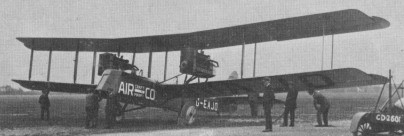
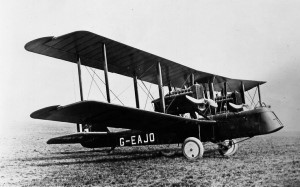
The successes being experienced by German bomber crews over London forced the War Office to think of using a medium bomber for retaliatory strikes. The unsuccessful DH.3 was one of the bombers that came to mind. Airco produced a design based on the DH.3, but in a larger version. The design was accepted and construction began in August 1917. Powered by two 230 hp B.H.P. water cooled engines, which were mounted between two mainplanes, the DH.10 retained the plywood-covered, box-like fuselage on the DH.3. It carried a crew of three with front and rear gunner cockpits, on which the guns were mounted on Scarff rings. It had dual controls fitted in the rear cockpit.
The first prototypes were give the name ‘Amiens’ by the Air Board, making them Amiens Mk.I and Mk.II. Flight tests and evaluations were quickly carried out, and orders for 1295 aircraft were placed with Airco as the main contractor and six other subcontractors; the Alliance Aeroplanevco, London; the Daimler Co Ltd, Coventry; the Siddeley-Deasey Motor Car Co Ltd, Coventry, National Aircraft Factory No.2, Stockport; Mann-Egerton Co Ltd, Norwich; and the Birmingham Carriage Co, Birmingham.
G-EAJO
The production lines started to gear up, but the war ended before they could get into mass production. Only eight were supplied to the RFC, but after the war the DH.10 saw a great deal of service as a mail carrier and, after some modifications, a passenger aircraft.
DH10 Mk.II
Airco DH.10 Engines: 2 x BHP, 200 hp Engines: 2 x Siddeley Puma, 230 hp Engines: 2 x Rolls-Royce Eagle VIII, 360 hp Engines: 2 x Rolls-Royce Eagle VIII, 375 hp Engines: 2 x Liberty 12, 396 hp Engines: 2 x Liberty 12, 405 hp
Production models Length: 39 ft 6 in / 12.0 m Height: 14 ft 6 in / 4.4 m Empty weight: 5600 lb / 2540 kg Loaded weight: 9000 lb / 4082 kg Max speed: 112 mph / 180 kph Ceiling: 16,500 ft / 5029 m Endurance: 3 – 5.5 hr Armament: 3 x .303 Vickers mg Bombload: 6 x 230 lb bombs
DH 10 prototype Wingspan: 62 ft 9 in / 19.13 m Length: 38 ft 10.25 in / 11.8 m Height: 14 ft 6 in / 4.4 m Empty weight: 5004 lb / 2270 kg Loaded weight: 6950 lb / 3152 kg Max speed: 100 mph / 160 kph Ceiling: 15,000 ft / 4572 m
DH 10 Mk.II Engines: 2 x RR Eagle VIII, 360 hp Wingspan: 65 ft 6 in / 19.9 m Length: 38 ft 10 in / 11.84 m Max speed: 109 mph / 175 kph Armament: 2 x Lewis .303 Bombload: 1200 lb / 554 kg
DH 10 A Mk III Amiens Engine: 2 x Liberty 12, 400 hp Length: 39.633 ft / 12.080 m Wingspan: 65 ft 6 in / 19.9 m Max take off weight: 9000.8 lb / 4082.0 kg Max speed: 131 mph Bomb load: 900 lb Endurance: 6 h Armament: 4x MG, 408kg Bomb. Seats: 3
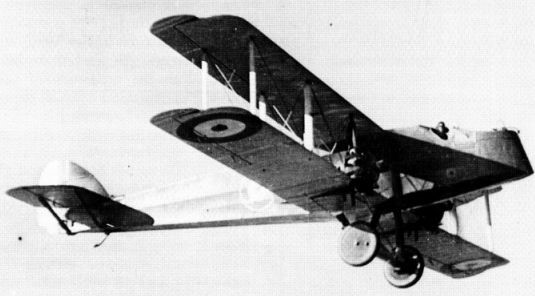
The DH9 development was started in order to give the RFC a means of hitting back at the Germans, who had raided London in daylight in June and July 1917.
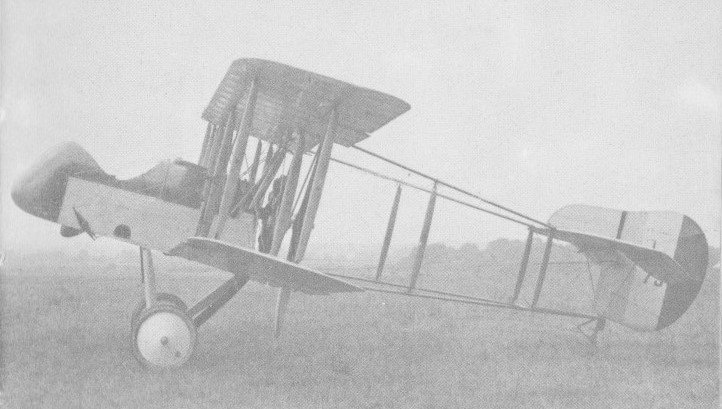
Based on the DH.4 two seat day bomber the result was the DH.9. The prototype Airco DH.9 was produced by modification of a DH.4, retaining the same wings, tail unit, and generally similar landing gear, but the fuselage was completely new, with a more streamlined nose, and the pilot’s cockpit directly above the lower wing trailing edge. In the DH.4 there had been a problem with communication between the pilot and observer because the two cockpits were too far apart, but in the DH.9 the cockpits were almost back-to-back, no longer separated by the main fuel tank as on the DH4. Fuel in the DH9 was in two tanks aft of the engine and one in the centre-section.
First flying in November 1917, the prototype was powered by a 172-kW (230-hp) B.H.P., built by the Galloway Engineering Company, and referred to sometimes as the Galloway Adriatic.
DH.9
Early testing began in late July 1917 and proceeded so well that existing contracts for 900 D.H.4s held by subcontractors were amended to cover production of the D.H.9. Some of these early production aircraft had a Siddeley built B.H.P. engine, but a new lightweight version of this engine, known as the Puma and developed by SiddeleyDeasy, was selected as the major production engine. Most D.H.9s were fitted with 230, 240 or 290 hp Siddeley Puma engines, although one small batch, built by Shorts, had 260 hp Fiat A 12s. Rated at 224kW (300 hp), it was expected to give the D.H.9 outstanding performance, but development problems meant that reliability could only be assured by de-rating output to 172kW (230 hp), and the performance of the new bomber was inferior to that of the D.H.4 which it was intended to replace. When the type was first introduced in April 1918, this resulted in serious losses by the squadrons in France.
Carrying a full military payload the aircraft could barely make 13,000 ft. The problem was highlighted on 31 July 1918 when ten DH.9s out of twelve on a bombing mission over Germany were lost, some to engine failure others shot down. During 848 sorties flown by Nos 99 and 104 Squadrons, RFC, 123 engine failures were recorded.
In ex¬cess of 3,200 were built in Britain by Airco and 12 sub-contractors, including Westland Aircraft. By the time the prototype flew, Trenchard had already asked for its cancellation, but production was already well advanced and there was no immediate substitute.
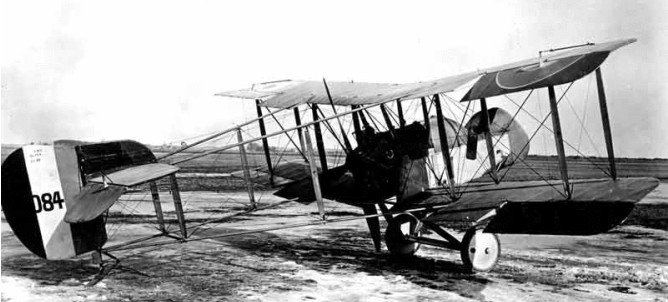
DH9A F1010
Deliveries of the D.H.9, to No 103 Squadron of the RFC, began in December 1917, and the first operational sorties (by No 6 Squadron) were carried out in France in the following March. Over the next few months their activity was stepped up quite considerably, but with operations affected by the lack of power from their Puma engines, or made abortive by repeated engine failures.
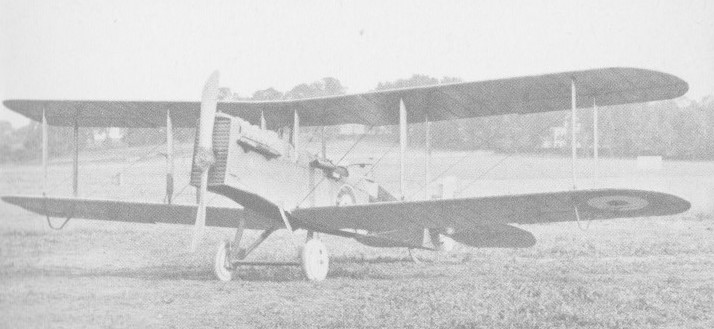
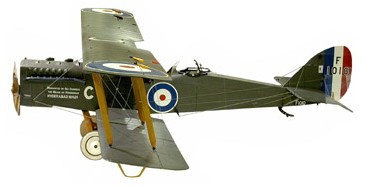
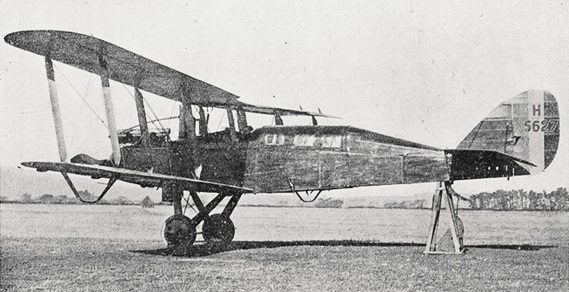
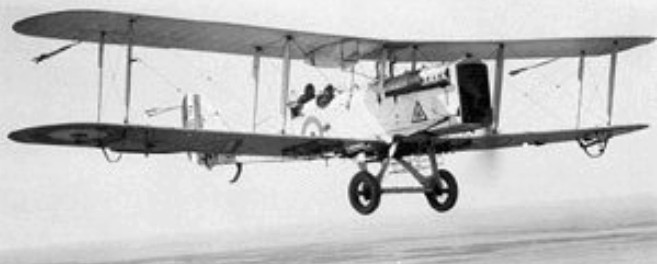
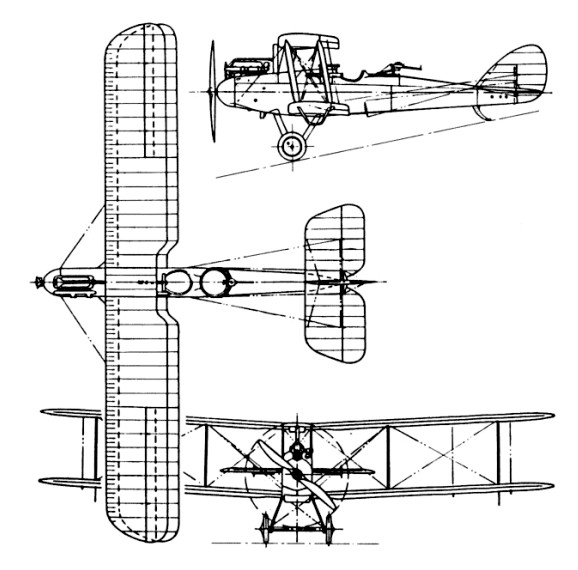
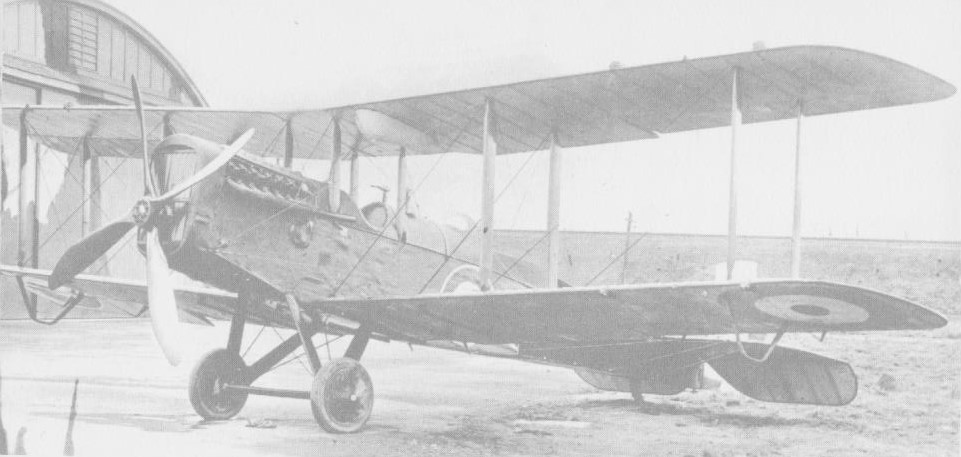
With the end of the war the D.H.9 soon faded from the RAF scene, eclipsed completely by the D.H.9A which replaced it. Developed from the DH.9, the DH.9A had a 375 hp Rolls-Royce Eagle VIII engine fitted at the behest of the Technical Department of the War Office. To accommodate this larger engine the mainplanes and ailerons were enlarged and the fuselage strengthened, but he undercarriage and tail section remained the as the DH.9. Harry Hawker carried out a number of the initial test flights.
DH.9A
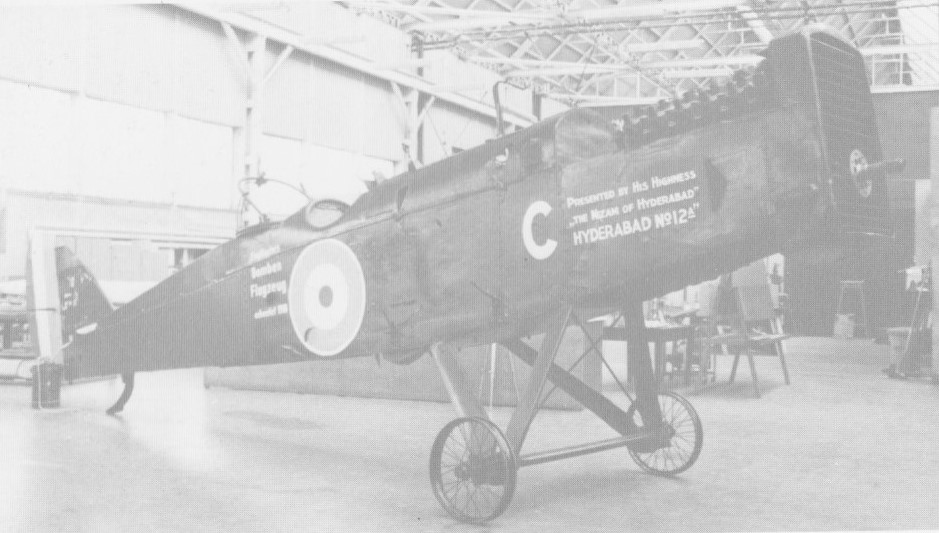
With the test completed, a number of the aircraft were assigned to No.110 Sqn, RAF, who used them to carry out bombing raids on Coblenz, Frankfurt and a number of other German manufacturing cities. One of the aircraft had been paid for by the Nizam of Hyderabad, commemorated by an inscription painted on the side of the aircraft.
Armament comprised a front-mounted, forward firing 0.303 in (7.7 mm) Vickers machine gun, with Constantinesco synchronizing gear, and a 0.303 in (7.7 mm) Lewis gun on a Scarff ring mounting in the rear cockpit. Normal bombload consisted of two 104 kg (230 lb) or four 51 kg (112 lb) bombs, which could be carried internally (though they seldom were) or externally, on fuselage or lower wing racks. Camera or W/T equipment was also installed.
DH.9A
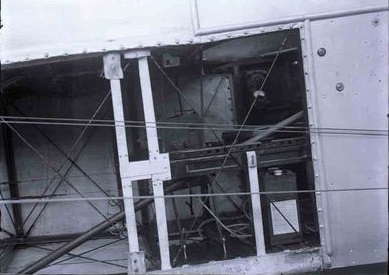
Irish Air Corp DH9 camera installation
To improve performance of the DH9, the Liberty 12 engines were ordered from the USA, and Airco requested the Westland Aircraft Works at Yeovil, Somerset, to redesign the D.H.9 to accept the Liberty engine. Westland combined the best features of both D.H.4 and D.H.9 with the US powerplant, strengthening the fuselage structure and introduced wings of increased span and chord, ailerons on all wings. Fuel was in two tanks aft of the engine and one centre section. Although nominally a conversion of the earlier aircraft, to take a more reliable American engine, the new DH9A was a complete redesign. The prototype Airco DH.9A, because no Liberty engines had been received, was flown initially with a 280-kW (375-hp) Eagle VIII engine.
By the middle of 1918, the converson to the Packhard Motor Company-built Liberty engine had been completed and the aircraft was sent to Martlesham Heath foe evaluaton, while at the same time the Americans were promising deliveries of the engine. Twelve of the engines were already in Britain, and tests with the Liberty-powered DH.9A had been extremely encouraging. A number of different sub-contractors had to be brought in because Airco were heavily committed to the design and development of the DH.10 day bomber. Among the sub-contractor were the Vulcan Motor and Engineering Co, the Westland Aircraft Works, Mann, Egerton Co,, the Whitehead Co, and F.W.Berwick. The first de¬liveries were made to the RAF during June 1918.
The deliveries of the Ameican Liberty engines started to come in, but in July 1918 they stopped abruptly after 1050 had been delivered. Winston Churchill, who was Minister for Munitions at the time, immediately contacted the US Under-Secretary for Aviation, Mr Ryan. Ryan informed Churchill that the US Navy had staked a priority claim on all the Liberty engines that were currently under construction. This was devastating news to Airco, as they now had to find a replacement engine rapidly. The one that sprang to mind was the Rolls-Royce Eagle VIII, which was currently under evaluation in a Westland-built DH.9A.
By the end of 1918 nearly nine-hundred had been built. Enquiries were also made of the 500 hp Galloway Atlantic engine that was currently under evaluation. Seventy-two of these engines were ordered in September 1918 with a possible increase to 1000, but only one was ever fitted into a DH.9A, which was re-designatd the DH.15.
DH 9A
Construction not only continued in Great Britain but the type went into unlicensed production in Russia for the Red Air Force.
An American production programme of USD 9s (the US designation of the Liberty-engined version) was planned but of the 14,000 ordered only four were completed. Following the installation of a 400 hp Liberty in a British testbed, 3000 Liberty engines were ordered from the USA to power the refined D.H.9A for the RAF. Only 1050 of these engines reached Britain in early 1918, from which 885 D.H.9As were powered before the end of the war. Apart from the powerplant, the chief differences from the D.H.9 were larger area wings (to offset the bigger and heavier American engine) and a redesigned forward fuselage; armament and bombload remained unchanged. Deliveries were made from June 1918, initially to No 110 Squadron, but only two squadrons in France and two in Russia had become fully operational with them before the Armistice. Mass production, by a dozen British manufacturers (chiefly de Havilland and Westland), continued after the war; deliveries continued until 1928, and the total built eventually reached nearly 2500. Others, with various engines, were built in Spain, the USSR and elsewhere.
Russian R.1
The D.H.9’s basic design was phased out of RAF service in 1931. Those of the SAAF continued in service until 1937. Its RAF replacement, the Westland Wapiti, was based on the same airframe.
War surplus D.H.9s served in Afghanistan, Australia, Belgium, Canada, Chile, Estonia, Greece, India, the Irish Free State, Latvia, the Netherlands, New Zealand, Poland and South Africa; and the type was built under licence by HispanoSuiza for service with the Spanish air force, a figure in excess of 500 being quoted as the production figure, and at least 25 still being in service when the Spanish Civil War started in July 1936. Others were built by SABCA in Belgium; and the Netherlands Army Aircraft Factory also assembled 10 new D.H.9s, built by the de Havilland Aircraft Company in 1923, and in 1934 these were each given a Wright Whirlwind engine of 347kW (465hp). Despite this sort of demand, Britain’s Aircraft Disposal Company still had large numbers of war surplus D.H.9s in stock in late 1930, and these were scrapped and burned during the following year.
Nine served with the RNZAF from 1923 to 1930.
A DH9 specially prepared by the Canterbury Aviation Company for a Christchurch-Blenheim, New Zealand, mail service.
D.H.9s were also flown experimentally or as a result of conversion with engines that included the 186-kW (250-hp) Fiat A-12, 216-kW (290-hp) Siddeley Puma high-compression engine, 224-kW (300-hp) A.D.C. Nimbus and Hispano-Suiza 8Fg, 321-kW (430-hp) Napier Lion, and 324-kW (435-hp) Liberty 12A. Conversions carried out by the South African Air Force, with the 149-kW (200-hp) Wolseley Viper, 336-kW (450-hp) Bristol Jupiter VI and 358-kW (480-hp) Bristol Jupiter VIII, were known respectively by the names of Mantis, M’pala I and M’pala II. Air Transport and Travel launching a proving flight between Hendon and Le Bourget on 15 July 1919. Its de Havilland 9 carried only one passenger, Major Wilkinson, of the glass firm. Production, during and after the First World War, eventually reached more than 4000, by no fewer than 15 British manufacturers, of which 3204 were built before the end of 1918.
Variants: Airco D.H.9B: designation of aircraft converted for civil use, and carrying one passenger forward and one aft of the pilot Airco D.H.9C: designation of aircraft converted for civil use, and carrying one passenger forward and two aft of the pilot Airco D.H.9J: designation used for the SAAF M’pala I, and also for the D.H.9s modernised in the late 1920s for use by the de Havilland School of Flying. These latter aircraft had a strengthened forward fuselage structure; improved landing gear, aileron controls, and fuel system; introduced Handley Page leading-edge slots; and were powered by a 287-kW (385-hp) Armstrong Siddeley Jaguar III radial engine. de Havilland D.H.9AJ Stag: designation of single prototype with improved main landing gear and powerplant of one 347-kW (465-hp) Bristol Jupiter VI radial engine de Havilland D.H.9R: designation of a single racing version with sesquiplane wing, and powered by a 347-kW (465-hp) Napier Lion II inline engine Engineering Division USD-9A: designation of nine generally similar US-built aircraft, each having its forward-firing 7.62-mm (0.3-in) Browning machine-gun on the starboard (instead of port) side, and a modified rudder Engineering Division USD-9B: designation of one USD-9A following installation of a 313-kW (420-hp) Liberty 12A engine. R-1 – At least 2700 DH9As built in the Soviet Union.
DH.9 Engine: B.H.P, 200 hp Span: 42 ft 6 in Wing aera: 436 sq.ft Length: 30 ft 6 in Height: 10 ft Empty weight: 2203 lb Loaded weight: 3669 lb Wing loading: 8.4 lb/sq.ft Max speed: 111 mpg at 10,000 ft Service ceiling: 17,500 ft ROC: 500 fpm to 5400 ft Endurance: 4 hr 30 min Armament: 1 x Vickers mg, 1 or 2 x Lewis mg Bombload: 931 lb Crew: 2
DH.9 Engine: BHP, 230 hp Length: 30 ft 6 in / 9.29m Wingspan: 42 ft 4 in / 12.9 m Max speed: 116 mph / 187 kph Armament: 1 x Vicker .303 sync. Through airscrew, 1 x Lewis .303 for observer Bombload: 500 lb / 227 kg
DH9 Engine: Siddeley Puma, 230 hp / 172-kW Wingspan: 42 ft 4 in / 12.9 m Length: 30 ft 5 in / 9.2 m Height: 11 ft 3 in / 3.4 m Wing area: 40.32 sq.m / 434 sq ft Empty weight: 2230 lb / 1011 kg Loaded weight: 3325 lb / 1508 kg MTOW: 3669 lb Wing loading: 8.4 lb/sq.ft Fuel capacity: 70 Gal Max speed at 1980m (6,500ft): 104 mph / 167 kph Max speed: 111 mpg at 10,000 ft Climb to 1980m (6,500ft): 10 minutes 20 seconds Service ceiling: 4725m / 15,500ft Endurance: 4 hours 30 minutes Armament: one fixed forward-firing 7.7-mm (0.303-in) Vickers machine-gun and one or two 7.7-mm (0.303-in) Lewis guns on Scarff ring in aft cockpit, plus up to 209 kg (460 lb) of bombs. Crew: 2
Engine: Siddeley Puma, 290 hp Wingspan: 42 ft 4 in / 12.9 m Length: 30 ft 5 in / 9.2 m Height: 11 ft 3 in / 3.4 m Empty weight: 2230 lb / 1011 kg Loaded weight: 3325 lb / 1508 kg Max speed: 104 mph / 167 kph Ceiling: 15,500 ft / 4724 m Armament: 1 x .303 Vickers mg
Engine: Fiat A-12, 250 hp Wingspan: 42 ft 4 in / 12.9 m Length: 30 ft 0 in / 9.1 m Height: 11 ft 2 in / 3.3 m Empty weight: 2460 lb / 1115 kg Loaded weight: 3600 lb / 1632 kg Max speed: 117 mph / 188 kph Ceiling: 17,500 ft / 5334 m Armament: 1 x .303 Vickers mg
Engine: ADC Nimbus, 300 hp Wingspan: 42 ft 4 in / 12.9 m Armament: 1 x .303 Vickers mg
Engine: Hispano-Suiza 8Fb, 300 hp Wingspan: 42 ft 4 in / 12.9 m Armament: 1 x .303 Vickers mg
Engine: Napier Lion, 430 hp Wingspan: 42 ft 4 in / 12.9 m Length: 30 ft 9 in / 9.3 m Height: 11 ft 7 in / 3.5 m Empty weight: 2544 lb / 1153 kg Loaded weight: 3667 lb / 1663 kg Max speed: 138 mph / 222 kph Ceiling: 23,000 ft / 7010 m Armament: 1 x .303 Vickers mg
Engine: Liberty 12A, 435 hp Wingspan: 42 ft 4 in / 12.9 m Length: 30 ft 0 in / 9.1 m Height: 11 ft 2 in / 3.3 m Empty weight: 2460 lb / 1115 kg Loaded weight: 4645 lb / 2106 kg Max speed: 114 mph / 183 kph Ceiling: 17,500 ft / 5334 m Armament: 1 x .303 Vickers mg
Engine: Wright Whirlwing R-975, 465 hp Wingspan: 42 ft 4 in / 12.9 m Armament: 1 x .303 Vickers mg
Engine: Wolseley Viper, 200 hp Wingspan: 42 ft 4 in / 12.9 m Armament: 1 x .303 Vickers mg
Engine: Bristol Jupiter VI, 450 hp Wingspan: 42 ft 4 in / 12.9 m Armament: 1 x .303 Vickers mg
Engine: Bristol Jupiter VIII, 480 hp Wingspan: 42 ft 4 in / 12.9 m Armament: 1 x .303 Vickers mg
Airco D.H.9A Engine: one 298-kW (400-hp) Packard Liberty 12 Prop: 2-¬blade Wing span: 14.01 m / 45ft 11½in Length: 9.22m / 30ft 3in Height: 3.45m / 11 ft 4in Wing area: 45.22m / 486.7 sq.ft. Empty weight: 1270 kg / 2,800 lb Maximum take-off weight: 2107 kg / 4,645 lb Maximum level speed at sea level: 198 km/h / 123 mph Climb to 1980m (6,500ft): 8 minutes 55 seconds Service ceiling: 5105m / 16,750ft Endurance: 5 hours 15 minutes Armament: one fixed forward-firing 7.7-mm (0.303-in) Vickers machine-gun and one or two 7.7-mm (0.303-in) Lewis guns on Scarff ring in aft cockpit, plus up to 299 kg (660 lb) of bombs.
The DH.6 was designed for an RFC’s urgent requirement for a trainer in autumn 1916, for ease of manufacture, maintenance and repair. Instead of two cockpits, there was one communal cockpit which made it easier for the tutor to instruct his pupil. The dual controls could be disengaged by the instructor in the case of an emergency, by means of a handle alongside the cockpit position. The aircraft had a two-bay wing that had been designed for low speed and good handling, a robust fin and horn-balanced rudder and was powered by a 90 hp RAF.1a engine.
Two prototypes, A5175 and A5176, were built, each with a communal tandem seat cockpit, and powered by a 90 hp RAF la air-cooled V engine. The four rectangular wing panels were interchangeable, as were the tailplane halves.
The prototype was built in October 1916, and after flight trials was immediately accepted by the War Office. An initial 200 were ordered in January 1917. But these were to be built by the Graham-White Aviation Company because the Airco Company was already heavily committed to the production of the DH.4 and DH.5. Then in April a further 500 were ordered, so other manufacturers had to be brought in to assist. Among these were: the Gloucestershire Aircraft Company, Kingsbury Aviation Co. Hraland & Wolff and Canadian Aeroplanes. This was the first British-designed aircraft to be built in Canada.
Production of 2950 by several British companies (900 of them by Airco) began in January 1917. Most of these retained the RAF (Royal Aircraft Factory) powerplant, but some utilized a cowled 90 hp Curtiss OX¬5 or an 80 hp Renault.
DH6s began to be phased out of the RFC in late 1917 with the arrival of the Avro 504 as the standard British trainer, but about 200 were put into service in early 1918 with 34 flights of the RNAS (five operated by the US Navy) on antisubmarine coastal patrol. Flown as single seaters, they could carry a 45.5 kg (100 lb) bombload. About 70 D.H.6s were sent to RFC Home Defence units in 1918.
The RAF possessed 1050 of the type in October 1918, and more than 50 were put on to the civil register after the Armistice.
Engine: 90 hp RAF la Wingspan: 10.95 m / 35 ft 11 in Length: 8.32 m / 27 ft 3.5 in Height: 3.2 m / 10 ft 9.5 in Empty weight: 662 kg / 1460 lb Gross weight: 919 kg / 2026 lb Maximum speed: 106 km/h / 66 mph Endurance: 2 hr 30 min Armament: 1 x .303 Vickers mg (rear cockpit)
The realisation that the German aircraft performance was substantially better than the Allied models forced Geoffery de Havilland to like at an idea put forward by Constantine Constantinesco, who claimed to have perfected an interruptor mechanism. The mechanism worked, and de Havilland got to work designing a single-bay biplane with a tractor engine upon which the mechanism could be fitted.
In an effort to enhance the performance of the aircraft and increase the pilot’s all-round view, de Havilland designed a 27in backward stagger on the upper wing, which brought the cockpit in front of the upper wing’s leading edge. Although under normal test conditions this was acceptable, under combat conditions the pilot had no view above or behind and this was one of the reasons why the aircraft was later relegated to low-level duties. Designed in 1916, the Airco D.H.5 was intended to replace the single seat DH2.
The wooden box-girder fuselage, roundd on top with flat sides, was strengthened with plywood. With conventional construction of wood and fabric, landing gear of fixed tailskid type, and powered by an 82-kW (110-hp) Le Rhóne 9J rotary engine, the initially unarmed prototype, A5172, was built in late 1916. It was sent to France for service trials in December 1916, armed with a forward firing Vickers gun fixed to move upwards through a 60 degree arc.
The prototype was flown by Major Mills first to No.1 Aircraft Depot, and then to No.2 Aircraft Depot before going to the No.24 Squadron, RFC, where flight evaluation was carried out.
Initial tests discovered that the DH.5s fitted with the 110 hp Le Rhone engine vibrated so badly that the pilot was unable to read his instruments. At first the blame was laid squarely on the engine, but after other engines had been tried, it was discovered that it was the engine bearer plate that was the problem. Strengthening the plate solved the problem.
After satisfactory performance, the D.H.5 was ordered into production and 549 were built by Airco; the Dar-racq Motor Engineering company; March, Jones & Cribb; and the British Caudron company. These differed from the prototype in having the fixed 0.303 in (7.7 mm) Vickers gun fitted with Constantinesco interrupter gear. The single Vickea machine gun was mounted on top of the front section and offset to the portside f the fuselage, and synchronised to fire through the propeller. It was powered by a 110 hp Le Rhone rotary engine, giving it a top speed of 109 mph.
Other problems appeared with the Constantinesco interrupter gear. Both No.24 and No.25 Squadron were out of action. Other squadrons that had the DH.5 on their strength also suffered from this problem, rendering their aircraft non-operational.
Over 550 of the aircraft were built: 200 by Airco, and 350 by three sub-contractors: the Darracq Motor Engineering Co Ltd of London; Messers March, Jones & Cribb of Leeds and the British Caudron Co Ltd, London.
Prototype DH.5
Deliveries to Nos 24 and 32 Squadrons in France began in May 1917. Easily outflown by contemporary fighters at altitudes above 3050m and after suffering fairly heavy losses in November 1917, the D.H.5 was used for ground-attack sorties with four 11 kg (25 lb) Cooper bombs. D.H.5s were put to such use in the battle of Cambrai in autumn 1917. By this time S.E.5as had begun to replace D.H.5s and their first line service life of eight months had ended by January 1918, after which they were used for training in Britain.
The DH.5 was the original equipment of the Australian 2 AFC which proved too slow for effective air fighting, but acquitted itself quite well as a ground-attack aircraft during the Battle of Cambrai.
One D.H.5 was experimentally fitted with a 45 degrees upward angled Vickers, though no D.H.5s were used for Home Defence.
Production of D.H.5s totalled about 550, built by Airco (200), and sub-contracted to the British Caudron Company (50), The Darracq Motor Engineering Company (200), and March, Jones and Cribb (about 100). For experimental purposes a single example was powered by an 82-kW (110-hp) Clerget rotary engine.
DH 5 Engine: Le Rhone 9J, 110 hp or Clerget 9Z, 100 hp, or Gnome Monosoupape, 100 hp Wingspan: 25 ft 8 in / 7.8 m Length: 22 ft 0 in / 6.7 m Height: 9 ft 1.5 in / 2.7 m Empty weight: 1010 lb / 458 kg Loaded weight: 1492 lb / 676 kg Max speed: 102 mph / 164 kph Ceiling: 16,000 ft / 4876 m Endurance: 2 hr 3 min Armament: 1 x .303 Vickers mg Bombload: 4 x 250 lb
Airco DH.5 Engine: one 82-kW (110-hp) Le Rhóne rotary piston Wingspan: 7.82 m / 25 ft 8 in Length: 6.71 m / 22 ft 0 in Height: 2.78 m / 9 ft 1 in Wing area: 19.70 sq.m / 212.05 sq ft Max take-off weight: 677 kg / 1493 lb Empty weight: 458 kg / 1010 lb Fuel capacity: 26 Imp.Gal. Maximum level speed at 3050m (10,000 ft): 164 km/h / 102 mph / 89kt Climb to 1980m (6,500ft): 6 minutes 55 seconds Service ceiling: 4875m / 16,000ft Endurance: 2 hours 45 minutes Armament: one fixed forward-firing 7.7-mm (0.303-in) Vickers machine gun Bombload: four 11.3-kg (25-lb) bombs on underwing racks Accommodation: 1
The two seat D.H.4 was designed as a fast day bomber, with a conventional two-bay biplane fuselage of wood and fabric structure.
The fuselage was constructed from spruce and ash with its forward fuselage having a plywood covering. There were two cockpits; the rear observer’s cockpit had a scarff ring fitted, on which was mounted either a single or twin Lewis machine guns. In front of the pilot was mounted a single, synchronised forward-firing Vickers machine gun.. Two 230 lb bombs or four 112 lb bombs were mounted in racks under both the fuselage and wings. The fin and rudder were the standard shape, and the undercarriage consisted of two 6 ft 9 in (2.0 m) rubber cords wound into nine turns for each of the wheels. The braced tail unit had an adjustable tailplane, to enable the pilot to trim the aircraft in flight, and landing gear was of fixed tailwheel type.
During the period when design of the D.H.4 was being finalised, a new engine was designed and constructed. Designated B.H.P. and rated at 172kW (230 hp), the prototype engine was installed in the prototype D.H.4, and early flight testing began in August 1916. Fifty were ordered in the summer of 1916, before the prototype had flown.
In August 1916 the DH.4 first flew, piloted by Geoffery de Havilland.
A 230 hp B.H.P. 6-cylinder, water cooled engine powered the prototype, producing a speed of 106 mph. The aircraft was sent to the Central Flying School Testing Flght for evaluation, and the report that came back was nothing less than ‘highly commended’.
Considerable delays occurred in getting the B.H.P. into production but an alternative powerplant, rated at 186 kW (250 hp), became available from Rolls-Royce. This engine was to become known as the Eagle In the meantime, de Havilland was building the second prototype with a number of modifications. The B.H.P. engine had been larger than anticipated and had extended and raised the nose or the aircraft, reducing the pilot’s forward visibility. By installing the new 250 hp Rolls-Royce engine, the nose was lowered by 3in which improved visibility considerably.
Captain R.H.Mayo, who had demonstrated the aircraft to a number of squadron commanders who also flew the aircraft, had flown the prototype to France. An immediate order for 50 of the aircraft was made, followed three months later by a second order for a further 690 of the aircraft. The production lines at Airco went into top gear immediately. The 250 hp Rolls Royce IIIs or IVs (later known as Eagles) were fitted to production aircraft.
Production aircraft included improvements introduced by the second prototype, including a ring mounting for the observer’s Lewis gun in the rear cockpit; a forward firing Vickers gun, with a Constantinesco synchronizing gear, was fitted in front for the pilot. Some RNAS D.H.4s had twin Vickers and an elevated Scariff ring for the Lewis. The maximum bombload was two 104 kg (230 lb), four 51 kg (112 lb) or an equivalent weight of smaller bombs.
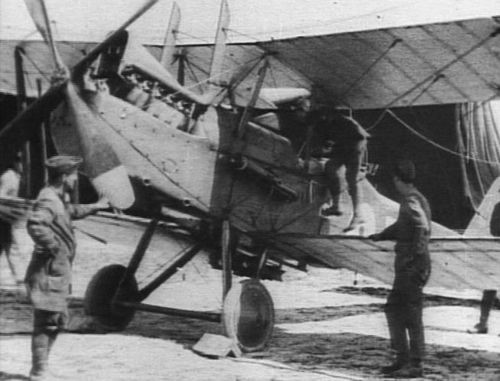
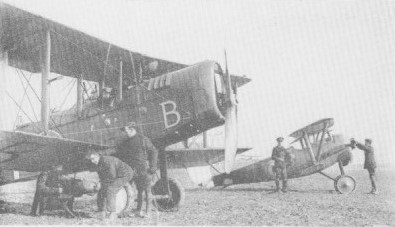
Arming a DH.4 of No.27 Sqn with escorting Nieuport, 1918
The first production DH.4s were delivered to No.55 Squadron, RFC on 6 March 1917 and had their first operational flight one month later at Valenciennes. They were used on a number of bombing missions and high-altitude photo-reconnaissance flights. There were several problems that caused some concerns among the crews that flew them. Communication between the two cockpits was impossible with the wind, engine noise and heat of battle, the Gosport Tube was useless. The 60 gallon fuel tank mounted between the cockpits would expode if hit.
The RNAS took a strong interest in the DH.4 after it had been lent one fitted with the 375 hp Eagle VIII, and subsequently ordered fifty of the aircraft. The one aircraft they had been lent was assigned to No.2 Squadron, RNAS in Dunkerque, where it operated until the end of the war. When the 280-kW (375-hp) Eagle VIII became available, D.H.4s with this engine were superior in performance to most of the contemporary fighter aircraft.
The D.H.4 was operating 11 squadrons of the RFC or RNAS and 13 American squadrons by the late spring of 1918. The type also served with the Royal Naval Air Service (combined with the RFC to form the RAF on 1 April 1918) for coastal patrol, and was used to equip home defence squadrons.
Improvements to engine manufacture were ongoing, and Rolls-Royce was no exception. Their only problem was that they could not keep up with demand, and their cause was not helped by the government’s intransigence in denying them permission to extend their factory and build a special repair shop. The development of the Eagle series of engines by Rolls-Royce produced the 375 hp Eagle VIII. This powerful engine drove a much larger propeller that required a taller under carriage and sturdier frame.
Two were fitted out experimentally with extra fuel tanks, enough to give 14 hours’ flying, and were intended to carry out a special photographic reconnaissance of shipping in the Kiel Canal. This mission never took place, but the two D.H.4s were later fitted instead with twin over wing Lewis guns and used for night fighting.
The DH4 was withdrawn from RAF service soon after the Armistice, and in the early postwar years many were supplied to the air forces of Belgium (where SABCA also built 15 in 1926), Canada, Chile, Greece, Persia, New Zealand, South Africa and Spain. Some remained in service until the early 1930s, and others were converted for civil use in the 1920s.
Production in Britain totalled 1450, built by by Airco and under sub-contract by F.W. Berwick and Company, Glendower Aircraft Company, Palladium Autocars Ltd, The Vulcan Motor and Engineering Company, Waring & Gillow Ltd, and the Westland Aircraft Works. At the end of the First World War 548 were still in service.
Almost all of the delays were the result of engine manufacturers not being able to deliver their engines on time, and when they did, Airco discovered that some of the engines had had modifications made which resulted in them having to alter the aircraft’s airframes to accommodate them. Even with all the delays, the government decided to supply the Russian Government with fifty DH.4s. These models were to be fitted with the Fiat A.12 engine. The Russian winter had set in and the Bolshevik revolution was about to break out, so it was impossible to deliver the aircraft. Immediately, the RFC used them to supplement their bomber force. The British government agreed with the Russians to replace the aircraft with an additional twenty-five in the spring of 1918, but because of the outcome of the revolution in Russia this never happened.
Rolls Royce engine production could not keep pace with this, resulting in several batches of D.H.4s being fitted with such alternative powerplants. Other than the Rolls-Royce III, IV or Eagle, these included the 149-kW (200-hp) R.A.F.3a, 172-kW (230-hp) Siddeley Puma, Adriatic (200 hp), and 194-kW (260-hp) Fiat A 12.
Experimental engine installations included a 224-kW (300-hp) Renault l2Fe, 239-kW (320-hp) Armstrong Siddeley Jaguar I, 263-kW (353-hp) Rolls-Royce ‘G’, 298-kW (400-hp; Sunbeam Matabele, and a Ricardo-Halford supercharged engine. lncreasing engine powers required larger diameter propellers, steadily reducing clearance between the propeller tip and the ground, and resulted in the main landing gear units being extended sufficiently to cater for future growth.
Highest performance was achieved with the Rolls Royce Eagle VIII (375 hp), which gave the D.H.4 a top speed of 230 km/h (143 mph).
Armament of the standard D.H.4s consisted of a fixed forward-firing Vickers machine-gun that was synchronised by a Constantinesco interrupter gear; the observer/gunner had one or two Lewis guns mounted on a Scarff ring. Underfuselage and underwing bomb racks had a maximum capacity of 209 kg (4601b). Aircraft built by Westland Aircraft for the RNAS had twin Vickers machine-guns for the pilot, and the rear Lewis guns were on a pillar mounting. Two examples of the D.H.4 were modified to mount a Coventry Ordnance works (C.O.W.) quick-firing gun, which fired a 0.68-kg (1.5-lb) shell. Mounted to fire almost vertically upward, this gun as intended for attacks on German Zeppelins; but by the time they were ready for service, Zeppelin raids on Britain had ended.
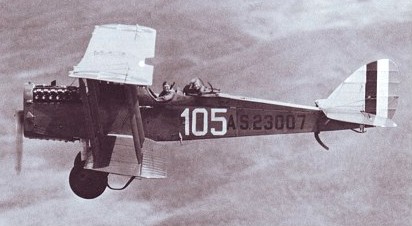
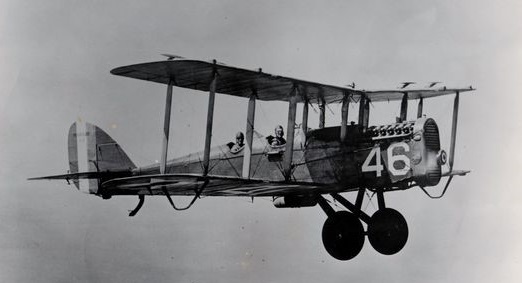
The United States possessed no combat-worthy aircraft upon entry into World War I in 1917 and selected the DH-4 because of its comparatively simple construction and it was well-suited to the 400-horsepower Liberty V-12 engine.
In the summer of 1917, a pattern aircraft had been fitted with a 400 hp Liberty 12 engine and the US government ordered more than 12,000 ‘Liberty Planes’, although 7502 were cancelled after the Armistice. A total of 4846 were completed by Dayton Wright (3106), Fisher Body Division of General Motors (1600) and Standard Aircraft Corporation (140) and the Atlantic Aircraft Corp, New Jersey, and Boeing Airplane Corp, Seattle, before production ceased at the war’s end in 1918.
By war’s end, 13 Army Air Service squadrons, five of them bomber squadrons, were equipped with them (from August 1918). In addition, four combined Navy-Marine squadrons of the US Naval Northern Bombing Group were flying DH-4s along the Belgian coast. Of the 4,346 DH-4s built in the United States, 1,213 were delivered to France, but of those only 696 reached the Zone of Advance. In the postwar period, the DH-4 was the principal aircraft used by the U.S. Government when airmail service began in 1918.
DH.4a, 1919
The Americans designated the initial version the DH4A, but it was obsolescent by the time it entered US service, having had to be reworked to suit it to US production techniques, and the improved DH 4B was ready too late (October 1918) to take its place on the Western Front. American built DH 4As were armed with two Marlin or Browning machine-guns in the front and two Lewis guns in the rear cockpit, and could carry up to 150 kg (332 lb) of bombs. After the war, 283 of the Army’s DH 4As were transferred to the US Navy or Marine Corps as observation or transport planes until 1932.
DH.4B
After the war a building and conversion programme (of more than 1500 DH4As) kept the DH4B, DH 4M (for Modernized) and other later variants in US service until 1932.
DH4B
The DH4B rectified a fault of the original D.H.4 by relocating the main fuel tank (previously between the two cockpits) in front of the pilot’s cockpit. Boeing built 150 DH4Ms for the US Army and 30 O2B-1s for the Marines; Fokker Atlantic Aircraft built 135 DH 4Ms.
Aeromarine converted 125 DH-4B under contract for de Havilland, first flown in 1917.
One Aeromarine DH-4B conversion example was specially tested at Wright Field. Possibly same as Whitbeck Special.
Aeromarine DH-4B
The NASM collection has the prototype American-built DH-4, manufactured by the Dayton-Wright Airplane Company. This airplane was used in more than 2,600 experiments until its retirement in April 1919. It was also the airplane in which Orville Wright made his last flight as a pilot in 1918.
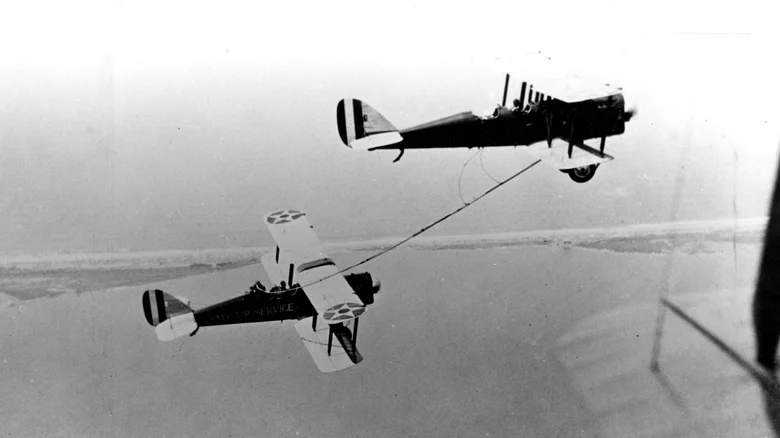
The career of the D.H.4 was to continue long After the Armistice of 1918, war surplus examples went to the Belgian, Greek, Japanese, and Spanish air forces, with American-built machines continuing to serve with the United States Army Air Corps and with many Latin American countries. In 1924 the Mexican government procured a number of US built D.H.4B bombers. Large numbers of variants appeared in the USA during the early post-war years, these being conversions of ex-military aircraft, and many pioneering flights were made with them. Two USAAC DH-4Bs were used in the first successfu experiments of inflight refuelling.
After Lts. Macready and Kelly set the record, the crew at San Diego’s Rockwell Field immediately set about creating a system to solve the problem. On June 27, 1923, Lts. Virgil Hine and Frank W. Seifert completed the first successful aircraft-to-aircraft in-flight refueling when they transferred gasoline via gravity feed through a fifty-foot hose connected to the bottom of their DH-4B that stretched to a DH-4B flown beneath them by Lts. Lowell H. Smith and John P. Richter.
Smith and Richter tried breaking Macready and Kelly’s record the very next day, but a gas valve malfunctioned, forcing Smith to land the plane prematurely. In August 1923, they flew 37 hours and 15 minutes on their way to setting 16 new world records for distance, speed, and duration. In October, they flew 1,250 miles nonstop from Canada’s border to Mexico’s, refueling midair three times and finally proving the system was a reliable option to extend an aircraft’s flight range.
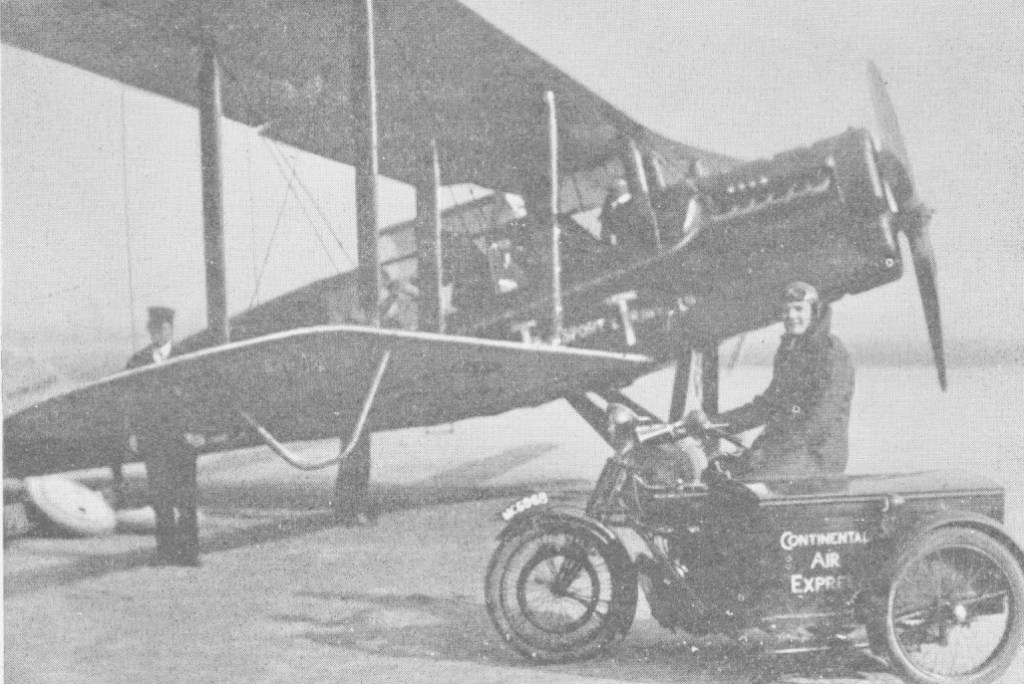
The D.H.4 was not limited to military applications in these early years of peace, and in the UK it was the earliest type to be used as a civil transport by Holt Thomas’ Aircraft Transport & Travel Ltd for the first cross-Channel service between London and Paris. For peace celebrations in Paris, special flights were made between London and Paris during Jul. In August the regular service opened when Lt. E.H.Lawford left Hounslow carrying one passenger, a package of newspapers, a supply of leather, several brace of grouse, and some jars of Devonshire cream.
Lt. Lawford landed at Le Bourget, Paris, and set out for the return flight to Hounslow one hour later. The 216 miles between London and Paris were covered by the DH.4a in two hours 30 minutes on the outward journey and two hours five minutes on the return. The fare for a single journey was twenty guineas. A.T.&T. advertised one flight in each direction each day. In the first month, only two of the fifty-six flights were cancelled.
It was also used by Handley Page Transport Ltd and the Belgian airline SNETA. In the USA, a number, acquired by the US Post Office Department in 1919 and converted as mailplanes, remained in use until 1927. Canada, which received 12 of the aircraft as an ‘Imperial Gift’ from Britain, used them for spotting forest fires.
Variants: Airco D.H.4A Designation of British post-war civil conversions with an enclosed two-seat passenger cabin formed from the aft cockpit
DH-4A Designation of US-built version with revised and increased capacity fuel system.
DH-4B/-4C/-4L/-4M/-4Amb/-4Ard Blanket designation covering a large number of US post-war variants; for example, DH-4B variants included DH-4B, DH 4B-1, DH-4BD etc., to the extent of some 60 versions, many of them experimental.
Airco D.H.4R Designation of a singe racing version converted by clipping the lower wings and installing a 336 kW (450-hp) Napier Lion inline piston engine
Airco D.H.4 Engine: BHP, 200 hp Wingspan: 42 ft 4.5 in / 12.9 m Length: 30 ft 8 in / 9.3 m Height: 10 ft 1 in / 3.0 m Empty weight: 2197 lb / 996 kg Loaded weight: 3386 lb / 1535 kg Max speed: 108 mph / 173 kph Ceiling: 17,500 ft / 5334 m Endurance: 3 – 4.5 hr Armament: 2 x .303 Lewis mg Bombload: 2 x 230 lb or 4 x 112 lb
Airco D.H.4 Engine: Siddeley Puma, 230 hp Wingspan: 42 ft 4.5 in / 12.9 m Length: 30 ft 8 in / 9.3 m Height: 10 ft 1 in / 3.0 m Empty weight: 2230 lb / 1011 kg Loaded weight: 3344 lb / 1516 kg Max speed: 106 mph / 171 kph Ceiling: 17,400 ft / 5324m Endurance: 3 – 4.5 hr Armament: 2 x .303 Lewis mg Bombload: 2 x 230 lb or 4 x 112 lb
Airco D.H.4 Engine: Galloway Adriatic, 230 hp Wingspan: 42 ft 4.5 in / 12.9 m Length: 30 ft 8 in / 9.3 m Height: 10 ft 1 in / 3.0 m Empty weight: 2209 lb / 1002 kg Loaded weight: 3641 lb / 1651 kg Endurance: 3 – 4.5 hr Armament: 2 x .303 Lewis mg Bombload: 2 x 230 lb or 4 x 112 lb
Airco D.H.4 Engine: RAF 3A, 200 hp Wingspan: 42 ft 4.5 in / 12.9 m Length: 30 ft 8 in / 9.3 m Height: 10 ft 1 in / 3.0 m Empty weight: 2304 lb / 1044 kg Loaded weight: 3340 lb / 1515 kg Max speed: 122 mph / 196 kph Ceiling: 18,500 ft / 5638 m Endurance: 3 – 4.5 hr Armament: 2 x .303 Lewis mg Bombload: 2 x 230 lb or 4 x 112 lb
Airco D.H.4 Engine: Fiat A.12, 260 hp Wingspan: 42 ft 4.5 in / 12.9 m Length: 30 ft 8 in / 9.3 m Height: 10 ft 1 in / 3.0 m Empty weight: 2306 lb / 1045 kg Loaded weight: 3360 lb / 1524 kg Max speed: 114 mph / 183 kph Ceiling: 17, 000 ft / 5181 m Endurance: 3 – 4.5 hr Armament: 2 x .303 Lewis mg Bombload: 2 x 230 lb or 4 x 112 lb
D.H.4 Engine: Liberty 12 Wingspan: 42 ft 4.5 in / 12.9 m Length: 30 ft 8 in / 9.3 m Height: 10 ft 1 in / 3.0 m Empty weight: 2391 lb / 1084 kg Loaded weight: 3297 lb / 1949 kg Max speed: 124 mph / 199 kph Ceiling: 17,500 ft / 5334 m Endurance: 3 – 4.5 hr Armament: 2 x .303 Lewis mg Bombload: 2 x 230 lb or 4 x 112 lb
Airco D.H.4 Engine: Rolls-Royce Mk. I, II, II, 250 hp Wingspan: 42 ft 4.5 in / 12.9 m Length: 30 ft 8 in / 9.3 m Height: 10 ft 1 in / 3.0 m Endurance: 3 – 4.5 hr Armament: 2 x .303 Lewis mg Bombload: 2 x 230 lb or 4 x 112 lb
Airco D.H.4 Engine: Rolls-Royce Mk. I, II, 275 hp Wingspan: 42 ft 4.5 in / 12.9 m Length: 30 ft 8 in / 9.3 m Height: 10 ft 1 in / 3.0 m Empty weight: 2303 lb / 1044 kg Loaded weight: 3313 lb / 1502 kg Max speed: 119 mph / 191 kph Endurance: 3 – 4.5 hr Armament: 2 x .303 Lewis mg Bombload: 2 x 230 lb or 4 x 112 lb
DH.4 Engine: Rolls Royce Eagle III, 250 hp Length: 30.7 ft / 9.23 m Wing span: 42.3ft / 12.9m Weight empty: 2,303 lb / 1,044 kg Gross weight: 1503 kg / 3313 lb Max speed: 119 mph / 190 kph Ceiling: 16,000 ft / 4,900 m Seats: 2 Armament (Standard version): One fixed machine gun firing forward One or two free guns in the rear cockpit. Armament (R.N.A.S. aircraft): Two fixed machine guns firing forward One or two free guns in the rear cockpit Max. bomb; load 460 lb / 210 kg
DH.4 Engine: 1 x 250hp Rolls-Royce Eagle VI inline engine Wingspan: 12.92 m / 42 ft 5 in Length: 9.35 m / 30 ft 8 in Height: 3.35 m / 10 ft 11 in Empty Weight: 2,392lbs (1,085kg) Max take-off weight: 1575 kg / 3472 lb Max. speed: 230 km/h / 143 mph / 124kt Maximum Range: 478miles / 770km Rate-of-Climb: 1,000ft/min (305m/min) Ceiling: 6705 m / 22000 ft Crew: 2 Armament: 2 x 7.62mm Vickers machine-guns, 209kg of bombs Maximum External Bomb Load: 460 lbs.
Airco D.H.4 Engine: Rolls-Royce Eagle VIII, 280 kW / 375 hp Wingspan: 42 ft 4.5 in / 12.9 m Wing area: 40.32 m / 434 sq.ft Length: 30 ft 8 in / 9.3 m Height: 10 ft 1 in / 3.0 m Empty weight: 2387 lb / 1082 kg Loaded weight: 3472 lb / 1574 kg Max speed: 143 mph / 230 kph Service ceiling: 6705 m / 22,000 ft Climb to 1830m / 6,000 ft: 4 minutes 50 sec Endurance: 3 hours 45 min Armament: one (RFC) or two (RNAS) fixed forward-firing 7.7 mm (0.303-in) Vickers machine-guns and one or two 7.7-mm 1(.303-in) Lewis gone in aft cockpit. Bombload: 2 x 230 lb or 4 x 112 lb
Airco D.H.4R Engine: Naper Lion 336 kW / 450-hp Maximum level speed: 241 km/h / 150 mph Empty weight: 1129 kg / 2490 lb Maximum take off weight: 1447 kg / 3,191 lb Length: 8.36 m / 27 ft 5in
De Havilland DH-4B Manufacturer: Dayton-Wright Airplane Co. Engine: Liberty V-12 water-cooled, 400-hp Wingspan: 13.0 m / 42 ft 8 in Length: 9.3 m / 30 ft 5 in Height: 3.2 m / 10 ft 6 in Empty weight: 1,087 kg / 2,391 lb Gross weight: 1,953 kg / 4,297 lb Seats: 2 Armament: two 7.62 mm (0.3 in) Marlin forward firing machine-guns Airframe: Wood Covering: Fabric
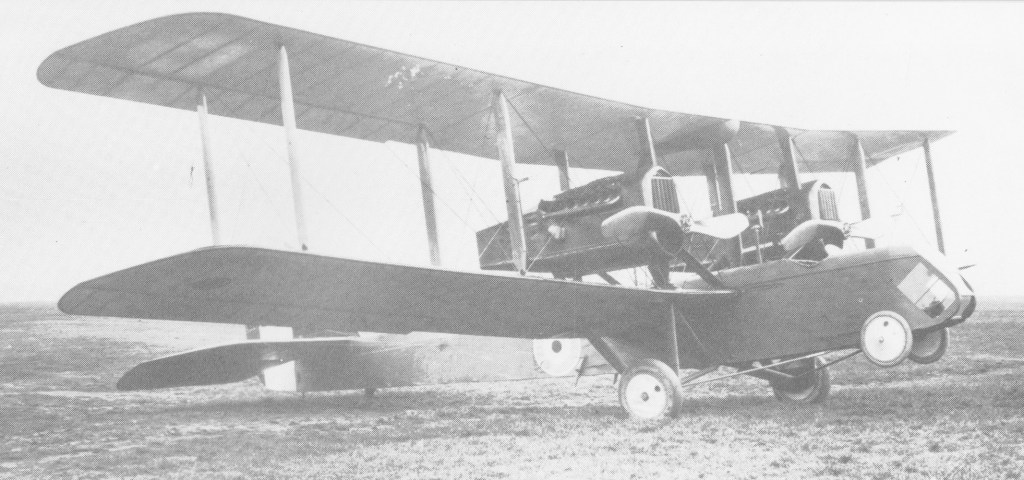
Under the designation Airco D.H.3, Geoffrey de Havilland designed a large two-bay biplane that was intended to fulfil a bombing role. With folding wings in order to save hangar space, and a conventional tailskid landing gear complemented by two wheels beneath the fuselage nose, extending well forward of the main wheels, to prevent it from bumping on the ground. Two Beardmore engines were mounted between the wings, directly above the main landing gear, and each drove a pusher propeller mounted on an extension shaft to clear the trailing edge of the wing. Accommodation was provided for a crew of three, the pilot in an open cockpit just forward of the wings, and the two gunners in individual cockpits, one in the nose forward of the pilot, and the other just aft of the wings.
A second prototype was built with more powerful Beardmore engines, each of 119 kW (160 hp), and with cutouts in the wing trailing edges in the area of the propellers so that the extended drive-shafts could be eliminated. This was designated D.H.3A, and almost immediately the War Office ordered 50. The order was later cancelled.
Neither of these aircraft was to enter production and both were reportedly scrapped within 12 months without seeing service use.
The DH 3 was also built under licence by Häfeli; some being operated as a single passernger airliner circa 1919.
Engine: 2 x Beardmore inline piston, 89-kW /120-hp Maximum speed at sea level: 153 km/h / 95 mph Climb to 1980m / 6,500ft: 23 minutes 30 seconds Endurance: 8 hours Cruise: 75 mph Empty weight: 1805 kg / 3,980 lb Maximum take-off weight: 2635 kg / 5,810 lb Wing span: 18.54m / 60ft l0in Length: 11.23m / 36ft l0in Height: 4.42m / l4ft 6in Wing area: 73.67m / 793 sq.ft Armament: 2 x flexible 7.7-mm (0.303-in) Lewis guns, plus bomb load
A conventional two ¬bay biplane of pusher configuration, the fuselage was curved along the front and top surfaces with slab sides and a flat underside – and held the armament, pilot, controls, fuel and engine. The pilot sat in an open-air cockpit “tub”. A single machine gun was fitted to the front of the fuselage. Fuel was held directly aft of the pilot in one tank, and ahead of the engine, the latter mounted to the extreme end of the fuselage rear with a two-blade wooden propeller. Wings were in a two-bay with parallel struts additionally held by cabling. Both upper and lower wings sported slight dihedral. The empennage tapered off to become a single vertical tail fin with a high-mounted horizontal plane affixed. The undercarriage was fixed in place and featured two large main landing gear wheels attached to the fuselage underside. The rear of the aircraft was supported by a simple tail skid.
Armament consisted of a single semi-trainable .303 Lewis type machine gun fed by a 47-round drum magazine. The machine gun could be mounted within three pre-set positions, allowing the pilot to fix the weapon at advantageous angles of fire. This proved highly impractical once in action. These three pre-set positions became largely ignored as most pilots soon learned to fix the machine gun in place and aim the entire aircraft at the intended target instead. Major Lance Hawker produced a fixed clip and even revised the gunsight for improved accuracy by allowing for leading of the target. Once enacted, the new clip and gunsight – along with the fixed machine gun – lessened the pilot’s workload substantially.
The prototype first flying in 1915, it began powered by a 100 hp Gnome Monosoupape engine. After trials in Britain, the prototype was issued to No 5 squadron RFC in France for further testing by July of 1915, but was destroyed following enemy action on August 9, 1915.
The D.H.2 was considered worthy of series production and initial deliveries began in late 1915 to No 24 Squadron, which was sent to France in February 1916 with 12 D.H.2s as the first ever British squadron to be equipped with single seat fighters.
With its small speed range and sensitive controls the D.H.2 caused some handling problems for pilots initially, but it was accepted as a highly manoeuvrable little fighter.
Modifications were made to the nose of the nacelle; the ammunition was carried in drums on external racks on each side of the cockpit; and the revised fuel system comprised a gravity tank fitted either under or on top of the upper mainplane on the port side. Production models retained the Gnome engine, as comparative trials with a 110 hp Le Rhone 9J powerplant revealed that this gave an inferior performance.
At least one DH.2 fell to German guns, but within time, she formed the ranks of No. 24 Squadron who first netted an aerial victory with a DH.2 on April 2nd, 1916. The DH.2 essentially became the Royal Flying Corps (RFC) first “true” dedicated fighter platform.
The first Imperial German Monoplane was downed by a DH.2 on April 25th, 1916. In June alone, DH.2 pilots racked up a further 17 enemy aircraft. A further 15 were counted in August and another 15 were netted in September. Ten more enemy aircraft were tallied in November.
Along the Western Front, the DH.2 had met her match by the new breed of German and Austro-Hungarian fighter by December 1916. On December 20th, 1916, five out of six DH.2s were lost in one aerial fight against just five Albatros D.III series fighters. Phasing out of the D.H.2 began in France in March 1917, though D.H.2s serving in Palestine with No 11 Squadron, and with No 47 Squadron and a joint RFC/RNAS squadron in Macedonia, had a slightly longer service life. Two were evaluated at Home Defence stations in Britain in 1917 but were unable to cope with the Zeppelin raiders.
No fewer than 100 DH.2s were retained on the British mainland to help train a new generation of fighter pilot, where they served until 1918. By the fall of 1918, the DH.2 was officially retired from any active service with the RFC.
The RFC remained the sole operator of the DH.2. She served within squadrons No.5, No.11, No.17, No.18, No.24, No.29, No.32, No.41, No.47 and No.111.
In total 453 D.H.2 were built.
Replica: Mason DH 2
Airco DH.2 Engine: 1 x Gnome Monosoupape, 100hp Wing span: 8.61 m / 28 ft 3 in Length: 7.68m / 25 ft 2½ in Height: 2.91 m / 9 ft 6½ in Wing area: 23.13 sq.m / 249 sq.ft Empty weight: 423 kg / 943 1b Loaded weight: 654 kg / 1,441 lb Fuel capacity: 26.3 gallon Maximum level speed at sea level: 150 km/h / 93 mph / 81 kt Maximum Range: 249 miles / 400km Endurance: 2 hours 45 minutes Rate-of-Climb: 545ft/min / 166m/min Climb to 1830m /6,000ft: 11 minutes Service Ceiling: 14,000 ft / 4270 m Armament: 1 x 7.62mm forward-firing Lewis machine gun on flexible mount. Crew: 1
Airco DH.2 Engine: 1 x Le Rhone 9J, 110 hp Wing span: 8.61 m / 28 ft 3 in Length: 7.68m / 25 ft 2½ in Height: 2.91 m / 9 ft 6½ in Wing area: 23.13 sq.m / 249 sq.ft Empty weight: 455 kg / 1004 1b Loaded weight: 702 kg / 1547 lb Maximum level speed at sea level: 143 km/h / 92 mph Maximum Range: 249 miles / 400km Endurance: 2 hours 45 minutes Rate-of-Climb: 545ft/min / 166m/min Climb to 1830m /6,000ft: 11 minutes Service Ceiling: 14,000 ft / 4270 m Armament: 1 x 7.62mm forward-firing Lewis machine gun on flexible mount. Crew: 1
Airco DH.2 Engine: 1 x Clerget 9Z, 110 hp Wing span: 8.61 m / 28 ft 3 in Length: 7.68m / 25 ft 2½ in Height: 2.91 m / 9 ft 6½ in Wing area: 23.13 sq.m / 249 sq.ft Empty weight: 428 kg / 943 1b Maximum take-off weight: 654 kg / 1,441lb Maximum level speed at sea level: 150 km/h / 93 mph / 81 kt Maximum Range: 249 miles / 400km Endurance: 2 hours 45 minutes Rate-of-Climb: 545ft/min / 166m/min Climb to 1830m /6,000ft: 11 minutes Service Ceiling: 14,000 ft / 4270 m Armament: 1 x 7.62mm forward-firing Lewis machine gun on flexible mount. Crew: 1
Geoffrey de Havilland was hired by the Airco firm in June of 1914 as lead designer and began developing the Airco “DH.1”. The DH.1 was a two-seat reconnaissance scout biplane fitted with a water-cooled inline engine in a “pusher” arrangement.
Geoffrey de Havilland piloted the prototype DH 1 fighter and reconnaissance aircraft on its first flight in early 1915. A two seat pusher biplane with the observer in the front cockpit, which also housed a forward firing machine gun, the DH 1 was powered by a 70 hp Renault engine, instead of the originally specified 120 hp Beardmore powerplant and the War Office ordered 49 examples. Appearing at the beginning of 1915, it was tested by Geoffrey de Havilland. Airco was fully committed to building Farman aircraft and employed a sub-contractor, Savages Ltd of Kings Lynn, but because of their inexperience, production of the DH.1 was delayed. An order for 100 was placed with Savages of Kings Lynn and production models differed from the prototype in having dual controls, a modified nacelle, reinforced brac¬ing wires and a simplified undercarriage.
Beardmore engines eventually became more plentiful and with this engine the type was designated DH.1A. With an all up weight increase of nearly 136 kg (300 lb), including a 10% additional fuel load, it was 13 km/h (8 mph) faster than the DH 1 and had a more rapid rate of climb.
At the end of 1915, the first five DH.1s off the production line had been alloated to training units. The remainder of the first batch were fitted with the 120 hp Beardmore and re-designated DH.1a.
Six DH.1a from the first batch saw service in the Middle East, and a further 44 were assigned to Home Defence units. No 14 Squadron had six DH1As which were operational in Palestine from the summer of 1916 on escort duty. The second batch of 49 was again built by Savages Ltd, but only 73 of the total number saw service with RFC units. Some survived in Britain until 1918, but all had been withdrawn from service before the Armis¬tice.
DH 1 Engine: Renault, 70hp Span: 12.50 m / 41 ft 0 in Length: 8.82 m / 28 ft 11.25 in Height: 3.4 m / 11 ft 2 in Empty weight: 615 kg / 1354 lb Loaded weight: 927 kg / 2044 lb Maximum speed: 132 km/h / 80 mph Ceiling: 4114 m / 13,500 ft Endurance: 4 hr
DH 1A Engine: Beardmore, 120hp Span: 12.50 m / 41 ft 0 in Length: 8.82 m / 28 ft 11.25 in Height: 3.4 m / 11 ft 2 in Empty weight: 1610 lb / 730 kg Loaded weight: 2340 lb / 1061 kg Maximum speed: 144 km/h / 90 mph Ceiling: 4114 m / 13,500 ft Endurance: 4 hr
DH 1A Engine: Austro-Daimler, 120hp Span: 12.50 m / 41 ft 0 in Length: 8.82 m / 28 ft 11.25 in Height: 3.4 m / 11 ft 2 in Empty weight: 1610 lb / 730 kg Loaded weight: 2340 lb / 1061 kg Maximum speed: 144 km/h / 90 mph Ceiling: 4114 m / 13,500 ft Endurance: 4 hr






 All Aero