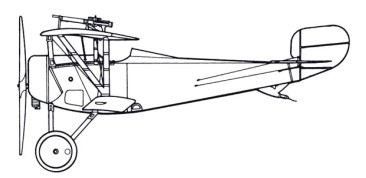
Full scale
Full scale
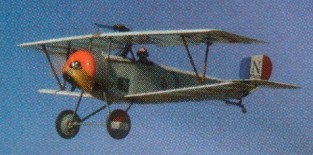
A 7/8 scale copy of the Nieuport 11.
Engine: VW, 52 hp
Hp range: 52-80
Cruise: 65 mph
Stall: 35 mph
Range: 150 sm
ROC: 700 fpm
Fuel cap: 8 USG
Empty wt: 380 lb
Gross wt: 720 lb
Length: 13.5 ft
Wingspan: 23.6 ft
Wing area: 110 sq.ft
Seats: 1
Landing gear: tailwheel
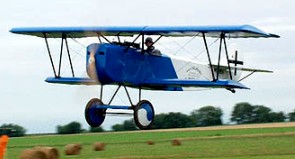
80% scale. Features aluminum tube & rivet construction, CAD designed and detailed, rigid biplane bracing, quick build (400 hrs), engine options, and light, responsive controls.
Engine: Rotax 503, 46 hp
Speed max: 81 mph
Cruise: 71 mph
Range: 212 sm
Stall: 30 mph
ROC: 950 fpm
Take-off dist: 90 ft
Landing dist: 300 ft
Service ceiling: 10,000 ft
hp range: 46-65
Fuel cap: 12 USG
Weight empty: 289 lb
Gross: 531 lb
Height: 7.29 ft
Length: 10.83 ft
Wing span: 22 ft
Wing area: 165 sq.ft
Seats: 2
Landing gear: tail wheel
Engine: Hirth F30, 110hp
Hp range: 80-110
Max speed: 105 mph
Cruise: 94 mph
Stall: 34 mph
Range: 240 sm
ROC: 900 fpm
Fuel cap: 14 USG
Empty wt: 470 lb
Gross wt: 775 lb
Length: 15 ft
Wingspan: 23.3 ft
Wing area: 148 sq.ft
Cockpit width: 24 in
Seats: 1
Landing gear: tailwheel
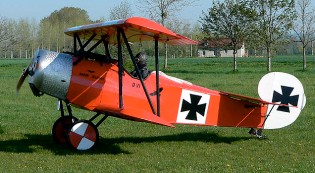
75% scale. Features aluminum tube & rivet construction, CAD designed and detailed, rigid biplane bracing, quick build (400 hrs), engine options (VW Torquemaster), and light, responsive controls.
Engine: Rotax 503SC, 47 hp
Speed max: 78 mph
Cruise: 70 mph
Range: 210 sm
Stall: 32 mph
ROC: 750 fpm
Take-off dist: 95 ft
Landing dist: 300 ft
Service ceiling: 10,000 ft
hp range: 46-65
Fuel cap: 12 USG
Weight empty: 297 lb
Gross: 539 lb
Useful load: 242 lb
Height: 7.33 ft
Length: 15.42 ft
Wing span: 17.75 ft
Wing area: 140 sq.ft
Seats: 1
Landing gear: tail wheel
Engine: Rotax 503, 52 hp
Hp range: 46-65
Cruise: 73 mph
Stall: 30 mph
Range: 240 sm
ROC: 750 fpm
Fuel cap: 10 USG
Empty wt: 297 lb
Gross wt: 539 lb
Length: 15 ft
Wingspan: 17.9 ft
Wing area: 110 sq.ft
Cockpit width: 24 in
Seats: 1
Landing gear: tailwheel
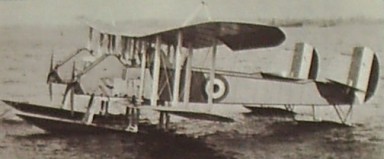
Designed by Harris Booth as a torpedo bomber in 1914, the A.D. Seaplane 1000 was a floatplane of wire braced, fabric covered wood construction. An unequal span biplane, the central glazed nacelle housed an engine and pusher propellor. Two tractor engines were mounted in the booms.
The undercarriage was two main floats and two smaller rear floats.
The outer wing panels had dihedral and were separated on each side by two sets of interplane struts. Overhanging ailerons, on the outboard trailing edges of the upper wing, were supported by kingposts and cables.
Seven were ordered from J. Samuel White, but only one was completed. With poor performance further development was abandoned but the single type 1000 survived until 1916.
AD Type 1000 Seaplane
Engine: 3 x Sunbeam Vee, 310 hp / 231vkW
Wingspan: 115 ft / 35.05 m
Crew: 5
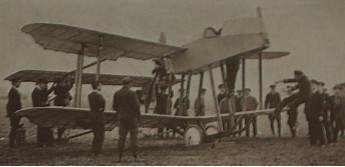
Designed by Harris Booth of the Air Department of the Admiralty as a single-seat anti-airship fighter, the A.D. Scout – later to become known unofficially as the ‘”Sparrow” – a single-bay staggered biplane intended to carry a Davis two-pounder recoilless gun. The rudders and outsize tailplane were carried by four parallel tailbooms. The gun was intended to be mounted in the bottom of the nacelle, to the tail of which was attached a 100hp nine-cylinder Gnome Monosoupape rotary engine driving a pusher propeller. Construction was of wood with fabric covering, and four prototypes were ordered and built (two by Hewlett & Blondeau and two by Blackburn) in 1915. Delivered to the RNAS, the A.D. Scouts proved seriously overweight and difficult to handle in the air. In consequence, all four aircraft were scrapped.
The narrow track main undercarriage was assisted by the lower booms set approximately 11 feet / 3.35 m apart.
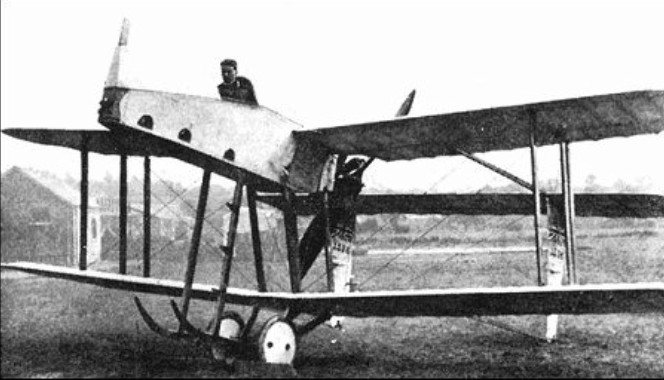
A.D. Scout (Sparrow)
Engine: Gnôme Monosoupape, 99 hp / 75 kW
Length: 22 ft 9 in / 6.93 m
Height: 10 ft 3 in / 3.12 m
Wingspan: 33 ft 5 in / 10.18 m
Max. speed: 73 kt / 135 km/h
Endurance: 2 h 30 min
Crew: 1
Armament: 1 x 0.303 in / 7.7 mm mg
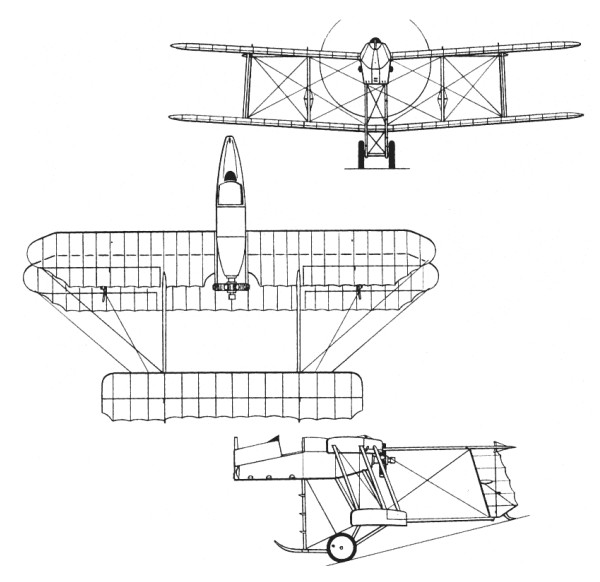
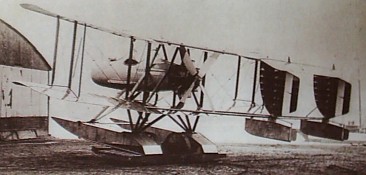
The A.D. Navyplane was designed by Harold Bolas as a two seat pusher floatplane.
Two were ordered in January 1916 for the Royal Naval Air Service and serial numbers were allocated for seven
(9095-9096, N.1070-N.1074) but only one prototype was completed (9095). It was originally fitted with an American Smith Static ten cylinder single-row engine, and flight tested in August 1916 by Lt.Cdr John Seddon. The engine was later replaced by an AR.1 rotary (later redesignated BR.1 for Bentley Rotary 1) and retested in May 1917. The performance was found to be poor and the aircraft was oficially deleted on 27 August 1917.
Engine: 1 x Smith Static, 150 hp / 112 kW
Prop diameter: 8 ft 10 in / 2.69 m
Max speed: 64 mph / 104 kph
Climb to 2000 ft / 907 m: 30 min
Service ceiling: 1300 ft / 396 m
Endurance: 6 hr
Empty weight: 2100 lb / 952 kg
MTOW: 3102 lb / 1157 kg
Wing span: 36 ft / 10.97 m
Wing chord: 5 ft / 1.52 m
Wing gap: 6 ft 6 in / 1.98 m
Tailplane span: 15 ft 6 in / 4.72 m
Length: 27 ft 9 in / 8.46 m
Height: 12 ft 9 in / 3.89 m
Wing area: 364.00 sq.ft / 33.80 sq.m
Armament: 1 x 0.303 / 7.7 mm Lewis mg
Engine: 1 x Admiralty Rotary 1, 150 hp / 112 kW
Wing span: 36 ft / 10.97 m
Wing chord: 5 ft / 1.52 m
Wing gap: 6 ft 6 in / 1.98 m
Tailplane span: 15 ft 6 in / 4.72 m
Length: 27 ft 9 in / 8.46 m
Height: 12 ft 9 in / 3.89 m
Wing area: 364.00 sq.ft / 33.80 sq.m
Armament: 1 x 0.303 / 7.7 mm Lewis mg
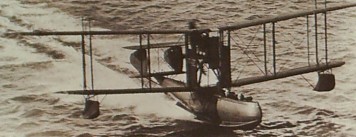
Designed in 1915 to serve in patrol and reconnaissance roles, the AD Flying-Boat was a two seat, single engined, unequal-span braced biplane. The wings could be folded for stowage, and a braced ailplane had twin fins and rudders.
Construction of two prototypes was begun in May 1915, with May, Harden & May of Southampton building the first hull. The hull being designed by Lieutenant Linton Hope. The first was then completed at Southampton by Pemberton-Billing Ltd, who also built the second prototype and the 27 production aircraft.
The first prototype was powered initially by a 200 hp / 149kW Hispano-Suiza with a four blade pusher prop.
The original order was for 85 aircraft but after the first 27 the remaining contracts were cancelled in March 1918.
The aircraft were used by the Royal Naval Air Service, armed with one forward firing 0.303 in Lewis gun and provision for eight light bombs. All 27 production aircraft were declared obsolete in late 1918.
Nineteen were repurchased by Supermarine soon after the war and converted for civil use as the Supermarine Channel.
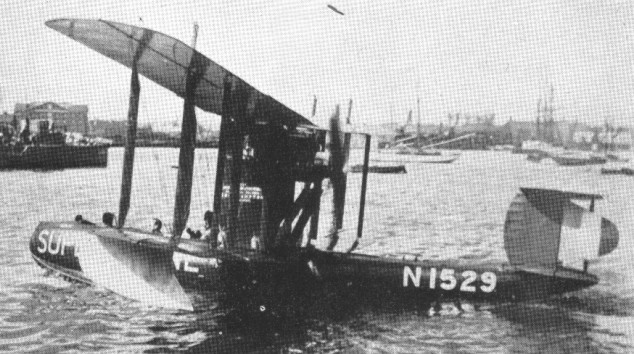
Engine: 1 x Hispano Suiza, 200 hp / 149 kW
Max speed: 100 mph / 161 kph at 2000 ft / 610 m
Cruise speed: 90 mph / 145 kph at 10,000 ft / 3050 m
Service ceiling: 11,000 ft / 3355 m
Endurance: 4 hr 30 m
Empty weight: 2508 lb / 1138 kg
MTOW: 3567 lb / 1618 kg
Wing spar upper: 50 ft 4 in / 15.34 m
Wing spar lower: 39 ft 7.25 in / 12.07 m
Length: 30 ft 7 in / 9.32 m
Height: 13 ft 1 in / 3.99 m
Wing area: 479 sq.ft / 44.5 sq.m
Armament: 1 x 0.303 / 7.7 mm Lewis mg
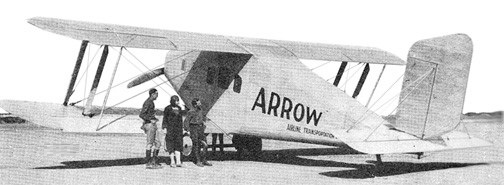
The Airline Arrow was a 1922 major modification of a Standard J-1 by (John W) Rogers Aircraft Co, Los Angeles, for this aspiring LA-Imperial Valley airline proved unsatisfactory. Seating 8 inside the cabin, it was the second commercial airliner design, after Lawson Air-Liner. It and the fledgling company flew into obscurity in the Depression Era.
Engine: possibly 300hp Hall-Scott
Cruise speed: 100 mph
Seats: 8
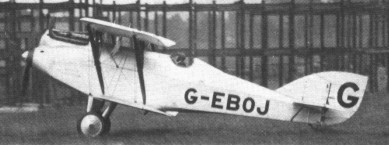
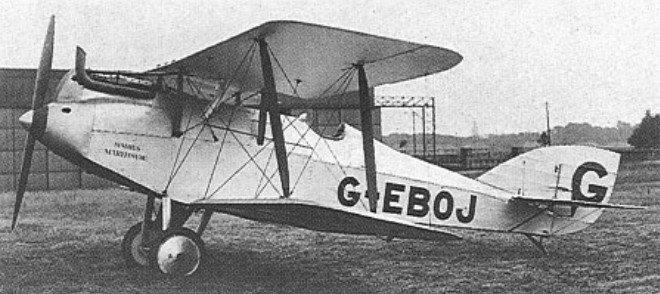
In 1926, John Kenworthy developed a single-seat fighter based on the F.4 Buzzard but utilising a 330 hp A.D.C. Nimbus six-in-line water-cooled engine. Referred to as the “Nimbus-Martinsyde”, with an essentially similar airframe to the Buzzard, it featured modified vertical tail surfaces with a horn-balanced rudder and revised aft upper fuselage decking. Its intended armament was two synchronised 0303-in (7,7-mm) Vickers machine guns, but these were never installed. Two prototypes were built and flown, both participating in the King’s Cup Air Race on 9-10 July 1926, and in 1927, the first prototype was modified with faired undercarriage legs and cylinder head fairings. No orders were placed for the Nimbus-powered aircraft and both prototypes were scrapped.
Engine; ADC Nimbus, 330hp
Span, 32 ft 9 in (9,98 m)
Length, 26 ft 10 in (8,18 m)
Height, 9 ft 6 in (2,89 m)
Wing area, 320 sq ft (29,73 sq.m)
Empty wt; 2014lbs, 914kg
Loaded wt; 2665lb, 1209kg
Max speed sea level, 150mph, 241 kph at sea level
Climb to; 10,000ft: 7min 30sec
Climb to 15,000ft: 14min
Climb to 20,000ft: 25min
Service ceiling; 23,500ft
Endurance: 2.5hrs
 All Aero