Armstrong Whitworth F.K.3

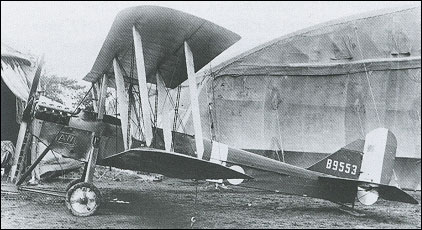
When W G Armstrong, Whitworth & Co received a contract in 1914 to build B.E.2 aircraft for the Royal Flying Corps and the Royal New Zealand Air Service, it offered to design and build a simpler but equally efficient two seat trainer aircraft instead. Similar in configuration to the B.E. in its initial state, with separated cockpits for pilot and observer, the Frederik Koolhoven designed F.K.3 construction started in August 1915.

Armstrong Whitworth F.K.3 Article

Production versions incorpo¬rated a tandem crew cockpit with the pilot seated forward and a more efficient tail design. The prototype F.K.3 had a 120 hp Austro Daimler engine, but most production models had the 90 hp RAF la, while a few had the 105 hp RAF lb.

Approximately 500 F.K.3s were ordered for RFC use, the bulk of which were allotted to training units where they gave service until the end of hostilities.
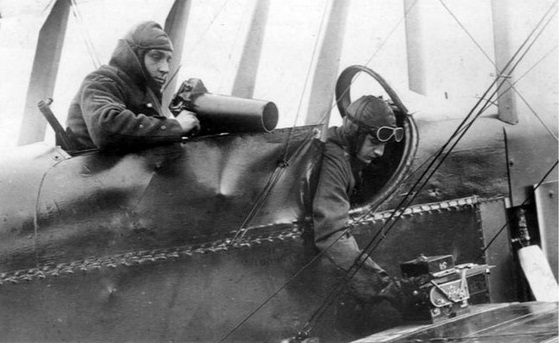
F.K.3

Only one RFC squadron used F.K.3s operationally; 47 Squadron in Macedonia, where they became a bomber and general reconnaissance machine from late 1916 until the Armistice. On October 31, 1918, the RAF had a total of 62 F.K.3s still on charge. At least four of these went onto the post 1918 Civil Register as G-¬EABY (ex 119629), G EABZ (ex-B9518), G EAEU (ex-B9612) and G EALK (ex-B9603).

Engine: RAF.1a, 90 hp or Beardmore, 120 hp
Span: 12.2 m (40 ft)
Length: 8.8 m (29 ft)
Height: 3.6 m (11 ft 10.75 in)
Empty weight: 762 kg / 1682 lb
Loaded weight: 932 kg / 2056 lb
Maximum speed: 142 km/h (88 mph) at 1980 m (6500 ft)
Service ceiling: 3962 m (13 000 ft)
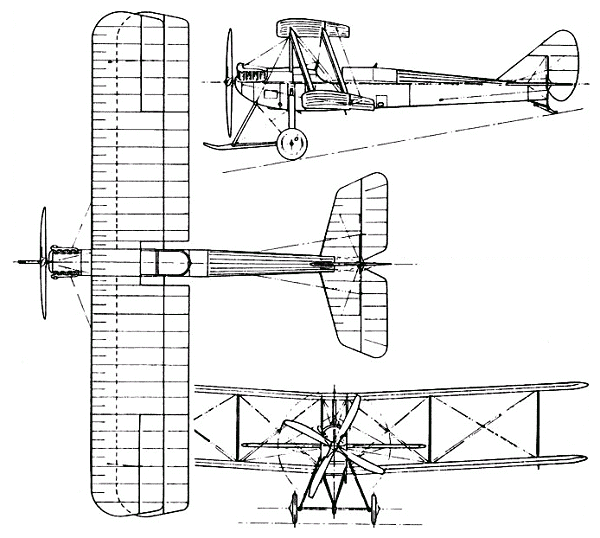
Armstrong Whitworth F.K.1 / F.K.2

F.K.1
Engine: Renault V-8, 70 hp
Wingspan: 40 ft 0 in
Length: 29 ft 0 in / 8.8 m
Height: 11 ft 10.5 in / 3.5 m
Empty weight: 1386 lb / 628 kg
Loaded weight: 2447 lb / 1109 kg
Max speed: 68 mph / 109 kph

F.K.2
Engine: RAF.1a, 90 hp
Wingspan: 40 ft 0 in / 12.1 m
Length: 29 ft 0 in / 8.8 m
Height: 11 ft 10.5 in / 3.5 m
Empty weight: 1386 lb / 628 kg
Loaded weight: 2447 lb / 1109 kg
Max speed: 78 mph / 125 kph

Arado Ar.197

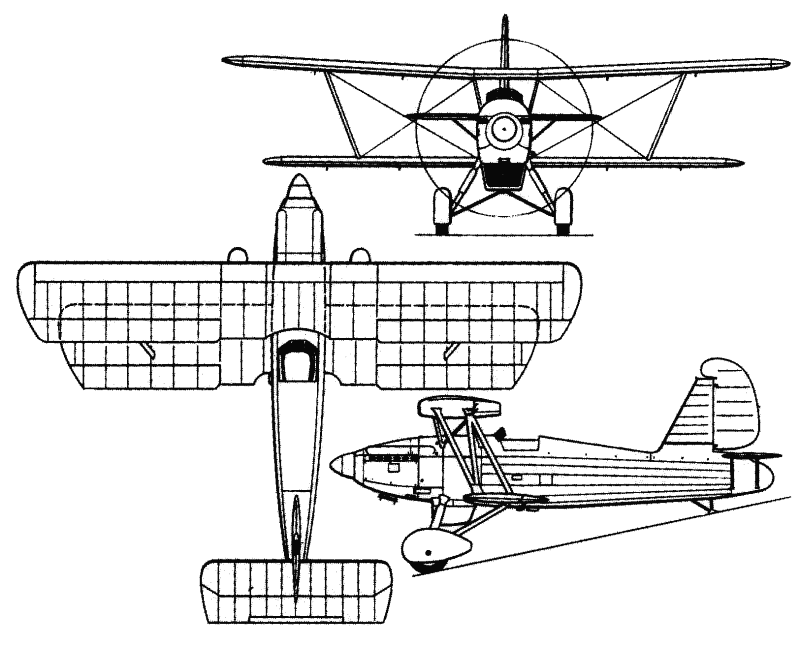
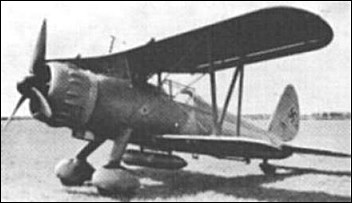
A 1937 single-engined biplane fighter development of the Ar 68 intended for use on aircraft carriers. The Ar 197 was fitted with fixed landing gear and fittings of catapult-launch.
The first prototype had a DB 600 engine, the two others had a BMW 132 radial. There was no production.

Ar 197 V1
Engine: 1 x Daimler Benz dB 600A, 900 hp
Propeller: metal three-blade variable pitch
Wing span: 11,00 m
Length: 9,20 m
Height: 3,60 m
Wing area: 27,75 m²
Empty weight: 1840 kg
MTOW: 2475 kg
Max speed: 400 Kmh at 2500 m
Ceiling: 8000 m
Range: 695 km
Armament: 2 MG 17 7,92 mm, 2 guns MG 20 mm, 4 x of 50 kg bombs

Ar 197 V2
Engine: 1 x BMW 132J, 815 hp

Ar 197 V3
Engine: 1 x BMW 132, 880 hp

Arado Ar.195

The Arado Ar 195 was prototype design intended for operations from Germany’s first aircraft carrier, the Graf Zeppelin. The aircraft was developed as a carrier-based torpedo.

The Ar 195 was based on the Ar 95 with major differences centreing mainly on a tail arrestor hook for catapult-launching. The Ar 195 featured a single BMW brand 819 horsepower radial engine, biplane wings, and crewed by a pilot and rear gunner. Landing gear was fixed and a single vertical tail surface was at the rear. Armament consisted of a single 7.92mm machine gun in a forward fixed firing position for the pilot and an additional 7.92mm machine gun in a trainable flexible rear gun mount. A single bomb or torpedo could be mounted in an underfuselage rail.

Though the Ar 195 prototype was flying by 1937 only three were built. The type was unsuccessful against the Fieseler-designed Fi 167.

Engine: BMW 132M, 850 hp
Wingspan: 12,50 m / 41.01 ft
Length: 10,50 m / 34.45 ft
Height: 3,60 m / 11.81 ft
Wingarea: 46 sq.m
Empty weight: 2380 kg / 5,247 lb
MTOW: 3745 kg / 8,256 lb
Wing loading: 81,413 kg/sq.m
Power loading: 4,4 kg/hp
Max speed: 175mph / 282kmh / 152kts
Cruise speed: 250 km
Service Ceiling: 19,685ft / 6,000m)
Range: 650 km / 404 miles
Crew: 2
Armament:
1 x 7.92mm MG17 machine gun in fixed forward firing position
1 x 7.92mm MG17 machine gun in flexible rear cockpit mount.
Hardpoints: 1

Arado Ar.95

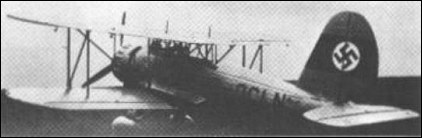
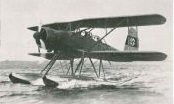
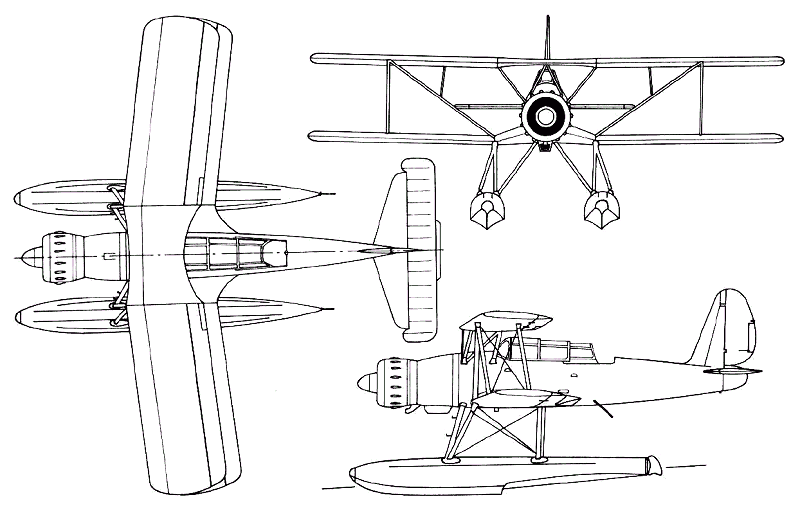
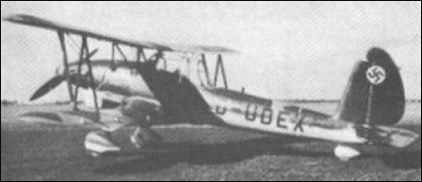
The Ar 95 developed as a naval torpedo-bomber and reconnaissance biplane for use from a proposed German aircraft carrier. The first prototype (built as a twin-float seaplane) first flew in 1936 and was followed by other seaplane and landplane prototypes, differing in engines fitted.

The landplanes featured heavily trousered main landing gear legs. A change of direction led to the delivery of six aircraft to Spain, where they fought during the late stage of the Civil War. Six Ar.95 landplanes and seaplanes were exported to Chile in 1939, and those built for Turkey were retained for use by the Luftwaffe.

Ar 95A
Wingspan: 12.5 m / 41 ft 0 in
Length: 11.1 m / 36 ft 5 in
Height: 5.2 m / 17 ft 1 in
Wing area: 45.4 sq.m / 488.68 sq ft
Take-off weight: 3570 kg / 7871 lb
Empty weight: 2450 kg / 5401 lb
Max. speed: 309 km/h / 192 mph
Cruise speed: 253 km/h / 157 mph
Ceiling: 7300 m / 23950 ft
Range: 1100 km / 684 miles

Arado Ar.81

1934

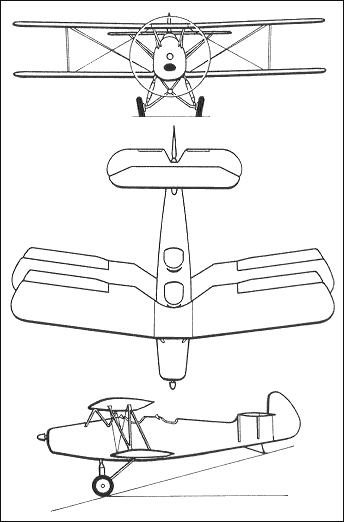
A two seat biplane dive bomber which competed with the early Ju 87. Three were built, all with different tail configurations; the V3 was considered satisfactory.
The pilot was under a canopy and observer/machine gunner was behind. Construction was and entirely metal fuselage, the aerofoil with a mixed structure with partial coating in fabric.
The prototypes were not followed by series production.

Ar 81 V1:
Engine: Jumo Junkers 210 C, 700 hp
Propeller: three-blade
Wingspan: 11,65 m
Length: 11,25 m
Height: 3,57m
Wingarea: 37,60 sq.m
Empty weight: 1925 kg
MTOW: 3070 kg
Wing loading: 82 Kg/sq.m
Power loading: 4,385 Kg/hp
Max speed: 345 Kmh
Armament: 2 MG 17, 1 MG 15 7,92 mm, plus 500 kg bombs

Arado Ar.76

1935

The Ar 76 was a lightweight home-defence fighter and advanced trainer. Single-engined with an open cockpit, The Ar 76 parasol monoplane had a traditional horizontal stabilizer at the extreme back of the fuselage.
Few were built up to the end of 1934, preference being given to the Fw 56.

Engine: Argus Aces 10C, 240 hp
Propeller: two-blade fixed pitch
Wingspan: 9,50 m
Length: 7,20 m
Height: 2,55 m
Wingarea: 13,30 sq.m
Empty weight: 750 kg
MTOW: 1070 kg
Speed: 267 Kmh
ROC: 5000 m in 21 min
Ceiling: 6400 m
Range: 470 km
Armament: 1 MG 17 7,92 mm, or 2 MG 17, plus 3 x 10 kg bombs

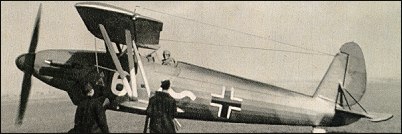
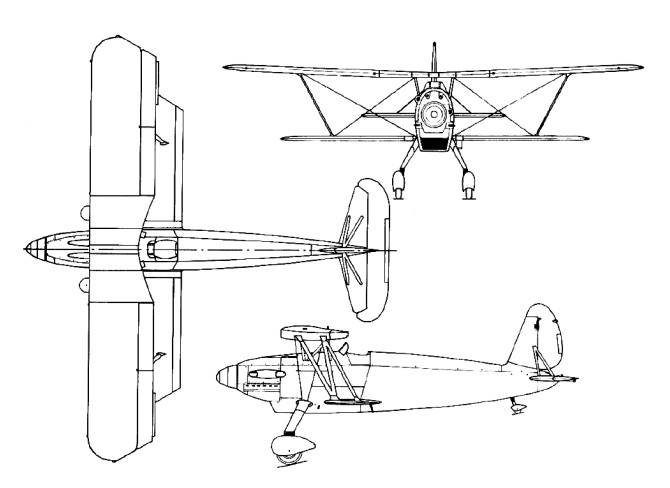
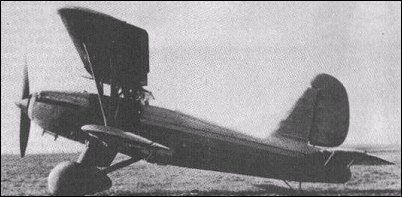
Arado Ar.68

Five prototypes of Ar 68 single-seat fighter biplane (the Luftwaffe’s first fighter) appeared in 1933, powered by BMW VI or Junkers Jumo 210 engines. The choice of engine was influenced by the availability. Rethel wanted the Jumo 210 but other manufacturers had claims before Arado so they had to settle on the BMW VI until supplies of the former were more readily available.
Designed to replace the Heinkel He 51, it was sent to Spain for operational evaluation. Three aircraft were sent to La Cenia in January 1937 for use in an experimen¬tal night fighter flight. They were used briefly, but apparently ineffectively, against Republican Potez 540 and Bloch 200/210 bombers.
All three aircraft were painted over¬all RLM 63 gray. In early 1938, the two surviving Arados (coded 9 1 and 9 2) were transferred to the Nationalists, who used them in the 2nd Army Co¬operation Group.

The first version to enter production and service (1936) was the Ar.68F, powered by the BMW engine, followed after a small production run by the improved 514kW Jumo Da- or Ea-engined Ar.68E.
Prototype Ar.65G and H versions were subsequently built, of which only the supercharged 533.4kW BMW 132 Da-engined ‘H’ was fully developed. The Ar68H was flown using the BMW 132Da radial, a license built Pratt and Whitney Hornet, this engine offered a very much improved performance (max speed 400 km/h) but it was all too late. But even this failed to enter production despite having four machine-guns and an enclosed cockpit for the pilot. A few Ar.68 remained operational as night fighters during the first months of World War II and were the Luftwaffe’s last operational biplane fighters.

Engine: 1 X Jumo 210ea, 505kw
Take-off weight: 2020 kg / 4453 lb
Empty weight: 420 kg / 926 lb
Wingspan: 11.0/8.0 m / 36 ft 1 in / 26 ft 3 in
Length: 9.5 m / 31 ft 2 in
Height: 3.3 m / 11 ft 10 in
Wing area: 27.3 sq.m / 293.85 sq ft
Max. speed: 335 km/h / 208 mph
Cruise speed: 280 km/h / 174 mph
Ceiling: 8100 m / 26600 ft
Range w/max.fuel: 500 km / 311 miles
Armament: 2 machine-guns, 60kg of bombs
Crew: 1

Arado Ar 68G
Engine: 1 x BMW VI V-type, 750hp.
Wingspan: 36.09ft (11.00m)
Length: 31.17ft (9.5m)
Height: 10.76ft (3.28m)
Maximum Take-Off Weight: 5,456lbs (2,475kg)
Maximum Speed: 190mph (305kmh; 165kts)
Maximum Range: 258miles (415km)
Service Ceiling: 26,575ft (8,100m)
Armament: 2 x 7.92mm MG 17 forward-firing fixed machine guns.
Crew: 1

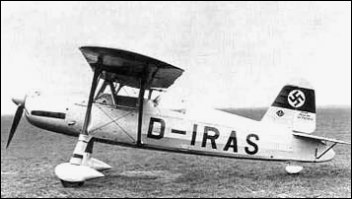
Arado Ar.66

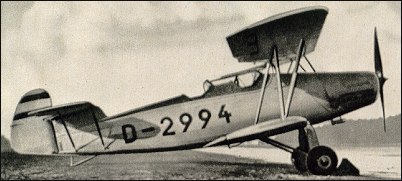
Two-seat biplane trainer powered by a 179kW Argus As 10 engine.

Engine: 1 x Argus As 10C, 175kW
Take-off weight: 1330 kg / 2932 lb
Empty weight: 425 kg / 937 lb
Wingspan: 10.0 m / 32 ft 10 in
Length: 8.3 m / 27 ft 3 in
Height: 2.9 m / 9 ft 6 in
Wing area: 29.6 sq.m / 318.61 sq ft
Max. speed: 210 km/h / 130 mph
Cruise speed: 175 km/h / 109 mph
Crew: 2