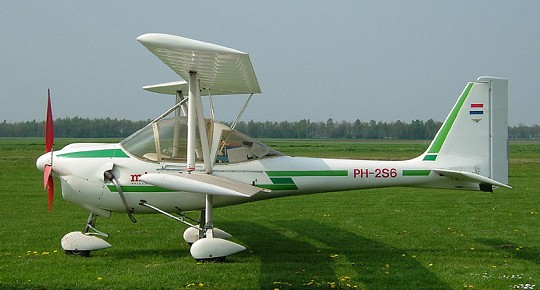
The Aviasud AE-206 Mistral was designed by Francois Goethals and Bernard d’Otreppe and developed by Aviasud Engineering in Fréjus, France, was flown first in 1985. A three-axis, tricycle landing gear, microlight biplane powered by a Rotax 532 engine, the Mistral is a side-by-side two-seated ULM (Ultra Light Motorised aircraft) with forward swept wings. Manufactured by Aviasud Industries in Fréjus, France, the first delivery took place in April 1986. Over two hundred have been built in France. The Mistral was manufactured in Brasil under licence by Ultraleger Industria Aeronáutica Ltda. The Mistral remained in production by Ultraleger until 2004. Their Mistral B and C were powered by a 65 hp 2 cylinder, 2 stroke liquid cooled Rotax 582 UL-DCDI engine. On 4 May 1987 a Mistral was flown to the geographic North Pole by Nicolas Hulot. Following the closure of Aviasud, the Mistral was built by Aeriane circa 1998. Almost entirely built in composites, the entire lower wing acts as ailerons.
Aeriane Mistral
Stall: 35 kt / 40 mph / 65 kmh Cruise: 72 kt / 83 mph / 133 kmh VNE: 89 kt / 103 mph / 165 kmh Empty Weight: 215 kg / 474 lbs MTOW Weight: 390 kg / 860 lbs Climb Ratio: 600 ft/min / 3,85 m/s Glide Ratio: 10,8 Take-off distance (50ft obstacle): 620 ft / 190 m Landing distance (50ft obstacle): 1100 ft / 335 m
Aeriane Mistral Empty weight: 215 kg Wing span: 9.4 m Wing area: 16.4 sq.m Fuel capacity: 60 lt Certification: Vz Engine: Rotax 582, 64 hp MAUW: 390 kg Seats: 2 Max speed: 160 kph Cruise speed: 133 kph Minimum speed: 60 kph Climb rate: 3.85 m/s Fuel consumption: 15 lt/hr
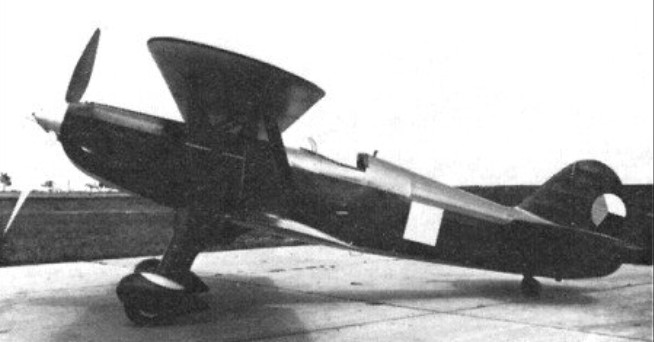
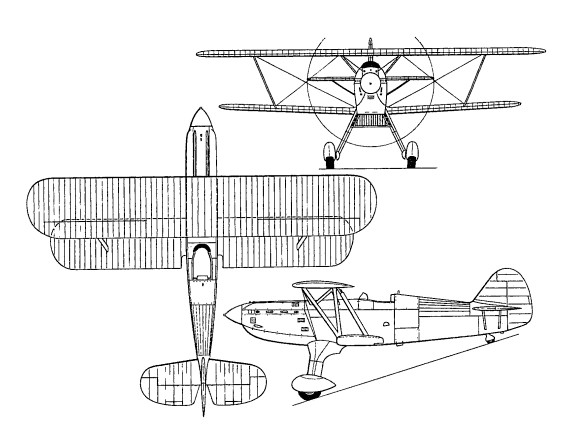
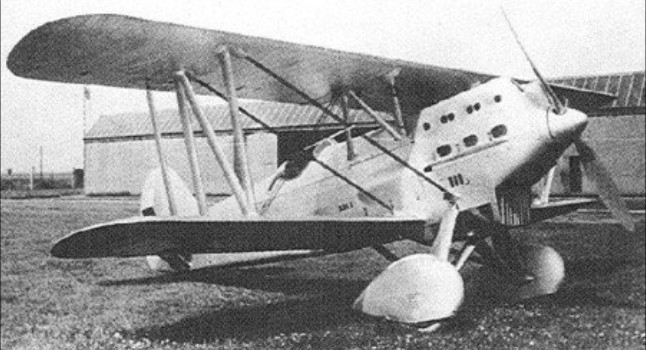
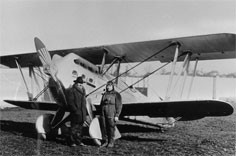
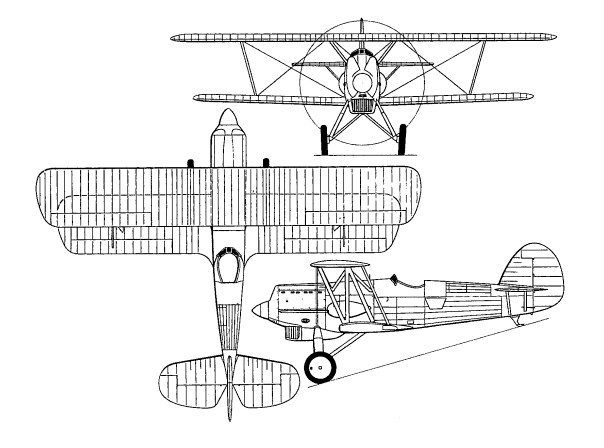
The B 634 represented the ultimate in the aerodynamic development of the basic B 34 single-seat fighter biplane design, and was to be numbered among the cleanest aircraft in its category ever flown. Tested in 1936, the B 634 was powered by an Avia-built HS 12Ycrs engine mounting a 20mm Oerlikon FFS cannon, two 7.7mm Model 30 machine guns being installed in the upper fuselage decking. There was virtually no commonality of components between the B 634 and the B 534.1 from which it was derived. By comparison with the earlier fighter, the upper wing of the B 634 featured increased chord while the lower wing had reduced chord, the wingtips were redesigned, the ailerons were broader, the gap was reduced (increasing the splay of the interplane struts), the stagger was greatly increased, and cut-outs were introduced on the lower wing roots. The curvature of the engine cowling and cockpit sill was refined, cantilever undercarriage legs were adopted and the radiator bath was faired cleanly between the leg roots. Despite a substantial reduction in drag, performance offered an insufficient improvement over that of the B 534 to warrant series production, the disappointing results provided by the B 634 being due primarily to a substantial increase in structural weight.
Two prototypes were built. The second had an enclosed canopy and different undercarriage. Both B-634 were pressed to service in 1938.
B.634 Engine: 1 x 850hp Avia-Hispano Suiza 12Ycrs Wingspan: 9.40 m / 31 ft 10 in Length: 8.35 m / 27 ft 5 in Height: 3.06 m / 10 ft 0 in Max take-off weight: 2340 kg / 5159 lb Empty weight: 1710 kg / 3770 lb Max. speed: 415 km/h / 258 mph Cruise speed: 362 km/h / 225 mph Ceiling: 11000 m / 36100 ft Rate of climb: 960 m/min / 3150 ft/min Range: 500 km / 311 miles Armament: 1 x 20mm, 2 x 7.7mm Crew: 1
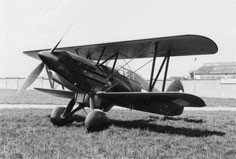
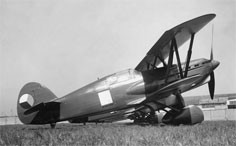
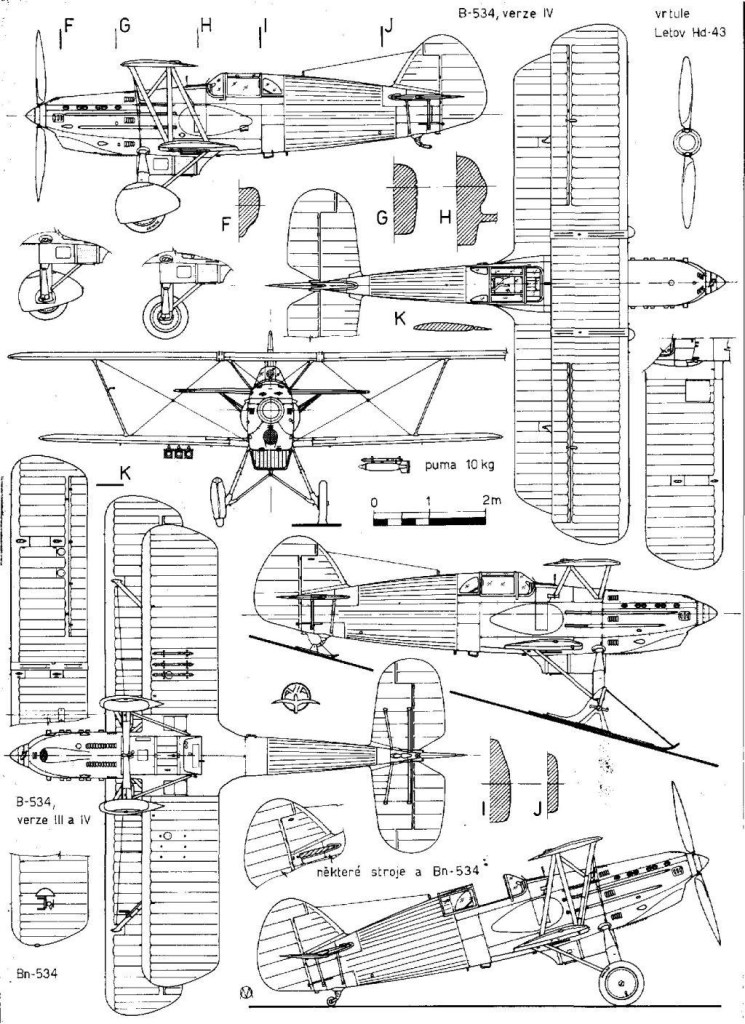
The B.534 featured a fixed undercarriage and biplane wings. Fuselage construction of the Avia B.534 was a mix of fabric-covered steel-structured wing assemblies. Armament was two or four 7.7mm synchronized machine guns and six 44lb bombs. Only some machines of the Nos I-II batches had a cockpit canopy.
The B-534 prototype was flight-tested in August 1933.
The operational flight ceiling was over 30,000 ft.
The 99th production Avia B-534 was tested for use of a Letov-made metal propeller.
The Nos I-II batches being built from Feb 1935 were equipped by wooden propellers, the Nos III-IV batches with composite ones.
Two machine guns were typical for the first 100, in the lower wing they were mounted into both sides of the fuselage. The No IV batch cockpit was covered by a canopy and hooded wheels. Aircraft of all the batches were equipped by racks for small splinter bombs.
No IV batch Avia B-534
The 190th production B-534 fighter was the fourth one armed by four machine guns. In addition to two side-fuselage-mounted machine guns, the Bk-534 was armed also by a HS No 402 via propeller-axle shooting canon.
B-534 No.190
The B-534 turned out from 1936 were of higher empty as well as take-off weight, top speed, service ceiling and climb up to 5 000 m.
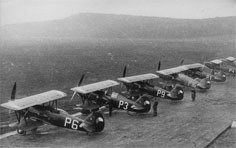
Avia B-534 fighters assigned to the Prague Flight under 1938 Mobilization in Eastern Slovakia
Because all three Aeroplane Works within a range of German bombers were, a new plant was built at the village of Kunovice in South Moravia. B-534s were turned out there in 1937.
Avia B.534’s would eventually see combat against the invading German forces, for the conquering German forces against the Soviet Union and ultimately phased out of service after completing several, less note-worthy, roles.
The Czechoslovakian Avia B.534 series of biplane was highly regarded. Such was the performance of the machine that the German Luftwaffe would briefly setup a fighter squadron utilizing captured B.534 aircraft.
Avia B-534 2nd batch Engine: Avia HS 12 Ydrs 750 hp Wingspan: 9.4 m Length: 8.1 m Empty weight 1385 kg Take off weight: 1913 kg Armament: two machine guns.
Avia B-534 Engine: Avia HS 12 Ycrs Empty weight: 1631 kg Loaded weight: 2222 kg Top speed: 375 kph Range: 500 km Rate of climb: 15m/sec Service ceiling: 9500 m
Avia B.534-IV Engine: 1 x Hispano-Suiza HS 12Ydrs, 850hp. Length: 26.90ft (8.2m) Width: 30.84ft (9.40m) Height: 10.17ft (3.10m) Maximum Speed: 245mph (394kmh; 213kts) Maximum Range: 360miles (580km) Rate-of-Climb: 2,953ft/min (900m/min) Service Ceiling: 34,777ft (10,600m) Armament: 4 x 7.7mm synchronized machine guns 6 x 44lb bombs Crew: 1 Hardpoints: 6 Empty Weight: 3,219lbs (1,460kg) Maximum Take-Off Weight: 4,674lbs (2,120kg)
In the spring of 1934 the Czechoslovak Army Command decided that some Czechoslovak Air Force pilots would participate in the international aerobatic competition Coupe Mondial. For this purpose, the Czechoslovakian aircraft manufacturer Avia was given a task to design and construct an aircraft. Designed by František Novotný as a development of the Avia BH-22, the prototype, B.122 Vosa (“Wasp”) was presented after a mere six weeks time, powered by a 260 hp Walter Kastor.
The fuselage had a frame of welded steel tube and linen covered. The wings were all wood, the upper and lower wing span the same. On the lower wings were the ailerons. The wheels were attached to the semi-axes split in the tops of the pyramids, including pneumatic oil shock absorbers.
The first flight was on May 12, 1934, testing was carried out by Captain Novak. The test results were quite satisfactory, although he considered that the area of the vertical stabilizer should be increased. Twelve days later, the second plane was ready.
The Czechoslovak pilots had only a few weeks to learn and master the aircraft as the competition was to be held in July 1934. Luckily, the design was quite successful and the Czechoslovak pilots managed to win the 4th (Novak) and the 8th place (staff-captain Ambrus) in the competition. After that, Novak appeared several times on the new aircraft with demonstration flights in Portugal, Austria, Spain, Romania and Yugoslavia.
Afterwards, the aircraft was modified, based on the pilots’ inputs, and this resulted in the improved version Ba 122. In 1935, the plant produced the first two Avia advanced aircraft modifications Ba-122. It increased the area of the keel and installed a new biplane box. The ailerons were located on the top and on the lower wing connected by rigid rods. The Ba.122 was equipped with a more powerful engine. This version went into production and 35 aircraft were built. The final two B-122 featured a Townend ring but without any advantage they were removed.
At the end of 1935 motor improvments went on in parallel on two fronts. One plane put had a Kastor IIA engine with a new carburettor, and another machine mounted a much more powerful 385 hp Air Rk-17 motor. The Avia engine biplane made its first flight 23 January 1936 and tests were successful. The plant began to build in parallel both variants in small batches. The Ministry of Defense ordered 35 biplanes with the Rk-17 to train fighter pilots. One machine with a Kastor IIA was used the German personal air attaché in Czechoslovakia. It was registered on the Czechoslovak civil register.
At the Olympic Games 1936, held in Berlin, the program included contests and aviators, Czechoslovakia enrered three pilots – Nowak, Ambrus and Wide. They all received brand new Ba-122. One of them was Kastor powered, and the other two – Rk-17. Broad took the second place, Novak – the third, Ambrus – the eighth.
In 1937, Avia powered the Ba-122 with 325 hp Walter Polluk motors. Three of these machines were sent to the International Flying Meeting in Zurich in July/August, along with five aircraft with Rk-17 engines. This allowed two different categories of engines volumes. The individual competition in categories B and C was won by Novak. His colleagues also took third and fourth places. These successes led to export orders from the Soviet Union and Romania. Czech pilots demonstrated three -122s in Moscow on October 15, 1936. The pilots were invited after the Soviet Military Group had paid a visit to the Czechoslovak Republic in summer of the 1936 year. The Soviets ordered fifteen Walter Castor powered A-122 aicraft.
A modification of the Ba-122, the B-222, took to the air 31 September 1937. The Rk-17 engine received an elongated NACA hood, and the wheels in a teardrop-shaped fairing. This machine remained the property of Avia and was intended for demonstration purposes.
In Czechoslovakia, by this time there was a new version of the Bs-122. The Ministry of Defence has ordered 45 of these aircraft for training units, flight schools and, especially, for the Higher School of aerial acrobatics in Prague. Bs-122 feature a rounded keel and cut-outs in the bottom of the fuselage at the wing to improve visibility downwards. Series tests started on 10 October 1936, completed them in July 1937. All the Bs-122 but one were equipped with Kastor PA engines. One of the planes of this order was a B-322 with Rk-17 engine in a Townend ring and with a closed canopy. The first flight of this machine was made Oct. 24, 1937.
For competition in France in 1938, Novak assembled improved B-122, later called the B-422. On it to improve visibility up and down the designer changed the upper wing shape. Two were made, the second an alternate. Both had an Rk-17 engine. The first B-422 went on March 4 and the second on April 7, 1938 to the competition in Saint-Germain. Novak came second.
Lt. F.Novak in front of his Avia B-422
After his return to Czechoslovakia, Novak organized an aerobatic team of nine airmen for various events. At the Munich crisis, all acrobatic planes went into the Air Force. Earlier, they were considered the property of the Czechoslovak Aeroclub, though they were flying military pilots and service technician aerobatic teams Air Force specialists. During the negotiations in Munich, Czechoslovakia was forced to comply with the Germans. In less than a year, the German army occupied the entire territory of Czechoslovakia. The entire fleet of the Czechoslovak Air Force was captured. What exactly the Germans did with the captured B-122 aircraft is unknown. Among the captured equipment included a total of 76 training and acrobatic aircraft.
Most of the Ba-122 and Bs-122 were sold to allies of Germany. A number of these biplanes got to Romania. In late 1939, the Germans offered to sell Bulgaria former Czechoslovak Army equipment, including aircraft. At the Merseburg airport a commission of Bulgarian pilots and engineers arrived. They selected a large number of aircraft of various types, including 12 Bs-122. Later, apparently made other purchases, since only the Bulgarian Air Force of 27, including one B-322. In Bulgaria, these planes were called ‘Osa’. The largest number of them operated in 1942-43 at a flight school in Lovech, training fighter pilots.
Quite a few aircraft were left in Slovakia, which became an ally of Germany. Slovaks got almost all the equipment of the 3rd Regiment, whose headquarters is located in Bratislava. It is composed of a training squadron, a unit of which were scattered across three different airfields. At the beginning of 1940 were 10 Slovak Air Force Ba-122 and 13 Bs-122. At the end of 1940, the majority of these machines went to a flight school, organized in the town of Trencincal Biskupiec. In August 1943, the school moved to the Three Oak airfield. There, they lived almost to the end of the war. In August 1944, the Slovak army, united with the guerrillas, attacked German garrisons. It began a Slovak National Uprising. Part of the Slovak aviation aircraft flew over the front line and sat on Soviet airfields. Others remained in their native land and began supporting rebels from the air. Among them the aircraft on the Three Oak airport. At that time there were three 122 and one Bs-122. Apparently, the machines were destroyed during German air raids.
After the conclusion of the agreement on mutual assistance between the USSR and Czechoslovakia in 1935 in the Czechoslovak Army, Soviet commanders were trainees, including pilots. In the summer of 1936 Prague was visited by Soviet aviation delegation headed by the Chief (in a modern commander) Red Army Air Force Army Commander 2nd Rank Ya Alksnis. For her, it organized a flypast, and included a demonstration of individual and group aerobatics airplanes of various types.
In response an aviation delegation went to the Soviet Union headed by Lieutenant Colonel Beroun, commander of the 4th Regiment (Czechoslovakia in a small regiments was only five, so Beroun was not the last person in the ranking Air Force). The delegation included the aerobatic team of Novak, Broad, and Hubacheka.
Czechoslovakia and the USSR did not have a common border, so flying through Romania, Iasi through to Odessa, the Soviet border was crossed in the parade – in the middle of the three-engine Fokker, and around four Ba-122. The fourth was considered a replacement. And it was needed. Shortly after reaching Soviet territory Novaks motor failed. He made a forced landing in a field. Next to him landed Vyborny. Nowak and Vyborny were guests of the local collective farm, waiting for a new engine from Prague. The rest of the aircraft continued along the planned route. They passed through Odessa, Vinnitsa, Kiev. On the way to the cities, airfields, military units and flight schools group Novak demonstrated aerobatics. The last presentation was given on October 15 in Moscow, at the Tushino airfield.
Ba.122s
Soviet specialists have noted good handling Ba-122. No Soviet aircraft had the necessary qualities. Even the new UT-1 could not be compared for its aerobatic capabilities. The Czechoslovak delegation returned home from Moscow, but the Red Army Air Force ordered 15 Ba-122. Ten of them had to have Kastor engines, while the remaining five Polluks. Avia fulfilled the order at the end of 1936. In the beginning of next year, all had arrived in the Soviet Union. One aircraft in 1937 was used for state tests in the Air Force Research Institute.
One machine with a Kastor engine at TsAGI was studied for the suitability of inverted flight for the Ba-122. He Czechoslovakian biplane could fly upside down for 30 minutes. To this end, it was equipped with a carburetor and fence so gasoline was produced from the center of the tank. The engine had a forced extraction of oil from the top of the crankcase.
Most biplanes apparently went into the flight schools and colleges, training pilots of fighter aircraft. Four Ba-122 (two – with Kastor and two with Polluk engines, on March 15, 1940 were in the Odessa aviation school. In the summer of the same year the school was transferred to Konotop. Another plane in the spring of 40, was with the Air Staff of the Kiev military district. The last thing that became clear is the presence of one in the Moscow Glavsevmorputi squadron. She wore a tail number N-261 on February 10, 1942. This was perhaps the last aircraft of this type in the USSR.
The aircraft was later further developed into the prototype Ba.422.
Ba.422 Prototype, another prototype was called Ba.422.2
Operators: Bulgarian Air Force – 12 aircraft taken over from the Czechoslovak Air Force Czechoslovakian Air Force – 45 Bs.122 and 35 Ba.122 aircraft Luftwaffe – 12 aircraft taken over from the Czechoslovak Air Force Royal Romanian Air Force Slovak Air Force (1939-1945) Soviet Air Force – 15 Ba.122 aircraft
Specifications:
Ba.122 Engine: 1 × Avia Rk-17, 260 kW (350 hp) Wingspan: 8.85 m (29 ft 0.5 in) Wing area: 22.55 m² (242.7 sq ft) Length: 6.80 m (22 ft 4 in) Height: 2.84 m (9 ft 4 in) Empty Weight: 1898 lb / 861 kg Max weight: 1080 kg (2381 lb) Maximum speed: 270 km/h (168 mph) Cruise speed: 230 km/h (143 mph) Service ceiling: 7,000 m (22,300 ft) Range: 463 km / 250 NM / 288 mi Rate of climb: to 3,000 m: 8.33 m/s (1,640 ft/min) Crew: One
B-122 Engine: Water Kastor II, 260 hp Wingspan: 8.85 m Wing area: 22.00 sq.m Length: 6.80 m Height: 3.80 m Empty weight: 760 kg Normal takeoff weight: 980 kg Max speed: 240 km / h Cruising speed: 187 km / h Practical range: 530 km Service ceiling: 6000 m Crew: 2
B-122 Engine : Avia Rk-17 385 hp Wing span: 8.85 m Length: 6.80 m Empty weight: 861 kg Top speed 270 kph Rate of climb 4 m/s Service ceiling: 7000 m Range: 575 km
Avia Ba-422 Engine: Avia Rk-17, 440 hp Span: 8.85 m Length: 6.80 m Empty weight: 903 kg Service ceiling: 7000 m Range: 460 km
The B 34, designed by Ing Frantisek Novotny, owed nothing to previous Avia single-seat fighters, and was an all-metal fabric-covered single-bay biplane powered by a 740hp Hispano-Suiza 12Nbr 12-cylinder liquid-cooled engine. Flown for the first time in 1932 by Vaclav Koci, the B 34 initially proved disappointing and the prototype was promptly returned to the factory for modifications, re-emerging as the B 34/1 with a new propeller, a redesigned engine cowling in which the face of the underslung radiator bath was cut back, and redesigned vertical tail surfaces. With these changes flight testing was resumed, and a production batch of 12 B 34 fighters was ordered for the Czechoslovak air arm.
The production B 34 embodied further redesign of the vertical tail surfaces, which were enlarged, and other changes by comparison with the prototype, including narrower-chord interplane bracing struts and the discarding of the streamlined mainwheel fairings. Power was provided by an Avia (Skoda) Vr 30 (licence-built HS 12Nbr) rated at 760hp for take-off, and armament comprised two 7.7mm fuselage-mounted Mk 28 machine guns.
B-34 Prototype Engine: 1 x 650hp Avia Vr 36 Wingspan: 9.40 m / 31 ft 10 in Length: 7.25 m / 24 ft 9 in Max. speed: 315 km/h / 196 mph Rate of climb: 12 m/s Range: 600 km / 373 miles Armament: 2 x 7.7mm Crew: 1
B-34 Engine: 1 x 760hp Skoda Vr 30 Wingspan: 9.40 m / 31 ft 10 in Length: 7.25 m / 24 ft 9 in Height: 3.10 m / 10 ft 2 in Wing area: 23.90 sq.m / 257.26 sq ft Max take-off weight: 1730 kg / 3814 lb Empty weight: 1305 kg / 2877 lb Max. speed: 315 km/h / 196 mph Cruise speed: 298 km/h / 185 mph Ceiling: 8200 m / 26900 ft Rate of climb: 610 m/min / 2000 ft/min Range: 600 km / 373 miles Armament: 2 x 7.7mm Crew: 1
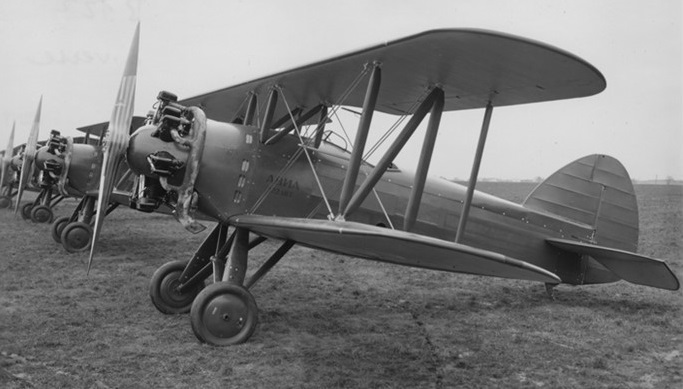
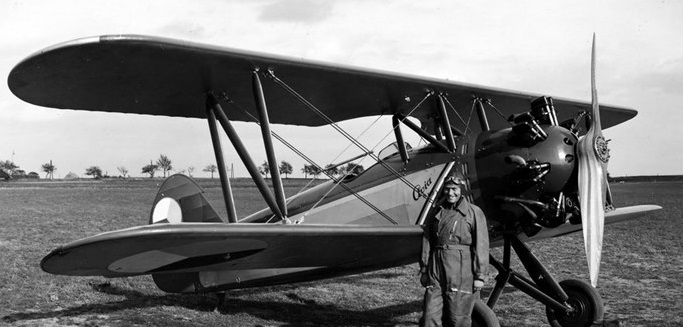
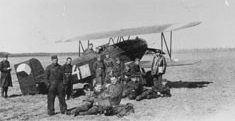
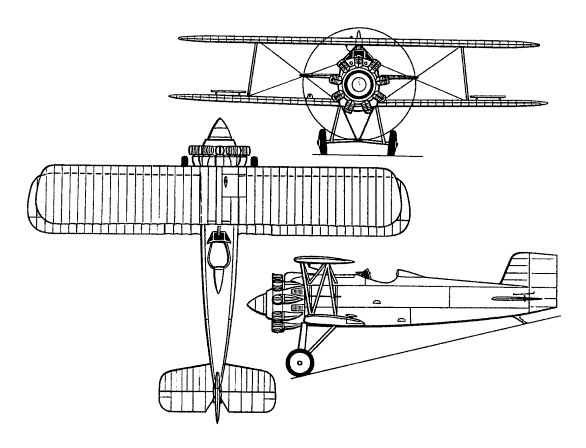
During the course of 1926, Avia tested the Gnome-Rhone version of the Bristol Jupiter nine-cylinder radial air-cooled engine in a BH-21 airframe, and elected to employ this power plant for a new fighter, the BH-33. This, the last fighter design to be produced by Benes and Hajn for the Avia concern, was the first Avia fighter to feature a fixed tail fin from the outset, and commenced flight trials in 1927.
The wood-framed wings and fin were partly covered by plywood and wholly by fabric. A steel-framed fuselage, rudder and elevator were covered by fabric. Sheet metal plated cowling.
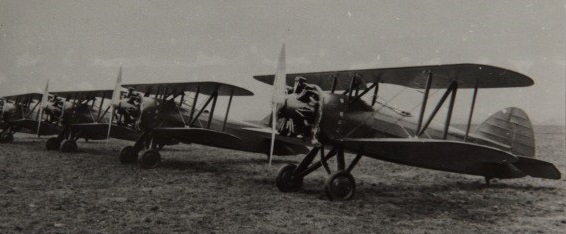
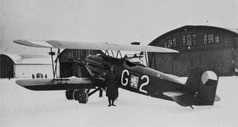
Avia Ba-33 of No 1 Fighter Regiment
It was ordered into production for the Czechoslovak air arm with a Walter-built Jupiter VI rated at 543hp for take-off, armament comprising two 7.7mm machine guns.
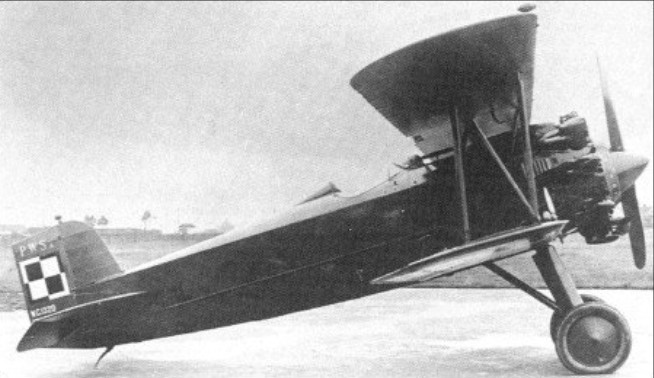
A manufacturing licence for the BH-33 was acquired by Poland in 1928, PZL building 10 pre-production fighters of this type and PWS building some 50 production examples for the Polish Air Force as the PWS A from 1930.
Three BH-33s were supplied to Belgium in 1929.
Avia Ba-33 of No 1 Air Regiment at Cheb
Engine: Walter Jupiter Mk VI, 450 hp Propeller: two blade wooden Wingspan: 8.90 m / 29 ft 2 in Length: 7.04 m / 23 ft 1 in Wing area: 22.20 sq.m / 238.96 sq ft Max take-off weight: 1253 kg / 2762 lb Empty weight: 830 kg / 1830 lb Max. speed: 285 km/h / 177 mph Rate of climb: 10.5 m/s Range: 450 km Armament: 2 x synchronized 7.7mm Crew: 1






 All Aero