During the course of 1931, the Central Repair Workshops at Szekesfehervar-Sosto began construction of the AVIS (Anderlik-Varga-Iskola-Sport) aircraft, ostensibly a single-seat trainer and sports aircraft, but, in fact, a fighter intended for use by the Legtiyi Hivatal (Aviation Department), the clandestine Hungarian air arm. An all-metal, single-bay, staggered biplane designed by Prof Elöd Abody-Anderlik, Laszlo Varga, Istvan Liszt and Deszo Fridrik, the first aircraft, the AVIS I, was completed and flown in 1933. Powered by a 420hp Manfred Weiss-built Jupiter VI nine-cylinder radial, intended armament being twin synchronised 7.62mm Gebauer machine guns, the AVIS I proved seriously underpowered, prompting major redesign as the AVIS II. The sole example of the AVIS I was eventually delivered to the flying school at Szombathely where it was to serve until 1936.
AVIS I Crew: 1 Engine: 1 x 420hp Weiss Jupiter VI Wingspan: 9.00 m / 30 ft 6 in Length: 7.50 m / 25 ft 7 in Height: 3.40 m / 11 ft 2 in Wing area: 21.20 sq.m / 228.19 sq ft Max take-off weight: 1480 kg / 3263 lb Empty weight: 1260 kg / 2778 lb Max. speed: 280 km/h / 174 mph Cruise speed: 233 km/h / 145 mph Ceiling: 5200 m / 17050 ft Range: 320 km / 199 miles Armament: 2 x 7.62mm mg
An Anglo Belgian fighter aircraft, the original Felix engined Firefly I was a private venture single seat biplane fighter first flown on November 12, 1925. Although it was much faster than contemporary RAF fighters top speed 302 km/h (188 mph) it did not go into production, but an improved all metal version, the Firefly IIM, was entered for an RAF fighter competition in 1929. Apart from its construction, this differed considerably from the Mk I, having a pronounced stagger to the wings, much improved interplane and landing gear struts, modified vertical tail surfaces, redesigned turret with the stowing cradle for a ventral radiator (instead of wing mounted), and a more powerful engine (480 hp Rolls-Royce Kestrel IIS) in an aerodynamically cleaner cowling. A 0.303 in (7.7 mm) Vickers machine gun was mounted in each side of the fuselage, forward of the cockpit, to fire forwards through the propeller disc. The Mk IIM lost the RAF competition to the Hawker Fury, but in a home based competition, against strong continental opposition, it proved superior to all its rivals and was the only one of them to demonstrate a terminal velocity dive. As a result, in 1930 Belgian’s Aeronautique Militaire ordered 45 (later increased to 88), of which all but the first 25 were manufactured by Fairey’s Belgian subsidiary at Gosselies. Deliveries began in late 1931 and were completed during 1933. Although they were no longer in first line service at the outbreak of the Second World War, about 50 were still on charge in May 1940 when Germany invaded Belgium, and took part in the brief fighting which followed. Most of the Fireflys that survived this period succeeded in escaping to France. Fairey in Britain also built one Firefly Mk III/IIIM, a carrier version with bigger area wings, strengthened fuselage, catapult and arrester gear, bomb racks, and provision for floatplane landing gear. This competed unsuccessfully for a Royal Navy order against the Hawker Nimrod, but was later used as a practice floatplane by the 1931 RAF Schneider Trophy team. Two other Firefly IIMs were converted to Firefly IVs with 758¬hp Hispano Suiza 12 Xbrs engines.
Firefly IIM – Span: 9.60 m (31 ft 6 in). Length: 7.52 m (24 ft 8 in). Gross weight: 1490 kg (3285 lb). Maximum speed: 282 km/h (175 mph).
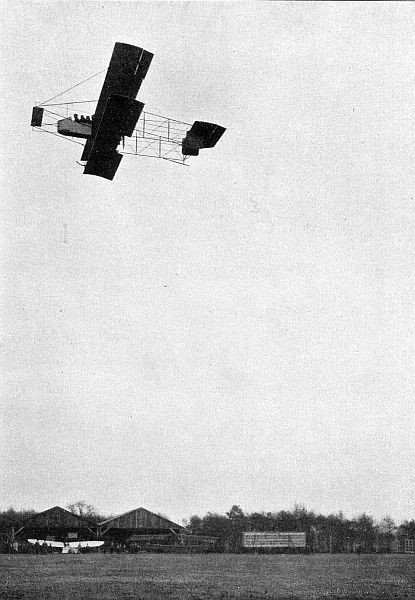
This particular machine was the first Aviatik biplane that received a 100 hp engine. In November 1912 aviator Arthur Faller planned to perform a promotion flight from Habsheim to the “Feldberg”, the highest mountain in the Black Forest, but while waiting for suitable weather conditions he undertook several record-breaking multiple-passenger flights. One such flight took place on January 30, 1913 at Flugplatz Habsheim carrying three passengers, lasting 2 hours and 3 minutes, breaking the standing world-record of 1 hour and 35 minutes set on January 25, 1912 by Dipl.-Ing. Grulich on a Harlan Eindecker, yet others with 3, 4, 5 and 6 passengers followed or predated that event.
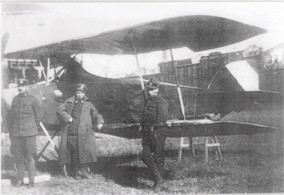
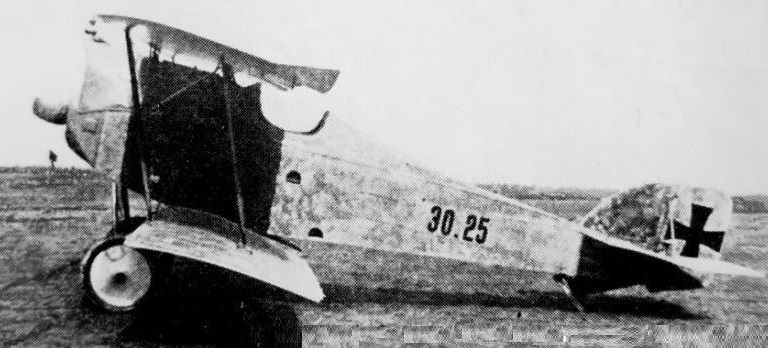
The D.I was designed to replace the Hansa-Brandenburg D.I series. The Aviatik D.I holds the distinction of becoming the first indigenously-designed fighter to be build in whole in Austria.
The D.I began life in prototype form in August of 1916 with a first flight recorded on January 24th, 1917. The test flight proved fatal, however, and took the life of its test pilot. As such, the initial design was revised to compensate for defects and three more prototypes soon emerged, each charged with a distinct development purpose as well as its 8mm Schwarzlose machine gun fitted to the top wing assembly. After additional testing, production aircraft were ordered and delivered – these with the synchronized (via a propeller interrupter gear) 2 x 7.92mm Schwarzlose forward-firing machine guns along the upper sides of the engine.
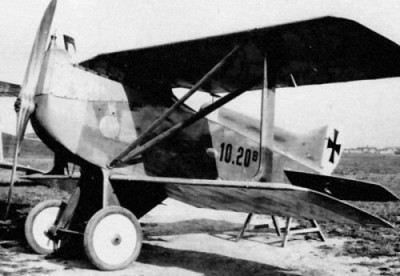
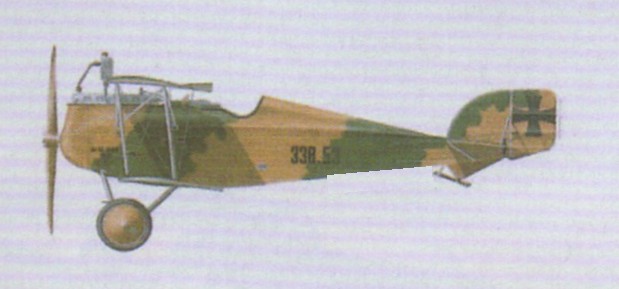
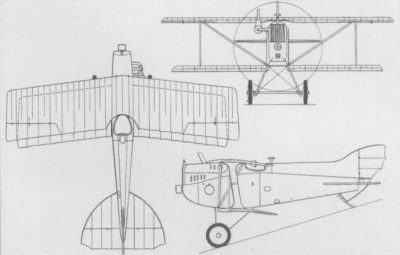
Design-wise, the Aviatik D.I was of a conventional single-seat biplane arrangement. Wings were fitted as an upper and lower staggered assembly of equal span with parallel struts and single bays. The engine – an Austro-Daimler water-cooled inline producing 200 horsepower – was fitted to the extreme forward portion of the fuselage and powered a two-blade propeller. The undercarriage was of a fixed arrangement and made up of two main landing wheels and a tail skid. The spacious cockpit was situated aft of the engine at about amidships and offered a relatively good field of vision (as good as vision gets in a biplane). The pilot sat behind the upper wing assembly (which was held relatively close to the top of the engine compartment) behind a simple windscreen in an open-air cockpit. The fuselage tapered into the empennage which featured a single large vertical tail fin and applicable horizontal planes. Performance specifications included a top speed of 115 miles per hour, a service ceiling of approximately 20,100 feet and operational endurance totaling 2 hours, 30 minutes.
Often called the Berg Scout, in honour of the chief designer of Austro Hungarian Aviatik, Julius von Berg, this basic single seat scout design was originally designated Serie 30.14. Though primary manufacture of the Aviatik D.I was handled by Austrian Aviatik, license-production was also undertaken at multiple facilities. These included Lohner, Lloyd, MAG, Thone und Fiala and WKF under various batch series designations and differed mainly in horsepower output of their selected Austro-Daimler engines. In all, roughly 700 of all types were produced from 1917 into 1918. Deliveries began in the Fall of 1917 and continued on into October of 1918.
Development was protracted and production did not begin until early 1917, the sub type hav¬ing by this time progressed to Type 30.21. As the D.I, this was ordered in large numbers (possibly as many as 1200) and about 700 were delivered by Aviatik (Serie 38), WKF (Serie 84), MAG (Serie 92), Thbne und Fiala (Serie 101) and Lohner (Serie 115). Repeat batches with higher numbers were ordered, the bulk of those delivered having the 200 hp engine and final batches the 235 hp version.
Built by the Austrian-Hungarian Aeroplane Works in Vienna-Stadlau, this type was used for recce duties by the Austrian Air Force during the Great War.
When in action, early-form D.Is exhibited engine overheating issues and structural weaknesses (namely the fabric tearing away from the understructure or loss of parts and wings while at high speeds). The guns on the original production models were also situated well out of reach of the pilot meaning that a jammed gun stayed jammed until the pilot landed his mount for repairs. As production continued, the structure received attention in areas and was reinforced based on pilot feedback. Likewise, the guns were now moved within reach of the pilot. Engine overheating was solved in-the-field by simply flying without the engine covers on.
The engine made the D.I unpopular because it tended to overheat badly; most photographs show the top cowling panels, and sometimes the side panels, removed to assist cooling. Initial armament was a single 8 mm Schwarzlose machine gun mounted above the upper wing to fire over the propel¬ler, but two of these guns, with synchronizing gear, in the top decking flanking the cylinders became standard armament. In almost every case the guns were so far forward that the pilot could not reach them to clear a stop¬page, though many pilots fitted string to the cocking handles.
The D.1 was replaced progressively from the Balkan and Italian fronts during 1918 by the preferred Albatros scouts.
The D.I appeared in a revised form as the D.II with a cantilever low wing assembly. The D.II was produced in limited quantities in two batches beginning in 1918 but arrived too late to see useful delivery to combat units. The D.I was also considered in a few other notable “one-off” prototype forms – mainly the D.III, a high-altitude variant fitting a Hiero engine of 230 horsepower and the Dr.I (Type 30.24), a triplane design based on the D.I biplane.
Engine: 185 hp Daimler Wingspan: 8.4 m Length: 7.6 m Loaded weight: 865 kg Maximum speed: 186 kph Service ceiling: 6400 m Endurance: 3 hr 30 min Armament: one synchronized machine gun incl. one flanking the cockpit
Aviatik D.I Engine: 1 x Austro-Daimler liquid-cooled 6-cylinder, 200 horsepower. Length: 6.95 m (22 ft 93in) Wingspan: 26 ft 3 in (8.00m) Height: 8.14 ft (2.48m) Empty Weight: 1,475lbs (669kg) Maximum Take-Off Weight: 1,878lbs (852kg) Maximum Speed: 115mph (185kmh; 100kts) Maximum Range: 225miles (362km) Service Ceiling: 20,177ft (6,150m) Armament: 2 x 8mm Schwarzlose synchronized forward-firing machine guns. Accommodation: 1
The Aviatik C.I was designed from the outset with military use in mind, sporting a single 7.92mm Parabellum machine gun for self-defense.
Following the Aviatik B.I, Aviatik produced their first full military-ready design in the Aviatik C.I series, a biplane reconnaissance aircraft.
The C.I was a single-engine, twin-seat biplane with a Mercedes D.II 6-cylinder engine producing upwards of 120 horsepower and driving a two-blade propeller. The observer was seated in the front – just behind the engine – and the pilot was at rear. The forward observer had a single 7.92mm Parabellum machine gun on a flexible mounting. It was soon found that the field of fire for the observer was quite restricted and the rearward seating position of the pilot was ill-suited when compared to other aircraft types coming out at the time. Later examples of the C.I began seating the observer (with gun) to the rear and the pilot forward. This new arrangement produced the designation of “C.Ia”. This version was built by both Aviatik and the Hannoversche Waggonfabrik.
The C.I series as a whole would be replaced by a small series of the improved C.II, with 200hp Benz Bz.IV engine.
C.II
The final production model was the C.III of early 1916, which was originally designed with the old crew arrangement but quickly changed to a rear observer layout. Powered by the 160 hp D.III, it had a cleaner and more streamlined nose, with propeller spinner faired into an improved engine installation, and was much faster than the C.I despite usually having twin machine-guns. A light bombload could be carried, and for some months the C.III was used in the first German Kampfgeschwader (bombing wings), though its main duty continued to be reconnaissance.
C.I Engine: 1 x Mercedes D.II 6-cylinder, 120hp. Length: 26 ft 0 in ft (7.92m) Span: 12.50 m (41 ft 0.25 in) Height: 9.68ft (2.95m) Maximum Speed: 88mph (142kmh; 77kts) Service Ceiling: 11,483ft (3,500m) Armament: 1 x 7.92mm Parabellum Accommodation: 2 Maximum Take-Off Weight: 2,954lbs (1,340kg)
C.II Engine: Mercedes, 160 hp Wingspan upper: 40 ft 8 in Wingspan lower: 37 ft 5 in Wing area: 430 sq.ft Length: 26 ft Height: 10 ft 5 in Empty weight: 1863 lb Loaded weight: 2831 lb Wing loading: 6.6 lb/sq.ft Max speed: 82 mph at SL Service ceiling: 11,500 ft Time to 6000ft: 22 min Endurance: 4.5 hr Armament: 2 x mg Crew: 2
C.III Span: 11.75 m (38 ft 51 in) Length: 8.09 m (26 ft 6.25 in) Gross weight: 1337 kg (2948 lb) Maximum speed: 161 km/h (100 mph).
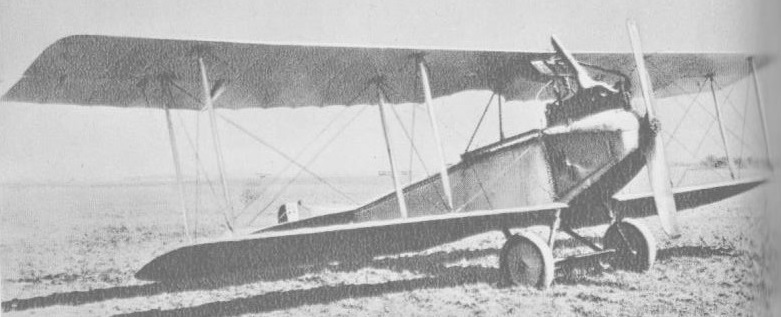
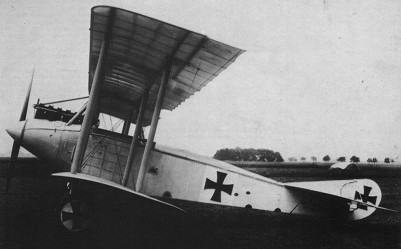
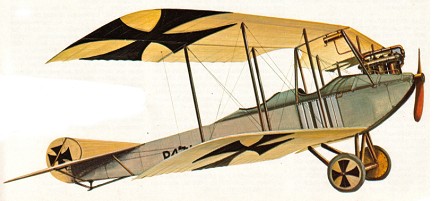
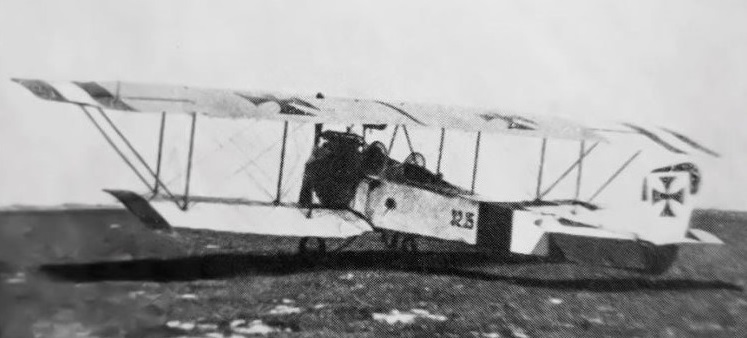
On the outbreak of the First World War, the company moved from Miffilhausen, which was near the Western Front, to Freiburg im Breisgau, on the other side of the Rhine. Here the B.I was designed, and flown in late 1914 (probably in November). A two seat biplane, it was powered by a 100 hp Mercedes D.1 six cylinder water cooled engine. A small series was built for the Imperial Air Service, supplementing the pre-war aircraft of similar design, one of which became the first aircraft to be shot down in air combat, on October 5, 1914.
During the winter of 1914 15 the company’s Austro Hungarian subsidiary, Osterreichisch Ungarisch Flugzeugfabrik Aviatik of Vienna, designed and went into production with a developed version, the B.II. Powered by a 120 hp Austro Daimler, this differed mainly from the B.I in having angular elevators and rudder with large horn balances; it could also carry two 10 kg (22 lb) bombs, but guns were not originally fitted. Limited production, designated Serie 32, was undertaken for the Austro Hungarian Flying Service, and from about April 1915 the B.II was an observation machine on the Russian Front.
B.II Series 32
In the spring of 1915 production switched to the more powerful B.III, with a 160 hp Austro Daimler with the radiator repositioned above the cylinders. The wings were larger, with swept back tips, and pilot and observer sat in a single large cockpit, the observer having a rifle or often a 7.92 mm Schwarzlose machine gun either on an infantry tripod or a spigot mounting on the upper longerons. The B.III had a sluggish response to control, so production reverted to the Serie 34, which was virtually a B.II with the 160 hp engine (but B.II side radiator) and machine-gun; most Serie 33 (B.III) and Serie 34 had racks for three 10 kg bombs. Hundreds were delivered, but by 1916 they were all being relegated to training.
Span: 14.00 m (45 ft 11 in) Length 8.00 m (26 ft 3 in) (small variations according to sub type) Gross weight (B.I) 860 kg (1900 lb) Gross weight (B.II) 870 kg (1918 lb) Maximum speed (all): 110 km/h (68 mph) approx
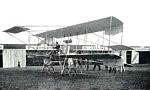
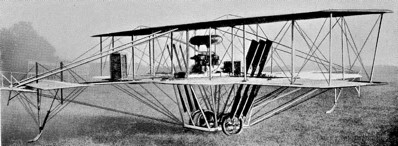
The Aviatik Versuchs-Doppeldecker of 1910 was an experimental first machine designed and built by Julius Spengler. Notable for its twin triple-superimposed propellers driven via chains by a 50 hp Argus engine in the wings, and its unique undercarriage.

 All Aero