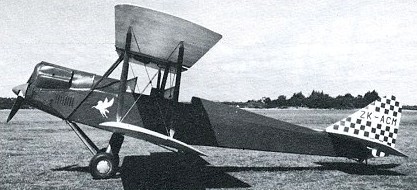
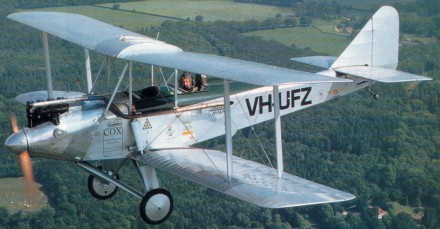
The 581 was replaced in production by the metal fuselage Avro 616 Avian IVM and Sports Avian variant in 1929. They were produced in small numbers in the UK, Canada and the USA. Only 16 of the Mk.IVM Sports Avians were built. Two aircraft, named Southern Cross Junior and Minor, were used by Kingsford Smith for the UK-Australia-UK attempts during 1930-31.
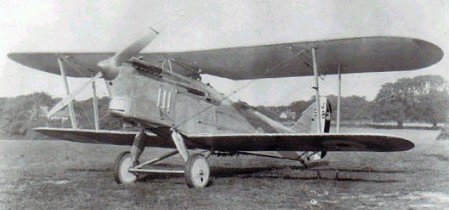
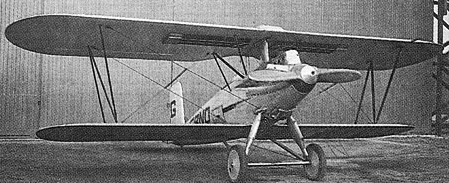
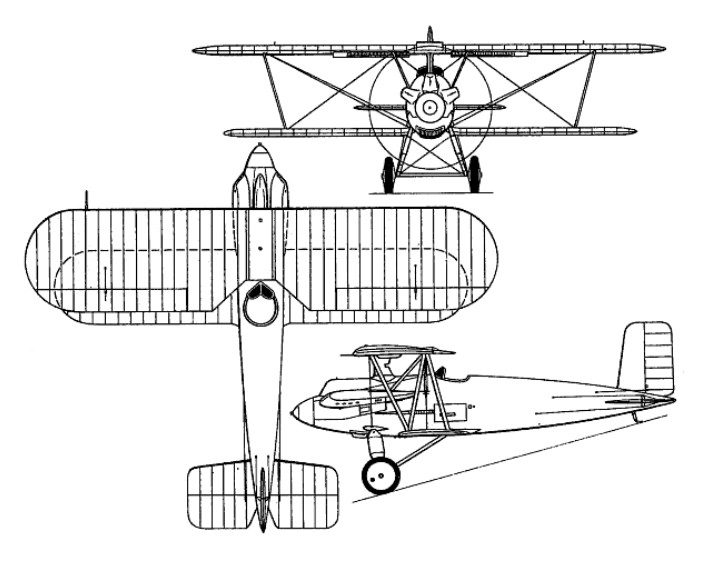
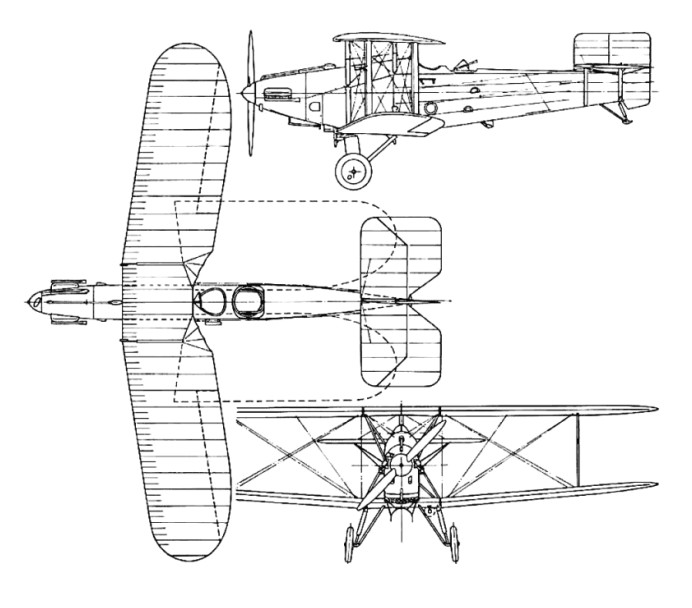
A two-seat bomber of 1928, but not ordered into production. One prototype was built, first flown in July 1928.
Engine: 1 x 480hp Rolls-Royce F.XIB Take-off weight: 2060 kg / 4542 lb Empty weight: 1298 kg / 2862 lb Wingspan: 11.23 m / 37 ft 10 in Length: 9.50 m / 31 ft 2 in Height: 3.28 m / 11 ft 9 in Wing area: 35.02 sq.m / 376.95 sq ft Max. speed: 278 km/h / 173 mph Ceiling: 6309 m / 20700 ft Range: 837 km / 520 miles Crew: 2 Armament: 2 x 7.7mm machine-guns, 2 x 110kg bombs
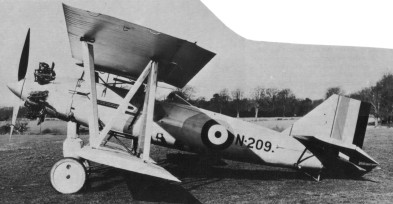
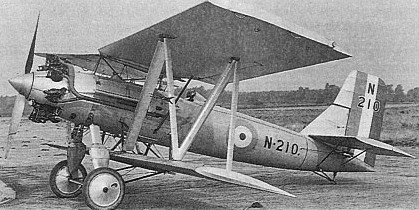
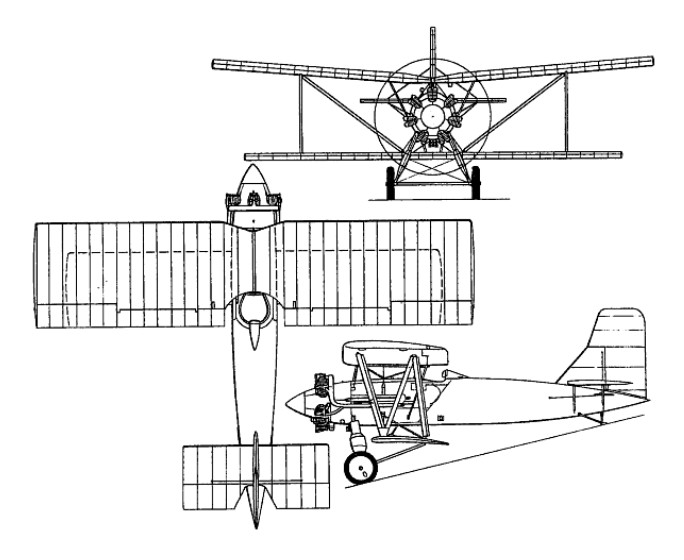
The 584 Avocet was designed to Specification 17/25, issued in June 1926, for an all-metal stressed-skin shipboard fighter with interchangeable wheel and float undercarriages and powered by a 180hp Armstrong Siddeley Lynx IV nine-cylinder air-cooled radial engine. Two prototypes were ordered, identical apart from the vertical tail surfaces. For manufacturer’s trials the first prototype was completed as a landplane and the second prototype as a twin-float seaplane, the first flying in December 1927 and the second in April 1928. The second prototype was also fitted with a land undercarriage in June 1928. Armament was two 7.7mm Vickers machine guns synchronised to fire through the propeller disc. Performance during evaluation at Martlesham was unspectacular and no production order was placed.
Engine: Armstrong Siddeley Lynx IV nine-cylinder air-cooled radial, 180 hp. Take-off weight: 1132 kg / 2496 lb Empty weight: 735 kg / 1620 lb Wingspan: 8.84 m / 29 ft 0 in Length: 7.46 m / 25 ft 6 in Height: 3.56 m / 12 ft 8 in Wing area: 28.61 sq.m / 307.96 sq ft Max. speed: 214 km/h / 133 mph
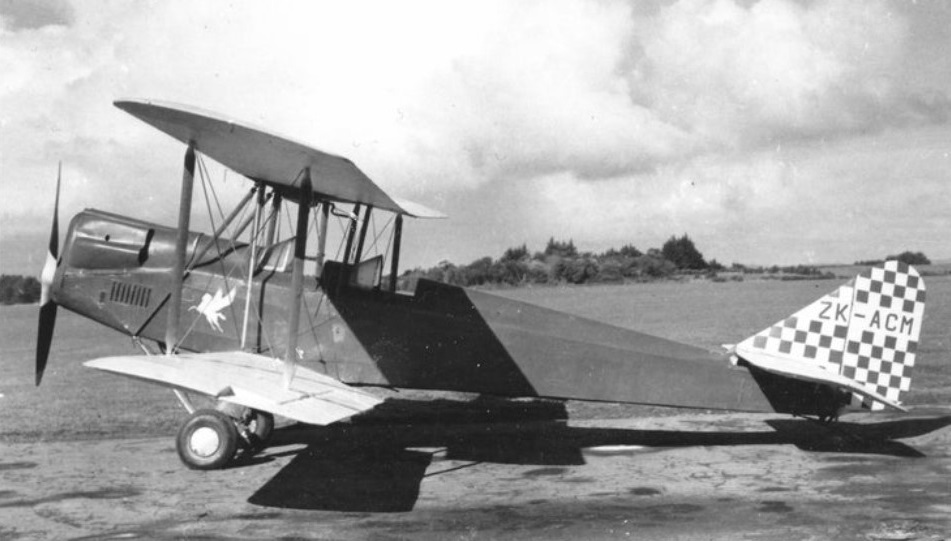
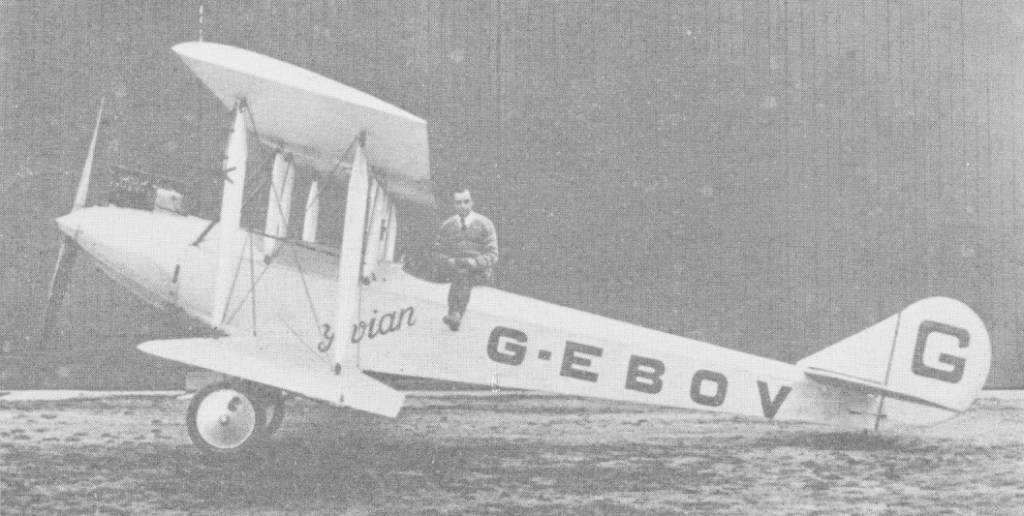
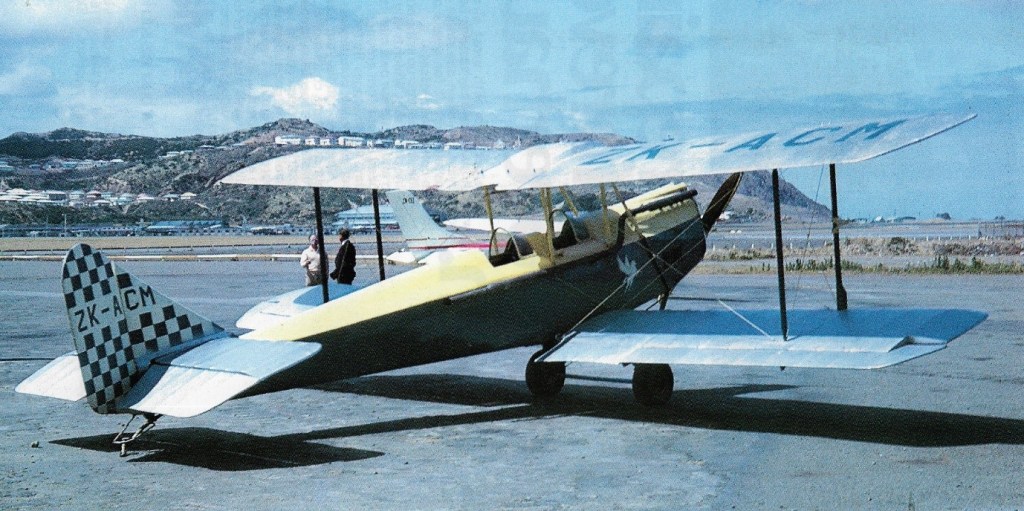
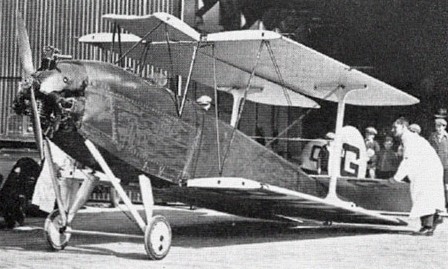
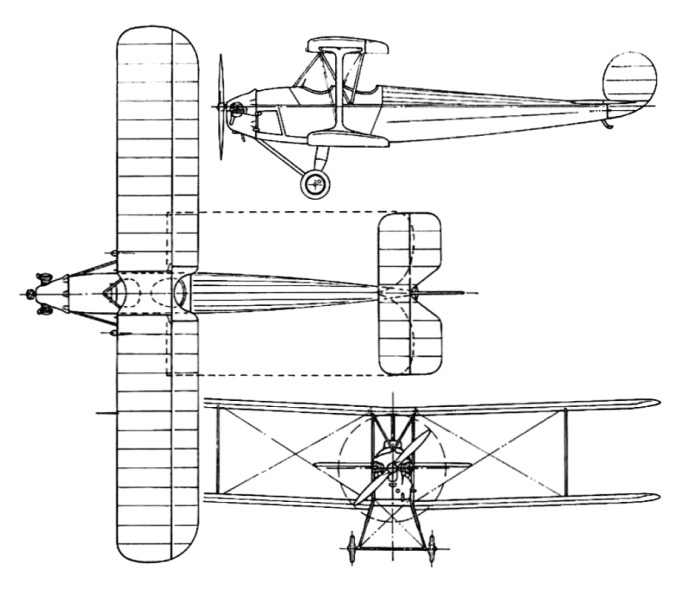
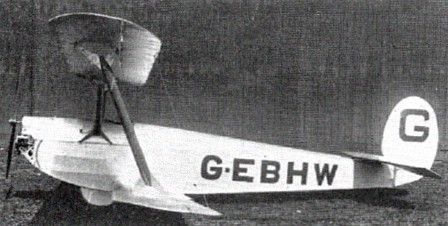
The original Avian was the Avro 581 G-EBOV which was first flown in 1926. Built for the Lympne Trials, the two-seat Avro 581 Avian was powered by a 52kW Armstrong Siddeley Genet engine. Its Armstrong Siddeley Genet engine was replaced by an ADC Cirrus I and with other modifications it became the Avro 581E in 1927.
From this the Avro 594 Avian I G-EBQN was developed and later in the same year the first Cirrus II powered Avian II G-EBTU was flown.
The 581E was powered by a 63kW Cirrus II engine, and used by H. J. L. Hinkler for the first solo flight to Australia in 1928.
Of wooden construction, the 581 was in production with various engines as the Avro 594 in the UK and USA between 1927 and 1929. The Avian continued in production until 1935 when the last Avian G-ADEO was built up from spare parts.
The 581 was replaced in production by the metal fuselage Avro 616 Avian IVM and Sports Avian variant in 1929.
Avro 594 Avian
The Avian IIIE featured upper wing slots.
In February 1928, H.J.L (Bert) Hinkler, and Australian, took off from London in an Avian. Less than three weeks later he was in Austrlia. Hinkler had flown from London to Australia in fifteen and a half days.
Avro 581 Engine: 1 x 70hp Armstrong Siddeley Genet Take-off weight: 726 kg / 1601 lb Empty weight: 316 kg / 697 lb Wingspan: 9.75 m / 32 ft 0 in Length: 7.39 m / 24 ft 3 in Height: 2.51 m / 8 ft 3 in Wing area: 27.31 sq.m / 293.96 sq ft Max. speed: 113 km/h / 70 mph
Avro 594 Avian Mk. III Length: 24.245 ft / 7.39 m Wingspan : 27.986 ft / 8.53 m Max take off weight : 1435.5 lb / 651.0 kg Max. speed : 89 kts / 164 km/h Range : 348 nm / 644 km Engine : ADC Cirrus III, 95 hp
Avro 594 Avian IIIE Engine: ADC Cirrus II, 85hp Wingspan: 28 ft Length: 24 ft 3 in AUW: 1467 lb Max speed: 98 mph
Avro 594 Avian IVM Engine: de Havilland Gipsy II, 120 hp Wingspan: 28 ft Length: 24 ft 3 in Height: 8 ft 6 in Empty weight: 1005 lb Loaded weight: 1523 lb Max speed: 105 mph Cruise: 90 mph
Designed as a private venture by Roy Chadwick, the Avenger fighter was first flown on 26 June 1926. Built of wood with fabric skinning, The Avenger was initially flown with a 525hp Napier Lion VIII engine, but no order was received. In May 1928, the aircraft was modified for racing and redesignated the Avro 567 Avenger II. It was fitted with equi-span wings of 8.53m, streamlined I-type interplane struts, ailerons on both upper and lower wings, and a 553hp Lion IX engine. Various progressive developments were proposed but the Avenger was dismantled for use as an instructional airframe in 1931.
Avro 566 Avenger Engine: 525hp Napier Lion VIII Take-off weight: 1460 kg / 3219 lb Empty weight: 1074 kg / 2368 lb Wingspan: 9.75 m / 32 ft 0 in Length: 7.77 m / 26 ft 6 in Height: 3.12 m / 10 ft 3 in Max. speed: 290 km/h / 180 mph
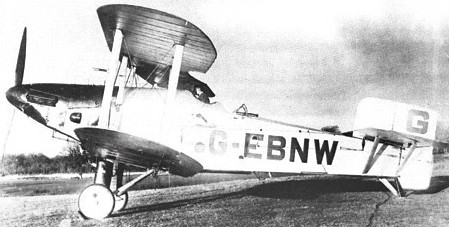
The Avro 571 Buffalo was designed by Avro as a private venture to meet the requirements of Air Ministry Specification 21/23, for a two-seat torpedo bomber and reconnaissance aircraft, intended to replace the Blackburn Dart. The prototype (G-EBNW) first flew at the Avro works at Hamble during 1926. It was evaluated against the Blackburn Ripon and the Handley Page Harrow, but was found to have poor handling and was therefore rejected.
The prototype was therefore rebuilt as the Avro 572 Buffalo II, with new, all-metal wings, fitted with controllable Handley Page slats and a more powerful engine. In this form, the Buffalo was much improved. By this time however, the Ripon had been declared the competition winner.
After it failed to be ordered into production, the Buffalo was converted into a seaplane in 1928 for the Air Ministry. As serial number N239, it was used for trials at the Marine Aircraft Experimental Establishment at Felixstowe.
Buffalo Mk I Engine: 1 x 450hp Napier Lion VA 12-cylinder water-cooled in-line Take-off weight: 3373 kg / 7436 lb Empty weight: 1922 kg / 4237 lb Wingspan: 14.02 m / 46 ft 0 in Length: 10.97 m / 36 ft 0 in Height: 4.19 m / 14 ft 9 in Wing area: 63.55 sq.m / 684.05 sq ft Max. speed: 217 km/h / 135 mph Ceiling: 3597 m / 11800 ft Range: 998 km / 620 miles Crew: 2 Armament: 1 × fixed, forward firing 0.303 in (7.7 mm) Vickers machine gun / 1 × 0.303 in (7.7 mm) Lewis Gun in rear cockpit. Bombload: 1 torpedo or 3 x 235kg bombs
Avro 572 Buffalo II Engine: 530 hp (400 kW) Lion XIA. Length: 37 ft 3 in (11.36 m) Wingspan: 46 ft 0 in (14.02 m) Height: 14 ft 0 in (4.27 m) Wing area: 684 ft2 (63.6 m2) Empty weight: 4,223 lb (1,920 kg) Loaded weight: 7,430 lb (3,377 kg) Maximum speed: 135 mph (117 kn, 217 km/h) Cruise speed: 105 mph (91 kn, 169 km/h) Range: 650 mi (565 nmi, 1,046 km) Service ceiling: 13,700 ft (4,180 m) Rate of climb: 770 ft/min (3.9 m/s) Wing loading: 10.9 lb/ft2 (53.1 kg/sq.m) Power/mass: 0.071 hp/lb (0.11 kW/kg) Crew: Two Armament: 1 × 0.303 in (7.7 mm) Lewis Gun in rear cockpit. Bombload: 1 × 18 in (457 mm) torpedo or up to 3 × 520 lb (236 kg) bombs
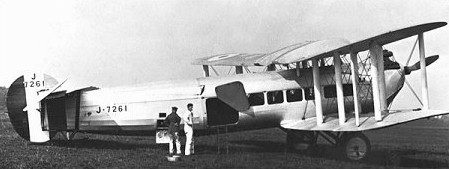
One commercial version of the Avro 561 was built as the Avro 563. This was operated by Imperial Airways on its cross-Channel services. Both versions powered by one 485kW Rolls-Royce Condor III engine.
Engine: 1 x 38hp Blackburne Thrush Take-off weight: 477 kg / 1052 lb Empty weight: 275 kg / 606 lb Wingspan: 9.17 m / 30 ft 1 in Length: 7.32 m / 24 ft 0 in Height: 2.74 m / 9 ft 0 in Wing area: 22.85 sq.m / 245.96 sq ft Max. speed: 121 km/h / 75 mph
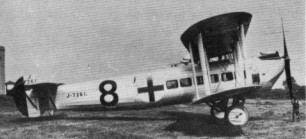
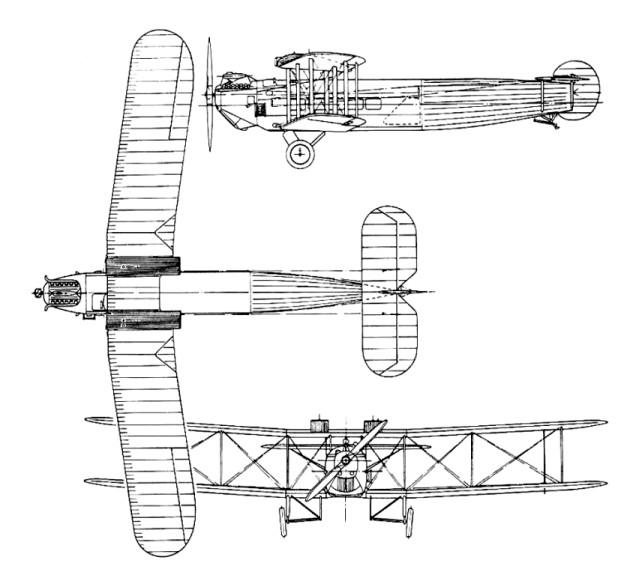
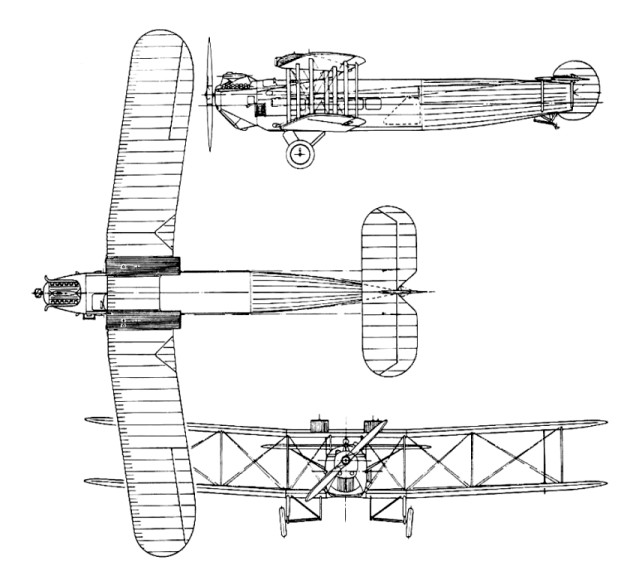
Similar to the Aldershot, the 561 Andover was produced to fly the RAF’s Cairo-Baghdad air service. Four were built but only three were delivered, with accommodation for 12 passengers, or stretchers as an air ambulance. One commercial version was built as the Avro 563. Both versions powered by one 485kW Rolls-Royce Condor III engine.
Avro 561 Engine: 1 x 650hp Rolls-Royce Condor III Take-off weight: 5221 kg / 11510 lb Empty weight: 3169 kg / 6986 lb Wingspan: 20.73 m / 68 ft 0 in Length: 15.62 m / 51 ft 3 in Height: 4.65 m / 15 ft 3 in Wing area: 98.66 sq.m / 1061.97 sq ft Max. speed: 177 km/h / 110 mph Ceiling: 4115 m / 13500 ft Range: 741 km / 460 miles
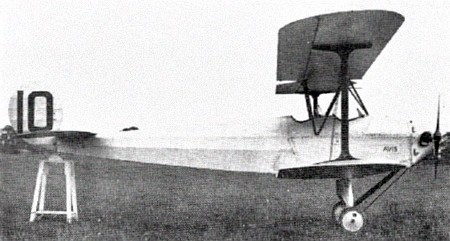
Engine: 1 x 500cc Douglas or 698cc Blackburne Tomtit Take-off weight: 218 kg / 481 lb Empty weight: 133 kg / 293 lb Wingspan: 9.14 m / 30 ft 0 in Length: 5.94 m / 20 ft 6 in Wing area: 15.42 sq.m / 165.98 sq ft

 All Aero