The 1916 Potlatch Bug was a single place, open cockpit biplane, built as an exhibition plane for motion picture work. One example was built, powered by a 50hp Adams-Farwell rotary.
Biplane
Babcock 1913 Curtiss Pusher Type
In 1913 Babcock built one copy of the Curtiss pusher. A single seat, open cockpit biplane.
Babcock Wright Biplane Type
Babcock built two airworthy copies of the Wright Biplane; in 1905 and 1909.
They were likely sold for exhibition work.
Avro 641 Commodore

1935
Engine: 1 x 240hp Armstrong Siddeley Lynx IVC
Take-off weight: 1589 kg / 3503 lb
Empty weight: 1016 kg / 2240 lb
Wingspan: 11.38 m / 37 ft 4 in
Length: 8.31 m / 27 ft 3 in
Height: 3.05 m / 10 ft 0 in
Wing area: 28.52 sq.m / 306.99 sq ft
Max. speed: 209 km/h / 130 mph
Cruise speed: 177 km/h / 110 mph
Ceiling: 3505 m / 11500 ft
Range: 805 km / 500 miles
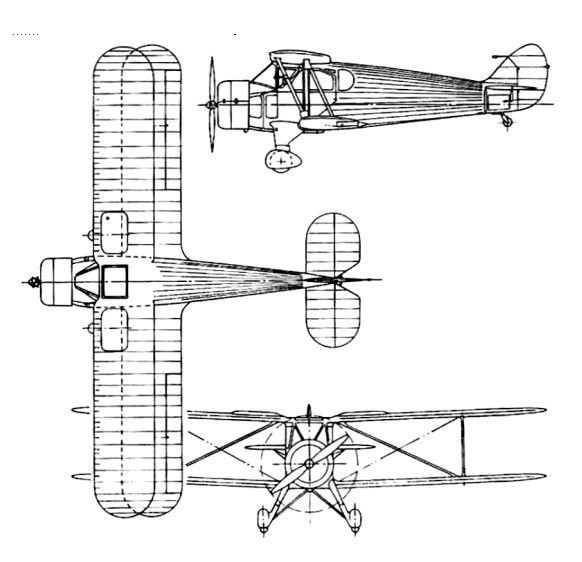
Avro 638 Club Cadet / 643 Cadet Mk.II
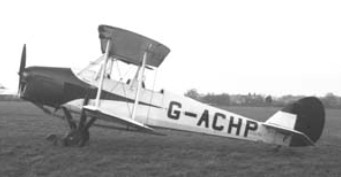
The Avro 638 Club Cadet and the basically similar 643 Cadet Mk.II were produced in the 1930s. Both types have identical wings, undercarriage and tail unit, but the wings of the Cadet have more stagger than those of the Club Cadet to provide improved view from both cockpits.
Engines used were the 130 hp DH Gipsy Major 1 and 135 hp AS Genet Major radial.
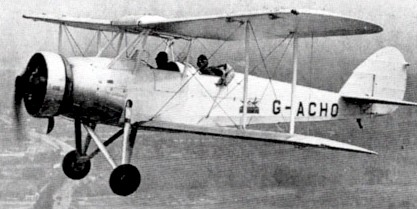
1933
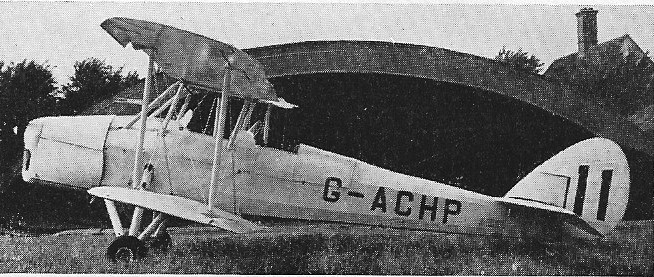
Engine: 1 x 135hp Armstrong Siddeley Genet Major I
Take-off weight: 908 kg / 2002 lb
Empty weight: 565 kg / 1246 lb
Wingspan: 9.19 m / 30 ft 2 in
Length: 7.54 m / 25 ft 9 in
Height: 2.67 m / 9 ft 9 in
Wing area: 24.34 sq.m / 261.99 sq ft
Max. speed: 185 km/h / 115 mph
Cruise speed: 161 km/h / 100 mph
Range: 523 km / 325 miles
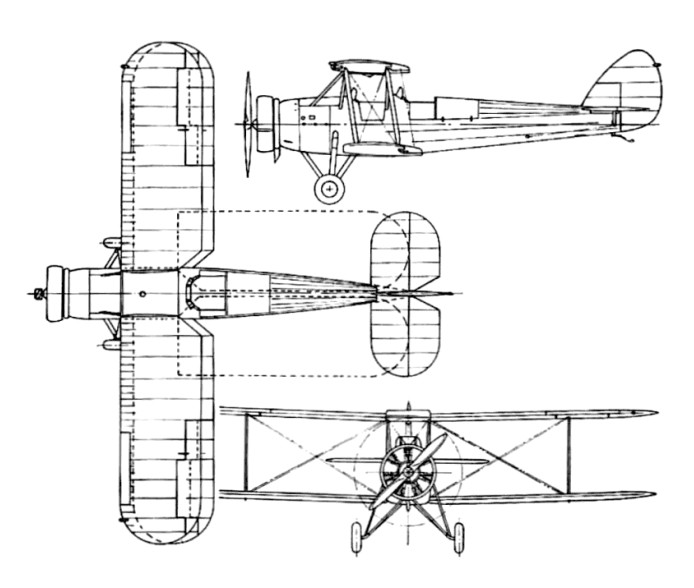
Avro 636
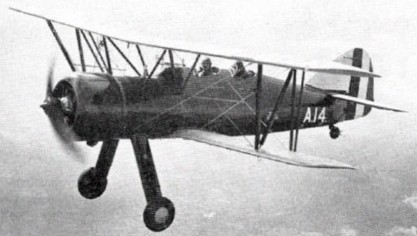
1935
Avro 636A
Engine: 1 x 680hp Armstrong Siddeley Panther XI
Take-off weight: 1781 kg / 3926 lb
Empty weight: 1348 kg / 2972 lb
Wingspan: 10.06 m / 33 ft 0 in
Length: 8.38 m / 28 ft 6 in
Height: 3.53 m / 12 ft 7 in
Wing area: 24.25 sq.m / 261.02 sq ft
Max. speed: 370 km/h / 230 mph
Cruise speed: 314 km/h / 195 mph
Ceiling: 9754 m / 32000 ft
Range: 467 km / 290 miles
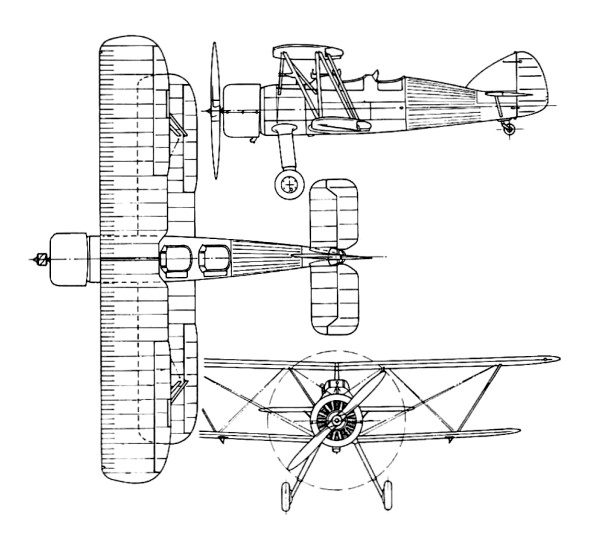
Avro 631 / 643 Cadet
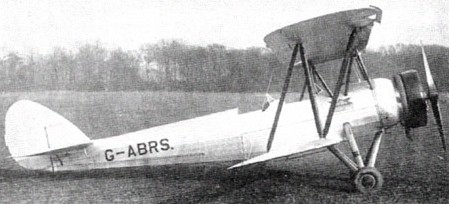
The Avro 631 Cadet was developed in 1931 as a smaller, more economical, derivative of the Tutor military trainer, for flying club or personal use, and the Irish Air Corps purchased six from the drawing board, the first three delivered on 21 March 1932. The first prototype, G-ABRS flew in October 1931. It was publicly unveiled at the opening of Skegness airfield in May 1932. A total of 35 were built.
The Avro 631 also saw service with the military when six (C1-C6) were delivered to the Irish Air Corps in March 1932. One aircraft (C3) was written off in a crash in August 1932 so a replacement was ordered from Avro. This arrived in December 1934 as C7, and it was the only one not destroyed or written off during their service with the IAC. It was subsequently sol in 1945, going through several private owners and at least one crash landing before ending up in New Zealand. There, it was restored to airworthy condition, one of only two Avro 631s left in the world.
The Avro 631 Cadet was replaced in production in September 1934 by the improved Avro 643 Cadet, which had a revised rear fuselage with a raised rear seat, retaining the 135 hp (101 kW) Armstrong Siddeley Genet Major 1 engine of the Avro 631. In turn, this formed the basis for the more powerful Avro 643 Mk II Cadet with a 150-hp Armstrong Siddeley Genet Major 1A engine mounted 6 inches further forward; it was also strengthened and had improved parachute egress. An inverted fuel system was added and minor modifications were made to the wing bracing wires. This model entered service in 1935, and 69 Cadet IIs were built, including 34 fitted with a tail wheel for the Royal Australian Air Force.
The Cadet, while smaller and more economical than the Tutor, was still more expensive to run than competing two-seat light civil aircraft and was harder to hangar because of its lack of folding wings; so was mainly used as a trainer for flying schools or the military. By far, the largest civil user was Air Service Training Ltd, which operated 17 Avro 631s at Hamble, together with a further four operated by its Hong Kong subsidiary, the Far East Aviation Co. Air Service Training also operated 23 Mk II Cadets, with both these and the earlier Cadets remaining in service with Reserve Training Schools run by Air Service Training until they were impressed as ATC instructional airframes in 1941.
The other major operator was the RAAF, which acquired 34 Mk II Cadets, delivered between November 1935 and February 1939. The RAAF ordered an initial 12 Avro Cadets in 1935. Delivered from December 1935 they were joined by 22 more in 1938-39 while a 1938 order for another 20 was cancelled before deliveries began. These remained in service until 1946, when the surviving 16 were sold for civil use. Two of these were re-engined in 1963 with 220 hp (160 kW) Jacobs R-755 engines for use as crop sprayers. In the U.K., only two Cadets survived the war.
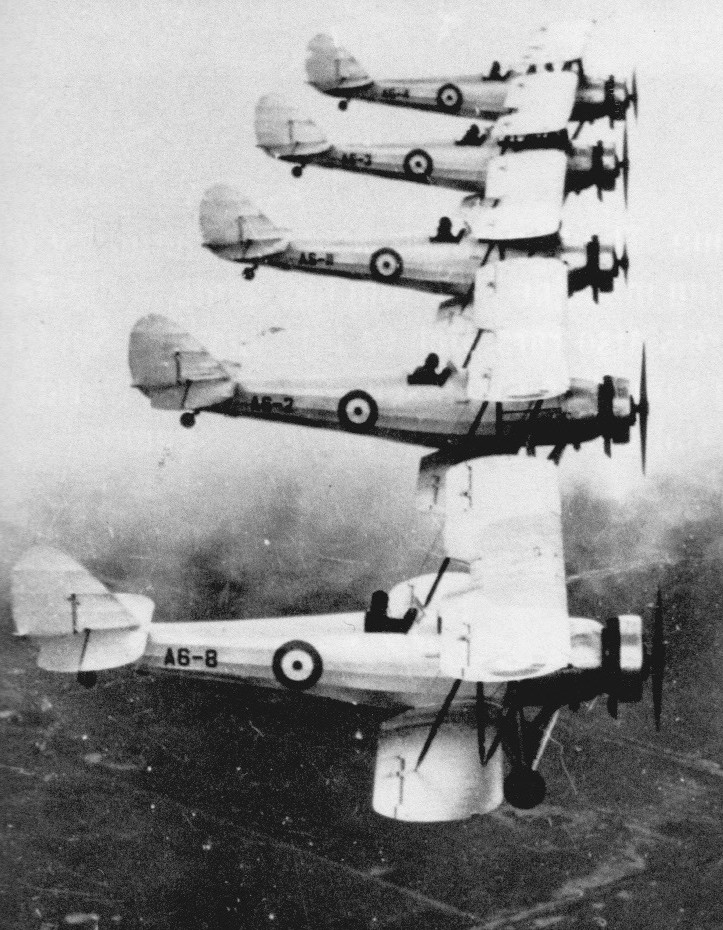
Produced from 1932 to 1939, a total of 104 were built.
Variants
Avro 631 Cadet
Initial version, powered by Armstrong Siddeley Genet Major I engine, 35 built.
Avro 643 Cadet
Raised rear seat, 8 built.
Avro 643 Cadet II
Powered by 150 hp (110 kW) Genet Major 1A, 61 built.
Operators:
Civil operators
Air Service Training Ltd
Military operators
Royal Australian Air Force operated 34 Avro 643 MkII Cadet.
Irish Air Corps operated 7 Avro 631 Cadets.
Portuguese Air Force
Chinese Nationalist Air Force – China had 5 Avro 631 deployed at Liuzhou Aviation School during the Second Sino-Japanese War, all of which were lost due to Japanese bombing in 1939.
Spanish Republican Air Force
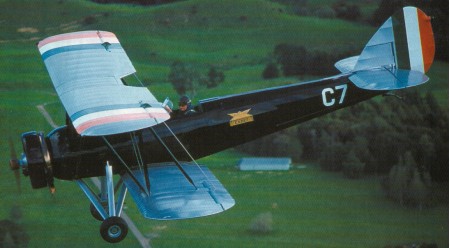
Avro 631
Engine: 1 x Armstrong Siddeley Genet Major I. 135hp / 100 kW
Wingspan: 9.14 m / 30 ft 0 in
Length: 7.54 m / 24 ft 9 in
Height: 2.67 m / 8 ft 10 in
Wing area: 24.25 sq.m / 261.02 sq ft
Take-off weight: 863 kg / 1903 lb
Empty weight: 536 kg / 1182 lb
Max. speed: 190 km/h / 118 mph
Cruise speed: 161 km/h / 100 mph
Ceiling: 3962 m / 13000 ft
Range: 564 km / 350 miles
Avro 643 Mk II Cadet
Engine: 1 × Armstrong Siddeley Genet Major 1A seven cylinder radial, 150 hp (112 kW)
Length: 24 ft 9 in (7.55 m)
Wingspan: 30 ft 2 in (9.20 m)
Height: 8 ft 10 in (2.69 m)
Wing area: 262 ft² (24.3 m²)
Empty weight: 1,286 lb (585 kg)
Loaded weight: 2,000 lb (907 kg)
Wing loading: 7.63 lb/ft² (37.4 kg/m²)
Power/weight: 0.075 hp/lb (0.12 kW/kg)
Maximum speed: 116 mph (101 kn, 187 km/h)
Cruise speed: 100 mph (87 kn, 161 km/h)
Range: 325 mi (283 nm, 523 km)
Service ceiling: 12,000 ft (3,660 m)
Rate of climb: 700 ft/min (3.6 m/s)
Crew: Two
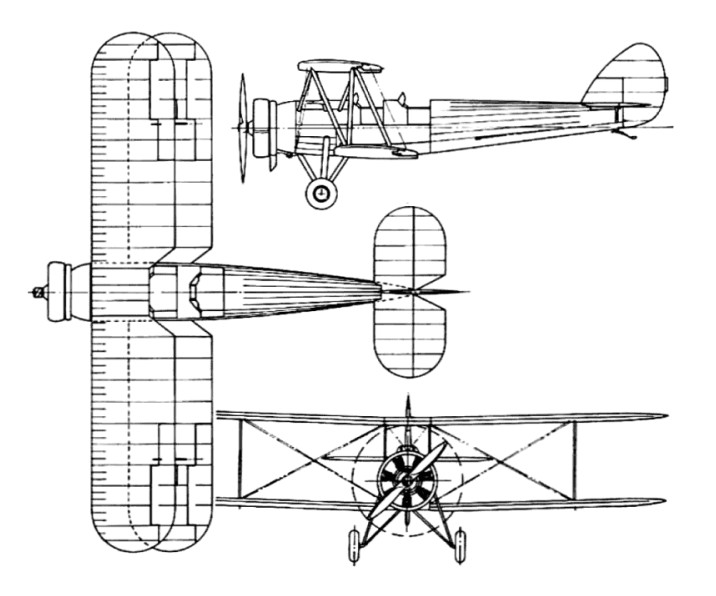
Avro 627 Mailplane
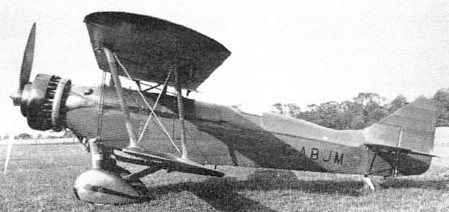
An unfinished Avro 608 Hawk was completed as the only Avro 627 Mailplane in 1933.
Avro 627
Engine: 1 x 525hp Armstrong Siddeley Panther IIA
Take-off weight: 2338 kg / 5154 lb
Empty weight: 1397 kg / 3080 lb
Wingspan: 10.97 m / 36 ft 0 in
Length: 9.40 m / 31 ft 10 in
Height: 3.30 m / 11 ft 10 in
Wing area: 35.40 sq.m / 381.04 sq ft
Max. speed: 274 km/h / 170 mph
Cruise speed: 237 km/h / 147 mph
Ceiling: 5791 m / 19000 ft
Range: 902 km / 560 miles

Avro 626 Prefect / Moravko-Slezka Vazovka Tatra T.126
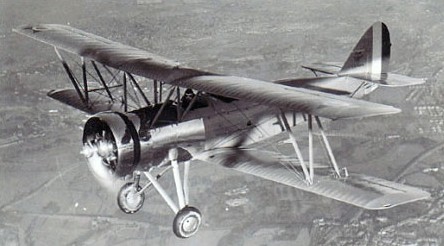
The Tutor was redesigned as the more multi-purpose Avro 626 trainer. It was essentially still used as a two-seat aircraft, but a third cockpit was aged and had a gun ring fitted to it. This allowed the aircraft to be used for gunnery training.
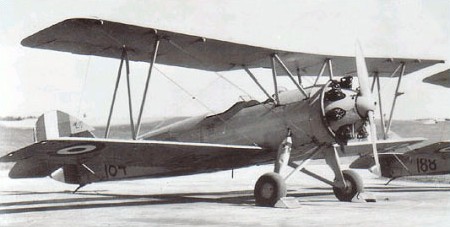
1930
Moravko-Slezka Vazovka Tatra (Ringhoffer-Tatra) obtained licenses to build the Avro 626 as T.126, and the Bucker Bu 131 Jungmann as the T.131.
Avro 626 Prefect
Engine: Armstrong Siddeley Lynx IV C, 237 hp
Length: 26.509 ft / 8.08 m
Height: 9.58 ft / 2.92 m
Wingspan: 33.99 ft / 10.36 m
Wing area: 299.993 sq.ft. / 27.87 sq.m
Max take off weight: 2749.6 lb / 1247.0 kg
Weight empty: 1766.2 lb / 801.0 kg
Max. speed: 97 kt / 180 km/h
Cruising speed: 83 kt / 153 km/h
Service ceiling: 14797 ft / 4510 m
Wing load: 9.23 lb/sq.ft / 45.0 kg/sq.m
Range: 191 nm / 354 km
Crew: 3
Engine: Armstrong Siddeley Cheetah Va, 285 hp.
Max speed: 130 mph.
Avro 626 landplane
Engine: 1 x 240hp Armstrong Siddeley Lynx IVC
Take-off weight: 1249 kg / 2754 lb
Empty weight: 801 kg / 1766 lb
Wingspan: 10.36 m / 34 ft 0 in
Length: 8.08 m / 27 ft 6 in
Height: 2.92 m / 10 ft 7 in
Wing area: 27.87 sq.m / 299.99 sq ft
Max. speed: 180 km/h / 112 mph
Cruise speed: 153 km/h / 95 mph
Ceiling: 4511 m / 14800 ft
Range: 386 km / 240 miles
Avro 621 Trainer / 621 Tutor
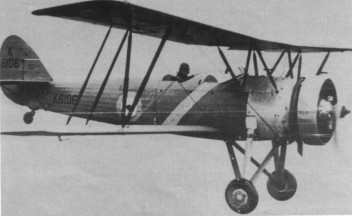
Designed as a replacement for the Avro 504N, the original Avro Trainer of 1929 featured a welded steel-tube structure and a 240-hp Armstrong Siddeley Lynx IVC radial engine. In 1930 the prototype Avro 621 Tutor made its first flight.
Design of the Avro 621 Tutor was of a basic biplane type with twin tandem seating for the student and instructor respectively in the tubular-shaped fuselage. Windscreens were afforded each seating position as were redundant control systems. The biplane structure was connected via a series of struts between them while the engine was fitted to the extreme forward portion of the design rotating a two-blade propeller. Landing gear were of the traditional World War 1 static design and a tail wheel was fitted at rear.
Twenty-two were built for the RAF and three for the Irish Army Air Corps.
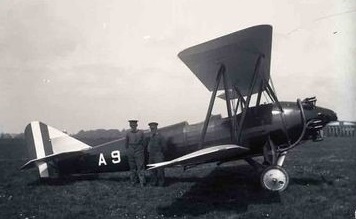
After evaluation Avro began mass production of the 621 for the RAF under the new name of Tutor. Some 200 Tutor trainers were still in operational use with British forces by the time of the Second World War. More than 390 were built, including 14 Sea Tutors with single-step Alclad floats and powered by a 160kW Lynx engine. The Sea Tutor was treated against corrosion by sea-water, and a metal propeller and hand-turning gear were also standard. The Sea Tutor was one of the few seaplanes that could not be converted into landplane form.
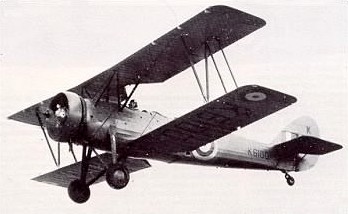
Tutors were delivered to Denmark, Greece, Poland and South Africa, plus others for civil use. Fifty-seven were built under licence in South Africa for the air force and a very small number in Denmark for the navy.
The UK line would stop production of the 621 by 1936 by which time some near 800 models would be in circulation. In total, 852 were built.
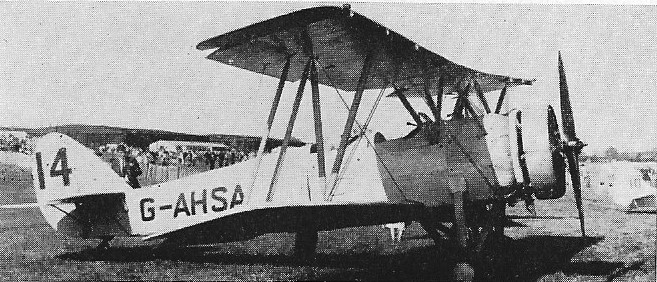
Engine: 1 x Armstrong Siddeley Lynx IVC, 179kW / 237 hp
Take-off weight: 1115 kg / 2458 lb
Empty weight: 839 kg / 1850 lb
Wingspan: 10.36 m / 34 ft 0 in
Length: 8.08 m / 27 ft 6 in
Height: 2.92 m / 10 ft 7 in
Wing area: 27.96 sq.m / 300.96 sq ft
Wing load : 8.2 lb/sq.ft / 40.0 kg/sq.m
Max. speed: 196 km/h / 122 mph
Cruise speed: 169 km/h / 105 mph
Service ceiling: 4940 m / 16200 ft
Range: 402 km / 250 miles
Crew : 2
 All Aero