Bernard AB.1 / AB.2 / AB.3 / AB.4

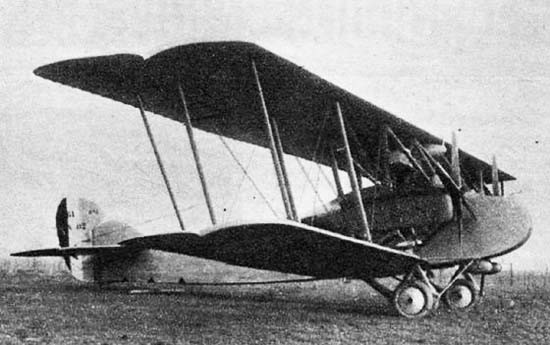
The Adolphe Bernard AB 1 two engine biplane medium bomber, built near the end of the First World War, was the first original design from the Adolphe Bernard factory, which had previously produced SPAD aircraft to government contracts. It was a twin engine biplane bomber, carrying 600 kg (1,323 lb) of bombs.

Designed by Louis Béchereau, the AB 1 was a wooden three bay biplane, without stagger but with greater span on the upper planes. Only the lower wings carried dihedral. The outer and mid interplane struts were outward leaning pairs but the inner bay was defined by a complex of struts supporting the engines midway between the wings. Head on, these appeared as a V based on the lower wing but had M and W arrangements seen side-on above and below the engine. The AB 1 used Hispano-Suiza V-8 piston engines, of which type there was a surplus after the Armistice. It had ailerons on both upper and lower wings, externally connected.

The fuselage of the AB 1 was flat-sided, with a narrowed but flat topped decking. There was a gunner’s position in the extreme nose fitted with a 7.7 mm machine gun on a TO 4 mounting. The fuselage tapered rearwards with the cantilever tailplane, which carried separate elevators, mounted on top. The fin carried a horn balanced rudder which extended down to the bottom of the fuselage, moving between the elevators.

Its main undercarriage had a wide track, with twin wheels on short axles mounted below each engine on inverted V struts, themselves further braced to the lower fuselage longerons.
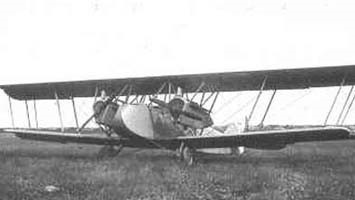
The first AB 1 was built in 1918 and flew in the late spring of that year and testing continued into early 1919. There were plans for a variant using more powerful Hispano-Suiza 8Ba engines, the AB 2, but this was not built. Post war, two civilian variants were started, the post-carrying AB 3 and the passenger only or passenger plus post AB 4. The AB 3, one of which was completed in 1920, could carry a useful load of 905 kg (1950 lb). The AB 4, which had the same engines as the proposed AB 2, carried a maximum of seven passengers. Its fuselage was on display at the 6th Paris Aero Show in December 1919, but it was not completed.

Ten AB 1s were produced after the Armistice but do not seem to have achieved squadron service.

Variants:

AB 1
The bomber version of 1918, as supplied to the Armée de l’Air. Eleven built.

AB 2
Proposed version with 200 hp (150 kW) Hispano-Suiza 8Ba engines. Not built.

AB 3
Post carrying civil version of AB 1, two Hispano 180 hp engines. One built 1920.

AB.3 M
Large twin boom monoplane bomber with three Hispano 12 G engines, two tractor and one pusher. One example started but unfinished.

AB.3 T
Civilian transport derivative of the AB.3 M, with three tractor engines. Project only.

AB 4
Airliner/post carrier version of AB 3, two Hispano 200 hp. Maximum seven passengers, depending on postal load. One part built 1919.

Specifications:

AB.1
Engine: 2 × Hispano-Suiza 8 Ab, 130 kW (180 hp)
Propellers: 2-bladed (later 4)
Upper wingspan: 18.95 m (62 ft 2 in)
Length: 11.30 m (37 ft 1 in)
Height: 3.65 m (12 ft 0 in)
Wing area: 80.0 sq.m (861 sq ft)
Empty weight: 1,570 kg (3,461 lb)
Max takeoff weight: 2,859 kg (6,303 lb)
Maximum speed: 167 km/h (104 mph; 90 kn)
Cruising speed: 135 kph
Service ceiling: 4,900 m (16,076 ft)
Rate of climb: 2.1 m/s (410 ft/min) to 2,000 m (6,560 ft)
Armament: 7.7-mm machine gun
Bombload: 600 kg / 1,323 lb
Crew: 2
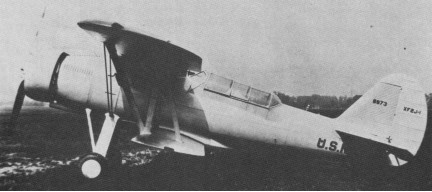
Berliner-Joyce XFJ-2

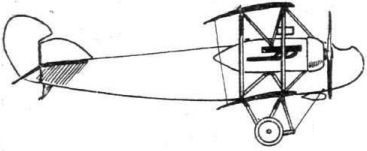
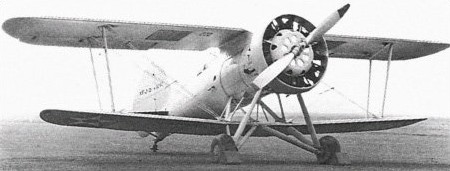
The XFJ-1 was returned to Berliner-Joyce for reconstruction in November 1930, during which the dihedral was eliminated from the upper wing, the vertical tail surfaces were enlarged and a 500hp R-1340D Wasp engine was installed, this being enclosed by a Townend ring and fitted with a spinner.
Redesignated XFJ-2, the fighter resumed its flight test programme at Anacosta on 22 May 1931. The XFJ-2 displayed no improvement in landing characteristics by comparison with the XFJ-1 and proved unstable, and after testing by the US Navy, was discarded as unsatisfactory.

Engine: 500hp R-1340D
Take-off weight: 1291 kg/2846 lb
Empty weight: 953 kg/2101 lb
Wingspan: 8.69 m/29 ft 6 in
Length: 6.28 m/21 ft 7 in
Height: 2.99 m/10 ft 10 in
Wing area: 16.59 sq.m/178.57 sq ft
Max. speed: 285 km/h/177 mph
Range: 837 km/520 miles

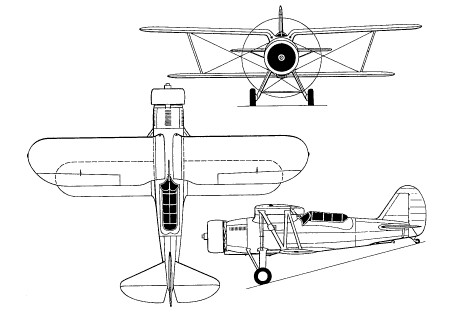
Berliner-Joyce XF2J-1

Berliner-Joyce XF2J-1

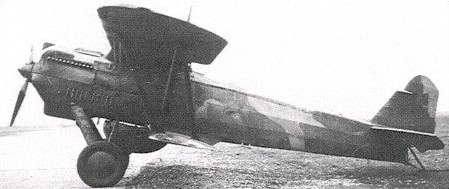
Essentially a navalised P-16, the XF2J-1 two-seat shipboard fighter prototype was ordered by the US Navy on 30 June 1931, but did not fly until 1933. Originally designed for a single-row Pratt & Whitney R-1690C Hornet radial, the XF2J-1 was completed with the experimental two-row 14-cylinder Wright R-1510-92 Whirlwind rated at 625hp at 1830m.
The XF2J-1 was a two-seater fighter with a smooth monocoque fuselage. Upper and lower wings were gulled in¬to the fuselage, as in the P 16.
As initially flown, the XF2J-1 had tandem open cockpits, but at an early stage in the test programme sliding canopies were fitted.
Inadequate visibility for deck landing and inability to compete with the Grumman XFF-1 ended further development of this type. The Navy chose the Grumman and the F2J never went into production.

Take-off weight: 2059 kg/4539 lb
Empty weight: 1456 kg/3210 lb
Wingspan: 10.97 m/36 ft 0 in
Length: 8.78 m/29 ft 10 in
Wing area: 28.19 sq.m/303.43 sq ft
Max. speed: 315 km/h/196 mph
Range: 840 km/522 miles

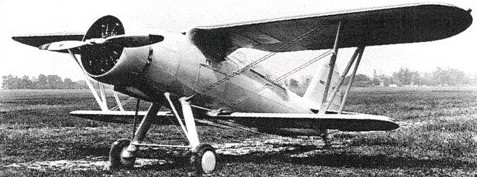
Berliner-Joyce P-16 / PB-1

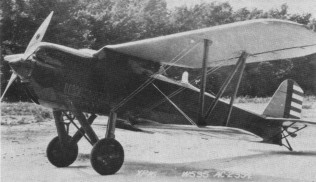
XP-16

The United States Army Air Corps wrote specs for a two seat fighter, getting a competition held in April, 1929. As per Air Corps specification 1639A, the proposal of the new Berliner/Joyce Aircraft Corp. won out over its competitors, Boeing, Curtiss and Vought. The fighter, officially designated the XP-16, was one of three products of a young company that had come into being in 1928. Two seat fighter concept as envisioned by Air Corps planners required an aft facing gunner.Completed in October 1929, the one and only XP 16 was delivered in October 1930. A supercharged Curtiss V-1570A Conqueror gave it a top speed of 186mph at 5000 feet, and 183 mph at 10,000 ft. The prototype XP-16 was of fabric-covered metal construction with an upper wing of gull configuration. Armament comprised two fixed forward-firing 7.62mm machine guns and a third weapon of similar calibre on a flexible mounting in the rear cockpit. Five 11kg or two 55kg bombs could be carried.Two contracts were issued for a total of 25 service test aircraft as YlP-16s, these being essentially similar to the prototype apart from having the unsupercharged V-1570-25 Conqueror which was also rated at 600hp. The YlP-16s were delivered in 1932 and were later redesignated as PB-1s (pursuit-biplace). These proved to possess insufficient manoeuvrability to oppose single-seat fighters, offered extremely poor visibility for landing and displayed a tendency to nose over. They were withdrawn from USAAC service on 31 January 1934.

PB-1

Prototype XP-16
Engine: Curtiss V-1570A Conqueror 12-cylinder liquid-cooled supercharged, 600hp

P-16
Crew: 2
Engine: 1 x 600hp Ñurtiss V-1570-25 Conqueror
Take-off weight: 1813 kg / 3997 lb
Empty weight: 1271 kg / 2802 lb
Wingspan: 10.36 m / 34 ft 0 in
Length: 8.59 m / 28 ft 2 in
Height: 2.74 m / 9 ft 0 in
Wing area: 25.92 sq.m / 279.00 sq ft
Max. speed: 282 km/h / 175 mph
Cruise speed: 243 km/h / 151 mph
Ceiling: 6585 m / 21600 ft
Rate of climb: 654 m/min / 2150 ft/min
Range: 1046 km / 650 miles
Armament: 3 x 7.62mm

Berliner-Joyce XFJ-1

In 1929 the stock market collapsed. Berliner/Joyce set the 29 1 aside and concentrated on a more promising military contract for the XFJ-1, a Navy carrier fighter contract they had gotten in May of that year.
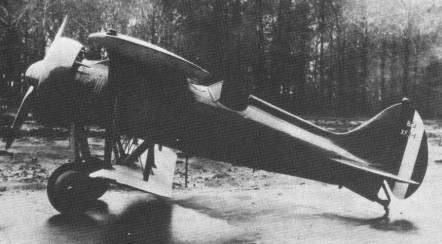
The first military design of the new Berliner/Joyce Aircraft Co. was the XFJ 1. Bristol Fighter influence was carried over into the single seater fighter by dropping the lower wing to reduce wing interaction.
The upper wing of the XFJ-1 was gulled into the fuselage and the lower wing was dropped sixteen inches below the fuselage. The XFJ 1 did not earn a production contact for Beliner/Joyce. The lower wing, so near the ground, created so much turbulence that it was difficult to keep the airplane from ground loop¬ing.
When the Navy lost interest in the XFJ 1, Temple Joyce attempted to interest the Air Corps in it. Fitted first with an anti drag ring and later with wheel pants, it had a top speed of 193mph.
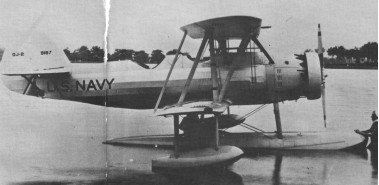
In the same year that the XFJ 1 was tested, 1930, Berliner/Joyce came out with the OJ 2.

Engine: P&W Wasp, 450 hp. Top speed: 193mph.

Berliner-Joyce Helicopter 1925

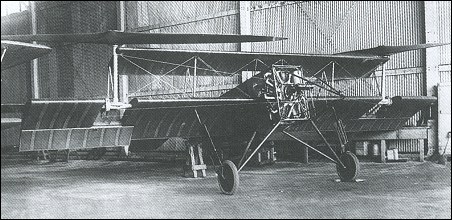
Henry and his father then decided to build a new, lighter helicopter to improve the thrust-to-weight ratio. Completed in 1925, the new design bore a superficial resemblance to the previous model, but it utilized a more efficient biplane configuration. The lower wing relied on a high angle of incidence and large camber to generate some lift from the rotor downwash. The Berliners also enlarged the rotors and added a novel differential collective pitch control system to replace the ineffective louvers.
However, even with the reduced weight and aerodynamic alterations, the 1925 model showed only a marginal increase in performance over the triplane version. Frustrated, Henry abandoned his helicopter experiments and became disillusioned with the potential of the helicopter. He went on to establish the Berliner Aircraft Company, and played an important role in the development of the innovative Erco Ercoupe.

Bert BF-4

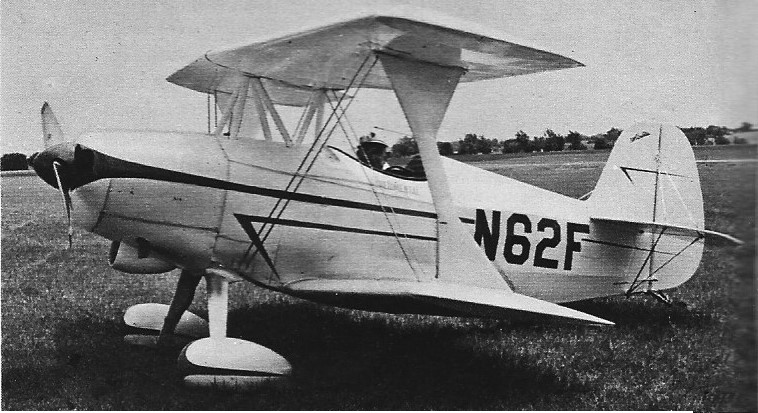
The Bert BF-4 N62F single-seat biplane was the fourth design of Floyd Bert. It took a year to construct at a cost of about $3500.

The wings are wood with Ceconite cover, and ailerons, on the lower wings only, are aluminium and fabric. The fuselage and tail are steel tube and fabric.

The engine is fitted with an inverted fuel system.

Engine: Lycoming O-320-A1A
Wingspan: 14 ft / 4.3 m
Length: 15 ft / 4.6 m
Empty weight: 660 lb / 299.4 kg
Gross weight: 1000 lb / 453.6 kg
Cruise: 140 mph / 225 kph
Landing speed: 60 mph / 96.6 kph
ROC: 3200 fpm / 16.26 m/sec
Endurance: 2 hr 30 min

Beriev KOR-1 / Be-2

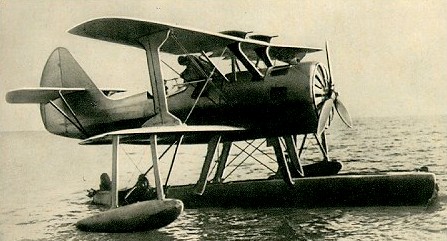
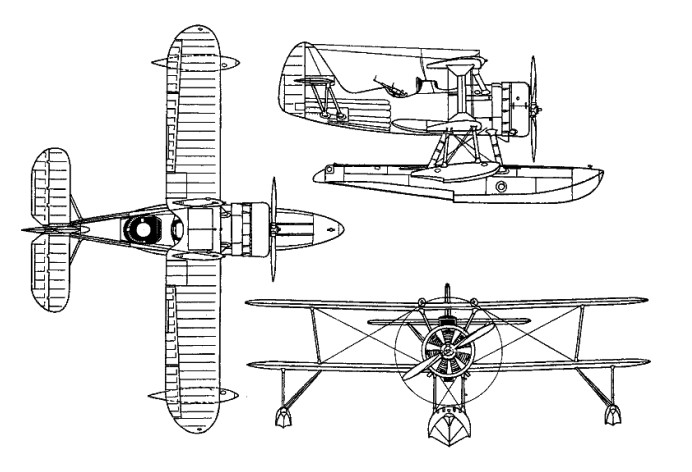
The Be-2, originally designated KOR-1, was a shipboard reconnaissance seaplane. It was first flown on 4 September 1936 by P O Noman and entered service in 1938.

Engine: 1 x M-25A, 715hp
Take-off weight: 2425 kg / 5346 lb
Empty weight: 1640 kg / 3616 lb
Wingspan: 11.0 m / 36 ft 1 in
Length: 7.1 m / 23 ft 4 in
Height: 4.4 m / 14 ft 5 in
Wing area: 31.8 sq.m / 342.29 sq ft
Max. speed: 277 km/h / 172 mph
Ceiling: 6600 m / 1650 ft
Range: 860 km / 534 miles