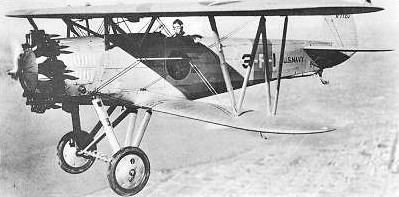
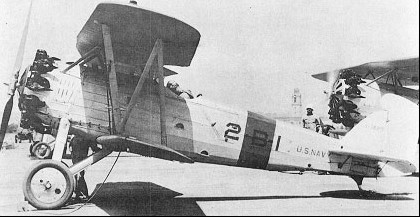
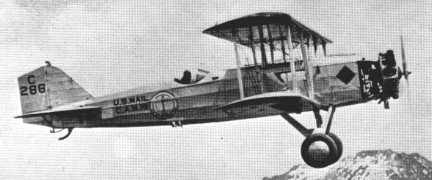
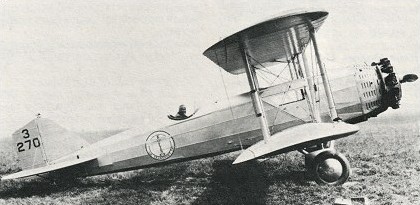
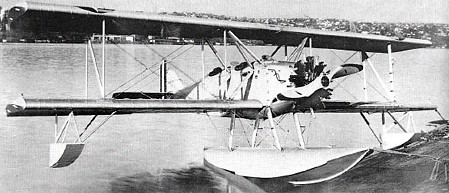
The XF3B-1 (Model 74) was built by Boeing as a private venture and externally resembled closely the F2B-1, but had provision for a single central float with outboard stabilising floats. Powered by a 425hp Pratt & Whitney R-1340 Wasp, it was flown for the first time on 2 March 1927 as a float seaplane. Showing no significant advance over the F2B-1, the XF3B-1 was returned to Boeing by the US Navy and completely rebuilt (as the Model 77), a redesigned undercarriage, wing and tail being introduced. In this new form the fighter proved successful and was the basis of an order from the US Navy for 73 production examples as F3B-1s. The F3B-1 was of mixed construction with wooden wings, a steel-tube fuselage and fabric skinning, but the ailerons and tail surfaces were of semi-monocoque all-metal construction with corrugated covering. Armament comprised two synchronised 7.62mm machine guns and provision was made for five 11kg bombs to be carried. The first flight of the rebuilt XF3B-1 took place on 3 February 1928, and the first production F3B-1, powered by an R-1340-B Wasp, was delivered to the US Navy on 23 November 1928.
F3B-1 Engine: Pratt & Whitney R-1340-B Wasp Take-off weight: 1336 kg / 2945 lb Empty weight: 988 kg / 2178 lb Wingspan 10.06 m / 33 ft 0 in Length: 7.56 m / 24 ft 10 in Height: 2.79 m / 9 ft 2 in Wing area: 25.55 sq.m / 275.02 sq ft Max. speed: 253 km/h / 157 mph Range: 547 km / 340 miles
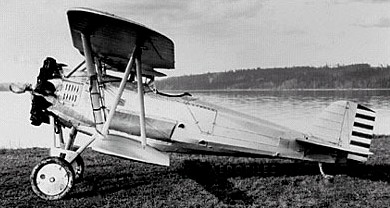
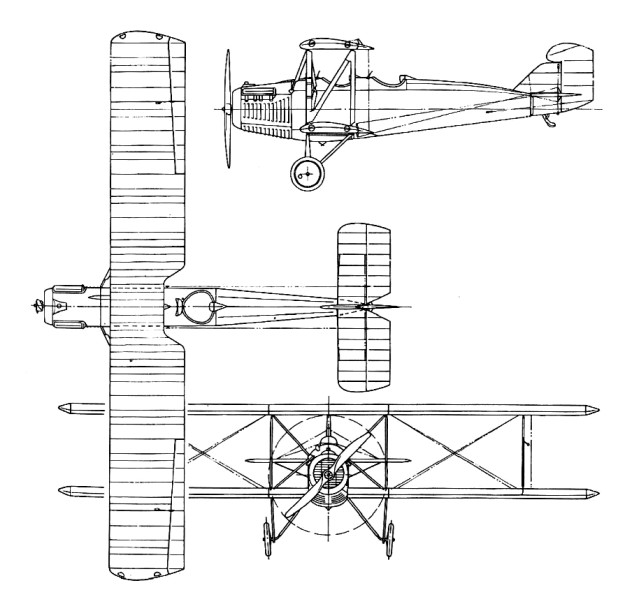
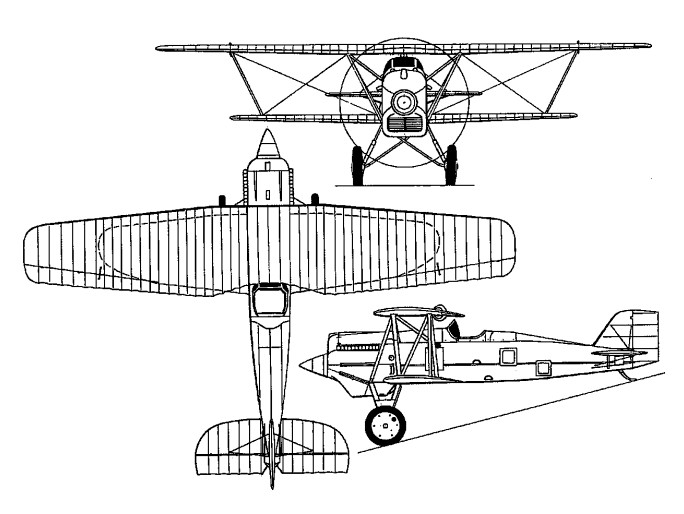
US Navy evaluation of the FB-4 with a Wright P-1 radial engine led to this aircraft being re-engined with a Pratt & Whitney Wasp and redesignated FB-6. It was flight-tested and demonstrated the clear superiority of the Wasp, leading to a decision to combine this engine with an airframe based on the Model 66. From this marriage of airframe and powerplant came the Boeing Model 69, designated XF2B-1 by the US Navy, and first flown in prototype form on 3 November 1926. It differed mainly in having the span of upper and lower wings more nearly equal, and by the propeller having a large spinner.
74 / XF3B-1
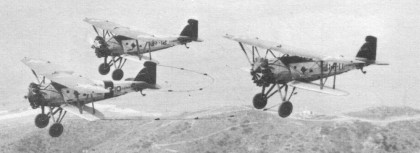
Satisfactory testing of the prototype resulted in an order for 32 production aircraft under the designation F2B-1, with deliveries beginning on 30 January 1928, and these served with US Navy Squadrons VF-1B (fighter) and VB-2B (bomber) on board USS Saratoga. The F2B-1s differed from the prototype by deletion of the spinner, and introduction of a balanced rudder.
Three F2B-1s were flown by the “Three Sea Hawks” Navy precision stunt flying team of the late 1920s.
Model 69 / F2B-1 Engine: 1 x 317kW Pratt & Whitney R-1340-B Wasp radial Take-Off Weight: 1272 kg / 2804 lb Empty Weight: 902 kg / 1989 lb Wingspan: 9.17 m / 30 ft 1 in Length: 6.98 m / 22 ft 11 in Height: 2.81 m / 9 ft 3 in Wing Area: 22.57 sq.m / 242.94 sq ft Max. Speed: 254 km/h / 158 mph Cruise Speed: 212 km/h / 132 mph Ceiling: 6555 m / 21500 ft Range: 507 km / 315 miles Armament: 1 x 12.7mm + 1 x 7.62mm machine-guns, 5 x 11kg bombs
To meet the requirements of the Air Mail Department of the US Post Office, which needed a new mailplane to replace its ageing DH-4s, Boeing designed in 1925 a large biplane transport under the designation Boeing Model 40. It was required to compete against other manufacturers, and the Post Office specification had stipulated the use of a Liberty engine, plus an ability to carry 454kg of airmail. A conventional biplane with tailskid landing gear and a Liberty engine, the Model 40 had a mail compartment in the forward fuselage, with the pilot seated well aft in an open cockpit. First flown on 7 July 1925, the Model 40 was unsuccessful in the competition, the Douglas entry being declared winner. This was to result in Boeing’s design gathering factory dust for some 18 months until, in early 1927, the US Post Office began the process of turning the government air mail service over to private enterprise.
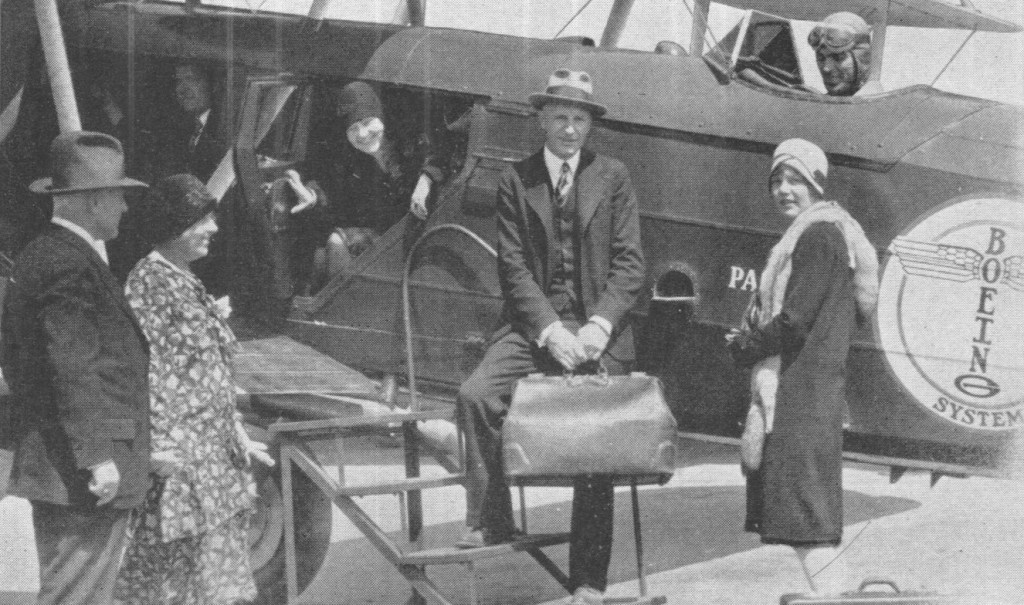
Requiring an aircraft to operate on any of the routes for which it might bid, Boeing began a redesign and conversion of the Model 40 to make it suitable for the sort of operation the company had in mind. The resulting Model 40A had three major changes by comparison with the original Model 40 prototype: the Liberty engine was replaced by a Pratt & Whitney Wasp radial, the composite structure fuselage was replaced with steel tube with fabric covering, and better use was made of fuselage capacity. The pilot’s position remained unchanged, but an enclosed cabin for two passengers was provided more or less directly over the lower wing, with cargo/mail compartments between the pilot’s cockpit and the cabin, and between the cabin and the engine firewall. Boeing was successful in its bid for the San Francisco-Chicago route, and was equally successful in gaining approval for its new aircraft. Following tests for certification, the Model 40A gained Approved Type Certificate No. 2, issued by the US Department of Commerce. Boeing built a fleet of 25 Model 40A mail planes in five months and their enclosed cabins and heated cockpits made possible the first regular transcontinental air passenger service by Boeing Air Transport which, like Varney Air Lines and National Air Transport, later hecame part of United Air Lines’ 13,250-mile network. One model 40A was utilised as an engine test-bed for Pratt & Whitney. The first example of the Model 40A was flown initially on 20 May 1927, and all 24 for Boeing Air Transport had been delivered in time for inauguration of the company’s first airmail service on 1 July 1927.
Boeing 40B-4 of Pacific Air Transport
40 Engine: Liberty
40A Engine: 1 x 313kW Pratt & Whitney Wasp radial piston Take-off weight: 2722 kg / 6001 lb Empty weight: 1602 kg / 3532 lb Wingspan: 13.47 m / 44 ft 2 in Length: 10.12 m / 33 ft 2 in Height: 3.73 m / 12 ft 3 in Wing area: 50.82 sq.m / 547.02 sq ft Max. speed: 206 km/h / 128 mph Cruise speed: 169 km/h / 105 mph Ceiling: 4420 m / 14500 ft Range: 1046 km / 650 miles
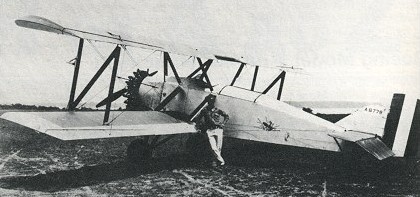
Having become recognised as a designer of military aircraft, following the supply of Model 15 to both the US Army (PW-9) and US Navy (FB-1), the company designed the Boeing Model 21 to meet a US Navy requirement for a primary trainer. This was an equal-span biplane, incorporating an unusually wide wing centre-section, and introduced N-type interplane struts to eliminate wing incidence-bracing wires. The divided-axle main units of the tail-skid landing gear had rubber bungee shock absorbers, plus provision for easy conversion to operation with floats. The pilot and pupil were accommodated in tandem open cockpits. Power was provided by a Lawrance J-1 radial engine. US Navy testing of the Model 21 was carried out with the prototype aircraft, under the designation VNB-1. From the potential operator’s point of view, however, the type was unsuitable for the required role, being unspinnable and too easy to fly. On the understanding that modifications would be introduced to make the aircraft a little more demanding, and spinnable, 41 production aircraft were ordered under the designation NB-1. The first of these was delivered on 5 December 1924, and it was soon discovered that Boeing’s spin modifications were too effective, since it was possible to get into a flat spin from which recovery was virtually impossible.
Further modifications produced an acceptable compromise. Some NB-1s had Lawrance J-2 or J-4 engines, and several aircraft had 164kW Wright J-5 engines installed at a later date. Following delivery of the NB-1s an additional 30 were ordered of the NB-2 variant, this differing only by having war-surplus 134kW Wright-Hispano E-4 engines, installed at the US Navy’s request to utilise some of the very large number of these licence-built engines held in naval stores.
Boeing Model 21 / NB-1 Engine: 1 x 149kW Lawrance J-1 radial piston engine Take-Off Weight: 1287 kg / 2837 lb Empty Weight: 969 kg / 2136 lb Wingspan: 11.23 m / 36 ft 10 in Length: 8.76 m / 28 ft 9 in Height: 3.56 m / 11 ft 8 in Wing Area: 31.96 sq.m / 344.01 sq ft Max. Speed: 160 km/h / 99 mph Cruise Speed: 145 km/h / 90 mph Ceiling: 3110 m / 10200 ft Range: 483 km / 300 miles Armament: 1 x 7.62mm machine-gun
NB-2 Engine: 1 x 134kW Wright-Hispano E-4 Wingspan: 11.23 m / 36 ft 10 in Length: 8.76 m / 28 ft 9 in Height: 3.56 m / 11 ft 8 in Wing Area: 31.96 sq.m / 344.01 sq ft Armament: 1 x 7.62mm machine-gun
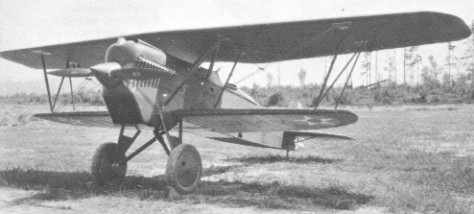
In April 1925 the USAAC issued a specification for a single-seat fighter to be powered by a new 447kW Packard engine of inverted layout. Boeing’s airframe for this requirement was generally similar to that of the Model 15 family, but incorporated a coolant radiator in the centre-section of the lower wing. Designated XP-8 (Boeing Model 66), this model preceded the XP-7, delivered in July 1927, having been launched as a private venture late in the previous year. Powered by a 600hp Packard 2A-1500 water-cooled engine, the XP-8 utilised an airframe essentially similar to that of the US Navy XF2B-1, but performance failed to meet the requirements of the 1925 USAAC specification which it had been designed to meet, and the aircraft was finally scrapped in June 1929. Armament comprised one 7.62mm and one 12.7mm machine gun.
Engine: 600hp Packard 2A-1500 water-cooled Take-off weight: 1552 kg / 3422 lb Empty weight: 1084 kg / 2390 lb Wingspan: 9.16 m / 30 ft 1 in Length: 6.95 m / 22 ft 10 in Height: 3.27 m / 10 ft 9 in Wing area: 22.57 sq.m / 242.94 sq ft Max. speed: 278 km/h / 173 mph
The last aircraft built by Boeing against an order for 30 PW-9 single-seat fighters was retained by the company at the request of the USAAC for trials with a turbo-supercharged version of the 510hp Packard 1A-1500 water-cooled engine (utilised by the FB-2). The USAAC also requested an increase in wing area, because of the higher weights involved, and while the standard PW-9 upper wing was retained, an enlarged lower wing was introduced, resulting in an equi-span biplane with vertical N-type interplane struts. The standard PW-9 armament of two 7.62mm synchronised machine guns was augmented by a pair of similar-calibre weapons mounted beneath the lower wing outside the propeller arc. With these changes the aircraft was designated XP-4 (Model 58), and delivered on 27 July 1926, but the 6.32sq.m increase in gross wing area by comparison with the PW-9 failed to compensate for the 370kg increase in loaded weight. The XP-4 proved to possess extremely unsatisfactory handling characteristics and after a few hours flying the test programme was abandoned.
Engine: turbo-supercharged Packard 1A-1500, 510hp Take-off weight: 1656 kg / 3651 lb Empty weight: 1262 kg / 2782 lb Wingspan: 9.75 m / 31 ft 12 in Length: 7.29 m / 23 ft 11 in Height: 2.69 m / 8 ft 10 in Wing area: 28.71 sq.m / 309.03 sq ft Max. speed: 259 km/h / 161 mph Range: 603 km / 375 miles
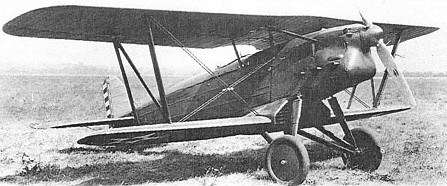
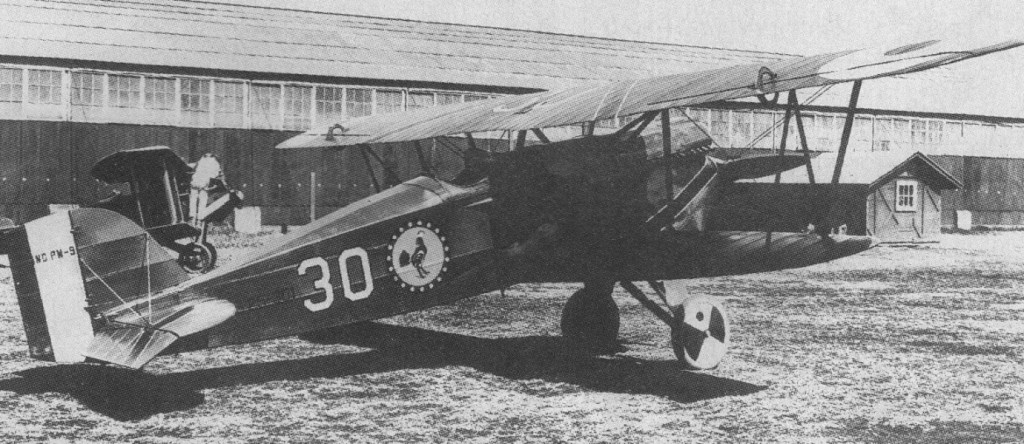
With experience gained from sub-contract production of a aircraft designed by other manufacturers, in particular, the Thomas-Morse MB-3A, Boeing began the private-venture development of a single-seat fighter under the designation Boeing Model 15. First flown on 2 June 1923, it was a single-bay biplane with wings of unequal span, the lower wing also being of reduced span and chord. The wings were of wooden construction, fabric-covered, but the fuselage was of welded steel tube. The braced tail unit was also of wood, and incorporated a variable-incidence tailplane that could be adjusted in flight. Landing gear was of fixed tailskid, with through-axle main units, and power was provided by a 324kW / 375 hp Curtiss D-12 inline engine. The design featured an underslung sloping core radiator with small frontal area, and an elliptical lower wing and tapered upper wing. The US Army became interested in the Model 15 before it was flown, and was evaluated by the US Army at McCook Field, under the designation XPW-9. It was flown in competition against a Fokker XPW-7 and Curtiss XPW-8A, wining an order for two extra XPW-9s for more extensive evaluation; these were delivered in May 1924. The third of the aircraft differed by having divided-axle instead of through-axle main landing gear units, and it was this type of landing gear that was chosen for the 30 examples of the production PW-9 ordered in two batches (12 and 18) in September and December 1925 respectively.
PW-9 25-301
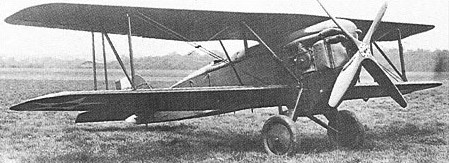
The US Navy was as keen as the US Army to acquire examples of Boeing’s new fighter, and the first of an order of 14 for service with the US Marine Corps, under the designation FB-1, were delivered on 1 December 1925 to the shore-based fighter squadrons VF 1M, 2M and 3M. They were used in 1927 and 1928 by the US Expeditionary Force in China. Only 10 were produced as FB-1s, these being virtually identical to the US Army’s PW-9 (Boeing Model 15), having the same 435 hp Curtiss D 12 engine and two gun armament. The 11th and 12th aircraft on this order introduced the 380kW Packard 1A-1500 inline engine, and were equipped with through-axle landing gear and an arrester hook for operation from aircraft-carriers. The change resulted in redesignation by the US Navy to FB-2 (Boeing Model 53); the 13th aircraft was identical to the FB-2, except for twin, float landing gear, and was designated FB-3 (Boeing Model 55); and the 14th and last of the US Navy’s initial order also had twin floats, but introduced a 336kW Wright P-1 radial engine, becoming redesignated FB-4 (Boeing Model 54) or FB-6 with the 298kW Pratt & Whitney Wasp. The development ultimately led to the FB-5 produced during 1926-27. The FB 5 for the US Navy (Boeing Model 67), differed from the FB 1 in having a 520 hp Packard 2A 1500 engine, increased wing stagger, and a balanced rudder. Twenty seven were deli¬vered in January 1927 to Marine fighter squadrons VF 1B and VF 6B for service aboard the Langley.
Boeing Model 15 / XPW-9 Engine: 324kW / 375 hp Curtiss D-12 inline
Boeing Model 15 / PW-9 / FB-1 Engine: 435 hp Curtiss D 12 Span: 9.75 m (32 ft) Length: 7.14 m (23 ft 5 in) Empty Weight: 1,936lbs (878kg) Maximum Take-Off Weight: 3,120lbs (1,415kg) Maximum Speed: 159mph (256kmh; 138kts) Maximum Range: 390miles (628km) Service Ceiling: 18,924ft (5,768m) Armament: 1 x 7.62mm mg, 1 x 12.7mm machine gun Accommodation: 1
PW-9C Engine: One 400 h.p. Curtiss D.12 Length 23.6ft (7.2m) Wingspan 32ft (9.75m) Weight 3,043 lb (1,380 kg) Seats: 1 Max speed: 163 mph (262 kph) Ceiling: 20,000 ft (6,000m) fully loaded.
Boeing Model 53 / FB-2 Engine: 380kW Packard 1A-1500 inline Length 23.6ft (7.2m) Wingspan 32ft (9.75m) Seats: 1
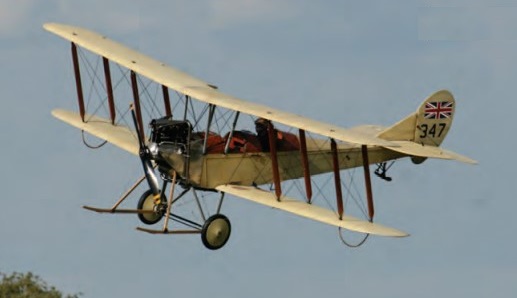
A full-size replica of the 1918 Royal Aircraft Factory BE.2c was built at Sywell, UK, for a ‘Biggles’ film in 1968 by Charles Boddington using Tiger Moth components and a Gipsy Major 10-1.
Registered G-AWYI cn 1 it flew with the serial 2984.
It was later sold in the USA as N1914B.
Engine: Gipsy Major 10-1 Wingspan: 37.00 ft Length: 27.03 ft
The 1911 Bloudek-Cermak Libella was a single-seat monoplane designed and built by S.Bloudek, Slovenian and J. Cermak, Czech, in the Austro-Hungarian Empire.
1911 Bloudek-Cermak Libella II was a single seat biplane designed and built by S.Bloudek and J. Cermak.


 All Aero