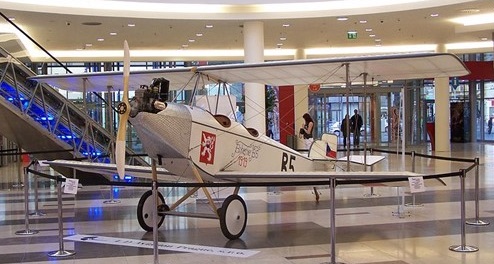
The Bohemia B.5 was a single engined, two seat, light sport aircraft designed and built in Czechoslovakia shortly after World War I.
The B.5 was the first aircraft designed and built in Czechoslovakia at the end of the First World War. Designed and constructed at the Bohemia Pilsen works the B.5 had one engine and two seats in separate, tandem open cockpits. The B.5 was a typical biplane sport/trainer aircraft of the period, with staggered upper and lower wings; the lower wing attaching directly to the lower fuselage between the two cockpits and the one piece upper wing supported on cabane and inter-plane struts.
The structure of the fuselage and wings was entirely conventional with fabric and/or plywood skinning and wooden structure. Conventional fin and tailplane were sited at the rear of the fuselage and were fitted with fin and elevators of generous area for yaw and pitch control. Roll control was effected by ailerons fitted to the upper wings only. The undercarriage consisted of bungee sprung main-wheels on a live axle supported by wire-braced struts and a sprung tail-skid at the extreme end of the fuselage.
Power was supplied by a Neue Automobil-Gesellschaft mbH NAG 4-cyl in-line piston engine, rated at 40 hp (30 kW), turning a two-blade wooden propeller counter-clockwise as viewed from the cockpit.
Colours and markings were simple with the fabric covering being left in its natural colour doped with a clear varnish. Large black letters across the span of the lower wing bottom surface spelt out BOHEMIA.
The prototype first flew from Pilsen aerodrome on 27 April 1919, but due to its lacklustre performance it was not a commercial success with few sales. The prototype B.5 crashed on Saturday, 17 May 1919, killing the student, Joseph Klíbr, and slightly injuring the instructor in the rear cockpit, Rudolf Polanecký. The remains of the B.5 were swiftly resurrected in just six weeks.
The B.5 kept flying until 1923 when it was owned by Chrudim J. Wiesner. By this time the NAG engine was completely worn out and unsafe. Wiesner and a test pilot from the Aero factory, Rudolf Valenta, converted the B.5 to a glider by removing the engine, modifying the front fuselage and replacing the wheeled undercarriage with skids. Results of attempts to fly the glider by Valenta Kbelská were mediocre due to the poor aerodynamic qualities and lack of a suitable launching area.
No complete B.5 exists today, but the fuselage is on display at the Prague Aviation Museum, Kbely.
Engine: Neue Automobil-Gesellschaft mbH NAG, 30 kW (40 hp) Wingspan: 8.00 m (26 ft 3 in) Length: 6.68 m (21 ft 11 in) Wing area: 18.05 sq.m (194.3 sq.ft) Height: 2.8 m (9 ft 3 in) Empty weight: 340 kg (750 lb) Gross weight: 520 kg (1,147 lb) Maximum speed: 110 km/h (68 mph) Service ceiling: 1,500 m (4,921 ft) Range: 120 km (74 miles) Endurance: ca 3 hours Seats: 2
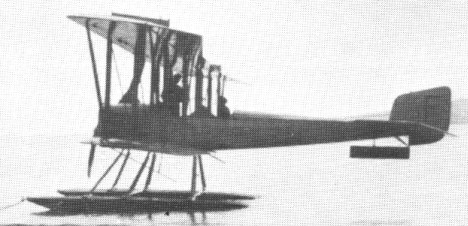
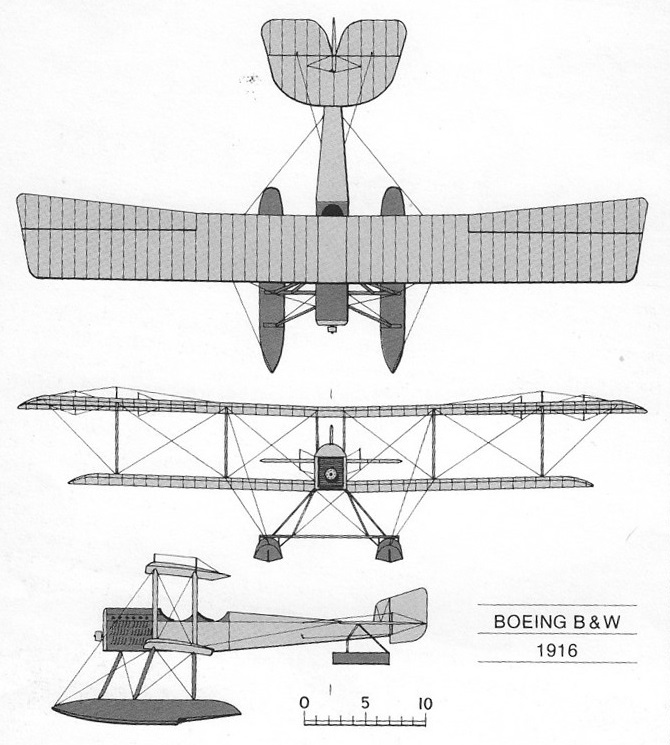
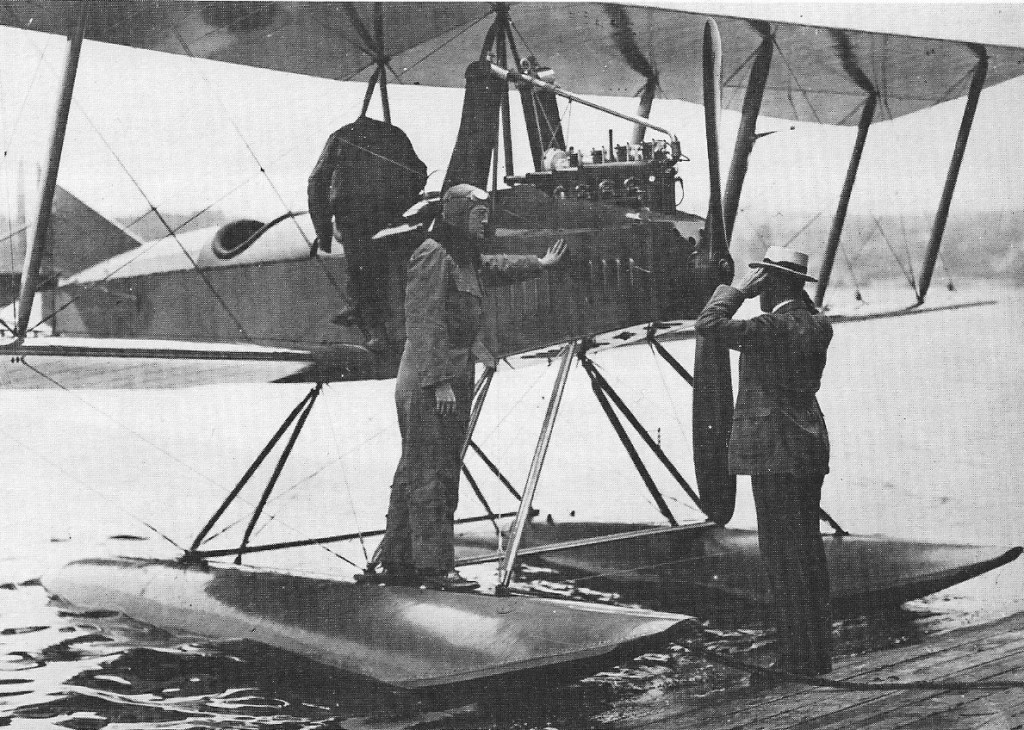
The B & W Model 1 design was the result of a collaboration between William E. Boeing and a friend, Cdr G.C. Westervelt of the US Navy, and the B & W designation recognised this association. Of wood and fabric construction, extensively strutted and wire-braced, the Model 1 was an unequal-span biplane, with ailerons on the upper wings only. The fuselage, mounted directly on the lower wing, had two open cockpits in tandem, and carried at the rear a tail unit that was a typical braced structure of its period. Power was provided by a Hall-Scott engine mounted in the nose of the fuselage to drive a tractor propeller. Floatplane landing gear included two single-step floats, strut-mounted and braced beneath the fuselage, plus a small float under the tail to prevent disaster in a tail-down landing. The first of two Model 1s was flown initially on 29 June 1916, by which time Cdr Westervelt had been posted to the other side of the American continent. William Boeing decided, therefore, to establish a company to build these aircraft, and his Pacific Aero Products Company was founded on 15 July 1916 in a rented boathouse on Seattle’s Lake Union. The first company to incorporate the Boeing name, the Boeing Airplane Company, was formed on 26 April 1917. The two Model 1s, construction numbers 1 and 2, were sold to the New Zealand government.
Later, Boeing staff created a replica of the B&W1.
Engine: 1 x Hall-Scott A-5, 125 hp / 93kW Take-off weight: 1270 kg / 2800 lb Empty weight: 953 kg / 2101 lb Wingspan: 15.85 m / 52 ft 0 in Length: 9.5 m / 31 ft 2 in Wing area: 53.88 sq.m / 579.96 sq ft Max. speed: 121 km/h / 75 mph Cruise speed: 108 km/h / 67 mph Range: 515 km / 320 miles
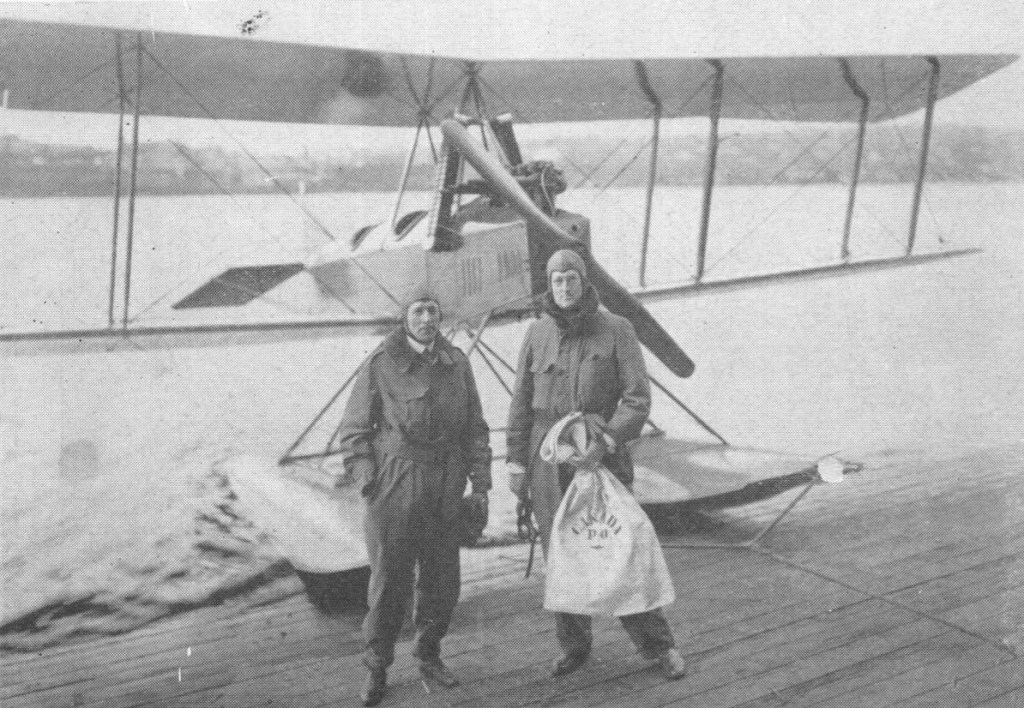
The Boeing C-700 was a development of the Model 5. Boeing (on the float) and Edward Hubbard put this aircraft to work in 1919 carrying mail between Seattle and Victoria B.C. and to ships at sea.
The first internation airmail flight was made from Vancouver to Seattle on 3 May 1919 by Eddie Hubbard and Bill Boeing. A pouch of 60 letters was carried in the C-700.
First international airmail
Powered by a Hall-Scott water-cooled four-cylinder of 100 hp, the cruise was 60 mph.
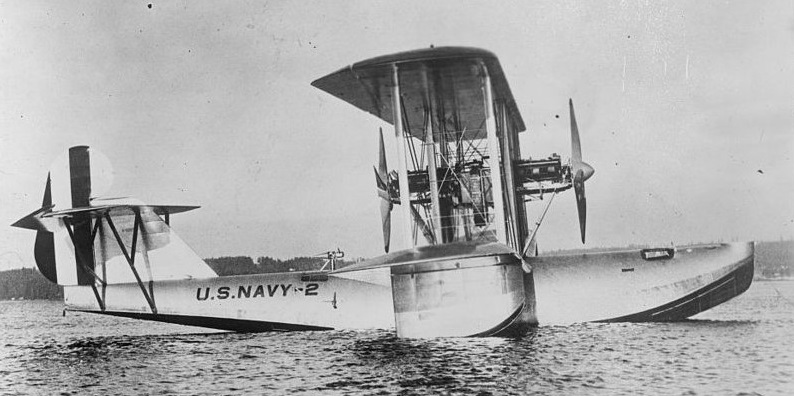
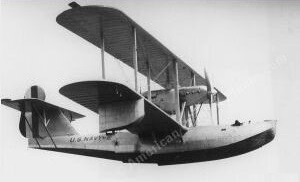
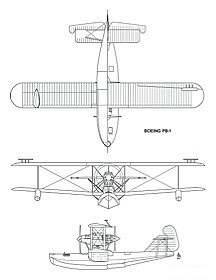
In September 1924, the Naval Aircraft Factory was tasked with designing a long-range twin-engined flying boat, capable of flying the 2,400 mi (3,860 km) between San Francisco and Hawaii. The initial design was carried out by Isaac Laddon, an employee of Consolidated Aircraft, and then passed to Boeing for detailed design and construction. The new flying boat, the Boeing Model 50, was a two-bay biplane of very streamlined design for flying boats of the time. The wings were of metal construction, with wooden wingtips and leading edges. The fuselage had a metal lower part, with the upper half made of laminated wooden frames with a wood veneer covering. Two 800 hp (600 kW) Packard 2A-2500 V12 engines driving four-bladed propellers were mounted in tandem between the wings above the fuselage.
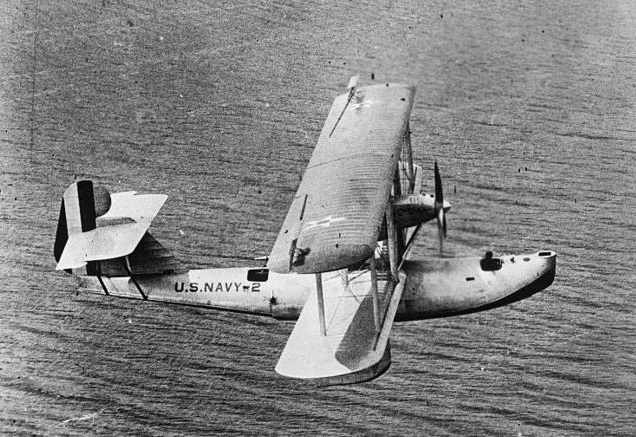
The Boeing Model 50, designated PB-1 by the US Navy, made its maiden flight in August 1925 as A6881. It was intended to use it to lead a pair of Naval Aircraft Factory PN-9s in an attempt to fly to Hawaii on 31 August 1925, but engine trouble led to its participation in the flight being cancelled.
PB-1
In 1928, the aircraft was modified by the Naval Aircraft Factory, its Packard engines were replaced by two 500 hp (370 kW) geared Pratt & Whitney R-1690 Hornet radial engines, leading to the new designation PB-2.
Although the aircraft was a prototype the U. S. Navy did not distinguish between experimental and operational aircraft at that time so the aircraft was never designated XPB-1 or XPB-2.
XPB-1 Engines: 2 × Packard 2A-2500, 800 hp (600 kW) each Length: 59 ft 4.5 in (18.098 m) Wingspan: 87 ft 6 in (26.67 m) Wing area: 1,801 sq ft (167.3 m2) Airfoil: Clark Y Height: 20 ft 10 in (6.35 m) Empty weight: 11,551 lb (5,239 kg) Gross weight: 26,882 lb (12,193 kg) Maximum speed: 97 kn; 180 km/h (112 mph) Cruise speed: 82 kn; 151 km/h (94 mph) Service ceiling: 9,000 ft (2,700 m) Range: 2,172 nmi; 4,023 km (2,500 mi) Rate of climb: 4,000 ft/min (20 m/s) Armament: none fitted Crew: 5
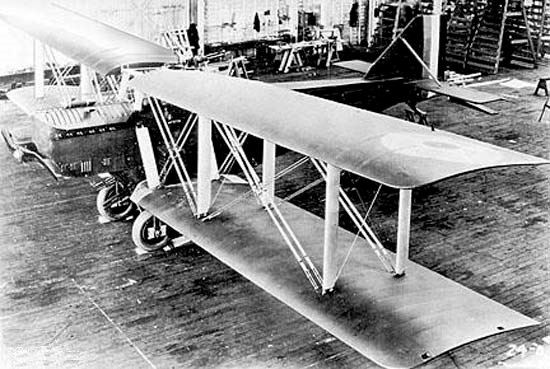
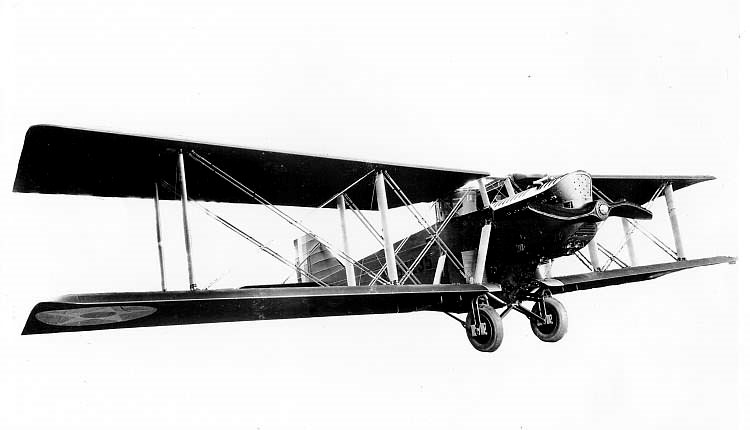
After the failure with the construction of GA-1 (and it was considered the refusal of the military to purchase a large series), Boeing decided to change the design of its attack aircraft while preserving the concept itself. The next model that received the designation GA-2 was already a single-engine armoured biplane that was also tested on the basis at McCook Airbase.
The GA-2 was initially seen as a prototype for a new three-engine attack aircraft with 700 hp engines, but as a result, the military ministry ordered two prototypes. The reservation remained approximately identical to GA-1, but due to the reduction of the crew and the number of engines, the mass of it decreased. The weapons were also changed, the gun remained in the same place, and two machine guns were placed in the turret instead of the turrets in front of the nacelle.
Both aircraft were left at the McCook airbase where they flew until 1926.
GA-2 Engine: Engineering Division W-18, 750 hp Wing span: 16.47 m Length: 11.25 m Height: 3.60 m Wing area: 258.00 sq.m Empty weight: 2934 kg Normal take-off weight: 3941kg Maximum speed: 206 km / h Cruising speed: 182 km / h Range: 364 km Maximum climb rate: 220 m / min Ceiling: 3505 m Crew: 3 Armament: one 37-mm Baldwin cannon, 6×7.62 mm Browning machine guns
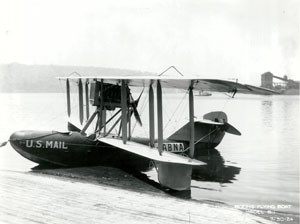
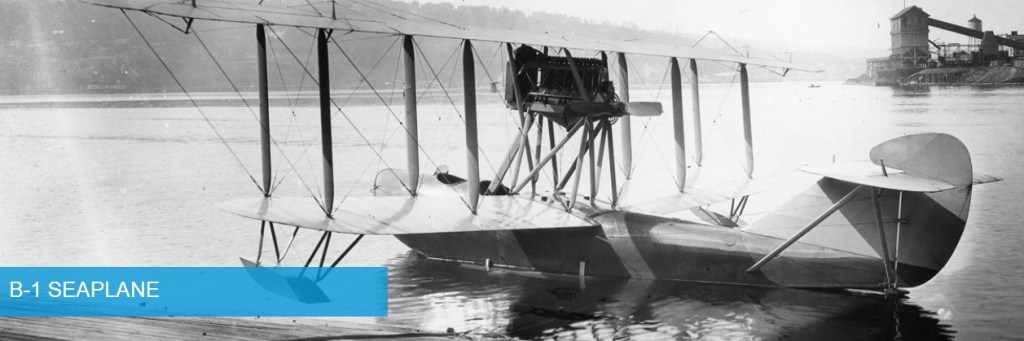
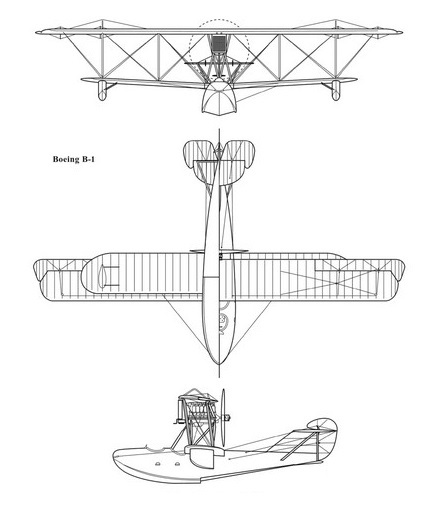
The Boeing Model 6, also known as the B-1 was a small biplane flying boat designed by William Boeing shortly after World War I. The Model 6 was the first commercial design for Boeing (as opposed to military or experimental designs), hence the B-1 designation. Its layout was conventional for its day, with a Hall-Scott engine driving a pusher propeller mounted amongst the cabane struts. The pilot sat in an open cockpit at the bow, and up to two passengers could be carried in a second open cockpit behind the first. The hull was laminated wood veneer, and the wing frames were spruce and plywood. The design was reminiscent of the Curtiss HS-2L that Boeing had been building under license during the war.
Only a single aircraft was built, first flying on 27 December 1919, as Boeing had trouble selling it in a market flooded with war-surplus aircraft. In 1920, it was purchased by Edward Hubbard, who used it to carry air mail between Seattle, Washington and Victoria, British Columbia. Air mail service began on 27 December 1919, and continued for eight years. The B-1 mail flights took off from Lake Union in Seattle. It outlasted six engines in eight years of international airmail runs between Seattle, Wash., and Victoria, British Columbia. Flown by Eddie Hubbard, the B-1 covered 350,000 miles (563,000 kilometers).
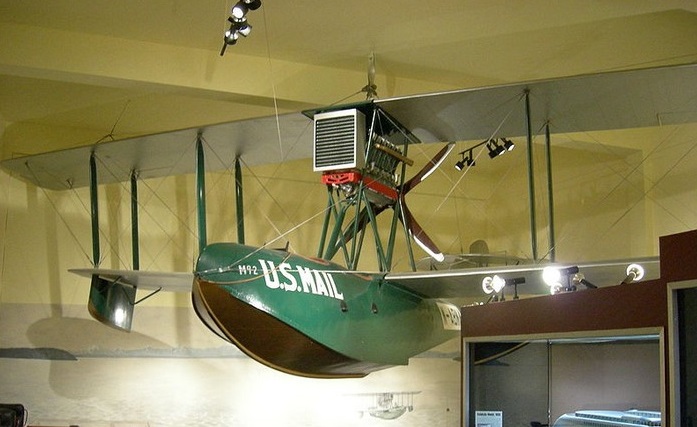
The plane flew until 1930 before being preserved and put on display at Seattle’s Museum of History and Industry in 1954.
Model 6 on display at the Museum of History and Industry in Seattle
Engine: 1 × Hall-Scott L-6, 200 hp (149 kW) 6 or 400-hp Liberty Prop: 4 blade wooden fixed pitch Wingspan: 50 ft 3 in (15.32 m) Wing area: 492 sq.ft (45.7 sq.m) Length: 31 ft 3 in (9.53 m) Height: 13 ft 4 in (4.06 m) Empty weight: 2,400 lb (1,089 kg) Gross weight: 3,850 lb (1,746 kg) Maximum speed: 90 mph (145 km/h) Cruise speed: 80 mph (128 km/h) Range: 400 miles (640 km) Service ceiling: 13,300 ft (4,050 m) Crew: one pilot Capacity: 2 passengers
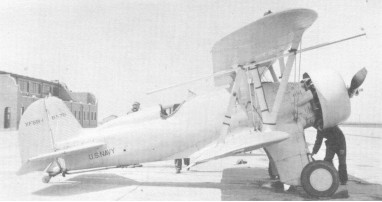
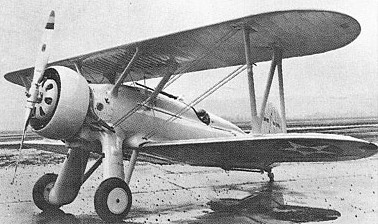
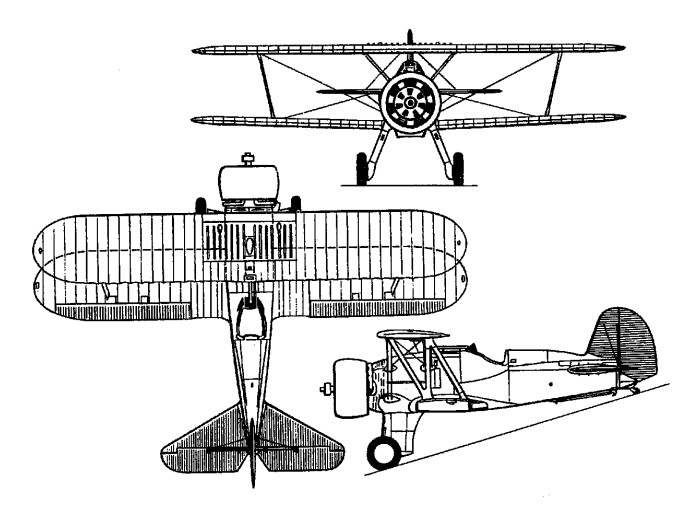
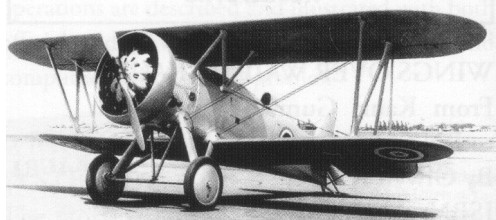
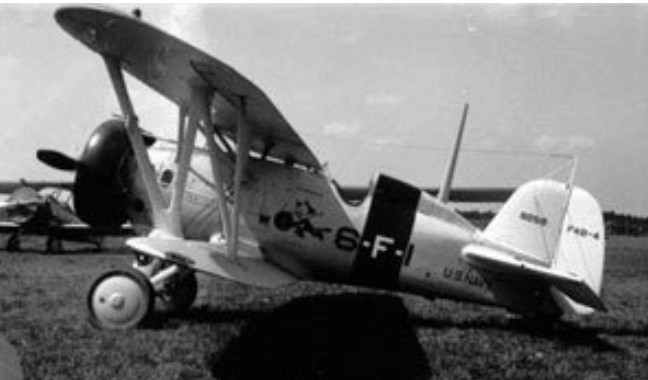
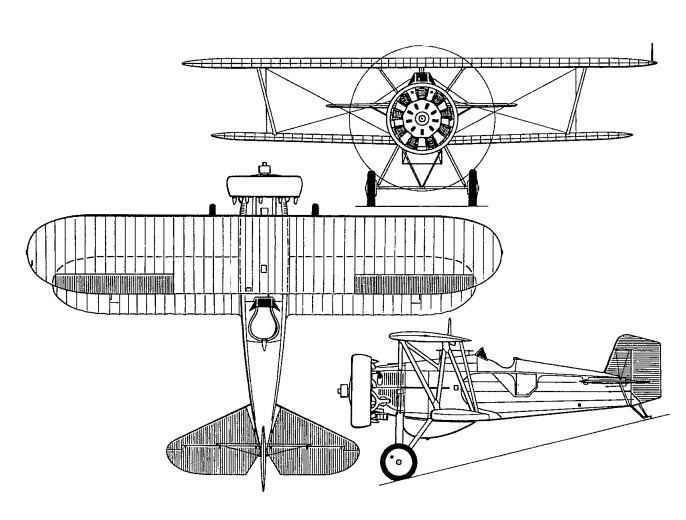
The last Boeing biplane fighter, the Model 236 single-seat shipboard fighter was designed around the 14-cylinder twin-row Pratt & Whitney R-1535 Twin Wasp Junior engine rated at 625hp at 1676m. Of all-metal construction with fabric-covered wings, the Model 236 was assigned the designation XF6B-1 by the US Navy and flew on 1 February 1933. Armament was two 7.62mm guns and provision was made for a single 227kg bomb or two 52kg bombs, and on 21 March 1934, the prototype was assigned the new “bomber-fighter” designation of XBFB-1. The engine installation and undercarriage were refined during the test and evaluation programme, but no production was undertaken.
Engine: Pratt & Whitney R-1535 Twin Wasp Junior, 625hp Take-off weight: 1680 kg / 3704 lb Empty weight: 1038 kg Wingspan: 8.69 m / 28 ft 6 in Length: 6.74 m / 22 ft 1 in Height: 3.22 m / 10 ft 7 in Wing area: 23.41 sq.m / 251.98 sq ft Max. speed: 322 km/h / 200 mph Range: 845 km / 525 miles
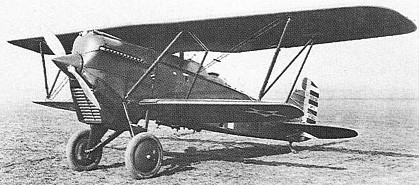
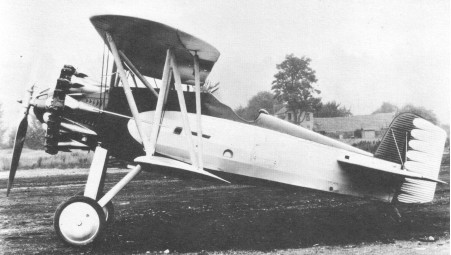
The final production PW-9D (the 16th) was retained by Boeing for the experimental installation of a 600hp water-cooled Curtiss Conqueror V-1570 engine and, as the XP-7 (Model 93), was eventually delivered to the USAAC on 4 September 1928. Distinguished from the PW-9D by a shorter, deeper nose with a larger radiator, the XP-7 enjoyed some success during trials, proving the suitability of the Conqueror for fighter installation. Proposals to build four service evaluation P-7s were abandoned when it was concluded that the basic PW-9 airframe had reached the limit of its development. The XP-7, the last Boeing fighter biplane to employ a liquid-cooled engine, was reconverted to PW-9D standards.
Engine: 600hp water-cooled Curtiss Conqueror V-1570 Take-off weight: 1479 kg / 3261 lb Empty weight: 1 053 kg Wingspan: 9.75 m / 31 ft 12 in Length: 7.31 m / 23 ft 12 in Height: 2.74 m / 8 ft 12 in Wing area: 22.39 sq.m / 241.00 sq ft Max. speed: 269 km/h / 167 mph
Both Models 83 and 89 were Navy designated Boeing XF4B-1 fighters. The difference was the Model 83 had a spreader-bar axle landing gear, and an arrester hook. The Boeing Model 89 had a split-axle landing gear so that a 500 lb bomb could be carried beneath the fuselage.
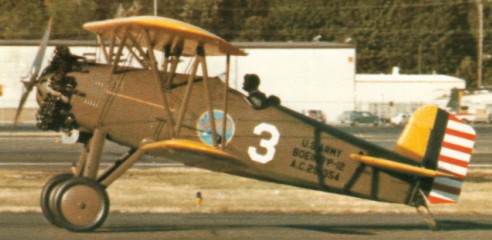
A private venture built at Boeing’s expense, the XF4B-1 first flew on 7 August 1928. It was placed in production as the Boeing 99 for the Navy F4B-1 series and Model 102 for Army P-12 series, 27 were ordered as F4B-1, and was first delivered in July 1928.
The P-12 was constructed of dural tubing, fabric covered and having wooden wings with corrugated metal control surfaces. Powered by a Pratt & Whitney R-1340 Wasp of 450 hp, the top speed was 171 mph and ceiling 29,000 ft fully loaded.
Model 102 P-12
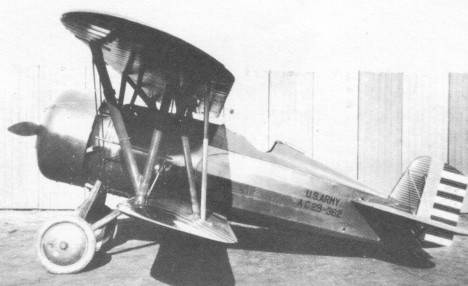
One XP-12A was built as a test vehicle for the newly NACA cowl. The fuselage was flared to conform to the enlarged nose and shorter landing gear was installed. The XP-12A was a modification of the 10th production P-12. It was later destroyed in a crash. The original P-12 and P-12B were the only two P-12 models that were not equipped with a speed-ring cowl.
XP-12A
The USAAC ordered ten aircraft similar to the F4B-1 in late 1928, accepting the naval evaluation as being correct. Designated P-12, these differed only by having the arrester hook and other specifically naval equipment deleted. P-12B, of which 90 were built with 317kW Wasp engines, differed very slightly with Frise balanced ailerons and internal improvements and were followed by 96 P-12C, which were similar to the Navy’s F4B-2. P-12D, of which 35 were built, had a more powerful 391kW Wasp engine.
The P-12C and P-12D models were improved models and utilised improved and heavier constructed cross-axle landing gear and a speed ring cowl around a Pratt & Whitney Wasp of 550 hp. Many P-12C and D models were fitted later with P-12E type vertical tail surfaces to give better control. The P-12E introduced an all metal monocopue fuselage with greater greater structural rigidity of the fuselage for higher G loads. Most extensively built of the Army versions was the P-12E. This had a pilot’s headrest faired by a turtleback and the more powerful engine of the P-12D. A total of 135 were ordered in 1931, many remaining in service until replaced by P-26A in 1935. The last few of the order were given 447kW / 550 hp Pratt & Whitney R-1340-19 Wasp engines and the designation P-12F. The P-12F had a top speed of 195 mph and ceiling of 32,000 ft. The P-12F had a swivel tail wheel in place of a skid. All P-12s in service were later fitted with tail wheels.
Model 218 c/n 1260
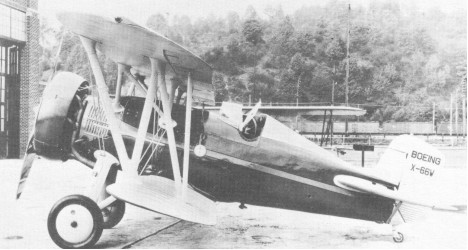
The Boeing Model 218 (XP-925H) was the prototype of the P-12E/F4B-3 series. With a 500 hp Pratt & Whitney Wasp engine the P-12E had a top speed of over 190 mph and a service ceiling of 27,000 ft fully loaded. One P-12E was fitted with a special cockpit enclosure and others had “Panama Conversion Kits” installed. Experimental test models included; XP-12G – turbo-supercharged Wasp engine and 3 blade propeller. XP-12H – basic P-12D with a geared Wasp engine instead of the usual direct drive. P-12L – engine test model. P-12J – engine test model. P-12K – P-12Es modified for fuel injection.
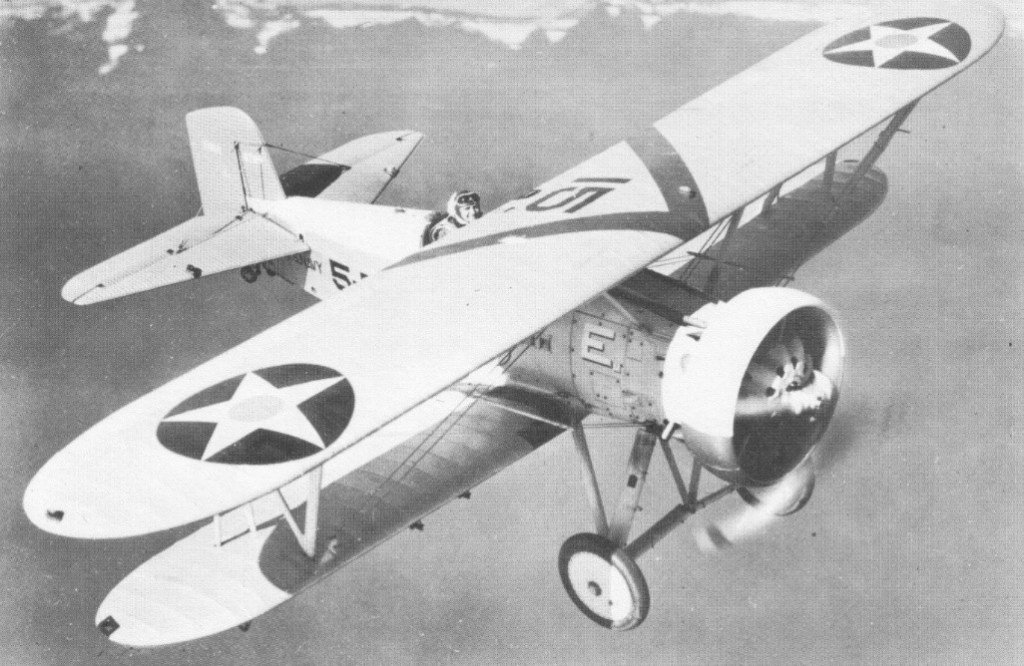
Forty-six F4B-2, delivered in early 1931, had the spreader-bar axle, a tailwheel, Frise ailerons and a neat ring cowling for the engine. They were followed by 21 F4B-3 with a semi-monocoque metal fuselage and 92 F4B-4 which differed by having a larger fin and rudder.
F4B-2 USN
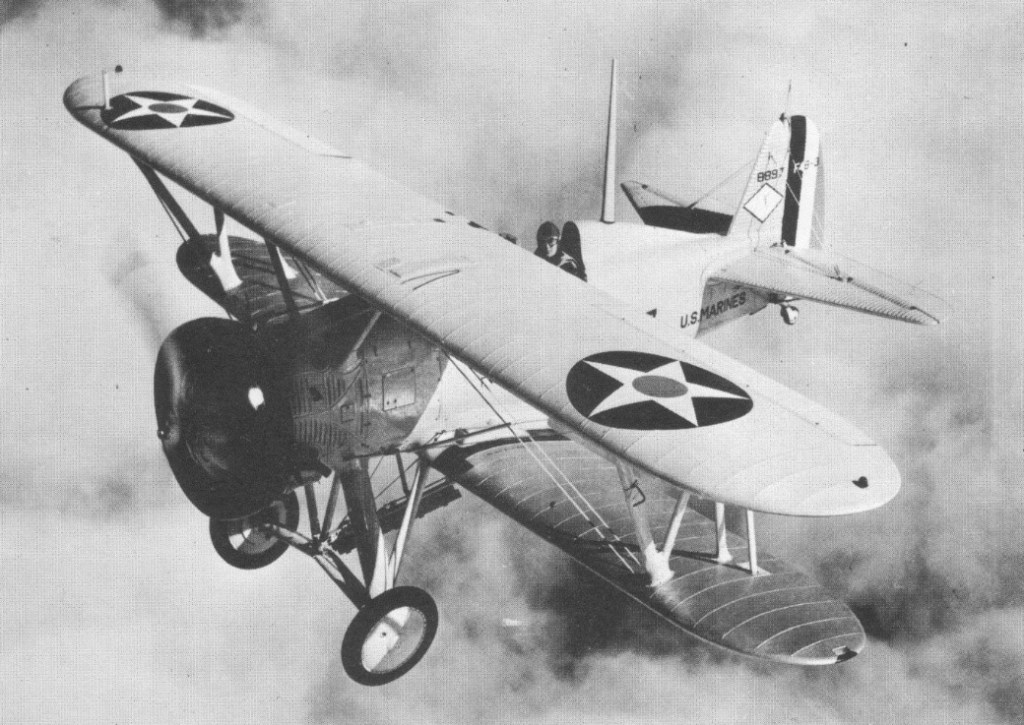
The F4B-3 and P-12E were identical except for the carrier hook, cabane wire, and double row of rivets, and a tall radio mast on the F4B-3. The F4B-4 served the US Navy and US Marines.
F4B-3 Marines
The Navy bought 94 F4B-4s, 21 going to the Marine Corp to operate from land bases.
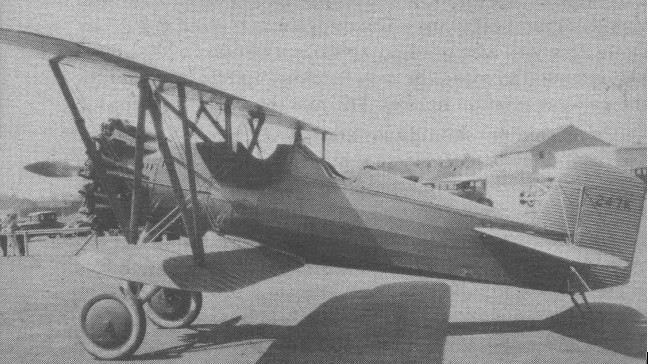
The Boeing 100 of 1929 was an ATC’d civil version of the P-12 built as a sport plane and for export. They were lighter in weight and the early models resembled the P-12B in appearance. Seven were built and owners included Howard Hughes, Art Goebel, Tex Rankin and Paul Mantz, as well as several foreign governments. Howard Hughes one was delivered as a two-seater as Model 100-A. Hughes soon had it reconverted to one seat, and it survived as such until 1958.
Model 100-A
It was reported in September 1956 that the sole Boeing 100-A, N247K, crashed at Dallas, USA, killing the owner -pilot, Robert Hallbeck. Hallbeck was rolling the machine at about 3000 ft when one of the wings collapsed, and although he was wearing a parachute he was unable to jump clear.
The Japanese imported a civil Boeing 100 and two Boeing 100Es were exported to Siam in September 1931.
Boeing 100E
One Boeing 100E survives on display at the Kings Museum, Bangkok, Thailand. Fourteen F4B-4s were exported to Brazil before World War 2. A total of 554 in the P-12 – F4B series were built, 110 of which were P-12Es. The one surviving P-12E is on display in “The Air Museum”, Ontario International Airport, Ontario, Canada.
Boeing 100E
P-12/F4Bs saw service in Panama, Hawaii and the Phillipines. A few went to China and one of them was the first American made plane to shoot down a Japanese plane in combat prior to World War 2. Two F4B-4 Navy aircraft were released to the CAA Air Safety Board during the early 1930s. Later sold to private buyers, they were used in many pre-war and post-war airshows. One was owned by Hyland Flying Service, Rochester, New York, was later acquired by the Smithsonian Institute and placed on loan to the Navy Museum, fully restored.
75% replica: Reid Boeing P-12E Aero-Tech Boeing F4B-2/P-12C
Boeing F4B / P-12 Engine: 1 x Pratt & Whitney R-1340-D Wasp Length: 20.08ft (6.12m) Width: 29.99ft (9.14m) Height: 9.32ft (2.84m) Empty Weight: 2,355lbs (1,068kg) Maximum Take-Off Weight: 3,611lbs (1,638kg) Maximum Speed: 188mph (303kmh; 164kts) Maximum Range: 370miles (595km) Rate-of-Climb: 1,666ft/min (508m/min) Service Ceiling: 26,903ft (8,200m) Armament: 2 x 7.62mm machine guns Accommodation: 1
Variants:
Boeing 83 / XF4B-1 Number built: 1 Serial number / Registration: 8129 First flight: 25 June 1928 Bought by Navy 19 June 1929.
Boeing 89 / XF4B-1 Number built: 1 Serial number / Registration: 8128 First flight: 7 August 1928 Bought by Navy 19 June 1929.
Armament: 500 lb bomb
Boeing 99 / F4B-1 Number built: 27 Serial number / Registration: 8130-8156 First flight: 6 May 1929 Production version of 89. Navy sn8133 converted to executive model.
Boeing 100 Number built: 4 Serial number / Registration: NS-21, NC872H, C873H, NC874H First flight: 18 October 1929 Civil version of 83/89.
Boeing 100A Number built: 1 Serial number / Registration: 247K First flight: 26 July 1929 Howard Hughes 2 seat version.
Boeing 100E Number built: 2 Serial number / Registration: First flight: Siam P-12E export version.
Boeing 100F Number built: 1 Serial number / Registration: X10696 First flight: 20 June 1932 Civil P-12F testbed for Pratt & Whitney.
Boeing 101 / XP-12A Number built: 1 Serial number / Registration: 29-362 First flight: 10 May 1929 Destroyed in mid-air collision.
Boeing 102 / P-12 Number built: 9 Serial number / Registration: 29-353 – 29-361 First flight: 11 April 1929 83, 89 Army version.
Engine: Pratt & Whitney R-1340 Wasp, 450 hp Top speed: 171 mph Ceiling at MAUW: 29,000 ft
Boeing 102B / P-12B Number built: 90 Serial number / Registration: 29-329 – 29-341, 29-433 – 29-450, 30-29 – 30-87 First flight: 12 May 1930
Engine: Pratt & Whitney R-1340 Wasp, 317kW
Boeing 218 / XP-925 Number built: 1 Serial number / Registration: X66W First flight: 29 September 1930 Army revised P-12B, prototype P-12E & F4B-3.
Engine: Pratt & Whitney R-1340 Wasp, 500 hp Top speed: 190+ mph Service ceiling at MAUW: 27,000 ft
Boeing 222 / P-12C Number built: 96 Serial number / Registration: 31-147 – 31-229, 31-230 – 31-242 First flight: 31 January 1931 131 ordered, last 35 built as P-12D.
Engine: Pratt & Whitney R-1340 Wasp, 391kW / 550 hp
Boeing 223 / F4B-2 Number built: 46 Serial number / Registration: 8806, 8613-8639, 8791-8809
Engine: Pratt & Whitney R-1340 Wasp, 391kW / 550 hp
Boeing 227 / P-12D Number built: 35 Serial number / Registration: 31-243 – 31-277 First flight: 2 March 1931 Improved P-12C, last 35 P-12C built as P-12D.
Engine: Pratt & Whitney R-1340 Wasp, 391kW / 550 hp Top speed: 188mph
Boeing 234 / P-12E Number built: 110 Serial number / Registration: 31-553 – 31-586, 32-1 – 32-76 First flight: 15 October 1931 Production 218 models, 1 converted to P-12J, 7 to P-12K.
Engine: Pratt & Whitney R-1340E Wasp, 391kW / 550 hp, 500 hp at 6000 ft Engine compression ration: 6:1 Overall span (Upper): 30 ft Length: 20 ft 4 11/16 in Height: 8 ft 9 in Airfoil section: Boeing 106 Total wing area: 227.5 sq.ft Upper wing span: 30 ft Upper wing chord: 60 in Upper wing diherdral: 0 degs Upper wing area: 141.4 sq. ft Lower wing span: 26 ft 4 in Lower wing chord: 45 in Lower wing diherdral: 2 degs Lower wing area: 86.1 sq. ft Empty weight: 1981.5 lb Fuel: 300 lb Wing loading: 11.75 lb/sq.ft Loaded weight: 2674.3 lb Landing speed; 59 mph Cruise speed: 167 mph Max speed: 190 mph Range at cruise: 475 miles Armament: 2 x .30 Browning 30M mg or 1 x .30 mg and 1 x .50 mg, and 2 x M-3 bombs
Boeing 235 / F4B-3 Number built: 21 Serial number / Registration: 8891-8911 Production 218 models.
Engine: Pratt & Whitney R-1340D Wasp, 391kW / 550 hp Speed: 187 mph at 6000 ft Empty weight: 2200 lb Armament: 2 x .30 Browing mg or 1 x .30 and 1 x .50 cal mg
Boeing 235 / F4B-4 Number built: 92 Serial number / Registration: 8912-8920, 9009-9053, 9226-9263 Improved F4B-3, larger tail. 14 to Brazil.
Engine: Pratt & Whitney R-1340D Wasp, 500 hp Speed: 187 mph at 6000 ft Empty weight: 2312 lb Armament: 2 x .30 Browing mg or 1 x .30 and 1 x .50 cal mg
Boeing 251 / P-12F Number built: 25 Serial number / Registration: 31-77 – 31-101 Improved P-12E.
Engine: Pratt & Whitney R-1340-19 Wasp, 447kW / 550 hp Top speed: 195 mph Ceiling: 32,000 ft
Boeing 256 / “1932” Number built: 14 Export F4B-4s from Navy order to Brazil.
Boeing 267 / F4B-3 / P-12E Number built: 9 F4B-3 fuselage, P-12E wings. Light export model to Brazil.
XP-12G turbo-supercharged Wasp engine and 3 blade propeller.
XP-12H basic P-12D with a geared Wasp engine instead of the usual direct drive.
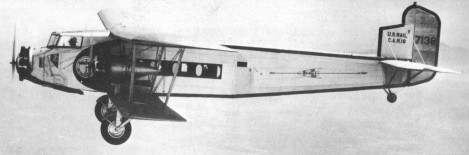
The growth of operations on Boeing Air Transport’s San Francisco-Chicago route resulted in the design and development of a purpose-designed passenger transport, the Boeing Model 80, first flown during August 1928. A large unequal-span biplane, with the lower wing of reduced chord, the Model 80 had a wing structure of wood, fabric-covered, and a fuselage and tail unit of welded steel tube, also fabric-covered. Landing gear was of fixed tailwheel type, and power was provided by three 306kW Pratt & Whitney Wasp radial engines. These were mounted in tri-motor configuration, one in the fuselage nose, and one each side of the fuselage, between the biplane wings. The main cabin of the Model 80 accommodated 12 passengers, plus a flight stewardess. Boeing stewardesses were all registered nurses. The Model 80 provided a separate enclosed flight deck for the pilot and co-pilot/navigator. Four of these aircraft were built, entering service with Boeing Air Transport in the late summer of 1928.
The Model 80s were followed by 10 of the improved Model 80A, this type having more powerful Pratt & Whitney Hornet engines, refinements to the wing, improved streamlining and, because of the increased power available, a cabin layout to accommodate a maximum of 18 passengers.
80A
Some pilots insisted on an open cockpit. One Model 80 was re-designed as the Model 80B with open cockpit and raised seats.
80B
The 80B was rebuilt to 80A configuration at the insistence of the majority.
Boeing 80 Engines: 3 x Pratt & Whitney Wasp, 306 kW Passengers: 12
Boeing 80A-1 Engines: 3 x 391kW Pratt & Whitney Hornet radial piston Take-off weight: 7938 kg / 17500 lb Empty weight: 4800 kg / 10582 lb Wingspan: 24.38 m / 79 ft 12 in Length: 17.22 m / 56 ft 6 in Height: 4.65 m / 15 ft 3 in Wing area: 113.34 sq.m / 1219.98 sq ft Max. speed: 222 km/h / 138 mph Cruise speed: 201 km/h / 125 mph Ceiling: 4265 m / 14000 ft Range: 740 km / 460 miles Passengers: 18


 All Aero