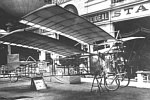
The 1911 Bulot tractor biplane was designed and built by Walter Bulot.
The 1911 Bulot tractor biplane was designed and built by Walter Bulot.
In 1925-1927 Alfred V. Verville produced the Buhl-Verville Airster two-seat biplane.
On March 29, 1927, the Aeronautics Branch issued Aircraft Type Certificate No. 1 to the Buhl Airster C-A3, a three-place open biplane. The plane had an empty weight of 1,686 pounds and its engine had a horsepower rating of 200. By the end of fiscal year 1927, the total of aircraft type certificates issued had reached nine.
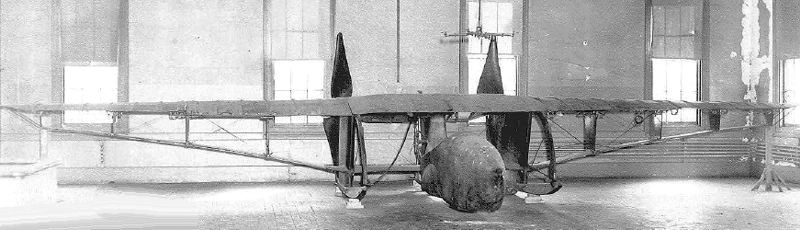
Charles Morgan Olmsted grew up in Buffalo, New York and became interested in aviation at a very early age. In 1895, when he was only fourteen, he built a glider of his own design. After attending college and getting his degree in astrophysics in Germany, he began work on a radical new propeller design (Glenn Curtiss proclaimed it to be “The finest and most efficient I have ever seen). In 1910 he joined the Buffalo-Pitts Company and began work on a biplane that featured a “monocoque” fuselage built of moulded, laminated birch, chrome-vanadium steel, and aluminium sheet. The motor and the two propellers were mounted behind the wings, pusher style. Unfortunately, in 1912, before the plane could be completely finished, the Buffalo Pitts Company went bankrupt. The nearly finished biplane went into storage and was eventually (after the wings had been sawed off to get it out of storage) donated to the Smithsonian Institution where it has remained awaiting restoration.
The 1910 Bueno et Demaurex pusher biplane, designed by Bueno and Demaurex in France. built by Avia. Featured two propellers on outriggers.
Span: 49’2″
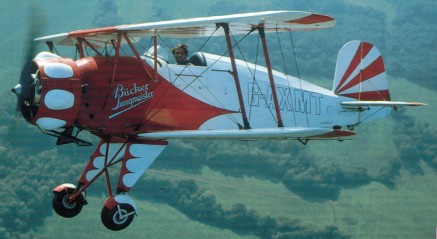
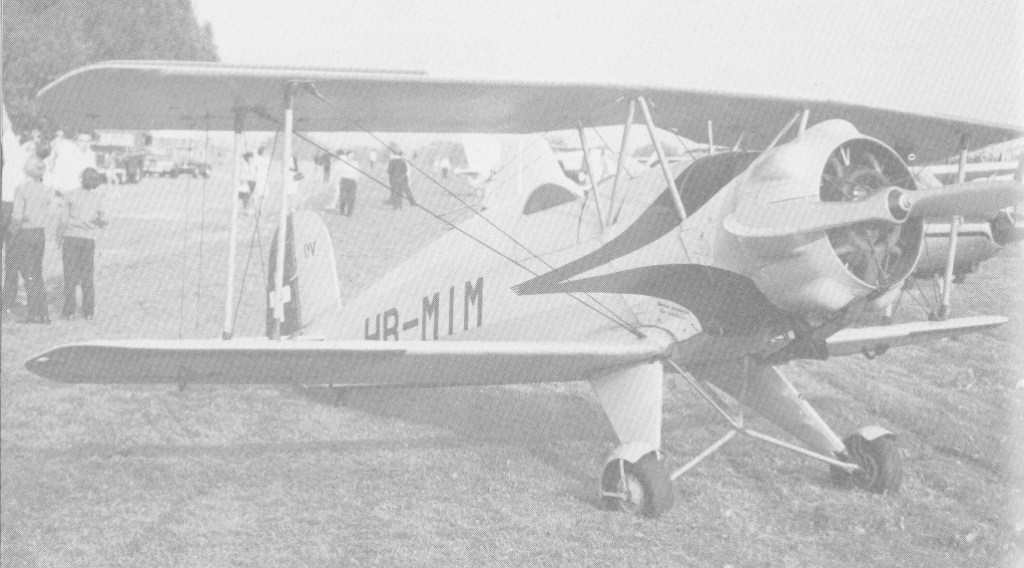
The success of the Jungmann led Bucker to open a second factory where a single-seat derivative could be produced in parallel with the original two-seater. The single-seater was the Jungmeister (young champion) advanced trainer, essentially a scaled-down Jungmann. First introduced in 1935, quickly developed an international reputation for its outstanding aerobatic capabilities.
Bucker Bu-133 Jungmeister Article
The initial Bu 133A had the 101-kW (135-hp) Hirth HM 6 inline but better performance than the higher-powered Bu 131. Quantity production was undertaken for the Luftwaffe, though precise details are lacking. The Bu 133B export version was produced to the extent of some 100 aircraft by Dornier in Switzerland and CASA in Spain with the 119-kW (160-hp) Hirth HM 506 inline. The definitive version, however, was the Bu 133C with a radial engine: this had excellent agility and performance, and was used as a fighter lead-in trainer as well as for advanced flying training. This model too was built in Switzerland and Spain.

The Bu 133 was built be Construcciones Aeronauticas S.A. in Spain for the Spanish Air Force under the designation ES-1, and 47 were built in Switzerland by the former Dornier-Werke for the Swiss Air Force.
In 1968, the Aero Technik Canary in Munich, Germany, began production of the BU-133 D-1, also called the Jungmeister. Its engine is a remanufactured Siemens-Halske Sh-14A4; however, due to this engine’s limited availability and demand for more power, a new version, the BU-133F, was built by Wolf Hirth GmbH with a 220 hp Franklin engine.
The Bu-133D-1 is basically as the Bu-133C but engine, optimised for constant inverted flight, Goodyear tyres, wheels and brakes, and US instruments.
Bucker Prado Sl offered kits to build the former German Jungmann two-seat aerobatic biplane using original Bucker/CASA Bu 131 jigs, plus Jungmeister single-seat aerobatic biplane.
Bu 133A
Engine: Hirth HM 6 inline, 101-kW (135-hp)
Bu 133B
Engine: Hirth HM 506 inline, 119-kW (160-hp)
Bu 133C Jungmeister
Engine: l x Siemens Sh 14A-4, 119kW (160hp)
Span: 6.6m (21 ft 7.75in)
Length: 6m (l9ft 8.25 in)
Empty weight: 420 kg / 925 lb
Max T/O weight: 585 kg (1,290 lb)
Max speed: 134 mph / 116 kt / 215 kph at sea level
Max cruise: 108 kt / 124 mph / 200 kph
Climb to 3300 ft / 1000m: 2 min 50 sec
Service ceiling: 19,685 ft / 6000 m
Operational range: 311 mi / 269 nm / 500 km
Optional fuel: 8.6 ImpGal / 39 lt
Bu 133 D-1
Engine: Siemens Sh-14A-4 Bramo, 158 hp
Length: 19.751 ft / 6.02 m
Height: 7.71 ft / 2.35 m
Wingspan: 21.654 ft / 6.6 m
Wing area: 129.168 sq.ft / 12.0 sq.m
Max take off weight: 1411.2 lb / 640.0 kg
Weight empty: 992.3 lb / 450.0 kg
Max. weight carried: 419.0 lb / 190.0 kg
Max. speed: 113 kts / 210 km/h
Initial climb rate: 1082.68 ft/min / 5.5 m/s
Service ceiling: 12467 ft / 3800 m
Wing load: 10.87 lb/sq.ft / 53.00 kg/sq.m
Range: 205 nm / 380 km
Endurance: 2 h
Crew: 1
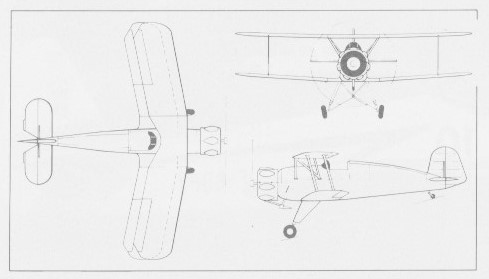
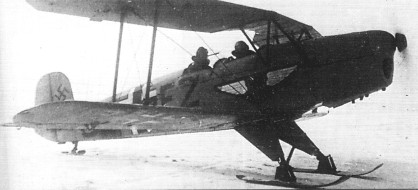
Bücker Flugzeugbau first design, designed by Anders Andersson, was the Bü.131A Jungmann powered by a 4 cylinder Hirth in line engine. A light two-seat biplane trainer specially developed for school and other training purposes, the prototype “D-3150” flew first 27 April 1934 with a 60-kW (80-hp) Hirth HM 6CR inline engine. The Jungmann was ordered by the Deutsche Luftsport Verband (The German Air-Sports Association). In 1936, the Luftwaffe adopted the Jungmann as one of its primary trainers.
Bucker Bu-131 Jungmann Article
Power was provided by a 60kW Hirth H.M.60R engine in the Bü.131A and a 78kW Hirth H.M.504A inverted engine in the Bü.131B.
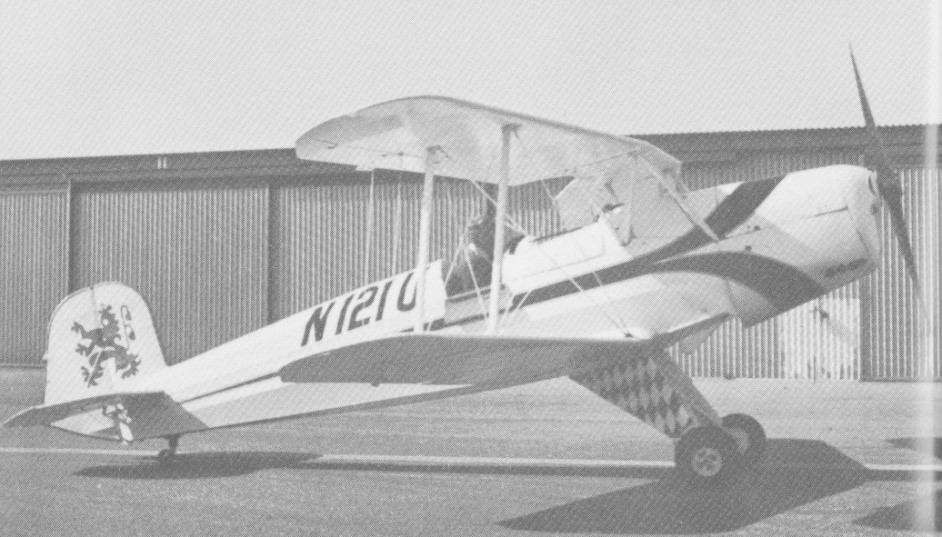
Before the outbreak of World War II the trainer was being used in 21 countries and licence-built in Holland, Czechoslovakia, Spain and Switzerland.
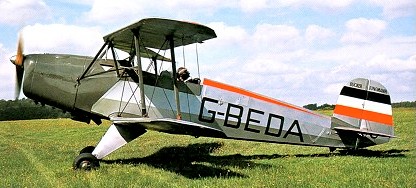
Spain was one of the earliest customers. Over a hundred German-built Jungmanns were delivered to the Spanish Nationalist side in the civil war. A total of 500 Jungmanns were built by the Construcciones Aeronauticas S.A. (CASA) in Spain. The first 200 had German Hirth HM504 engines but the remainder were powered by versions of the Spanish ENMA Tigre G-IV. In Spain production started 1938 and the CASA I-131 remained in production until the end of the fifties. The CASA E3B is a licence-built example.
Some 1,254+ were built in Japan by Watanabe and Kyushu as the army’s Kokusai Ki-86A (1,037) and the navy’s K9W1 Momiji (Maple) (217+). Later models had 110 hp Hitahi Ha.47 engines. The code name was Cypress, applied to both the Navy Type 2 Momiji and Army Type 4.
The prototype was originally delivered to Japan in 1939, and Navy production began in August 1941.
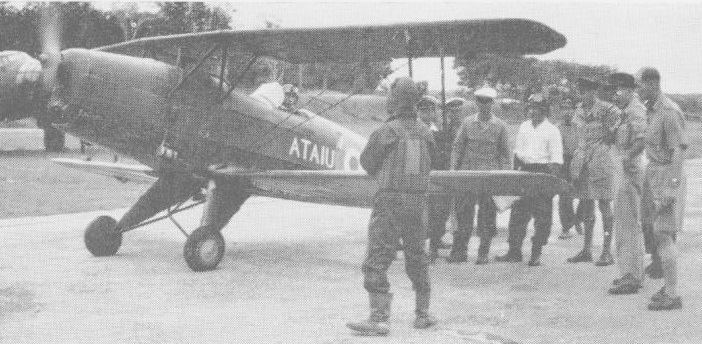
Production figures have not survived, but some indication of scale is provided by the fact that Hungary took 100 and Romania 150, while Switzerland built 75. The Bucker Bü.131B Jungmann was also built under license pre-war in Switzerland by Dornier, and Czechoslovakia as the Tatra T.131. In Czechoslovakia the post-war version of the Bu.131B was the C.4. The C.104 was as the C.4 but with a 105 hp Walter Minor 4-III engine.
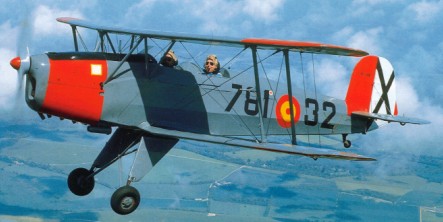
Bucker Prado Sl offered kits to build the former German Jungmann two-seat aerobatic biplane using original Bucker/CASA Bu 131 jigs, plus Jungmeister single-seat aerobatic biplane.
Bu 131A
Engine: 1 x Hirth HM60R, 59kW / 80 hp
Max Take-off weight: 630 kg / 1389 lb
Empty weight: 280 kg / 617 lb
Wingspan: 7.4 m / 24 ft 3 in
Length: 6.7 m / 21 ft 12 in
Height: 2.3 m / 7 ft 7 in
Wing area: 13.5 sq.m / 145.31 sq ft
Max. speed: 170 km/h / 106 mph
Cruise speed: 150 km/h / 93 mph
Ceiling: 3500 m / 11500 ft
Range w/max.fuel: 680 km / 423 miles
Crew: 2
Bu 131B
Engine: Hirth HM 504 A-2, 104 hp, 78kW
Wingspan: 24 ft 3.25 in / 7.4 m
Wing area: 145.314 sq.ft / 13.5 sq.m
Length: 21 ft 8in / 6.62 m
Height: 7.776 ft / 2.37 m
Max take-off weight: 1477.4 lb / 670.0 kg
Weight empty: 882.0 lb / 400.0 kg
Max. weight carried: 595.4 lb / 270.0 kg
Max. speed: 93 kts / 173 km/h / 114mph at sea level
Initial climb rate: 748.03 ft/min / 3.8 m/s
Service ceiling: 11483 ft / 3500 m
Wing load: 10.25 lb/sq.ft / 50.0kg/sq.m
Range: 216 nm / 400 km
Endurance: 3 h
Crew: 2
Ki-86
Engine: Hatsukaze, 110 hp
No built: 1037
K8W1
Tatra T-131
CASA Bu.131
Engine: Hirth HM504
CASA Bu.131
Engine: ENMA Tigre G-IV
C.4
C.104
Engine: Walter Minor 4-III, 105 hp

The 1910 Brunet Tandem biplane was designed and built by Brunet in France.
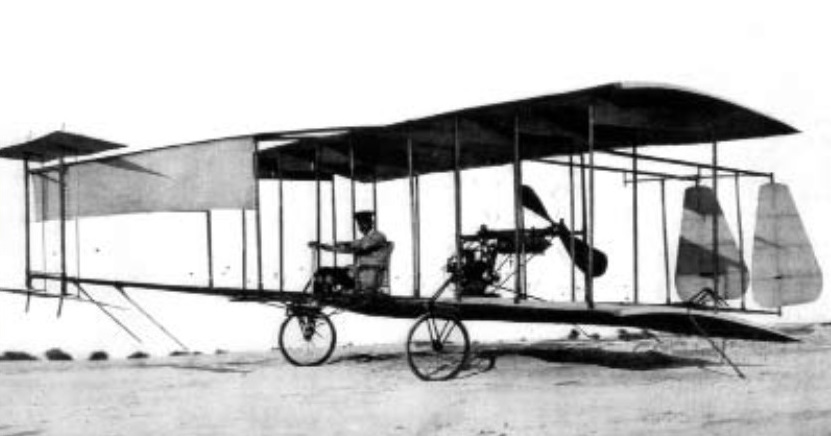
Juan Olivert, in company with his friend and engineer Gaspar Brunet, undertook the building a biplane inspired by that of the Wrights, but also influenced by the French Farman and Voisin. Built in Barcelona in the workshops of Rosell y Vilalta, with dried ash and beech wood, Brunet’s airplane had a double helm front and a rear stabilizer tail, on which a double rudder was supported, since the plane lacked ailerons. The flight controls consisted of a lever topped by a bicycle handlebar for attitude control and pedals for steering. The throttle control was operated by cables attached to a lever. The engine that propelled it had to be a 25 HP Anzani.
On Sunday September 5, 1909 and with the assistance of the Mayor of Valencia, Mr. Maestre, as well as the designer of the plane, Mr. Brunet, Juan Olivert climbed onto the wicker chair, then started and proceeded to an engine test, which was followed by a check of the suitability on the ground. Then, the makeshift pilot put on power and the plane flew, rising tens of centimeters off the ground, according to the press the next day, and traveling between 30 and 50 meters, until when Olivert tried to modify the course of his flight to avoid carob trees, the plane suggested a loss of speed, immediately returning to earth, where an existing trench in the ground damaged one of the wheels, later spreading to various parts of the plane. This being the first flight made in Spain. As for the plane, there are indications that it was repaired and even went on to do some other flight.
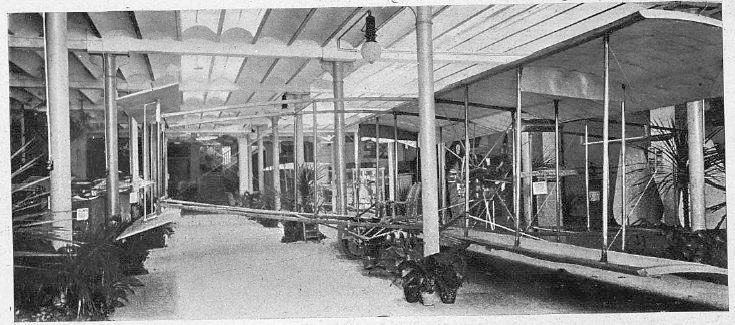
There’s at least one replica of the machine, at the Madrid “Museo del Aire”.
Engine: Anzani 25 HP
Wingspan: 10.50 m
Length: 7.50 m
Weight: 350 Kg
Total weight: 430 Kg
First flight: September 5, 1909
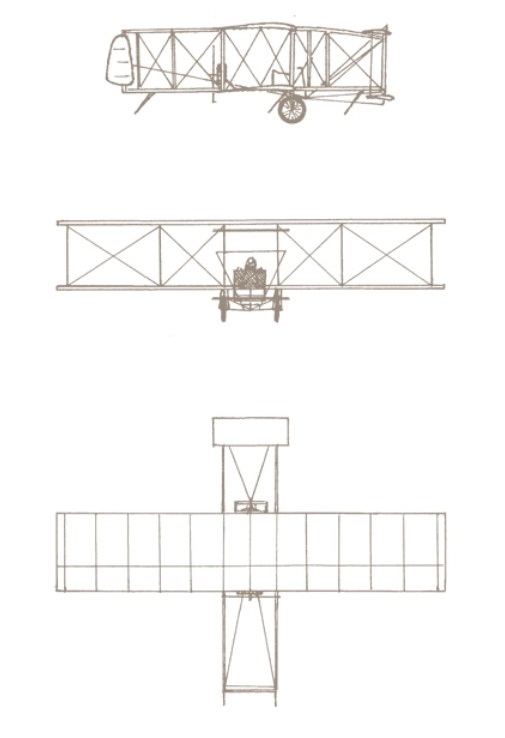
The Brunet-Olivert 1909 biplane was designed and built by G. Brunet y Viadera and J. Olivert in Spain.
The 1911 Brumarescu “Columba” (dove) 2-seater biplane was designed and built by Dumitru Brumerescu in Romania.
 All Aero