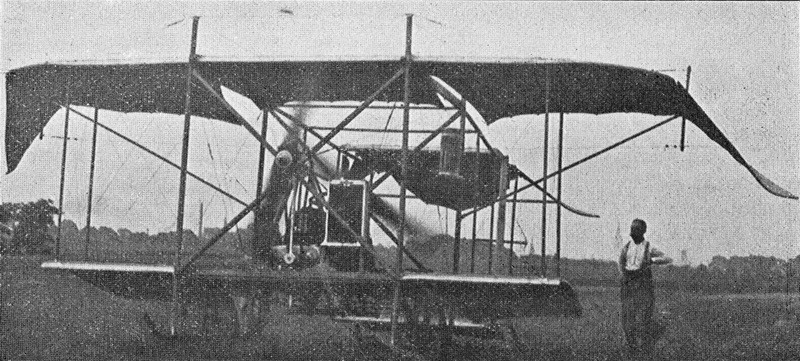
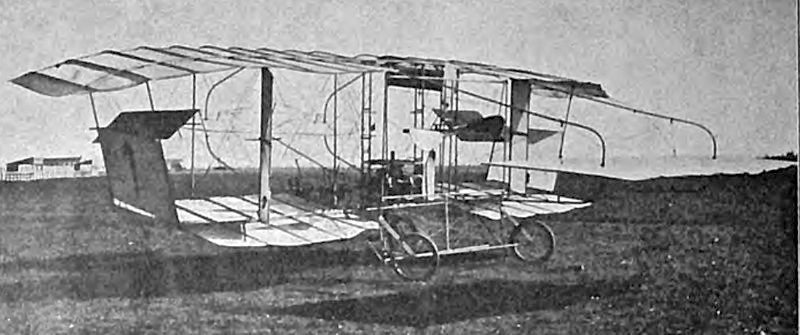
This 1912 design is claimed as the third design of Kommissar Hans von Klösterlein from Cologne (Cöln).
The design was built by the Condor Flugzeugwerft and according to Flugsport a 60 PS Basse & Salve engine was fitted. This is a single engine machine, where the engine drive two propeller – set on a rod fore and aft – via a chain.
The machine hopped or flew a little on the military exercise field on the Merheimer Heide in Köln-Merheim.
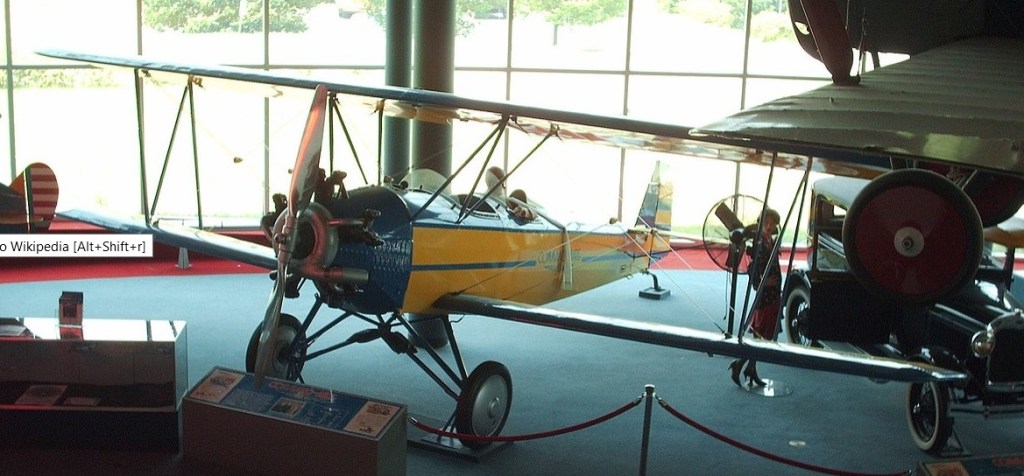
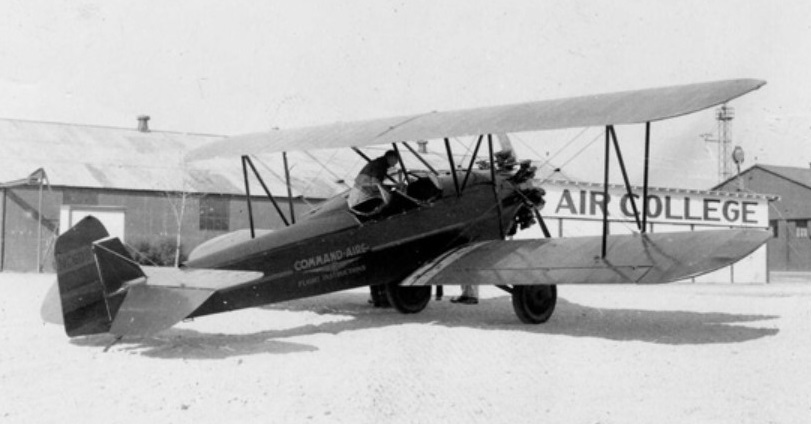
The Command-Aire did not at first appear to offer much of an advancement over the vast multitude of three seat biplanes built around the ubiquitous Curtiss OX-5 engine to similar designs, with similar dimensions and construction methods, many of which were already in production. The basic design was by Morton Cronk, and although it had excellent high altitude capabilities, it was slow. This setback nearly foundered the company before its first aircraft entered production.
Albert Vollmecke, a Heinkel engineer was in the US attempting to find a customer to build Heinkel HD 40 mailplanes under licence for the US market. Seeing that there was little prospect of any sales in the US, he decided to hire on with an American company, Command-Aire.
His first task was to rework the design to provide documentation for the new approval process. While there was only one major visible external difference, he undertook an extensive redesign based on his experience in the much more scientifically-grounded German aviation industry, and to bring the design into line with CAA (now FAA) certification requirements, which involved a lot of submissions, and alterations, and resubmissions before they signed off on it. Many parts had to be redesigned when it was easier to redo the design, than to use the existing design to calculate the necessary strength margins. The most obvious change was a switch from four small conventional ailerons at the tips to two slotted nearly full-span ailerons on the lower wing. This improved low speed control dramatically, allowing lateral control even after the aircraft had stalled – a novelty among American aircraft at the time, and a recurring advertising theme.
The second change was the incorporation of a Phylax fire suppression system capable of putting almost any fire out in flight. The third novelty was the use of a rotisserie type fuselage jig, that ensured accuracy and consistency between the airframes they built, reducing the chance of building an airplane that couldn’t be rigged to fly right. Although Command-Aire’s advertising claims that Vollmecke invented this, he claimed he merely brought the idea from Europe.
The fuselage was built from welded chromium-molybdenum alloy steel tubes, faired with wooden battens. The top of the fuselage was covered in large metal panels that could be readily opened to provide access, and a compartment for luggage was provided between the cockpits large enough for a suitcase.
The slightly staggered wings were built around solid spruce spars, with spruce and plywood warren truss type ribs. The wings were braced with cables.
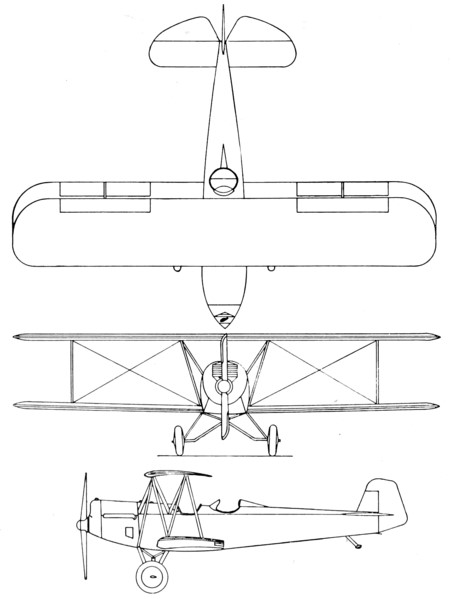
The ailerons and the entire empennage were also built from chromium-molybdenum alloy steel tubing, and all controls were actuated through pushrods and bellcranks, with no cables or pulleys used. The ailerons on the prototype were conventional, however on production variants, they extended across nearly the full span on the lower wings only, and had a slot that allowed air to flow over the aileron at low airspeeds and high angles of attack, which helped ensure lateral control even after the wings had stalled. These were not Frise-type ailerons though, but conventional ailerons with a slot at the hinge line.
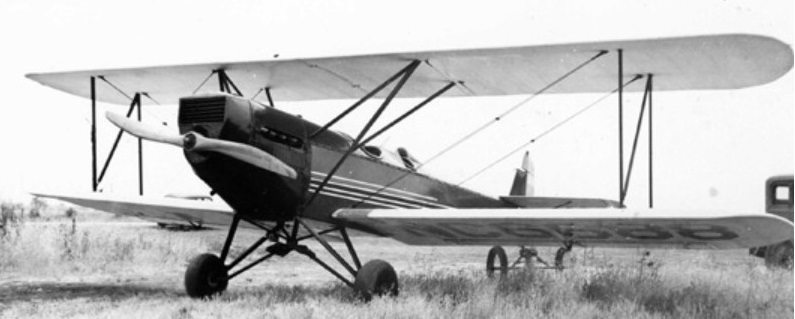
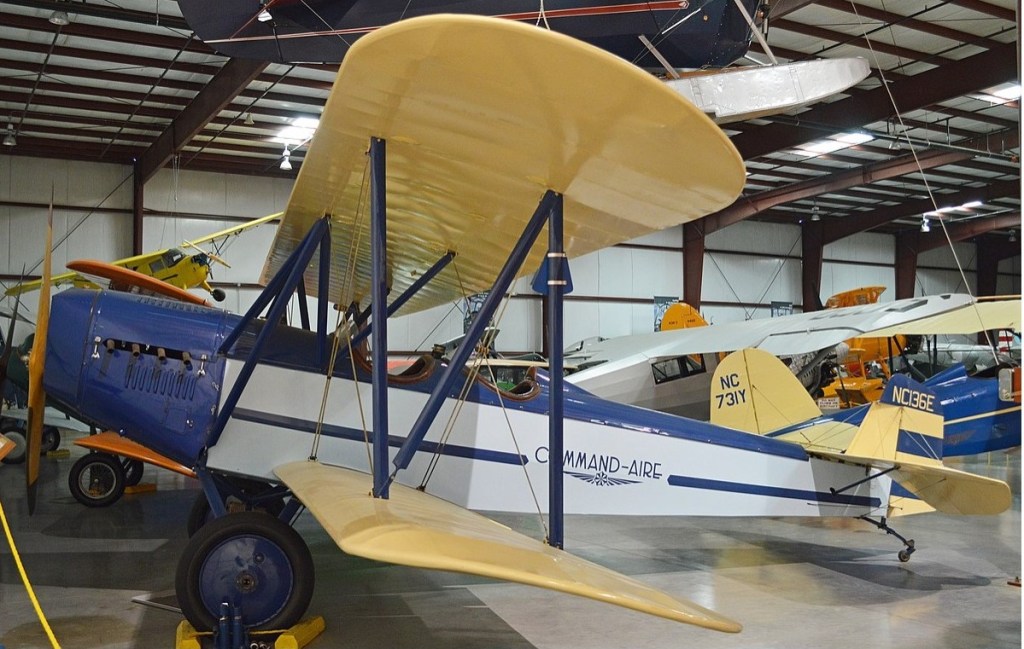
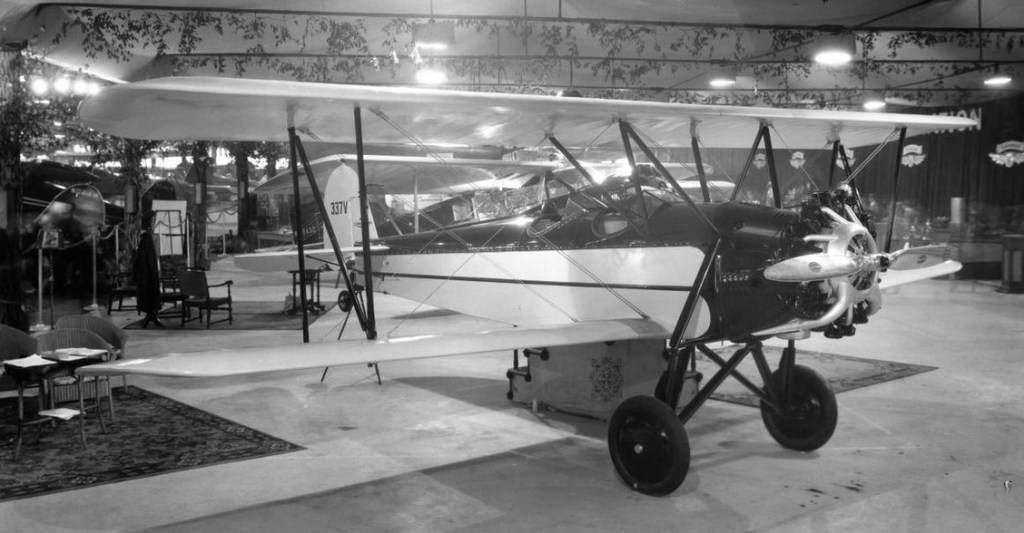
The undercarriage was a split axle type, braced to a steel tube four point pyramid that extended from the belly of the aircraft, with suspension provided with bungee cords which were protected by leather boots. Both cabane and interplane struts took the form of an N and were steel tubing as well. The 3C3 can be distinguished from later types by having an additional strut providing lateral bracing from the forward strut anchor point on the wing, to the lower longeron at the firewall, triangulating the structure. The 4C3 and later types dispensed with this extra strut, and coincided with an extensive redesign that otherwise had few external differences.
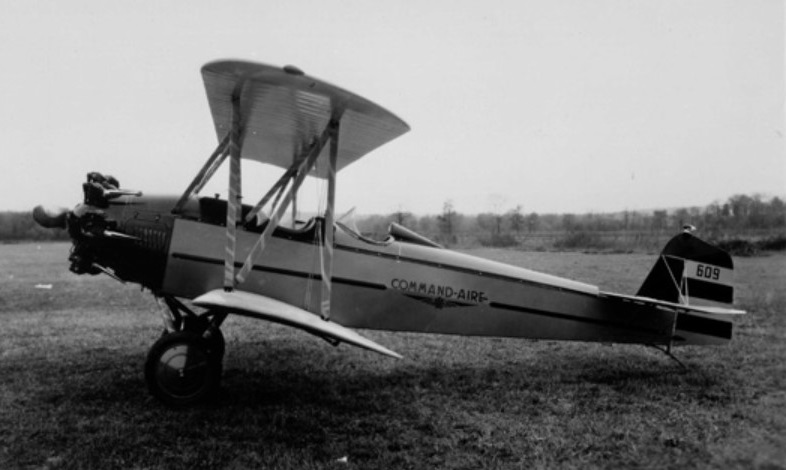
The 3C3 first flew in January 1928 and received certification in July 1928.
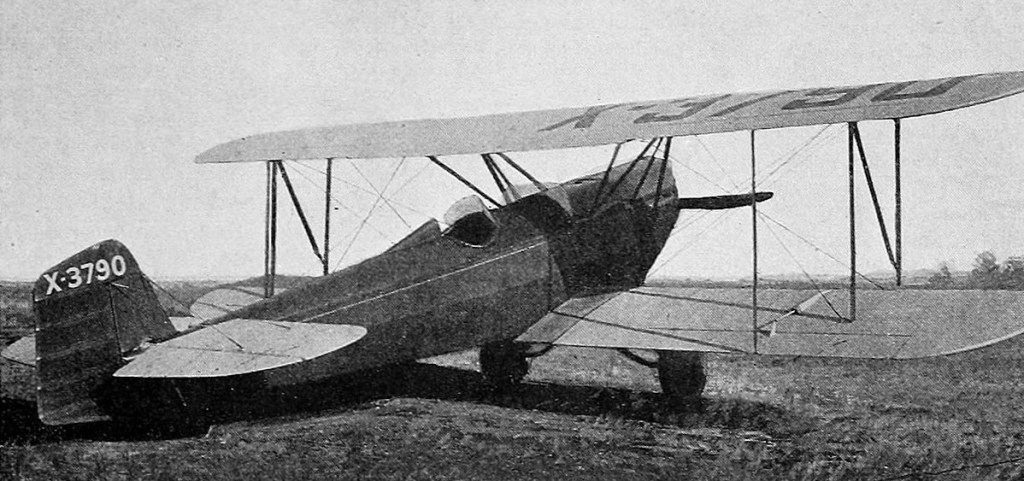
Command Aire 3C3 prototype from Aero Digest, February 1928
While normally a three-seat design, those aircraft with a T in the designation were built as two-seat trainers specifically for flight instruction, and a crop-dusting version was also sold, with the space in the front cockpit being filled with a large hopper, and the fuel tank relocated to the wing centre section. At least 17 of these were built, with others converted from other variants.
The 3C3 was one of the most pleasant and stable aircraft of the 1920’s. In the companies “hands off” flight demonstration, the fearless pilot would climb out of the cockpit and straddle the turtle deck like a horse while the aircraft cruised the skies, this proved a quite effective sales technique. He turned the aircraft by leaning in the desired direction.
Command-Aire 3C3 NC6688 msn 513 showing salient characteristics, including triangulated cabane that was simplified on later models
The 3C3 is similar in construction to most aircraft of the period and used a war surplus OX-5 engine. One of the notable features was the metal cowls, cockpit and turtle deck which made half the aircraft metal covered–not fabric covered. The aircraft was controlled by push-pull tubes and bell cranks, there were no wires, cables or pulleys.
In another publicity stunt, a flight of over 100 mi (160 km) from San Diego to Los Angeles was made without once using the control stick as all control inputs were through the rudder pedals.
In 1929, the government decided to allow aerobatics (known as stunting at the time), during the Annual Arkansas Air Tour being held in 1929 and so a team of three Warner-powered Command-Aire 3C3-As were formed as “The Blue Devils”, but painted incongruously in black and orange stripes.
The 3C3 sold for $5500 in 1929.
The BS-14 and BS-16 (BS standing for Biplane sport) were the final developments, and again featured extensive redesign work, but once again with few visible external alterations. The rudder was redesigned, and a new and promising engine was added to the lineup – the Lycoming R-680. On the BS-16, the undercarriage was changed to the outrigger type and a tailwheel was provided in lieu of the skid used previously, while the rear seat was raised to improve visibility.
A variety of engines were installed during the life of the design, with the area ahead of the firewall being redesigned to accommodate lighter engines, with longer noses to maintain the correct balance.
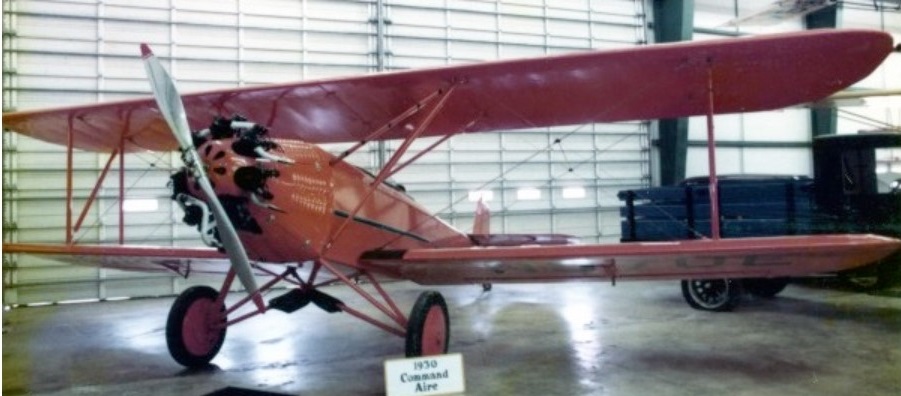
The problematic engine supply situation was well understood long before the last Curtiss OX-5 was installed in an airplane, and substantial efforts for alternatives were made. Simplicity and reliability were key, and the solutions invariably involved air-cooled radial engines, however the designs were not sufficiently developed, and there were many failures, and for various reasons. As a German, it was natural for Vollmecke to look to Germany, where some of the best designs were available, however two major problems surfaced. The first was that the supply of these engines was endangered by economic instability in Germany. The second was that the Command-Aire people were never able to get their engines to run right on the fuel available. Vollmecke suspected that the octane rating was too low, which caused knocking – potentially damaging the engine. Only 7 aircraft were built with the German radials. The Czechoslovakian Walter NZ-120 was even less successful, and only one was used. The most successful of the replacement engines with Command-Aire, was the Curtiss Challenger, despite its poor reputation elsewhere. Over 50 aircraft were fitted with this engine. Had the company continued in existence, then the Wright J6 and Lycoming R-680 that were only installed in a small number of airframes, would probably have eventually outsold the OX-5 as they did with other aircraft types.
A Challenger powered-Command-Aire 5C3 was entered into the Guggenheim Safe Aircraft Competition in 1929. The 3C3 was the last aircraft not specially designed for the contest to be eliminated, and would actually enter revenue service. It later succeeded on a repeat of the test that it was eliminated on.
The Command-Aire 5C3 was featured in the Berryloid advertising series for aircraft dope, each featuring a different fabric covered aircraft, and each aircraft painted as a different bird. This advert was from the November 1929 Aerodigest
5C3 NC925E
In 1929, Command-Aire contracted the Curtiss Flying Service to handle sales, through their large number of facilities, and Curtiss purchased a large number of aircraft for flight training for their own schools. Recognizing that the excessive number of aircraft companies in the aviation industry would force consolidation into a smaller number of larger companies, it had long been the intention to merge Command-Aire into a larger company even before the onset of the Great Depression forced matters. Negotiations had been underway for just such a merger – into Curtiss, at one time the largest aircraft manufacturer in the United States, however while negotiations were still underway, Curtiss’s financial problems forced it to merge with Wright Aeronautical. Unfortunately, Wright had themselves recently absorbed Travel Air, whose offerings included the Travel Air 2000 which was similar to the Command-Aire biplanes. Negotiations collapsed, and along with them, went the contracts for supplying the flying schools – and access to the sales network.
Command-Aire landed a by now much needed contract from the Chilean government to produce 36 3C3-BTs to be built at a specially-built facility in Chile, however no Command-Aires seem to have been either used in that country, either civil or military.
Only one example appears to have been exported, a 3C3 that went to Canada in 1931, where it went through a succession of private owners as CF-APQ, having previously been NC5590 in the US.
Produced 1928-1931a total of 184-254 (total for 3C3, 4C3, 5C3, BS-14 and BS-16) were built/
1928 ATC 53, 2-201 Engine: 90 hp (67 kW) Curtiss OX-5 Propeller: 2-bladed Wooden fixed pitch Upper wingspan: 31 ft 6 in (9.60 m) Upper chord: 60 in (1.5 m) Wing sweep: 0° Lower wingspan: 31 ft 6 in (9.60 m) Lower chord: 60 in (1.5 m) Wing area: 303 sq ft (28.1 m2) Airfoil: Aeromarine 2A Length: 24 ft 6 in (7.47 m) Height: 8 ft 4 in (2.54 m) Empty weight: 1,410 lb (640 kg) Gross weight: 2,200 lb (998 kg) Useful load: 790 lb (360 kg) Fuel capacity: 40 US gal (150 l; 33 imp gal) Oil capacity: 4 US gal (15 l; 3.3 imp gal) Maximum speed: 100 mph (160 km/h, 87 kn) Cruise speed: 85 mph (137 km/h, 74 kn) Minimum control speed: 36 mph (58 km/h, 31 kn) Range: 440 mi (710 km, 380 nmi) 116 built. Crew: One Capacity: Two Undercarriage track: 87 in (2.2 m)
3C3-A 1929 ATC 118 Engine: 110 hp (82 kW) Warner Scarab 20 built. 1 fitted with Edo floats.
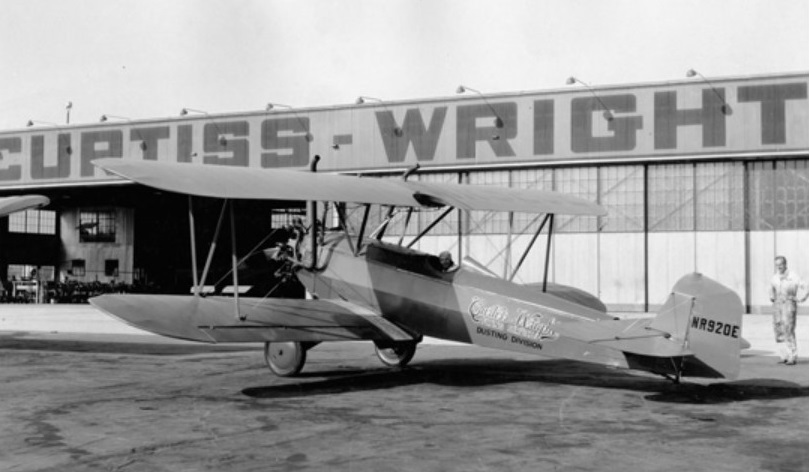
3C3-AT
3C3-AT N970E W-108
1929 ATC 151 2 seat trainer developed from 3C3-A about 6 built.
3C3-B 1929 ATC 120, 2-440 Engine: 105 hp (78 kW) Siemens-Halske Sh 12 5 built 1st possibly modified from 3C3 with a new c/n.
3C3-BT 1929 ATC 209 Engine: 113 hp (84 kW) Siemens-Halske Sh 14 2 seat trainer developed from 3C3-B. 2 built plus 1 converted from 3C3-B.
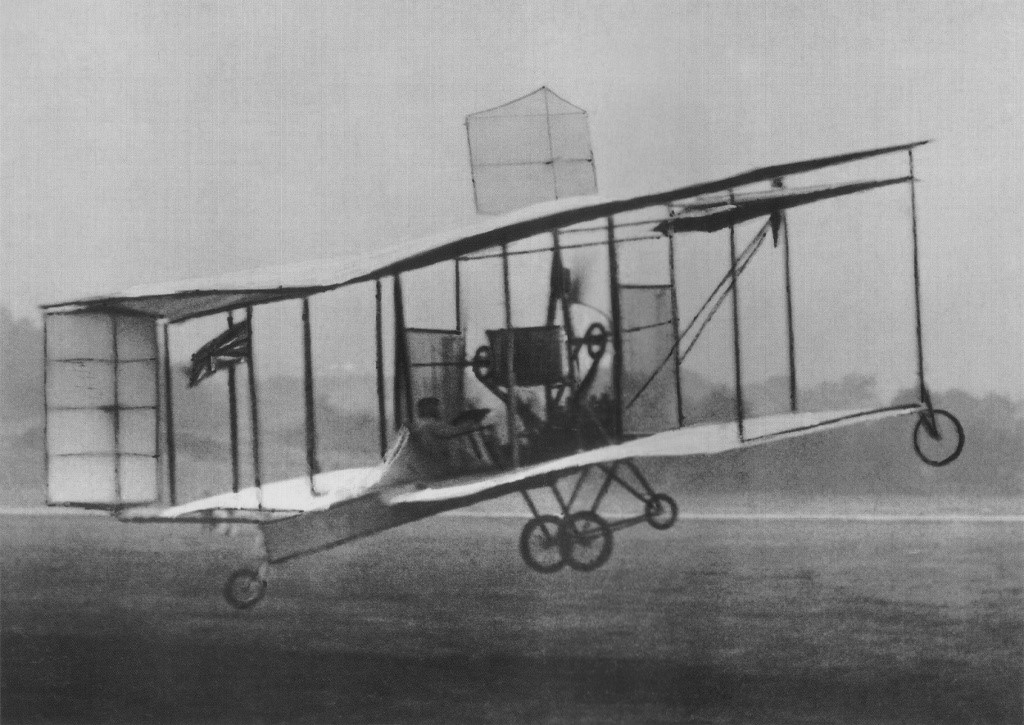
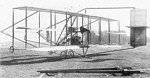
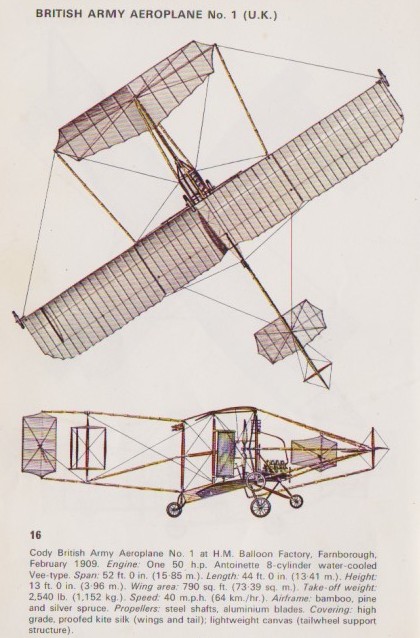
Using personal funds and a borrowed airship shed, Cody built a huge sturdy pusher biplane of 52 foot span, weighing 1,200 pounds. Size and strength were Cody trademarks; he was observed tying knots in bracing wires with his bare hands and was the only one able to spin the biplane’s 50 hp V8 to life. A reporter took one look and dubbed it “the Flying Cathedral.” The nickname stuck. While he had seen pictures of American and French machines, Cody saw no reason to alter his kite with an engine concept, which, by the way, he carried entirely in his head. There were no blueprints or lists of materials because Cody had never learned to read and write. (He eventually mastered a huge “S.F. Cody” for official paperwork, holding the pen like a trowel.) The finished product included a shock-mounted landing gear with steerable tailwheel, ground adjustable wing camber and propeller pitch plus ailerons, this being the first aircraft to use separate surfaces for banking. Cody did not invent ailerons, but he was the first to make practical use of them. Oddly enough, he abandoned them later in favor of wing warping. In the summer of 1908, Cody’s aircraft was towed to Laffan’s Plain, a rough, rolling pasture surrounded by trees. One up¬hill run to test the controls left a 234 foot gap in the tire tracks, a greater distance than the Wright’s first hop, but Cody dismissed it as “just a jump.” On October 16, with reporters watching, he gave it full throttle, rose quickly to 40 feet and flew 1,390 feet, crashing when he dragged a wingtip in an attempt to avoid some trees. The big man emerged from the pile of bamboo and linen bruised but smiling. The illiterate genius had become the first man to fly an airplane in England.
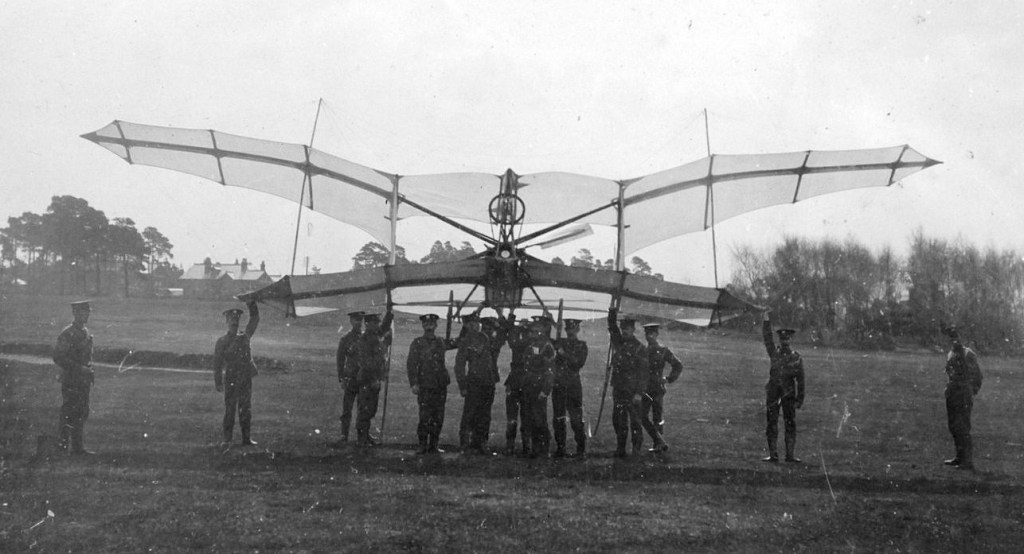
Winner of the 1912 War Office military trials at Salisbury Plain was Cody’s Cathedral, which collected a total of £5,000 prize money, but was clearly of no use to the newly formed Royal Flying Corps and was not put into production.
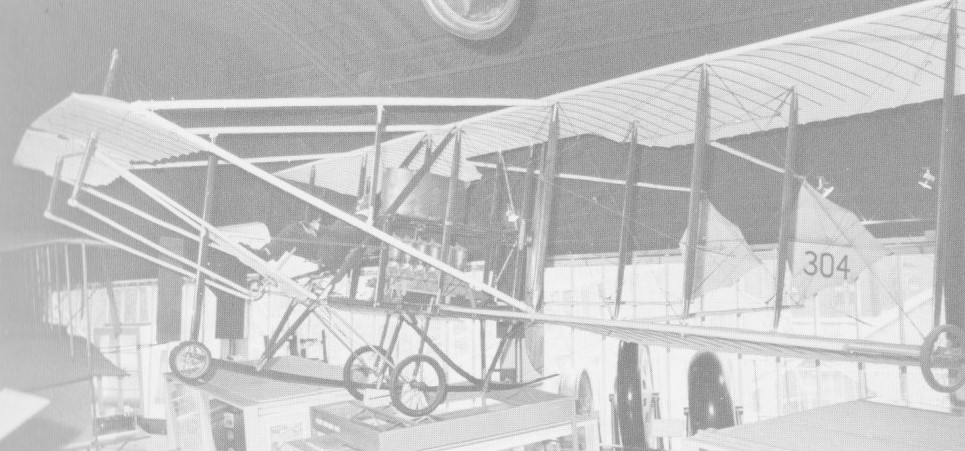
One example, built in 1912 at Farnbough, was similar in configuration to the 1911 Biplane and was again evaluated for military application. It was evaluated by the Army at Cambridge in September 192 and subsequently purchased. The Army number 304 was allocated.
304 at Science Museum, South Kensington
It was little flown and passed to the Science Museum in 1913.
Engine: Austro-Daimler, 120 hp. Span 43 ft Length 34 ft. 4 in Wing chord 5 ft. 6 in Wing area 430 sq. ft Weight, empty about 1,900 lb Weight loaded 2,680 lb Max. speed 73 mph. Stalling speed 48.5 mph Take off run 960 ft Range 336 miles.
Army 304 Engine: Austro-Daimler, 120 hp. Span 52 ft Length 44 ft Weight loaded 2,900 lb Max. speed 65 mph.
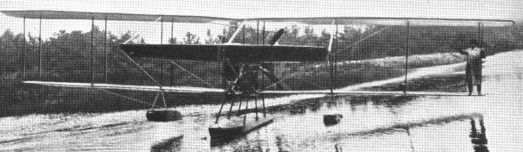
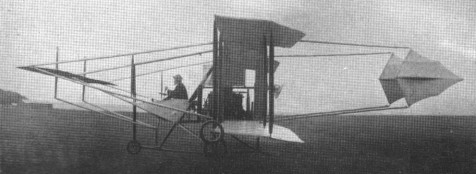
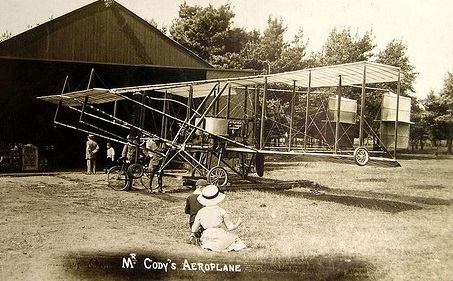
The next step was to build a full size piloted version of the glider. In December 1907, Cody began to build his first biplane at Farnborough, and since Nulli Secundus was rebuilding (to emerge as Nulli Secundus II the following summer) he was allowed to use her 50 h.p. Antoinette engine to power the machine of bamboo and wire. He arranged it to drive two pusher propellers; the result looked something like the Wright biplane.
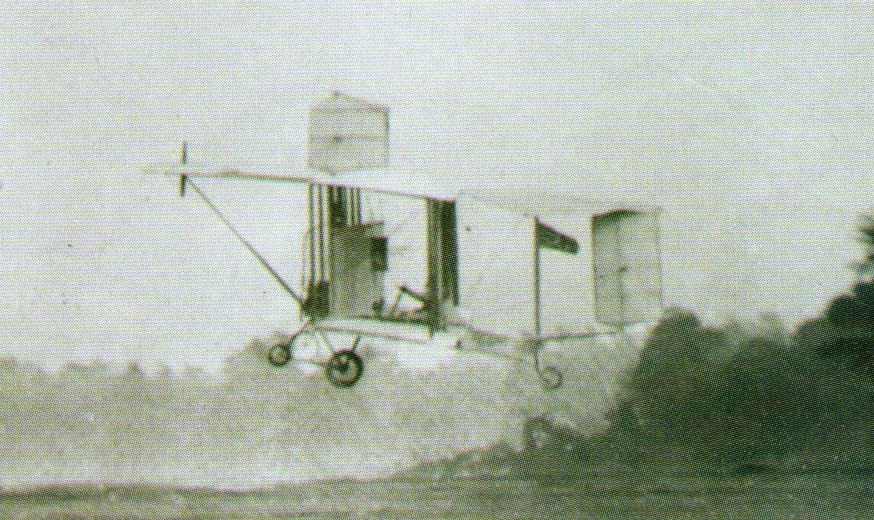
It was in this aircraft that Cody made his first hops in May, 1908, on Laffan’s Plain. On October 5 or 16th 1908 he made the first official flight in a piloted aeroplane in Great Britain a measured distance of 496 yards at a height of 50-60 ft over Laffan’s Plain (it lasted 37 seconds), Farnborough, and this was the first powered aeroplane flight in Britain; but Cody was American at the time, and did not take out naturalisation papers until 1909.
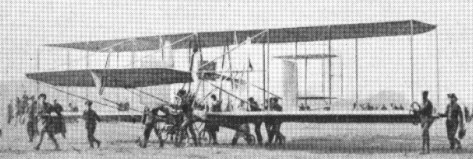
Cody Army Aeroplane No.1A
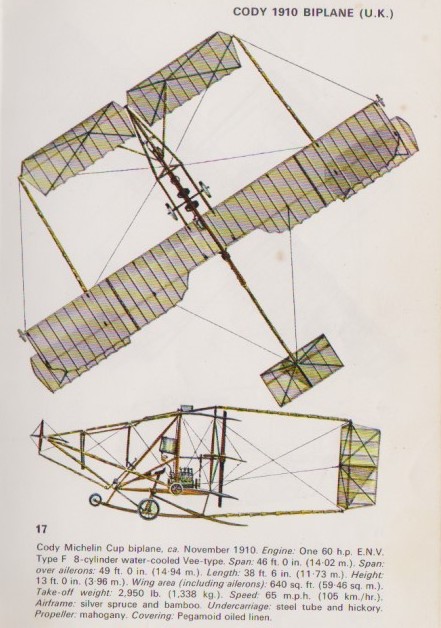
Cody 1 – Initial Prototype; fitted with Antoinette 50 hp. Later, with ailerons Cody 2 – Revised Cody 1 airframe Cody 3 – Cody 2 prototype fitted with ENV Type F engine of 60 horsepower.
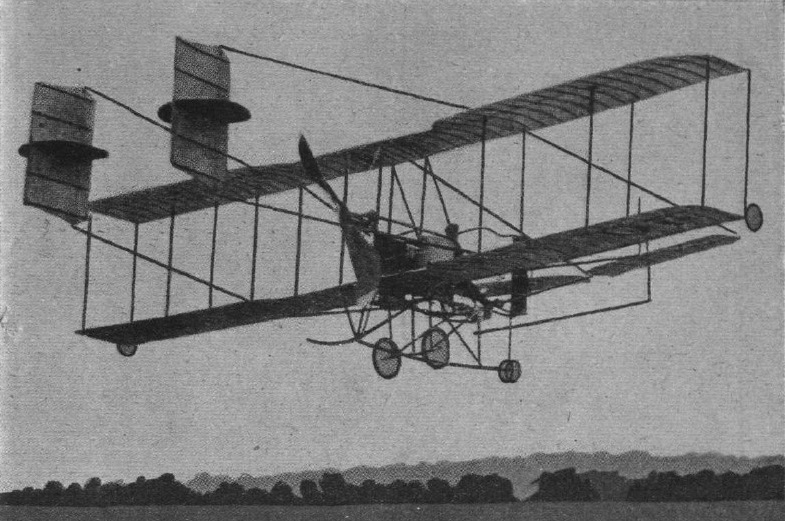
The Cody II was a Michelin Cup machine in which he flew 4 3/4 hours on December 31, 1910 to win the trophy. Clear differences to the earlier machine were the one large propeller installed at the rear in place of the two forward propellers and a 60 hp Green engine fitted in place of the ENV.
Cody II
The Michelin Cup machine in which he flew 4 3/4 hours on December 31, 1910 to win the trophy. Clear differences to the earlier machine were the one large propeller installed at the rear in place of the two forward propellers and a 60 hp Green engine fitted in place of the ENV.
Engine: 1 x Antoinette, 50 hp Length: 38.48ft (11.73m) Wingspan: 52.00 ft (15.85m) Height: 13 ft (3.96m) Maximum Take-Off Weight: 2,950lbs (1,338kg) Maximum Speed: 65mph (105kmh; 57kts) Accommodation: 1
Turning his back on a 15 year stage career, Cody closed the road show and spent months on kite and airship matters. He built gliders in his spare time, but Cody was more interested in aeroplanes and before long had fitted a 12 h.p. Buchet engine to one of his kites.
The motor kite was constructed at Farnborough in 1907, though possibly started in 1906. It was a pilotless biplane, similar to a Cody kite but with additional control surfaces and a three-cylinder 12 hp Buchet engine powering a propeller situated behind the wings. The span of the upper wing is estimated to 35 feet. The undercarriage was fitted beneath the central box section and two long skids were mounted beneath the twin tail rudders. The machine had a horizontal tailplane and at one stage biplane elevators/balancing planes were fitted on the front.
It was tested both on the ground and suspended from a cable rigged between two 100 ft masts, but there is no evidence that it ever made a free flight. Cody said, when presenting slides of the machine to a meeting of the Aeronautical Society, “This is a kite; I am just starting the engine and I try to get out of the way to let it run. It was supposed to be let loose, but the authorities were afraid I might do some damage by letting it go up in the sky.”
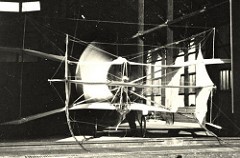
Mario Cobianchi was a Bolognese designer and draftsman, who had Sicilian-born engineer Franz Miller build his 1909 Brescia biplane, powered by a 100 hp Miller engine. It was originally intended to have both a helicopter-like propeller on the top wing and a pusher propeller in the rear.
Even after being modified several times, it never did get off the ground except for a few brief hops. After being strengthened and modified from its original state, it was entered in the Circuito Aereo Internazionale di Brescia, Brescia, Italy, September 8th – 20th 1909, but it still didn’t fly.
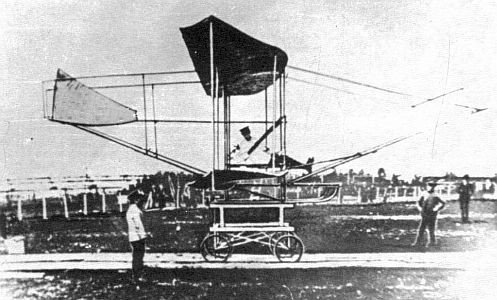
A biplane glider with identical unstaggered wings and relatively short tailbooms. The machine had a skid landing gear where the start was done on a four-wheel trolley. Coandă designed the machine, Joachim built it in his workshops and Caproni was named as a “mate” of Coandă [he himself stated that he did not contribute to the machine).


 All Aero