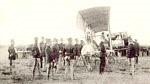
The 1910 De Broucker biplane was designed and built by De Broucker in Belgium.
The 1910 De Broucker biplane was designed and built by De Broucker in Belgium.
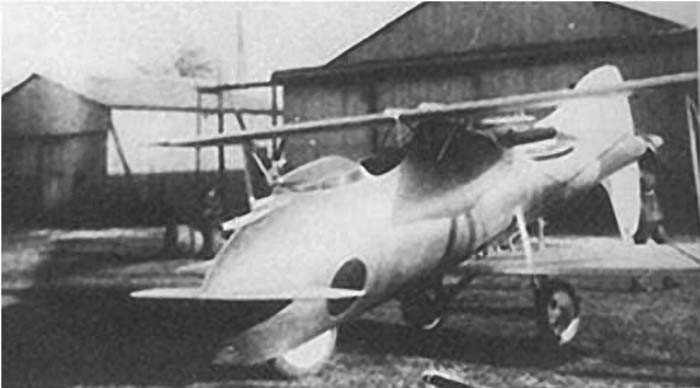
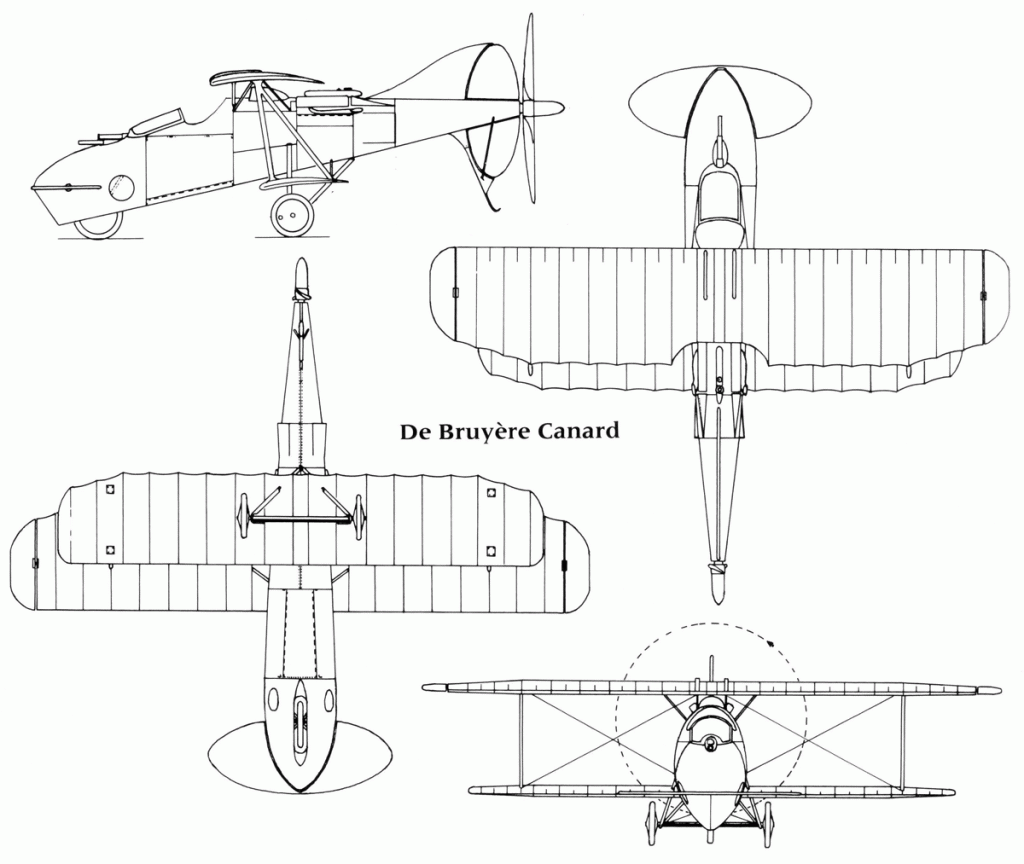
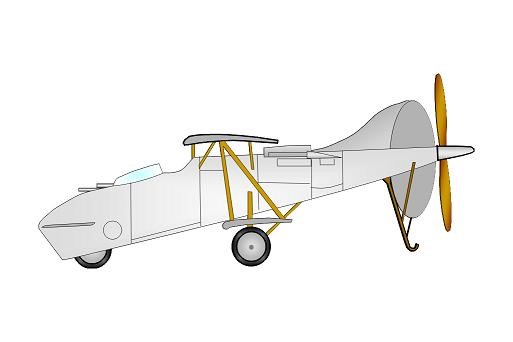
A fighter of the First World War created by French engineer Marcel de Bruyere in 1917, the C 1 was a biplane with equal-span, staggered wings supported by inverted V-struts. Pitch control came from a one-piece, all-moving canard foreplane, while roll was managed by full chord tip ailerons managed roll on the upper wing. The 150-horsepower Hispano-Suiza 8Aa engine was placed behind the wings.
A long shaft connected the engine to a pusher propeller mounted at the tail. The aircraft lacked a fixed horizontal stabiliser but had a short vertical fin and long tail skid to protect the rear-mounted propeller. Its tricycle landing gear and metal fuselage were extremely advanced for the time.
Large circular side windows gave reasonable downward visibility, and it was armed with a single Hotchkiss M1902 37mm cannon.

The fighter, designated de Bruyere C1, first flew in April 1917 from the Etampes test aerodrome in Belgium.
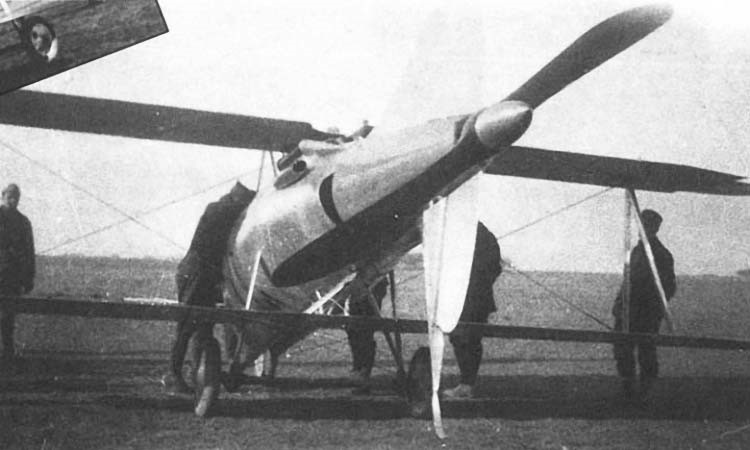
During the test flight, the plane climbed several meters, rolled over and crashed. The craft was not rebuilt and received no further development.
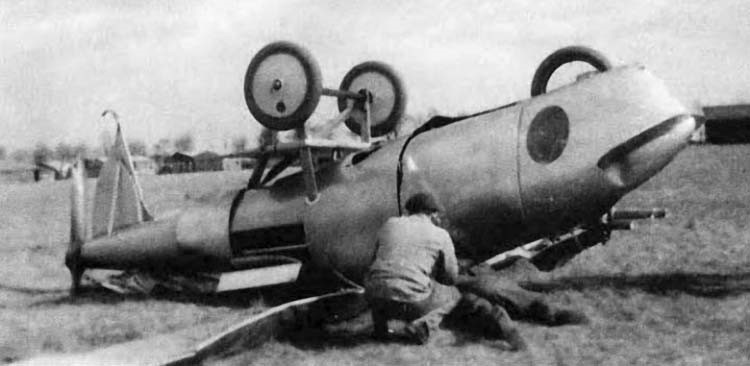
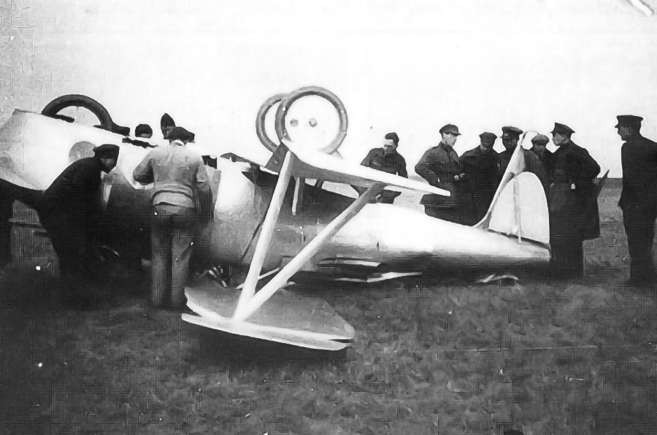
de Bruyere С1
Engine: 150 hp Hispano-Suiza 8a
Wing span: 8.20 m
Length: 7.50 m
Crew: 1
Armament: 1 x 37 mm Hotchkiss M1902
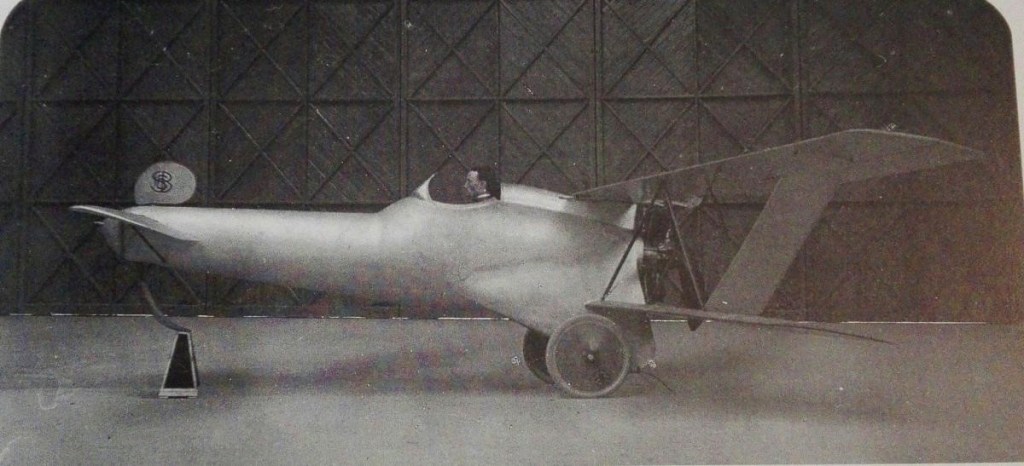
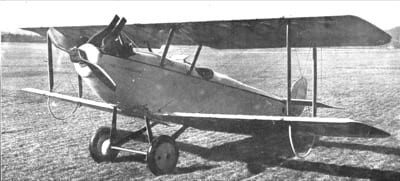
The Dayton-Wright Messenger biplane was designed by Oliver Thomas in 1918. It was powered by a 37-hp DePalma V-4 engine. Dayton-Wright hoped to get an Army contract. Failing that, it was planned to sell on the civil market, but only one was built.
Engine: 37-hp DePalma V-4
Span: 19 ft 3 in
Length: 17 ft 6 in
Empty weight: 476 lb
Loaded weight: 636 lb
Speed: 85 mph
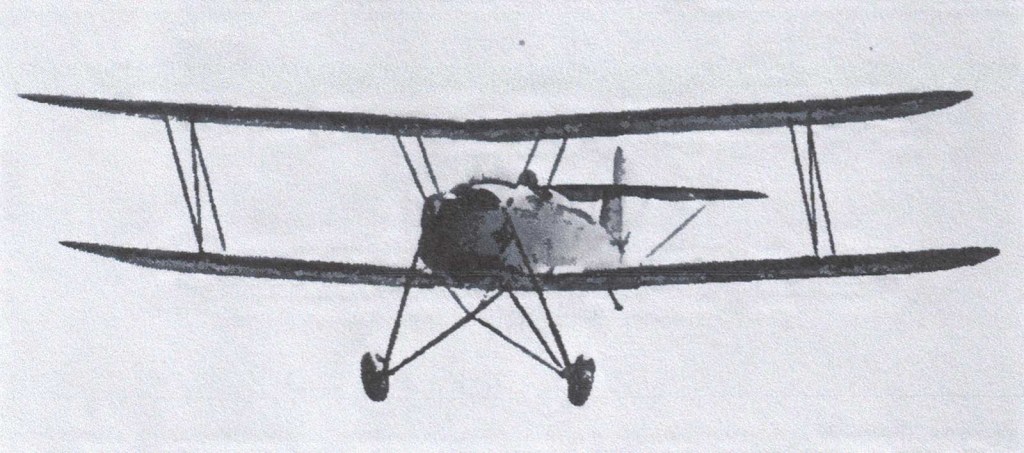
The Day Model A Special was planned originally for pilots with limited experience by offering them a safe, easy to fly aircraft. An early light plane around-the-world-flight was successfully achieved by Charles Healy Day with his wife Gladys in 1931. They completed a 24,000 mile global tour in an open cockpit, side by side biplane he designed.
Day was a highly respected aeronautic engineer. He designed the Standard J-1 in 1914 which was used to teach World War I cadets to fly. It was also a favorite of barnstormers during the 1920’s. He also designed the later five-place New Standard GD-24 and D-25.
The 34 foot span airplane was powered with a 120 hp Martin D-333 engine. Their seven month tour included flights over 20 countries with visits to 74 cities and covered 16,000 miles flown over land and 8,000 miles with their aircraft loaded aboard ship for crossing the Atlantic and Pacific oceans.
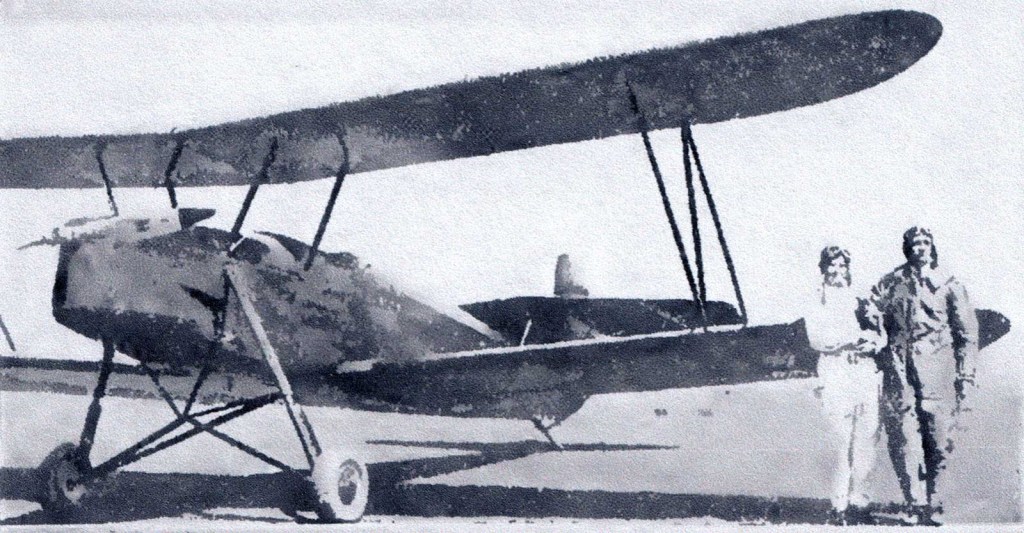
The only damage this aircraft suffered throughout the world tour was a bent tail skid mount caused by ground-looping across a ditch in Foo-Chow, China.
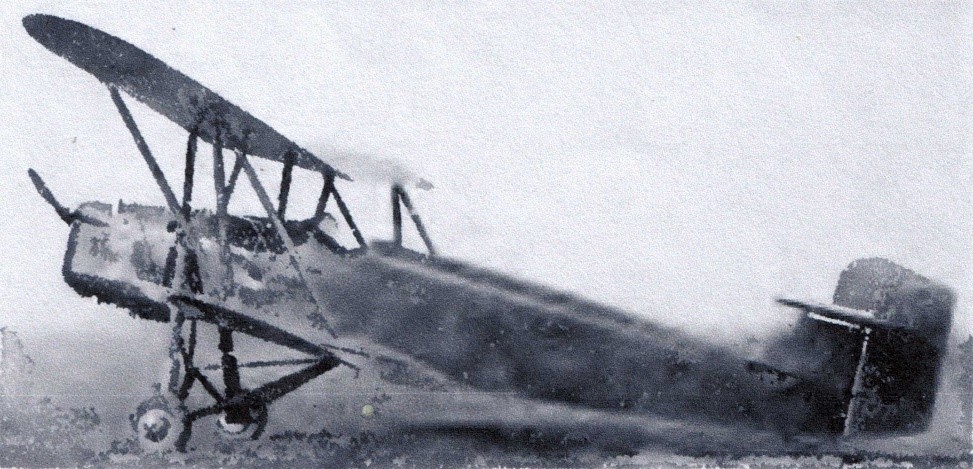
Fuel capacity was only 24 gallons. An additional 24 gallon tank was installed for the world flight. This extended range for over land flights but 48 gallons was insufficient for flying over the oceans.
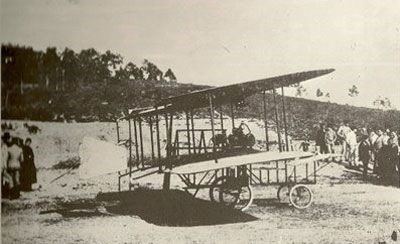
On his return to Portugal in 1910, Gomes da Silva presented an improved design of his invention to the newly-founded Aero Club de Portugal, and received funding not only from this organisation, but also from the young republican government. The military placed its base in Tancos at his disposal in order to build the Gomes da Silva II. However, the modifications that had been made weren’t enough to get the craft off the ground – be it due to possible shortcomings of the machine, or to the harsh runway conditions. Faced with these results, the sponsors quickly lost interest and the Gomes da Silva II was dismantled and boxed to Mozambique, its whereabouts currently unknown.
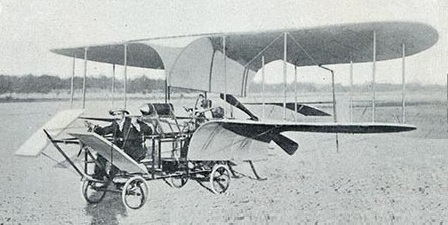
In 1909, Abeillard Gomes da Silva, was in Beira in the then Portuguese colony of Mozambique. Working there, at customs, was Abeillard Gomes da Silva, who that year had the opportunity to visit Europe during a holiday. At his own expense, he set off for France with an interest in heavier-than-air flight.
Upon arriving in France, he promptly spent 23,000 francs to build an airplane of his own invention: the Gomes da Silva I. A biplane configuration with its engine – a 25 to 28 hp Anzani – placed behind the pilot, it had a three-lever control system: a central lever for the rear directional rudders, and the other two for the altitude rudders, placed on either side of the pilot and which could either function together or separately. Enrolled in the Juvisy Aviation Fortnight (Grande Quinzaine d’Aviation), organised by the Société d’Encouragement à l’Aviation, it seems that Gomes da Silva was eventually disqualified due to a “21-day delay in the delivery of the engine”. The craft had been tested at the Issy-les-Moulineaux airfield and was not able to take off.
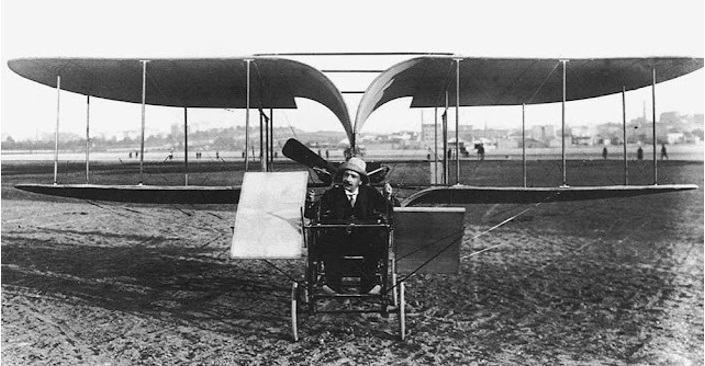
Gomes da Silva I
Wingspan: 7 m
Length: 6.5 m
Weight: 250 kg
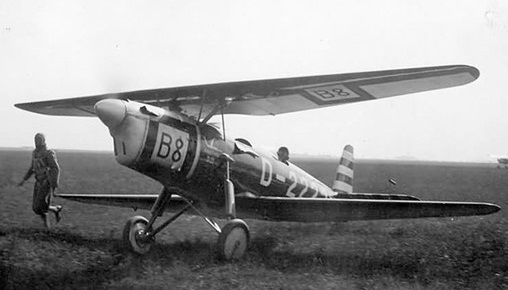
The Darmstadt D-22 was an all-wood sport biplane designed and built in Germany in 1931 by the Akademische Fliegergruppe of Darmstadt University of Technology, a group of aerodynamical engineering students. A development of the Darmstadt D-18 designed by F. Fecher, the D-22 was a slightly enlarged, more streamlined and more powerful German sports-plane built to compete in the 1932 Coupe Deutsch de la Meurthe.
The D-22 had an unorthodox configuration, being a cantilever biplane, with an upper wing placed low, just above the fuselage and ahead of its lower wing. The design emphasized aerodynamics and lightness and the aircraft was small with a streamlined silhouette.
The D-22 boasted an oval cross-section fuselage skinned with plywood and fabric on parts of the single-spar wings. This could, as was required by the rules of the competition, be dismounted and folded rearwards. The crew of two sat in tandem in open cockpits each with its own with windshield. The landing gear was fixed with a tail skid. The engine was mounted in the fuselage nose and drove a two-bladed fixed-pitch propeller.
Propulsion was from a 75.7 kW (101.5 hp) Argus As 8 4-cylinder inverted air-cooled, in-line piston engine driving a 2-bladed fixed-pitch propeller which powered the D-22 to a top speed of 230 km/h (140 mph, 120 kts).
Two were constructed. One was allocated G-ABPX and was known to have a Gipsy III engine.
One was allocated D-2222.
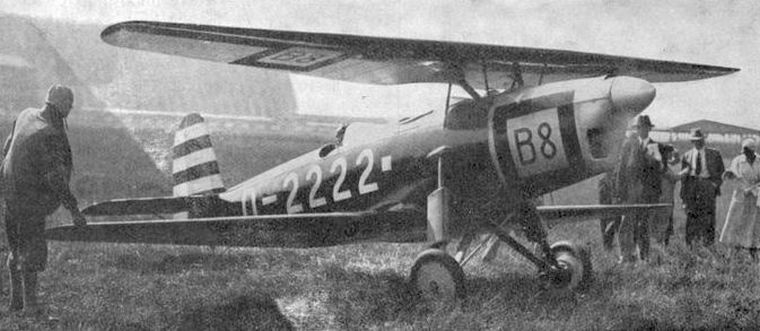
The trial was to be run in two 1,000 km stages separated by a 90-minute refuelling stop and was limited to aircraft with an engine capacity not exceeding eight litres. The starting point of the race was still at Étampes. Suzanne Deutsch de la Meurthe offered one million Francs in prize money while Ministère de l’Air (Air Ministry) offered another three million.
Only one, a D-22A flew in the cup. Not having flaps or slats, she was severely handicapped in the landing trials, eventually finishing 35th out of 43 contestants. However, after this she improved her score after a rally around Europe, where she took the 4th place with a cruise speed of 205 km/h (127 mph; 111 kts). In the maximum speed trial, the D-22A was beaten only by the five Heinkel He 64s, reaching 230.7 km/h (143.4 mph; 124.6 kts). As a result, she eventually finished 17th overall.
Sold in 1933, she competed for several more years in various events.
Wingspan: 24 ft
Length: 21 ft 6 in
The D’Apuzzo D-295 of 1974 was an unequal-span variant of the PJ-260 built for E Mahler & L Webber.
Engine: 295hp Lycoming GO-480-G1D6
Wingspan: (upper) 27’0″ (lower) 23’9″
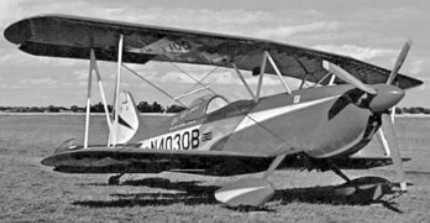
This single-seat sporting biplane is a smaller version of the Senior Aero Sport, and is built from the standard combination of a fabric-covered wooden wing and a fabric-covered steel-tube fuselage.
This single-seat sporting biplane is a smaller version of the Senior Aero Sport and is built from the standard combination of a fabric-covered wooden wing and a fabric-covered steel-tube fuselage. The powerplant drives a constant-speed metal propeller to produce a maximum speed of 160 mph. Plans are no longer available.
Engine 180-hp Lycoming.
Wingspan 21’8″
Length 18’3″
Gross wt. 1,275 lb.
Empty wt. 840 lb.
Fuel capacity 20 USG.
Top speed 160 mph.
Cruise speed 140 mph.
Stall 55 mph.
Climb rate 2500 fpm.
Ceiling 20,000 ft.
Takeoff run 400 ft.
Landing roll 550 ft
Range 300 sm.
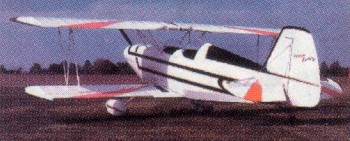
The D-201 Sportwing is a completely redesigned version of the Senior Aero Sport. Of special interest is the attention that was given to reducing the cost and complexity of building the airplane without sacrificing the safety aspects of the previous models. The fuselage is a conventional steel-tube structure with aluminum alloy panels used for covering forward of the cockpit and fabric used aft of the cockpit. The wings are the conventionally braced biplane type with long-span ailerons on the lower wings. Power is supplied by engines ranging from 125-hp to 200-hp by Lycoming, while the most common powerplant is the 160-hp Lycoming. Seating is in tandem fashion with a canopy as an option.
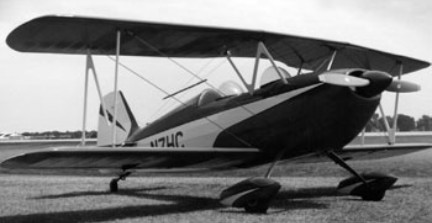
Engine 160-hp Lycoming IO-320.
hp range 125-200
Wingspan 27 ft.
Length 21 ft 7.5 in.
Height: 7.6 ft.
Wing area: 181 sq.ft.
Gross Weight. 1900 lb
Empty Wt. 1295 lb.
Fuel capacity 29 USG
Top speed 132 mph.
Cruise mph 122.
Stall 45 mph.
Climb rate 1050 fpm.
Takeoff roll 420 ft.
Land¬ing roll 520 ft
Takeoff distance (50’) 790 ft.
Land¬ing distance (50’) 850 ft.
Range 360 sm.
Service ceiling: 19,000 ft.
Seats: 2.
 All Aero