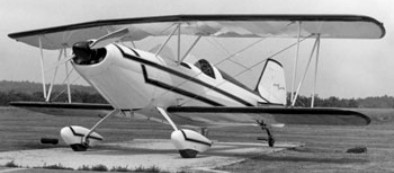
D’Apuzzo PJ-260 Senior Aero Sport

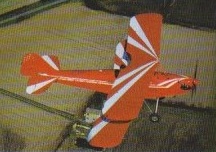
Designed by Nicholas D’Apuzzo, the aerobatic Senior Aero Sport was available as either a single or two-seater. One prototype, N40304, was designed and built at the request of Rodney Jocelyn as an exhibition aircraft for world champion aerobatic pilot Lindsey Parsons at competitions in Spain. It first flew on 28 July 1960.
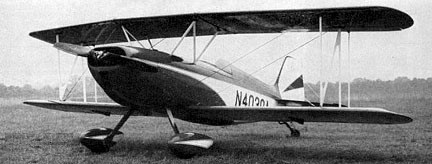
PJ-260 N40304

Rod Jocelyn completed a PJ-260 Joc-Par Special for entry in the 1964 World Aerobatic Championships in Spain. Powered by a 260 hp Lycoming VO-435-A1F, 27 ft span and 21 ft length, gross weight was 1600 lb. Scothply plastic was used instead of steel spring for landing gear, saving 40 lb.

This sport biplane has a wood-faired steel tube fuselage, wire-braced steel tube tail section, all fabric covered. The fuel supply and the front seat passenger are very close to the center of gravity, so trim is little affected by expending fuel or by the presence or absence of a passenger. A variety of engines can be used from 190 to 260 hp.

Reportedly 7 amateur-built planes up to February 1974. Also seen recorded as Joc-Par. One example is the grand champion homebuilt at the 1968 EM fly-in at Rockford, Illinois.
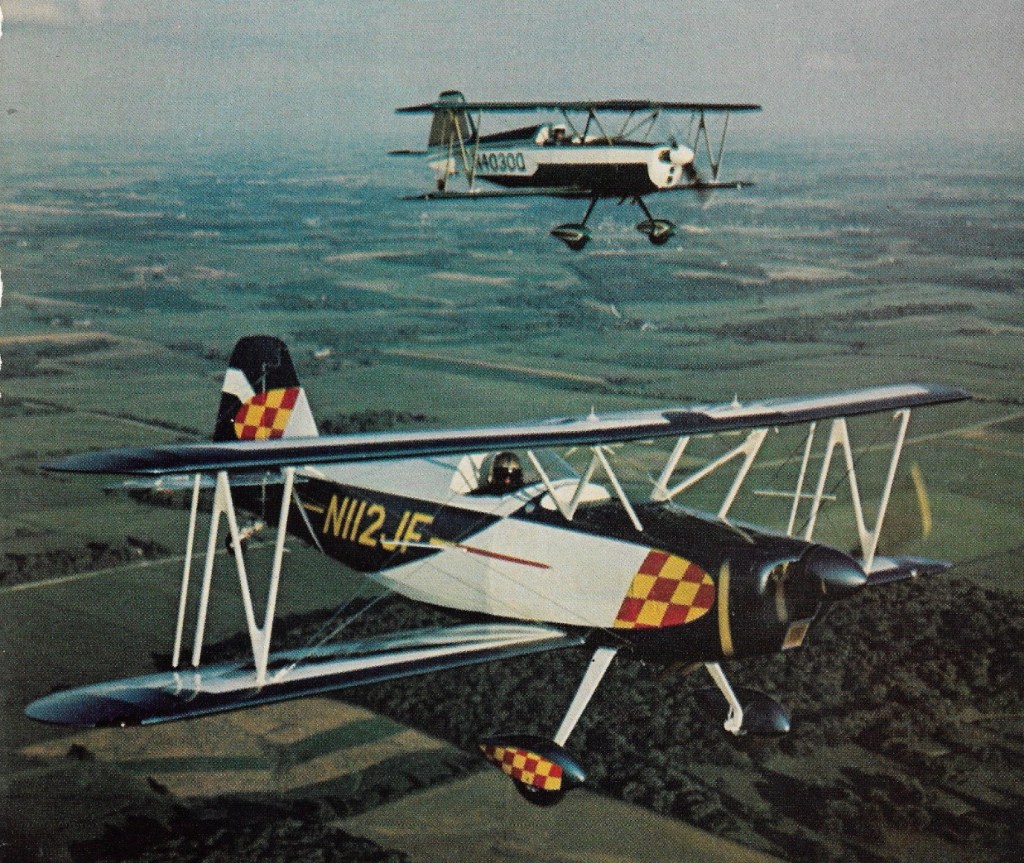
D’apuzzo D-260 N112JF

Engine: 260hp Lycoming GO-435-C2
Wingspan: 27’0″
Length: 21’0″
Useful load: 700 lb
Max speed: 170 mph
Cruise: 138 mph
Stall: 52 mph
Range: 500 mi
Ceiling: 24,000′
Seats: 1

Engine 280-hp Lycoming.
Wingspan 27 ft 0 in.
Length 21 ft 0 in.
Gross Weight. 2050 lb.
Empty Weight. 1450 lb.
Fuel capacity 36-42 USG.
Top speed 155 mph.
Cruise speed 140 mph.
Stall speed 52 mph.
Climb rate 2000 fpm.
Takeoff distance (50’) 700 ft.
Land¬ing distance (50’) 900 ft.
Range 400 miles.
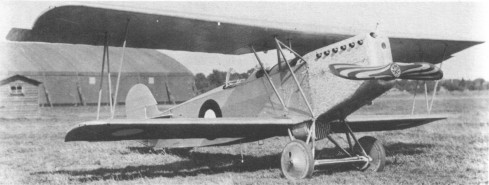
D’Angelis Biplane

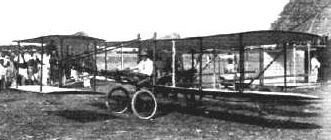
Giacomo D’Angelis, a confectioner from Messina, Italy, arrived in Madras in 1880. He ran a flourishing confectionery business, and in due course of time established Hotel D’Angelis, Madras’s finest hotel of the time, in Mount Road. Inspired by Frenchman Louise Bleriot’s flight across the English Channel in 1909, D’Angelis built a biplane, with the help of Simpson’s, entirely from his own designs. The airplane was powered by a small 12 horse-power engine. He tested his aeroplane at Pallavaram, and then arranged for a public viewing, for a fee, in March 1910. D’Angelis made the first public flight on March 26, 1910 from Island Grounds. Clearly, Madras pioneered the first flight in India, and may be in Asia as well. Subramania Bharati wrote in 1910 about the plane that was built by Tamil workers in the workshop of Simpson’s. Then, in 1914, J W Madley, the civil engineer who built Madras’s water supply system, assembled an aeroplane and flew from Island Grounds over the Red Hills water reservoir to make an aerial assessment with photographs.

Dallach D.3 Sunwheel / W.D. Flugzeugleichtbau D.3 Sunwheel / DG Aircraft Sunwheel / UL-JIH Sunwheel

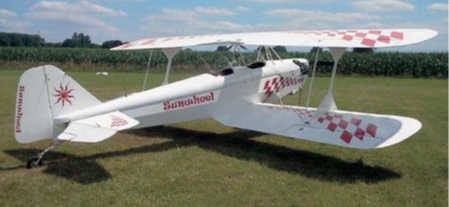
A tandem two seat biplane capale of aerobatics, the Sunwheel has a welded steel spaceframe fuselage while the wings have spars of argon-welded dural tube. The retro style biplane tail-dragger has dual controls and powered with a Rotax 912 UL four stroke engine. The wing spars are aluminum tubes with PU ribs covered with fabric. The ailerons are fitted on both upper and lower wings.

W.D. Flugzeugleichtbau GmbH marketed in completed and kit forms the Dallach D.3 Sunwheel tandem two-seat biplane.

The Wolfgang Dallach Company collapsed and on 1 August 2008 DG Aircraft GmbH took over support of the Dallach “Fascination”, “Evolution”, “Sunwheel” and all derivatives.

Sedláček UL-JIH marketed the Sunwheel UL.

Engine: Rotax 912, 80 hp
Wing span: 7 m
Wing area: 16 sq.m
MAUW: 450 kg
Empty weight: 250 kg
Fuel capacity: 30 + 30 lt
Max speed: 145 kph
Cruise speed: 135 kph
Minimum speed: 65 kph
Climb rate: 3.5 m/s
Certification: VZ
Seats: 2
Fuel consumption: 15 lt/hr
Price (1998): 88 800 DM
Kit price (1998): 62 700 DM

Sedláček UL-JIH Sunwheel UL
Engine: Rotax 912 UL
Span: 7 m
Length: 6,1 m
Wing area: 16 sq.m
Empty weight: 251 kg
MTOW: 400 kg
Stall speed: 50 km/h
Cruising speed: 130 km/h

Daily Old Glory

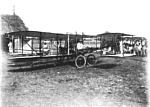
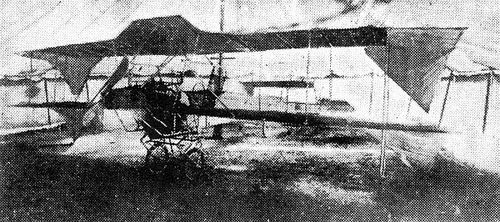
The Daily ‘Old Glory’ built in 1910 in Chicago, Illinois, was an early “gull-wing” aircraft built for entry in one of the popular local air meets. The ship was motorless at the time of the photo.

The machine had the name “Old Glory” painted on the petrol tank that was mounted under the center of the drop in the upper wing. Although apparently built to completion, it is doubtful the machine was ever flown.

Cutting 1909 Aeroplane

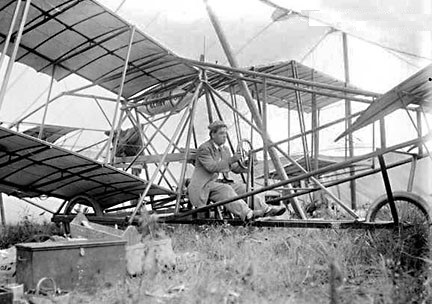
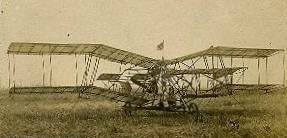
South African biplane of original design constructed in Johannesburg by J. H. “Harry” Cutting with the help of friends Jimmy Cloughly, Ernest Miles and Sammy Samuels. The machine was built in Cutting’s workshop out of steel tubes, aluminium, covered with linen and powered by a 12 hp air-cooled two-cylinder J.A.P. V-engine driving a locally-manufactured aluminium propeller. Construction was started on August 22, 1908, and while several attempts to fly the plane were made prior to its three month-long public exhibition commencing in December 1909, the machine, although being capable of a fair speed along the ground, would not take off owing to a lack of engine power. When the plane was displayed next to the Empire Theatre in Johannesburg it was called “Carter’s Aeroplane”. Carter claimed he was awaiting a more powerful engine and would replace the canvas with silk to lighten his machine. Herbert Carter was a boxer by profession and most likely had purchased the aeroplane, but nothing more was heard of it after the exhibition closed down on February 26, 1910.

Curtiss-Wright CA-1

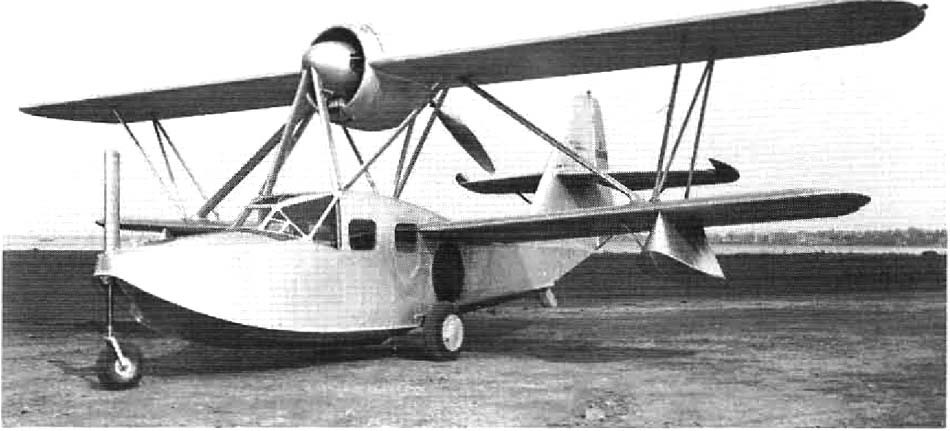
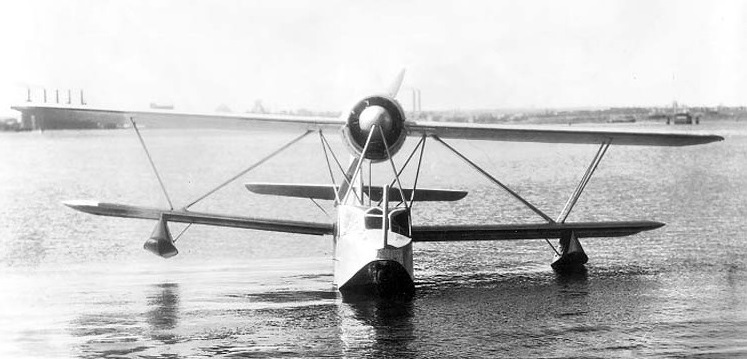
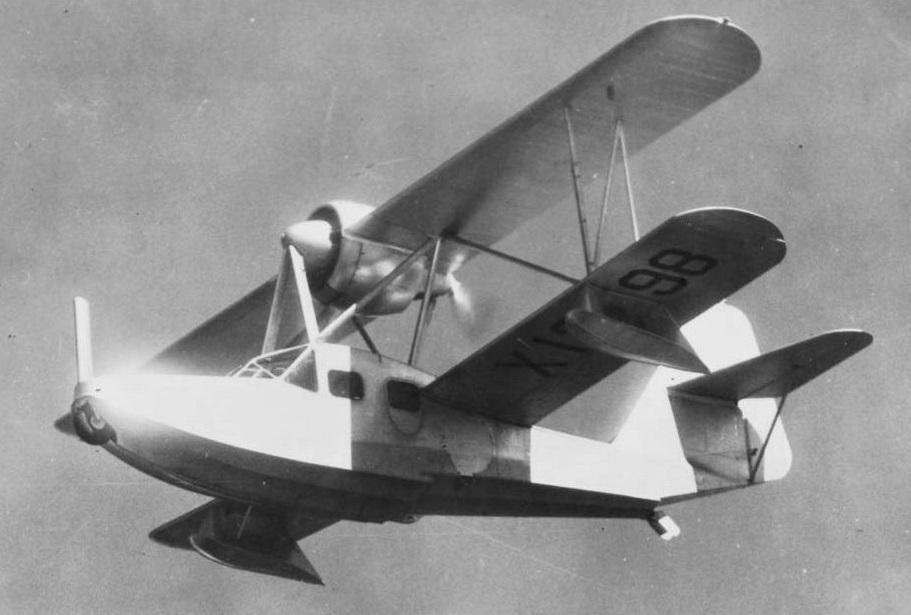
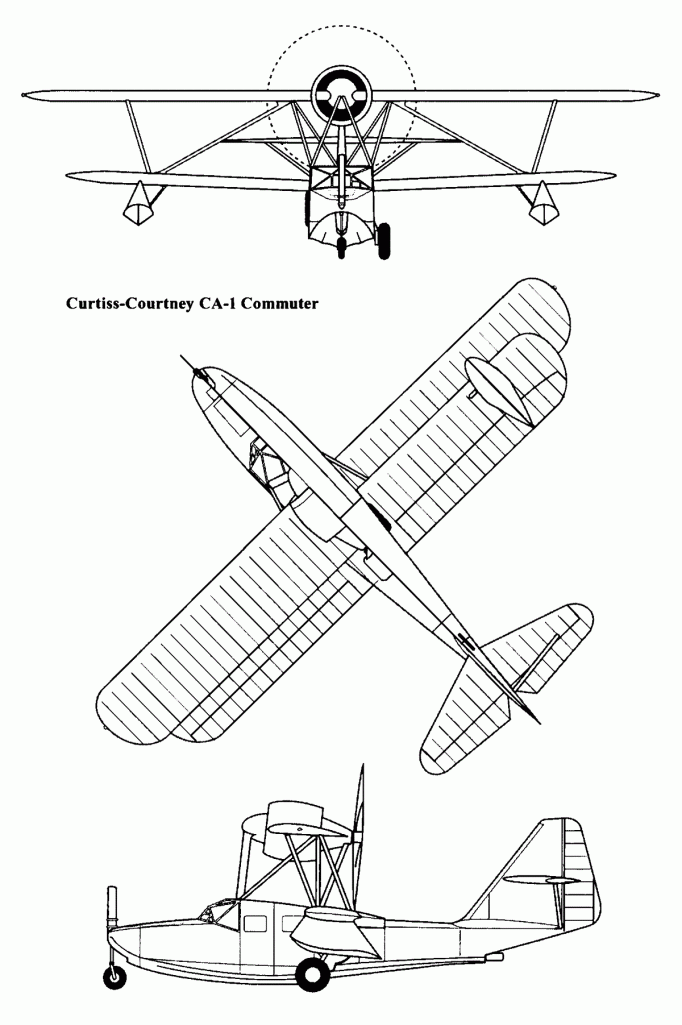
Designed by the British test pilot Frank Courtney, the Curtiss CA-1 (sometimes known as the Commuter or the Courtney Amphibian), was a five-seat amphibian. The CA-1 was powered by a 365 hp (272 kW) Wright 975E-1 radial, cowled and fitted into the leading edge of the top wing driving – through an extension shaft – a pusher propeller. When Wright told Courtney that this could not be done, the Briton went to a non-Curtiss-Wright mechanical workshop and successfully assembled his design.

Possessing a metal hull and wooden wings, the CA-1 had a nose wheel landing gear and an enclosed cabin for the pilot and passengers.

The three prototypes were built at the St. Louis plant, the first flying in 1935.

CA-1 (factory number 101; registration number 13298) in January 1935 received ATC No.2-397, and CA-1 (factory number 102; registration number 11780) in September received ATC 582, aircraft of this type did not go into mass production. Only three aircraft were built and they were all sold in Japan along with the project documentation, designated LXC by the Imperial Japanese Navy Air Service.

Gallery

Engine: 1 × Wright 975E-1 (J-6-9), 365 hp (272 kW)
Wingspan: 40 ft 0 in (12.19 m)
Length: 31 ft 0 in (9.45 m)
Height: 3.65 m
Empty weight: 1352 kg
MTOW: 2109 kg
Maximum speed: 151 mph (243 km/h; 131 kn)
Cruise speed: 125 mph (201 km/h; 109 kn)
Stall speed: 60 mph (97 km/h; 52 kn)
Range: 550 mi (478 nmi; 885 km)
Ceiling: 4267 m
Crew: one
Capacity: four passengers
Baggage: 240 lb (110 kg)

Curtiss Tadpole

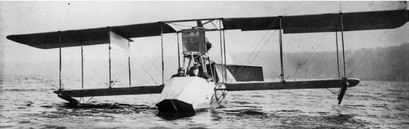
Curtiss built the Tadpole to test the aerodynamic relationship between the planning hull and the rigging of the wings. The first variation used a 100 hp Curtiss OX engine and came with the unequal span wings of the early F Boat, but with inset ailerons and several degrees of sweep. One of the devices tested on this aircraft was a set of moveable struts on the upper and lower wing centre sections that enabled incidence to be adjusted. If the wing were adjusted to a negative incidence while the plane was moored, it would not tend to become airborne during high winds. Continuing experiments were carried out with the Tadpole in the winter of 1914 when it was fitted with outrigger skis and flown from a frozen lake.

Curtiss-Beachey Speed Tractor

The 1912 Curtiss-Beachey Speed Tractor was the first of the “modern” Curtiss biplanes, with fabric-covered fuselage, although it was flown uncovered for a while, three-point landing gear with tailskid, and double-surfaced wings, but still using trailing interplane ailerons. Used by Beachey for exhibition work. Design was used for the prototype Curtiss Military Tractor. Powered by a 90 hp Curtiss OX V-8.