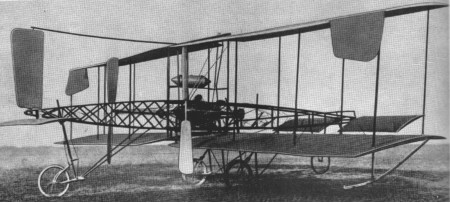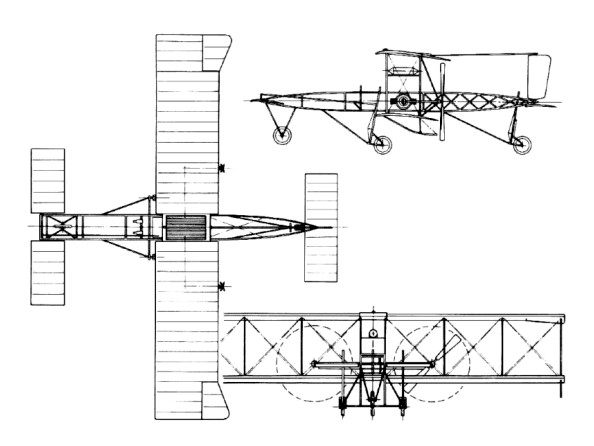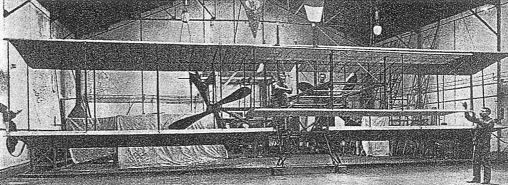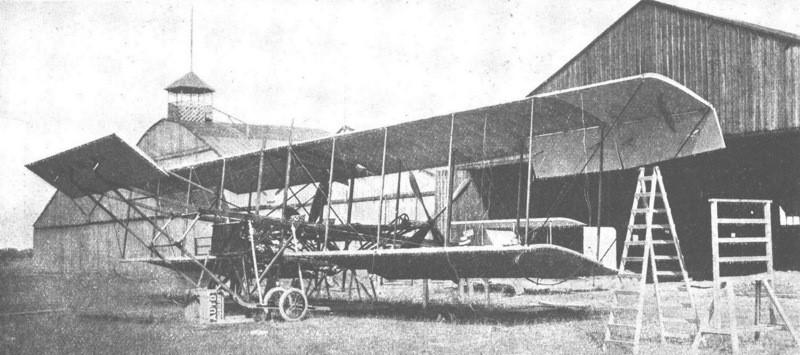
de Havilland DH 34

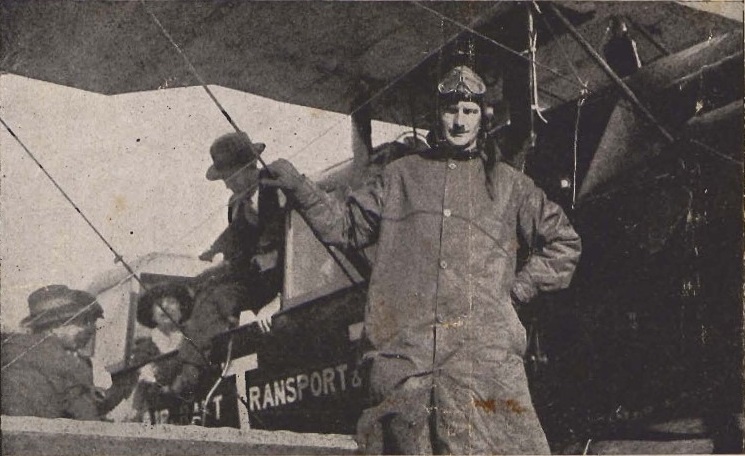
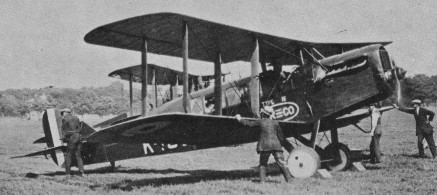
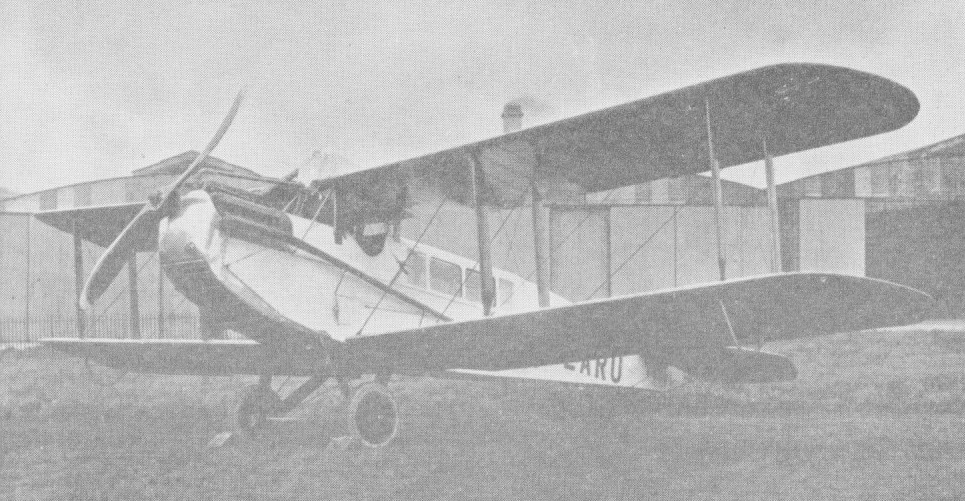
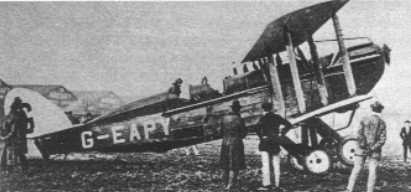
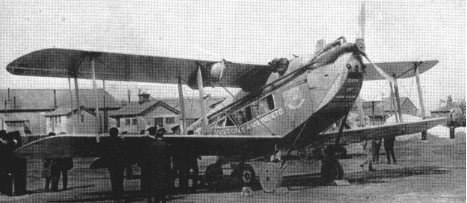
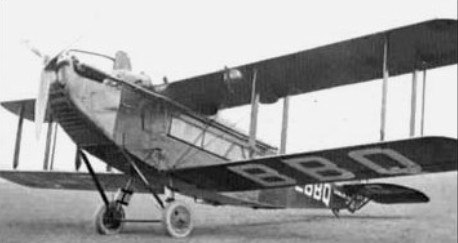
Instone’s DH.34 City of New York

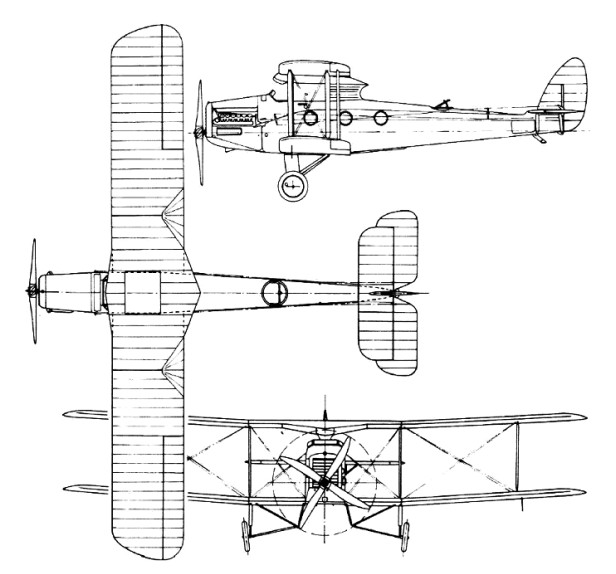
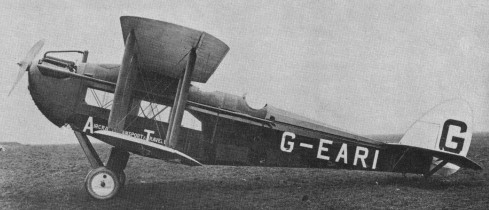
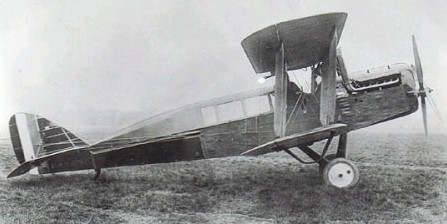
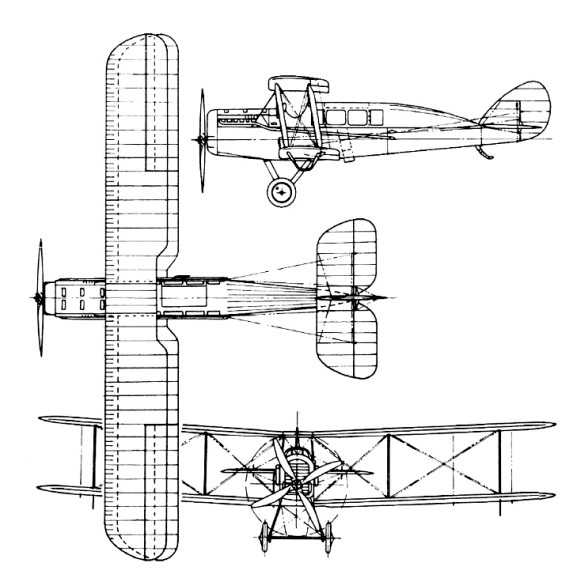
Building on commercial experience obtained with the D.H.18 and structural experience with the D.H.29, de Havilland began work on the de Havilland D.H.32, in 1921.

Plans for construction of the first aircraft (with the 268kW Rolls-Royce Eagle engine as its powerplant) had been announced, but since the main customers would be Instone and Daimler Hire, who were already using Napier Lion-powered D.H.18s, de Havilland, redesigned the aircraft to use that engine.
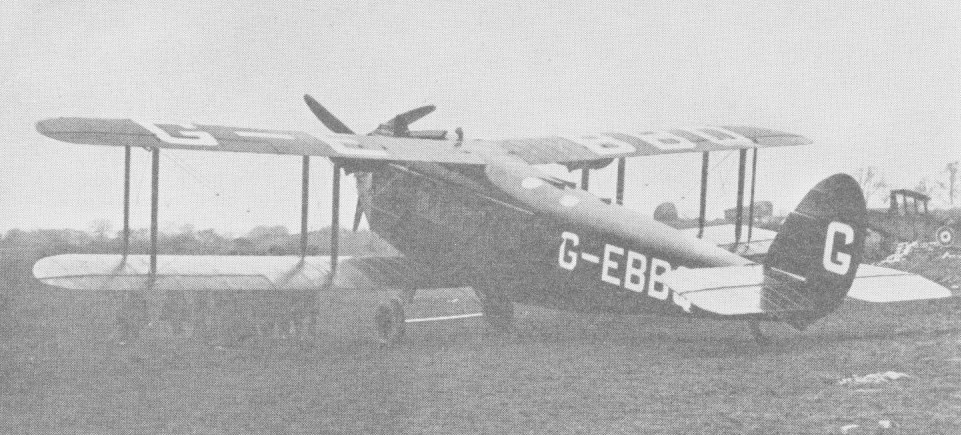
The first of 11 aircraft flew on 26 March 1922, and made an inaugural Croydon- Paris flight on 2 April. Daimler Hire eventually used six D.H.34s and Instone four, while one was sold to Dobrolet, the Russian airline. When Imperial Airways was formed in 1924 it took over seven D.H.34s and used them over the next two years before re-equipping with larger aircraft.

Some 8,000 flying hours were recorded by December 1922, less than nine months after the prototype’s appearance, and over 160,000km flown without overhaul by the second Daimler aircraft. Six D.H.34s were lost in accidents, several of them fatal. An early stalling crash led to extensions being added to the top wing to increase its area, as the D.H.34B. The last four D.H.34s in UK service were scrapped in 1926.
Gallery

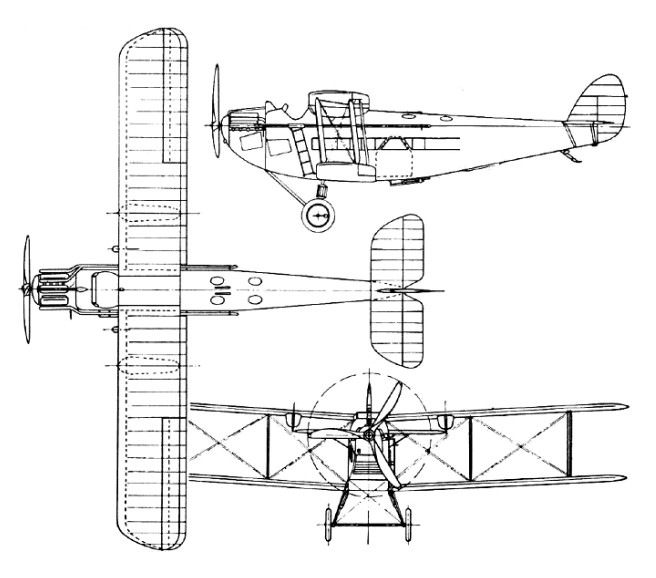
D.H.34
Engine: 1 x Napier Lion inline piston engine, 336kW
Take-off weight: 3266 kg / 7200 lb
Empty weight: 2075 kg / 4575 lb
Wingspan: 15.65 m / 51 ft 4 in
Length: 11.89 m / 39 ft 0 in
Height: 3.66 m / 12 ft 0 in
Wing area: 54.81 sq.m / 589.97 sq ft
Max. speed: 206 km/h / 128 mph
Cruise speed: 169 km/h / 105 mph
Range: 587 km / 365 miles
Seats: 10.
de Havilland DH 27 Derby

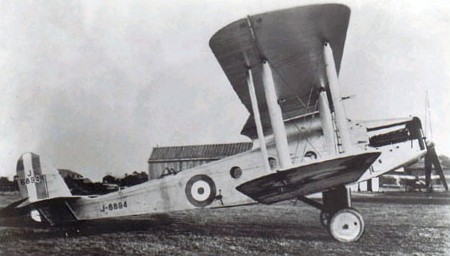
Two prototypes. No production.

Engine: 1 x 650hp Rolls-Royce Condor III
Take-off weight: 5241 kg / 11554 lb
Empty weight: 3059 kg / 6744 lb
Wingspan: 19.66 m / 64 ft 6 in
Length: 14.43 m /47 ft 4 in
Height: 5.13 m / 16 ft 10 in
Wing area: 104.05 sq.m / 1119.98 sq ft
Max. speed: 169 km/h / 105 mph
Ceiling: 3901 m / 12800 ft
Range: 886 km / 551 miles
Armament: 1 x 7.7mm machine-gun / 4 x 250kg bombs

de Havilland DH 18

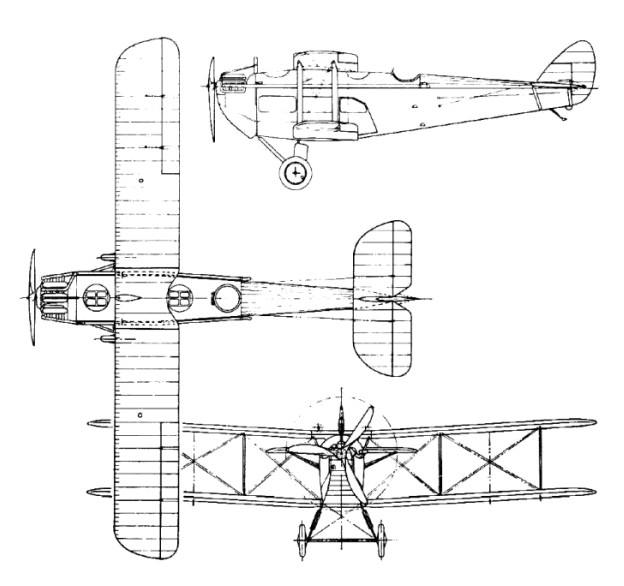
The designation D.H.17 was allocated to a project for a twin-engined 16-passenger biplane which was not built. The next type number, de Havilland D.H.18, was allocated to a large single engined biplane accommodating eight passengers in an enclosed cabin; the pilot was seated in an open cockpit behind the wings.
During 1920 the Aircraft Manufacturing Company, which had been building de Havilland designs, was re-formed as the de Havilland Aircraft Company Ltd. The new organisation built two modified aircraft at Hendon designated D.H.18A for lnstone Air Line, followed by a third.

Disembarking on arrival at Hounslow on the inauguration day of London-Paris service.

The D.H.18 first flew early in 1920 and was delivered to Aircraft Transport & Travel Ltd This D.H.18 had a short life, terminated by a forced landing near Croydon in August of the same year.

These were kept busy on Croydon-Paris service until the first, having accumulated high flying hours, was withdrawn from use in September 1921; another was lost in a crash only two months after delivery. The third production D.H.18A, delivered to Instone in June 1921, was passed to Daimler Hire Ltd in April 1922, only to be destroyed over France a few days later in a mid-air collision with a Farman Goliath.

The last two aircraft were designated D.H.18B, and had plywood-covered fuselages and increased weights; they served with Instone for a short time before the second was dismantled in 1923. The first was used in Air Ministry flotation tests, being deliberately landed in the sea off Felixstowe in May 1924. Strangely, the last surviving D.H.18 was the first production aircraft which, following its withdrawal from Instone’s use in 1921, was delivered to RAE Farnborough for test purposes. It was finally scrapped in 1927.

D.H.18A
Engine: 1 x Napier Lion inline piston engine, 336kW
Take-off weight: 2956 kg / 6517 lb
Empty weight: 1833 kg / 4041 lb
Wingspan: 15.62 m / 51 ft 3 in
Length: 11.89 m / 39 ft 0 in
Height: 3.96 m / 12 ft 12 in
Wing area: 57.71 sq.m / 621.18 sq ft
Max. speed: 206 km/h / 128 mph
Cruise speed: 161 km/h / 100 mph
Ceiling: 4875 m / 16000 ft
Range: 644 km/ 400 miles

de Havilland DH 16

The end of World War I and the subsequent vast surplus of military aircraft was not a time for new civil designs to emerge. Instead, many conversions of military models were attempted, but the de Havilland D.H.16 was a redesign of the D.H.9A with a wider fuselage for four passengers. Following its first flight at Hendon in March 1919, the D.H.16 was sold to Aircraft Transport and Travel Ltd (AT&T), who used it for pleasure flying before it inaugurated a London-Paris service on 25 August 1919.

On September 2, 1919, Handley Page Transport Ltd, operating from Cricklewood, began flights between London and Paris, and to Brussels and Amsterdam.

Handley Page used converted O/400 bombers on the London-Paris, London-Brussels routes, and converted de Havilland 9s on the London-Amsterdam. The converted DH9s were designated DH.16s. The fuselage of the aircraft was rebuilt as a cabin with room for four passengers.

Total D.H.16 production was nine aircraft, all but one being used by AT&T. The sole exception was sold to a customer in Buenos Aires, where it operated a service to Montevideo. The first six D.H.16s were powered by the 239kW Rolls-Royce Eagle engines, the last three having Napier Lions.

AT&T closed in December 1920 and its seven remaining D.H.16s (one had been lost in a crash) were stored. Five were broken up in 1922 and two sold for newspaper delivery flights; one of these was lost in a fatal crash in 1923, and the remaining aircraft was subsequently withdrawn and scrapped.

Engine: Rolls-Royce Eagle, 325 hp.
Speed: 95 mph.
Pax cap: 4.

Engine: 1 x Napier Lion inline piston engine, 336kW
Take-off weight: 2155 kg / 4751 lb
Empty weight: 1431 kg / 3155 lb
Wingspan: 14.17 m / 46 ft 6 in
Length: 9.68 m / 31 ft 9 in
Height: 3.45 m / 11 ft 4 in
Wing area: 45.5 sq.m / 489.76 sq ft
Max. speed: 219 km/h / 136 mph
Cruise speed: 161 km/h / 100 mph
Ceiling: 6400 m / 21000 ft
Range: 684 km / 425 miles

de Havilland DH.15 Gazelle

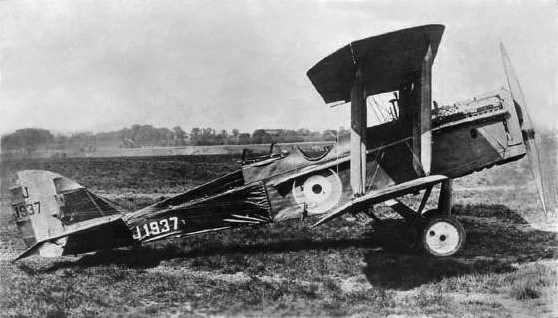
Airco DH.15 J1937

Enquiries were also made of the 500 hp Galloway Atlantic engine that was currently under evaluation. Seventy-two of these engines were ordered in September 1918 with a possible increase to 1000, but only one was ever fitted into a DH.9A, which was re-designatd the DH.15.

The DH.15 Gazelle, more often known just as the DH.15, was a standard DH.9A, complete with original armament, converted for use as an engine testbed. The engine involved was the 500 hp (373 kW) B.H.P. Atlantic, a water-cooled V-12 unit produced by the Galloway Engineering Co., which merged two six-cylinder inline B.H.P. engines onto a common crankcase. This replaced the DH.9A’s standard 400 hp (300 kW) Liberty 12, although without great change in appearance, as the Atlantic was mounted behind a similar large rectangular radiator. Both engines were upright V-12s, both with crankshafts near the base, and in each case the propeller was mounted low on the nose. The exhaust pipes on the DH.15 were longer than the usual DH.9A set, running straight back from the upper sides of the engine, ending at the observer’s cockpit.

Two DH.15s were ordered, but only one was built. It completed many flights with the Atlantic engine, through 1919 to 1920.

Engine: 1 × B.H.P (Galloway Atlantic), 500 hp
Wingspan: 45 ft 11.38 in (14.00 m)
Wing area: 486.75 ft2 (45.13 m2)
Length: 29 ft 11 in (9.12 m)
Empty weight: 2,312 lb (1,049 kg)
Gross weight: 4,773 lb (2,165 kg)
Maximum speed: 139 mph (224 km/h)
Service ceiling: 20,000 ft (6,100 m)
Rate of climb: initial 1,500 ft/min (7.62 m/s)
Crew: two

de Havilland 1910 / FE.1

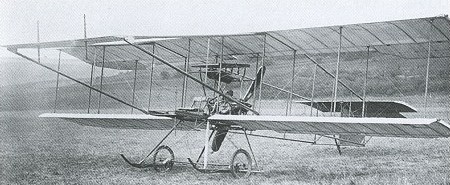
The Balloon Factory at Farnborough decided to buy the de Havilland No. 2 for £400. Being a pusher biplane like the Farman, de Havilland’s aircraft was given the official designation F.E.1 (Farman Experimental No. 1). After quite a lot of flying it was wrecked, rebuilt with a Gnome instead of its original 45 hp de Havilland Iris engine and re-designated F.E.2. A successful fighter of 1916-17.

Engine: 1 x 60-h.p. E.N.V., “F”
Span: 38ft 0in
Length: 40′
Loaded wt: 1,200 lb
Seats: 1

1910 De Havilland biplane No. 2

De Havilland 1

The first Geoffrey de Havilland aeroplane was a biplane built by de Havilland and F.T.Hearle in a shed near Newbury (Berks) in 1908-9. The airframe was American white pine, spruce and ash. The propeller had steel shafts with aluminium blades, and the airframe covered in undoped bleached cotton.

Flown (or hopped) on a racecourse there, it crashed; but he built another.

Engine: 45 hp Iris-built de Havilland 4-cyl horizontally opposed
Span: 36 ft 0 in / 10.97 m’
Length: 29′ 0 in / 8,84 m
Height: approx. 9 ft 10 in / 3.00 m
Wing area: 408 sq.ft / 37.90 sq.m
Weight all up: 850 lb 386 kg

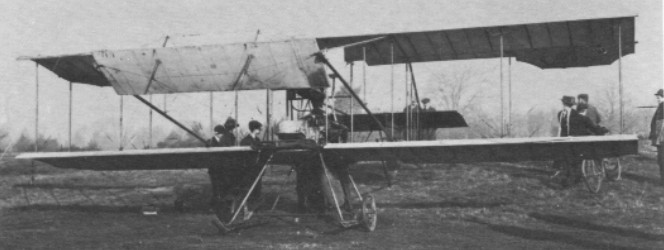
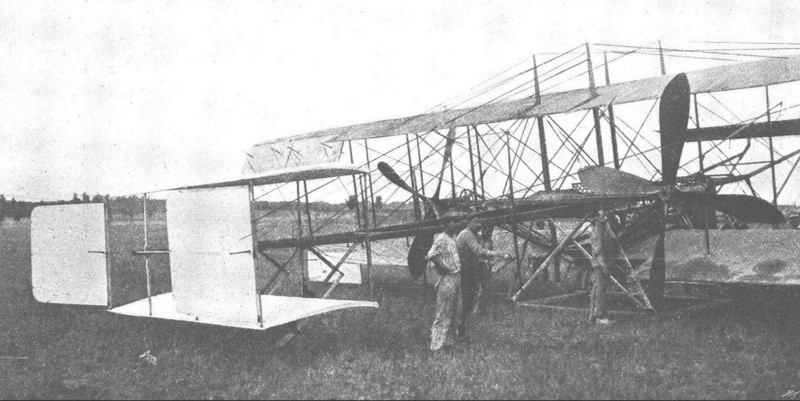
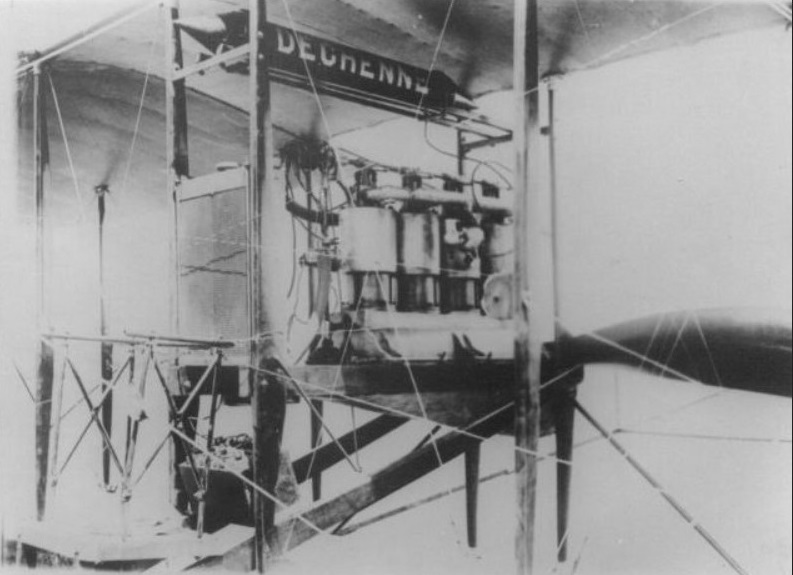
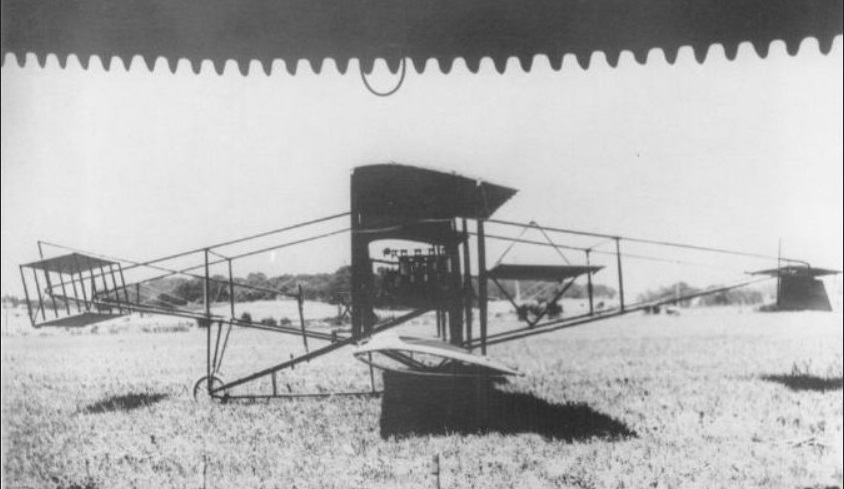
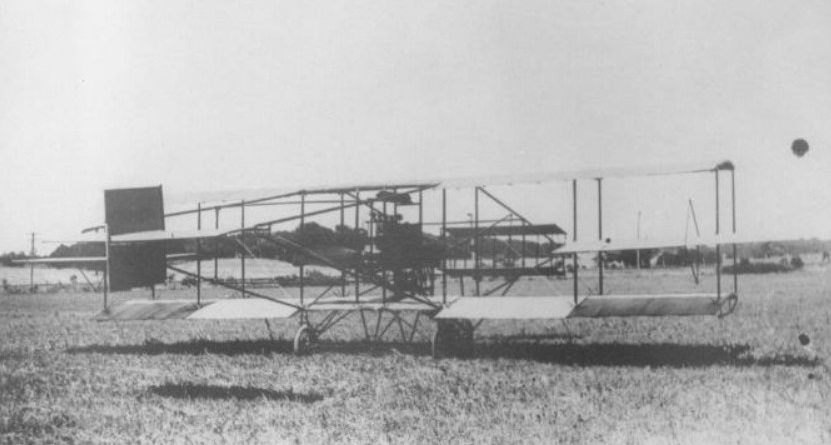
DeChenne 1911 Aeroplane             

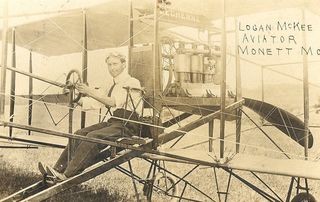
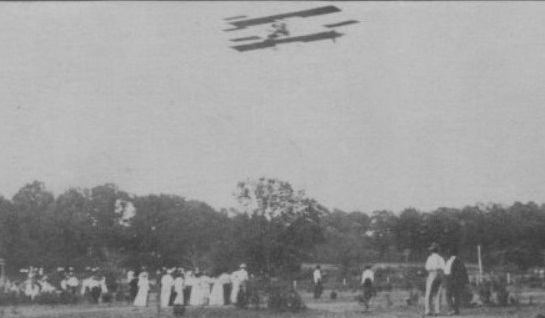
was a success and gave its first public demonstration flight at Monett on July 4, 1911, flown by Monett druggist Logan McKee. It then made an exhibition tour in Oklahoma and Texas.

The aeroplane made several straight away flights, going some distance, but hardly exceeding fifty feet in height, alighting in some pasture and returning to the grounds.” If I am reading this correctly, when McKee wanted to turn around, he landed and turned the plane around on the ground, then flew back to the fair grounds. Turning was by far the most dangerous maneuver in early flight, and making a plane that could turn safely was a major design challenge for early airplane builders. Either McKee was a very cautious pilot, or the DeChenne was a very limited aircraft. In any case, the DeChenne company received $1,000 for a two day exhibition at Caddo.

On October 6, 1911, Aero magazine carried a classified ad seeking a new pilot for the Dechenne, and on November 25, 1911, it carried an ad offering to sell the plane’s engine. “Cheap if taken soon. Reason, have closed for season and can make more by spring.” If the plane ever flew again after McKee, I have found no record of it. In February, 1913, Aero & Hydo magazine carried a “quitting business” ad offering to sell various assets of the DeChenne company.