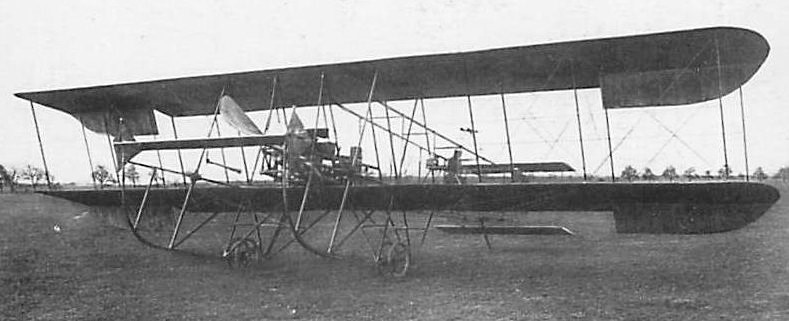
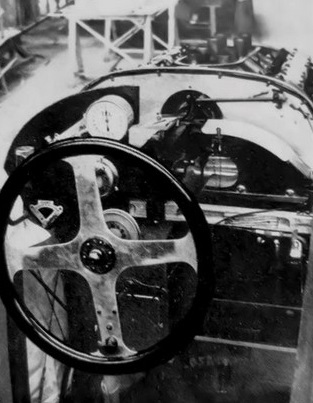
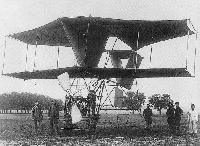
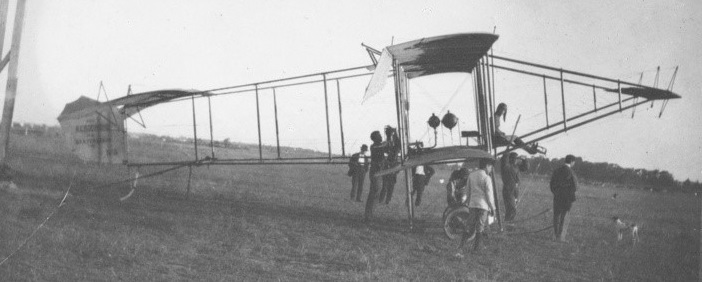
A design specially built for the testing of several components, like wings and propellers. The machine was loaded with all sorts of measurement instruments. As this was far before the time of automatic registration, these instruments were photographed in flight. At that time glass plate negatives were used for photographing. Interpretation was made on the ground.
The machine dates from 1910 (although first described in L’Aérophile 1912) and was continuously modified if needed for the tests. Dorand was an old hand in aeronautics as he was already assigned commander of the Établissement Aérostatique at Chalais-Meudon in 1894.
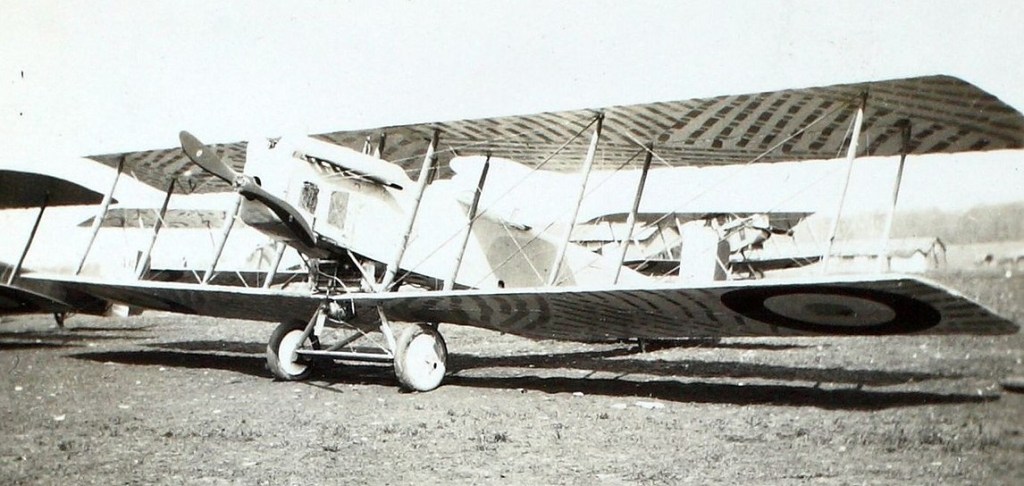
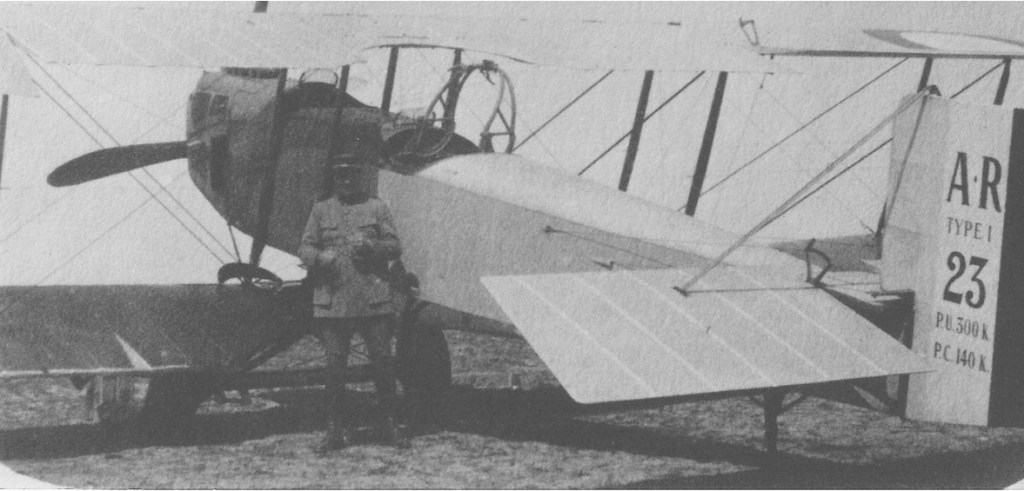
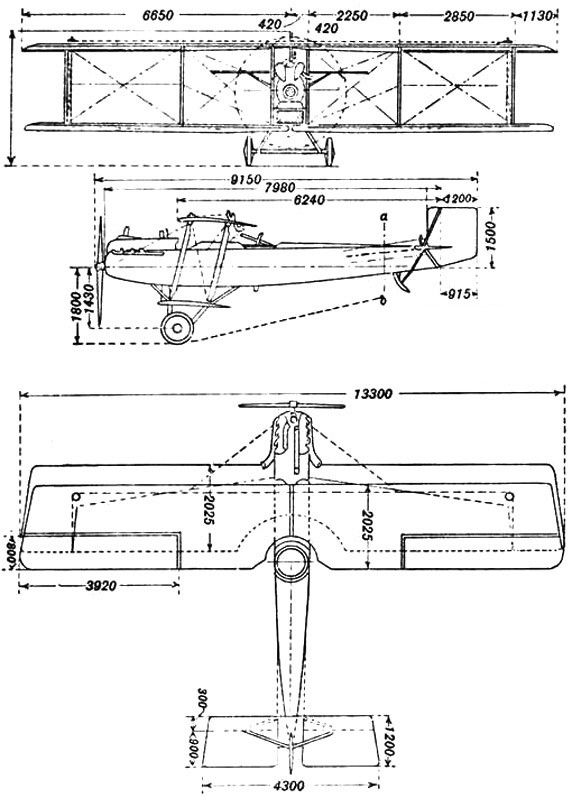
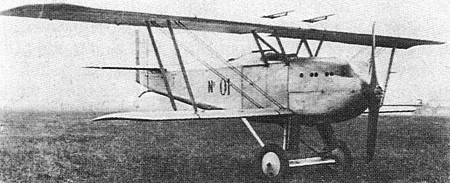
The Dorand AR.1 was a World War I French two-seat observation biplane aircraft used by the French Air Force, the American Expeditionary Force and, in small numbers, by Serbian Aviation.
Designed by Captain Georges Lepère of the STAé to replace the obsolescent Farman F.40 pusher aircraft, Dorand AR-series were two-seater reconnaissance biplanes that were named after the STAé director, Lt. Col. Dorand. They were characterized by backward-staggered two-bay wings and angular all-moving tail surfaces. The pilot sat beneath the leading edge of the upper wing, with the observer’s cockpit being under the trailing edge, and there were cut-outs in both wings to improve the latter’s field of view. Rather unusually for a single-engine tractor biplane of the era, the lower wing was not directly attached to the fuselage, instead being somewhat below it, supported by struts.
Dorand AR.1
Production of these aircraft began in a state-owned French Army Aircraft Establishment (or S.T.Aé.) factory at Chalais-Meudon, near Paris, after flight testing had been completed in the autumn 1916.
The first of the thirteen squadrons which flew Dorands on the Western Front received their aircraft in the spring 1917. Five other French squadrons used the type on the Italian Front. These aircraft were withdrawn from the combat units in early 1918.
In 1917 the American Expeditionary Force ordered the Renault-engined varieties of the Dorand, the first of 22 AR.1s being delivered in December 1917 and the first of 120 AR.2s in following February. The Americans operated these types on the Western Front for the first half 1918, until replacing them with the Salmson 2. After being retired from fighting duties, the surviving examples were used as trainers.
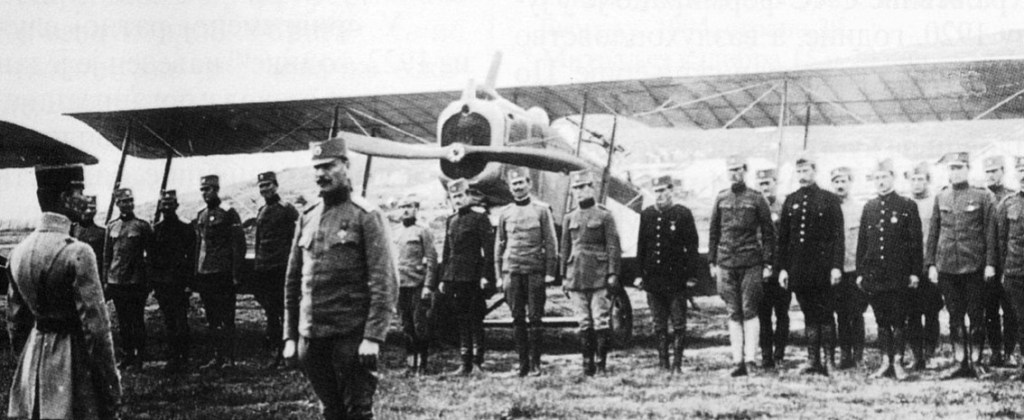
A small number of Dorand AR.1s were also supplied to Kingdom of Serbia, which operated these aircraft in four squadrons from April 1918 onwards.
Dorand AR.2’s of the first Serbian squadron
While the Dorand AR-types didn’t have a particularly distinguished career in either French or American service, having a rather mediocre performance for a late-war daytime reconnaissance aircraft and suffering from having low priority for engine supplies, it is a testimony to the general soundness of the design that after the war, many AR.1s and AR.2s appeared in the French civil register, being used as 2/3-passenger transports by companies like Compagnie Aérienne Française and Réseau Aérien Transafricain. Private users found the aircraft useful for training and joy-flights as well.
All these types had “A.2” added to their names in French service, indicating that they were two-seater reconnaissance aircraft.
1917
Variants:
AR.1 A2 160 Early production version, frontal radiators Engine: 120 kW (160 hp) Renault 8Gd Wing span: 13.27 m (43.5 ft)
AR.1 A2 200 Mid production version, frontal radiators Engine: 150 kW (200 hp) Renault 8Gdy Propeller: 2-bladed wooden fixed pitch Wing span: 13.27 m (43.5 ft) Wing area: 50.36 m2 (542.1 sq ft) Length: 8.225 m (27 ft 0 in) Empty weight: 890 kg (1,962 lb) Gross weight: 1,330 kg (2,932 lb) Wing loading: 26.4 kg/m2 (5.4 lb/sq ft) Power/mass: 0.143 kW/kg (0.087 hp/lb) Fuel capacity: 170 L (37 imp gal) Maximum speed: 148 km/h (92 mph, 80 kn) at 2,000 m (6,600 ft) Endurance: 3 hours Service ceiling: 5,500 m (18,000 ft) Crew: 2 (pilot and observer) Armament: 1 × fixed forward-firing 7.7 mm (.303 in) Vickers mg / 1 or 2 × 7.7 mm (.303 in) Lewis gun(s) for observer
AR.1 A2 190 Late production version, frontal radiators Engine: 140 kW (190 hp) Renault 8Gd Wing span: 13.27 m (43.5 ft)
The first special military aeroplane ever built. It was specially designed by Capt. Dorand, for what were then held to be the aerial necessities of the French Army. The planes were placed well above the body, giving the pilot a very clear uninterrupted view.
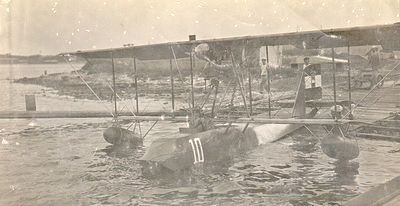
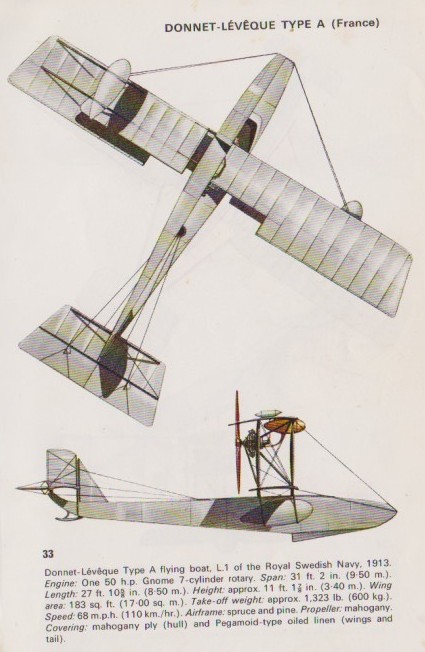
In 1912 four Donnet-Lévêque flying boats type A (no ailerons) and type C (with ailerons) – assigned numbers from 8 to 12 – were obtained by K.u.k. Seeflugwesen. A two-place hulled hydroplane designed by Francois Denhaut, they were powered by a 50 hp Gnome engine.
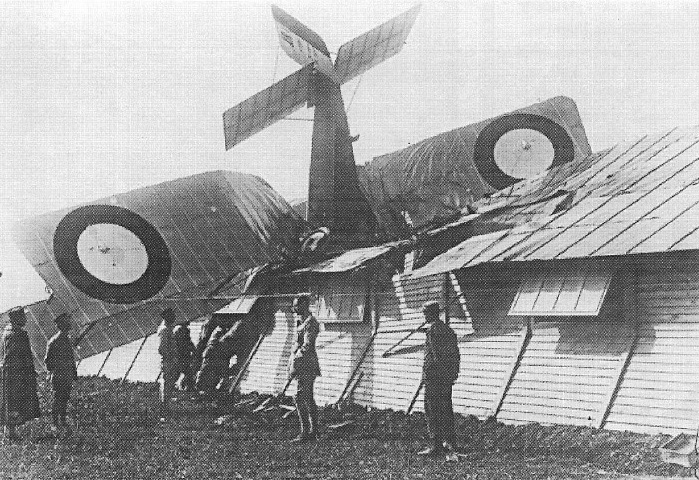
Aircraft sporting number 10 entered service on January 4, 1913 and was written off in December 1913 due to damage sustained in a crash.
At Argenteuil in 1913, piloted by the marine Konning
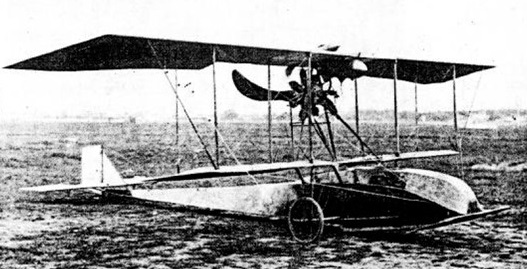
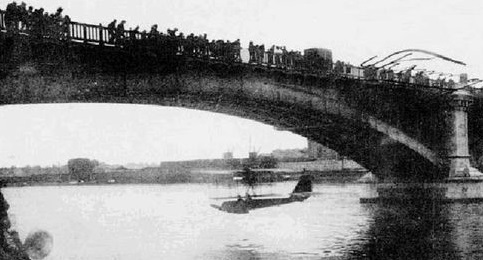
On 9 August 1912, Jean Conneau (also known as Beaumont) attempted a Paris-to-London flight. He took off from the Seine, near Bezons, made stops at Quilleboeuf and Le Havre, and the landed at Boulogne-sur-Mer where an accident cancelled the flight.
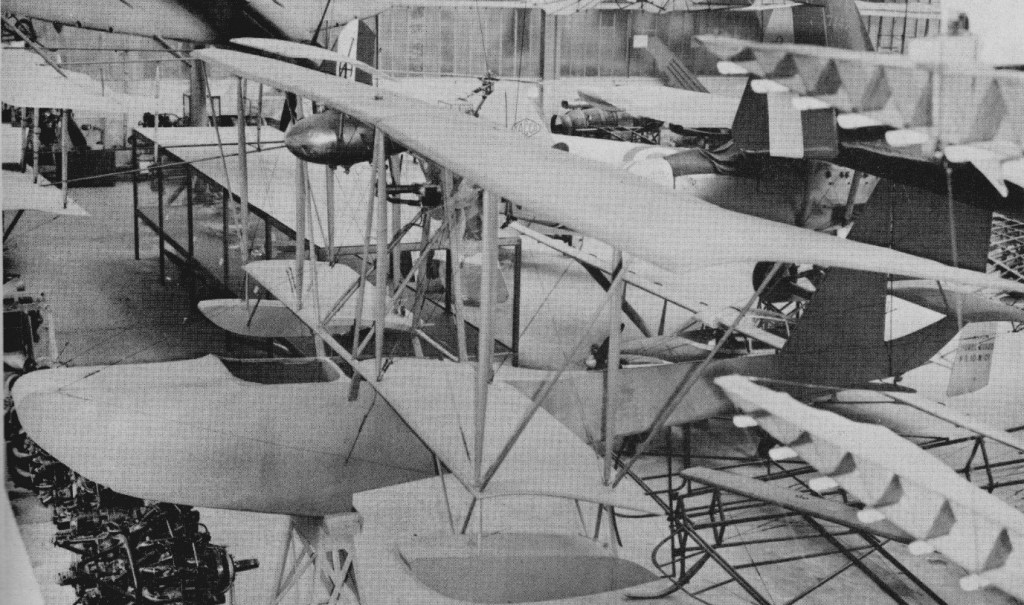
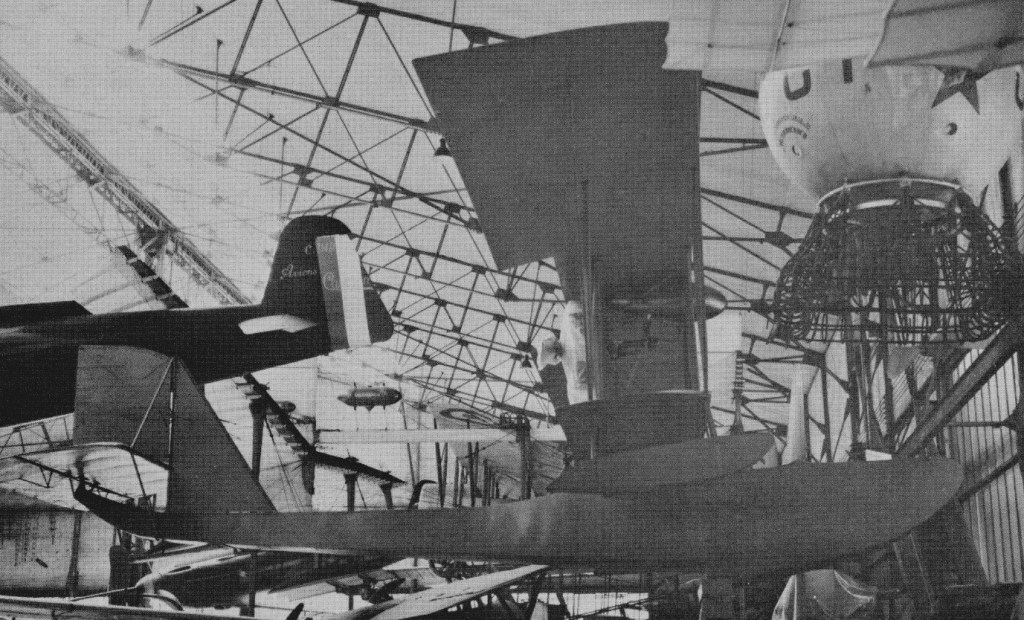
Jean Conneau’s aircraft was donated to the Musse de L’Air by the Schreck concern.
Jean Conneau’s aircraft
Engine: Gnome, 50 hp Wingspan: 31.16 ft Length: 28.86 ft
One of the designs of the Russian flying instructor A. Ya. Dokuchayev [А. Я. Докучаев]. The 1913-1914 number 3 machine – the Докучаев-3 – was based on two Henry Farman design which gives this mix. The front part is based on the Farman-VII and the tail side is based on the Farman-XVI (about equal with the French HF.20). This resulted in this one-off pusher trainer, fitted with a 80 hp Gnôme rotary engine. The instructor seat is right behind the seat of the pupil, somewhat higher placed so that he can see easily to the front. He could also guide the steering done by the pupil (or take it over).
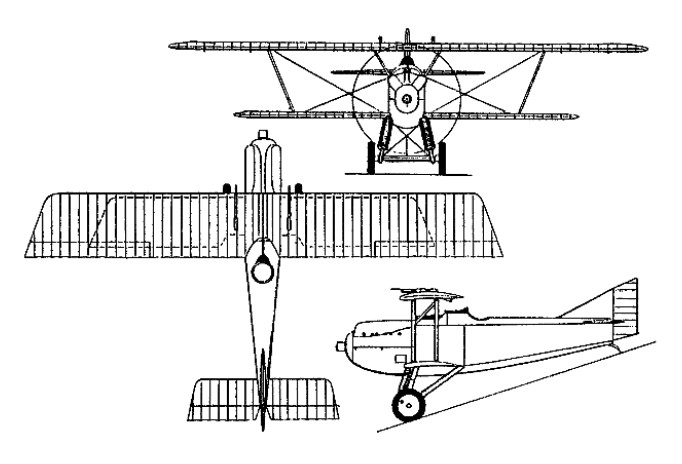
The only single-seat biplane configuration fighter built by Emile Dewoitine, the D 15 was proposed as a simpler and more economic (from the structural viewpoint) fighter than the D 9, D 12 and D 19 monoplanes. Powered by a 450hp Hispano-Suiza 12Ha (HS 51) 12-cylinder liquid-cooled Vee engine, the D 15 had fabric-covered metal wings with ailerons on the upper wing only. The metal fuselage with steel longeron and duralumin tube cross-member construction with fabric-covered sides and light metal upper and lower decking. Armament was two fuselage mounted 7.7mm Vickers guns and two 7.5mm Darne guns mounted on the upper wing centre section. Flown on 13 August 1924, the D 15 displayed inadequate longitudinal and lateral stability, and, after modification, proved to possess inferior performance to the lower-powered D 19 monoplane during CEPA (Commission des Essais Pratiques de l’Aviation) testing at Villacoublay during the autumn of 1924. It was not submitted for STAe evaluation of 1923 C1 programme contenders held in 1925-26.
Take-off weight: 1535 kg / 3384 lb Empty weight: 1040 kg / 2293 lb Wingspan: 12.00 m / 39 ft 4 in Length: 7.40 m / 24 ft 3 in Height: 3.54 m / 11 ft 7 in Wing area: 30.00 sq.m / 322.92 sq ft
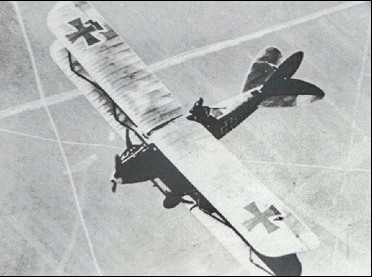
With the power of a 200hp Benz Bz IV, the top level speed was 155km/h at 1000m, while the C.V’s operational ceiling was 5000m. Built not just by DFW, but by four other sub-contractors. Just under 1,000 were in operation on every front at the end of September 1917. Armament comprised the standard 7.92mm guns, one fixed forward-firing and one mounted in the rear cockpit, plus light bombs.
Max. speed: 155 km/h / 96 mph Ceiling: 5000 m / 16400 ft
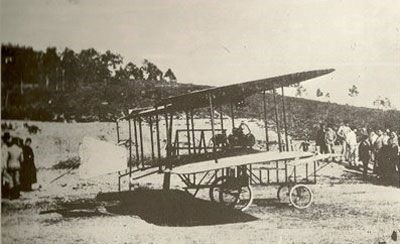
This canard biplane, a creation of inventor Abeillard Gomes da Silva, was tested at Tancos, Portugal in 1910. Several unsuccessful take-off attempts were made, before the craft was damaged and then abandoned. It had a wingspan of 6.75 m, weighed 185 kg and was powered by a 28 hp Anzani.
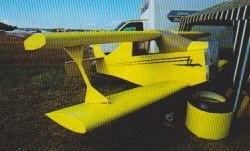
Single-seat biplane with forward-staggered wings, the Staggerlite is a reproduction of the Beech Staggerwing. Construction is of wood and polystyrene foam.
Empty weight: 113 kg Wing span: 5.48 m Wing area: 11.20 sq.m Fuel capacity: 19 lt MAUW: 226 kg Seats: 1 Kit price (1998): US$2695
 All Aero