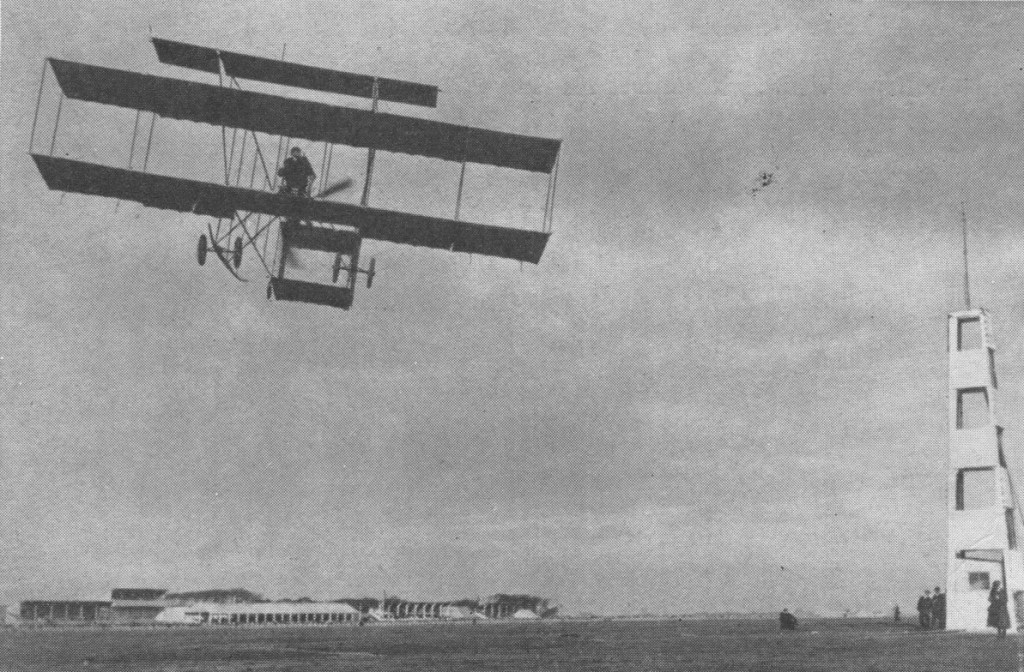
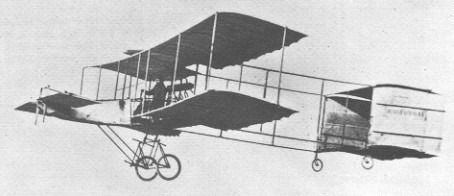
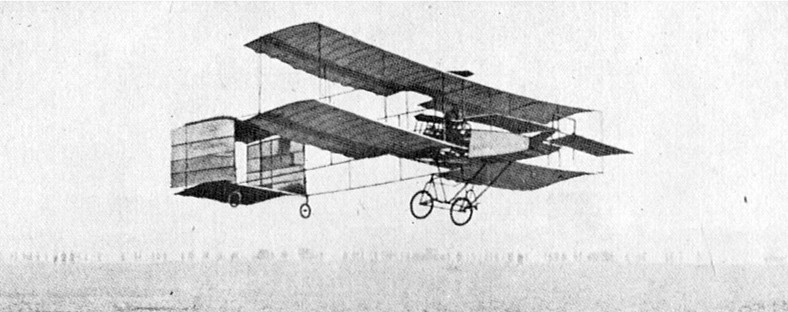
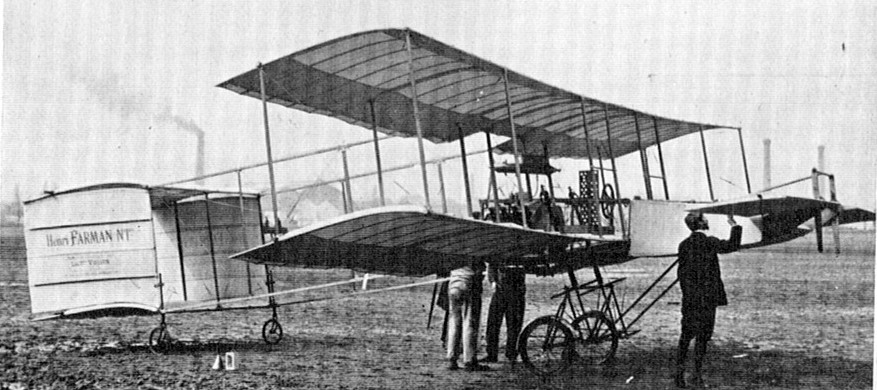
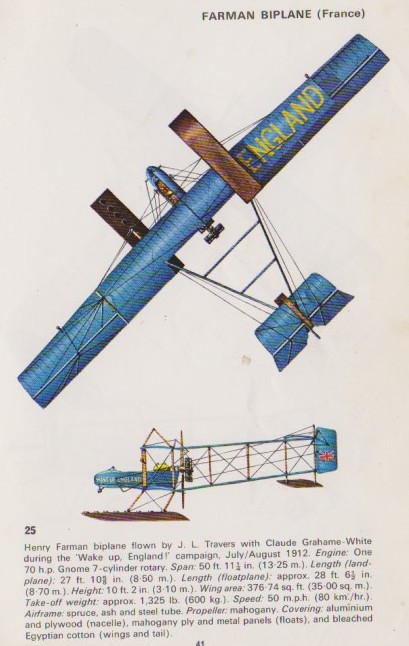
In 1909 Farman designed and built his own machine, which he entered at the great Rheims meet. On July 18, 1909, he flew for one hr. 23 mins, at Chalons, and on August 27 he made a 180-km flight in 3:04:56.4 at Rheims, official world record for distance and duration, winning first prize. On the twenty-eighth, he flew 10 km in 10:39 with two added passengers, the first time three were carried in airplane.
He next flew prominently at Blackpool meet, England, and won first duration and distance prize of $10,000, on October 20, 1909. On November 3 he flew 232 km in 4:17:53 at Mourmelon, another new world duration and distance record.
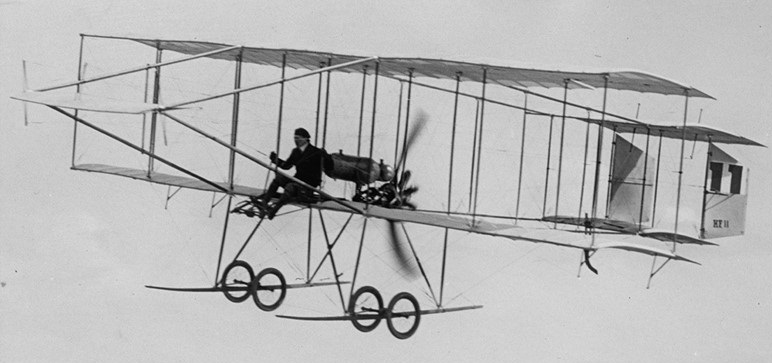
Two identical pusher biplane machines, with Antoinette engines, had been built by the Voisin brothers for two early aviation pioneers, one for Léon Delagrange in March 1907, and the second for his friend and rival the Anglo-French pioneer Henry Farman (1874-1958) in October 1907. The latter biplane became known as the Voisin-Farman I and Farman made a number of modifications of his own during the autumn of that year. Thus, the Voisin-Farman 1 became the Voisin-Farman 1bis; it was flown by Farman on 13 January 1908 to win the Archdeacon’s Grand Prix d’Aviation prize for making the successful first one-kilometer closed-circuit flight.
Built for Farman by Voisin Frères, Charles and Gabriel – often referred to as the Voisin-Farman 1 or Voisin HF-1 – yet sometimes called the Farman HF-1, since after delivery from the Voisin Factory, Henry Farman made significant modifications to the machine. This Voisin-built Farman had no ailerons and no wing warping, the only thing to do was to fly a very steady level turn.
In this form it became the first aeroplane, after the Wright Flyer No. 2, 1904, to remain airborne for over a minute and turn a complete circle. The latter flight, made on 13th January, 1908, won Farman the Deutsch Archdeacon prize of 50,000 francs for completing the first official circle of one kilometre in diameter.
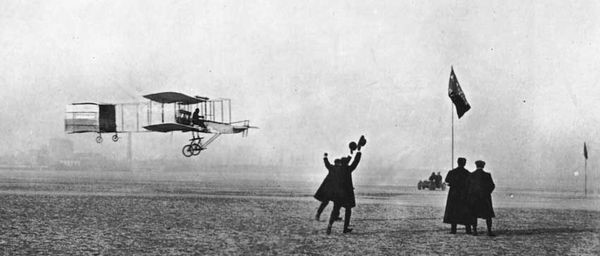
The photograph shows Farman at the moment he crosses the start/finish line at Issy-les-Moulineaux in completing, on January 13, 1908, the first 1 km circuitous flight, thus winning the Grand Prix d’Aviation that had been offered by Henri Deutsch de la Meurthe. Although the two points (start and return) were exactly at 500 m distance, Farman was unable to fly the aeroplane in that way. Observers in the photo from left to right are: René Demanest, André Fournier, Louis Blériot (commissaire au départ et à l’arrivée) and Charles Voisin. In the car are Ernest Archdeacon (one of the prize sponsors) and his wife.
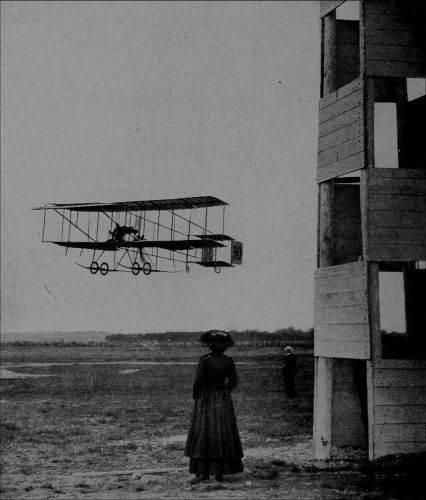
The Champagne Grand Prize Won by Henry Farman – 80 Kilometre’s in 3 hours
Farman had modified hid Voisin machine in January-February 1908 and with it made flights of nearly 45 minutes duration.
Farman again modified his Voisin in October 1908 as the Voisin-Farman I-bis, making it the first European machine to incorporate successful ailerons.
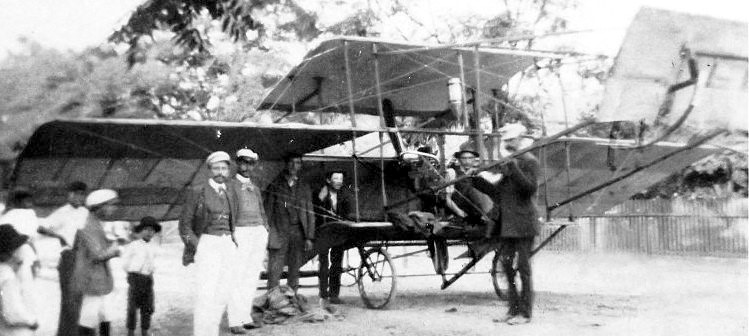
Károly Faludi (1872-1974), more known as an actor and singer later in his life, built two airplanes, powered by a 25 hp three-cylinder engine. One was a monoplane and one was a biplane, both with a raised central wing surface. They both crashed at their first test flights in Nagikanizsa in southwest Hungary, the first in the summer and second in October of 1910.
The 1909 Faludy III biplane was designed and built by Karoly Faludy in Hungary.
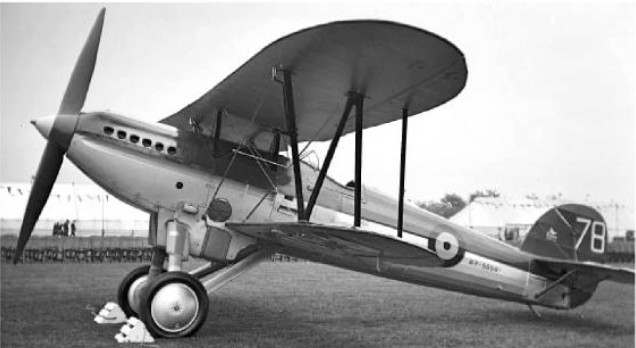
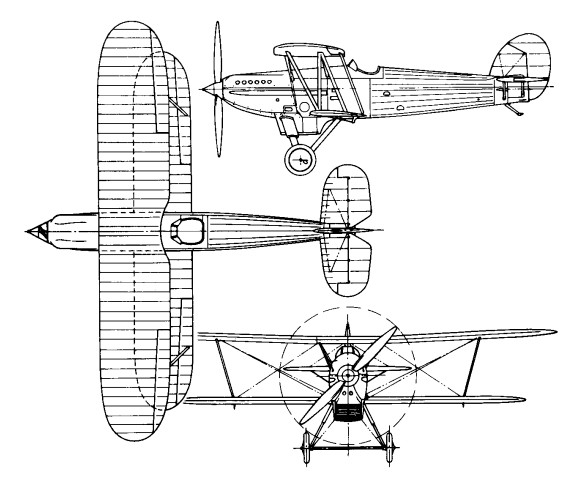
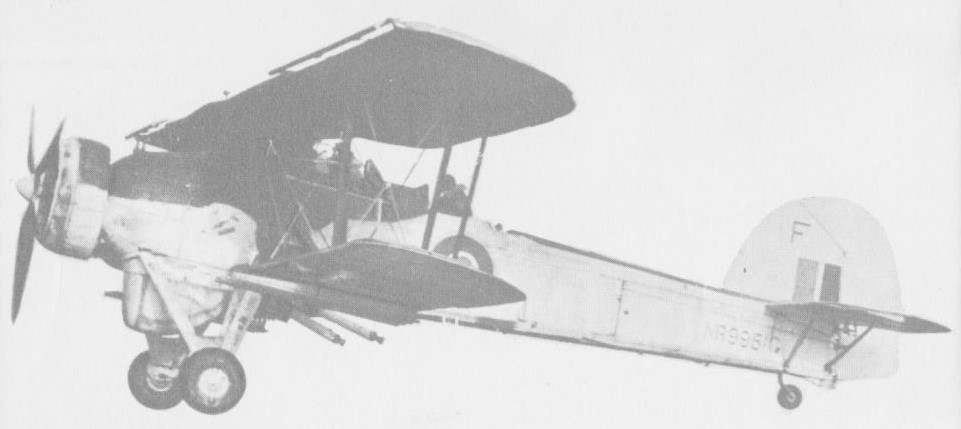
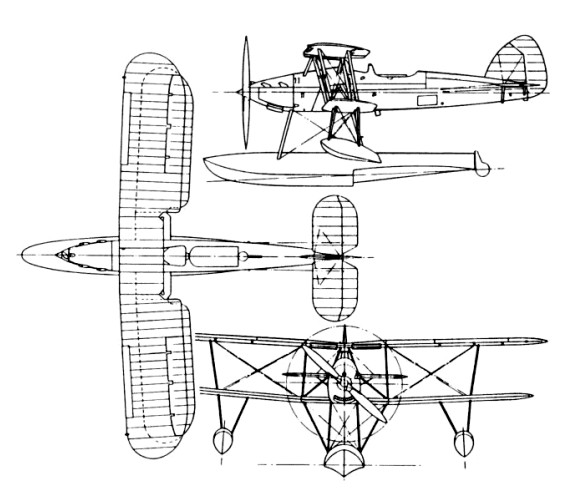
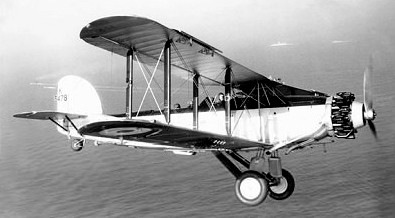
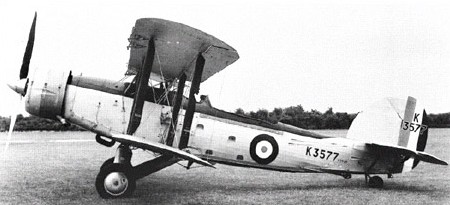
Air Ministry Specification G.4/31 called for a General Purpose aircraft, capable of level bombing, army co-operation, dive bombing, reconnaissance, casualty evacuation and torpedo bombing. The Vickers Type 253 won against the Fairey G.4/31, Westland PV-7, Handley Page HP.47, Armstrong Whitworth AW.19, Blackburn B-7, Hawker PV-4 and the Parnell G.4/31. One prototype Fairey G.4/31 was built, first flown on 29 March 1934.
Engine; 1 x 750hp Armstrong Siddeley Tiger IV Take-off weight; 3991 kg / 8799 lb Empty weight; 3172 kg / 6993 lb Wingspan; 16.15 m / 52 ft 12 in Length; 12.45 m / 40 ft 10 in Height; 4.78 m / 15 ft 8 in Wing area; 61.13 sq.m / 658.00 sq ft Max. Speed; 253 km/h / 157 mph Ceiling; 7071 m / 23200 ft Crew; 2-3 Armament; 2 x 7.7mm machine-guns, 1 x 450kg or 3 x 227kg bombs or 1 torpedo
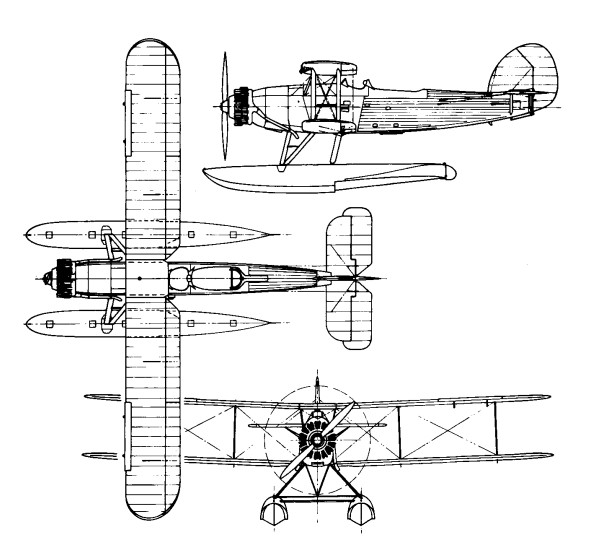
In 1933 the Fairey Aviation Company privately financed and built the TSR.1, a biplane torpedo spotter reconnaissance aircraft, from which the Swordfish evolved. Although the first TSR.I crashed, it had undergone sufficient tests to prove the feasibility of the design, and Fairey built the TSR.II, a slightly larger aircraft. It was designed by Marcelle Lobelle to meet the Naval Spec S.15/33.
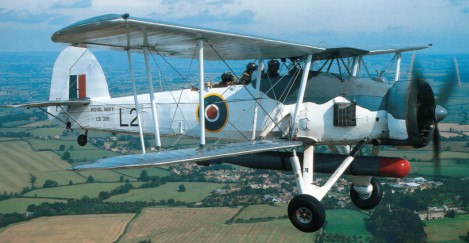
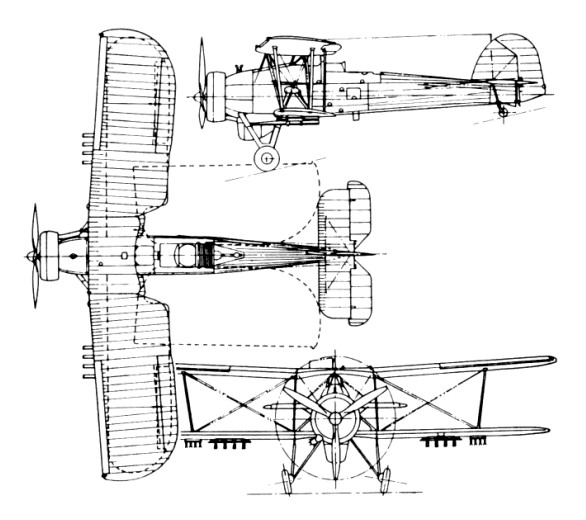
First flying from Harmondsworth on 17 April 1934, and after numerous modifications a specification (S.38/34) was written around the aircraft. Official testing proved it to be a stable and reliable aircraft. The fuselage, 36ft 4in long, was rectangular in section and featured a bolted steel tube frame. The aft portion was fabric covered, but detachable metal panels, for easy access, were fitted from the cockpit forward. The crew consisted of a pilot, navigator and bomb-aimer. The equal span biplane wings were of fabric covered metal construction, and the upper wing centre section was attached to the fuselage by a pyramid structure and carried the hoisting sling. The lower wings were braced to the fuselage by an inverted V strut. The wing cellules could be manually folded for compact storage. The leading edge of the upper wing was fitted with Handley Page slots, and ailerons were fitted to both upper and lower wings. The undercarriage used medium pressure tyres and pneumatic brakes. Each of the main units consisted of an oleo shock absorber leg connected to the lower centre section front spar, and two inner struts hinged to the fuselage. The design was strengthened to withstand catapult launches and arrester hook landings. Early production Swordfish, built to Air Ministry Specification S.33/34, were powered by an air cooled 690 hp Bristol Pegasus IIIM3 radial engine. Blessed with superb handling characteristics, the Swordfish performed extremely well on carrier borne operations, being able to operate from pitching decks in stormy conditions. It had a range of 546 miles and a maximum speed of 138 mph at 5,000ft.
The propeller was a three-blade Fairey-Reed metal.
The Swordfish carried 155 Imp.Gal / 705 lt of fuel in its min tank and 12.5 Imp.Gal / 57 lt in a gravity tank, both behind the Pegasus IIIM3 or Mk.30 engine.
The first batch of production Fairey Swordfish rolled off the assembly line during December 1935, and were operating with the Royal Navy’s Fleet Air Arm (FAA) within two months. By 1939, on the eve of the Second World War, there were 13 operational squadrons of the type. A total of 689 aircraft had been delivered or were on order. The Swordfish Mk I’s defensive armament comprised a fixed forward firing synchronised Vickers machine gun and a movable Vickers K gun on a Fairey high speed mounting in the rear cockpit. The offensive load could be a single 18in 1,610 lb torpedo, or one 1,500 lb mine, or 1,500 lb of bombs. The Mk II, which appeared in 1943, had a strengthened lower wing capable of carrying eight 601b rocket projectiles. The final production version, the Mk III, had an ASV Mk X radar scanner in a radome under the fuselage. In Canada, canopy equipped Mk.IIs and IIIs were designated Mk IVs. The No 1 Naval Air Gunners School at Yarmouth, Nova Scotia, operated 105 Swordfish. Considered obsolete at the beginning of the war, the Swordfish outlived its successors and survived the war with an impressive battle record; the type is credited with sinking a greater tonnage of Axis shipping than any other torpedo bomber.
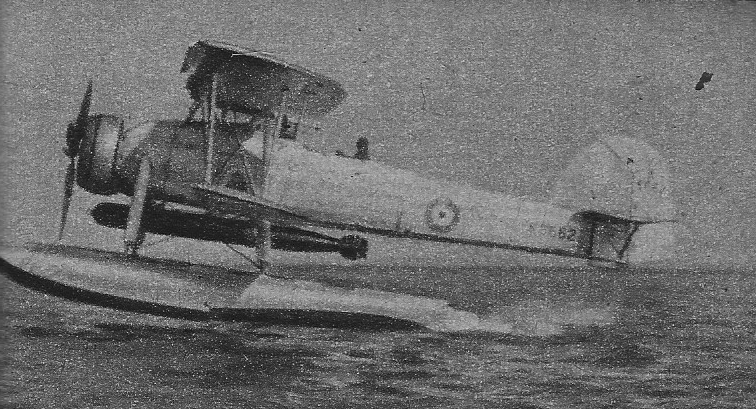
The Swordfish first made big news in the seaplane form, when a Swordfish catapulted from HMS Warspite not only spotted for the British naval force during the battle in Ofot Fiord, Norway, on April 13, 1940, but itself bombed and sank a submarine and fin¬ished off an enemy destroyer that had been dam¬aged by the ships. Seven months later, Swordfish from the carrier Illustrious achieved one of the most spectacular successes in naval air warfare. In two waves or twelve and nine aircraft, they dived into Taranto Harbour under cover of darkness and launched their bombs and torpedoes to such effect that three Italian battleships, a cruiser and two destroyers were seriously damaged, two naval auxiliaries sunk and shore installations heavily damaged all for a loss of two Swordfish. Another major success was achieved on May 26, 1941, when Swordfish of 818 Squadron so crippled the battleship Bismarck that the Navy was able to intercept and sink it. The well remembered attack on the Scharnhorst and Gneisenau in the Channel cost the lives of 13 of the 18 men who took part. Outliving its intended replacements, the Fairey Albacore and Barracuda, the Swordfish served until the war’s end. Production ended on 18 August 1944, by which time a total of 2,396 Swordfish were built.
Engine: Bristol Pegasus, 690 hp Wingspan: 45 ft 6 in Length: 36 ft 4 in Takeoff weight: 9250 lb Max speed: 139 mph Seats: 2-3
Swordfish Mk II Engine: 1 x Bristol Pegasus XXX, 559kW / 740 hp Max take-off weight: 3406 kg / 7509 lb Empty weight: 2132 kg / 4700 lb Wing loading: 12.3 lb/sq.ft / 60.0 kg/sq.m Wingspan: 13.87 m / 45 ft 6 in Length: 10.87 m / 35 ft 8 in Height: 3.76 m / 12 ft 4 in Wing area: 56.39 sq.m / 606.98 sq ft Max. speed: 120 kt / 222 km/h / 138 mph Cruise speed: 104 kt / 193 km/h / 120 mph Service ceiling: 3260 m / 10700 ft Range: 1658 km / 1030 miles Armament: 2 x 7.7mm machine-guns, 1 x 730kg torpedo or 680kg of bombs Crew: 2-3
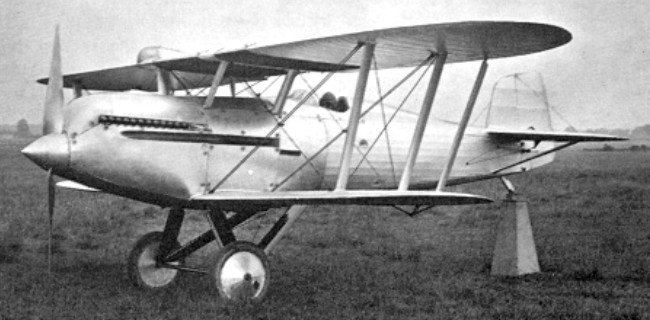
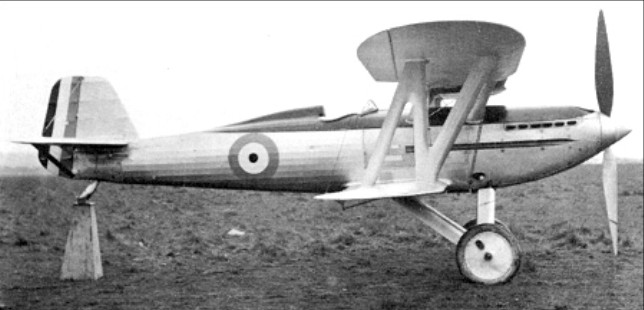
In 1933 the Fairey Aviation Company privately financed and built the TSR.1, a biplane torpedo spotter reconnaissance aircraft, from which the Swordfish evolved. Although the first TSR.I crashed, it had undergone sufficient tests to prove the feasibility of the design, and Fairey built the TSR.II, a slightly larger aircraft.
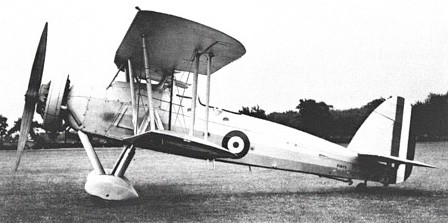
One S.9/30 prototype, first flown on 22 February 1934. One TSR.1 prototype, first flown on 21 March 1933. No production.
S.9/30 (landplane) Engine; 1 x 525hp Rolls-Royce Kestrel IIMS Max take-off weight; 2606 kg / 5745 lb Wingspan; 14.02 m / 45 ft 12 in Length: 10.39 m / 34 ft 1 in Height: 4.27 m / 14 ft 0 in Wing area: 41.06 sq.m / 441.97 sq ft Max. speed: 237 km/h / 147 mph Armament; 1 x 7.7mm machine-gun, 540kg of bombs Crew; 3
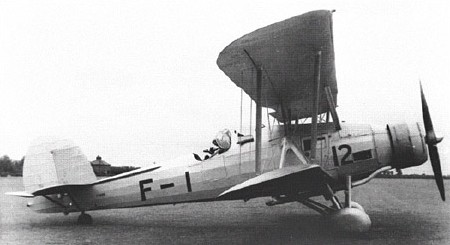
A further development of the IIIF Mk VI went under the designation Seal. The Seal was the Fleet Air Arm version of the Gordon and was operated as a three-seat spotter-reconnaissance biplane. Equipment unique to the Seal were a tailwheel, wheel brakes, catapult points, flotation gear, slinging gear and an arrester hook, enabling it to be used from aircraft carriers and as a seaplane from warships. 90 were delivered to the FAA between 1933 and 1935 (the 91st Seal ordered but thought not to have been delivered.
Seals were also sold to Peru, Latvia, Argentina and Chile. Late in their career a number of Seals passed into RAF service, remaining operational in Ceylon during the early years of World War II.
Engine; 1 x 525hp Armstrong Siddeley Panther IIA Max take-off weight; 2724 kg / 6005 lb Wingspan; 13.94 m / 45 ft 9 in Length; 10.26 m / 33 ft 8 in Height; 3.89 m / 12 ft 9 in Wing area; 41.20 sq.m / 443.47 sq ft Max. speed; 222 km/h / 138 mph Ceiling; 5182 m / 17000 ft Range; 773 km / 480 miles Armament; 2 x 7.7mm machine-guns, 2 x 110kg bombs Crew; 3