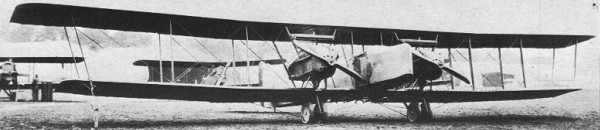
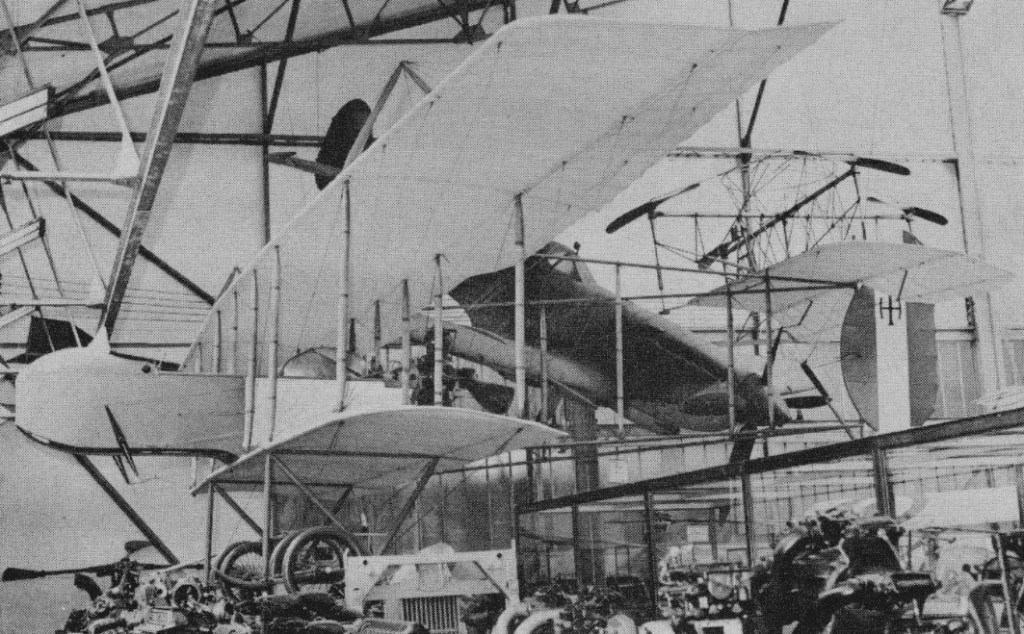
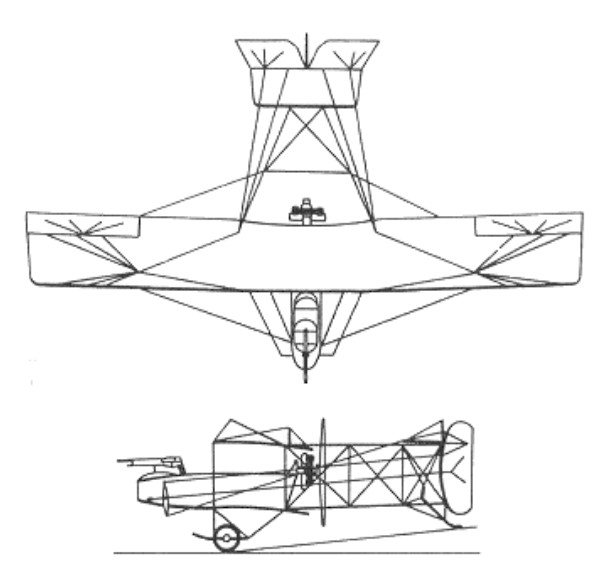
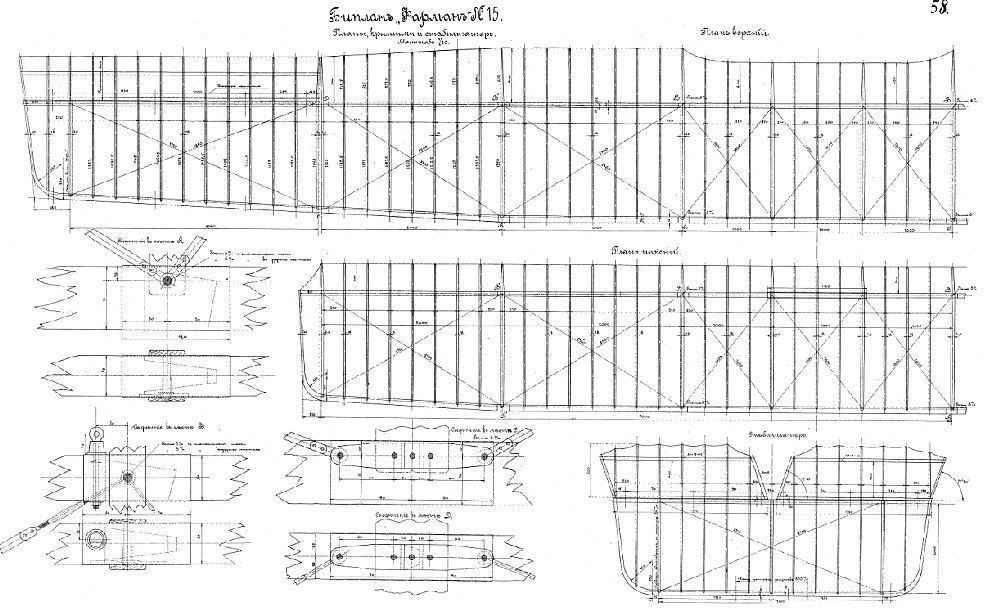
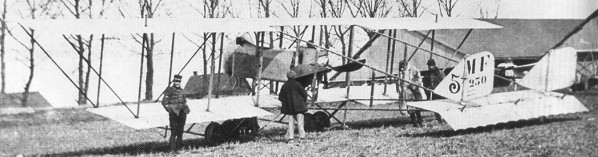
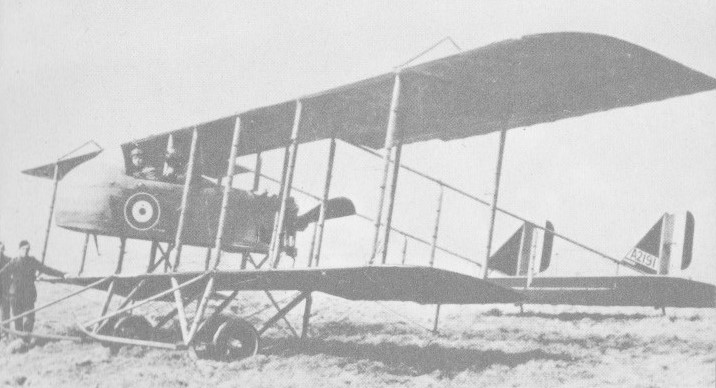
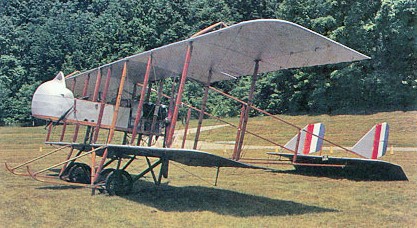
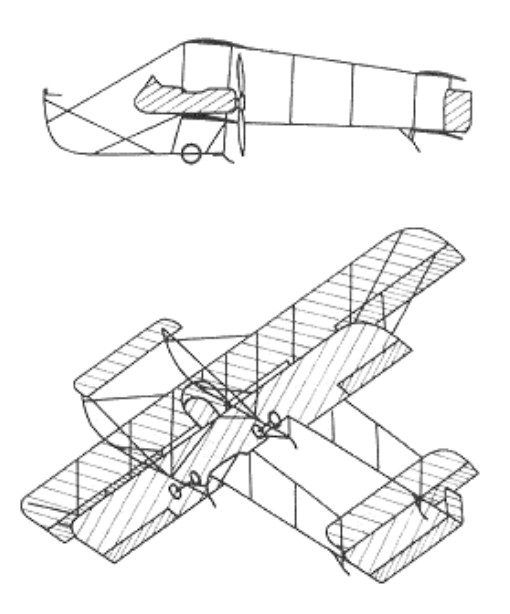
The F.50 bomber was a large tractor machine able to carry a significant load of heavier bombs. It was normally powered by two 250/265 hp Lorraine Dietrich engines, and in appearance strongly resembled the enemy Gothas. The front gunner/ bomb aimer was in the nose and the pilot just ahead of the wings; there was no rear cockpit for a gunner to provide defence astern. There were two twin wheel landing gears, between which were racks for eight 75 kg (165 lb) bombs. Two escadrilles of the Aviation Militaire used this type, and two were supplied to the AEF. The F.50BN 2 operating as a night bomber in 1918. Several survived for some years with the French navy (as torpedo bombers), in Japan and as civil transports.
Span: 22.9 m (75 ft 1.5 in) Length: 12.03 m (39 ft 5.75 in) Gross weight: 3116 kg (6870 lb) Maximum speed: 150 km/h (93 mph)
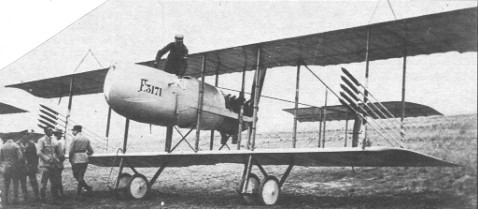
The last important pusher type produced by Henry and Maurice Farman was the F.40 and F.41 reconnaissance bombers, produced by the brothers’ new joint company at the end of 1915.
It derived from the F.30, the F.40 was a more refined aircraft, again with the gunner in the nose with a Hotchkiss or Lewis and the pilot seated behind. The usual engine was the 160 hp Renault V 8. The F.41 had a shorter span, less powerful Renault engine and reduced performance. The F.40 and 41 were used in large numbers by the Aviation Militaire, equipping 47 escadrilles on the Western Front and in Macedonia. Even in 1916 they were no match for enemy scouts, and many were lost. By 1917, they were used mainly by night, and continued in use until the Bre.XIV became available in numbers late in that year.
A few F.40s (F.40P) were armed with Le Prieu rockets and used against balloons.
F.40
F.40 Engine: Renault, 130 hp Span: 17.60 m (57 ft 10 in) Length: 9.25 m (30 ft 4 in) Gross weight: 1120 kg (2470 lb) Maximum speed: 135 km/h (84 mph)
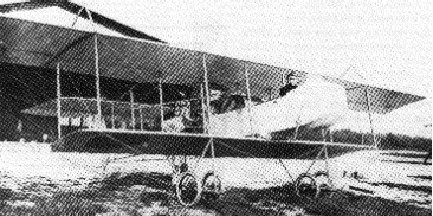
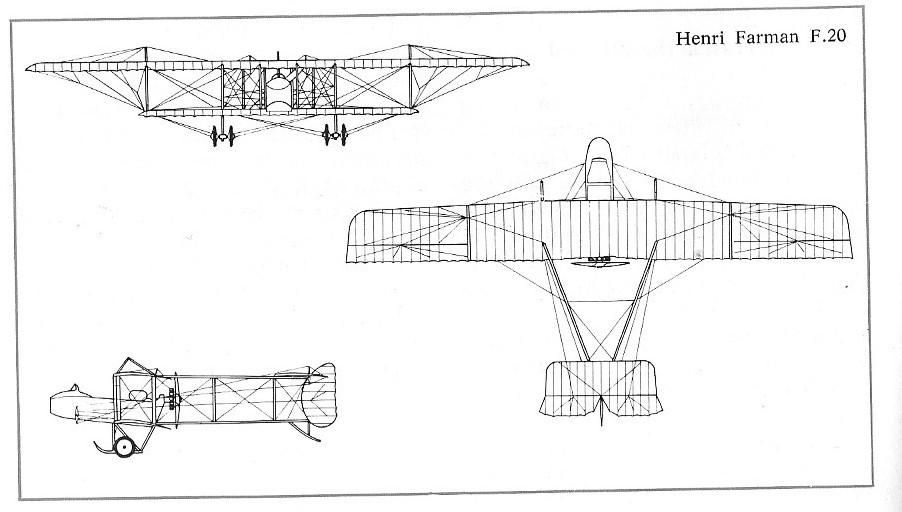
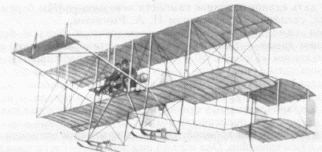
The two-seat H.F.20 was in service with the French and Belgian military in 1913 and was basically a refined “Shorthorn”, with a 59.6kW Gnome rotary engine driving a pusher propeller. With the outbreak of World War I the type was used also by the British air services for scouting and light bombing but achieved only marginal success as a reconnaissance type and then trainer.
H.F.21
By substituting the Gnome for a Le Rhone engine of similar power it was hoped to extend the aircraft’s capabilities, but the resulting H.F.21 was obsolete. In a final attempt to rectify the tremendous lack of power the H.F.27 was developed with a 104.3kW or 119kW Canton-Unne engine – as fitted to the equally light but far more successful early Voisin types. The resulting aircraft was sufficiently promising to be deployed on secondary war fronts.
Engine: 1 x Gnome, 59kW Max take-off weight: 660 kg / 1455 lb Empty weight: 360 kg / 794 lb Wingspan: 14.0 m / 45 ft 11 in Length: 8.3 m / 27 ft 3 in Height: 3.2 m / 10 ft 6 in Wing area: 35.0 sq.m / 376.74 sq ft Max. speed: 110 km/h / 68 mph Ceiling: 315 m / 1050 ft Range w/max.fuel: 250 km / 155 miles Armament: 1 machine-guns Crew: 2
HF.20 Engine: Gnome 7A. 80 hp Wingspan: 44 ft 10 in / 15.54 m Length: 27 ft 9 in / 8.79 m Height: 10 ft / 3.1 m Weight: 1565 lb / 710 kg Max speed: 65 mph / 100 kph at SL Ceiling: 9022 ft / 2750 m Endurance: 3 hr 20 min Armament: 1 x mg Crew: 2
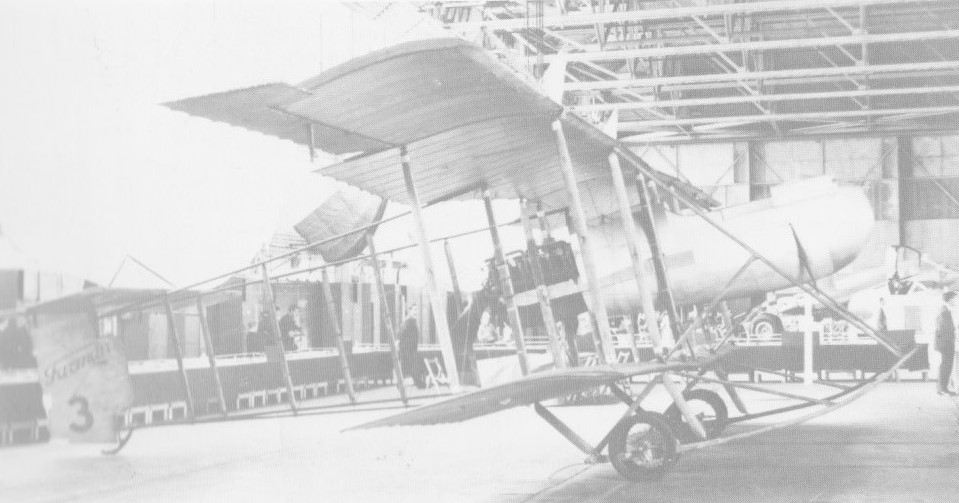
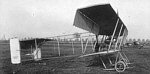
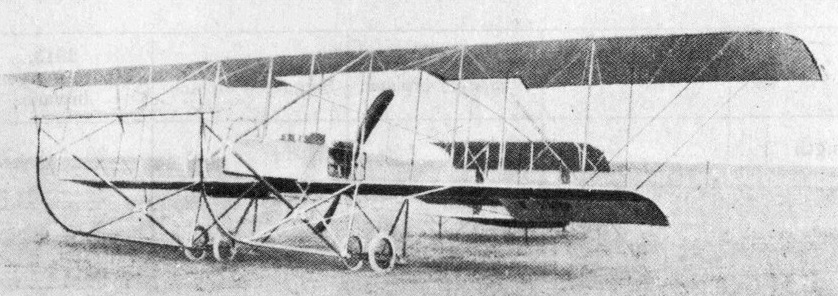
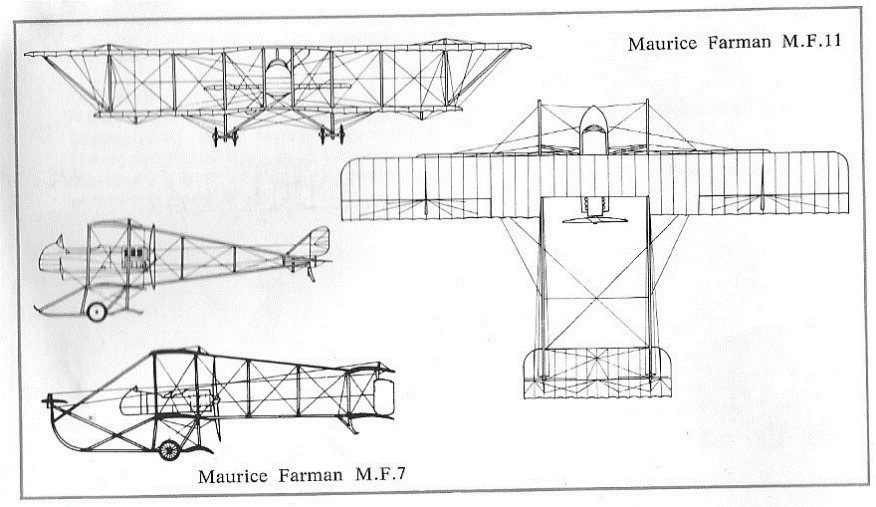
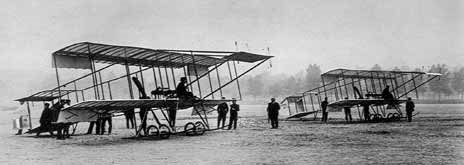
The M.F.11 retained the same basic configuration as Maurice Farman’s preceeding M.F.7, but introduced a number of refinements and one radical change: the forward elevator that had led the British to give the nickname “Longhorn” to the M.F.7 was abandoned, and the British dubbed the M.F.11 the “Shorthorn”. The tail unit was re-designed to have a single tailplane, elevator, and twin rudders. Another visually notable change was an alteration in the position of the nacelle, which was raised from the upper surface of the lower wing to a point between the upper and lower wings. It was the first Farman design to be armed, being employed on bombing and reconnaissance duties.
The M.F. 11 first flew in 1914 and entered service in 1915 with an assortment of engine types delivering anything between 70 and 130 hp (52 and 97 kW), though the most common units were De Dion or Renault engines; aircraft licence-built in Italy by S.I.A. had Renault or Fiat A.l0 engines.
The Shorthorn was also built in England by the Aircraft Manufacturing Company, the forerunner of the de Havilland aircraft company, used by both the RFC and RNAS. One of the RNAS machines dropped eighteen 16-lb bombs on enemy positions near Ostend on 21 December 1913 as the first-ever military night operation.
In the basic M.F. 11 the pilot was seated in front of the observer, but in the MF.11bis developed by Maurice’s brother, Henry Farman, the observer was given a better field of fire for his gun by being seated in front of the pilot.
The Farman MF 11 served in considerable numbers, equipping 37 French escadrilles, six squadrons of the RFC on the Western Front and other RFC/RNAS units in Mesopotamia, the Dardanelles and the Aegean. The R.F.C. received its first Shorthorns for No. 4 Squadron, each fitted with one machine gun. Unfortunately, they had such poor performance that they could often make no head¬way against the prevailing wind when returning from flights over the enemy line, and were easy prey for flak.
The type was used mainly for observation, but was occasionally and successfully pressed into service as a bomber. A Farman MF. 11 of the Royal Naval Air Service made the first night bombing raid of World War I, attacking German gun emplacements near Ostend on 21 December 1914.
The MF.11, shown here on at Hendon airfield, was fitted with an 80 hp De Dion-Bouton engine. This machine was the private aeroplane of the Frenchman Marquis Larienty-Tholozan.
1913 Maurice Farman MF.11 of Marquis Larienty-Tholozan
In 1916 the Australian Government ordered five Shorthorns from England for the Central Flying School at Point Cook, Victoria. They were serialled CFS-15, CFS-16, CFS-17, CFS19, and CFS-20. A sixth aircraft, CFS-18 was built at Point Cook. After the war, on 19 March 1919, four Shorthorns were offered for sale at a public auction but failed to sell. They were subsequently purchased by a syndicate of Graham Carey and Arthur Fenton.
Following their frontline service, the MF. 11 and its predecessor, the MF.7, were widely used for training. Principal versions – M.F. 11 (basic model) and M.F. 11bis (revised version with reversed seating). Principal users – France, Great Britain, Italy, and Russia.
Farman MF.11 “Shorthorn” Engine: Renault R-80, 70-hp (52-kW) Wing span 53 ft 0 in (16.15 m) Length 31 ft 2 in (9.50 m) Height 12 ft 9.5 in (3.90 m) Wing area 613.56 sq ft (57.00 sq.m). Empty weight: 1,213 lb (550 kg) Maximum take¬off weight: 1,874 lb (840 kg) Max. weight carried: 672.5 lb / 305.0 kg Wing loading: 3.69 lb/sq.ft / 18. 0 kg/sq.m Maximum speed: 46 kt / 85 km/h / 62mph (100 km/h) at sea level Service ceiling 12,470 ft (3,800 m) Initial climb rate: 295.28 ft/min / 1.5 m/s Endurance 3 hours 45 minutes. Range: 162 nm / 300 km Armament: one 8-mm (0.315-in) machine-gun and (bomber version) 288 lb (131 kg) of bombs. Crew: 2
Engine: 1 x 100hp Renault 8-cylinder air-cooled V Max take-off weight: 928 kg 2046 lb Wingspan: 16.16 m 53 ft 0 in Length: 9.45 m 31 ft 0 in Height: 3.18 m 10 ft 5 in Max. speed: 106 km/h 66 mph Ceiling: 3800 m 12450 ft Crew: 2 Armament: one machine gun, 130kg of bombs
The Longhorn was used extensively for training purposes, and from 1912 the Maurice Farman-designed M.F.7 served with the French military as well as with many civil and military flying schools in France, Britain and elsewhere in Europe. French squadrons used Longhorns for reconnaissance duties until 1915.
It was an unequal-span, three-bay biplane, of two-spar wooden construction, with strut-braced extensions to the upper wing. Fabric covered the wings, cockpit nacelle and tail surfaces. The biplane tail unit had elevator on upper tailplane and twin rudders (no fixed fins) carried on open wire-braced wooden booms. Additional front elevator carried on wooden twin-skid assembly. Two pairs of wheels were fitted.
Usually fitted with a 70-80 hp engines driving a pusher propeller. It was the prominent frontal elevator which led to the nickname “Longhorn”.
Next to the French – who used it initially for reconnaissance duties with seven escadrilles and later for training – the best customers were the RFC and RNAS who received a large number from France and others were licence-built in the UK for training duties.
The Longhorn held many records including a distance record of 350 miles in a closed circuit in 1910 and duration records in 1911, 1912 and 1913. The 1913 record was 13 hr 22 min.
The type was built under licence in Britain at Bradford with 100 hp Sunbeam engines. French Longhorns had 70 and 80 hp Renault and others 75 hp Rolls-Royce Hawk engines.
A development of the Longhorn, with the elevator located behind the rudders, was appropriately known as the MF.11 “Shorthorn”.
MF.7ter
The 1913 MF.7ter, shown here on at Hendon airfield, was fitted with an 80 hp 8-cylinder De Dion-Bouton engine. This unique machine was an intermediate between the MF.7 and the MF.11, as the front elevator is omitted. The Americans used the term ‘headless’ to describe this type of machine. This machine was the private aeroplane of the Frenchman Marquis Larienty-Tholozan.
Farman MF 7 Longhorn Engine: 1 x Renault, 51kW / 69 hp or one 100 hp Sunbeam Max take-off weight: 855 kg / 1885 lb Empty weight: 580 kg / 1279 lb Wingspan: 15.5 m / 50 ft 10 in Length: 11.5 m / 37 ft 9 in Height: 3.4 m / 11 ft 2 in Wing area: 60.0 sq.m / 645.83 sq ft Max. speed: 90 km/h / 56 mph Crew: 2
Engine: 70 hp Renault Prop: 2 blade Wood pusher Wingspan: 51 ft /15.4 m Length: 37 ft 9 in / 11.35 m Height: 11 ft 4 in / 3.45 m Empty weight: 1280 lb MTOW: 1835 lb / 855 kg Max speed: 56 mph / 95 kph at SL Ceiling: 13,123 ft / 4000 m Endurance: 3 hr 30 min Crew: 2
The most widely used and popular ‘Farman’ in Russia during 1909-1916. Hundreds of Russian aviators made their first flight on Farman-IV. Only few Farman-IV’s were purchased in France. But many hundreds were built at various workshops and factories, ranging from homebuilts to large batches from ‘Dux’ and other serious manufacturers. As a result total number of built aircraft and its modifications are unaccountable. Most of them were powered by 50hp Gnome engine.
1910 Coupe Michelin 2-seat
1910 Farman “Coupe Michelin”
The 1910 Farman “Coupe Michelin” biplane was designed and built by Maurice Farman.
A two-place Farman biplane won the Michelin Grand Prize for landing atop Puy de Dome.
A 3-strut biplane with tail frame. Engine is mounted on the lower wing, driving pusher propeller. Ailerons had only lower control cables and were hanging down while aircraft is in rest. Aircraft is built of wooden elements, connected by very basic joints and enforced by bracing wires.
Wing was covered with fabric only from below. But it was fine, thanks to very small wing load.
Lieutenants Albert Féquant and Felix Camerman
The most common modification of F-4 included two-side fabric cover on the wing and ribs with more advanced airfoil. Those basic improvements, first performed by Russian aviators, allowed pilot M.A.Gaber-Vlynskij to set several ceiling records (April 13, 1913) : pilot with 5 passengers – 1120m # pilot with 4 passengers – 1350m # pilot alone – 3000m Some Russian Farman-IV’s were built of bamboo instead of pine. During winter season wheels were replaced by skis.# Modifications: Farman-IV by ‘Dux’ factory had substantially increased wingspan, single rudder, landing skis were much longer (like on Farman-III). Wing airfoil was not revised, but cover was on both sides. This aircraft was built in series under supervision of engineer V.V.Bartoshevich.
# ‘Farman’ by French aviator Christians (?) was presented on the First Petersburg Aviation Week in 1910. It differed by additional small wheels on forward-extended skis. Aircraft was purchased by the Military Department as a trainer for Gatchina Aviation School. Speed was 57km/h.
# ‘Farman-IV’ with 60hp liquid-cooled ENV engine was flown in the School of Turkestan Aviation Society by Shavrov, officer of the Central Headquarters. It was the first aircraft built by ‘Dux’ factory.
# Few were built in 1910 with 55hp l.c. Renault engine.
# ‘Novgorod The Great’ – built at Novgorod section of the Russian Aeroclub. Had 2-side wing and tailplane/elevator cover, lower wing had smaller than usual size.
# ‘Farman-IV’ by A.K.Tikhomirov was built in Moscow, 1912. Trainer with switchable second set of controls.
# ‘Farman-IV’ of Odessa Naval Battalion was built in April 1911. Upper wing was larger than lower one and supported by upper kingpost. One of Odessa Farmans was flown by aviator S.Utochkin (1876-1916).
# ‘Farman-IV’ by B.S.Maslennikov was built in 1911 for flight Petersburg-Moscow. Differed by pinpointed nose shell, covering controls and pilot’s legs.
# ‘Farman-Aviata’ was built in Warsaw by Aviata Enterprise. 60hp Argus engine provided speed up to 80km/h. Struts were replaced by upper kingposts, landing skis extended forward, lower wing is smaller than usual. Few were accepted by Military Department. Note that at the time Poland was part of Russia.
# ‘Farman-IV’ by A.V.Shiukov had pilot’s seat moved 1.5 forward. Front elevator was removed. Performance was not harmed.
# German built ‘Farman-Albatros’ with minor changes in upper wing design served in Gatchina Aviator School near St.Petersburg.
# ‘Farman-Bristol’ aka ‘Farman-V’
# ‘Farman Militer’ was almost identical to Farman-IV. Few obtained by Russia in 1911. First (actually flying) aircraft built on Polish soil (at the time under Russian rule) was French-designed Farman IV made by Warszawskie Towarzystwo Lotnicze “Awiata” (Warsaw Aeronautical Society “Awiata”) starting from April 1910. 10 of such aircraft were made there and used for pilot training until 1912 when tsarist authorities dissolved the institution.
Originally, George White of Bristol Aeroplanes wanted to build licensed copies of the Zodiac biplane designed by Gabriel Voisin, after one was bought by White to show at the 1910 London Aero Meet. On May 28, 1910, pilot Maurice Edmond was able to achieve a short flight, but on June 10, 1910, an accident that damaged its undercarriage had the frustrated crew give up on the Zodiac… even with five other such copies being built by the British and Colonial Aeroplane Company at its headquarters at Filton.
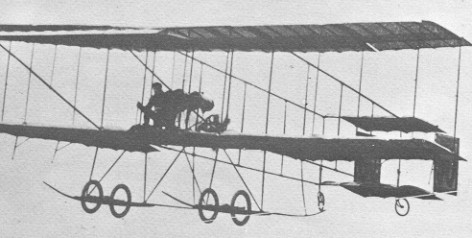
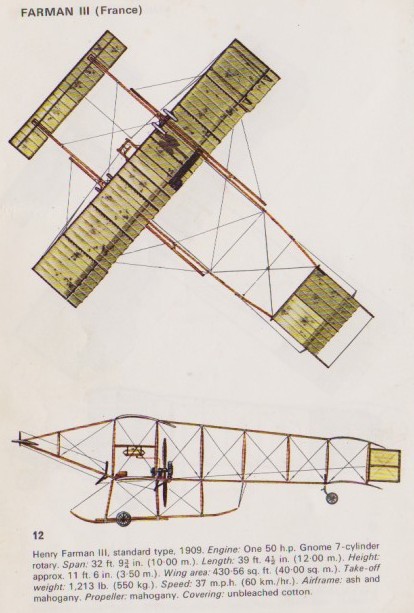
White was advised to take a look at the Farman III plane, designed by Henri Farman. White was unable to grab the rights to build the Farman III biplane because George Holt Thomas—founder of the Aircraft Manufacturing Company Limited (Airco) had a head start in doing the same thing with Farman.
Unable to grab the rights to the Farman Brother’s Farman III, White and the British and Colonial Aeroplane Company based the Bristol Boxkite on the Farman III biplane, but Challenger and his staff made significant achievements to have their plane be its own design. Farman, not surprisingly, sued the British and Colonial Aeroplane Company for patent infringement. However, White was able to show Farman that they had made significant alterations to Farman’s design to improve it… so Farman dropped the suit.
The Farman III set a record of 112 miles in 3 hrs 15 mins.
Engine: One 50 hp Gnome. Length 39 ft 4 in (12 m) Wing span 34 ft 5 in ft (10 m) Weight empty 990 lb (450 kg) Gross weight: 1280 lb Speed: 37 mph (60 kph). Ceiling: 360 ft (110 m) fully loaded. Range: 112 + miles (180 + km). Seats: 1.