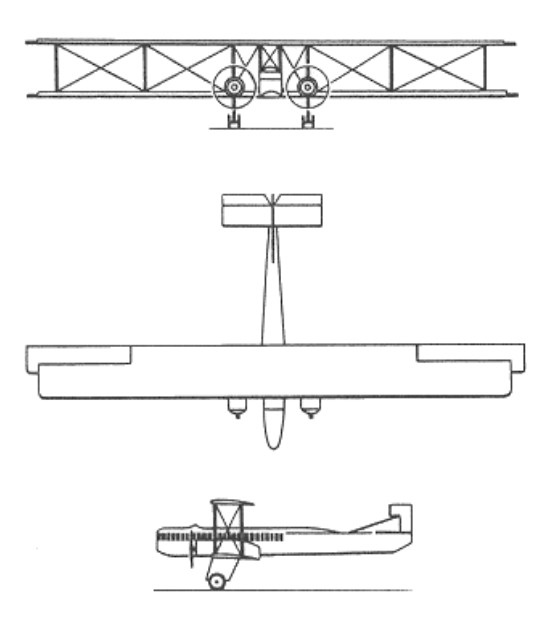
Thee 1933 Farner WF. 7 single-seat biplane glider was designed by Willy Farner and Hermann Aecherli.
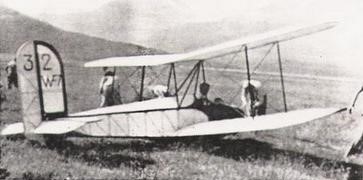
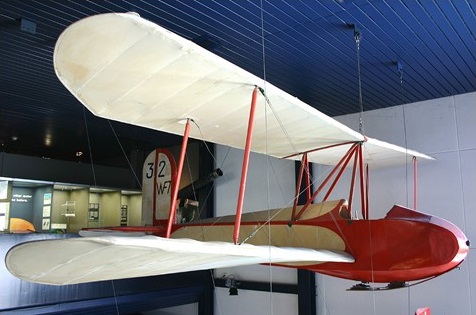
Wing span: 7.50 m
Length: 5 m
Empty weight; 48 kg
Wing area: 16.2 sq.m
Speed: 42 kph
Min sink: 1.2 m/sec
Glide ratio: 12

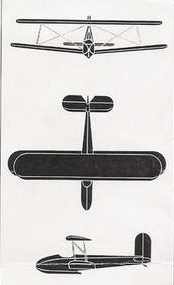
Thee 1933 Farner WF. 7 single-seat biplane glider was designed by Willy Farner and Hermann Aecherli.
Wing span: 7.50 m
Length: 5 m
Empty weight; 48 kg
Wing area: 16.2 sq.m
Speed: 42 kph
Min sink: 1.2 m/sec
Glide ratio: 12
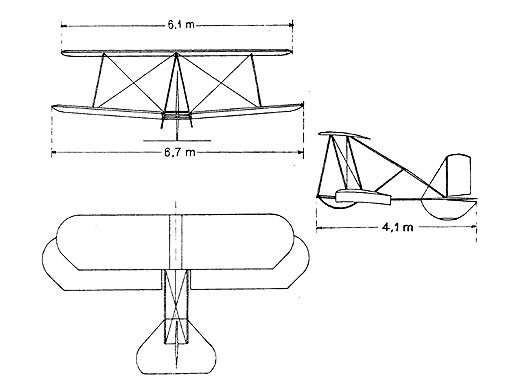
The 1925 Farner W.F.3 biplane ultra-light/hang glider experimental design was similar to the W.F.-1 and W.F.-2. Only one was built.
Wingspan: 6.70 m
Length: 4.1 m

The 1924 Farner W.F.2 biplane ultra-light/hang glider had a larger tail than W.F.-1 and a revised wing shape. An experimental design with ‘X’ wing bracing, only one prototype was built.
Wingspan 6.00 m
Wing area: 14 sq.m
Length: 3.5 m
Empty weight: 32 kg
Max weight: 102 kg
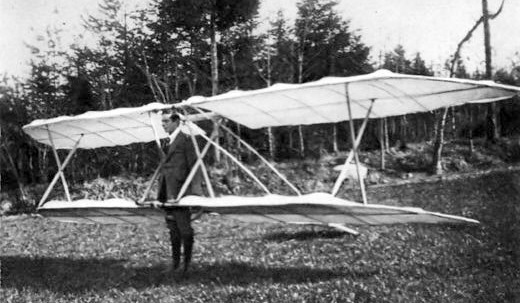
The Farner W.F.-1 was a 1923 biplane ultra-light/hang glider. An experimental wood and canvas design with ‘X’ wing bracing, only one prototype was built.
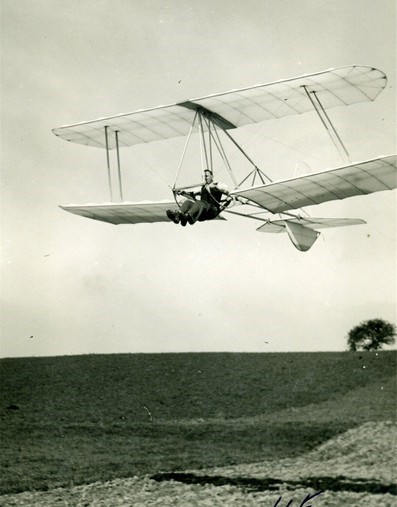
Wingspan: 6.00 m
Wing area: 10 sq.m
Length: 3.5 m
Empty weight: 25 kg
Max weight: 102 kg
The 1910 Farman Freres biplane was designed and built by Henri and Maurice Farman in France.
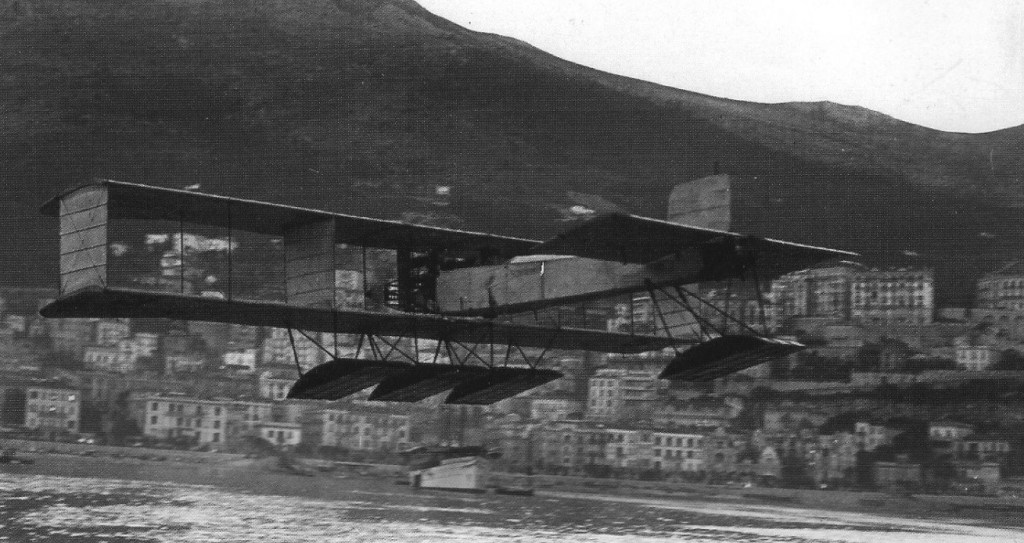
A Farman seaplane fitted with a 70 hp Gnome engine flies low over the port at the very first Monaco meeting in 1912.

The Farman David was a light sport biplane introduced to the aviation world via the 1919 Paris Salon. Power was provided by a 37 kw (50 hp) Gnome rotary engine and the type was quite successful. Although publicised as a single-seater, it had accommodation for a pilot and passenger in cramped conditions. It was placed in production by Farman and soon became known as the Farman Sport, the name by which it was usually known. The 1920 model became available with a 45 kw (60 hp) Gnome engine, but eventually the Anzani engine seems to have become the norm.
A number were exported to Australia. The first of the type was imported by Shaw-Ross Engineering & Aviation Company Ltd of Port Melbourne, VIC. This aircraft G-AUBV (c/n 8 – later VH-UBV) arrived on 4 March 1921 and was registered from June 1921 but was destroyed by a fire at Essendon, VIC on 7 August 1931, the same fire which destroyed VH-UDL (c/n 24).

A further aircraft VH-UFX (c/n 7085) was registered to Industrial Indent Pty Ltd of Melbourne on 29 June 1927. It was damaged when it undershot landing at Essendon on 24 November 1930.
Another aircraft VH-UDC (c/n 25) was registered on 28 June 1921, also to Shaw-Ross Engineering & Aviation Company Ltd of Port Melbourne. It was destroyed in a crash at Cowes, VIC on 9 February 1923.
VH-UDL (c/n 24) was registered to Shaw-Ross Engineering & Aviation Company, also on 28 June 1921. Ownership was transferred to Shaw Aviation on 27 June 1930. It was destroyed in a fire at Essendon, VIC on 7 August 1931.
Two Farman Sports were obtained by Airgold Ltd in Papua New Guinea, G-AUHL (c/n 30) and G-AUHM (c/n 31). In May 1928 the two Farmans arrived in Port Moresby in crates. The intention was to assemble and then fly them to Lae to be operated in the freight role. However, on examination of the aircraft they were found to be too frail for the conditions prevalent in Papua New Guinea.
VH-UHL, named ‘Butterfly’, was assembled at Lae and flown to Wau. Fitted with a 34 kw (45 hp) Anzani radial engine, although Department of Civil Aviation (DCA) records indicated it, and VH-UHM, were fitted with the 60 kw (80 hp) Anzani 6A engine, the Farman Sport VH-UHL swung on landing on its first flight and a wheel collapsed. A further flight to Wau was made nine days later and on this occasion the undercarriage collapsed on landing. As well, many problems were experienced with the engine and VH-UHL was re-crated and shipped south for disposal. The second Farman Sport aircraft VH-UHM was never assembled and flown in Papua New Guinea and was also shipped back to Australia.
After returning from New Guinea VH-UHL had a number of owners, including L Mitchell of Wycheproof, VIC in May 1929, H Sweeney of East St Kilda, VIC in July 1930, C H Frazer of St Kilda, A H Wilkins of Blackwood, SA in November 1934, and R J Weston of North Adelaide, SA in October 1938. It was struck off the register in December 1947.
Farman Sport VH-UHM eventually ended up with Mr G N Wikner of Brisbane, QLD who loaned it to the Aero Club of NSW at Mascot for a period in 1929. He eventually rebuilt it, making various improvements to the airframe, the aircraft eventually being written off in an accident on 20 March 1930 at Dayboro in Queensland. Later a wing was used in the construction of a glider known as the Golden Arrow.
A catastrophic fire wiped out three of the Australian registered Farman Sport aircraft on 7 August 1931 when it broke out in the Shaw Aviation Company hangar at Port Melbourne, four aircraft, including three Farman Sports (VH-UBV, VH-UDL and VH-UFX) and a de Havilland DH.6 (VH-UBW) being destroyed.
Engine: Anzani 52 kw (70 hp)
Wingspan: 7.11 m (23 ft 4 in)
Wing area: 26 m² (279.87 sq ft)
Length: 6.13 m (20 ft 1¼ in)
Empty weight: 200 kg (441 lb)
Loaded weight: 400 kg (882 lb)
Max speed: 140 km/h (87 mph)
Service ceiling: 2,000 m (6,560 ft)
Endurance: 4 hrs 20 mins
Seats: 2
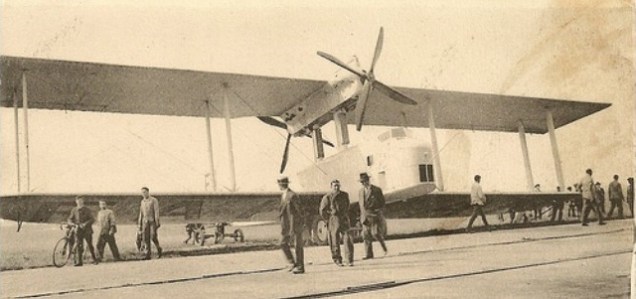
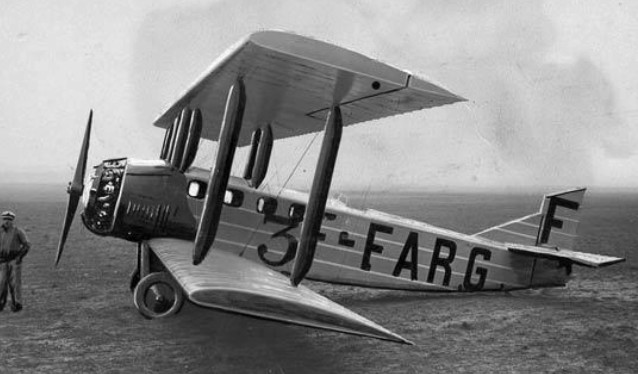
The Farman F.90 passenger transport first flew in 1921. It was a single engine, single bay biplane with unstaggered, rectangular wings and ailerons on the upper wings only. The interplane gap was large, with the upper plane held high above the fuselage by a set of four vertical centre section struts. The interplane struts were also simple parallel pairs. Its tailplane and elevators were fixed to the top of the fuselage; it had a triangular fin and a rudder with a tip at the same angle but vertically displaced, producing a nick in the leading edge.
The F.90 was initially powered by a 260 hp (194 kW) Salmson AZ 9 9-cylinder radial engine, neatly enclosed in a short nose. The fuselage was deep and flat sided, though with a slightly rounded decking. The passenger compartment, with four small windows on each side, began near the wing leading edge and stretched aft a little beyond the trailing edge. The pilot had an open cockpit behind the cabin with a clear forward view under the high wing. The F.90 had a conventional undercarriage with single mainwheels under the wing leading edges and a rear skid.
Flight trials began in 1921, conducted by Farman pilots Lucien Coupet and Jules Landry. By 1923 the Salmson radials had been updated from the mark AZ to CM for its appearance the Zenith Cup competition of that year. It was re-engined again, this time with 380 hp (283 kW) Bristol Jupiters, for the same competition in 1926. This change came with a new type number, F.91. Only one F.90/1 was built.
The F.90/1 won several Cups but no orders. It won the 1922 Grand Prix de Paris, the only single engine aircraft amongst five competitors, where it was flown by Louis Boussoutrot and his mechanic, Henri Carol. This contest included a 600 km (370 mi) circuit, which the F.90 completed at an average speed of 144.4 km/h (89.7 mph), and rewarded Farman with FF 80,000 and a statuette.
It appeared in the Zenith Cup, a fuel consumption competition funded by the Société du Carburateur Zenith, twice, winning it both times. This competition required the contestants to make out and return flights from Paris to Lyon and back on successive, prescribed days. The round trip distance was 770 km (480 mi). The winner was the aircraft that used the least fuel for the load it carried, measured by the ratio of weight of fuel used to weight of useful load. In 1923 there were nine entrants, though three were non-starters. On 21-22 July 1923, fitted with its new Salmson CM 9 engines and flown by Boussoutrot, it won with a fuel to load ratio of 0.475, well ahead of the 0.616 of the runner-up, a Potez VIII A two-seater.
Three years later, on 3-4 July, the same machine, now the F.91 with Bristol Jupiters and Bristol Triplex carburettors, was one of seven competitors. The Farman, flown by Maurice Drouhin, won again with a much improved fuel to load ratio of 0.253, though the runner-up, a Caudron was close behind at 0.256. Each win gained Farman the Cup plus the first prize of FF 30,000; in 1926 at least the winning pilot also got FF 3,000.
Only the one example was ever built.
F. 90
Engine: 1 × Salmson AZ 9, 190 kW (260 hp)
Propellers: 2-bladed
Wingspan: 14.03 m (46 ft 0 in)
Wing area: 66.80 m2 (719.0 sq ft)
Length: 9.30 m (30 ft 6 in)
Height: 3.86 m (12 ft 8 in)
Empty weight: 1,100 kg (2,425 lb)
Gross weight: 2,350 kg (5,181 lb)
Maximum speed: 180 km/h (112 mph; 97 kn)
Range: 70 km (43 mi; 38 nmi)
Crew: 1
Capacity: 6 passengers
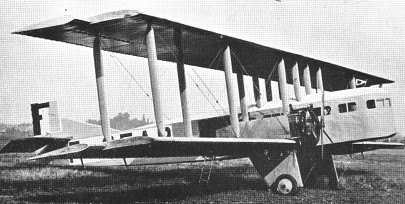
The two FF.60 bomber prototypes of 1918 started a great family of passenger airliners and night bombers. The F.60 of 1915 16 was an F.40 with the more powerful 190 hp Renault; the F.61 was the 190 hp version of the F.41. The type was an equal-span biplane with a conventional monoplane-type tail unit. The landing-gear legs had trousered fairings and each supported twin wheels. Immediately above each leg was an engine set in a large nacelle on the lower wing, with minimal clearance between the propeller and the slab-sided fuselage.
Bomber versions had gunners cockpits in the nose and amidships, while the pilot and co-pilot/navigator were seated in tandem in open cockpits. Commercial transport Goliaths had a nose cabin for four passengers and an aft cabin for eight, separated by a raised open cockpit for the two pilots under the leading edge of the upper wing.
The Farman brothers commenced Paris-London flights on 6 February 1919 using an F.60 Goliath.
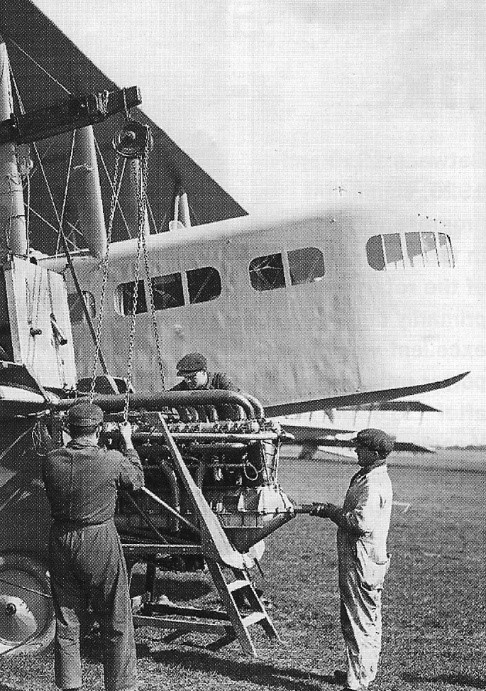
About 60 commercial Goliaths were built in several versions with Salmson, Renault, Lorraine, Gnome-Rhone-built Jupiter, Armstrong Siddeley Jaguar and Farman engines, among the most important being those powered by 171.4kW Salmson Z.9 radial engines operated by Air Union.
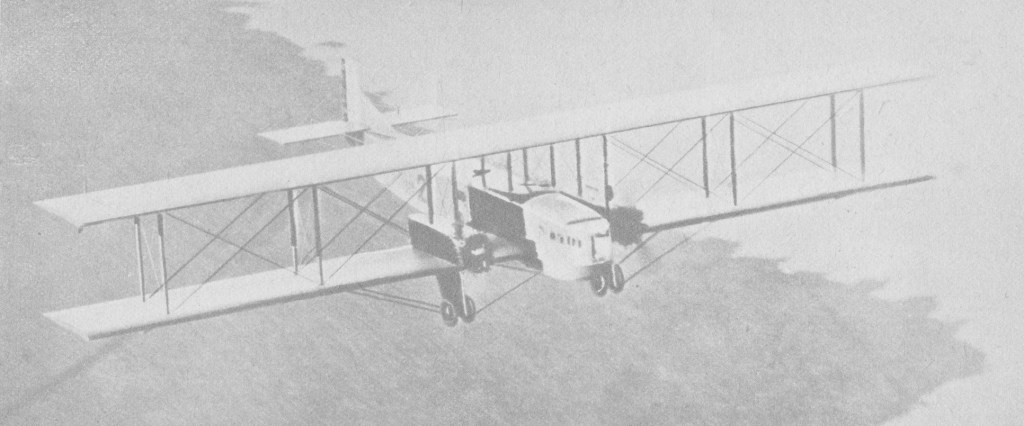
Several flew with other airlines including the Farman airline, and indeed it was this company that started the world’s first regular international passenger service, beginning on 22 March 1919 between Paris and Brussels. Of course this had not been the first international passenger service by an airline between European capital cities, this being officially recognised as the Farman flight between Paris and London on 8 February 1919 carrying military personnel. However the latter was not the start of a sustained or civil passenger service and as such does not conflict with the Paris-Brussels “first”. Versions operated by the Farman airline included the Renault-powered F.61 and Gnome-Rhone-built Jupiter-powered F.63bis. Six passenger-carrying Goliaths were also built under licence in Czechoslovakia, two going to the air force.
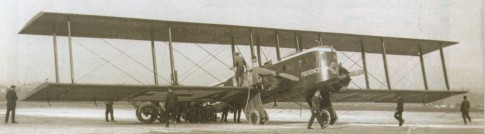
Thirty-six F.60 bombers (with Salmson engines and cut-down noses) served with the French 21 and 22 Regiments d’Aviation and 24 square-nosed Jupiter-powered Goliaths equipped naval escadrilles 6R1, 6B1 and 6B2, following tests with a passenger type. These could be mounted on twin floats (with stabiliser floats under the lower wings) as an alternative to the normal wheel-type landing gear. Russia purchased sufficient F.62s to equip two units which formed the embryo of its new heavy bomber force; Japan and Italy bought a single example each for testing; and Poland acquired 32 F.68 bombers. Export bombers – like the 42 F.63 for the French Army and a large batch of F.65 for the French Navy – each had a ‘balcony’-type nose-gunner’s cockpit with a ‘step’ below.
The Belgian Aviation Militaire had two squadrons of F.41s and 60s a few F.40 series were used by the RNAS and 30 were supplied to the American Expedtionary Force.
Conversions to airliner were operated by Air Union circa 1929.
Engine: 2 x Salmson CM.9, 190kW
Max take-off weight: 4870 kg / 10737 lb
Empty weight: 2500 kg / 5512 lb
Wingspan: 26.5 m / 86 ft 11 in
Length: 14.3 m / 46 ft 11 in
Wing area: 161.0 sq.m / 1732.99 sq ft
Max. speed: 130 km/h / 81 mph
Cruise speed: 120 km/h / 75 mph
Ceiling: 4000 m / 13100 ft
Range w/max.fuel: 400 km / 249 miles
Crew: 2
Passengers: 12